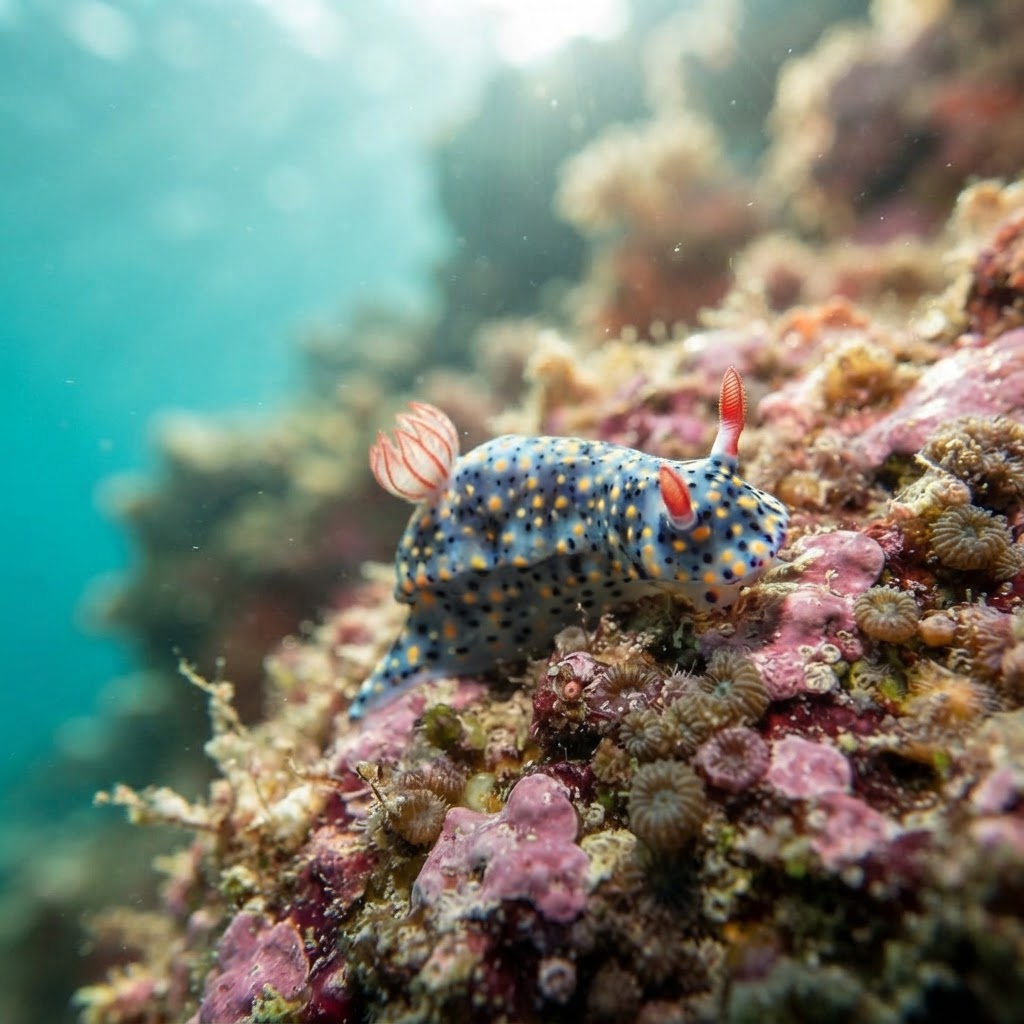
Hypselodoris infucata
Tiny blue-and-orange nudibranch logged most in Eilat's Red Sea reefs and Okinawa, year-round in 23-30C water. Here's how to spot it.
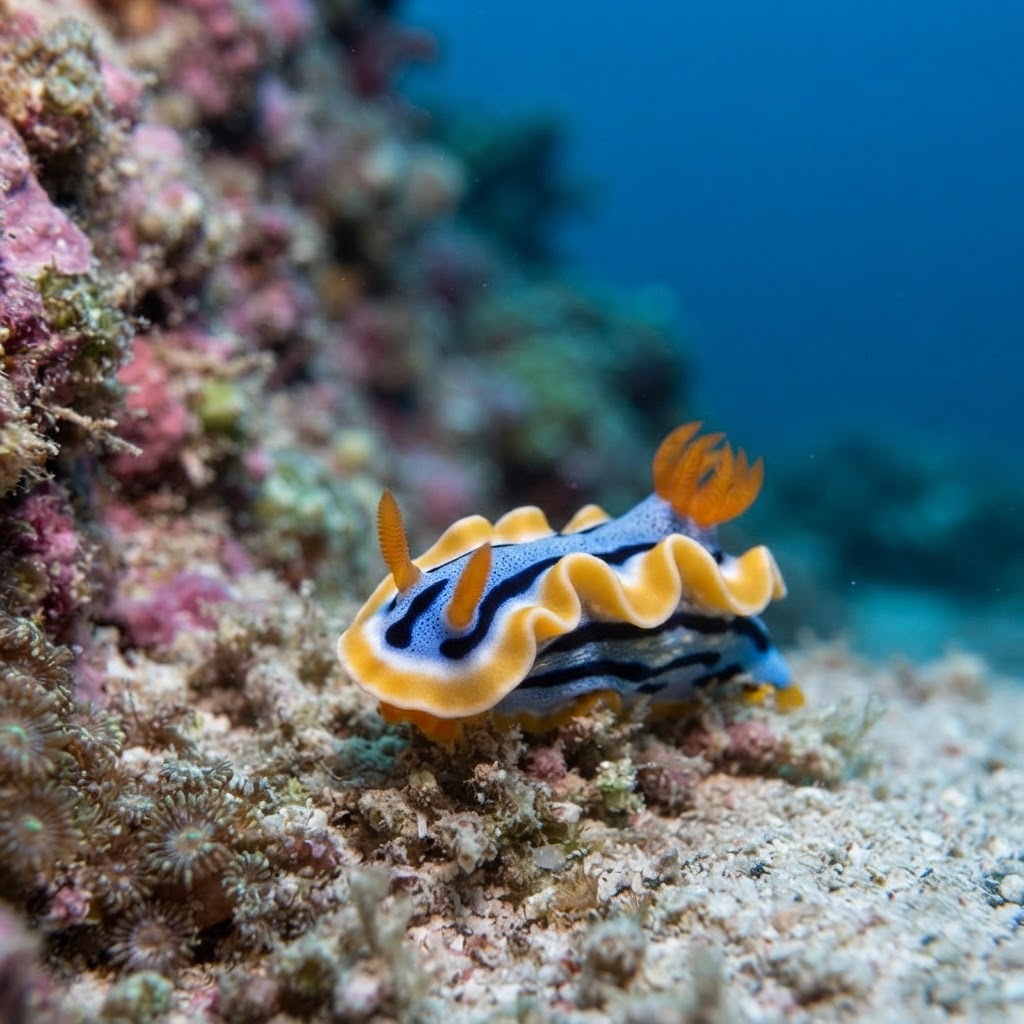
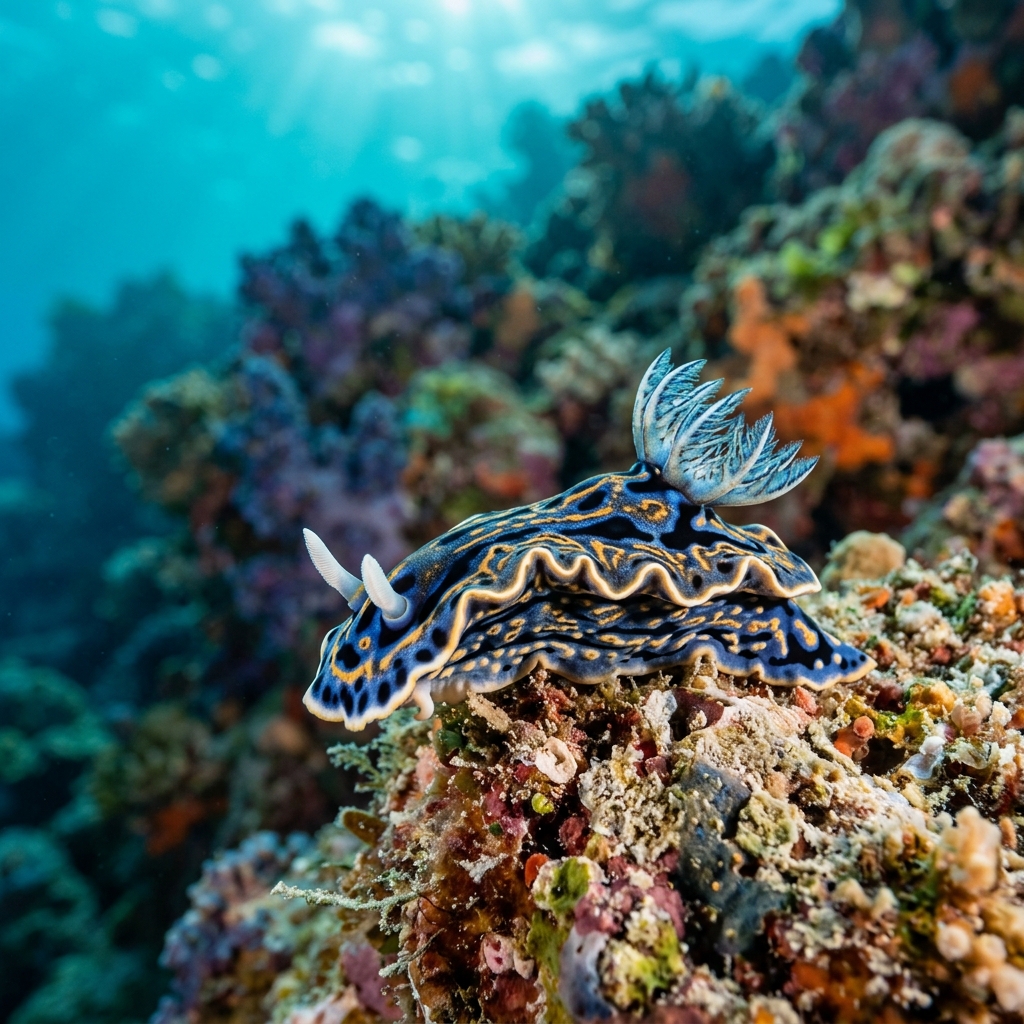
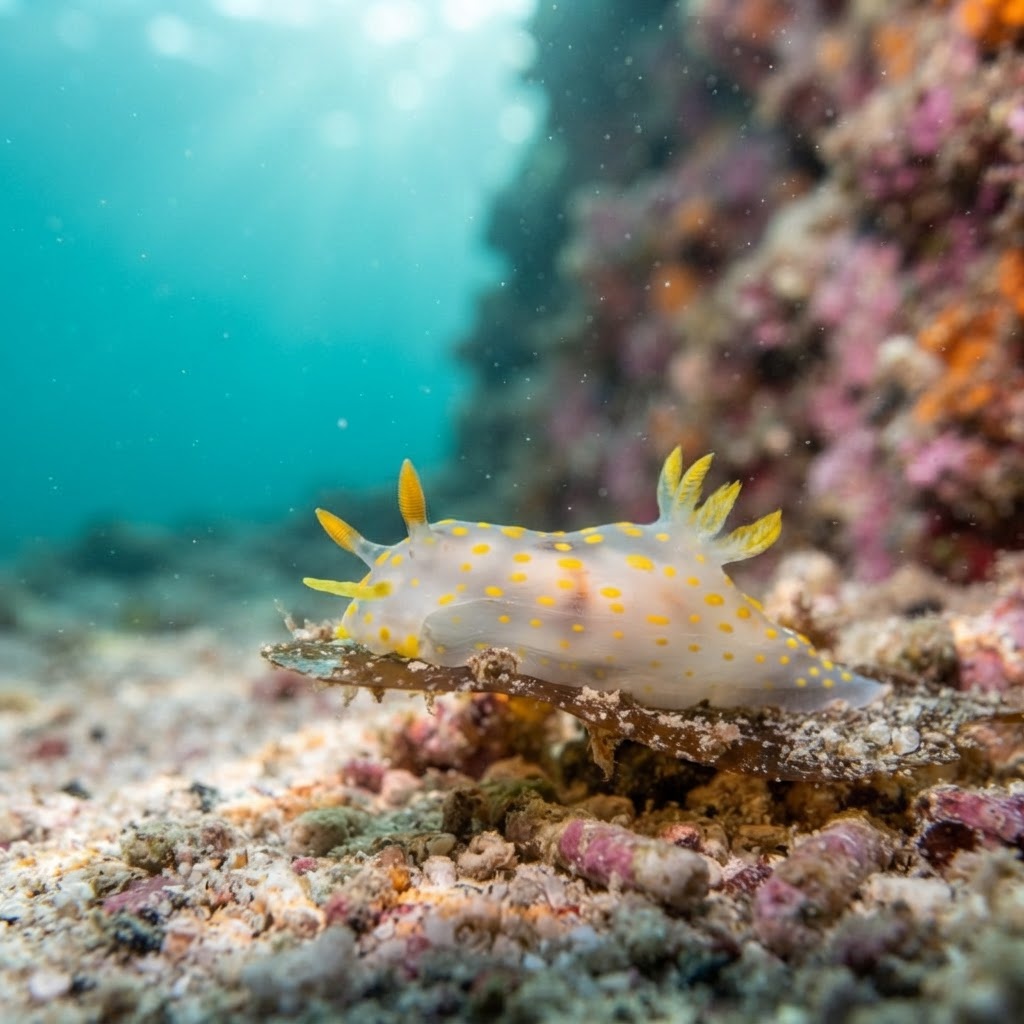
A tiny slug barely 2cm long, its body is translucent blue to purple with a scatter of orange-yellow spots running down the back and a thin orange line tracing the mantle edge. Look for the two rhinophores (feather-like sensory horns) up front and the small flower-like gill cluster near the tail, both often tipped in orange. Its small size means divers usually spot it by scanning bare rock and rubble rather than by colour from a distance.
Divers find it parked on rock, rubble or sponge-covered substrate, moving slowly as it grazes, and it pays no attention to a torch or a close look. Most logs describe it as uncommon to rare at any given site, so finding one usually means a slow, deliberate scan of the bottom rather than a lucky swim-by. It shows up on both day and night dives, tucked into the same kind of low-relief benthic habitat divers check for other small chromodorid slugs.
Like other chromodorid nudibranchs, it feeds on sponges and can recycle chemical compounds from its prey into its own skin as a defence against predators, meaning that bold colour pattern is doing double duty as a warning sign.
No clear season shows up in the sighting data, and its comfort range of 23.1 to 29.7C spans warm reef water year-round across its range, so any month is fair game where it's found.
Reef neighbours a diver could mistake it for. Use the identification notes above to tell them apart.
Most consistently logged in Eilat, Israel, both on the Red Sea coast and along the Mediterranean side, making it one of the more reliable slug finds in the region. It also turns up with fair regularity around Okinawa and the Ryukyu Islands in Japan, Nouméa in New Caledonia, Hawaii and the Visayas in the Philippines, with further sightings in Bali and KwaZulu-Natal.
Mapping where Painted Nudibranch is logged…
Eilat in Israel is the most reliable spot, on both its Red Sea and Mediterranean coasts. It's also logged around Okinawa in Japan, Nouméa in New Caledonia, Hawaii, and the Visayas in the Philippines.
There's no strong seasonal pattern in the sighting data, and it's found across a broad warm-water range of 23 to 30C, so it can be spotted on any given month.
Look for a slug about 2cm long with a translucent blue-purple body scattered with orange-yellow spots and a fine orange line along the mantle edge. Its size means you'll usually need to be scanning rubble or rock closely rather than spotting it from afar.
They stay small, typically around 2cm long, making them one of the easier species to walk past without noticing on a reef.
No, they pose no threat to divers. They have no sting or bite of concern and simply graze slowly on the reef surface.
They feed on sponges and are thought to store chemical compounds from that diet in their own tissue, turning their bright colouring into a warning rather than just decoration.
Site and sighting data is aggregated from diver logs, iNaturalist and GBIF. For taxonomy and conservation status:
Light-spotted Aegires
3,168 sites