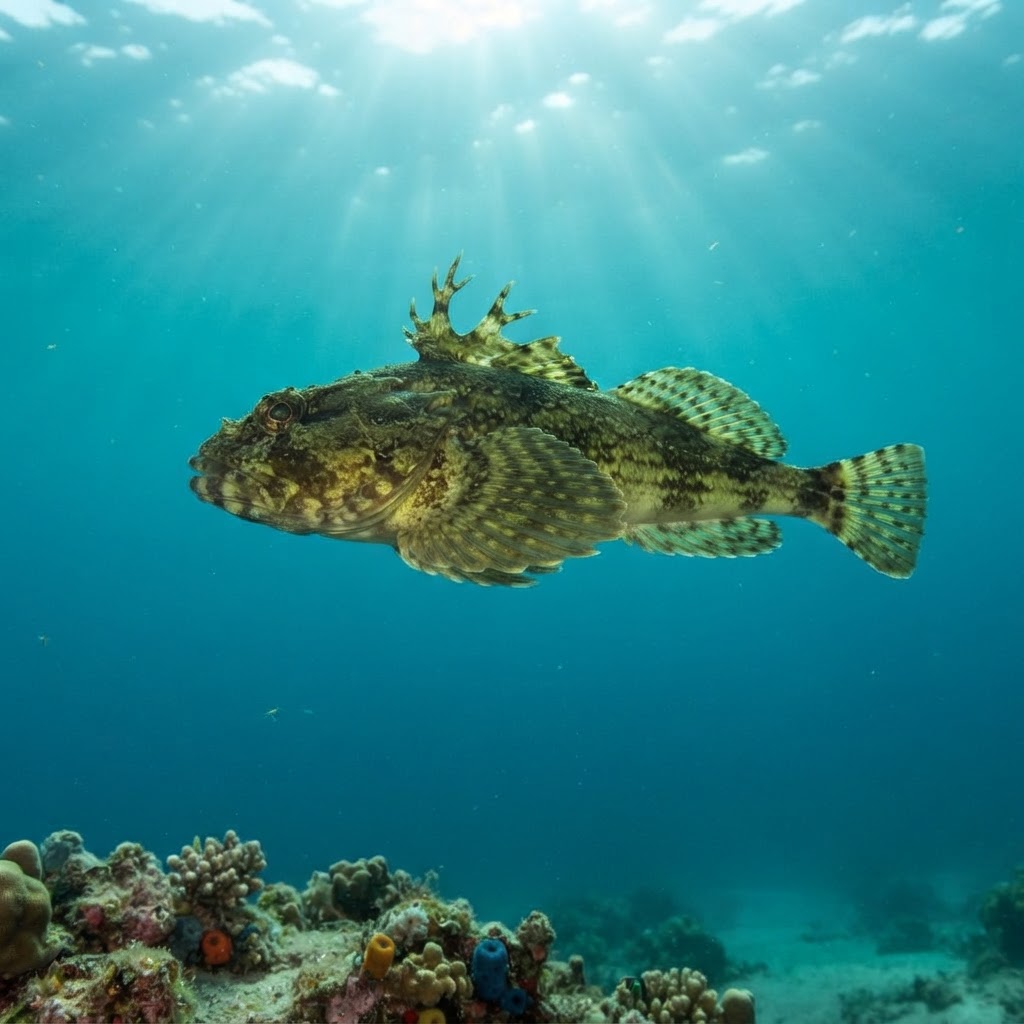
Leptocottus armatus
Bottom-dwelling and easy to miss: found in cold water from British Columbia to the Pacific Northwest, active year-round.
Safety warning
It carries sharp spines on the gill cover that can deliver a painful puncture if handled or accidentally pinned against the sand, so avoid touching it or reaching under ledges where one might be resting. Bites and stings are not aggressive encounters; they happen when divers grab or corner the fish, so a hands-off approach removes the risk entirely.
If you're stung
Venomous spinesGeneral first-aid guidance, not a substitute for professional medical care. In an emergency, call your local emergency number.
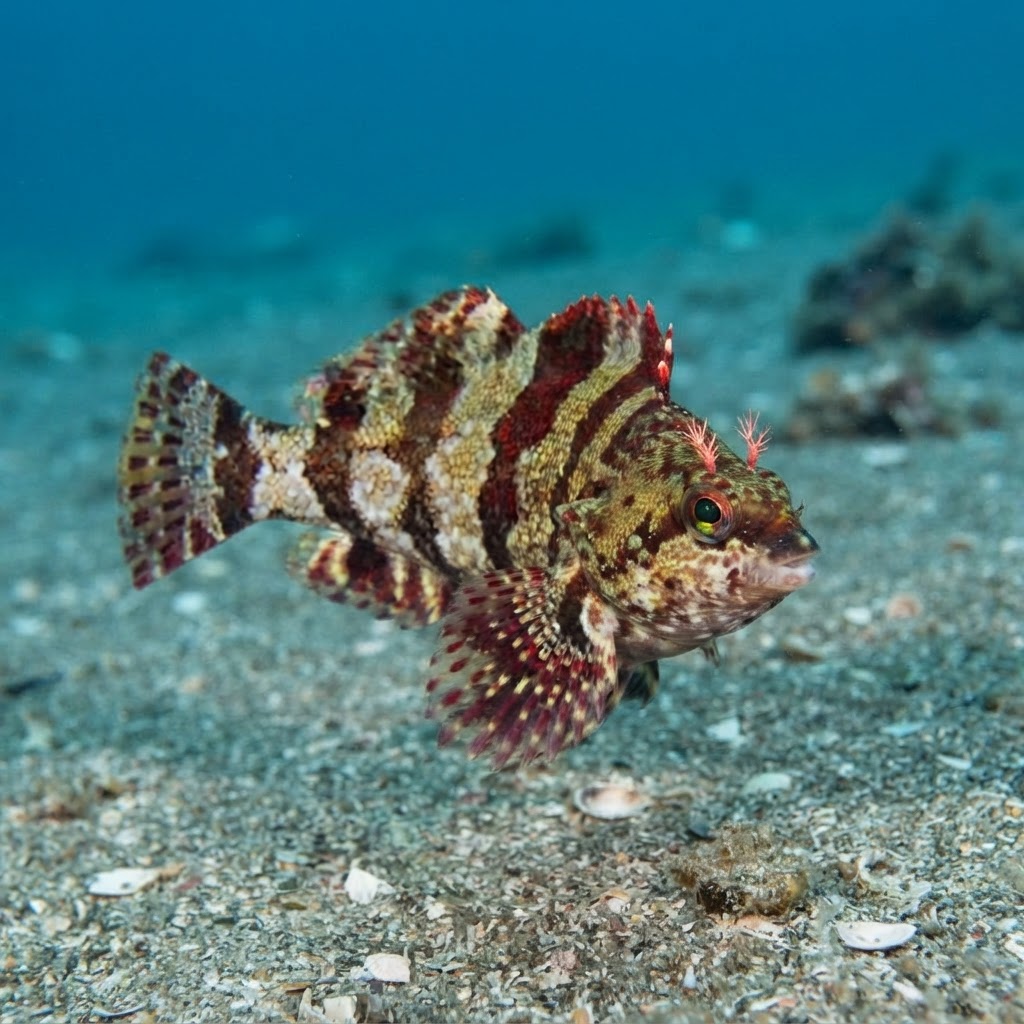
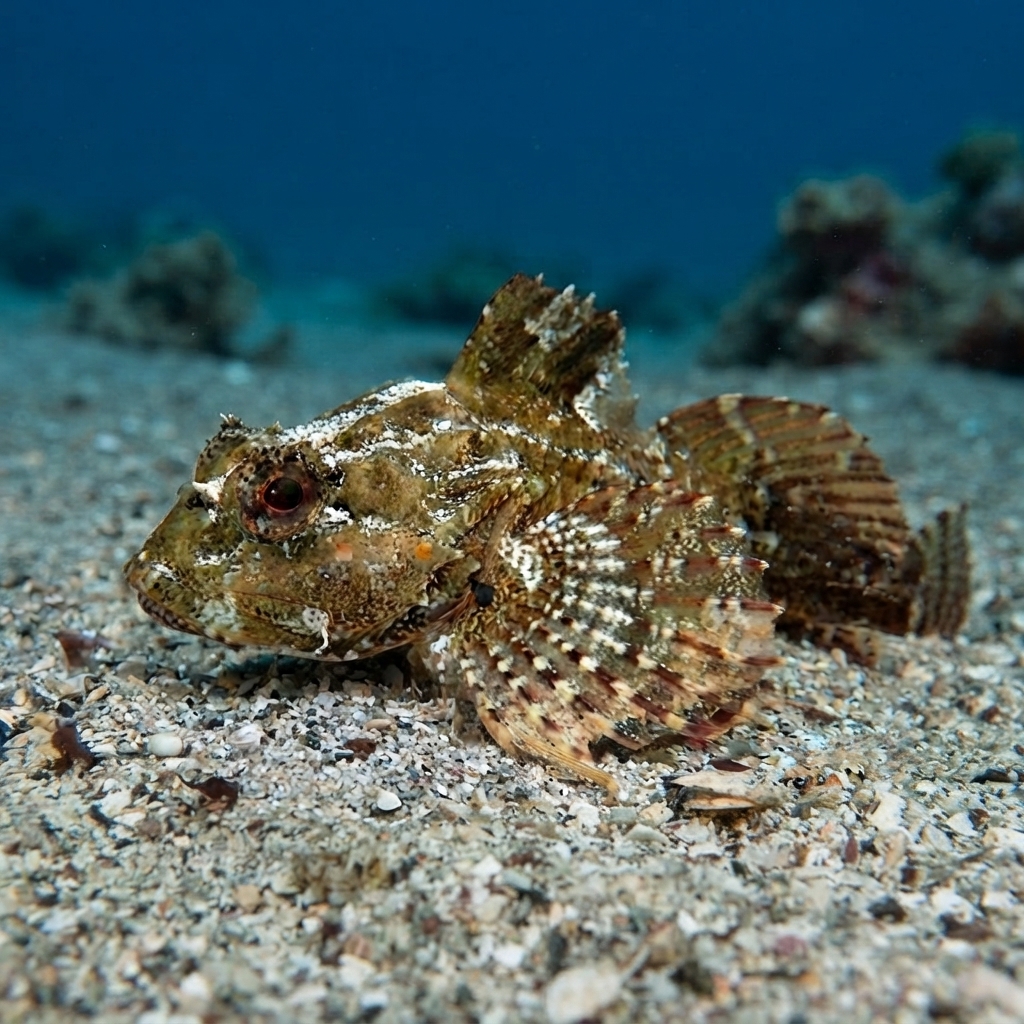
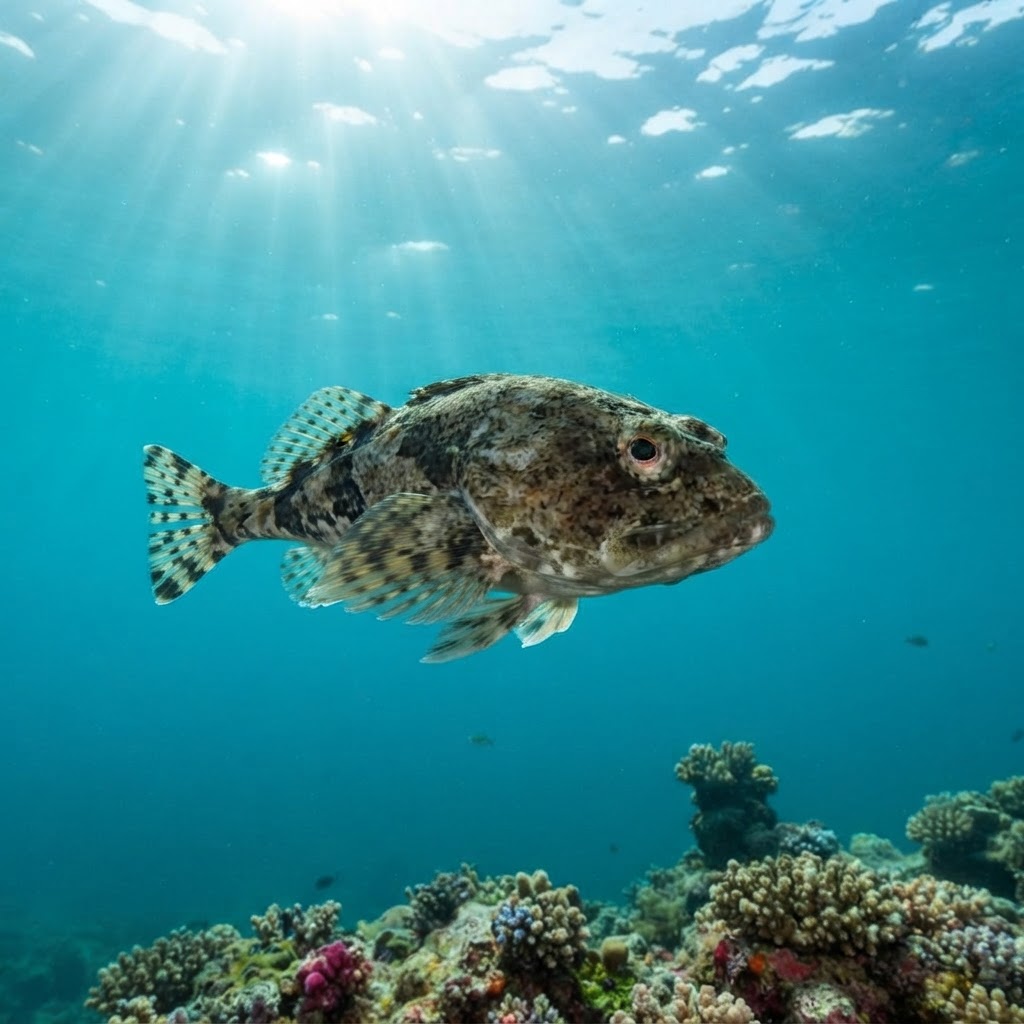
Look down, not out: this fish lies flat on sand or mud with its broad, fan-shaped pectoral fins spread against the bottom. Mottled brown and grey blotching camouflages it against silt, and a large spiny head with a wide mouth gives it a slightly grumpy, toad-like profile. It rarely swims far when approached, preferring to stay put or make a short dart to resettle a metre away, and the two curved spines on the gill cover (the feature that gives it the name
Divers usually find it lying motionless on sand or silty bottom, half buried or resting in the open, using its mottled colouring to disappear against the substrate. It is not a fast swimmer and tends to sit tight rather than flee, only shifting a short distance if you get too close. Most sightings come from slow bottom-scanning dives in shallow coastal or estuarine terrain rather than mid-water encounters.
It tolerates a wide range of salinity and temperature, which lets it live in estuaries and brackish harbour water where few other sculpins bother to go.
Sightings show no clear seasonal pattern, so treat this as a year-round find in the cold waters it favours (around 4.5 to 14.1 C). Cooler months may bring slightly better visibility at some Pacific Northwest sites, but the fish itself is present throughout the year.
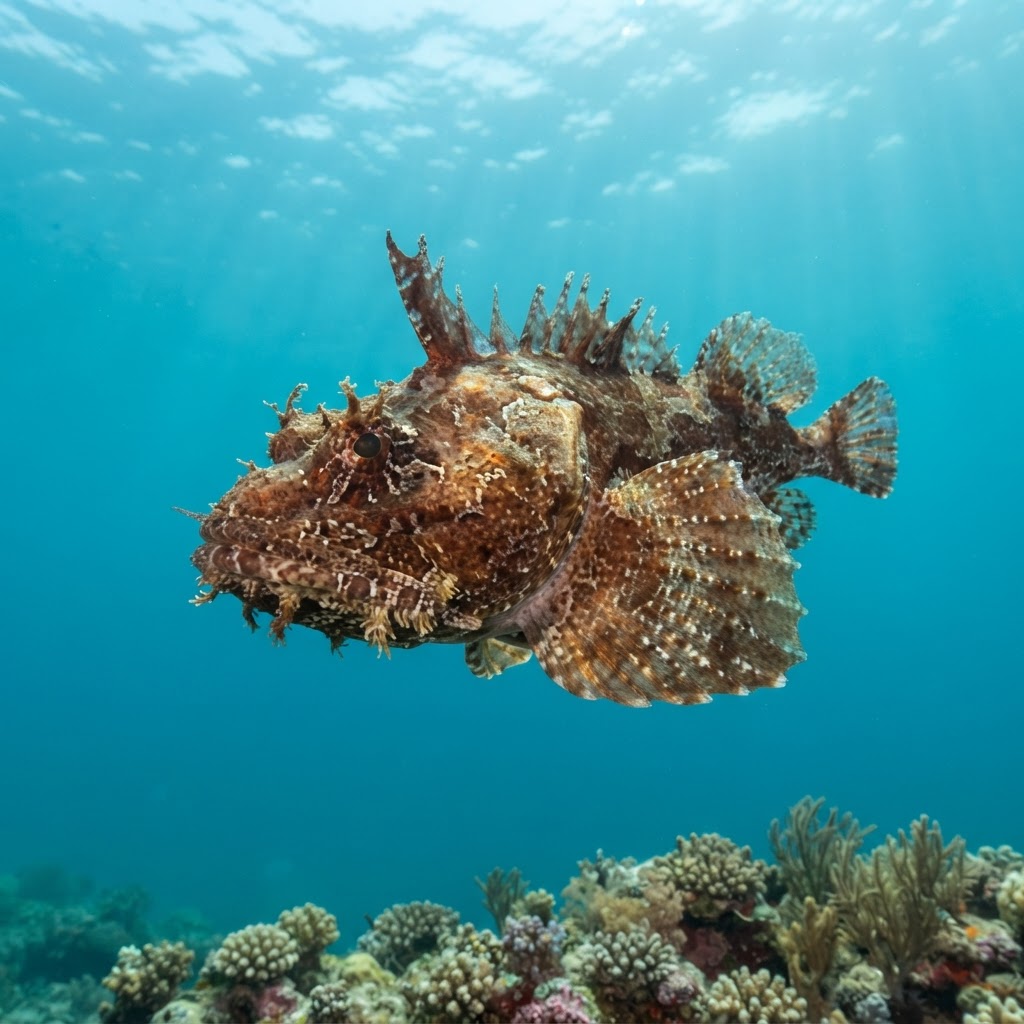
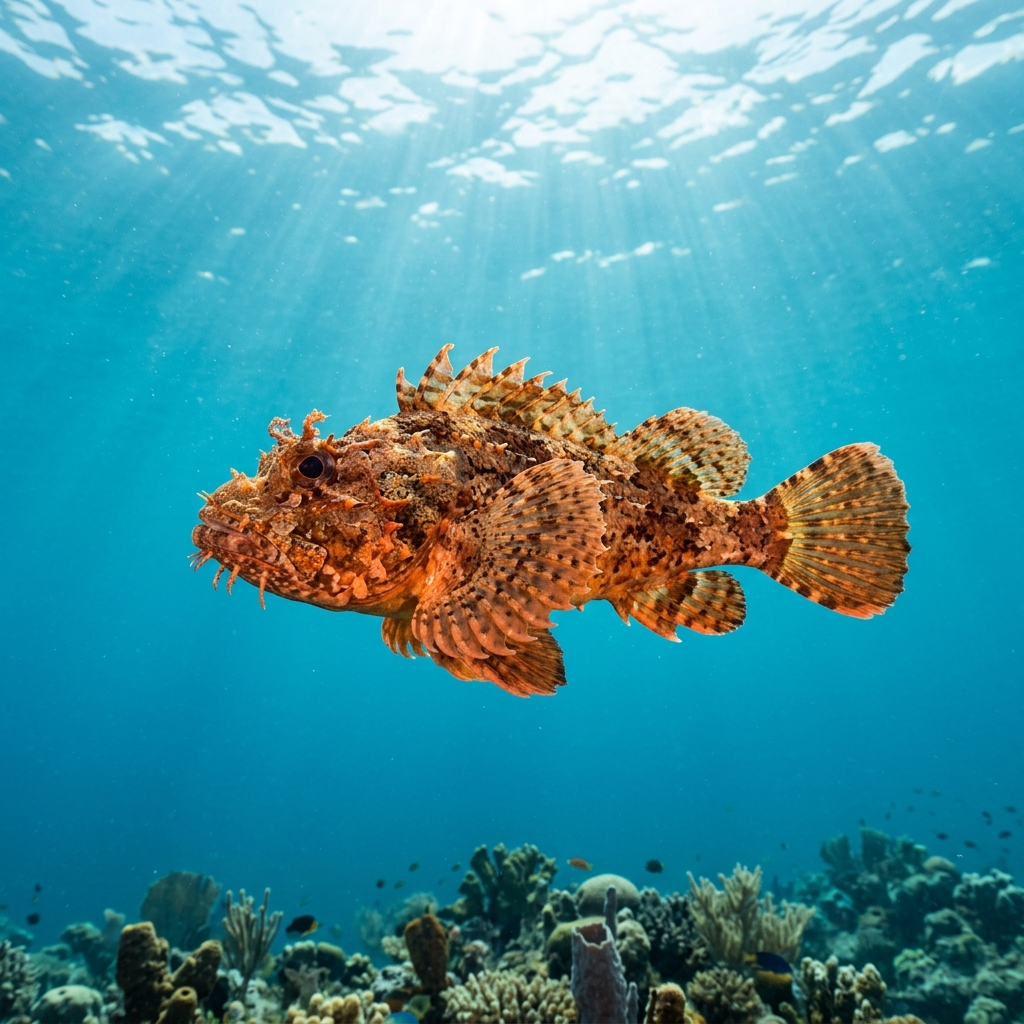
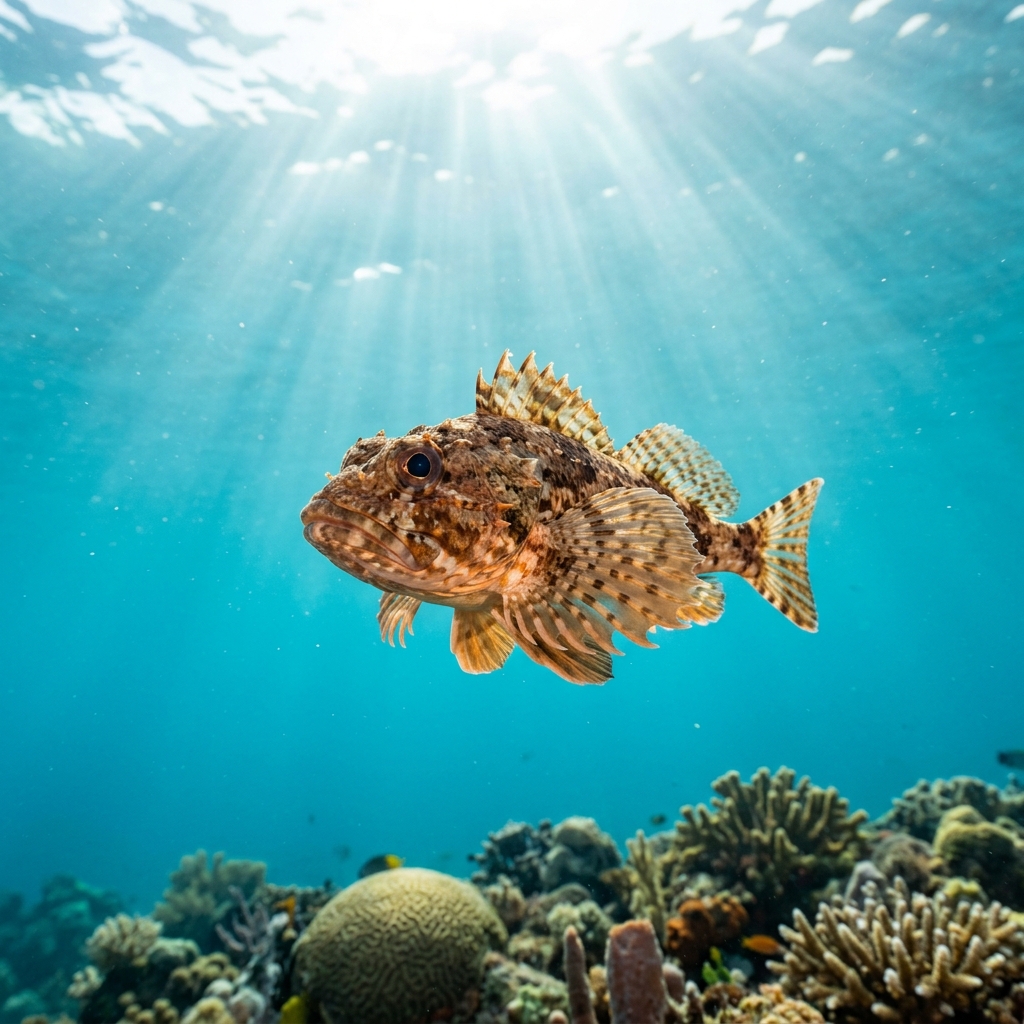
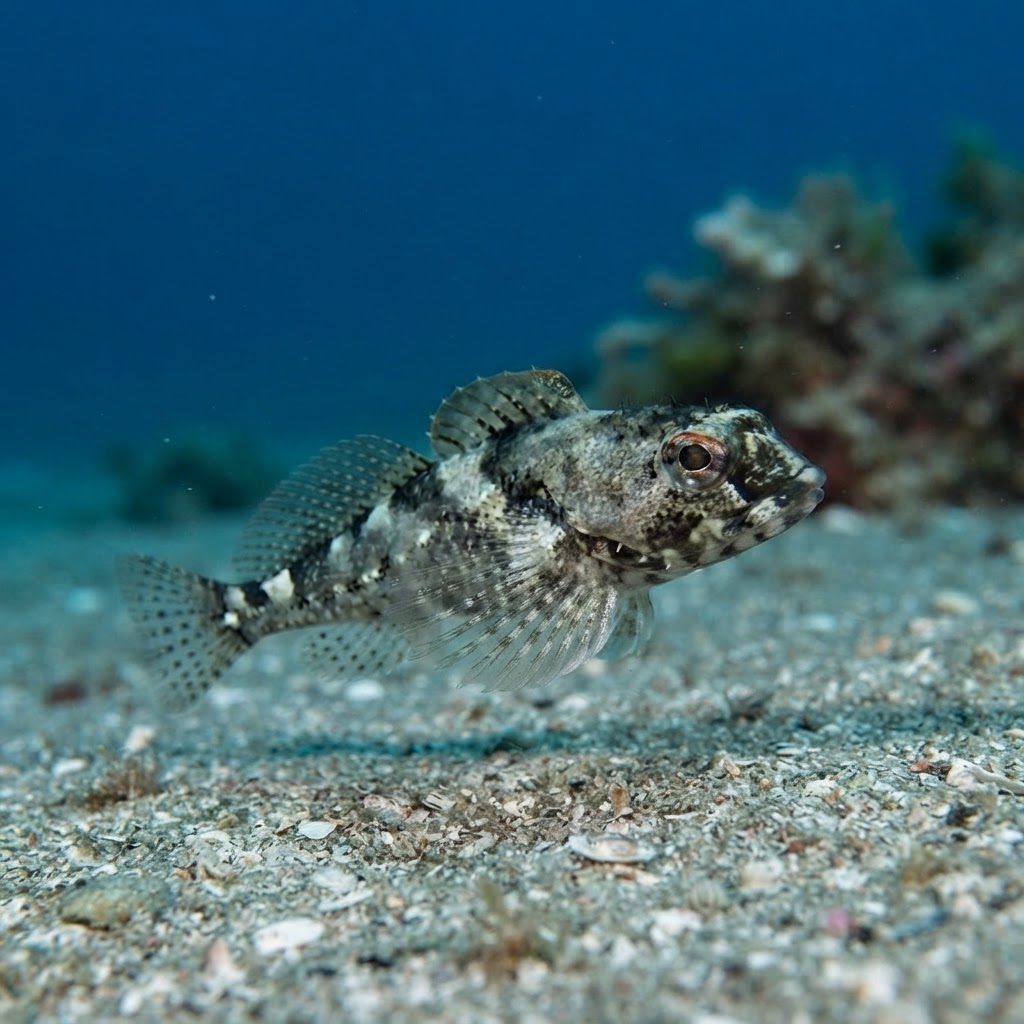
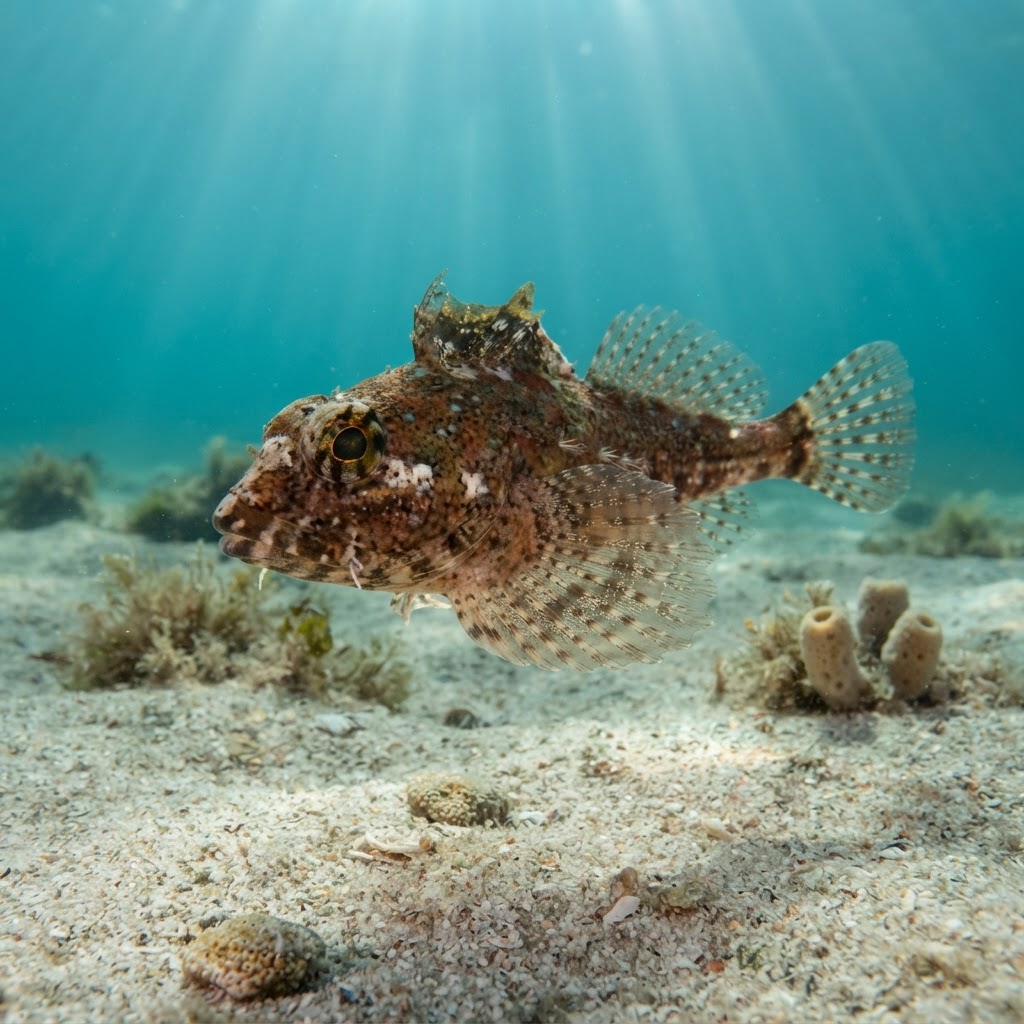
Reef neighbours a diver could mistake it for. Use the identification notes above to tell them apart.
Most commonly logged along the Pacific Northwest coast of the United States and in British Columbia, Canada, with sightings concentrated at sites in both regions. It turns up on sand and mud bottoms near harbours, eelgrass beds and estuary mouths rather than on rocky reef, so muck and shore dives in these areas are your best bet.
Mapping where Pacific Staghorn Sculpin is logged…
It's most reliably found along the Pacific Northwest coast of the United States and in British Columbia, Canada, usually on sand or mud bottoms near shore, harbours and estuaries rather than open reef.
There's no strong seasonal pattern in sightings, so it can be found year-round in the cold coastal waters it favours, roughly 4.5 to 14.1 C.
They can deliver a painful spine puncture from the gill cover if handled or pinned, but they are not aggressive toward divers who leave them alone. Keep hands away and watch where you place them near sandy bottoms.
Look for a flat-bodied fish lying on sand or mud with large, fan-like pectoral fins and mottled brown camouflage. It has a wide, spiny head and rarely swims far when disturbed.
They typically reach around 32 centimetres in length, making them a modest-sized bottom dweller rather than a large fish.
They handle a wide range of salinity and temperature, letting them live comfortably in brackish estuaries and harbour mouths where most other sculpins can't survive.
Site and sighting data is aggregated from diver logs, iNaturalist and GBIF. For taxonomy and conservation status:
Shorthorn Sculpin
228 sites