Hippocampus ingens
A large, colour-shifting seahorse of the eastern Pacific, holding tight to reef and rubble in water from 19 to 28.5 C year-round.
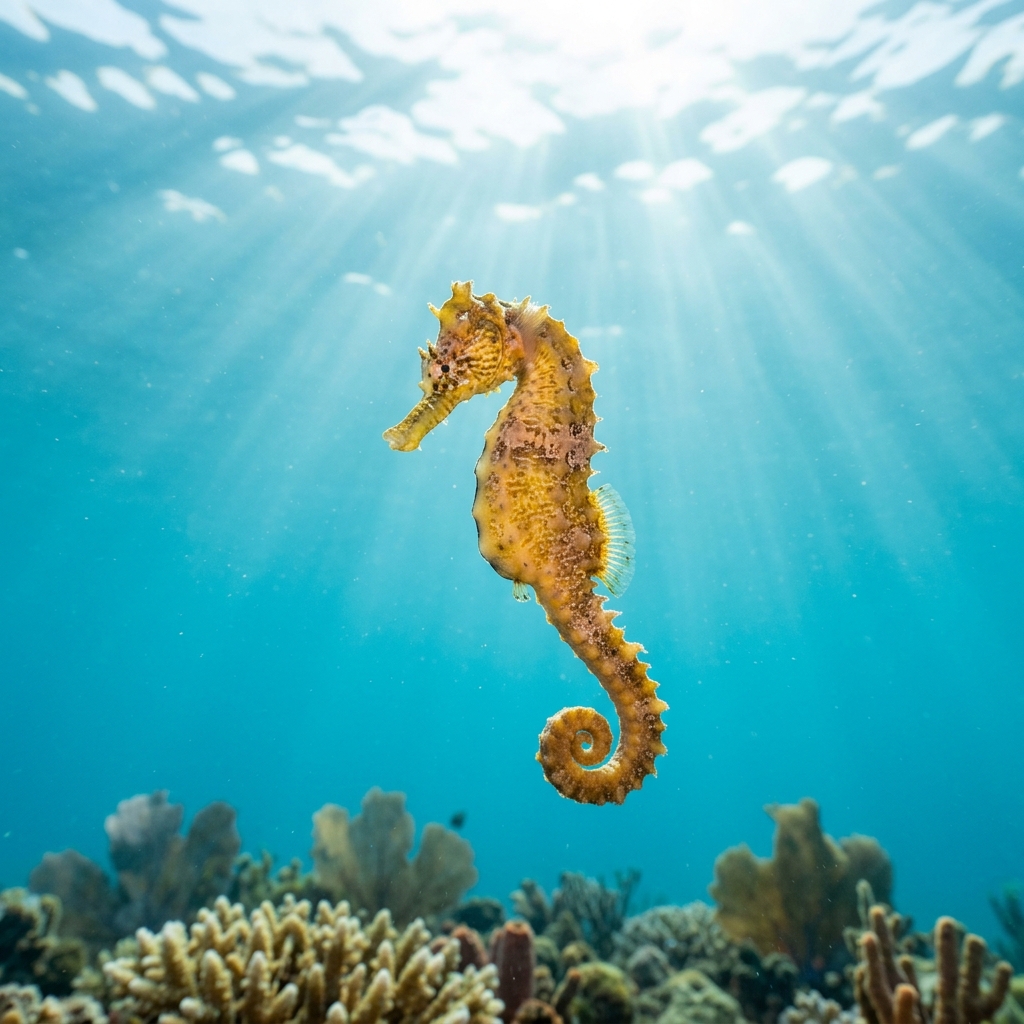
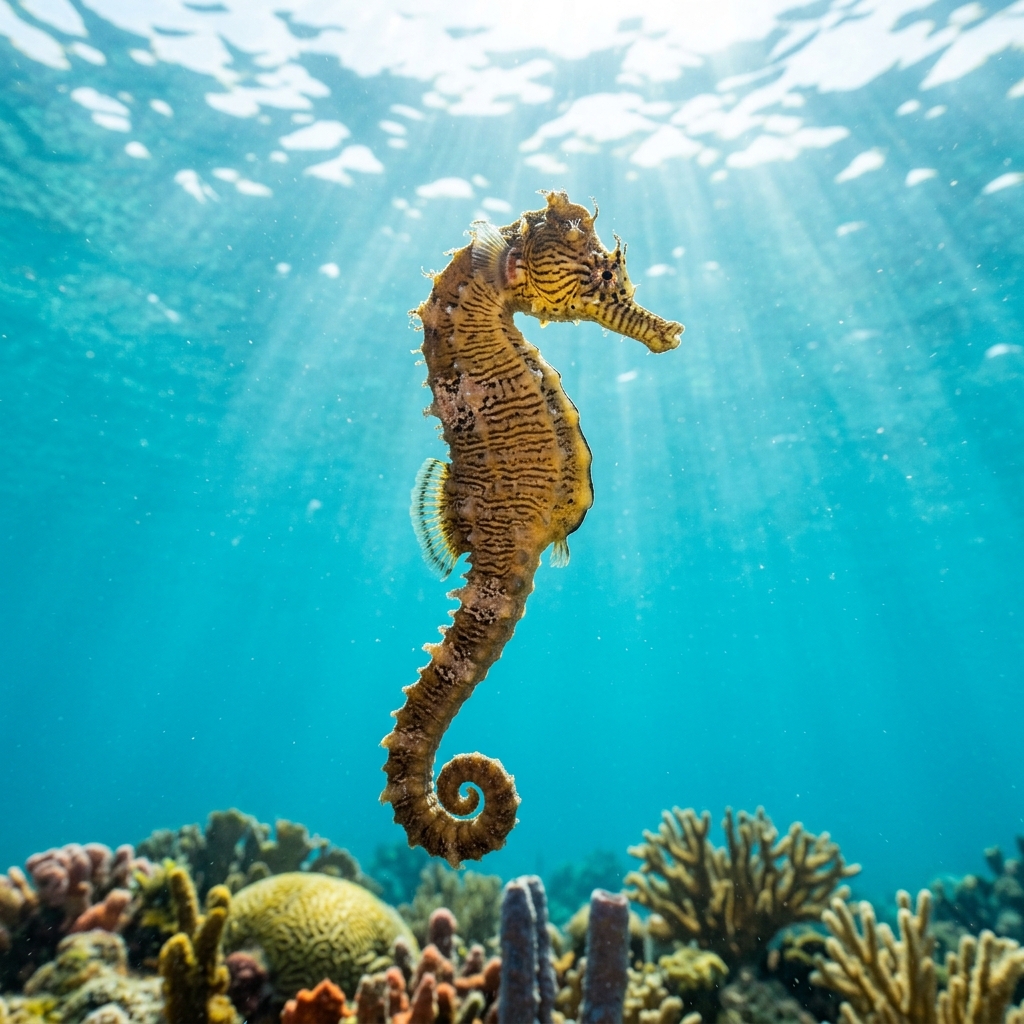
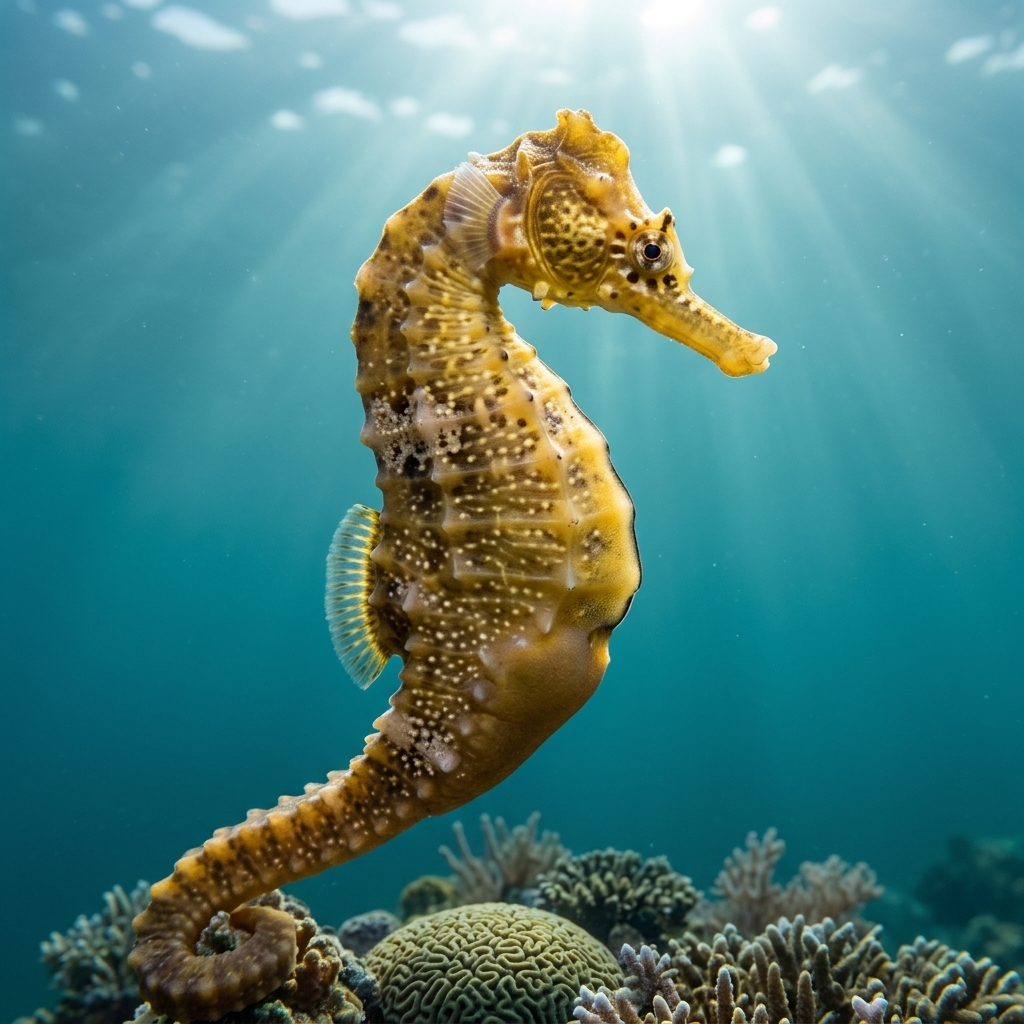
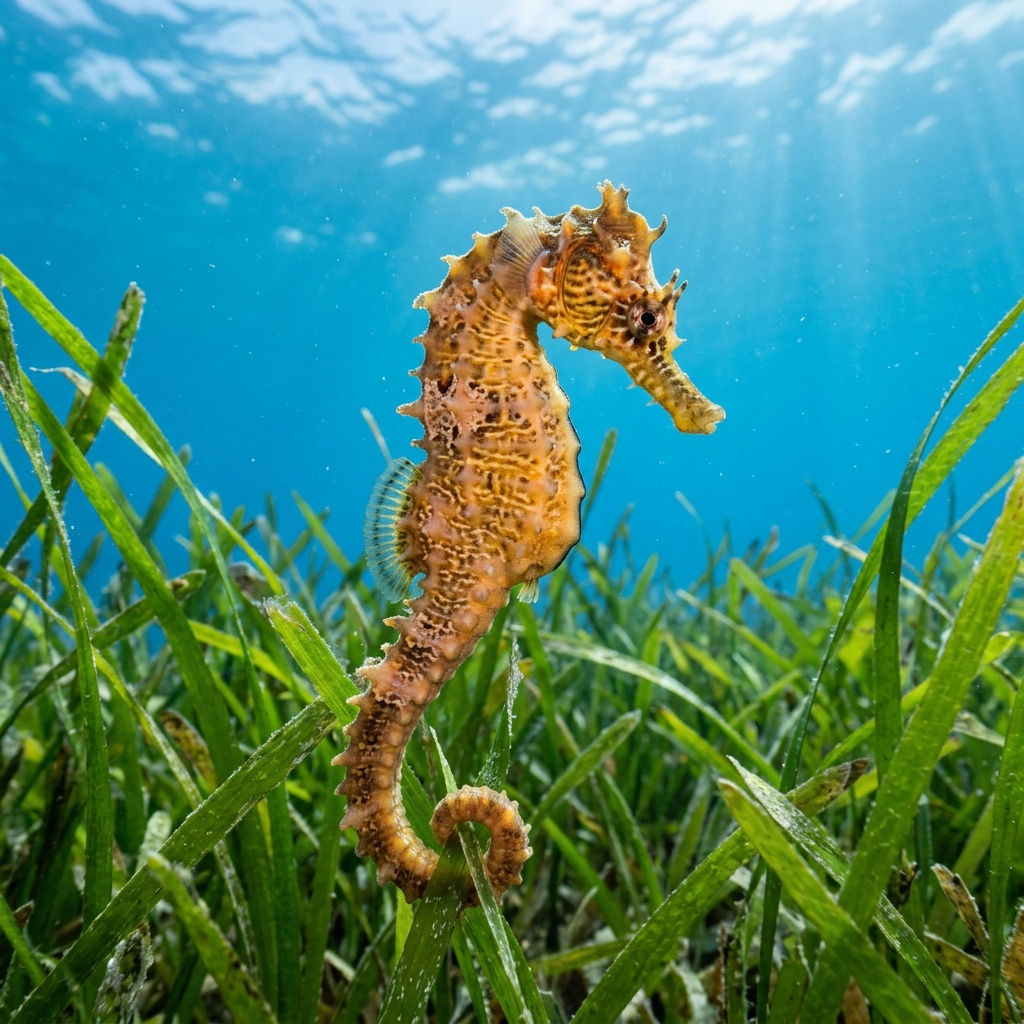
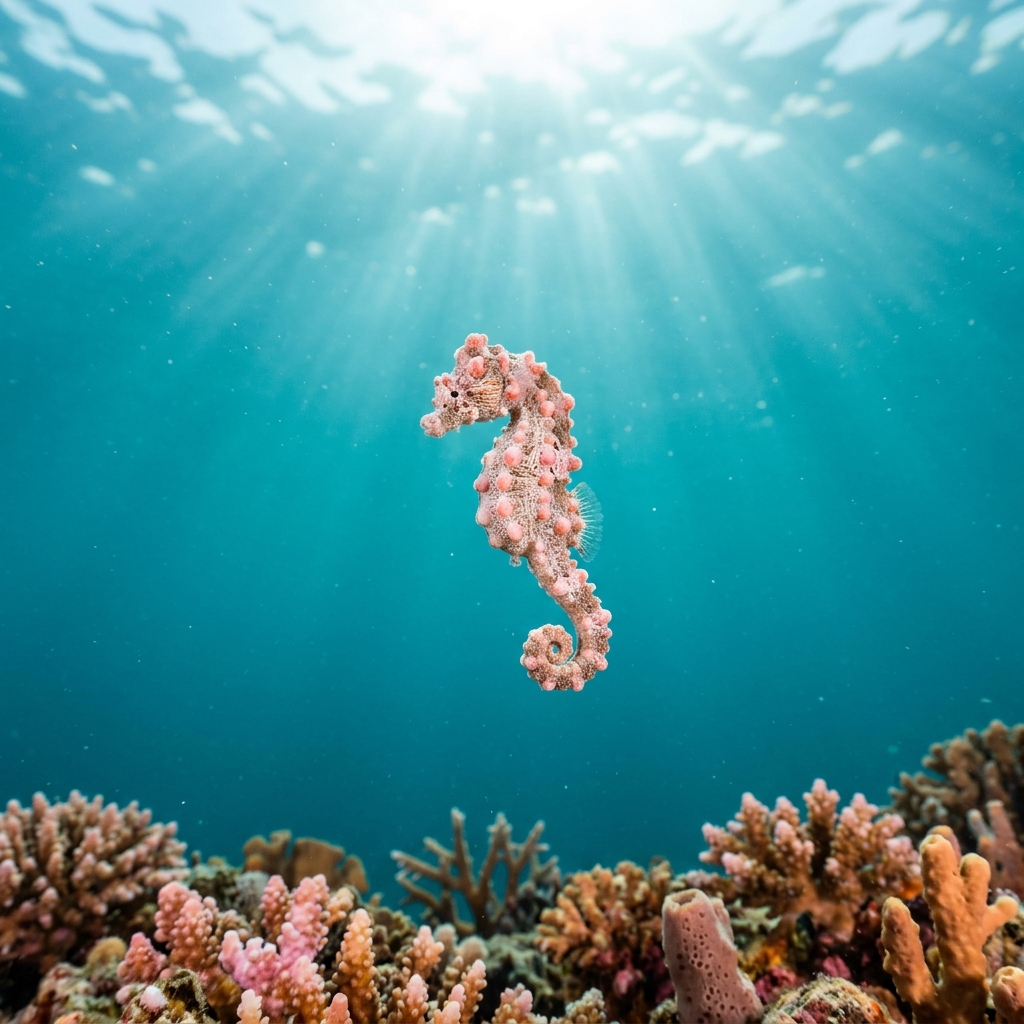
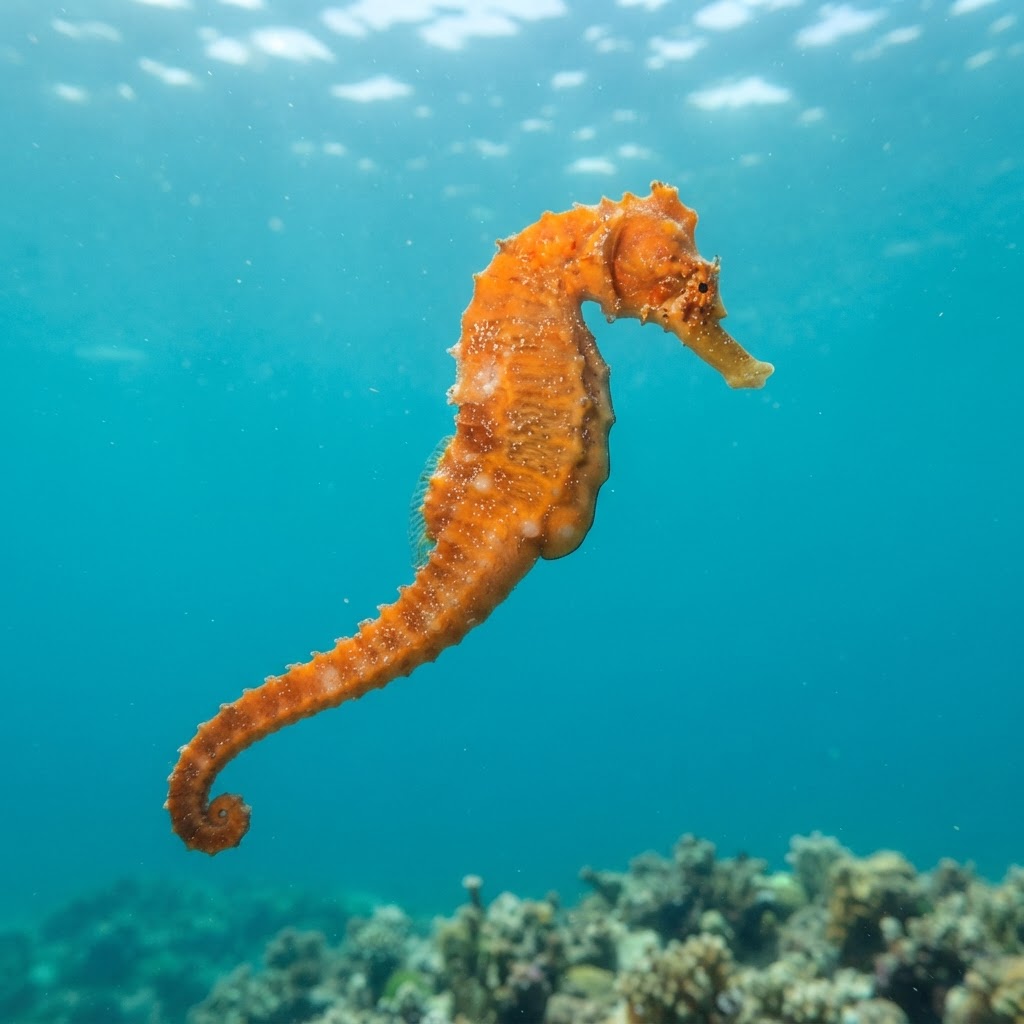
Grows to around 21 cm, one of the larger seahorse species you'll find on a reef, with a chunky ridged body and a long snout angled down from a bony head. Colour is highly variable, from mottled brown and grey to yellow or orange, often blotched or speckled, which helps it disappear against sponges and gorgonians. Look for the deep body ridges (bony rings) running down the trunk and the tightly curled prehensile tail wrapped around whatever it's holding onto.
Spends most of its time anchored by the tail to a sponge, gorgonian branch, or bit of rubble, swaying gently with the current rather than swimming off. It's a slow, deliberate feeder, sucking up tiny crustaceans through that tube-like snout, and tends to sit still and let divers approach rather than bolt. Best found by scanning structure closely at slow speed, since its camouflage does most of the work against detection.
Males carry the fertilised eggs in a front pouch and give birth to fully formed babies, sometimes hundreds at once, after a courtship dance with their partner.
Recorded in water from 19.1 to 28.5 C, a wide enough range that it turns up across the seasons rather than in one narrow window. Treat this as a year-round possibility rather than a seasonal target until more sightings are logged.
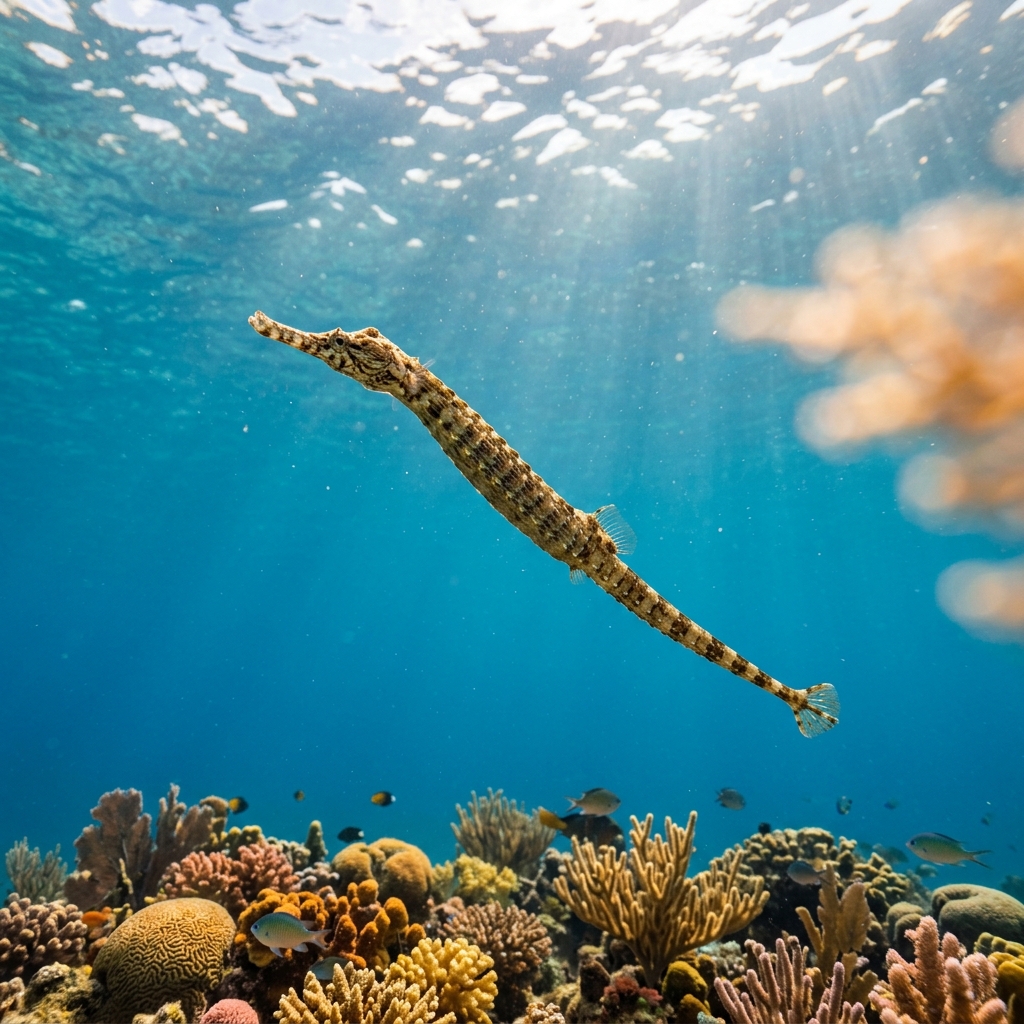
Reef neighbours a diver could mistake it for. Use the identification notes above to tell them apart.
Sighting data for this species is too sparse right now to name reliable regions with confidence. Known range covers the eastern Pacific from Baja California down to Peru and out to the Galapagos, where local divers do report it on rubble and reef slopes.
Mapping where Pacific Seahorse is logged…
Look for a large seahorse, up to about 21 cm, with a ridged bony body, a downward-curved snout, and a tightly coiled tail anchored to sponges or gorgonians. Colour varies a lot, from brown and grey to yellow or orange with mottling, so body shape and the ridged trunk are more reliable cues than colour.
They reach around 21 cm, making them one of the larger seahorse species divers are likely to encounter.
Sightings span water temperatures from 19.1 to 28.5 C with no strong seasonal pattern detected so far, so it's best treated as a year-round possibility rather than tied to one month or season.
No, they pose no threat to divers. They're small, slow, and rely on staying still and camouflaged rather than any kind of defence against a diver.
Males carry the eggs in a belly pouch after a courtship dance with a partner, and give birth to fully formed young once they're ready, sometimes in large numbers in a single brood.
Site and sighting data is aggregated from diver logs, iNaturalist and GBIF. For taxonomy and conservation status:
Ornate Ghostpipefish
1,155 sites