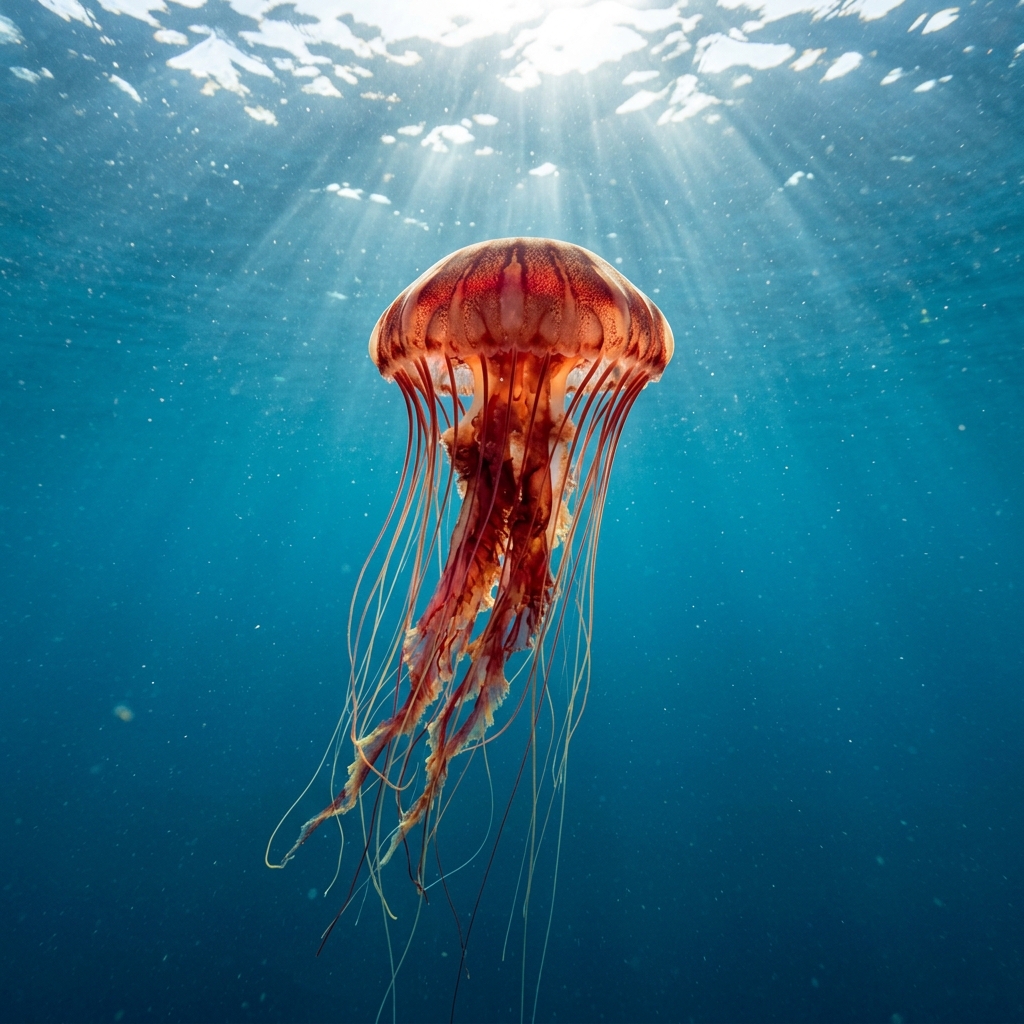
Cyanea ferruginea
Spot Pacific Lion's Mane Jellyfish in cold Pacific waters off British Columbia and the US Pacific Coast, mainly May to November.
Safety warning
This species can sting on contact with its tentacles, which may trail well beyond the body and can still sting after the animal is dead or washed up. Look but do not touch, and give it a wide berth.
If you're stung
Stinging tentaclesGeneral first-aid guidance, not a substitute for professional medical care. In an emergency, call your local emergency number.
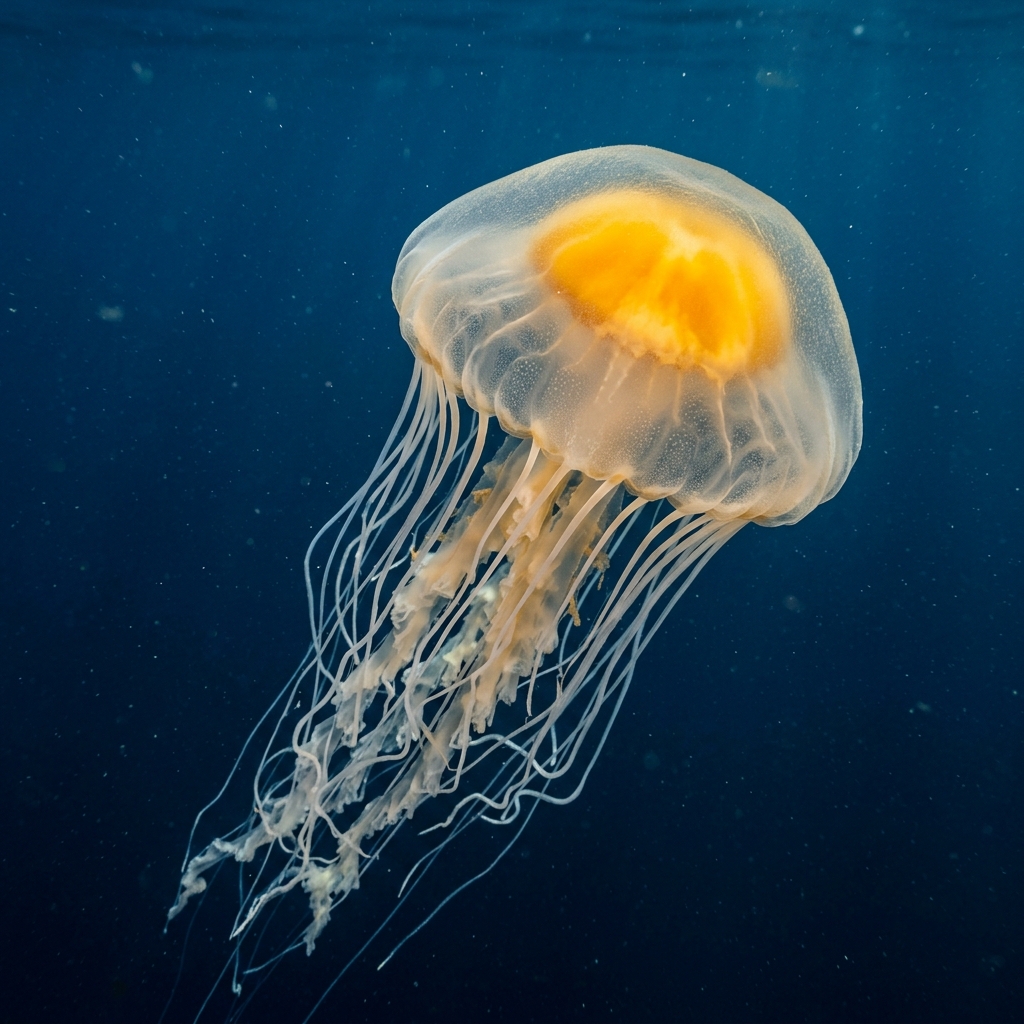
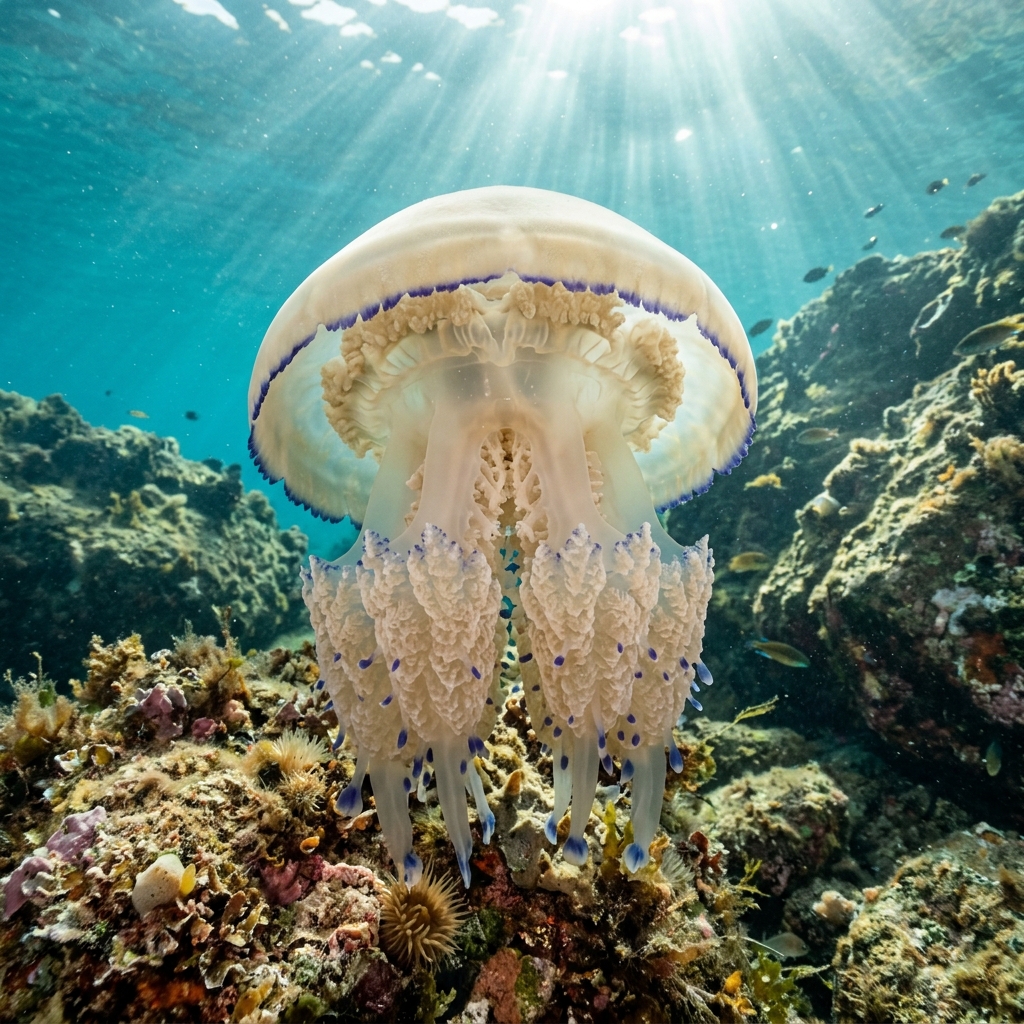
A medium-sized jellyfish, typically around 28 cm across, with a reddish-brown to rust-orange lobed bell that keys it apart from paler relatives. The underside carries dense clusters of tentacles and oral arms in similar warm, earthy tones. In cold, dim Pacific water the rusty colouration is the main ID feature, it reads distinctly darker and more orange-brown than the yellow of an egg-yolk jelly or the translucent blue of other open-water species.
As a pelagic (open-water) species, it spends its time drifting through the water column rather than associating with reefs or the seafloor. Encounters tend to be brief, it pulses past on the current and is gone before you have long to study it. There is little data on how it reacts to divers specifically, but its passive, drift-based lifestyle means it is unlikely to change course for you in either direction.
It occupies a notably cold thermal niche, observed in water between roughly 8 and 11.5 °C, conditions that many divers only experience in drysuit territory along the Pacific Northwest coast.
In the Northern Hemisphere, sightings concentrate between May and November, aligning with the productive upwelling season in Pacific coastal waters.
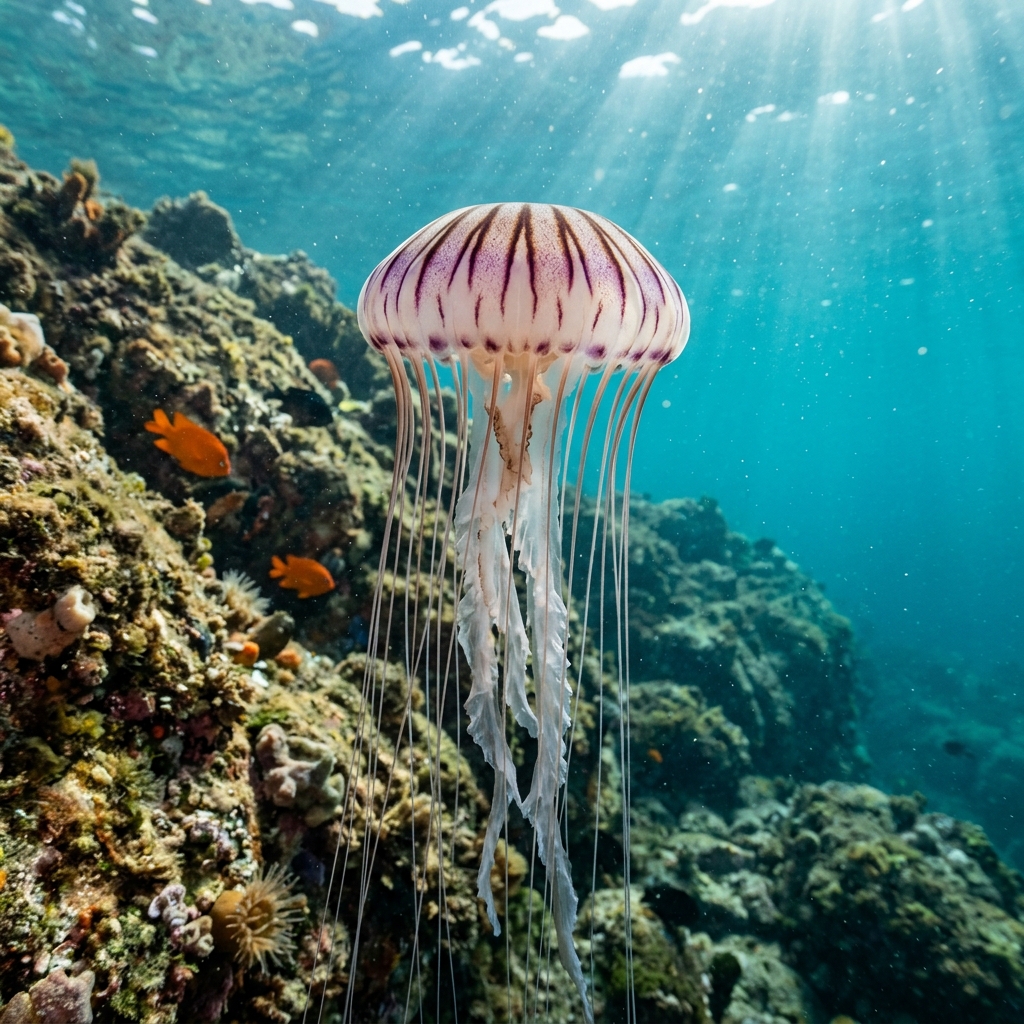
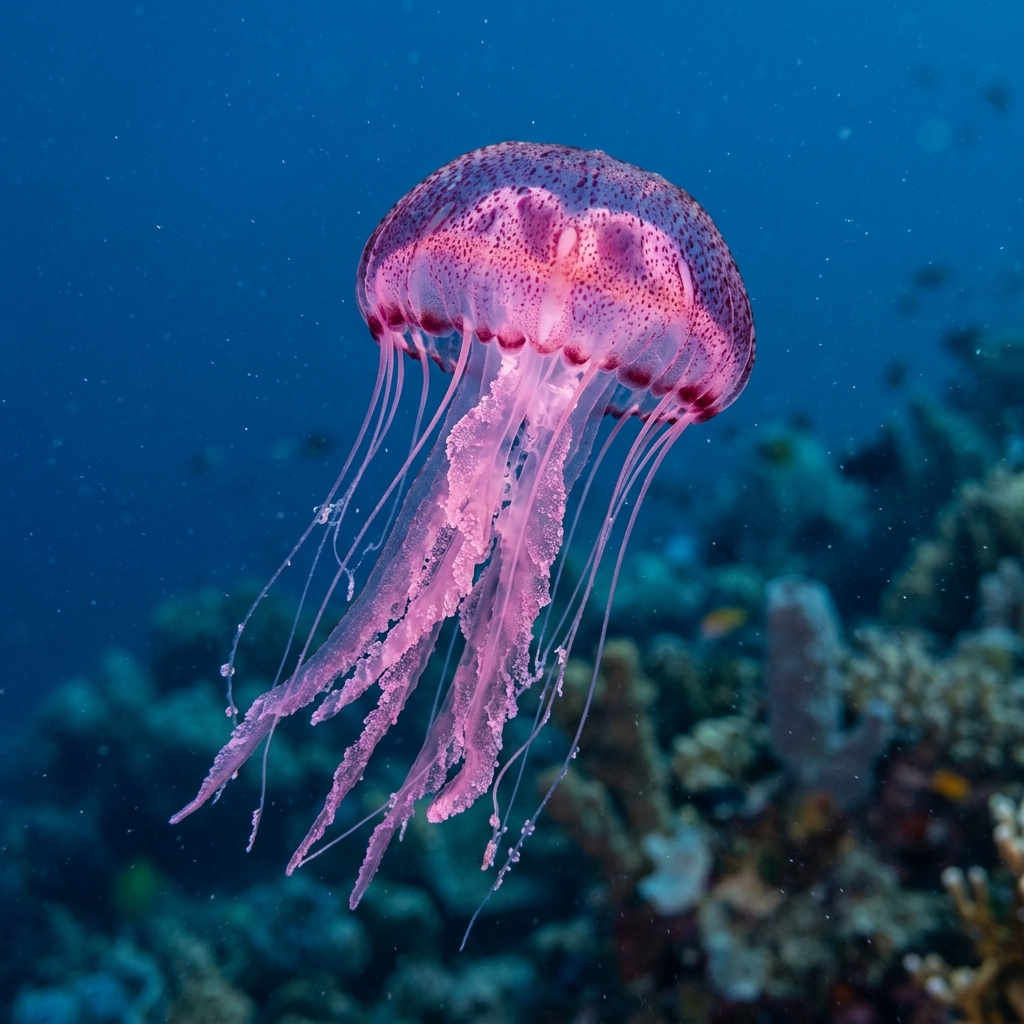
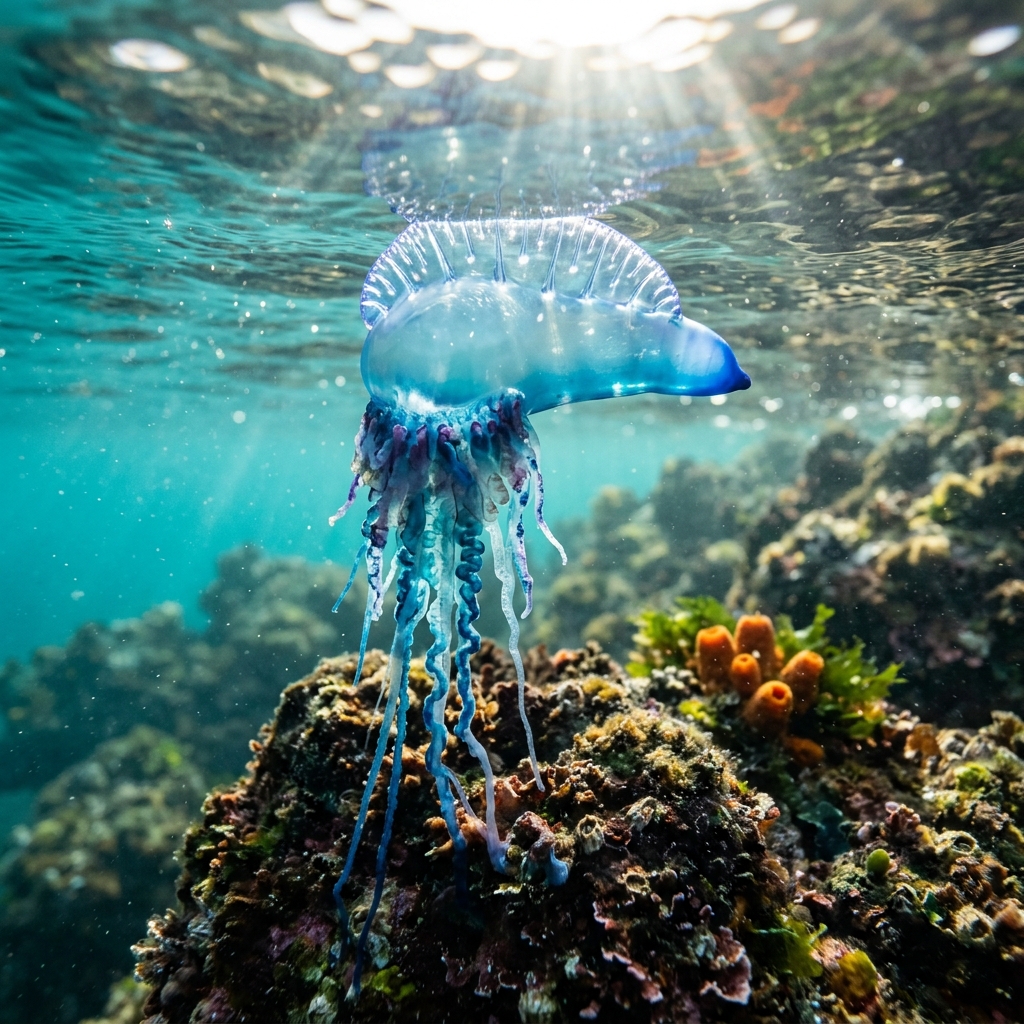
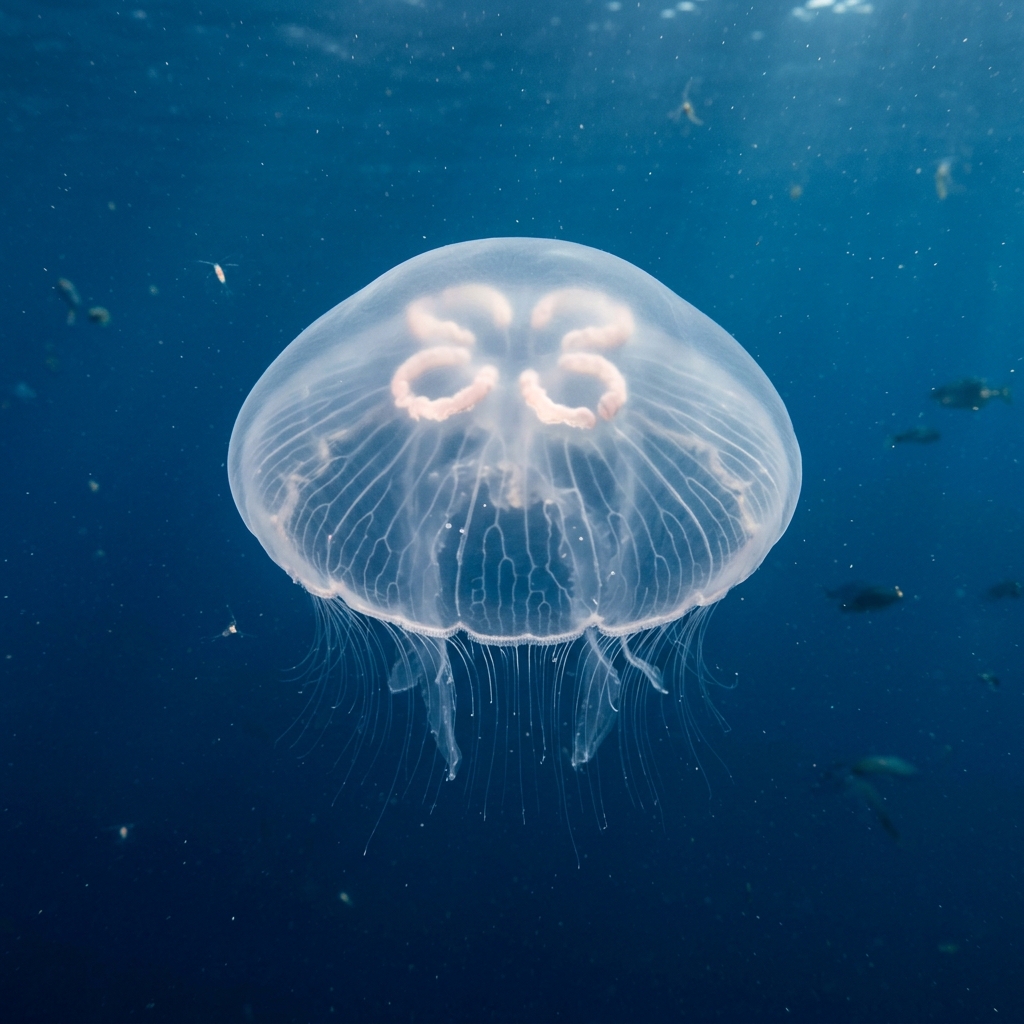
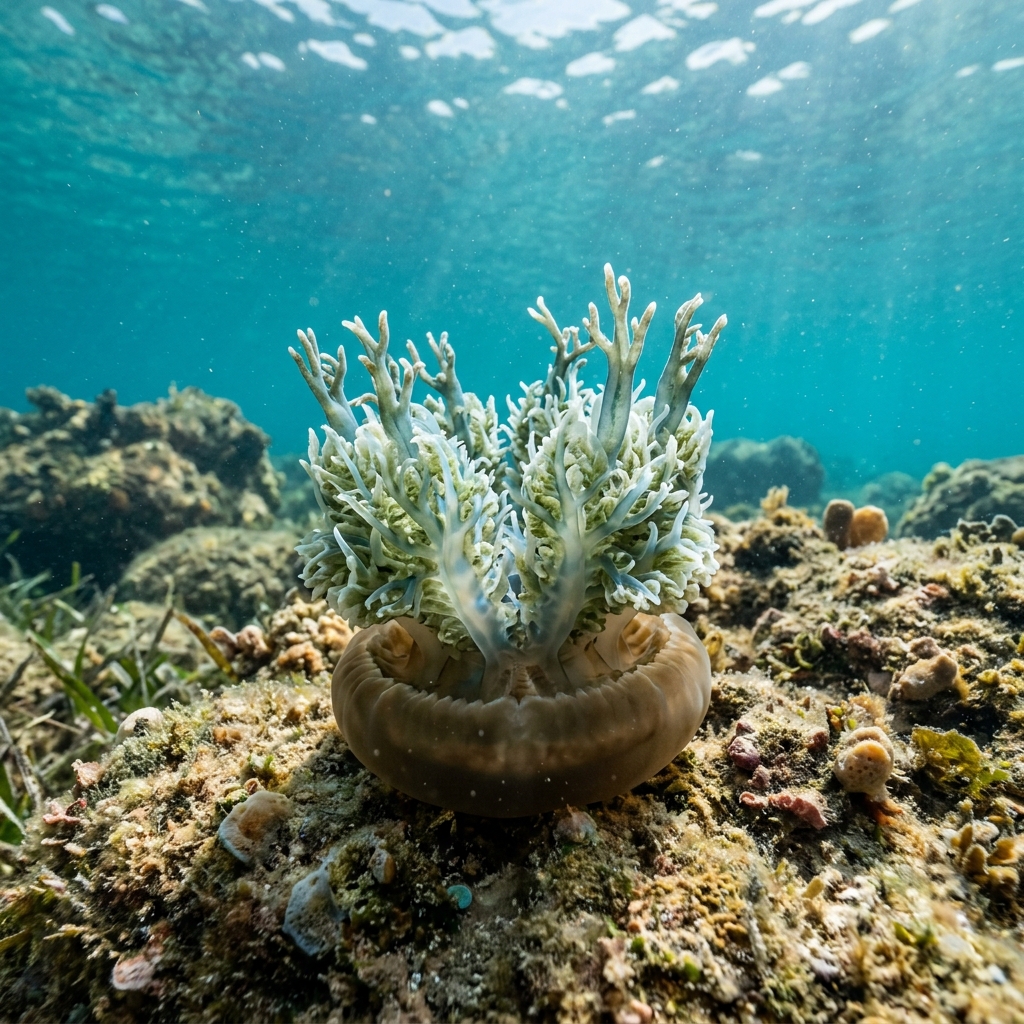
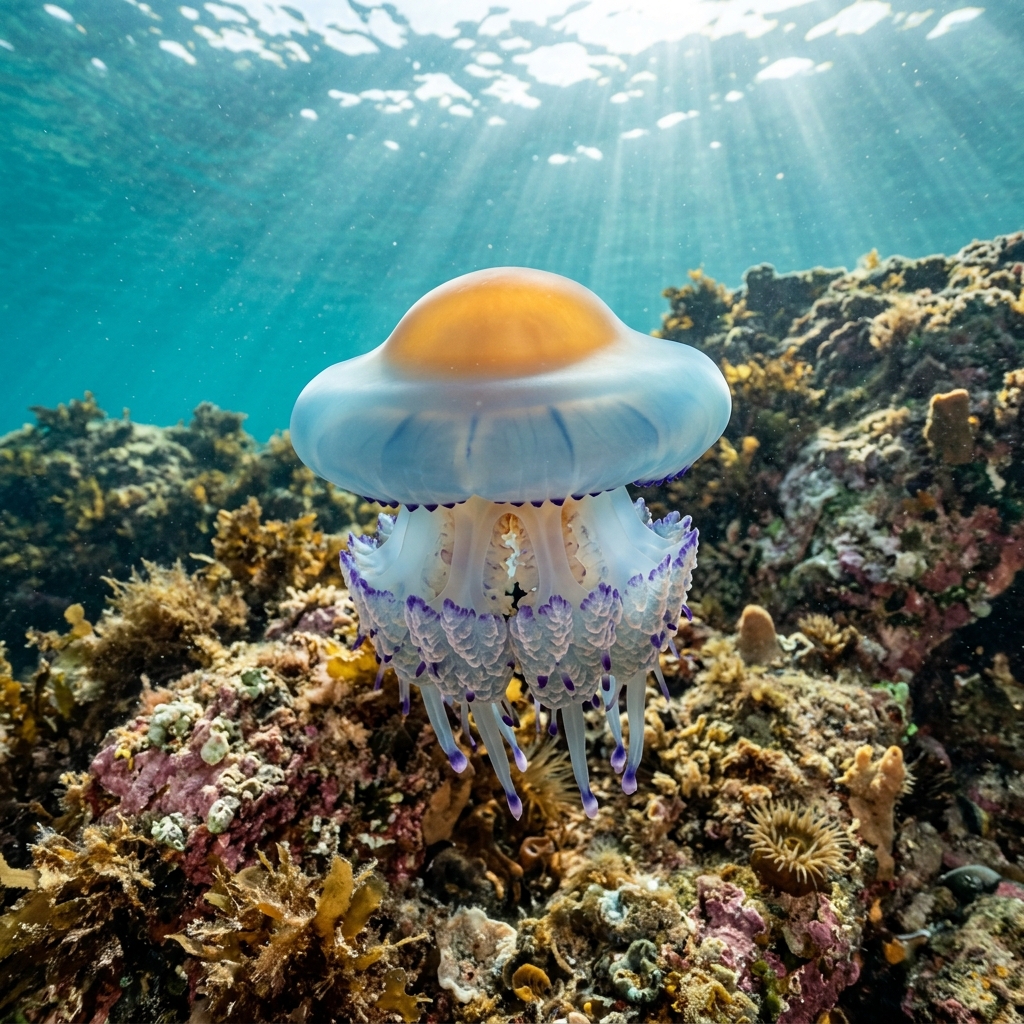
Reef neighbours a diver could mistake it for. Use the identification notes above to tell them apart.
Most sightings come from the British Columbia Coast and the US Pacific Coast, making these cold northeastern Pacific waters the core of its known range. Alaska adds a smaller but notable cluster of sites, and a handful of records exist from the British Virgin Islands, though those are range-model projections rather than confirmed diver observations. Within North America, British Columbia and the Pacific Coast of the United States are by far your best options.
Mapping where Pacific Lion's Mane Jellyfish is logged…
The strongest diver records come from the British Columbia Coast in Canada and the US Pacific Coast, with a smaller number of sites in Alaska. These cold northeastern Pacific waters are your best bet for an encounter.
Diver sightings in the Northern Hemisphere concentrate from May through November. This overlaps with the productive coastal upwelling season off British Columbia and the US Pacific Coast, when jellyfish numbers tend to peak.
Look for the rust-orange to reddish-brown lobed bell, around 28 cm across, with matching warm-toned tentacles beneath. The deep, earthy colouration is the clearest field mark, it looks noticeably darker and more orange than most other jellyfish you will encounter in these waters.
Typical individuals measure around 28 cm across the bell. This makes them a medium-sized jellyfish, large enough to spot in the water column but considerably smaller than the Atlantic lion's mane, which can reach over a metre.
They are not considered dangerous to divers. As with any jellyfish, unnecessary contact is best avoided, but there are no specific hazard warnings associated with this species. Its pelagic drift behaviour means encounters are typically brief and at a comfortable distance.
Site and sighting data is aggregated from diver logs, iNaturalist and GBIF. For taxonomy and conservation status:
Moon Jellyfish
1,766 sites