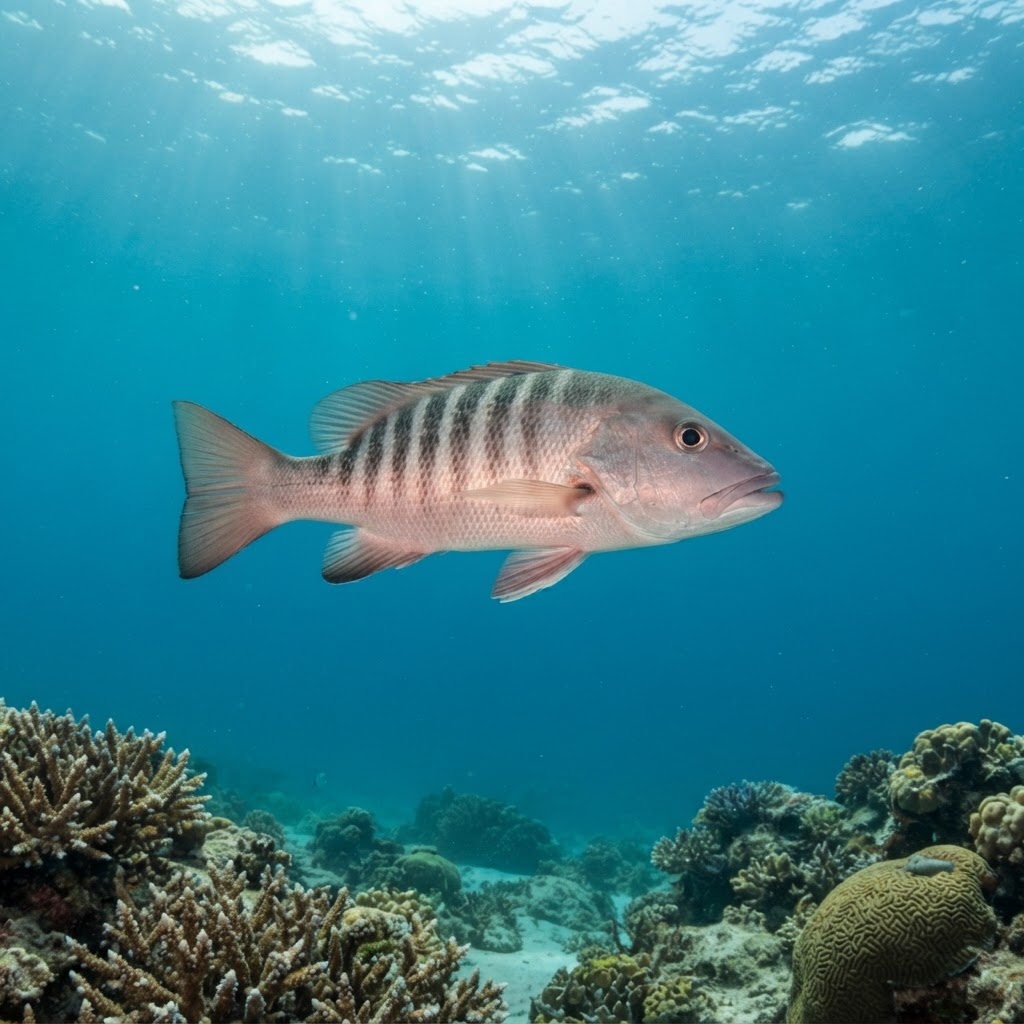
Lutjanus novemfasciatus
Chunky reef predator up to 119cm, most reliably logged around Baja California, Cocos Island and the Galápagos in 22-29C water.
Safety warning
Marked dangerous to divers, most likely due to its size, powerful jaws and the risk of a defensive bite if cornered, provoked or hand-fed rather than any tendency to attack unprovoked. Give it space, do not corner it in a cave or crevice, and avoid feeding it, as habituated fish that associate divers with food are the ones most likely to bite.
Handle with care
Ciguatera risk if eatenGeneral first-aid guidance, not a substitute for professional medical care. In an emergency, call your local emergency number.
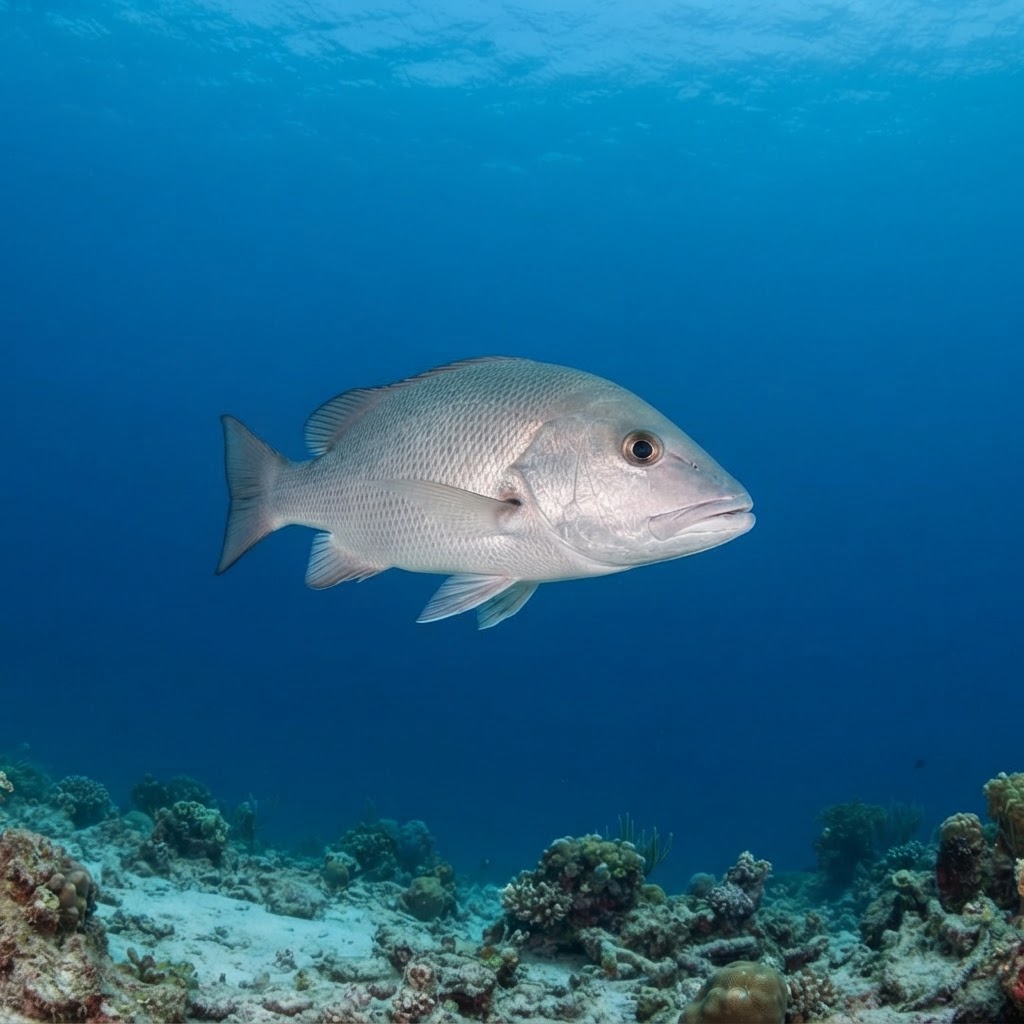
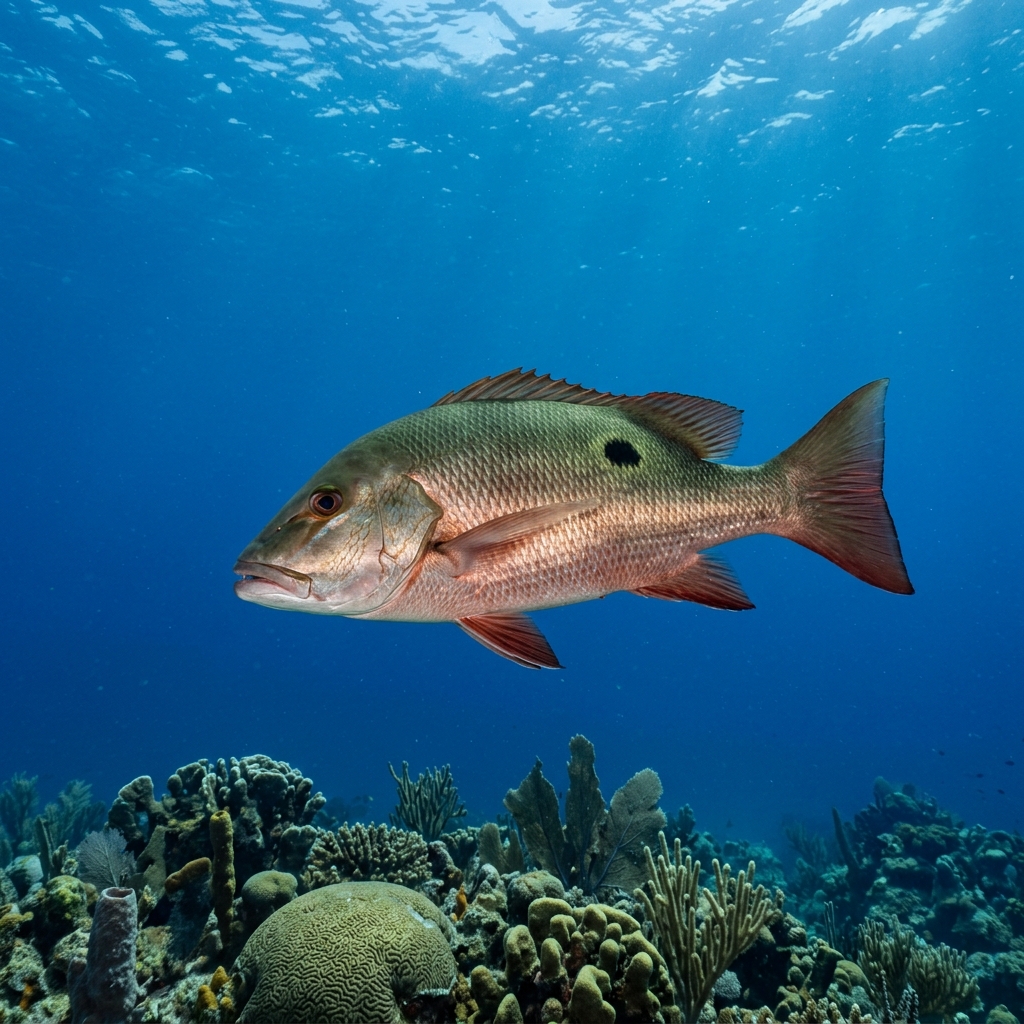
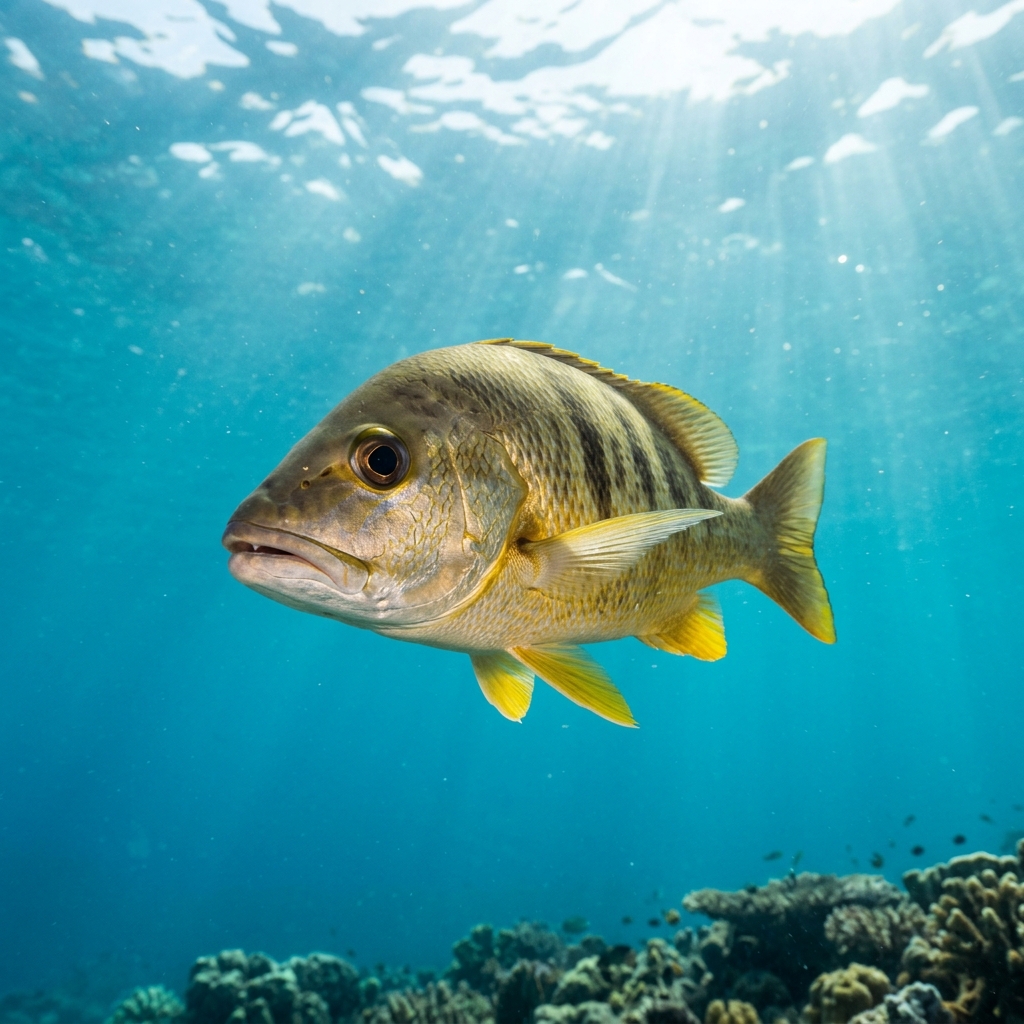
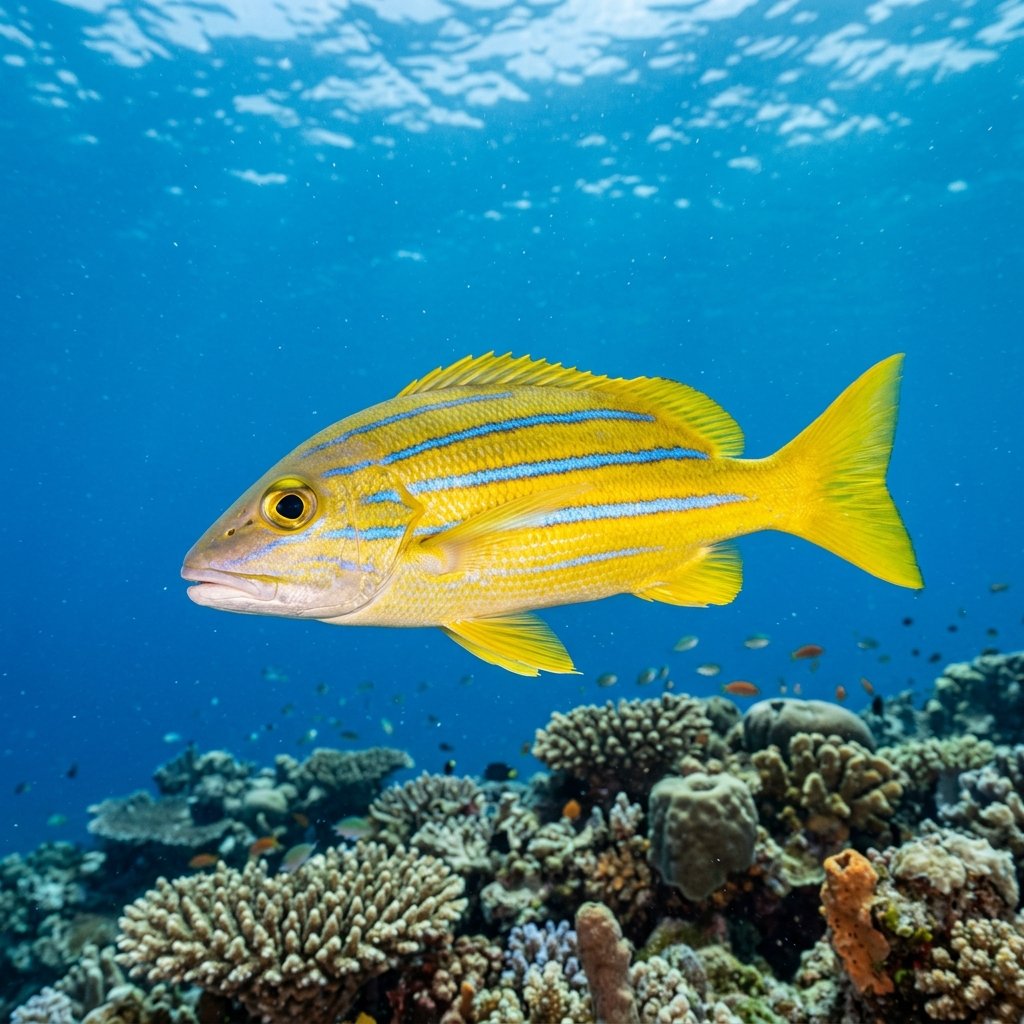
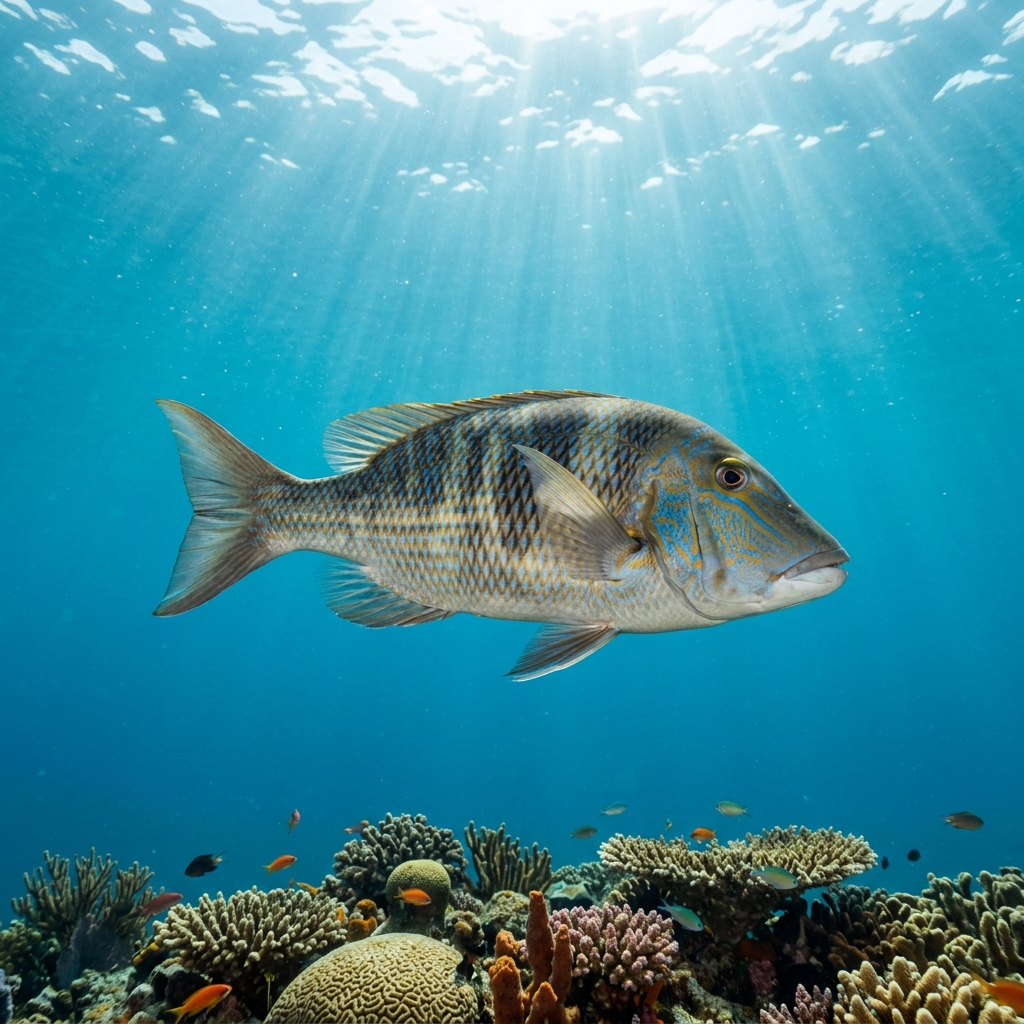
Bulky, deep-bodied snapper reaching well over a metre, with a brownish-grey to copper body that can show faint dark bars along the flanks. Look for the heavy, blunt head, thick lips and the canine-like teeth at the front of the jaw that give it the name. It often holds close to structure rather than swimming in open water, which combined with its bulk and dull colouring makes it easy to mistake for a boulder until it moves.
Usually seen singly or in small loose groups tucked against rocky ledges, cave mouths or wreck structure rather than out in the open. It tends to hold its ground or move off slowly rather than bolt, so a calm, no-chase approach usually gets you a good look. Most sightings are on cooler, structure-heavy sites, and it is logged as uncommon rather than a guaranteed encounter at the vast majority of these locations.
It is one of the larger snappers in the eastern Pacific, and big adults will sometimes stake out a favourite ledge or crevice that local divers and guides come to recognise as home to a particular fish.
No clear seasonal pattern shows up in the data, so treat it as a year-round sighting on the eastern Pacific coast. Water in its comfort range (22.4 to 29.1C) holds across most of the year at these sites, so timing your trip around the target region's general dive season matters more than chasing a snapper season.
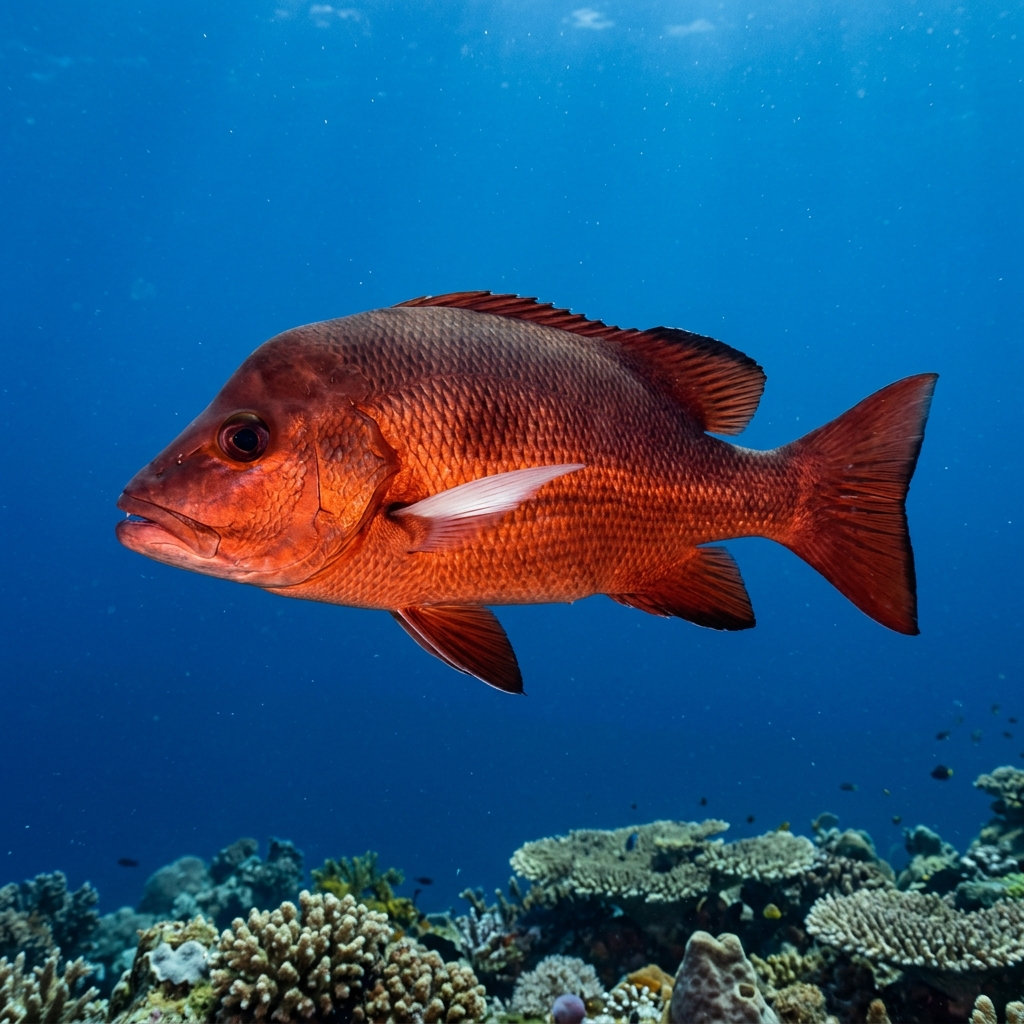
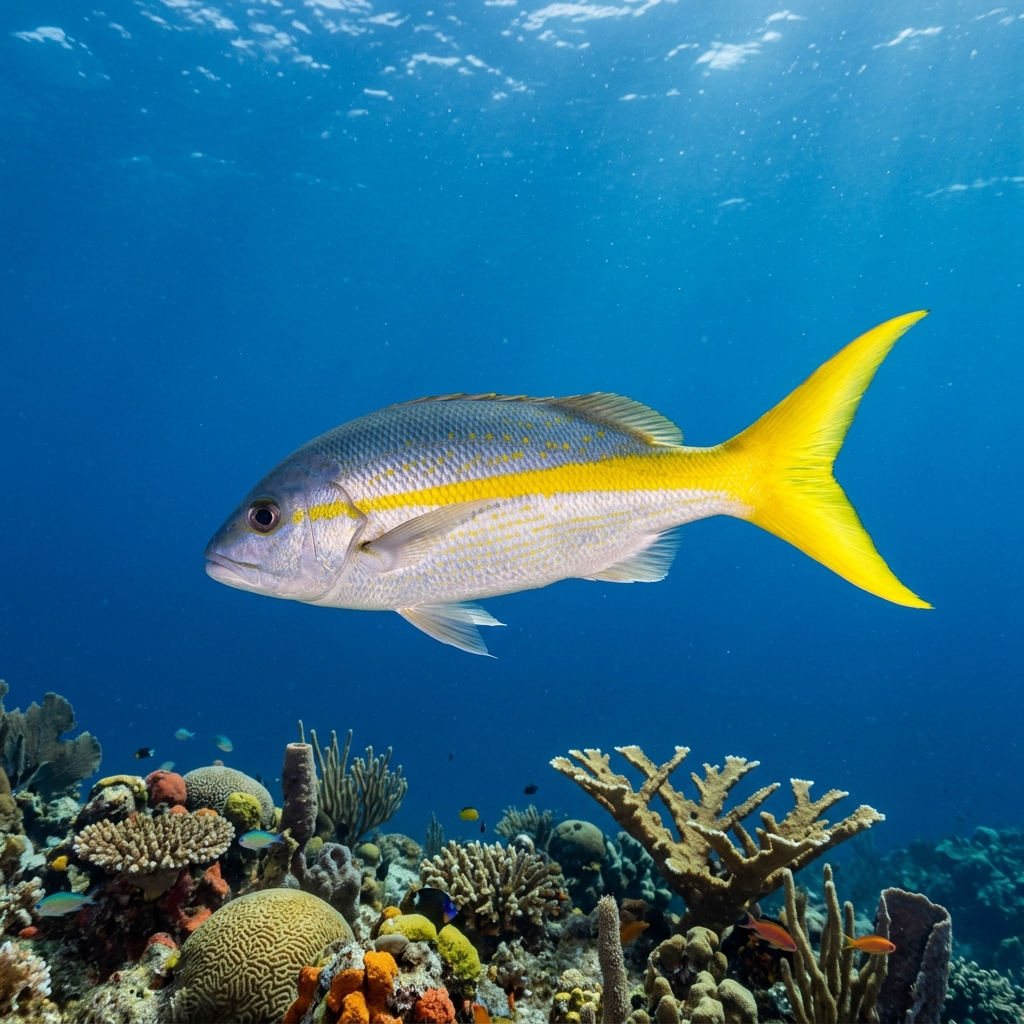
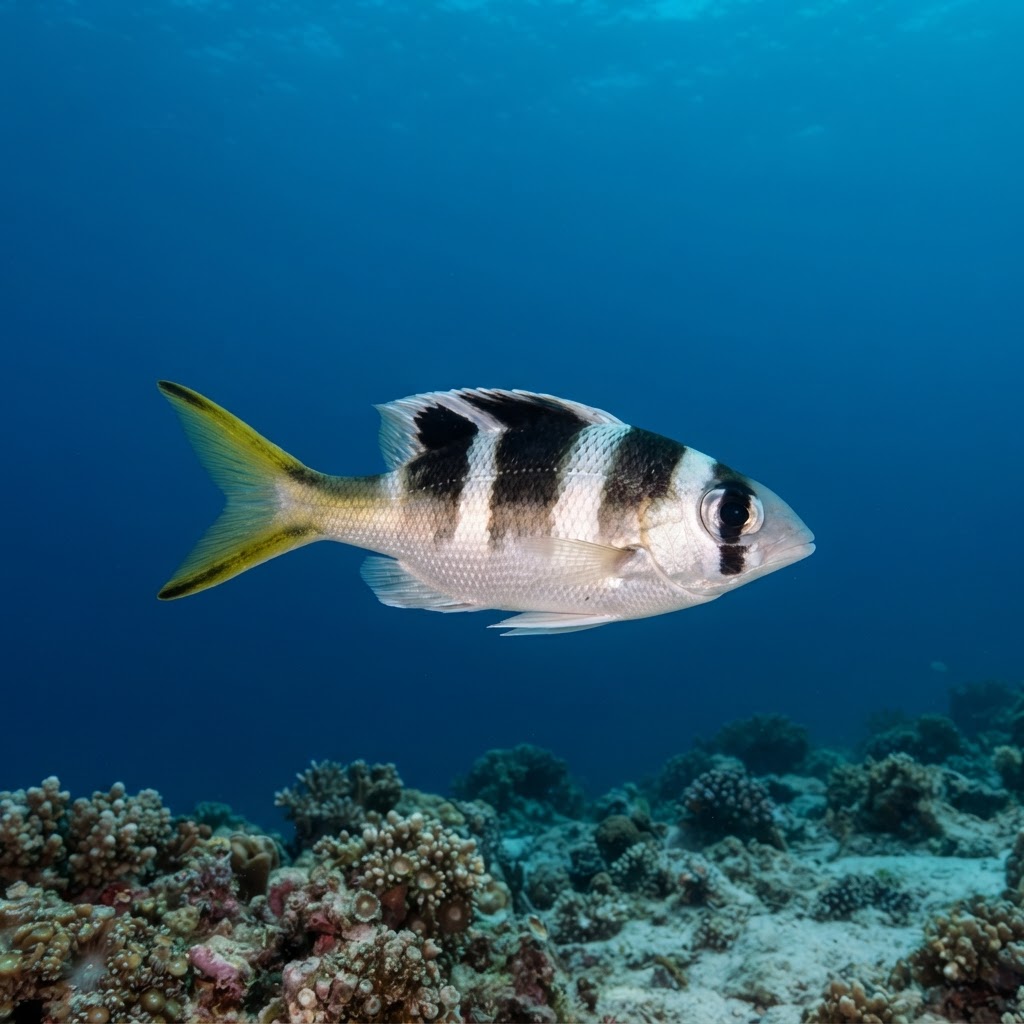
Reef neighbours a diver could mistake it for. Use the identification notes above to tell them apart.
Most consistently logged around Baja California and the Pacific Coast of Mexico, with strong showings in Costa Rica's South Pacific and Cocos Island, Panama's Pacific Coast and the Galápagos Islands in Ecuador. Across all four countries it turns up mainly around rocky reefs and volcanic structure rather than open sand or coral gardens.
Mapping where Pacific Dog Snapper is logged…
Best chances are along Baja California and the Pacific Coast of Mexico, Costa Rica's South Pacific and Cocos Island, Panama's Pacific Coast, and the Galápagos Islands in Ecuador. It favours rocky and volcanic reef structure over coral or sand.
There is no strong seasonal signal in the data, so it is best treated as a year-round sighting. It is recorded in water from 22.4 to 29.1C, a range that holds for most of the year at its eastern Pacific sites.
They are listed as dangerous, mainly because of their size and strong jaws rather than aggression. Keep your distance, never corner one, and do not attempt to feed it to avoid provoking a defensive bite.
Look for a large, heavy-bodied snapper over a metre long with a brownish-grey to copper body, faint bars on the flanks, a blunt head and thick lips with visible canine teeth. It usually sits close to rocky structure rather than swimming in open water.
They can reach around 119cm, making them one of the larger snapper species divers encounter in the eastern Pacific.
Site and sighting data is aggregated from diver logs, iNaturalist and GBIF. For taxonomy and conservation status:
Emperor
2,052 sites