Caranx caninus
Deep-bodied silver jack seen rarely along Mexico's Pacific Coast and Costa Rica's Central Pacific, in water from 13 to 22C.
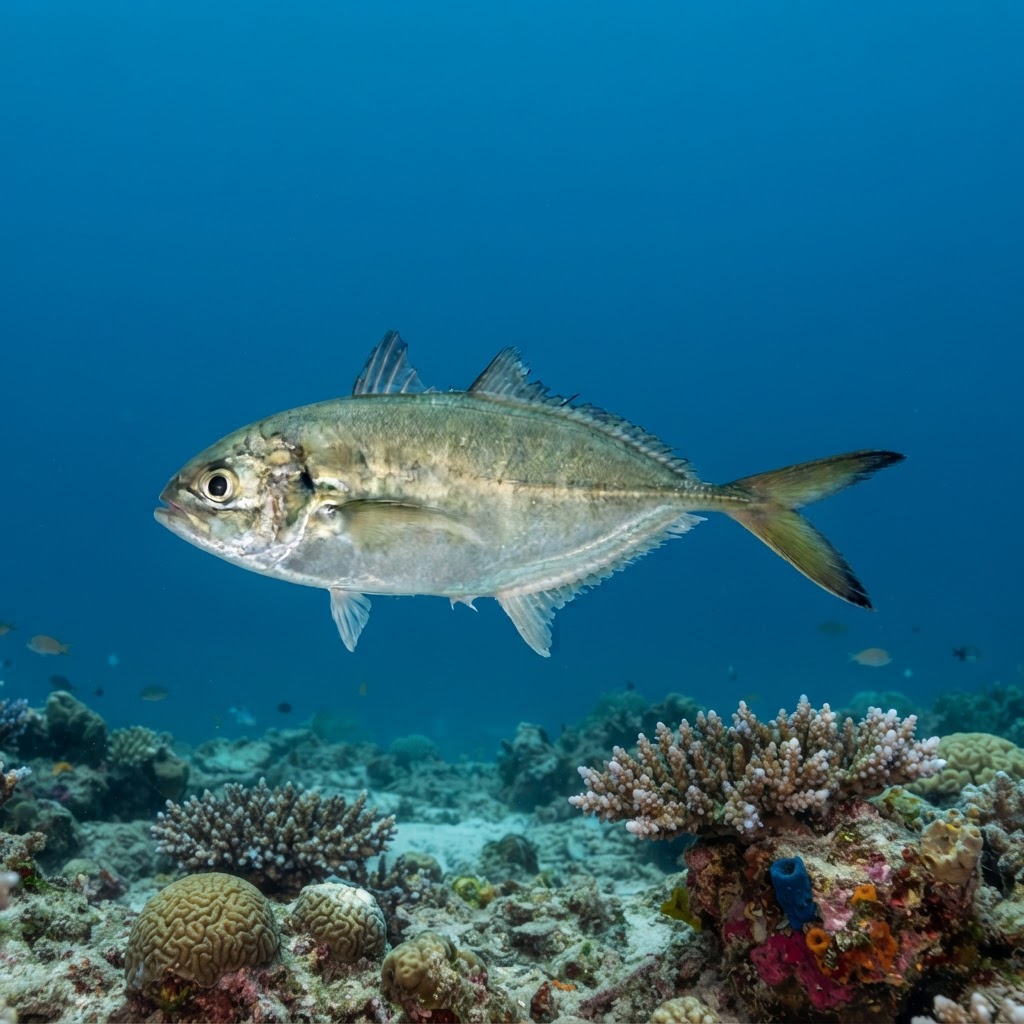
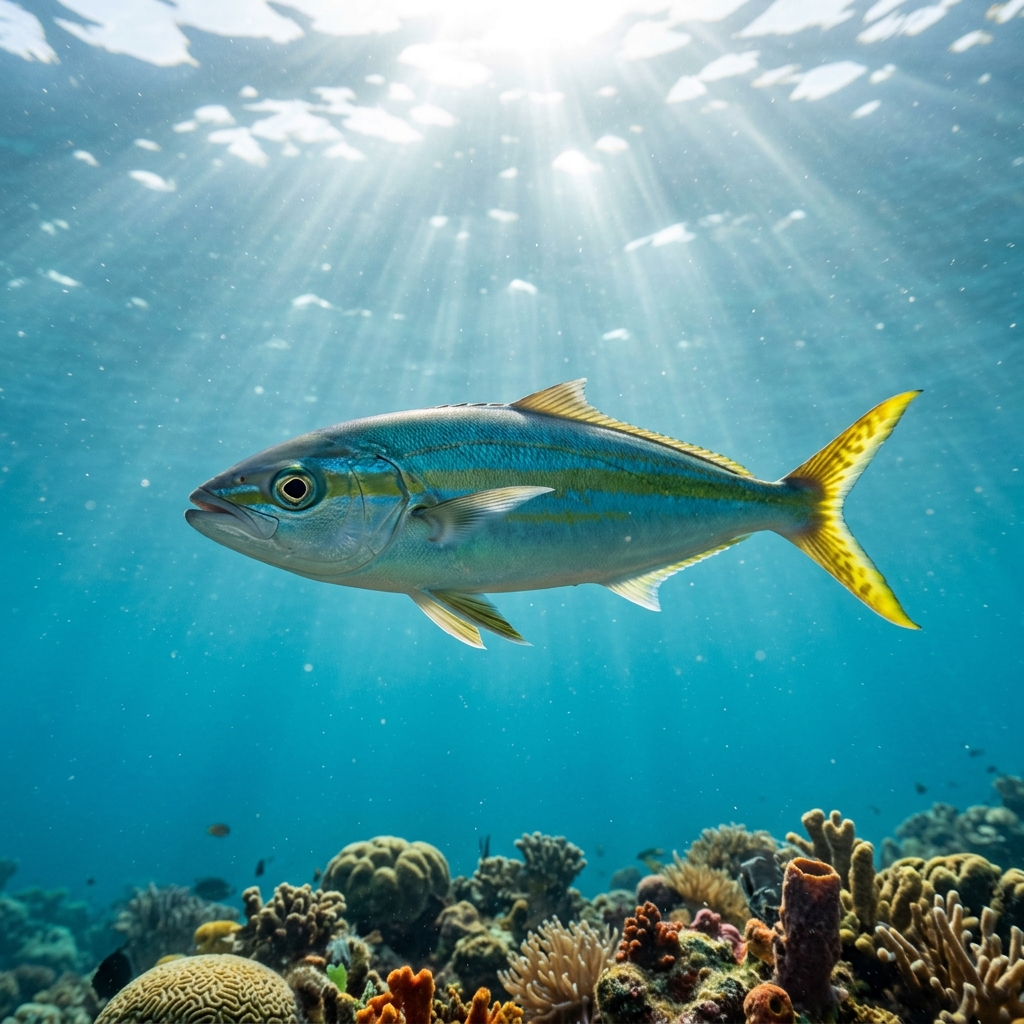
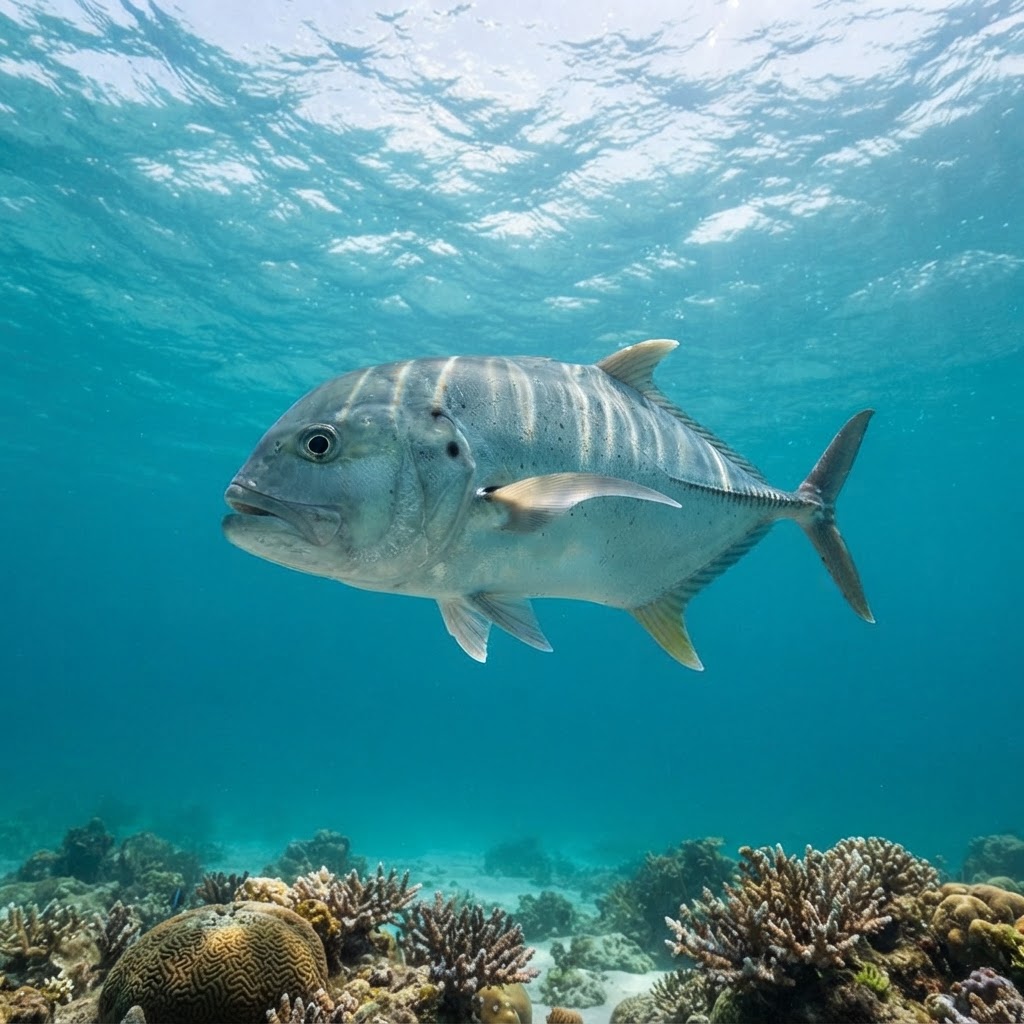
Deep, laterally compressed body with a steep forehead profile and a noticeably curved lateral line lined with bony scutes toward the tail. Colour runs silver to olive on the back with a golden or brassy sheen on the flanks, and a dark spot sits on the upper edge of the gill cover, another on the pectoral fin base. At around 71 cm they read as a solid, muscular fish rather than a slender baitfish, usually moving with purpose rather than drifting.
Divers mostly encounter it alone or in small loose groups cruising over rocky reef and open sand rather than schooling tightly like some jacks. It tends to keep its distance and moves off if approached directly, spending time in mid-water where visibility allows it to scan for baitfish. Most sightings logged are rare rather than frequent, so a sighting feels more like a bonus than a guarantee at most of these sites.
Crevalle jacks are active mid-water hunters that will sometimes flash silver-gold as they turn to chase baitfish, a quick colour change that can catch a diver's eye before the fish itself is spotted.
No clear seasonal pattern shows up in the data, so treat this as a year-round possibility wherever it is logged. It has been recorded across a wide temperature range from around 13 to 22C, suggesting it tolerates cooler upwelling conditions as well as warmer surface water.
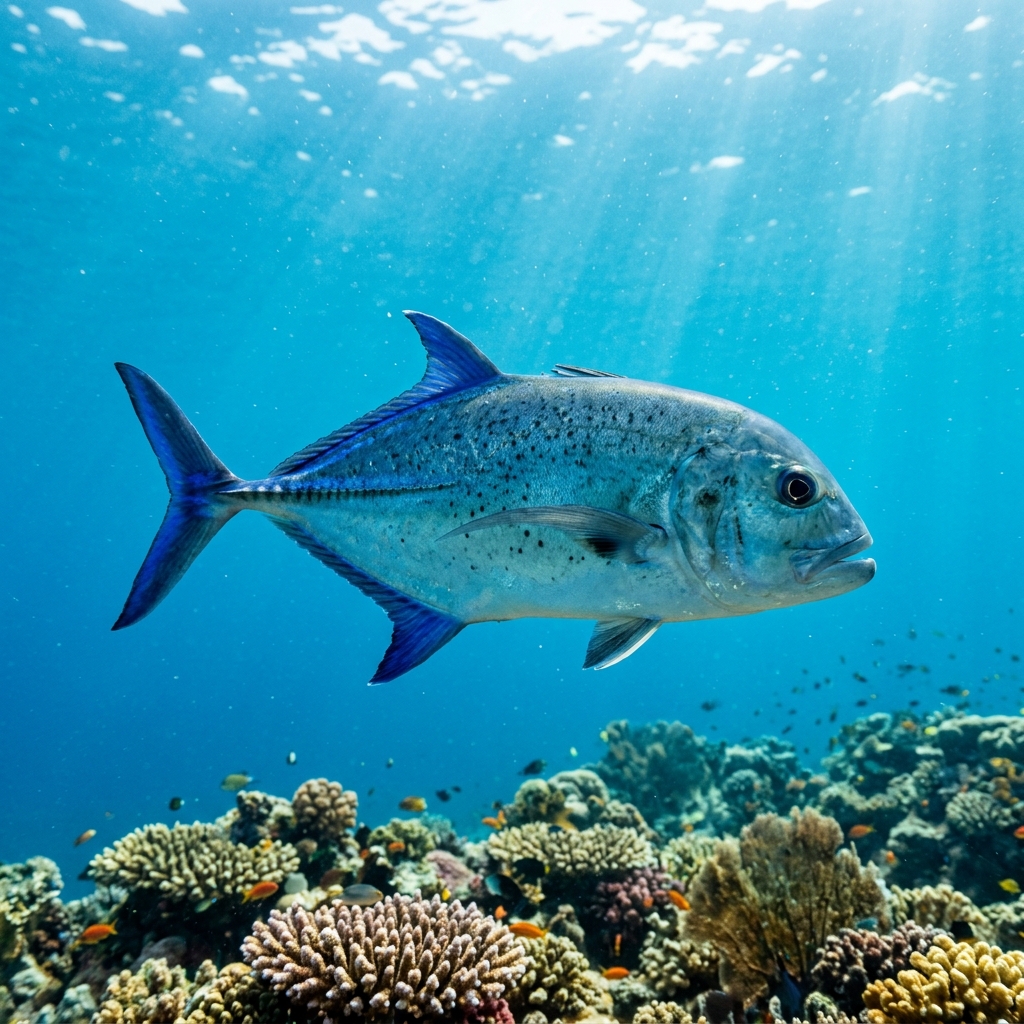
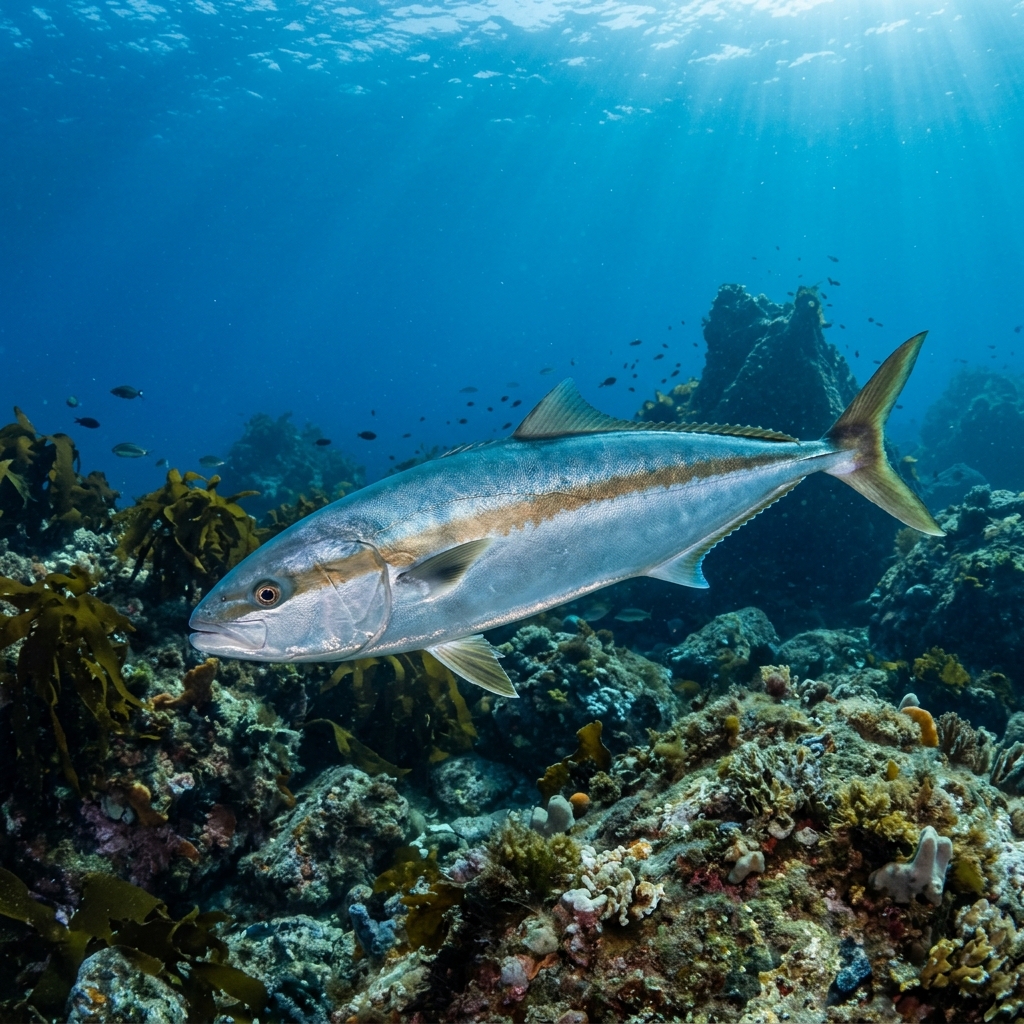
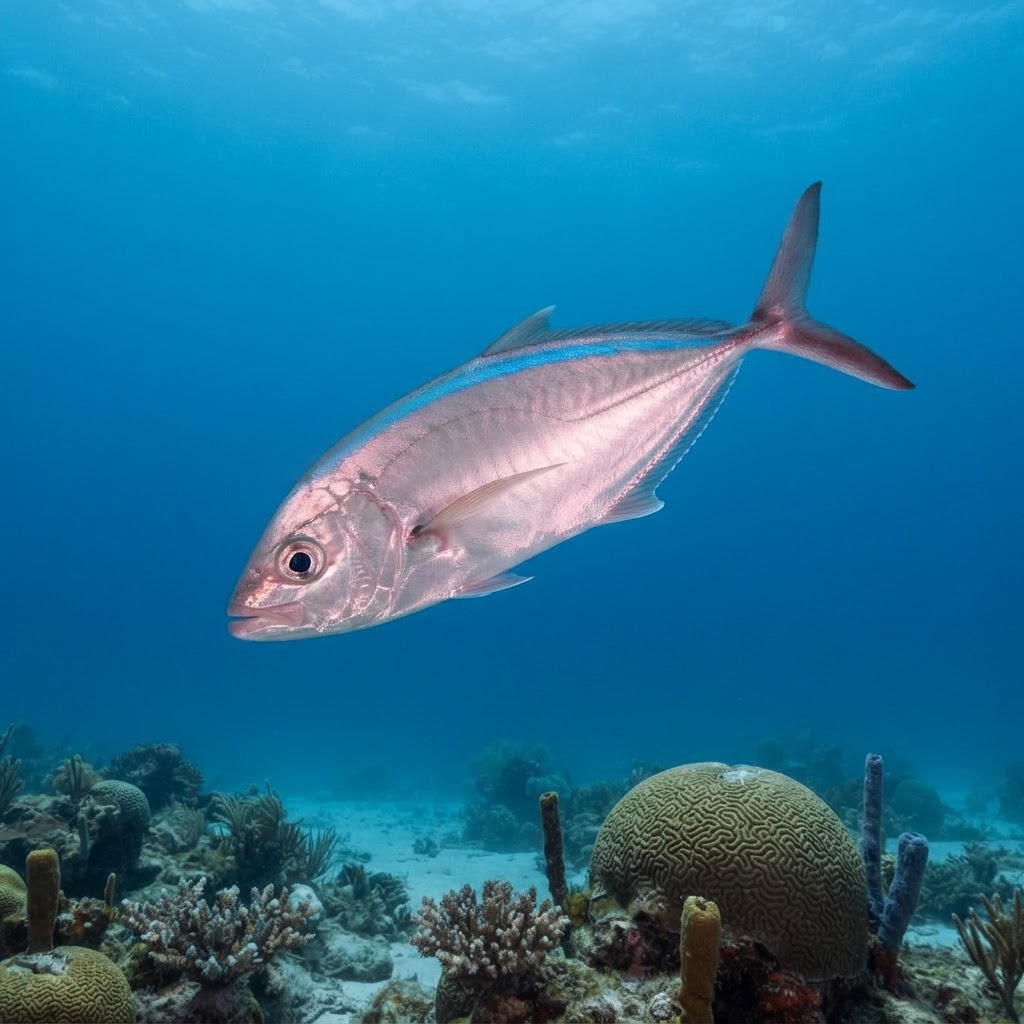
Reef neighbours a diver could mistake it for. Use the identification notes above to tell them apart.
Most consistently logged along Mexico's Pacific Coast and Baja California, with Costa Rica's Central Pacific the other reliable spot for it. Mexico accounts for the bulk of recorded sightings, so sites along the mainland Pacific coast and the Baja peninsula are the best bet.
Mapping where Pacific Crevalle Jack is logged…
Mexico is the strongest region, particularly the Pacific Coast and Baja California, with Costa Rica's Central Pacific also producing regular sightings. Outside these two countries it has not been logged with any consistency.
There is no strong seasonal signal in the sighting data, so it is best treated as a year-round possibility. It has been recorded in water from roughly 13 to 22C, so temperature alone does not narrow down a season.
Look for a deep, silver-gold body with a steep-fronted head, a dark spot on the gill cover, and another at the base of the pectoral fin. It moves with a purposeful, muscular swim rather than the tight schooling style of some other jacks.
Typical adults seen by divers run around 71 cm, a solid mid-sized jack rather than a giant of the family.
At most sites where it has been recorded, divers log it as rare, with only a couple of locations reporting it as common or uncommon. Expect a possible encounter rather than a guaranteed one.
Site and sighting data is aggregated from diver logs, iNaturalist and GBIF. For taxonomy and conservation status:
Bigeye Trevally
2,591 sites