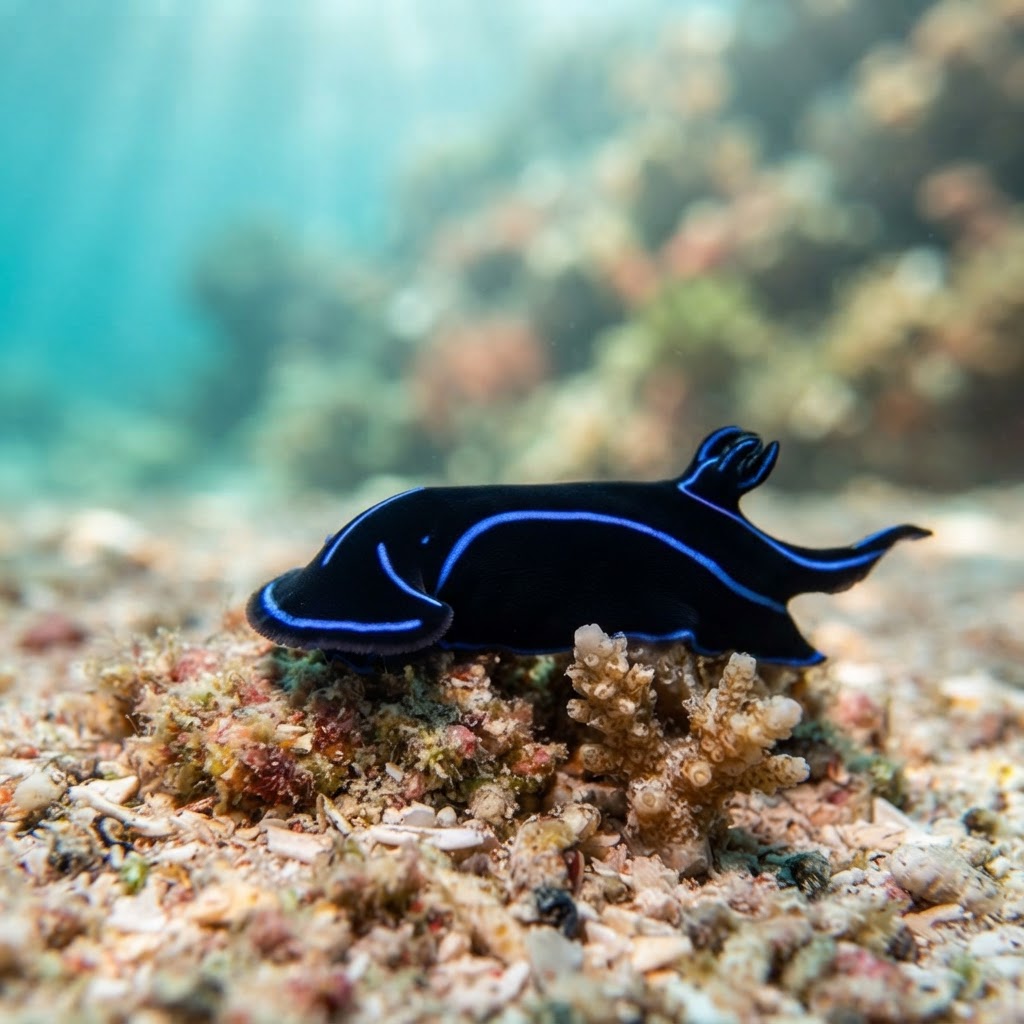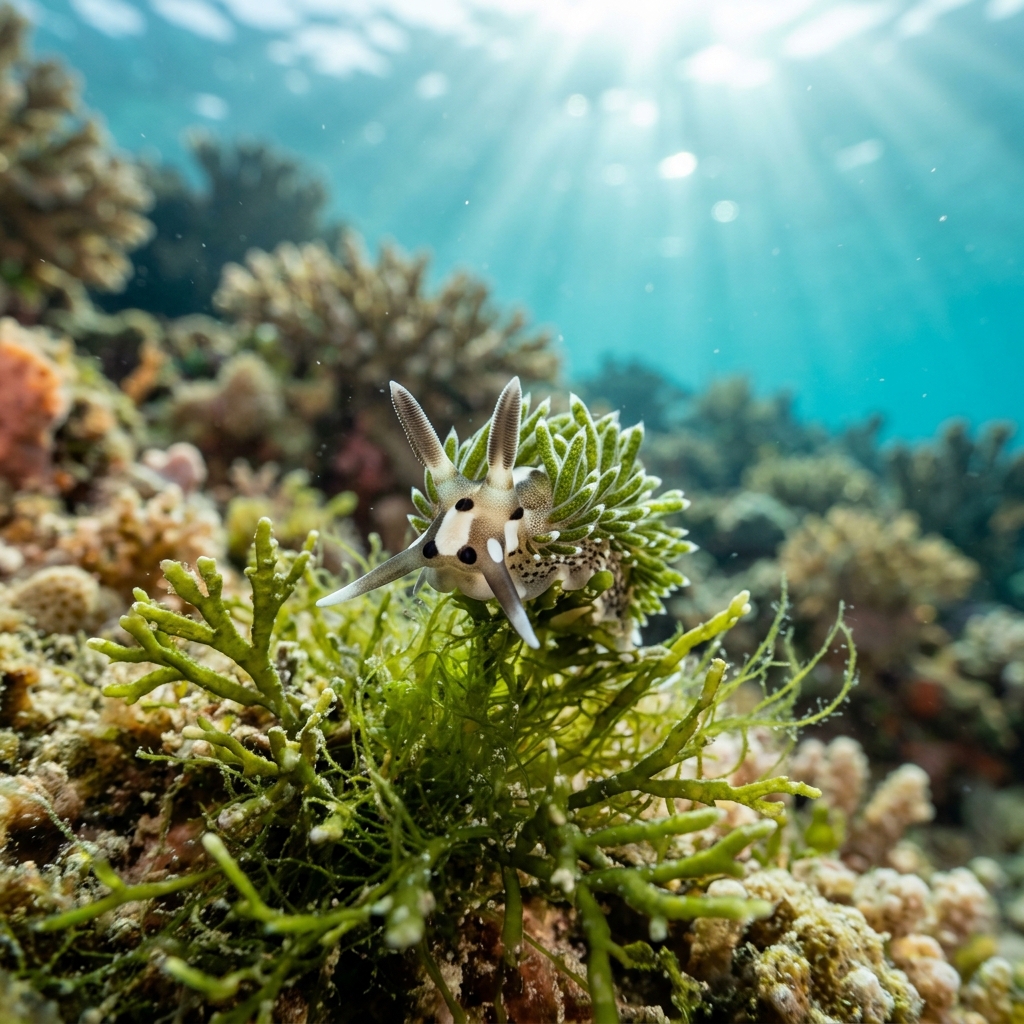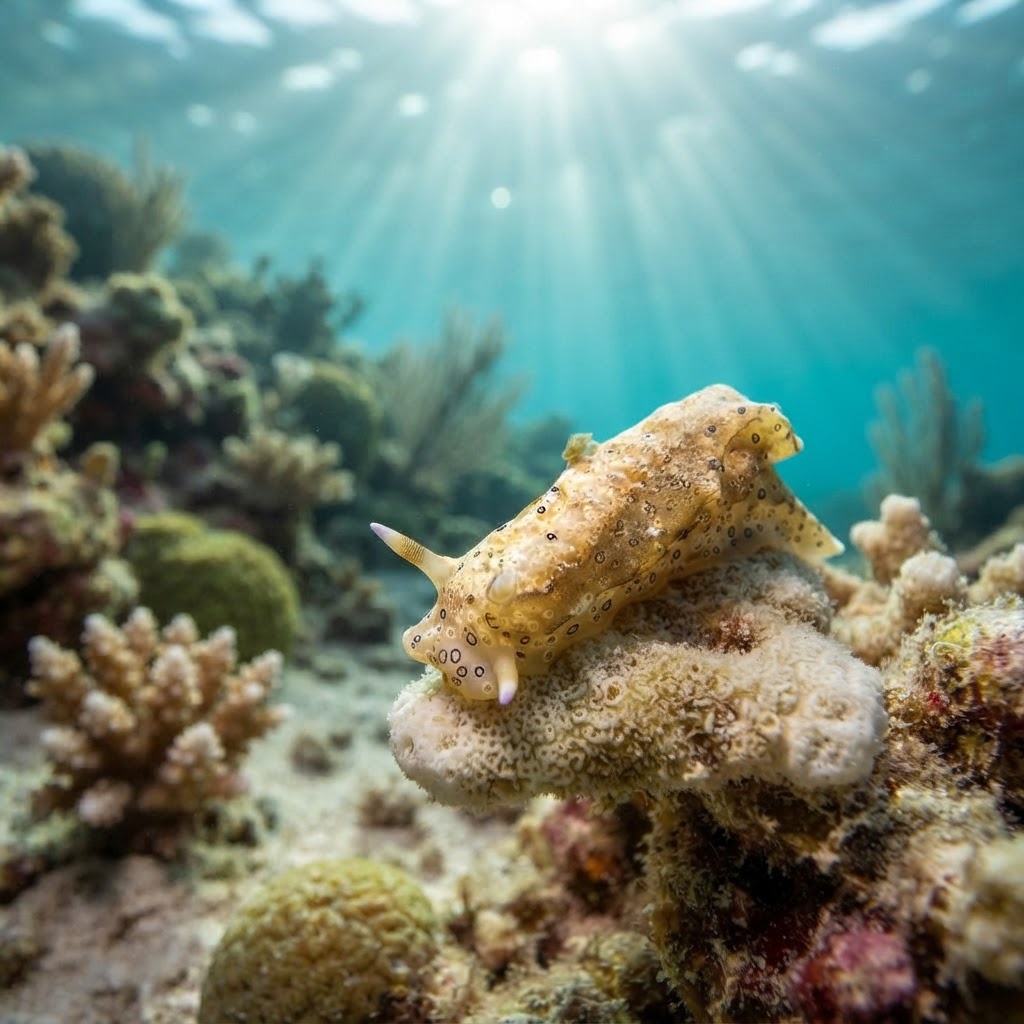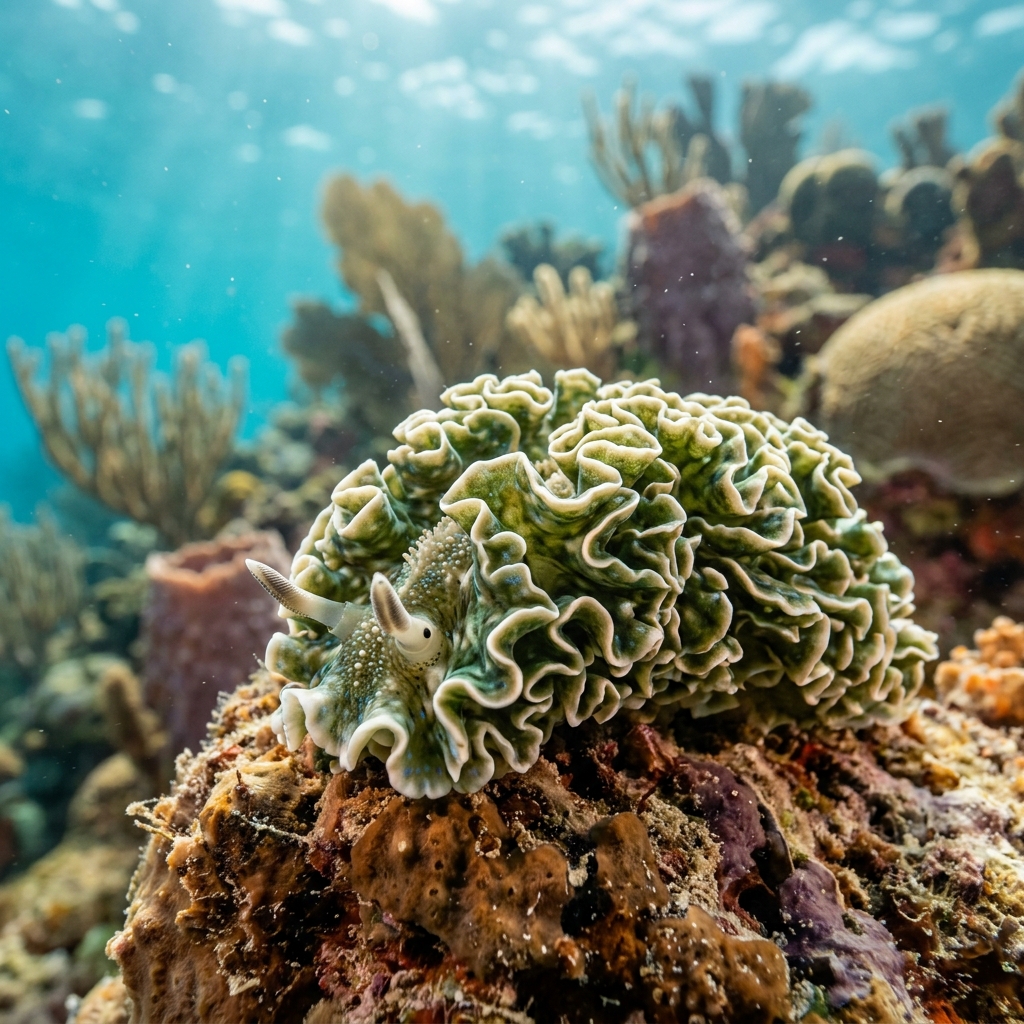
Oxynoe kylei
A small green sea slug logged mostly on the reefs of Goa, India, in warm 26-32C water year-round.
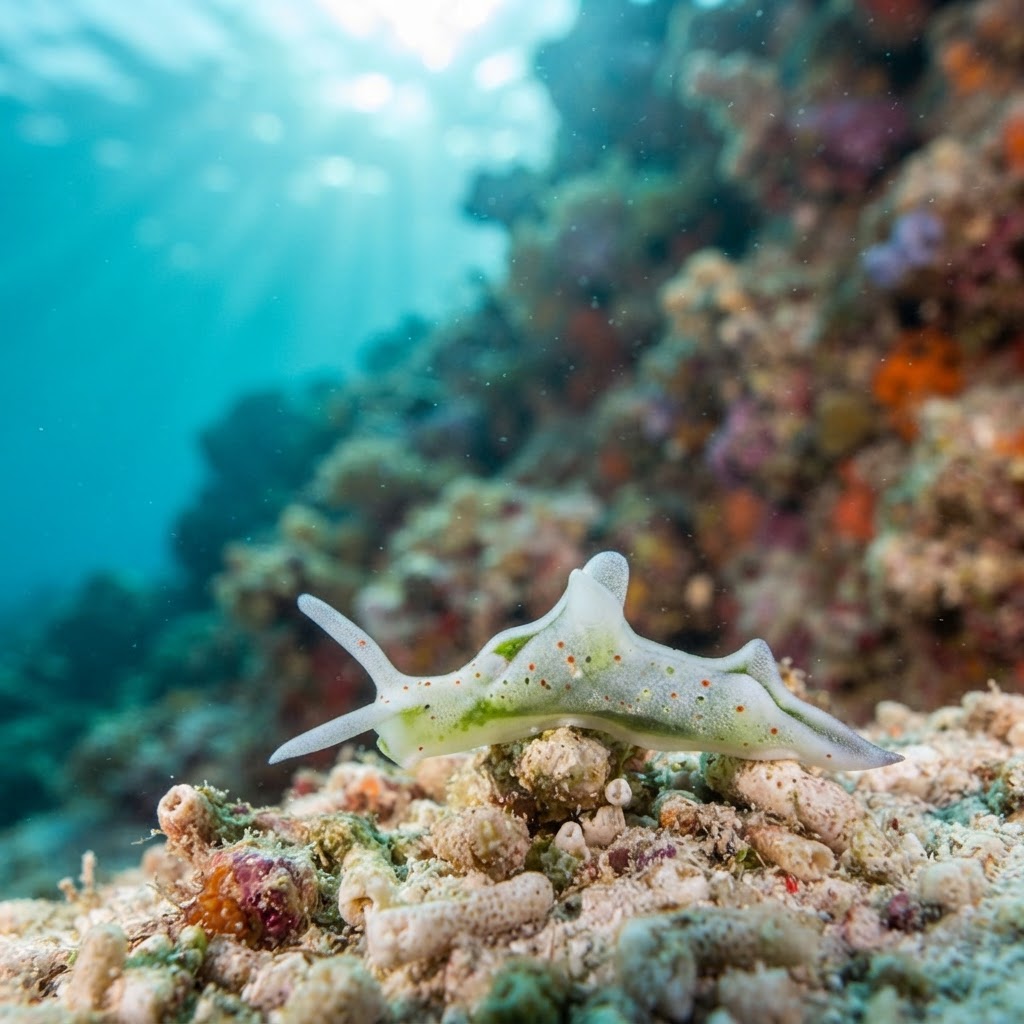
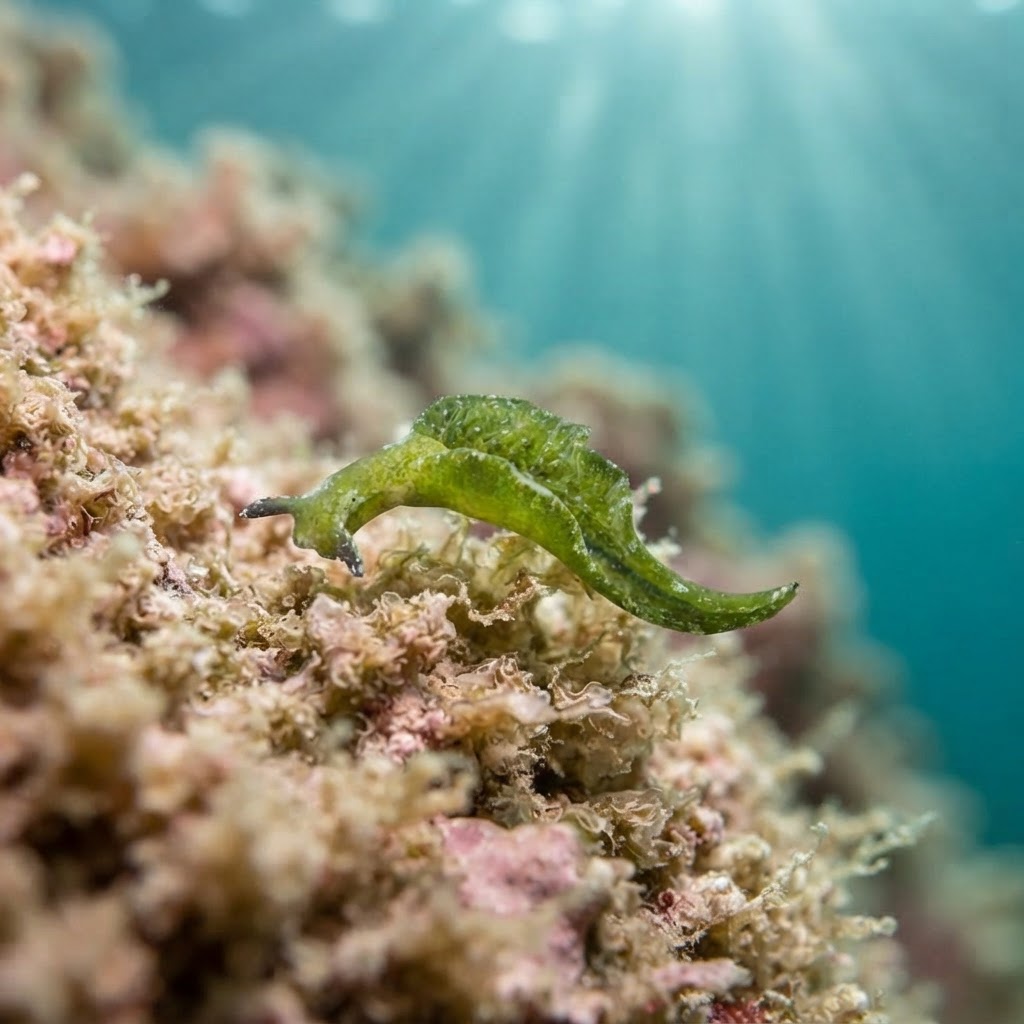
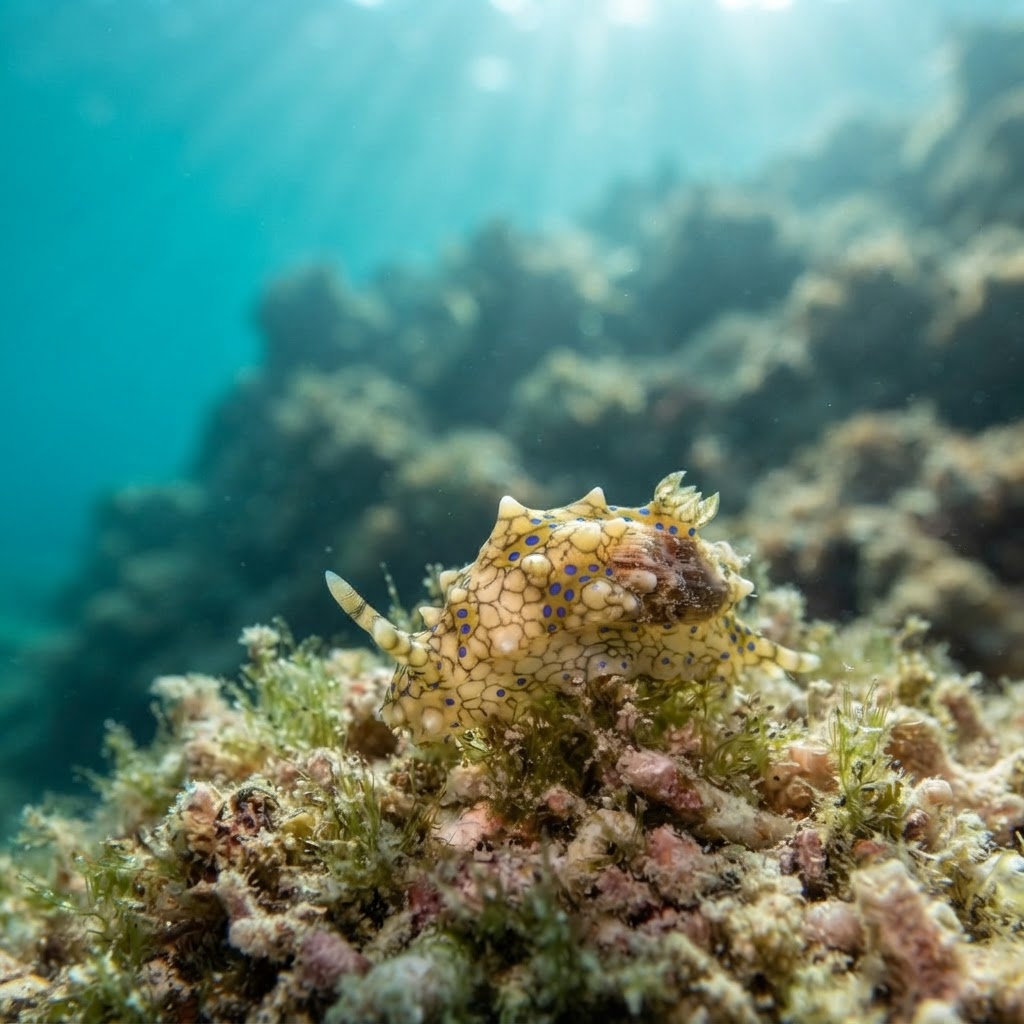
A small, slender sea slug with a soft green body that blends closely with the algae it feeds on, often with faint darker speckling along the sides. The parapodia (the wing-like flaps along its back) can curl upward or wrap around the body, giving it a rolled, leaf-like look rather than the flat profile of many other sea slugs. There is no obvious shell visible in the water, and the whole animal rarely stretches beyond a couple of centimetres, so divers tend to spot it only once they are looking closely at algae patches rather than open reef.
Divers usually find this slug clinging to or grazing on algae mats, moving slowly and staying put long enough for a close macro look. It shows little reaction to divers beyond retracting slightly if directly disturbed, and it is most often picked out during slow, methodical macro-focused dives rather than drift or wide-angle swims. Look low on the reef or over rubble and algae patches rather than in open water.
Like other members of its family, it feeds by piercing algae cells and sucking out the sap rather than grazing the whole plant, which is how the group gets the name sap-sucking slugs.
Sightings show no clear seasonal pattern, and with a comfortable range of roughly 25.6 to 31.6C, warm tropical water is available year-round in both Goa and Bali. Treat it as a species you can look for on any dive rather than one tied to a particular month.
Reef neighbours a diver could mistake it for. Use the identification notes above to tell them apart.
Most dive logs for this slug come from Goa in India, which stands out as the strongest spot for it, with a smaller but reliable spread of sightings from Bali, Indonesia. Both regions offer warm, algae-rich shallow reef and rubble areas where this species is typically found tucked into the greenery.
Mapping where Oxynoe Kylei is logged…
It is most reliably logged around Goa in India, with additional sightings from Bali in Indonesia. Look for it on shallow, algae-covered reef and rubble patches in these regions.
There is no strong seasonal pattern in the sightings, and warm water in the mid-20s to low-30s Celsius is present year-round in Goa and Bali, so it can turn up on any dive in those regions.
Look for a small, soft-bodied green slug with rolled or curled parapodia that make it blend into algae strands. It has no visible shell and rarely reaches more than a couple of centimetres, so a slow, close look at algae patches is usually needed to spot it.
Exact size data is not confirmed for this species, but like related sap-sucking slugs it stays small, typically only a centimetre or two long, making it an easy animal to overlook on a reef.
No, this slug poses no danger to divers. It is a small, slow-moving algae feeder that divers can safely observe up close without any risk.
It feeds by piercing algae cells and sucking out the internal fluids rather than eating the plant tissue whole, a feeding style shared across the sap-sucking slug family.
Site and sighting data is aggregated from diver logs, iNaturalist and GBIF. For taxonomy and conservation status:
Elysia Timida
573 sites