Selar boops
A small, silvery jack rarely logged in Raja Ampat, Indonesia, in waters from 13 to 26.5C, this scad rewards divers who look closely at the shoal.
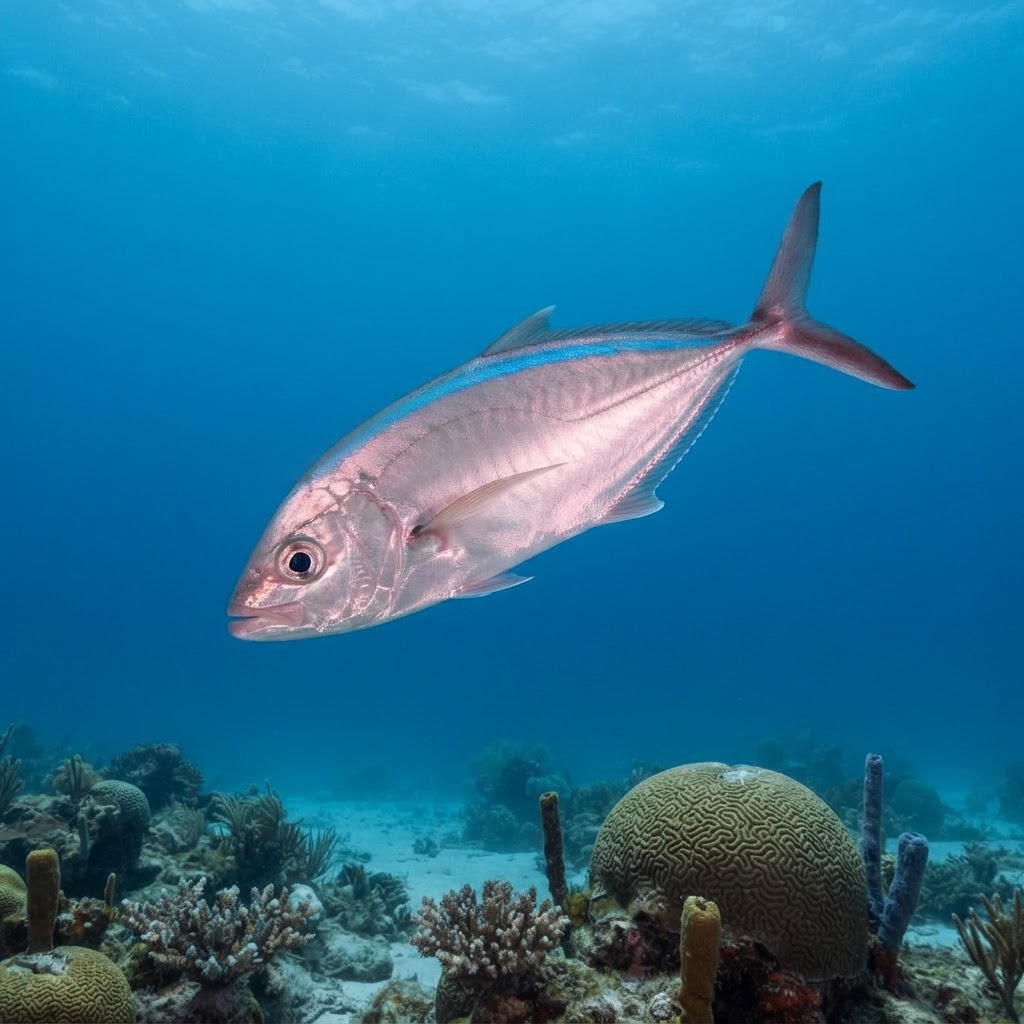
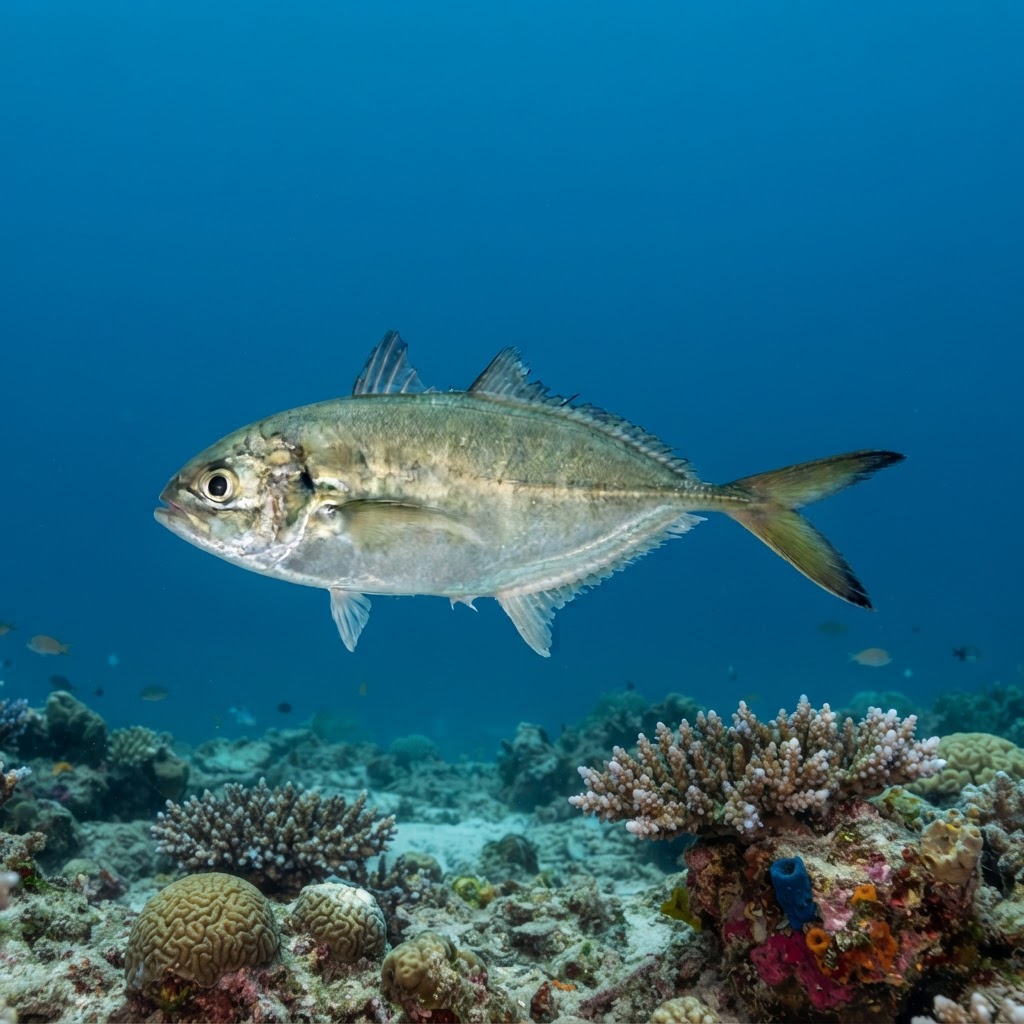
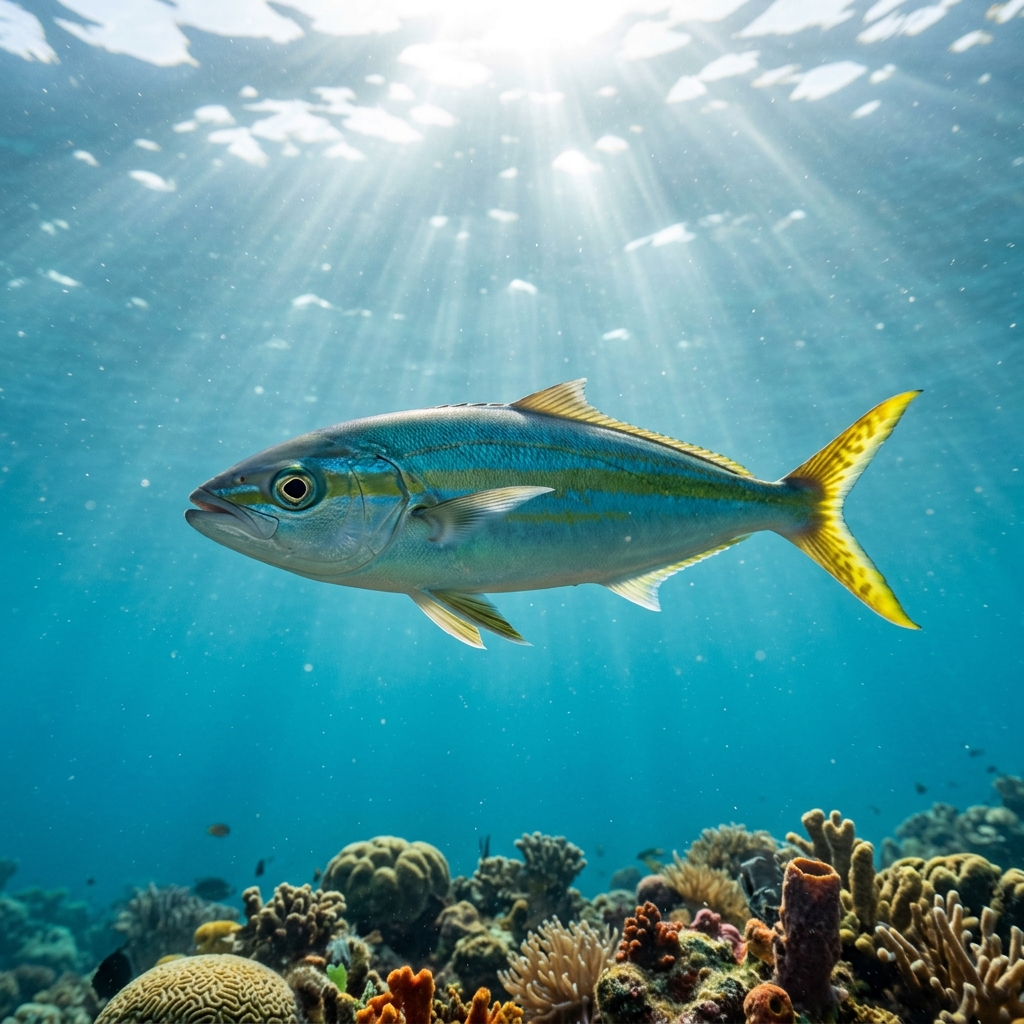
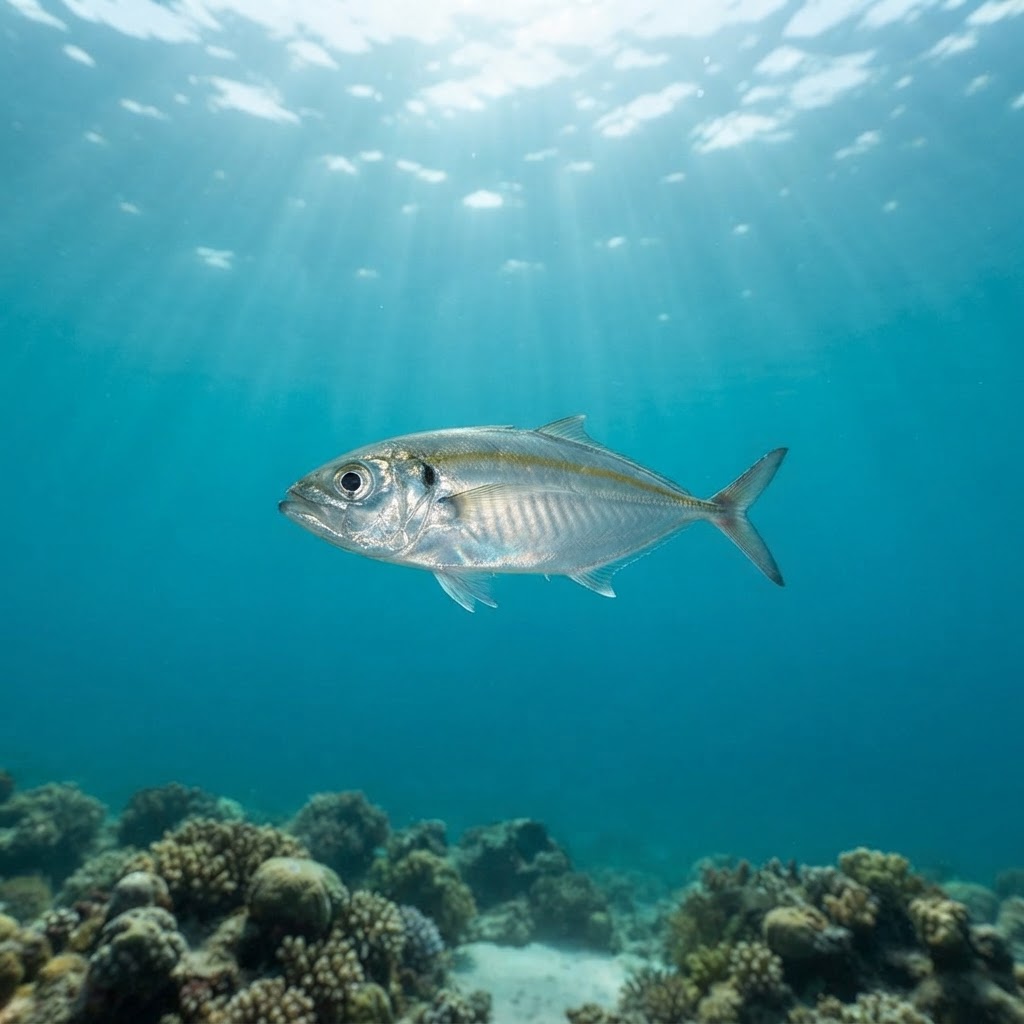
A slim, compressed jack around 18cm, silvery overall with a greenish-blue back and a faint yellow stripe running along the midline. The name gives away the best clue underwater: an unusually large eye for a fish this size, set in a blunt, rounded head. Look for the small black spot on the upper edge of the gill cover, a common carangid (jack family) marker that helps separate it from similarly-built schooling fish.
Divers tend to encounter it moving in loose schools over reef flats and slopes, often mixed in with other small jacks rather than forming its own dense wall of fish. It keeps a comfortable distance from divers and carries on foraging in mid-water, showing little interest in bubbles or torches. Sightings so far suggest it is more often spotted by divers who scan open water off the reef rather than those focused tight on the substrate.
Like most scads, it likely feeds on plankton picked out of the water column, which is why it is usually seen hanging in loose formation over open reef rather than tucked into structure.
No clear seasonal pattern shows up in the sightings, and the recorded temperature range (13.4 to 26.5C) spans cool to warm tropical conditions, so it appears to be a year-round possibility wherever it is found rather than a seasonal visitor.
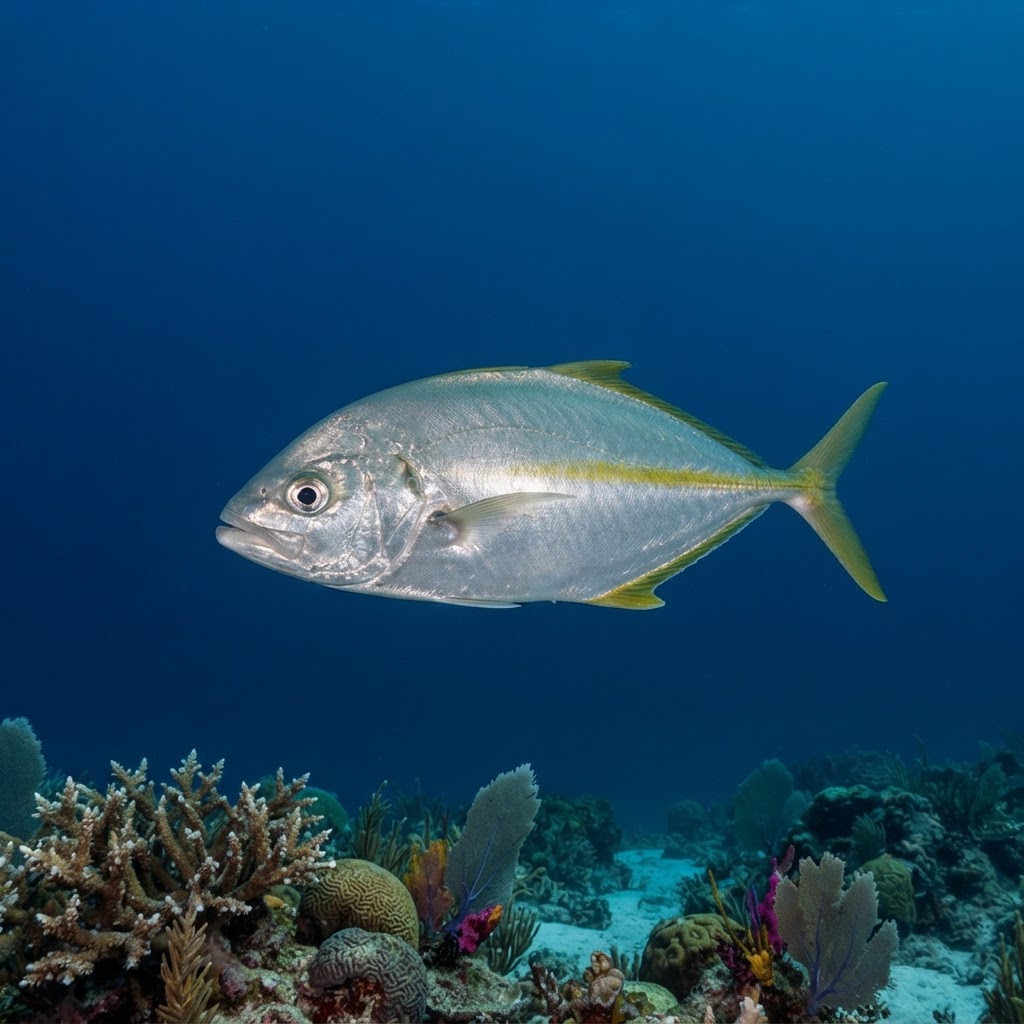
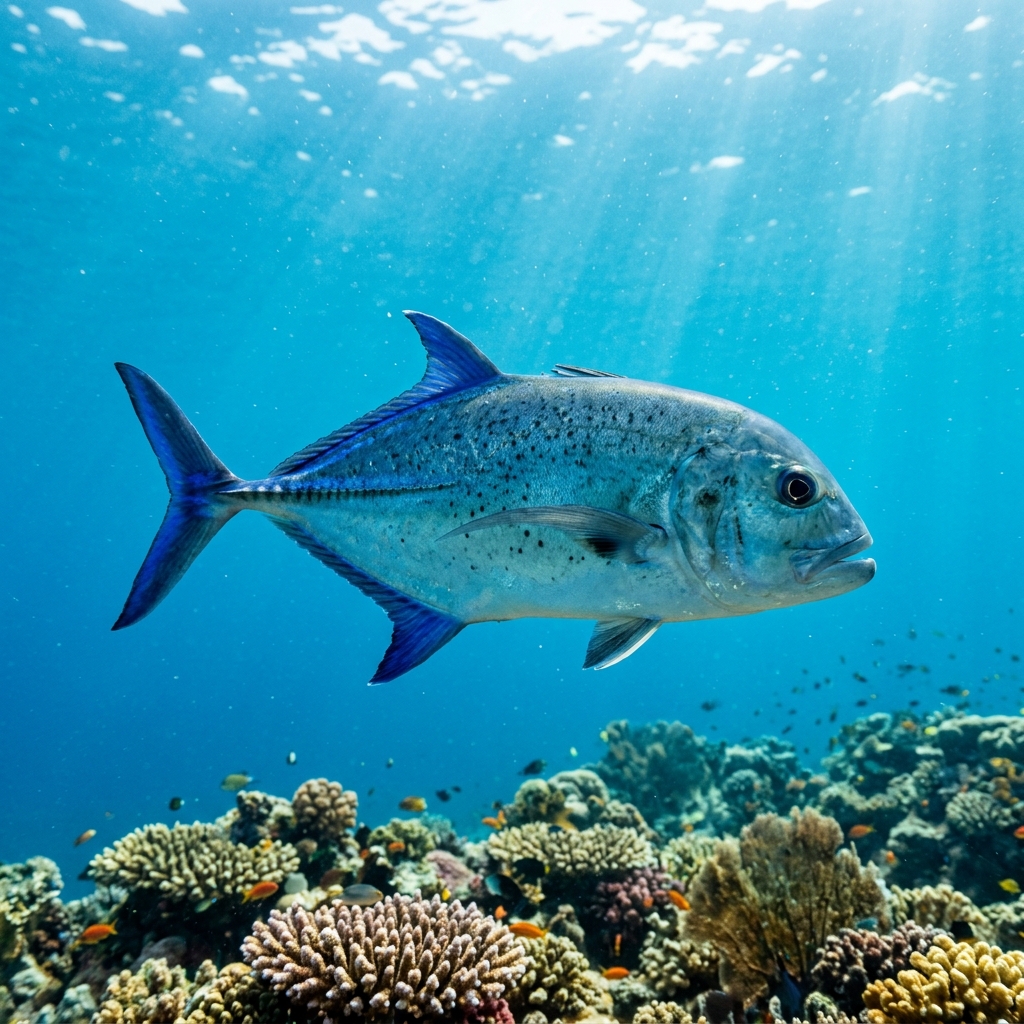
Reef neighbours a diver could mistake it for. Use the identification notes above to tell them apart.
Logged sightings cluster almost entirely in Indonesia, with Raja Ampat the strongest area and a further record from Nusa Tenggara. At the handful of sites where divers have found it, it turns up as a rare to occasional catch rather than a guaranteed sighting, so treat it as a bonus fish on a Raja Ampat reef dive rather than a target species.
Mapping where Oxeye Scad is logged…
The strongest records come from Raja Ampat, Indonesia, with an additional sighting in Nusa Tenggara. It is not a fish tied to one famous dive site, more a species you might pick out while scanning a school over a reef in these regions.
There is no detected season in the sighting data, and it has been recorded across a wide temperature range from 13.4 to 26.5C, so it appears to be present year-round rather than tied to a particular month.
Look for a small, silvery jack around 18cm with a noticeably large eye, a faint yellow midline stripe, and a small dark spot on the upper gill cover. It usually shows up in loose schools mixed with other small jacks over open reef.
They are a small member of the jack family, typically reaching around 18cm in length, making them noticeably smaller than trevallies or kingfish they might be mistaken for at a glance.
No. They pose no threat to divers and simply carry on schooling or feeding when divers are nearby.
Site and sighting data is aggregated from diver logs, iNaturalist and GBIF. For taxonomy and conservation status:
Bigeye Trevally
2,591 sites