Panulirus ornatus
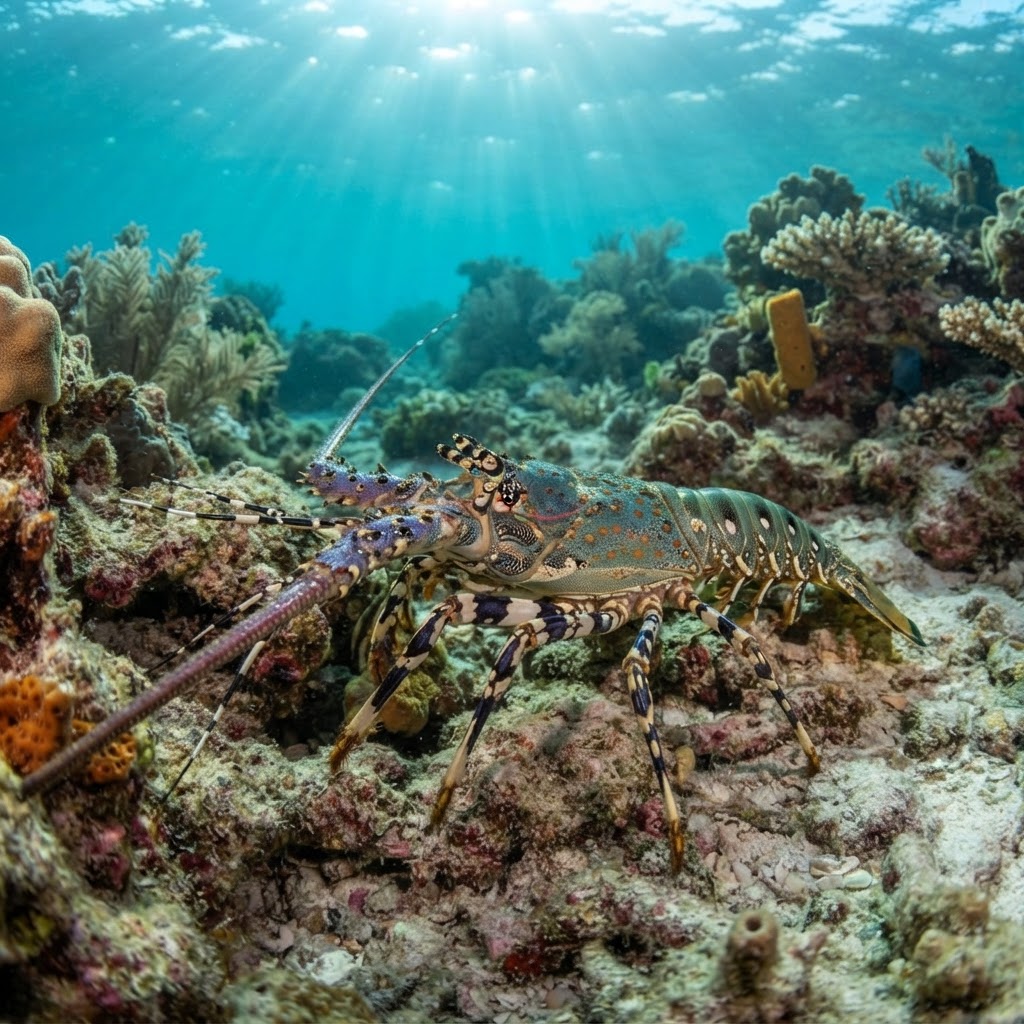
Look for its cream-spotted legs and long banded antennae on night dives around Zanzibar, Tanzania, in 20-26C water.
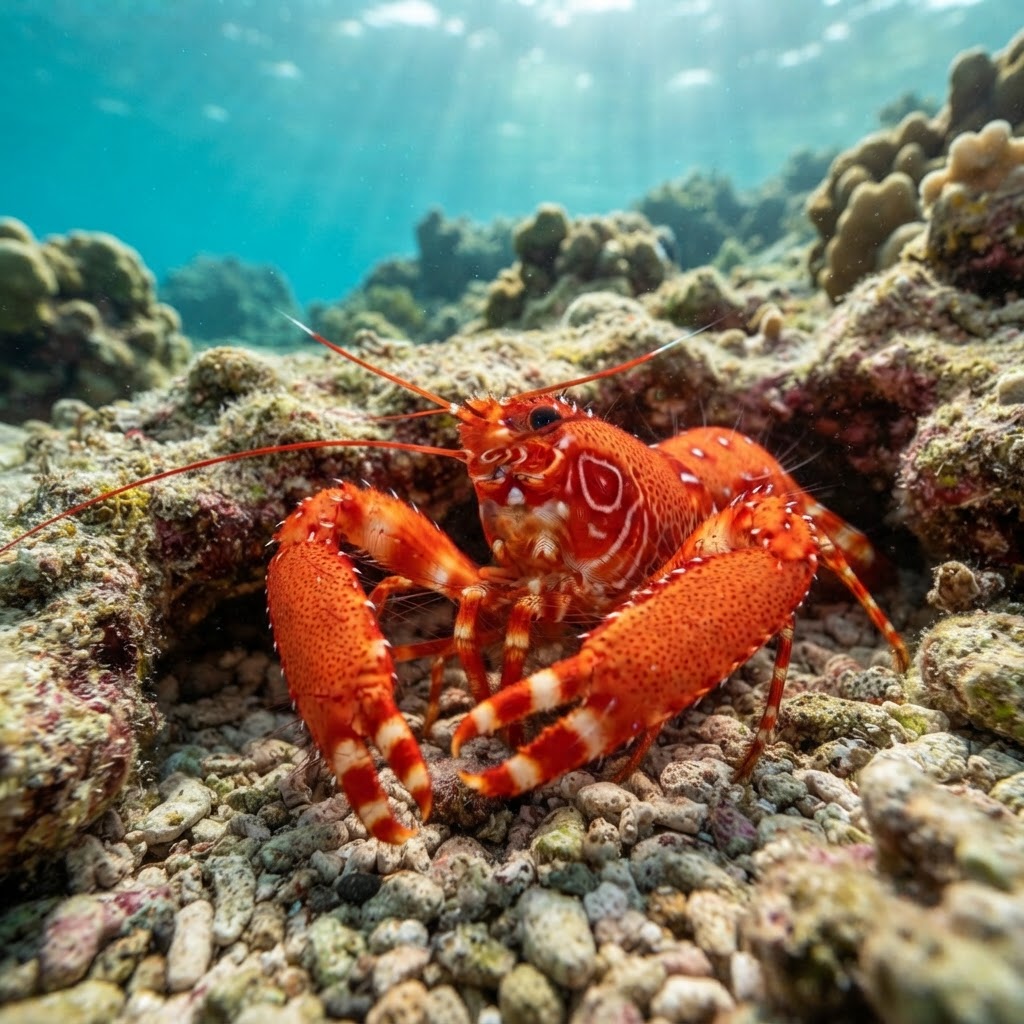
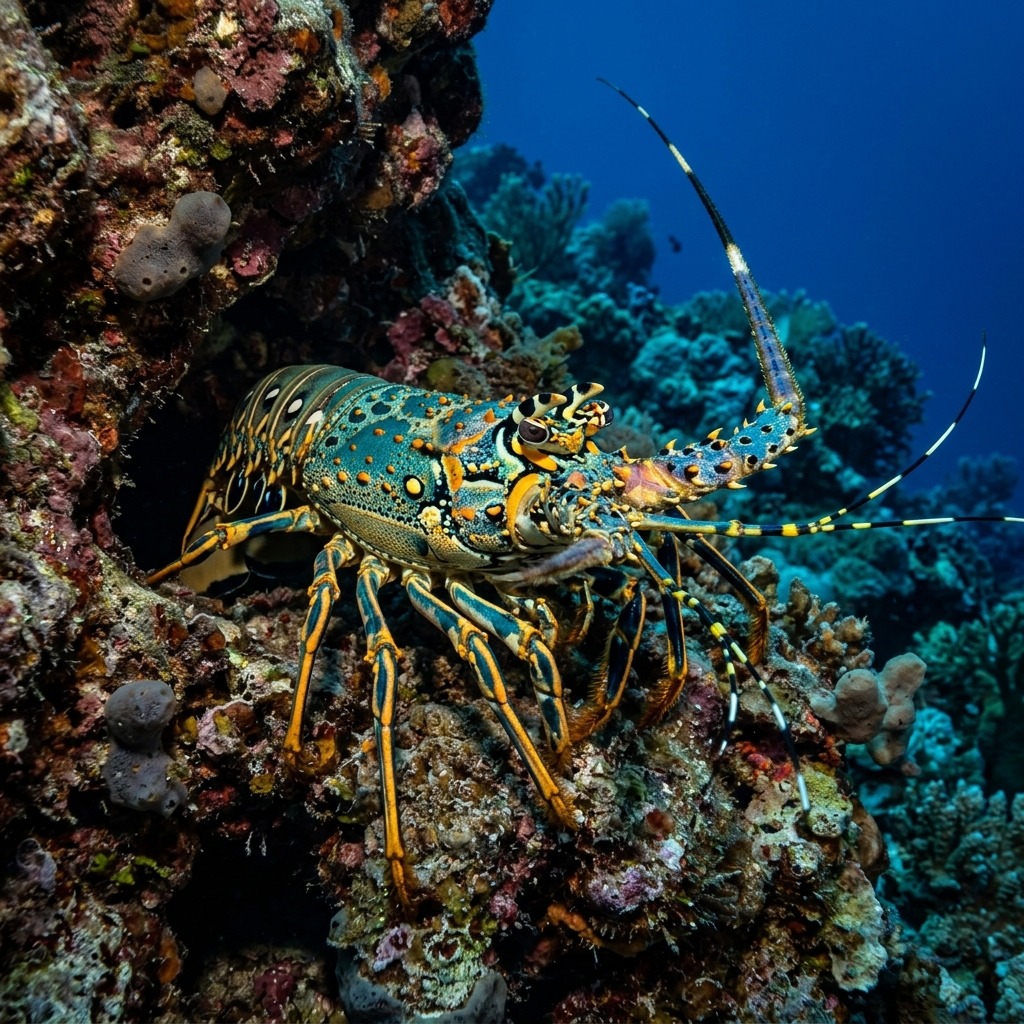
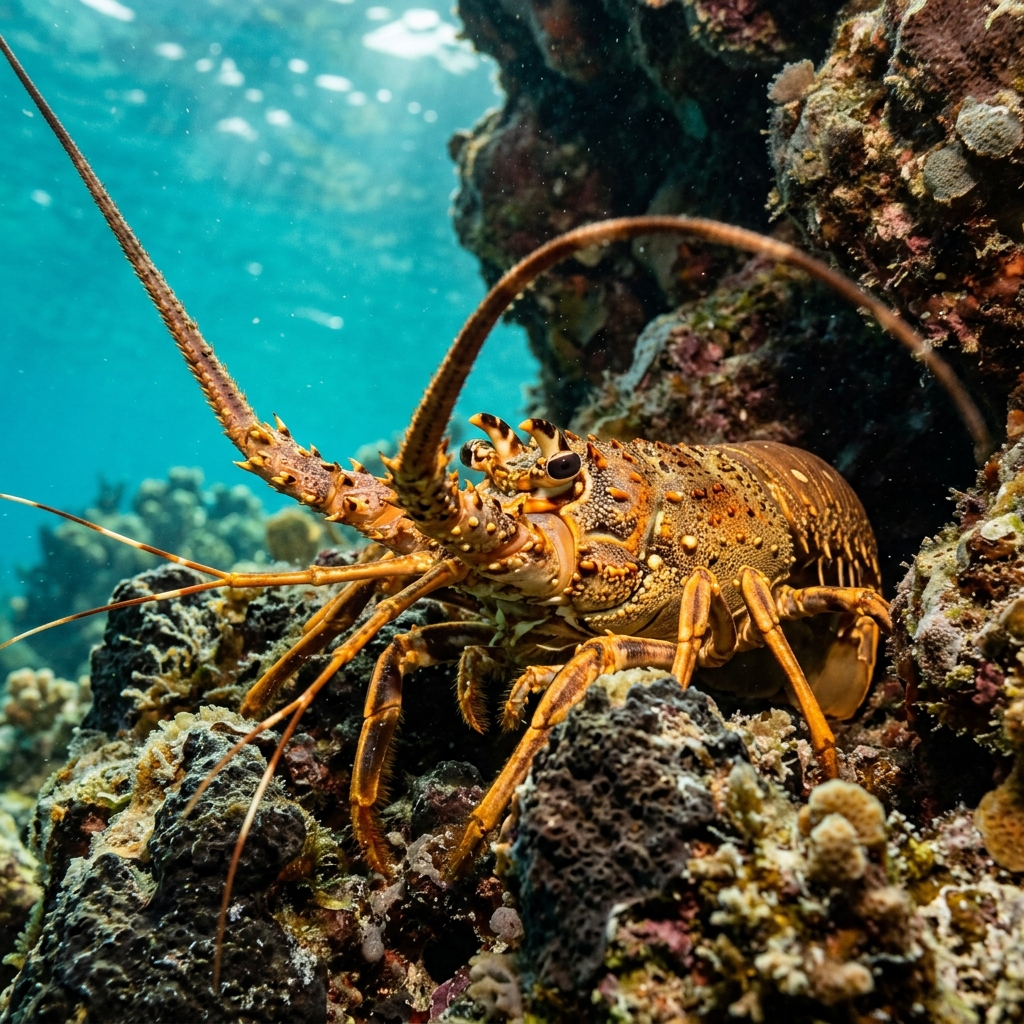
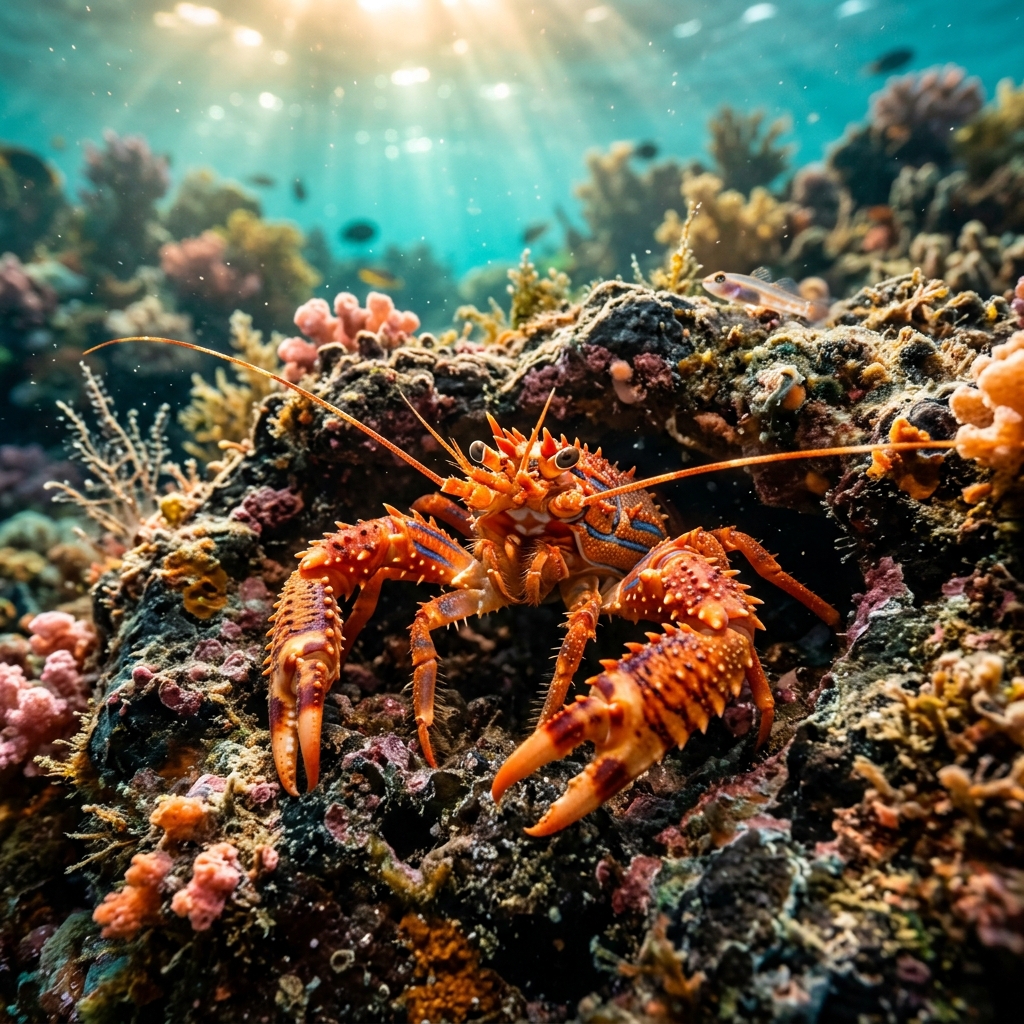
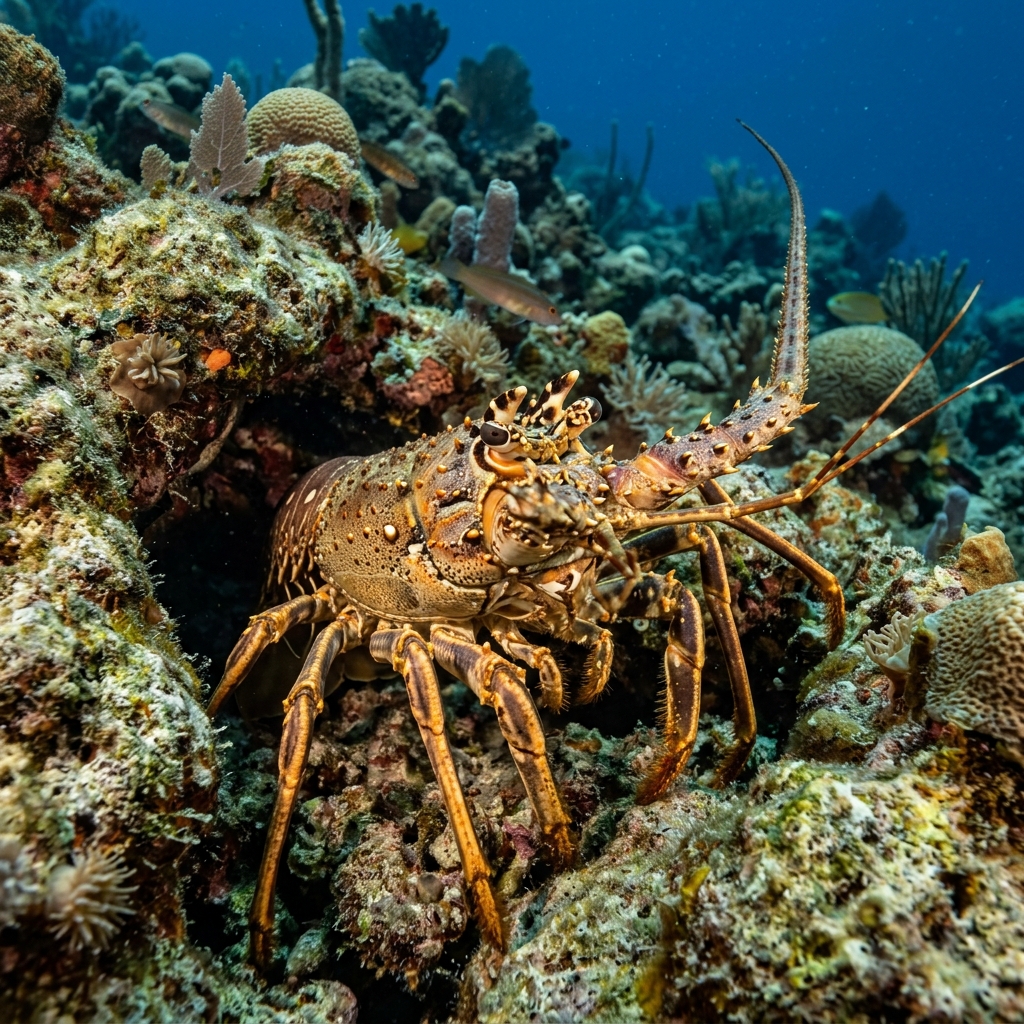
Grows to around 35 cm, with a heavily armoured, spiny carapace in mottled green to olive-brown and a pair of long, thick, banded antennae sweeping out ahead of it. The legs carry pale cream spots that stand out clearly in torchlight, a useful giveaway against similar-looking reef lobsters. Most sightings are of it wedged into a crevice or ledge with only the antennae and legs visible, rather than out in the open.
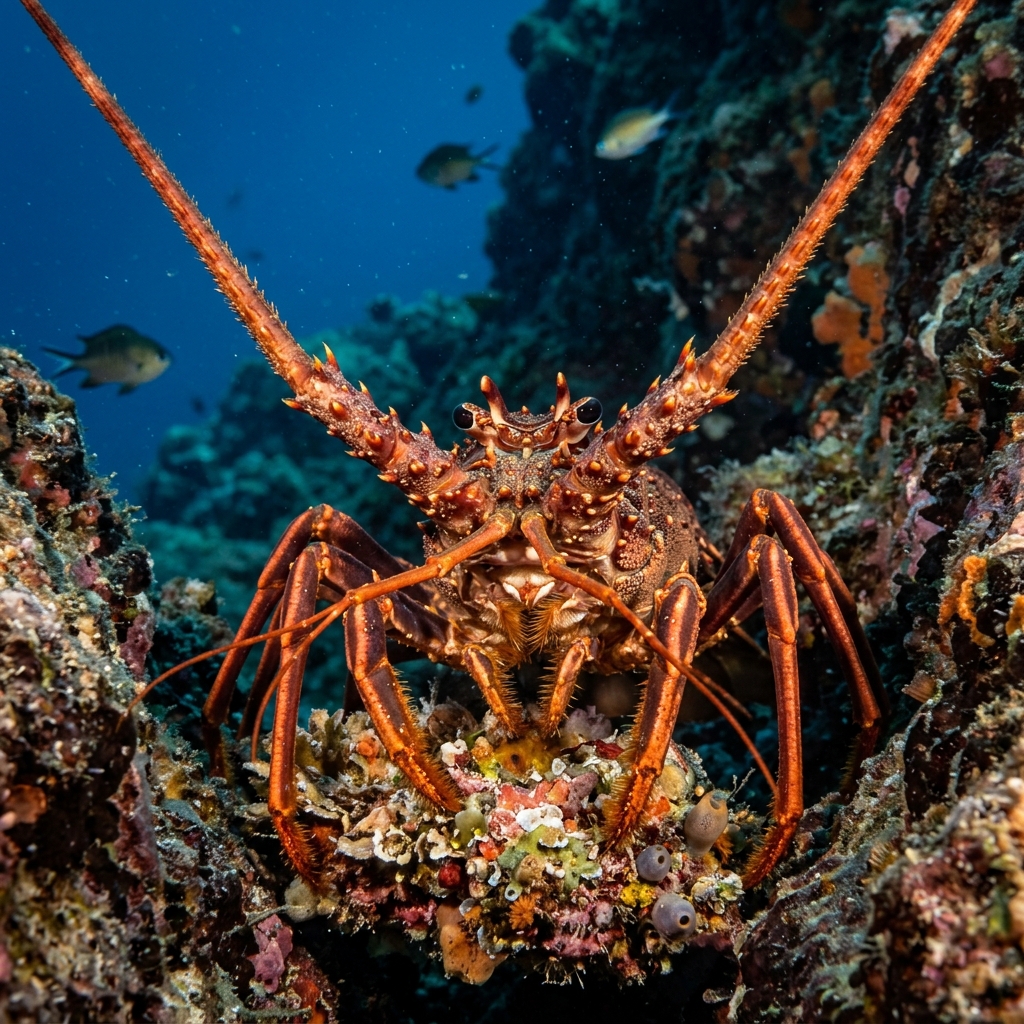
Spends daylight hours tucked back into reef crevices, ledges and rubble piles, usually facing outward with antennae fanned forward as an early-warning system. Divers most often spot it on night dives or when peering into overhangs with a torch, when it becomes more active and can be seen walking across open ground foraging. It doesn't scuttle off in a panic when approached carefully, but a direct light in its eyes or a hand too close will send it backing deeper into cover.
Like other spiny lobsters, it has no claws for defence and relies entirely on its heavy, spine-covered shell and a rapid tail-flick escape to get clear of predators, rather than fighting back.
No clear seasonal pattern shows up in the sightings, and the 20 to 26.4C range it's recorded in covers most of the year on these reefs, so it's effectively a year-round find rather than a seasonal target.
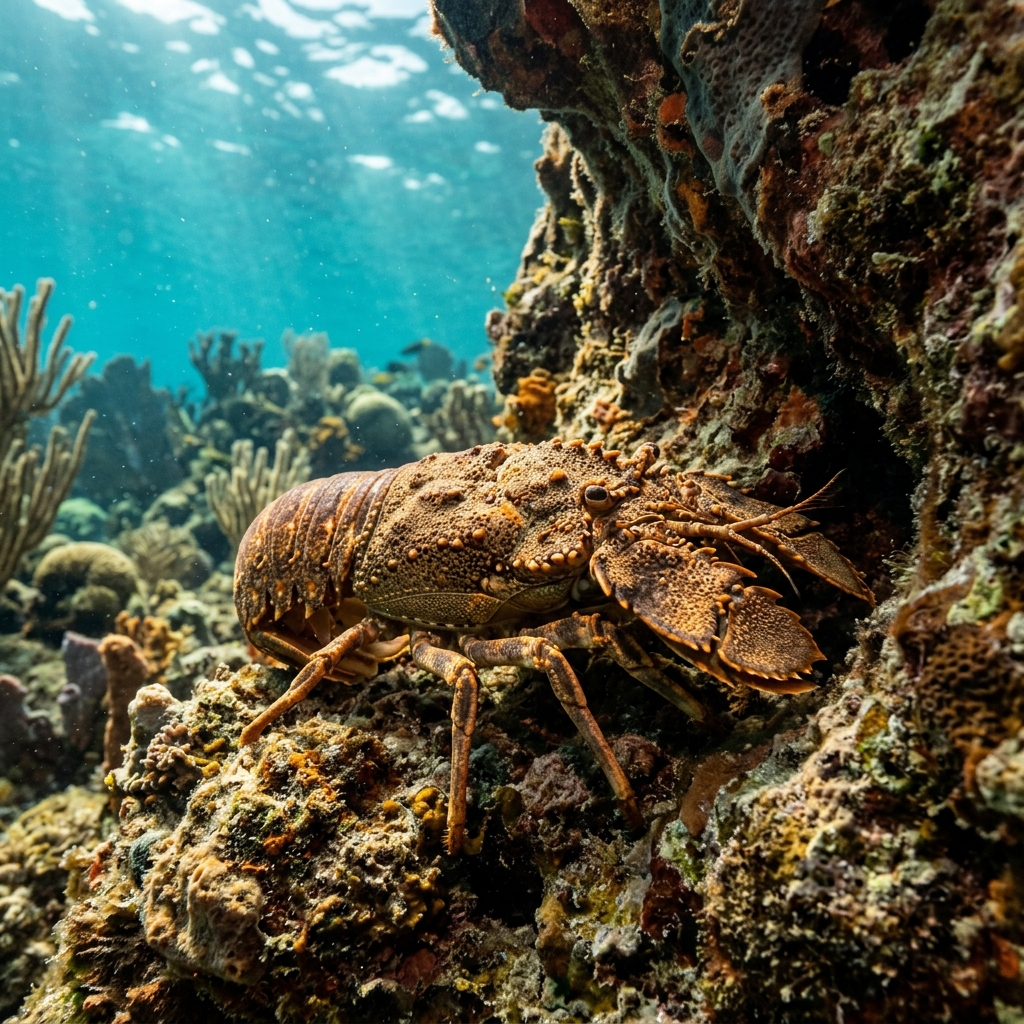
Reef neighbours a diver could mistake it for. Use the identification notes above to tell them apart.
Most consistently logged around Zanzibar, Tanzania, where it turns up across several sites as an uncommon find, with a further sighting recorded on Australia's Queensland coast. Tanzania currently holds the strongest logged presence for this species, so reef ledges and rubble patches around Zanzibar are the reliable bet.
Mapping where Ornate Spiny Lobster is logged…
Zanzibar in Tanzania is the most reliable region, with several sites logging it as an uncommon sighting. It has also been recorded off Queensland, Australia, though less frequently.
There's no strong seasonal signal in the sightings, and water temperatures on its known sites stay within its comfort range most of the year, so it's a year-round possibility rather than a seasonal event.
Look for a mottled green to olive carapace covered in spines, long banded antennae, and cream-coloured spots running along the legs. It typically sits tucked into a ledge or crevice with only the antennae and legs poking out.
They reach around 35 cm in length, making them one of the larger spiny lobsters divers encounter on tropical reefs.
No. They have no claws and rely on their spiny shell and a quick tail-flick to escape rather than confronting divers, so there's no real risk beyond an accidental brush against their spines.
Unlike true lobsters, they have no claws at all. Their defence is a heavily spined shell plus a fast backward tail-flick that shoots them away from threats in an instant.
Site and sighting data is aggregated from diver logs, iNaturalist and GBIF. For taxonomy and conservation status:
Caribbean Spiny Lobster
2,209 sites