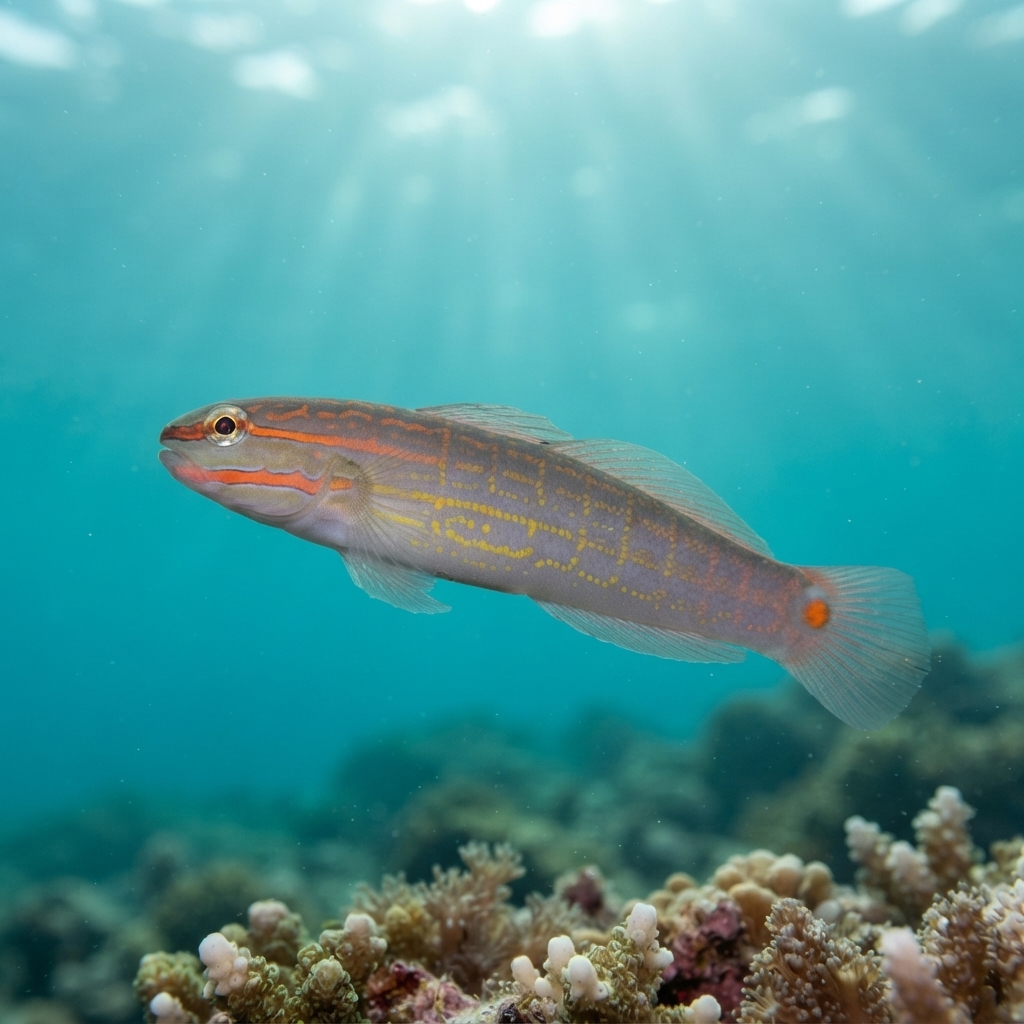
Amblygobius decussatus
Common on Palau's reefs, this small striped goby hovers near sandy burrows year-round in 26-29C water. Here's where to spot it.
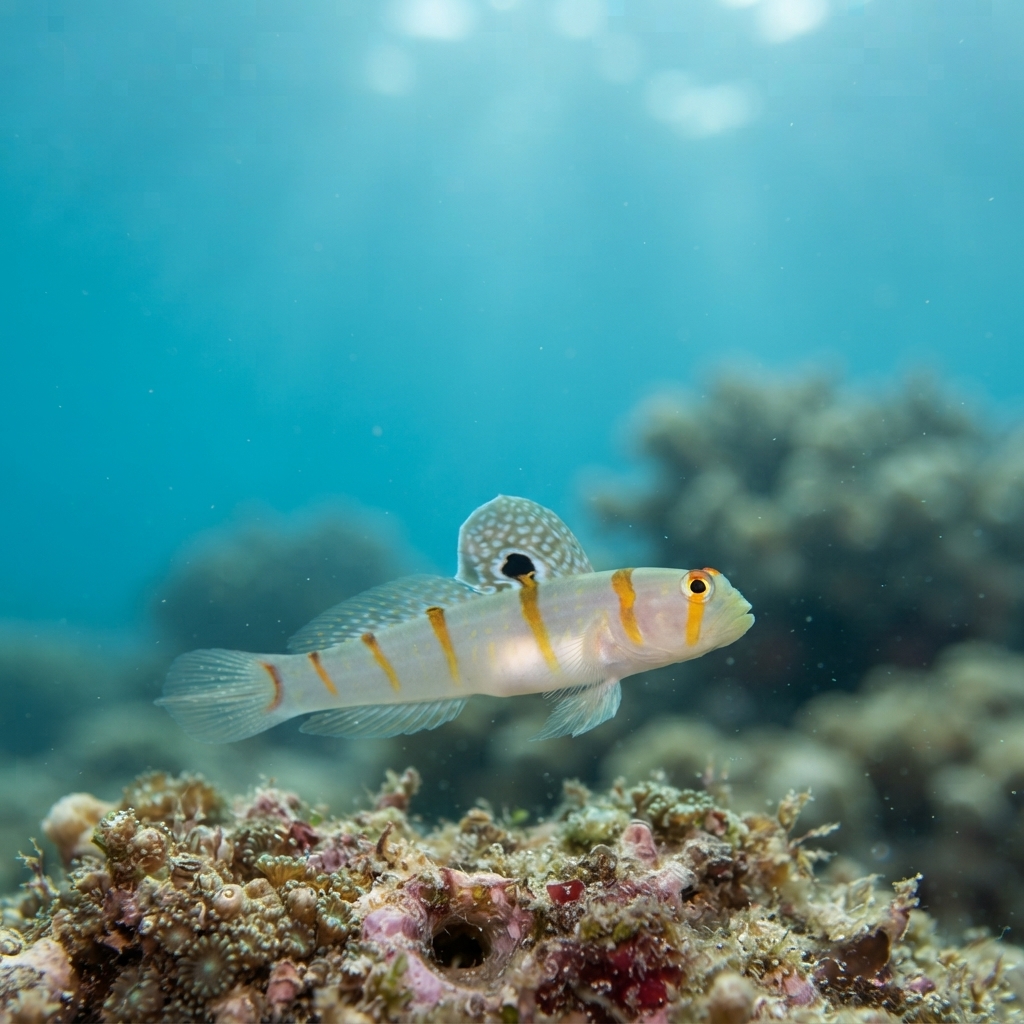
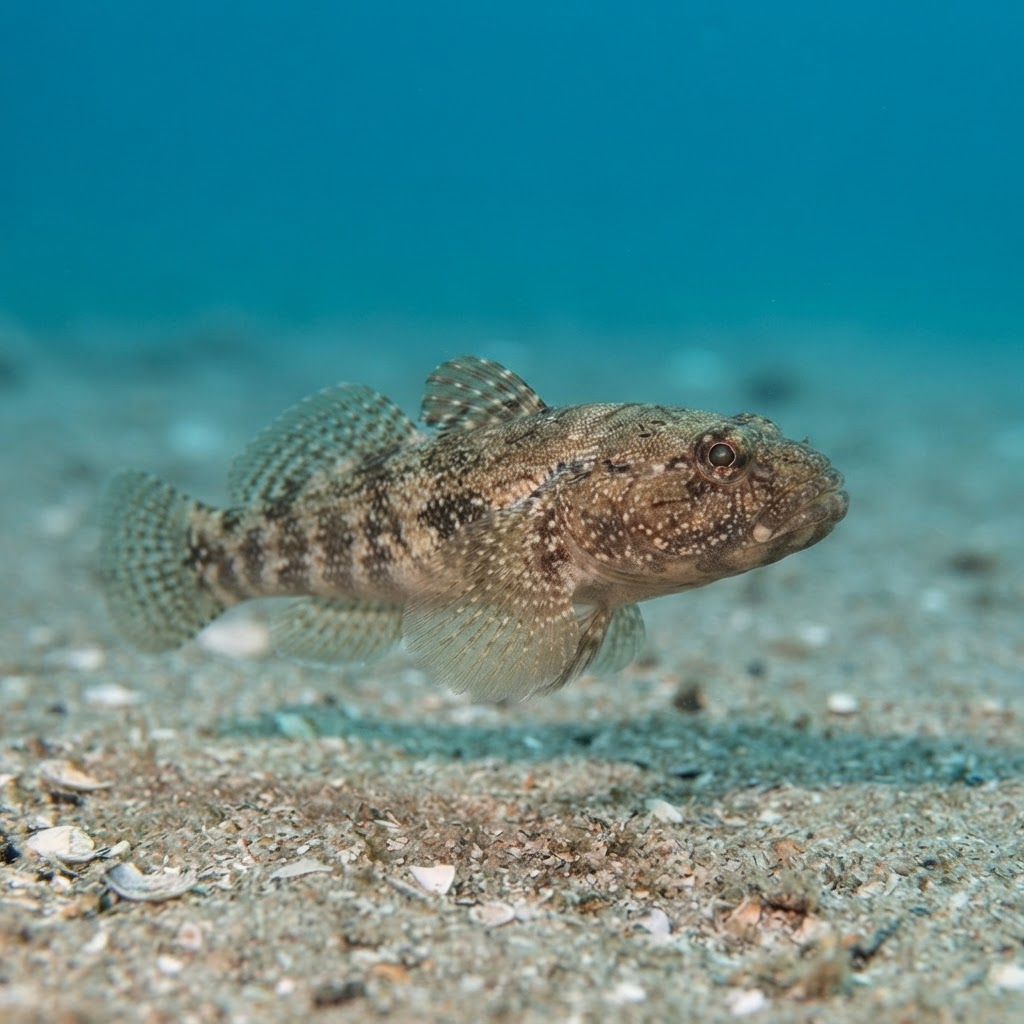
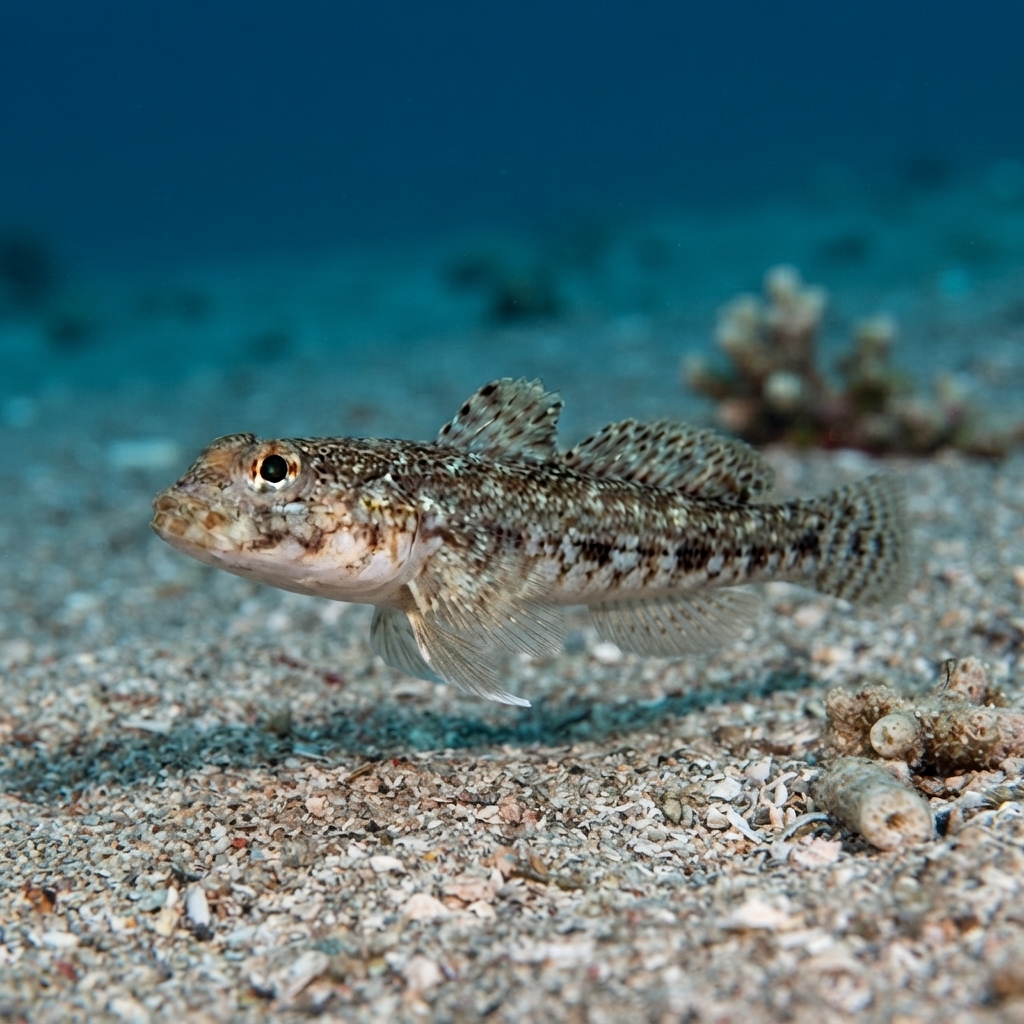
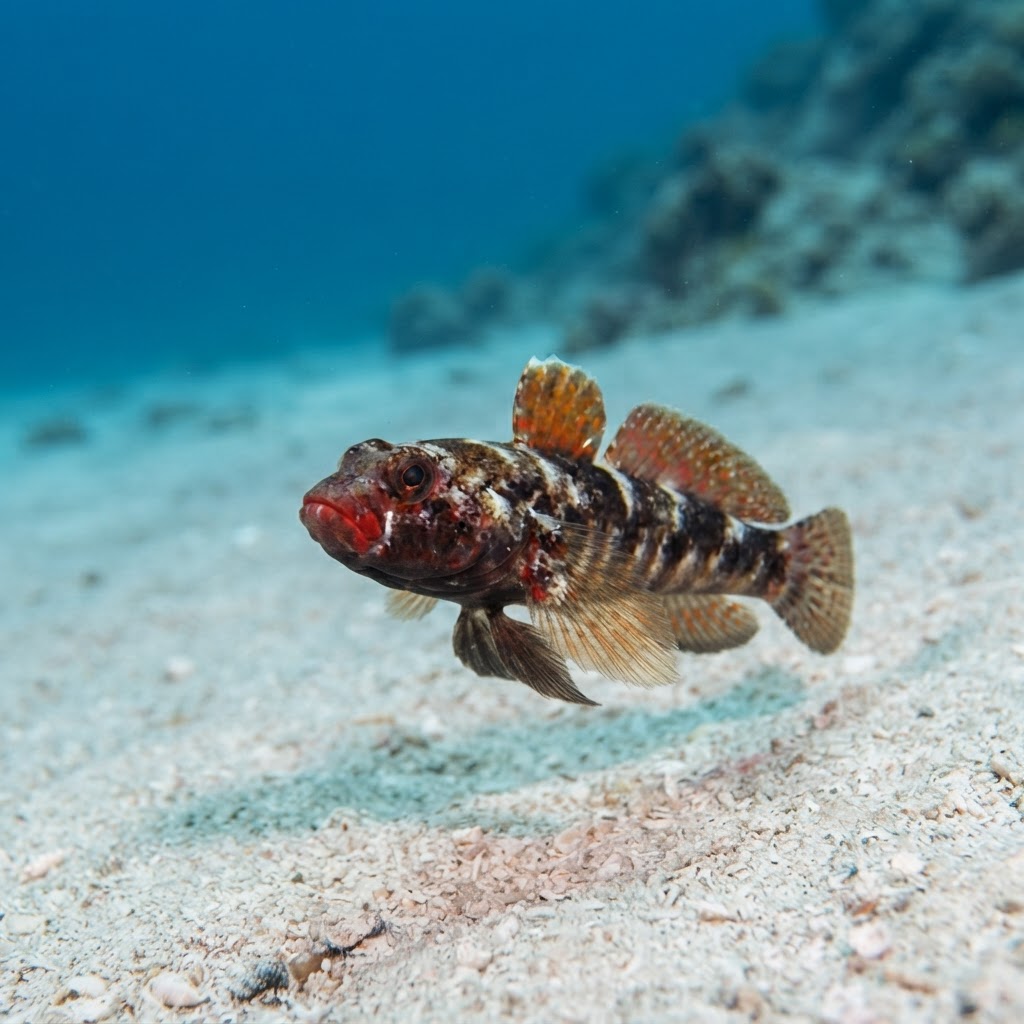
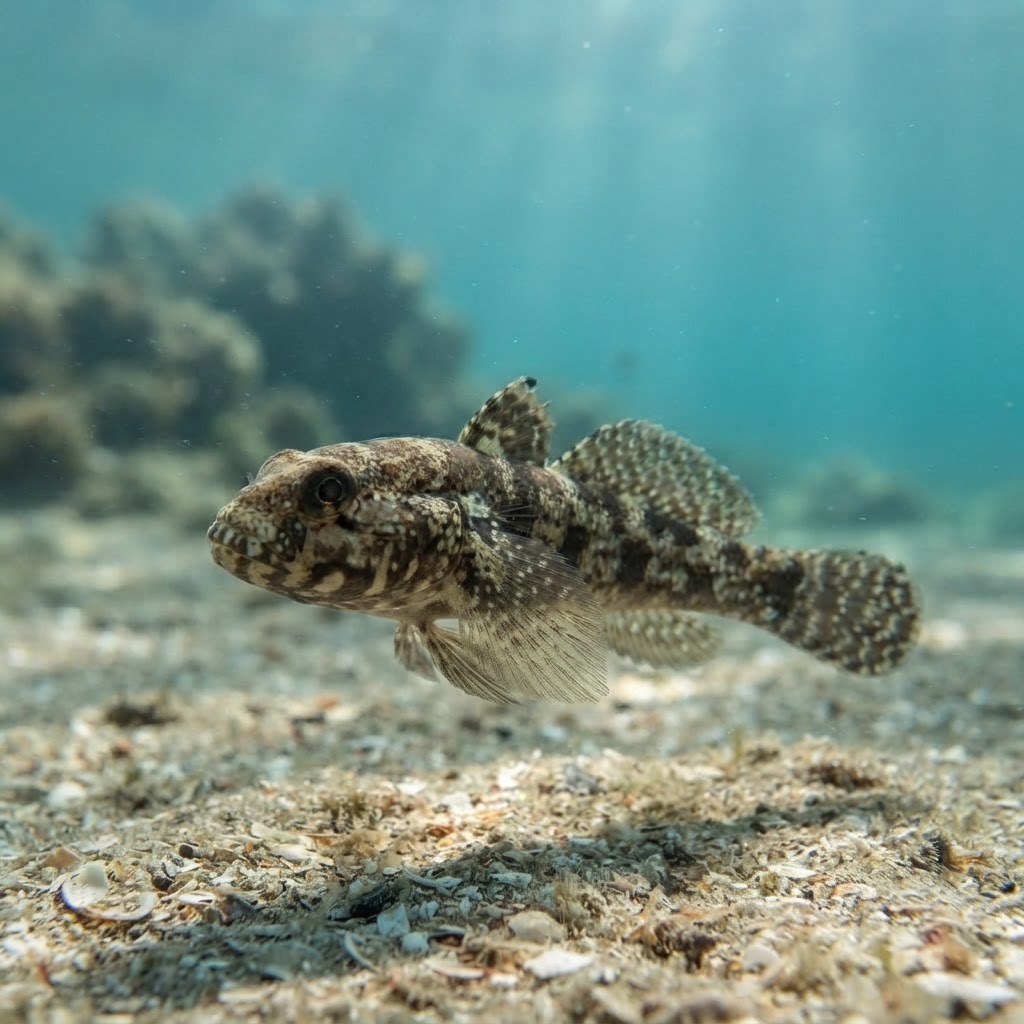
A small, slender goby around 7 cm long, easily overlooked unless you slow down and scan the sand near coral rubble. Look for the diagonal orange-brown stripes crossing a pale body, giving a criss-cross pattern that's the giveaway at close range. It perches low over the substrate rather than swimming freely in open water, often near a burrow entrance.
Divers typically find it hovering just above the sand or perched near a burrow, staying close to shelter rather than venturing into open water. It's not a fish that reacts dramatically to divers, but it will dart into cover if you approach too fast, so a slow, low approach and a patient hover give the best look. Most sightings come from sandy patches and rubble zones adjacent to reef, rather than on the reef structure itself.
Like other Amblygobius gobies, it sifts mouthfuls of sand to feed on the organic material within before spitting the sand back out, a habit worth watching for if you find one settled in one spot.
No clear seasonal pattern shows up in the sightings, and with a comfortable temperature range of 26.3 to 29.0C it's a year-round find on the tropical reefs where it occurs.
Reef neighbours a diver could mistake it for. Use the identification notes above to tell them apart.
Palau is by far the strongest area for this goby, with sightings concentrated around Koror & Malakal, making it one of the more reliable small-goby finds in that region. It also turns up regularly across the Philippines' Visayas and Indonesia's Raja Ampat and Sulawesi, with occasional records in Papua New Guinea's Tufi and the Solomon Islands' Guadalcanal.
Mapping where Orange-striped Goby is logged…
Palau is the standout location, especially around Koror & Malakal, where it's logged as common at many sites. It's also a solid find in the Philippines' Visayas and Indonesia's Raja Ampat and Sulawesi.
There's no strong seasonal pattern in the sightings, and it lives in consistently warm water between 26.3 and 29.0C, so it's a year-round sight on the reefs where it occurs.
Look for a small goby, around 7 cm, with pale body colour crossed by diagonal orange-brown stripes. It stays low over sand or rubble near a burrow rather than swimming in open water.
They reach around 7 cm in length, making them one of the smaller reef gobies divers encounter. Their size and sand-hugging habit mean they're easy to swim past without noticing.
No. They're small, harmless bottom-dwellers that pose no risk to divers and simply retreat to shelter if approached too quickly.
Site and sighting data is aggregated from diver logs, iNaturalist and GBIF. For taxonomy and conservation status:
Slender Goby
806 sites