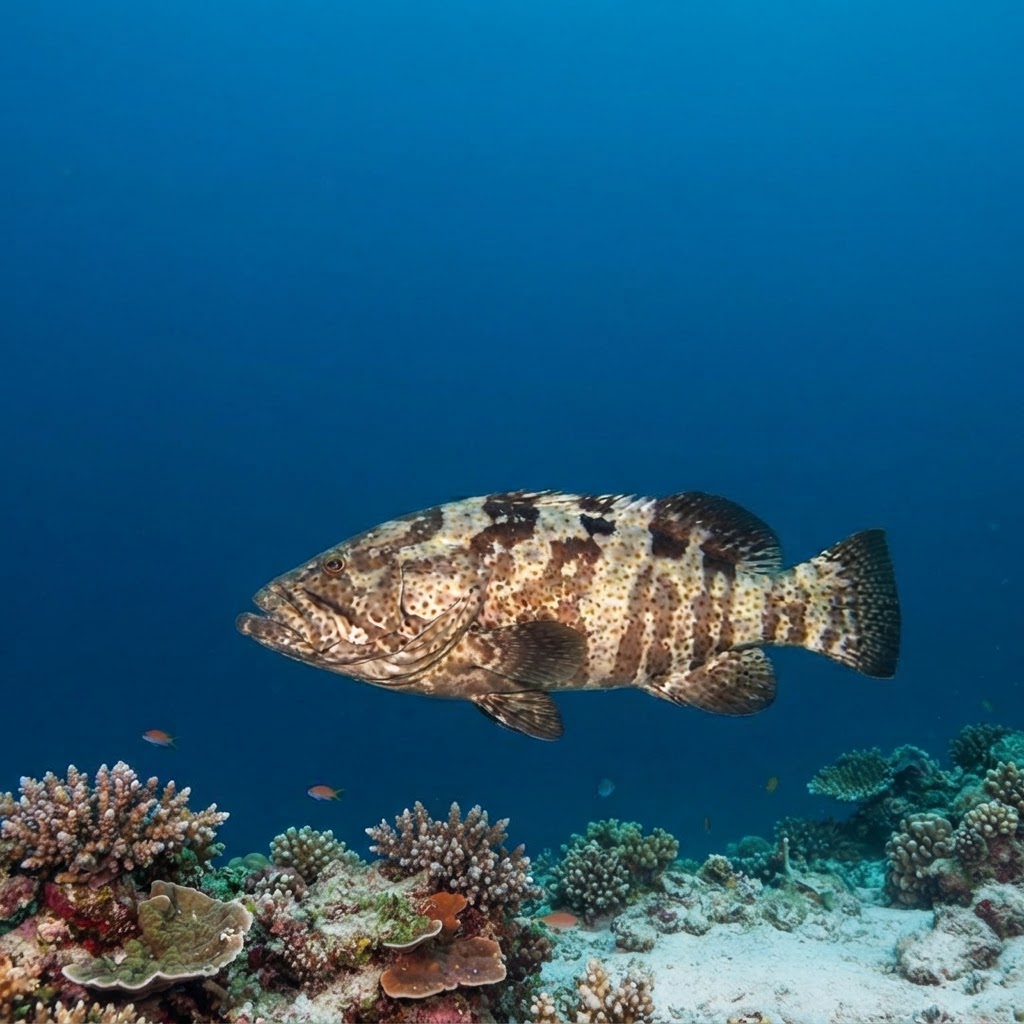
Epinephelus coioides
Mottled, orange-flecked grouper turning up on Queensland reefs and Goa's coast in water around 24 to 29 C, year-round.
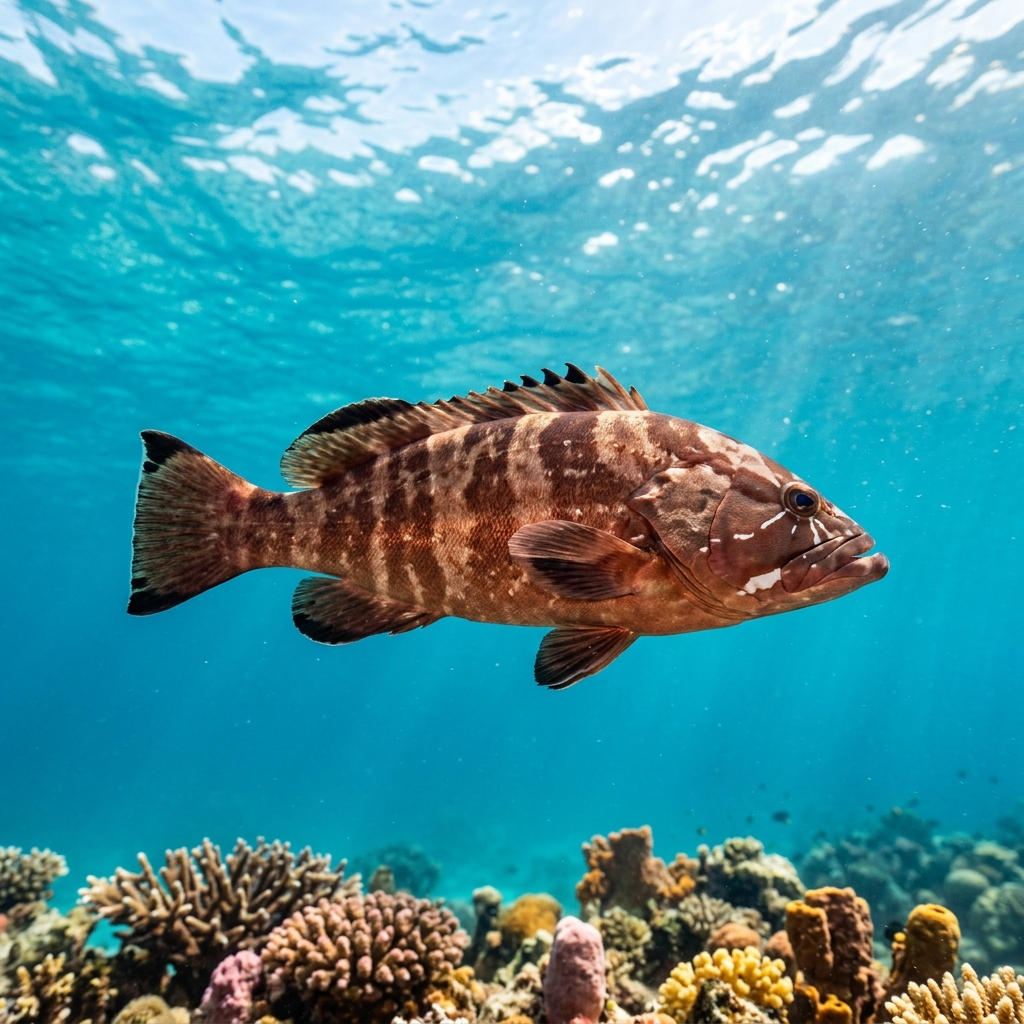
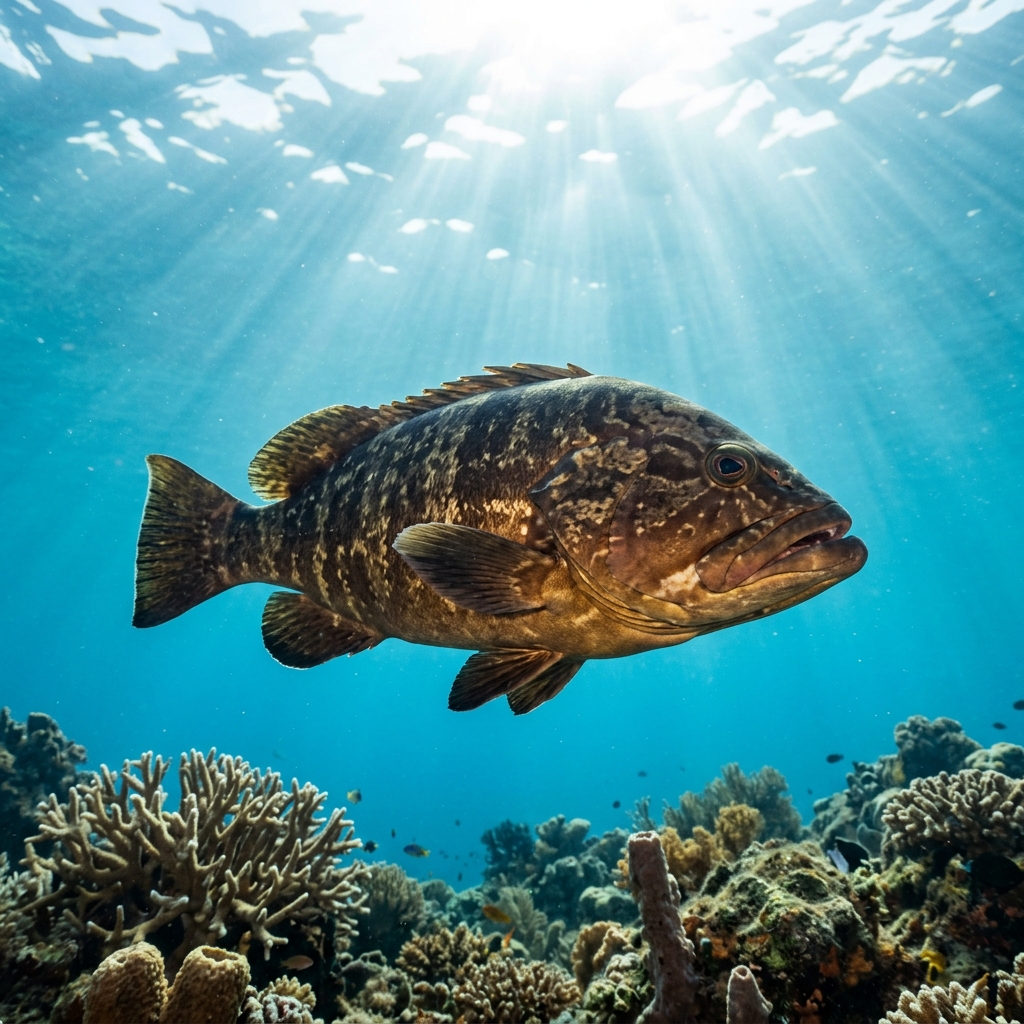
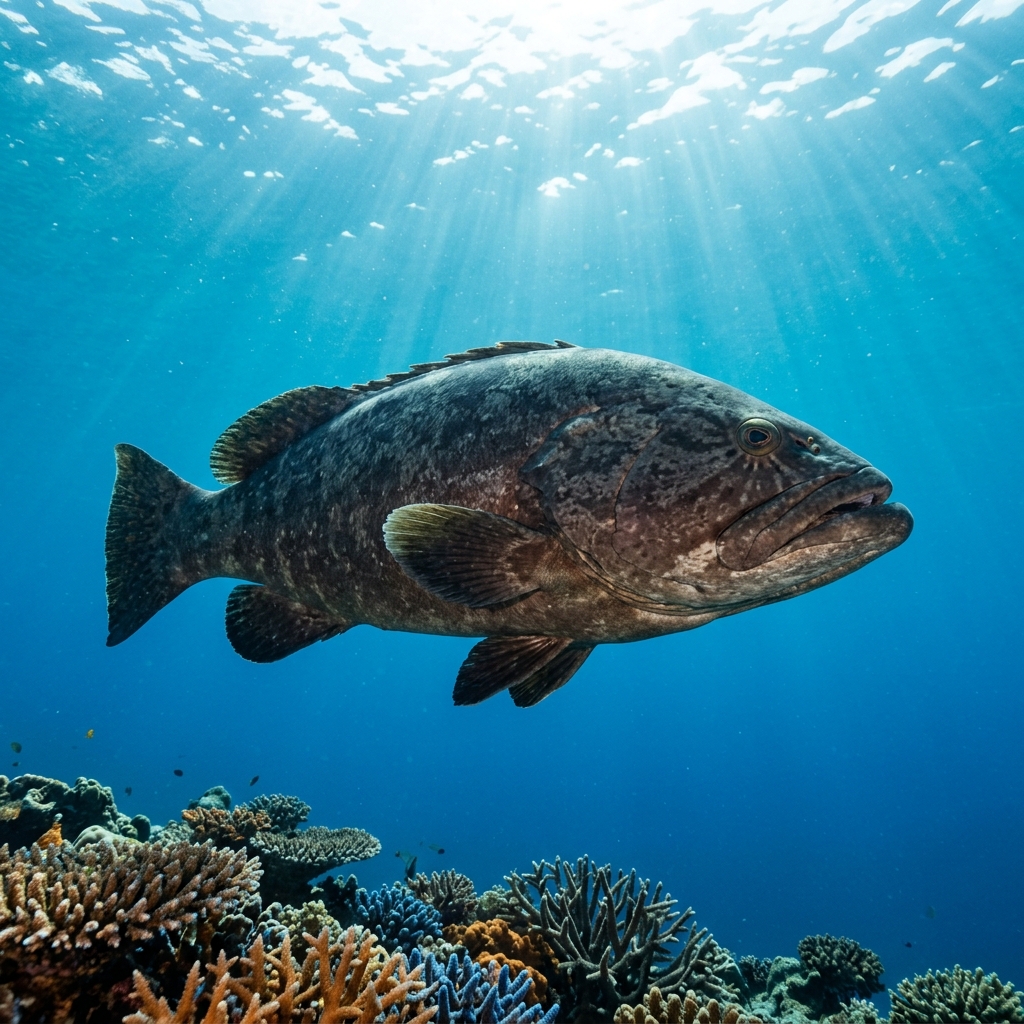
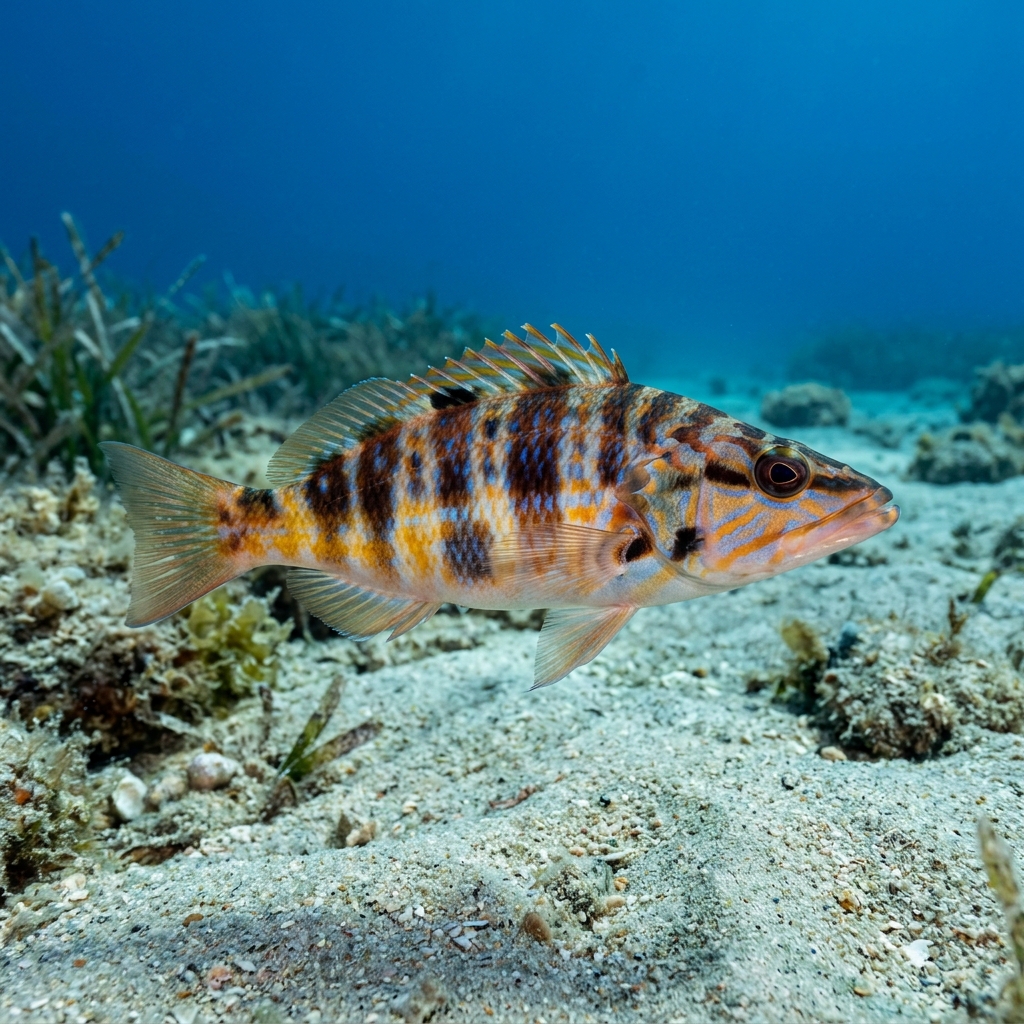
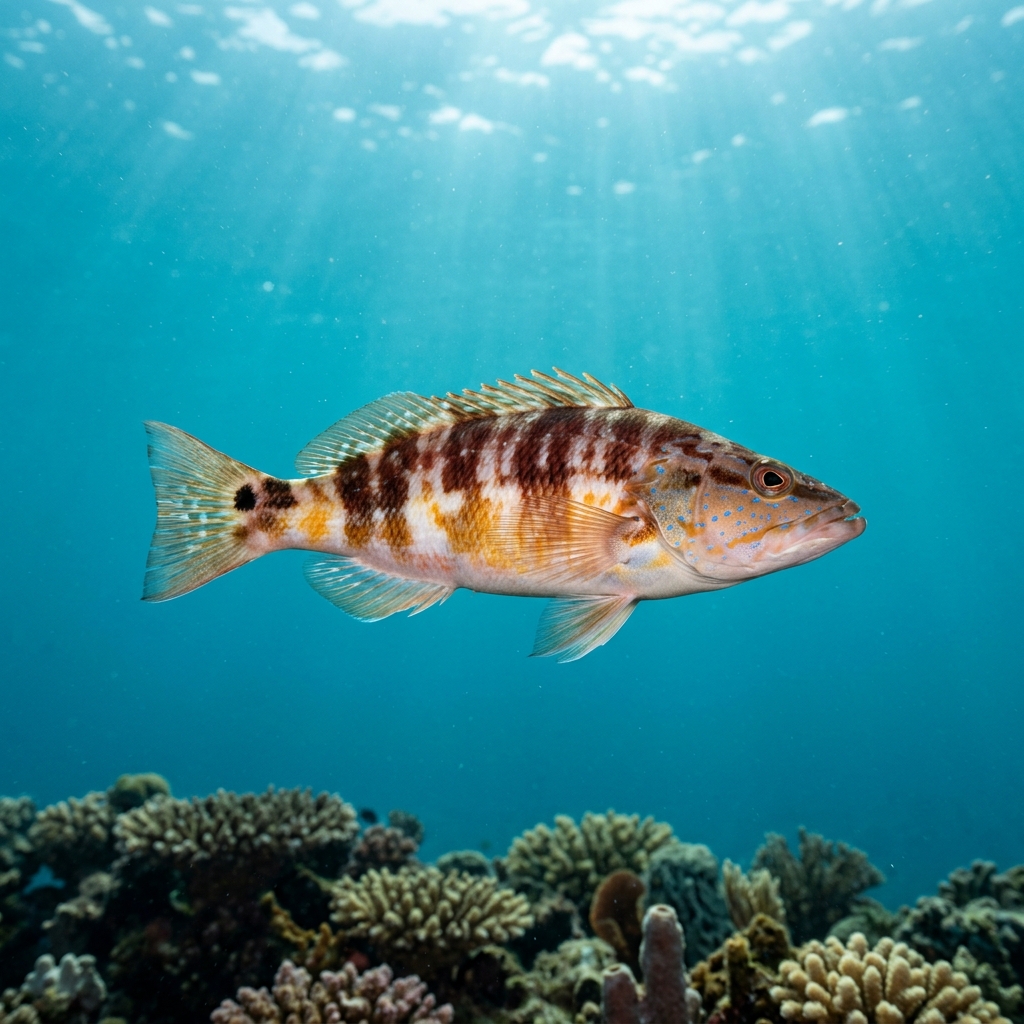
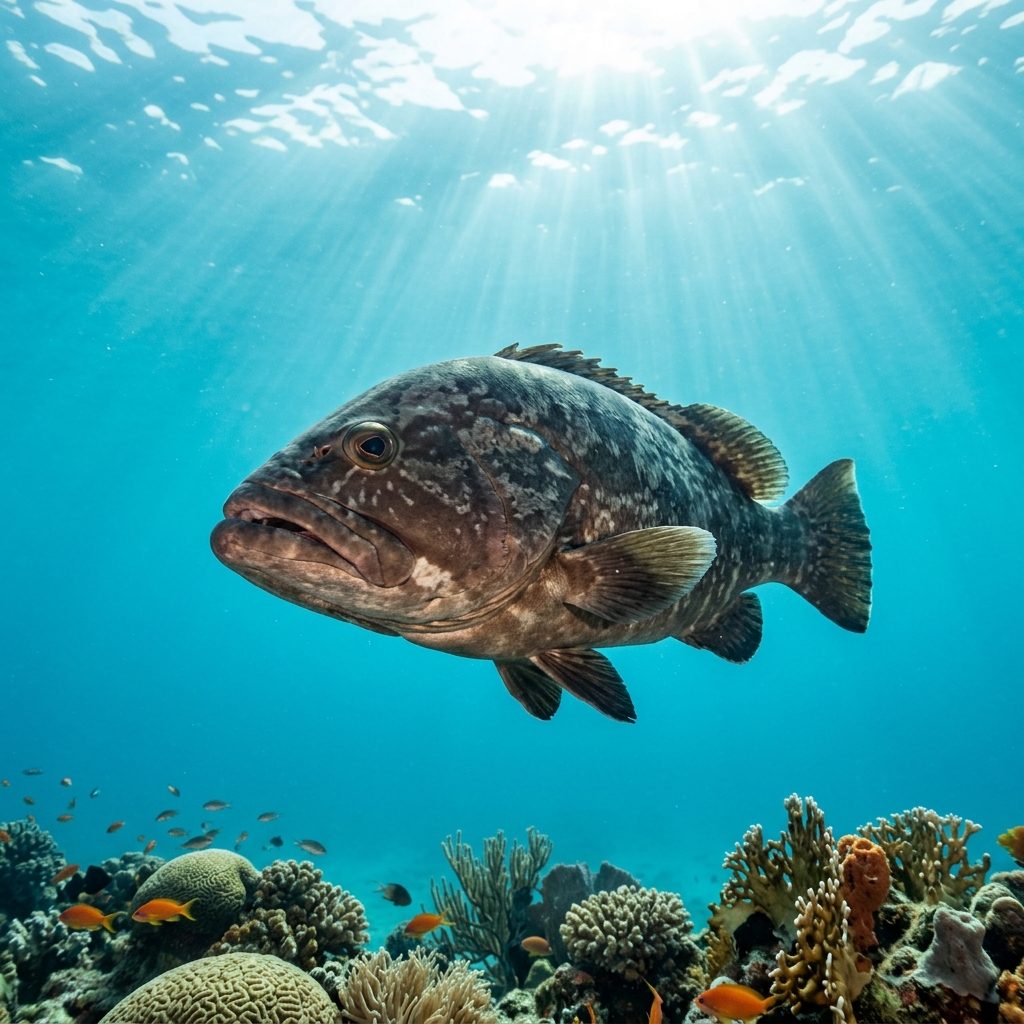
Bulky, heavy-bodied grouper reaching around 84 cm, pale grey to olive with scattered orange-brown spots covering the body, head and fins that give it a freckled look rather than bold banding. The mouth is large and the profile thick-set, typical of the genus, and it often sits still on or near the substrate rather than swimming in open water. Colour intensity varies with background and depth, so the spots can look faint and rusty in low light or vivid orange in shallower, brighter water.
Usually found parked near ledges, wrecks or reef structure rather than out in the open, often hovering close to cover where it can dart in if disturbed. It is not a fast swimmer and tends to hold its ground when divers approach slowly, making it an easy fish to get a good look at once spotted. Sightings skew uncommon at most sites, so it rewards divers who check crevices and overhangs rather than just scanning open reef.
Like many groupers, it is a protogynous hermaphrodite, meaning individuals typically start life as females and some later change sex to male as they grow, which affects the size and behaviour of the fish you see on a reef.
No clear seasonal pattern shows up in the sighting data, and its comfortable range of about 24 to 29 C spans most of the year on the reefs where it is found, so it is best treated as a year-round sighting rather than a seasonal target.
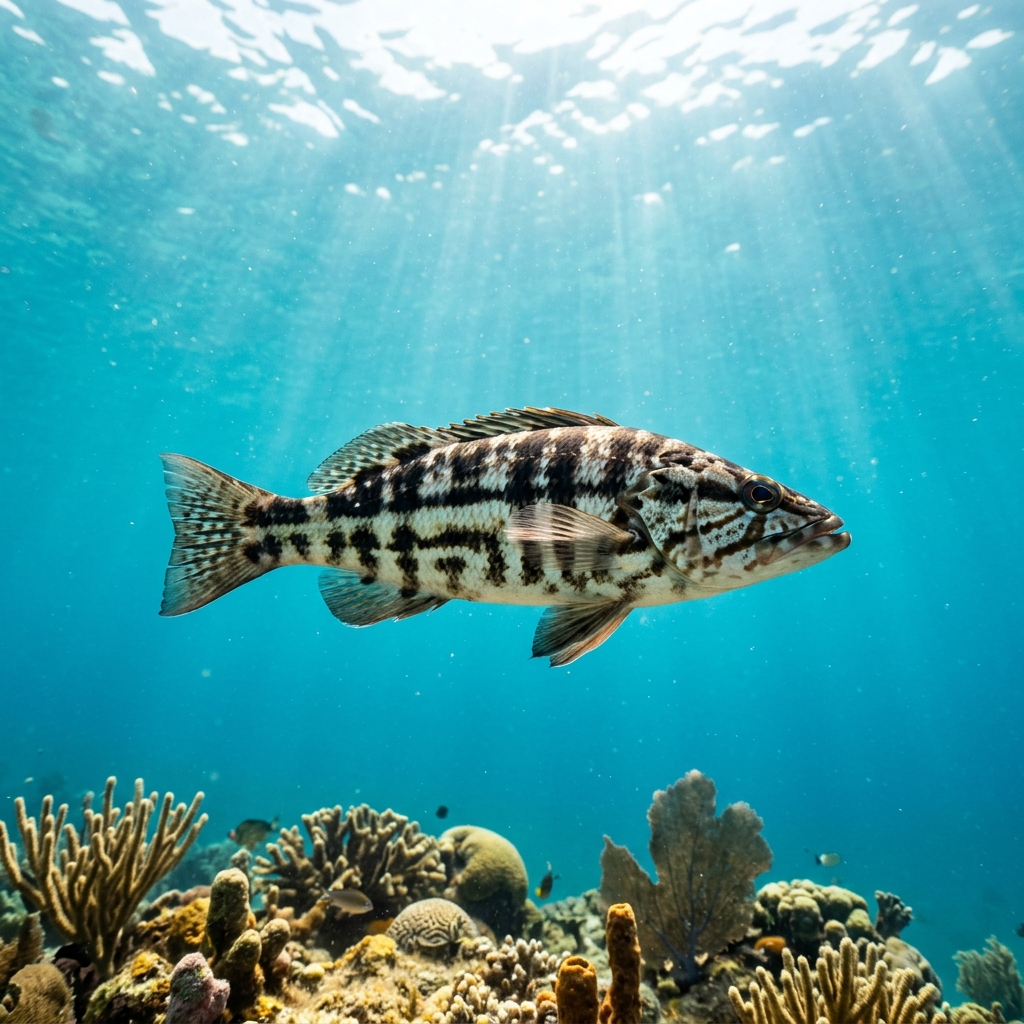
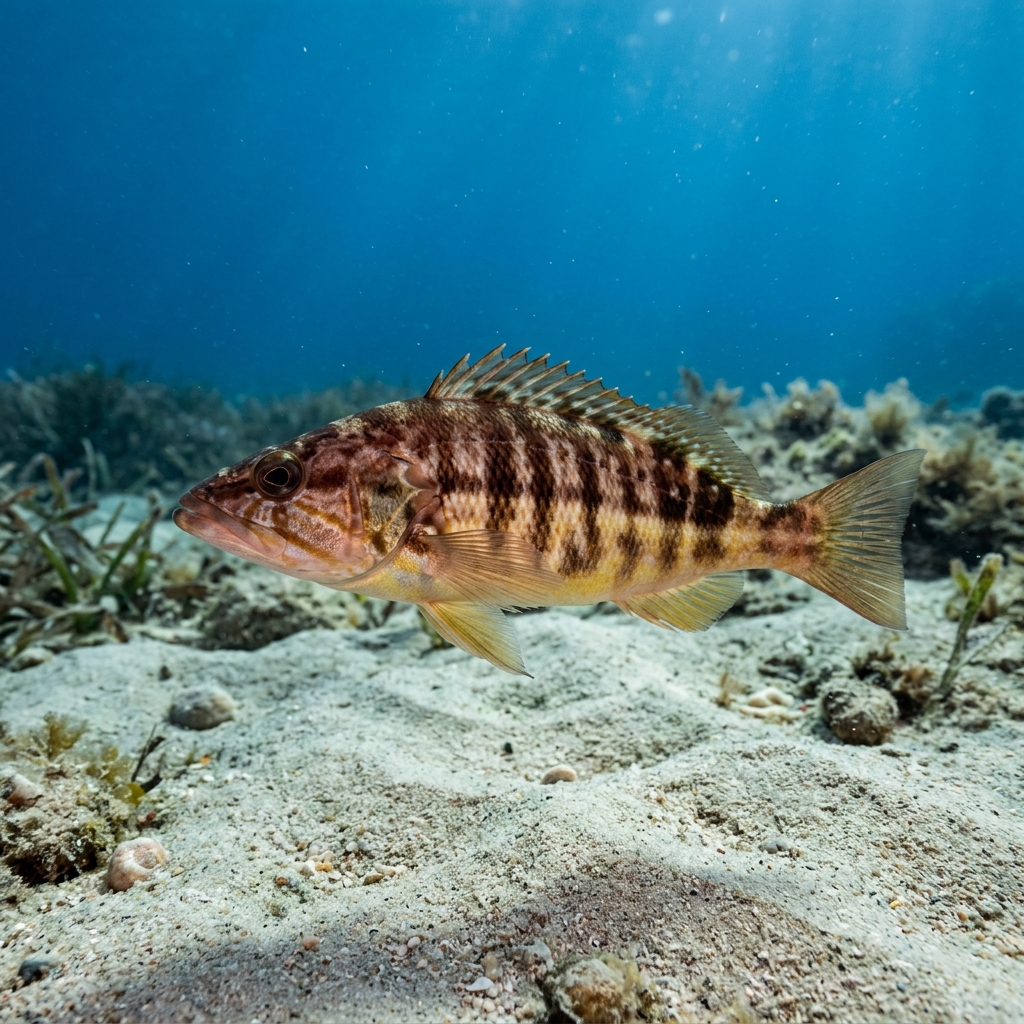
Reef neighbours a diver could mistake it for. Use the identification notes above to tell them apart.
Most reliably logged on reefs in Queensland, Australia, which accounts for the bulk of recorded sightings, with a further reliable presence along Goa in India. Smaller but real populations turn up in West Papua, Indonesia, and scattered sites in New South Wales and Western Australia, with occasional records from Sabah, Malaysia.
Mapping where Orange-spotted Grouper is logged…
Queensland, Australia is the most consistent place to find them, with further sightings logged in Goa, India, and West Papua, Indonesia. Smaller numbers are recorded in New South Wales, Western Australia and Sabah, Malaysia.
There is no strong season in the data, and the species sits comfortably in water from about 24 to 29 C, so it is seen year-round wherever it occurs rather than during a specific window.
Look for a thick-bodied grouper up to around 84 cm with a pale grey to olive base colour covered in scattered orange-brown spots across the body and fins. It tends to hold still near ledges or structure rather than swim openly in the water column.
They reach around 84 cm in length, making them a solid, heavy-bodied fish rather than a small reef species. Most individuals divers encounter will be somewhat smaller than this maximum.
Yes, it is a protogynous hermaphrodite, meaning most fish begin life as females and some transition to male later on. This is common across groupers and shapes the size structure seen on a reef.
Site and sighting data is aggregated from diver logs, iNaturalist and GBIF. For taxonomy and conservation status:
Blacktip Grouper
2,726 sites