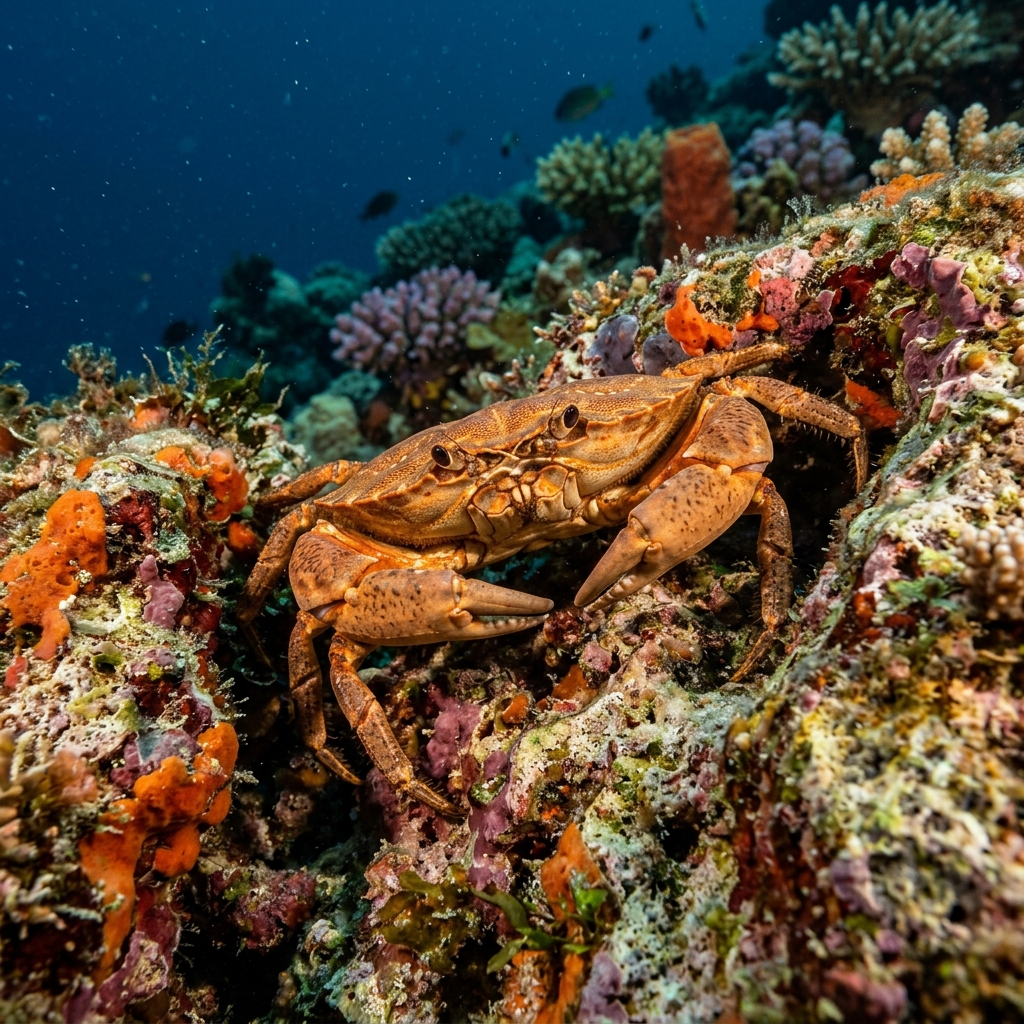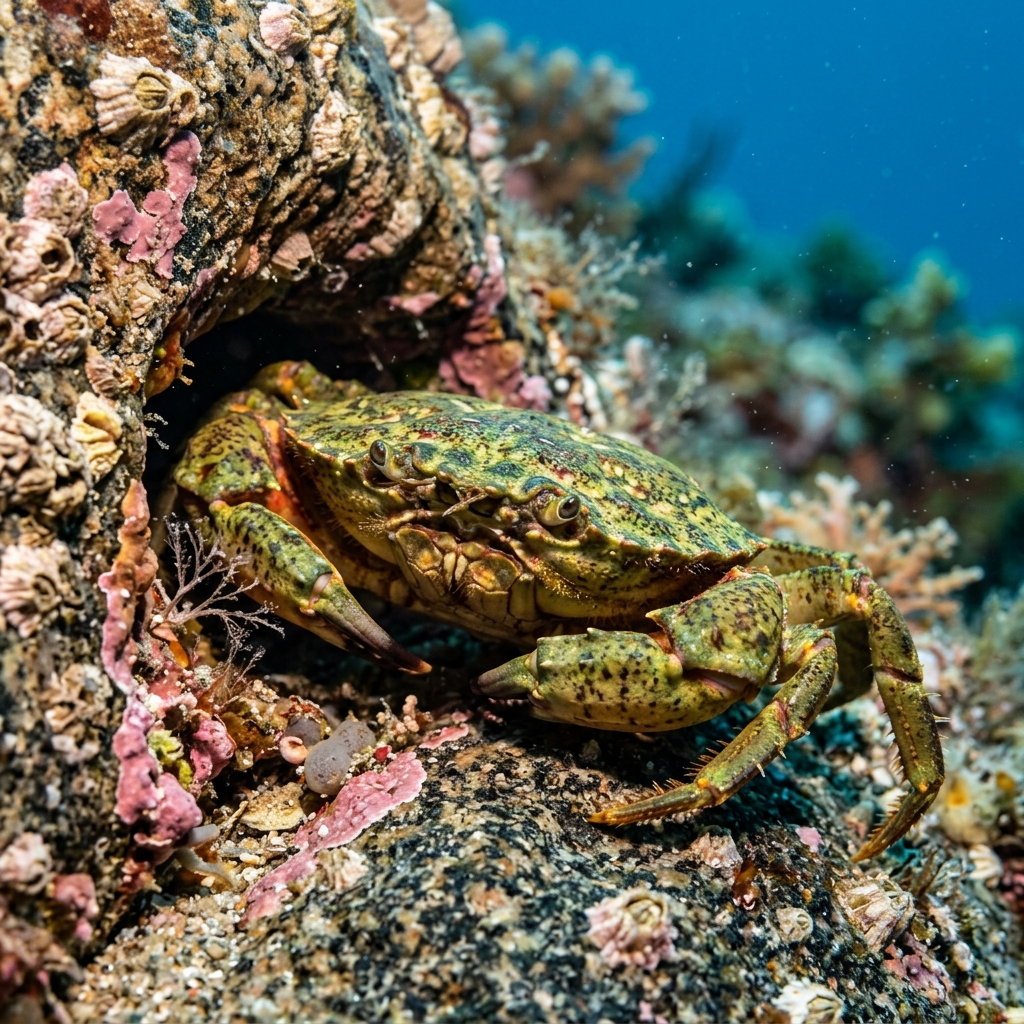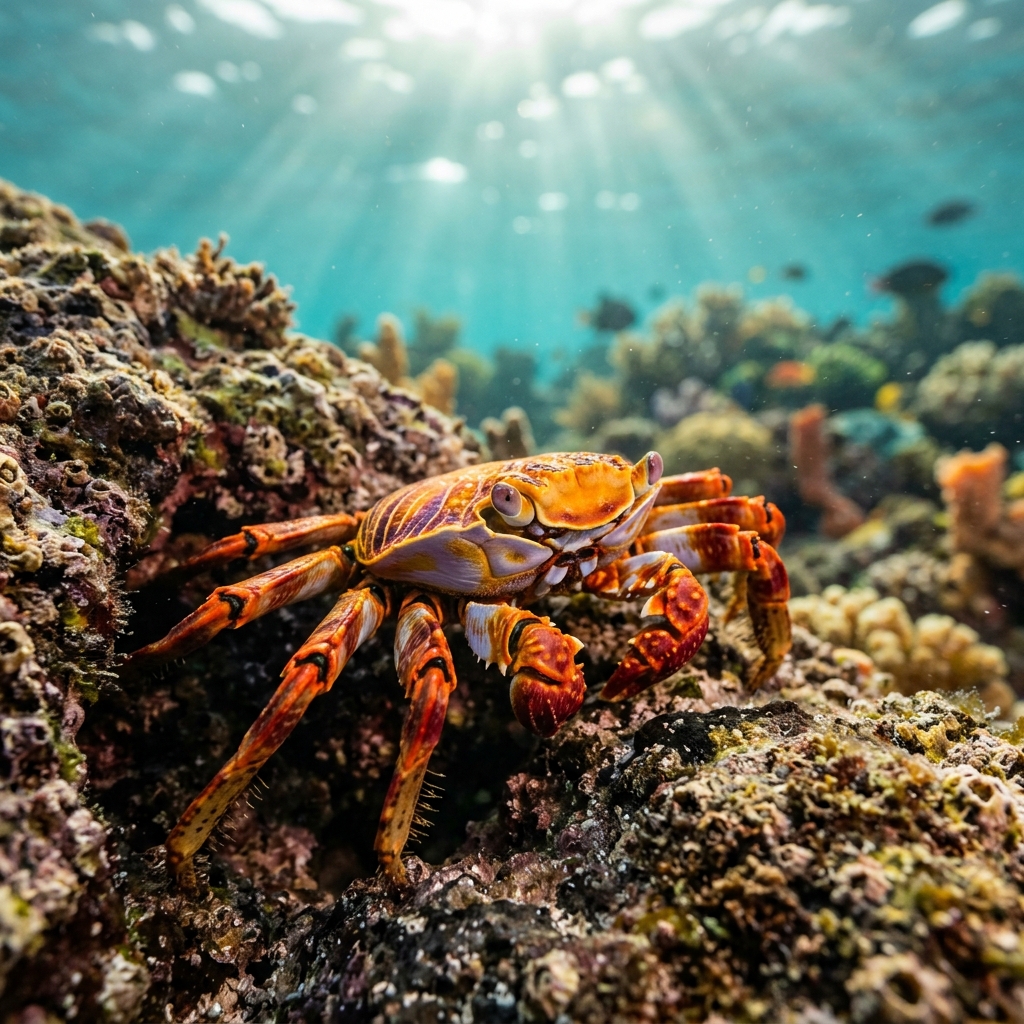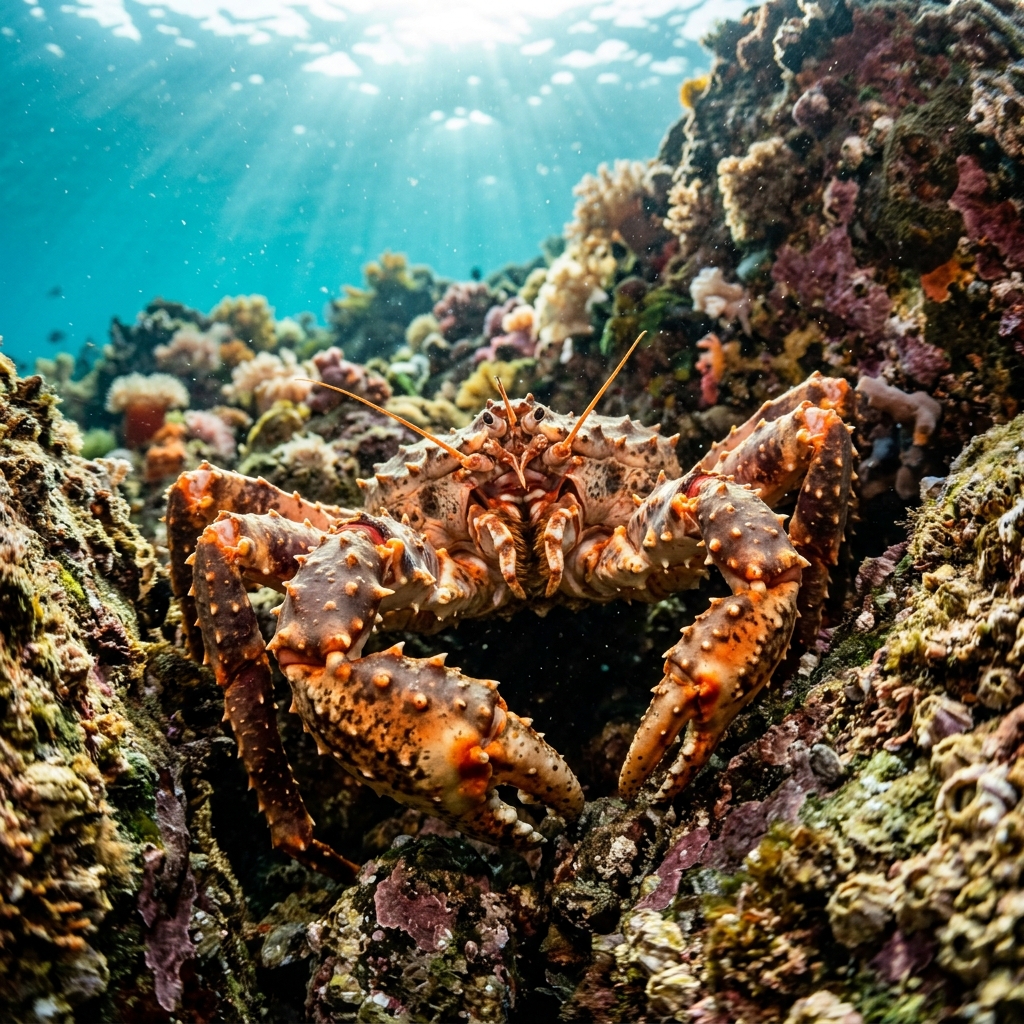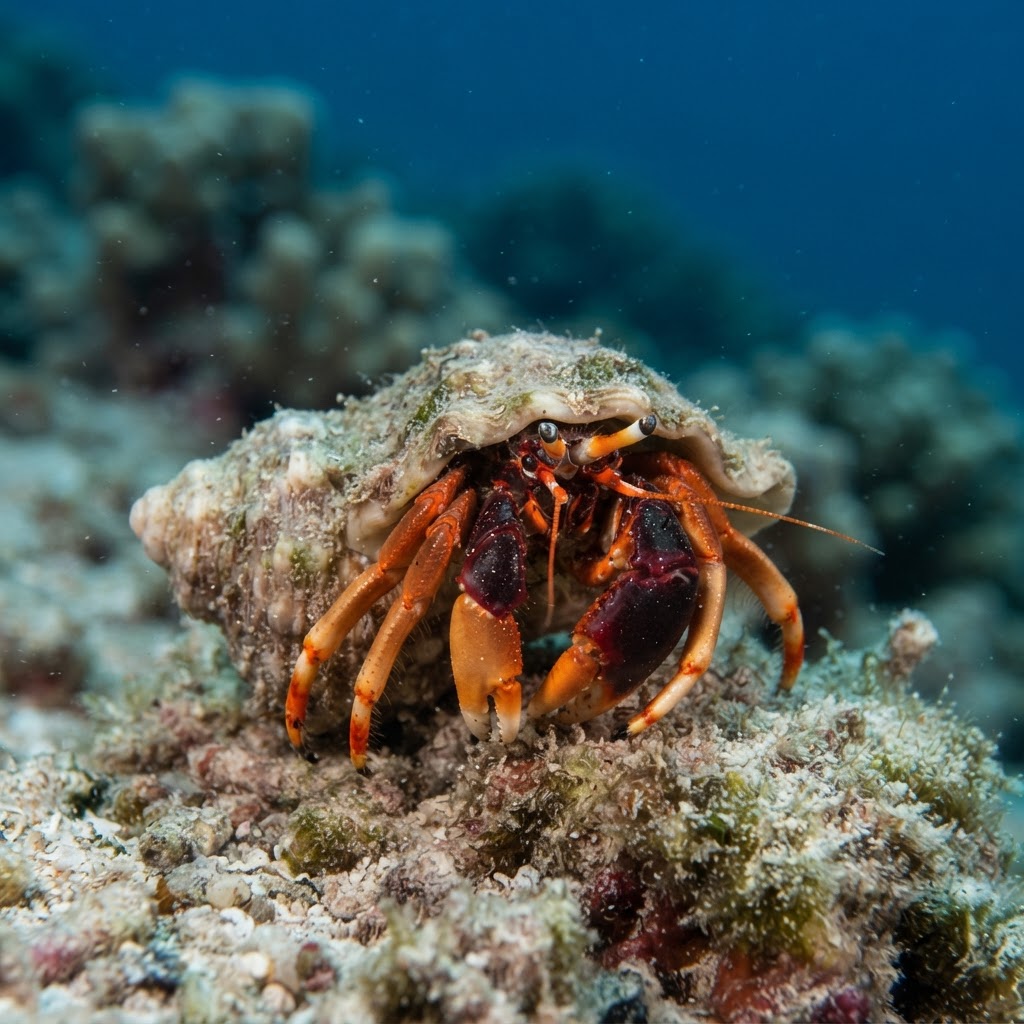
Calcinus tibicen
Look for this small reef crab tucked in rubble around the Yucatán Peninsula, year-round in warm 24-30C water.
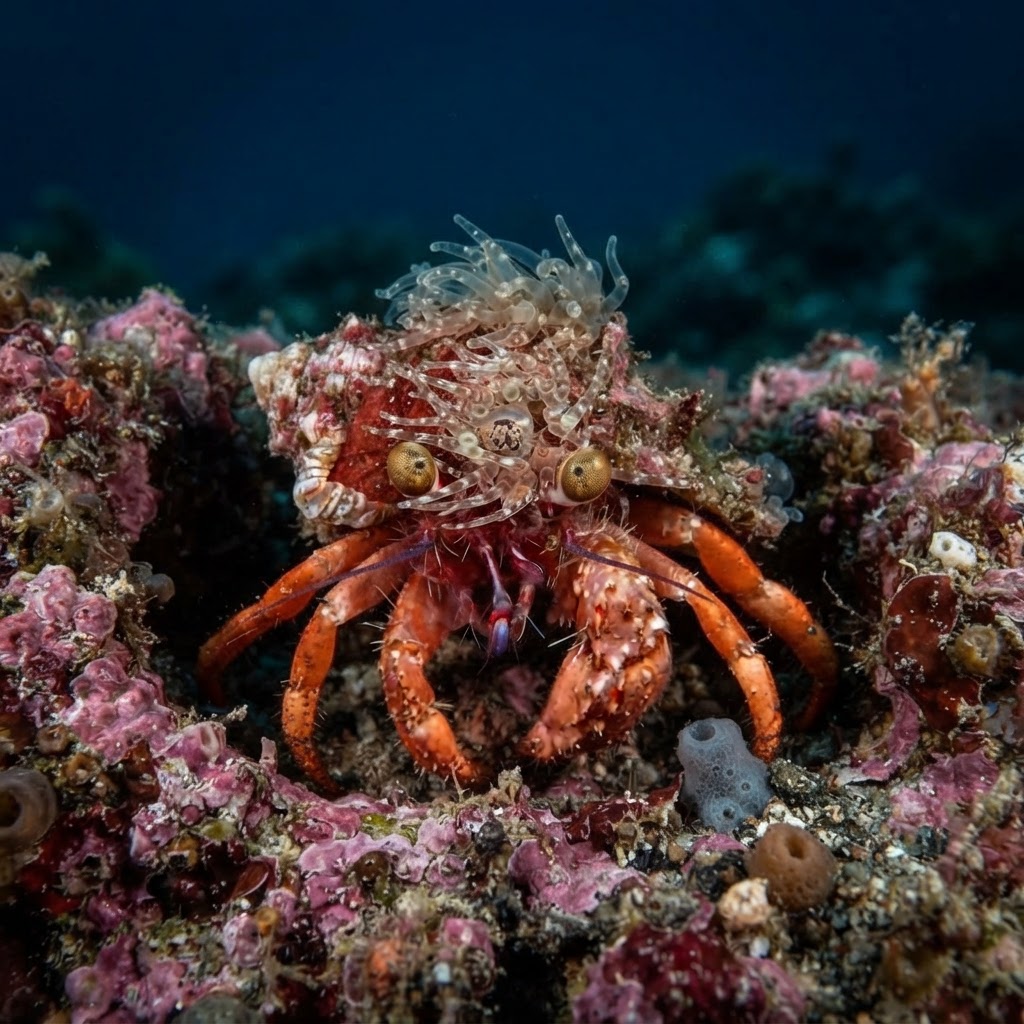
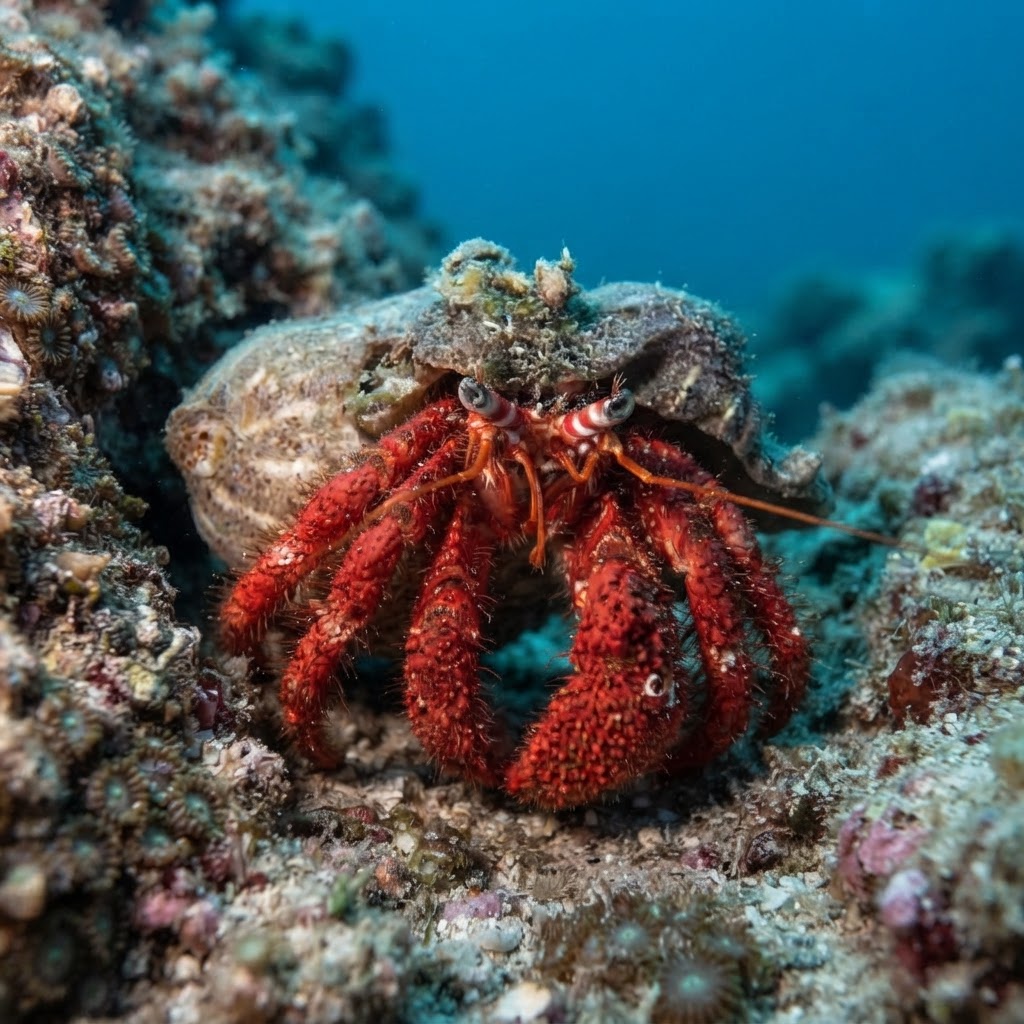
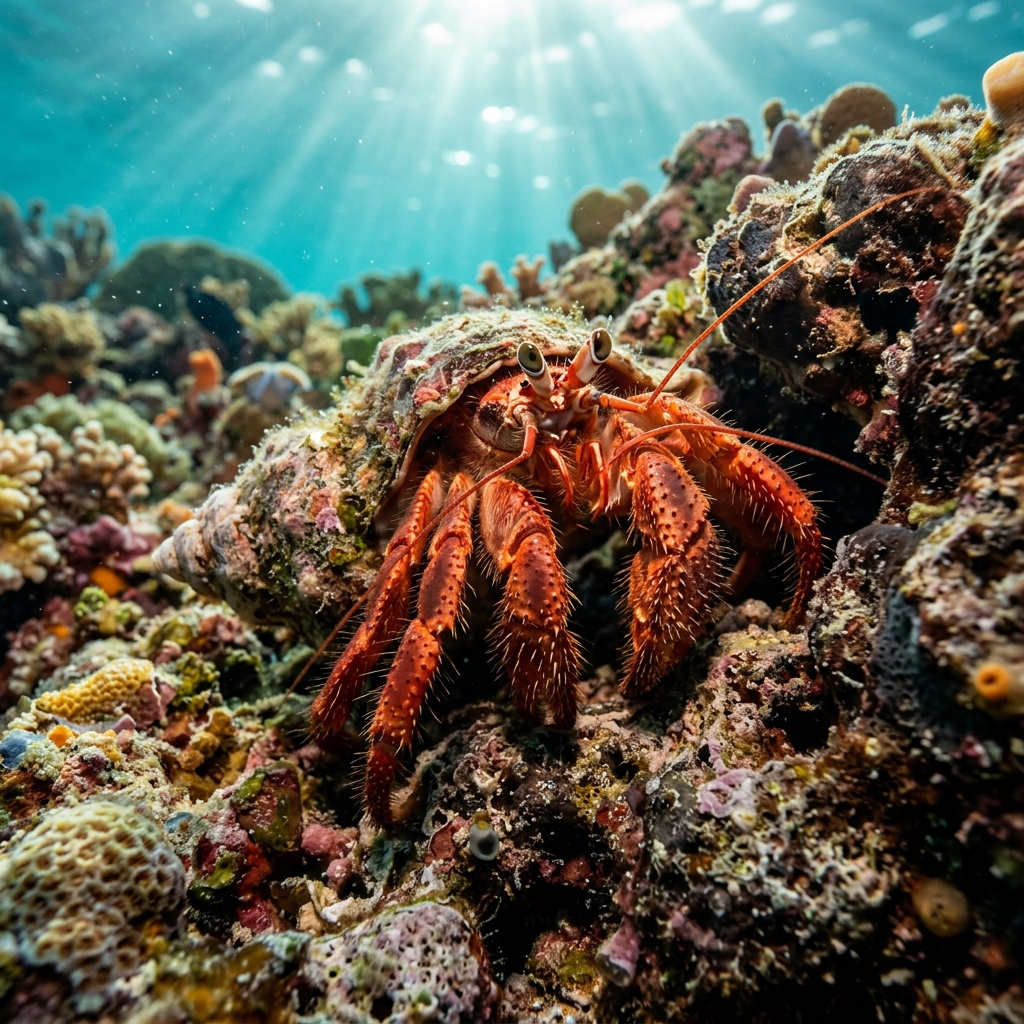
Look for a small hermit crab carrying a snail shell with claws tipped in bright orange, the giveaway that separates it from plainer reef hermits. The eyestalks are typically dark blue to black, and the legs show faint banding. It rarely sits in the open, so most sightings are a claw or eyestalk poking out from a shell wedged in rubble or reef crevices. Size in the water is modest, closer to a thumbnail than a fist, so divers tend to notice the colour before the shape.
Divers usually find it wedged into a borrowed shell among rubble, coral rock, or shallow reef crevices, often only visible when it extends a claw or eyestalk to test the water. It moves slowly and retreats into its shell at the first sign of disturbance rather than fleeing, so a patient, still diver gets the better look. Most sightings happen on shallower parts of the reef where light and rubble cover are both good, rather than out on open sand or deep walls.
Like other hermit crabs it does not grow its own shell, so it recycles empty snail shells and trades up to a bigger one as it grows, which is why divers sometimes see several loitering near a freshly vacated shell.
No clear seasonal pattern shows in the data, and with a comfortable range of 24.5 to 30.5C this is a year-round find on Caribbean and western Atlantic reefs. Any month of diving in its range gives a reasonable shot, though it stays an uncommon rather than guaranteed sighting.
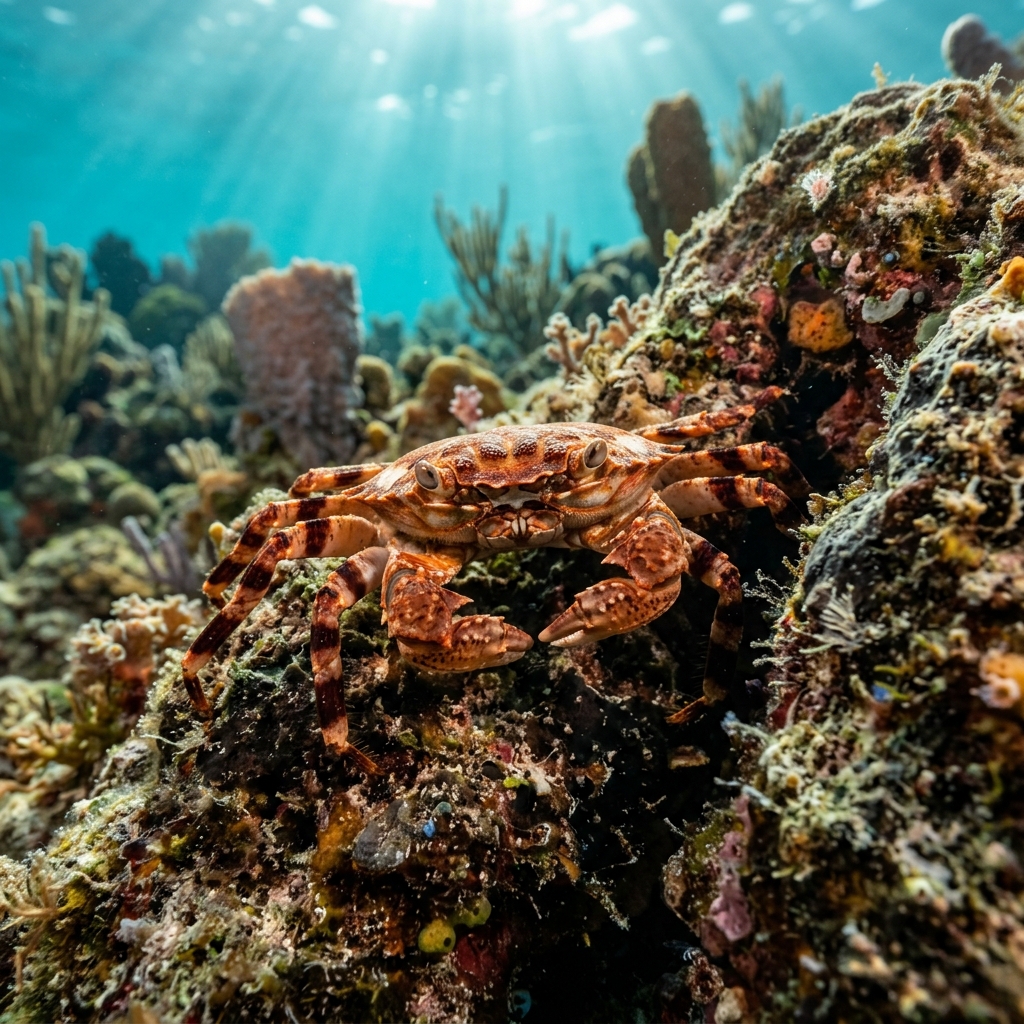
Reef neighbours a diver could mistake it for. Use the identification notes above to tell them apart.
Most commonly logged around the Yucatán Peninsula in Mexico, which accounts for the bulk of sightings, followed by Florida in the United States and Bahia in Brazil. It also turns up reliably along Colombia's Caribbean coast, around Bermuda, and off San Juan in Puerto Rico, with smaller pockets in Ocho Rios, Jamaica and around Curacao.
Mapping where Orange-clawed Hermit Crab is logged…
Your best odds are around the Yucatán Peninsula in Mexico, plus Florida and Bahia in Brazil. Colombia's Caribbean coast, Bermuda, and San Juan in Puerto Rico also produce regular sightings.
There is no strong season in the sighting data, and its warm-water niche of roughly 24.5 to 30.5C means it can be found year-round on tropical and subtropical reefs.
Check the claws first: bright orange tips are the clearest marker. It carries a scavenged snail shell, has dark blue-black eyestalks, and stays small and slow-moving, usually tucked into rubble or reef crevices rather than out in the open.
They stay small, roughly thumbnail to a few centimetres across including the shell they occupy, making them an easy detail to miss on a reef unless you are looking closely at rubble and crevices.
No, they pose no threat to divers. They are small, shy, and retreat into their borrowed shell rather than react aggressively if disturbed.
Site and sighting data is aggregated from diver logs, iNaturalist and GBIF. For taxonomy and conservation status:
European Green Crab
2,469 sites