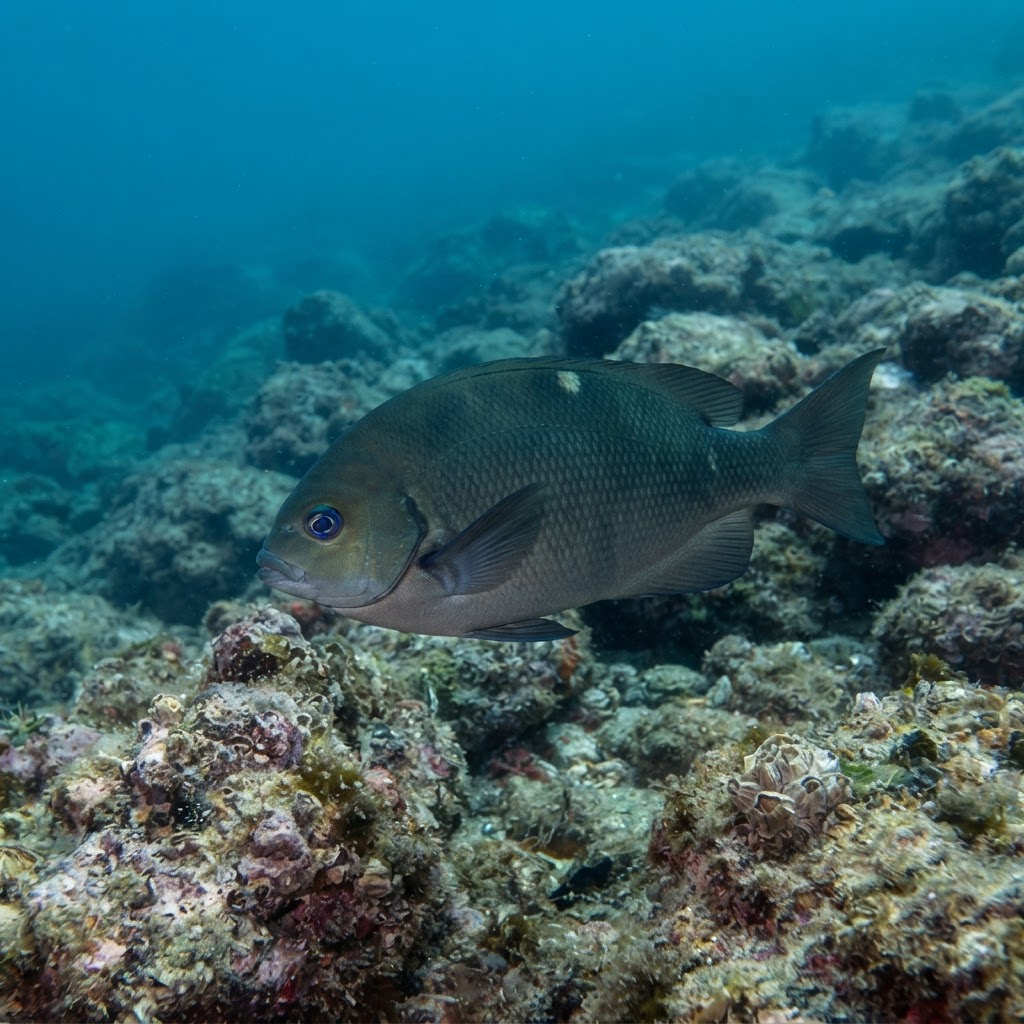
Girella nigricans
Olive-green reef fish with a pale eye spot, common year-round across California kelp forests from 15 to 24 C.
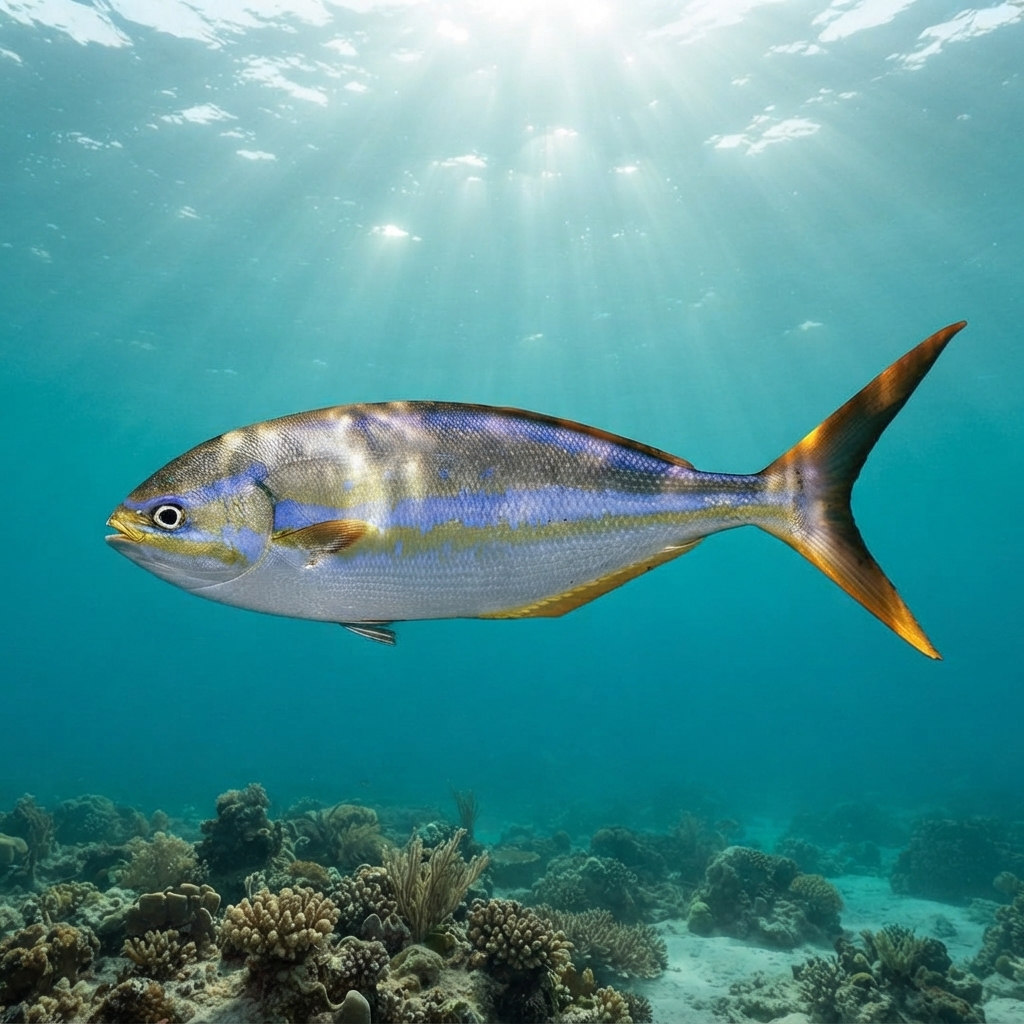
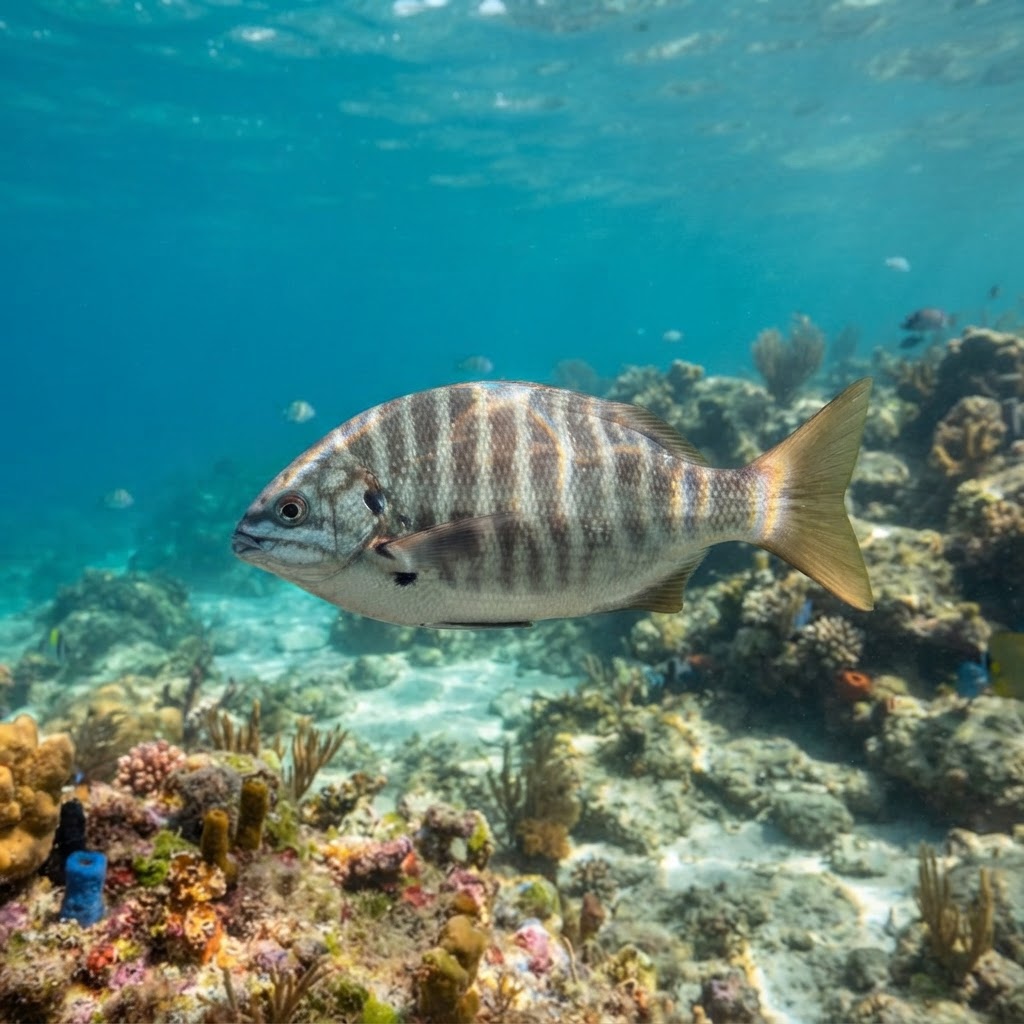
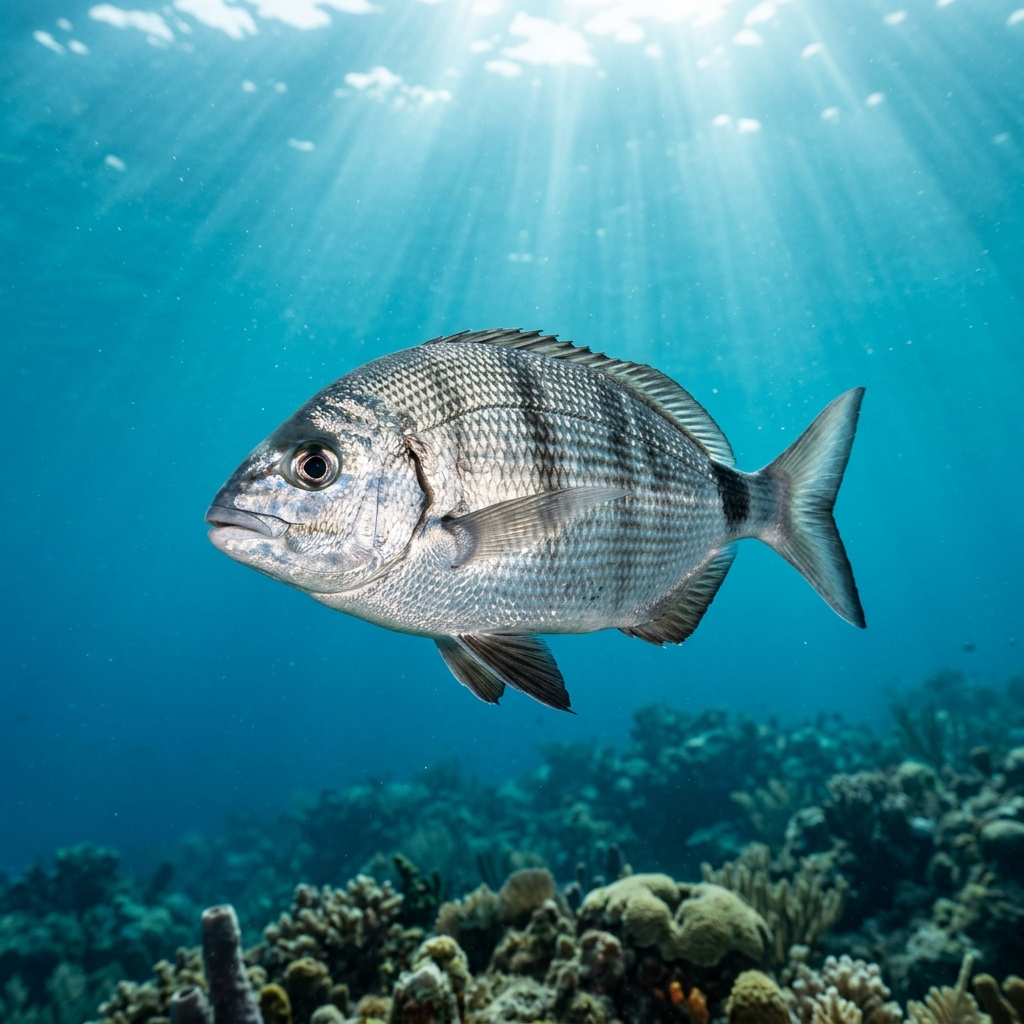
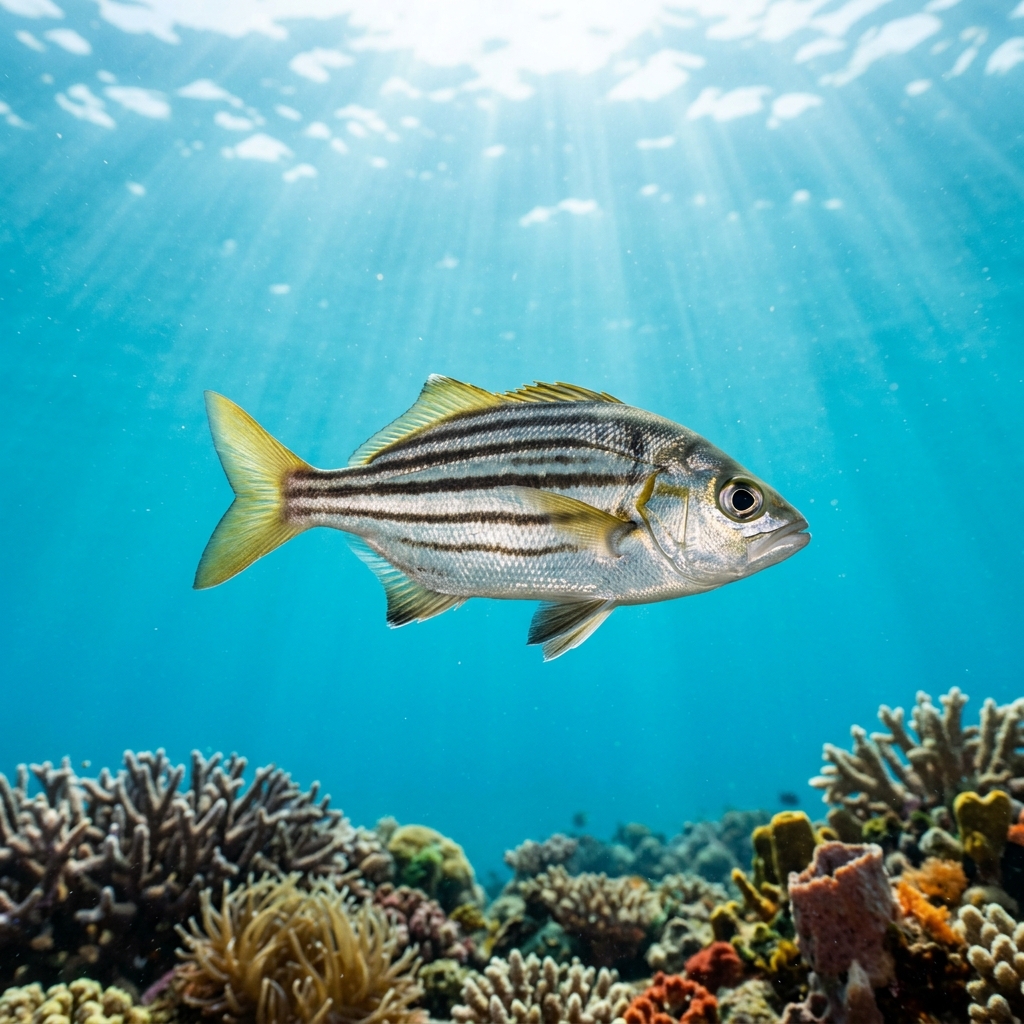
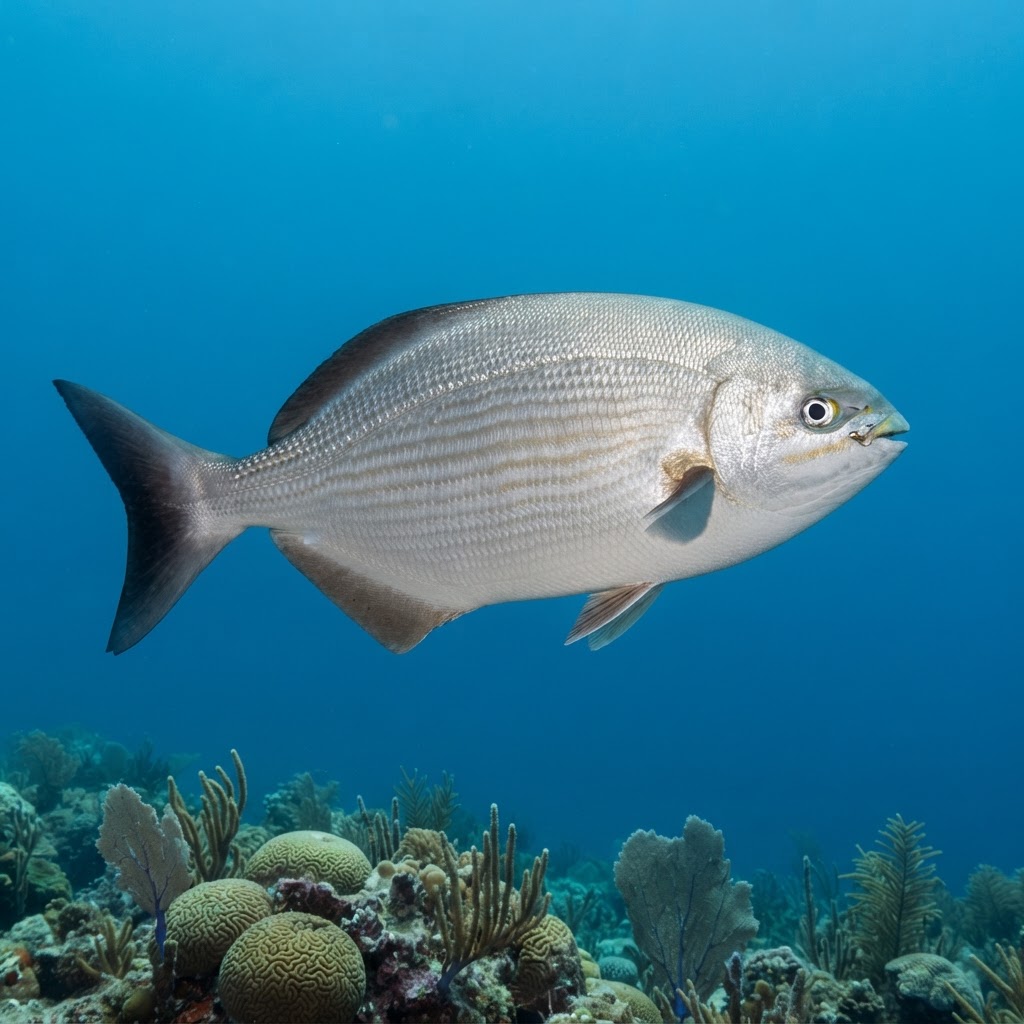
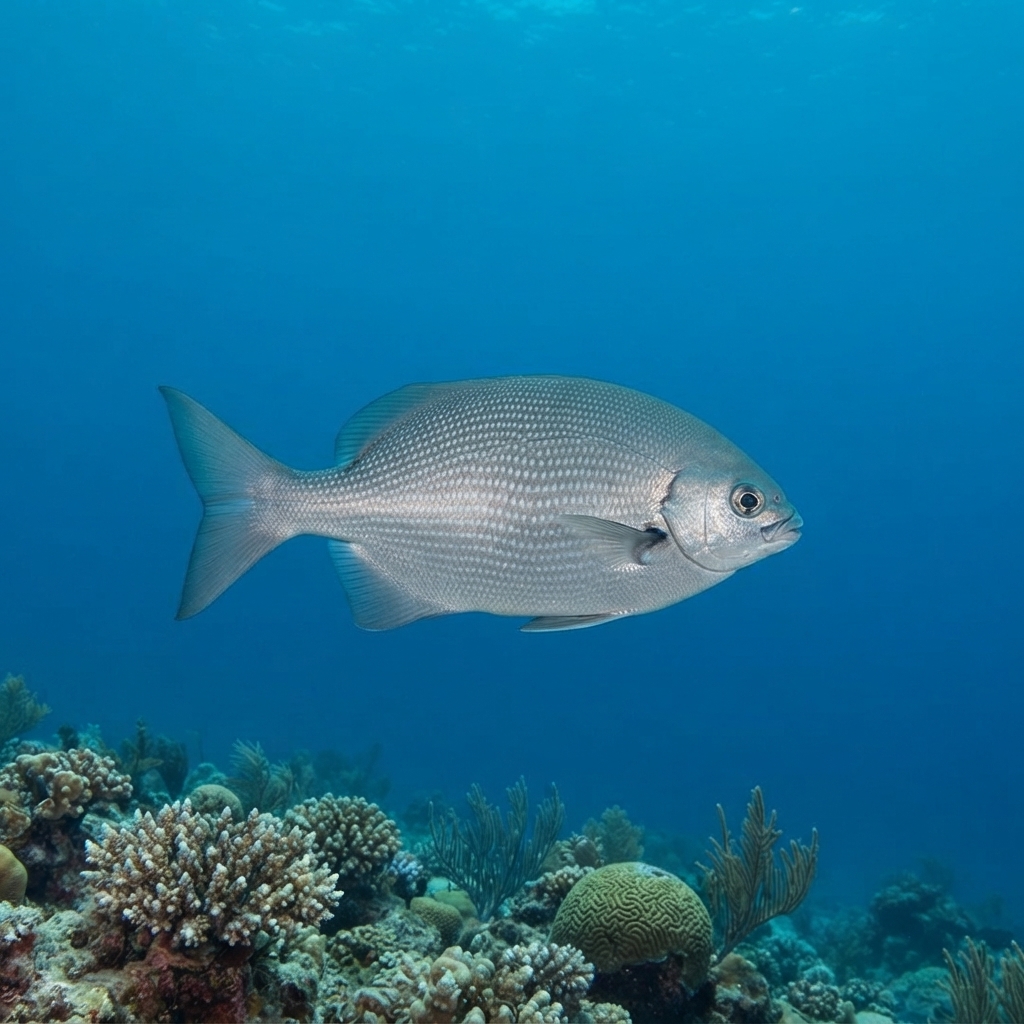
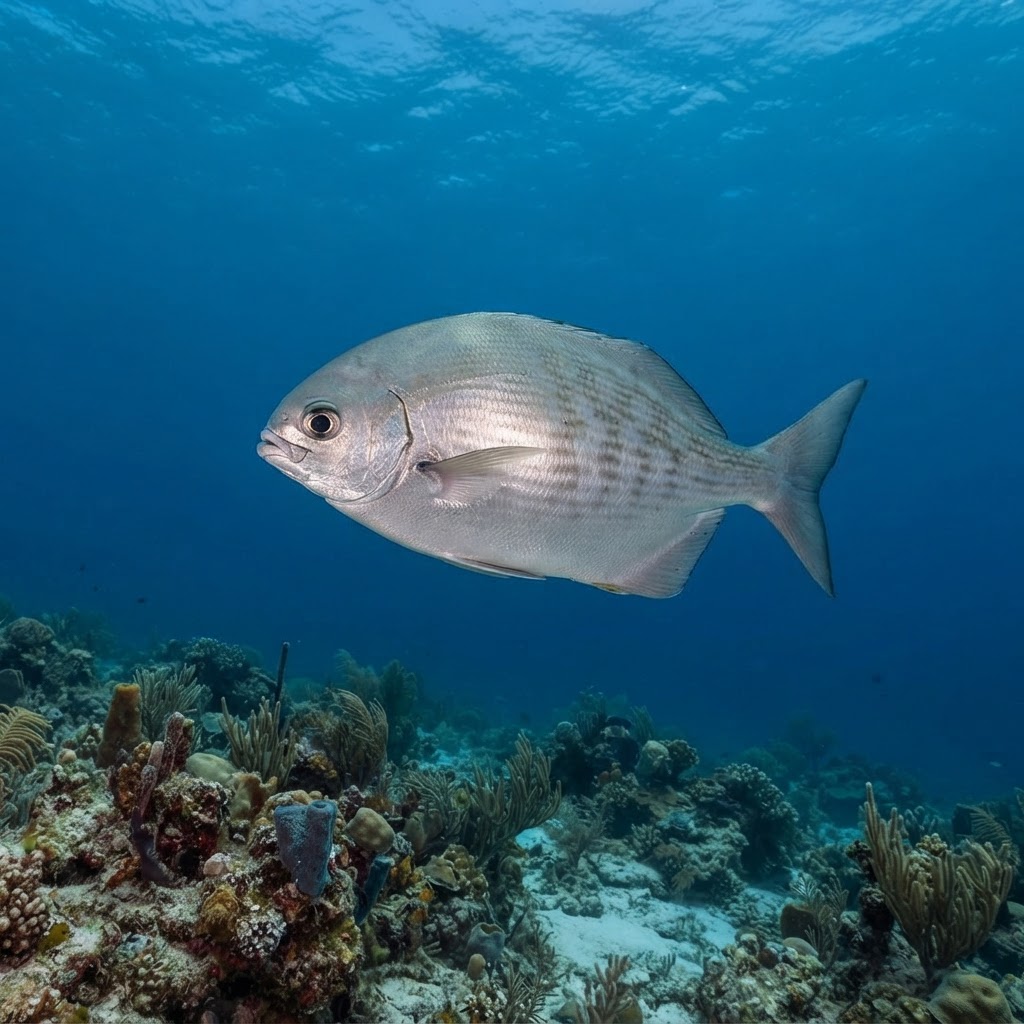
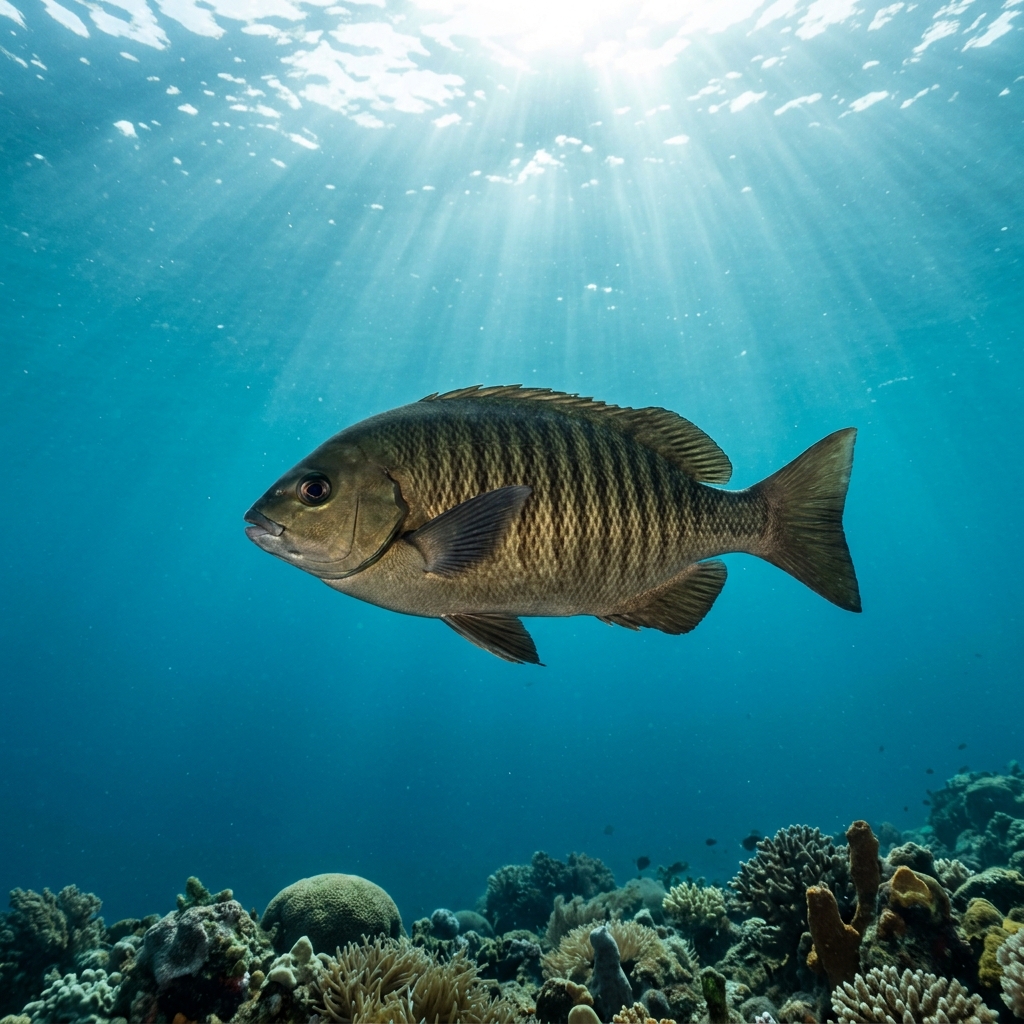
Deep, oval body up to about 46 cm, olive-green to grey-green overall with a faint pale blotch behind each eye that gives the species its name. Look for one or two light patches high on the back near the dorsal fin on adults, and a blunt head with a small mouth suited to grazing algae off rock. It swims with a steady, unhurried kelp-forest gait rather than darting, which makes the eye spot easy to pick out even at a glance.
Usually seen grazing algae off rock and reef surfaces in kelp forests, moving in loose groups rather than tight schools. It is generally unbothered by divers and will often keep feeding within a metre or two of a slow-moving photographer. Most sightings are in the shallower to mid part of its depth range, from a few metres down to around 20 metres, where light supports the algae it feeds on.
Despite its heavy, chub-like build it is an almost pure herbivore, spending most daylight hours rasping algae off rocks with small, dense teeth built for grazing rather than hunting.
Sighting data shows no strong seasonal pattern, so it is logged year-round; its comfort range of roughly 15.4 to 24.2 C spans California's normal seasonal swing, so divers see it in both cooler winter and warmer summer water.
Reef neighbours a diver could mistake it for. Use the identification notes above to tell them apart.
Most reliably logged along California, especially in and around kelp forest sites, with a strong secondary presence in Baja California, Mexico. Within the United States it is one of the most consistently reported reef fish on Californian dive logs, making it a near-guaranteed encounter on a typical kelp dive there.
Mapping where Opaleye is logged…
California is the stronghold, particularly its kelp forest dive sites, where it is one of the most frequently logged reef fish. It also turns up reliably along Baja California, Mexico, just south of the border.
There is no strong seasonal pattern in sighting data, so it is present year-round on Californian reefs. Its recorded temperature range of about 15 to 24 C covers both the cooler and warmer months there.
Look for an olive-green, deep-bodied fish up to 46 cm with a pale blue-white spot behind each eye. It grazes slowly over rock and kelp rather than schooling tightly or darting away from divers.
They typically reach around 46 cm in length, giving them a solid, chub-like profile that stands out among smaller kelp forest fish.
No, they pose no threat to divers. They are herbivores that graze algae and generally ignore divers entirely.
Their diet is almost entirely algae, which is unusual among reef fish of similar size and build, and their teeth are shaped specifically for scraping it off rock surfaces rather than catching prey.
Site and sighting data is aggregated from diver logs, iNaturalist and GBIF. For taxonomy and conservation status:
Blue Sea Chub
554 sites