Girella tricuspidata
Spot luderick along New South Wales and New Zealand reefs between January and July. Here's what to look for and where populations are strongest.
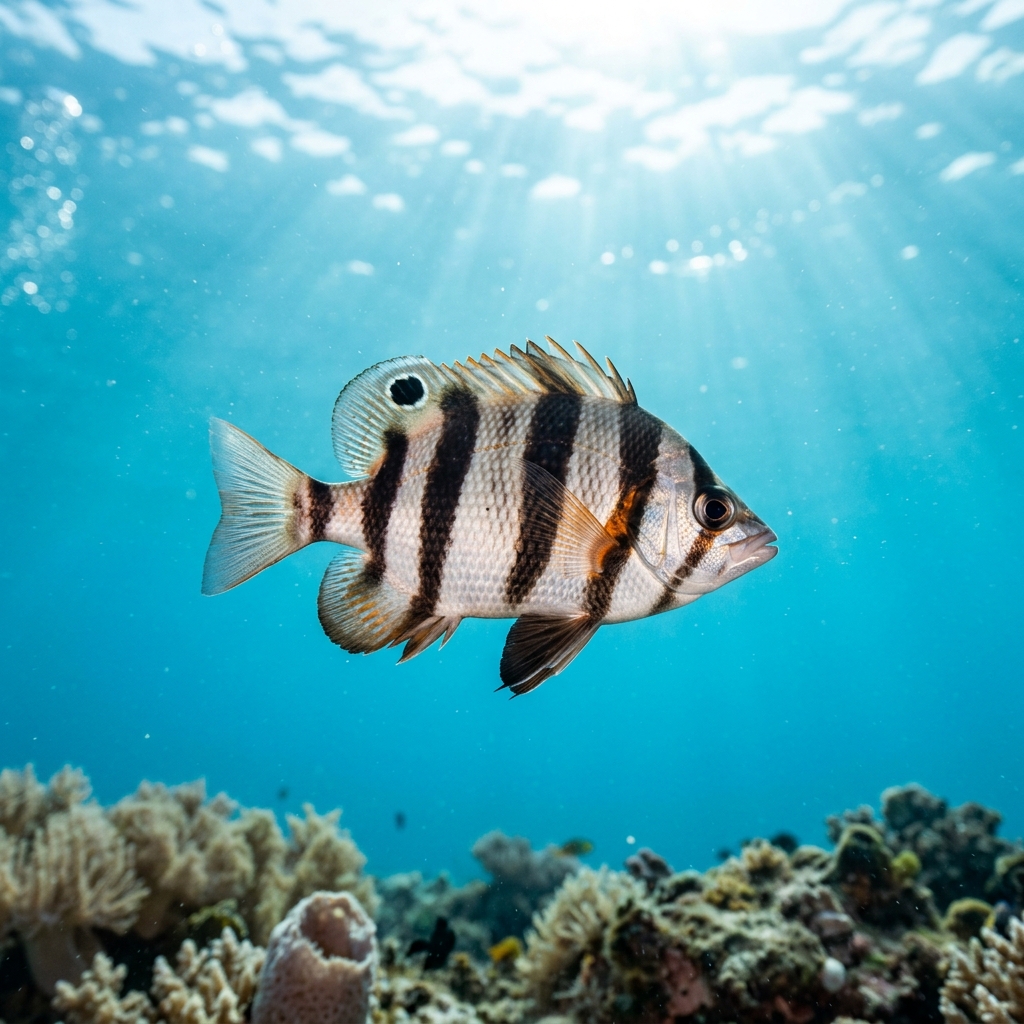
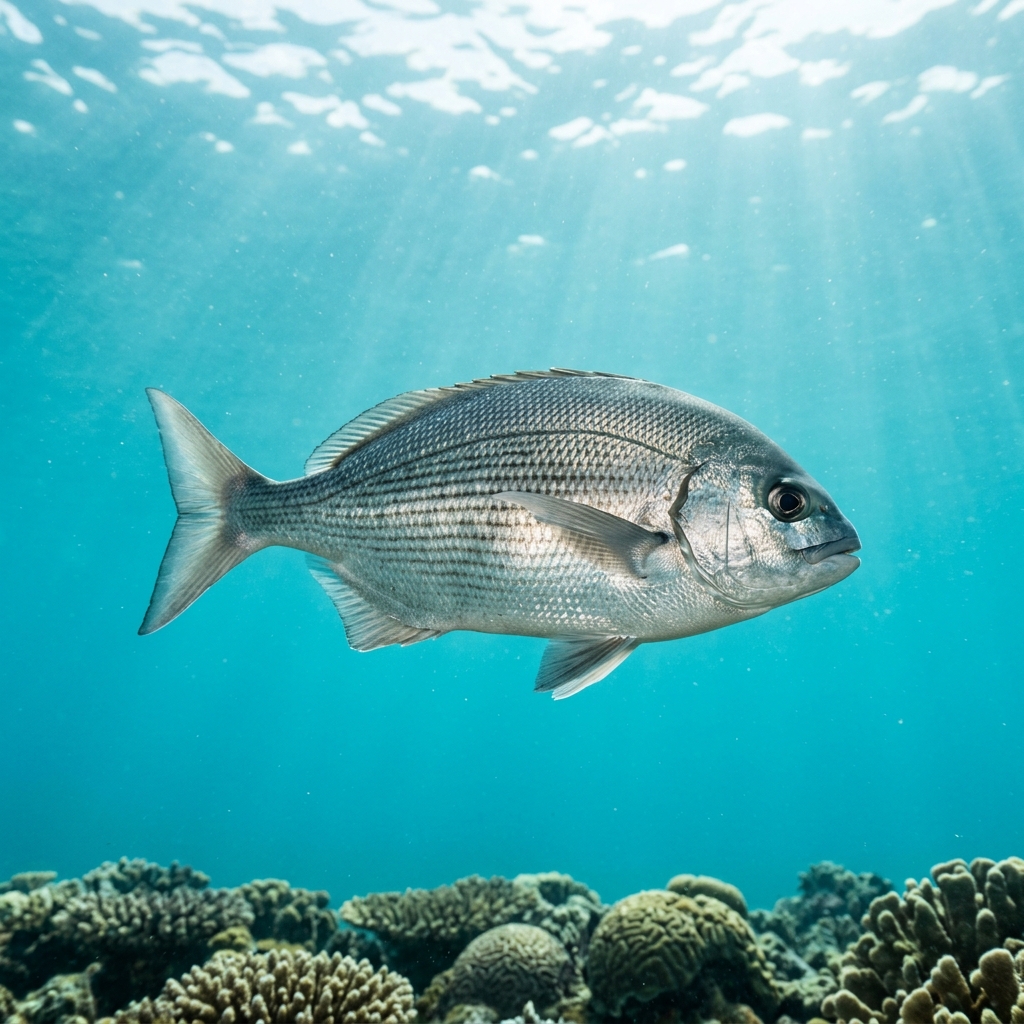
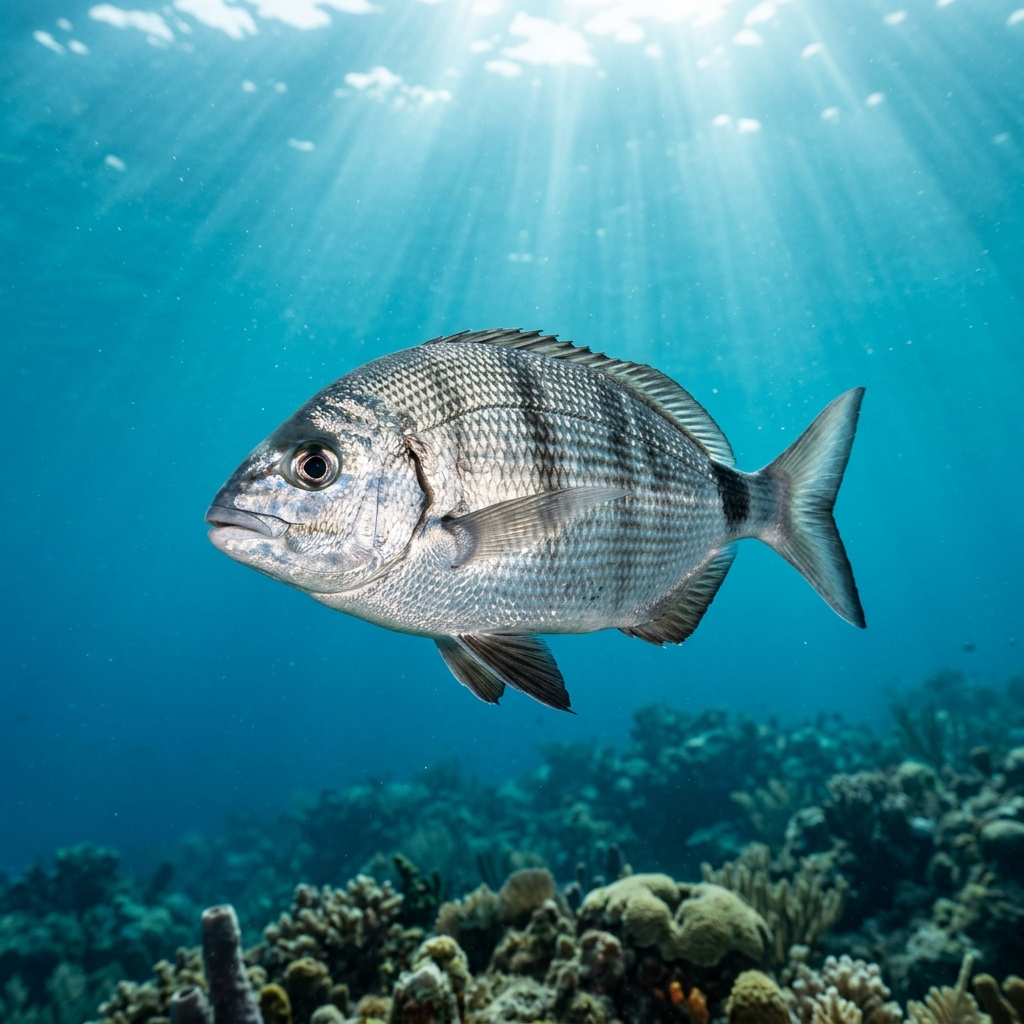
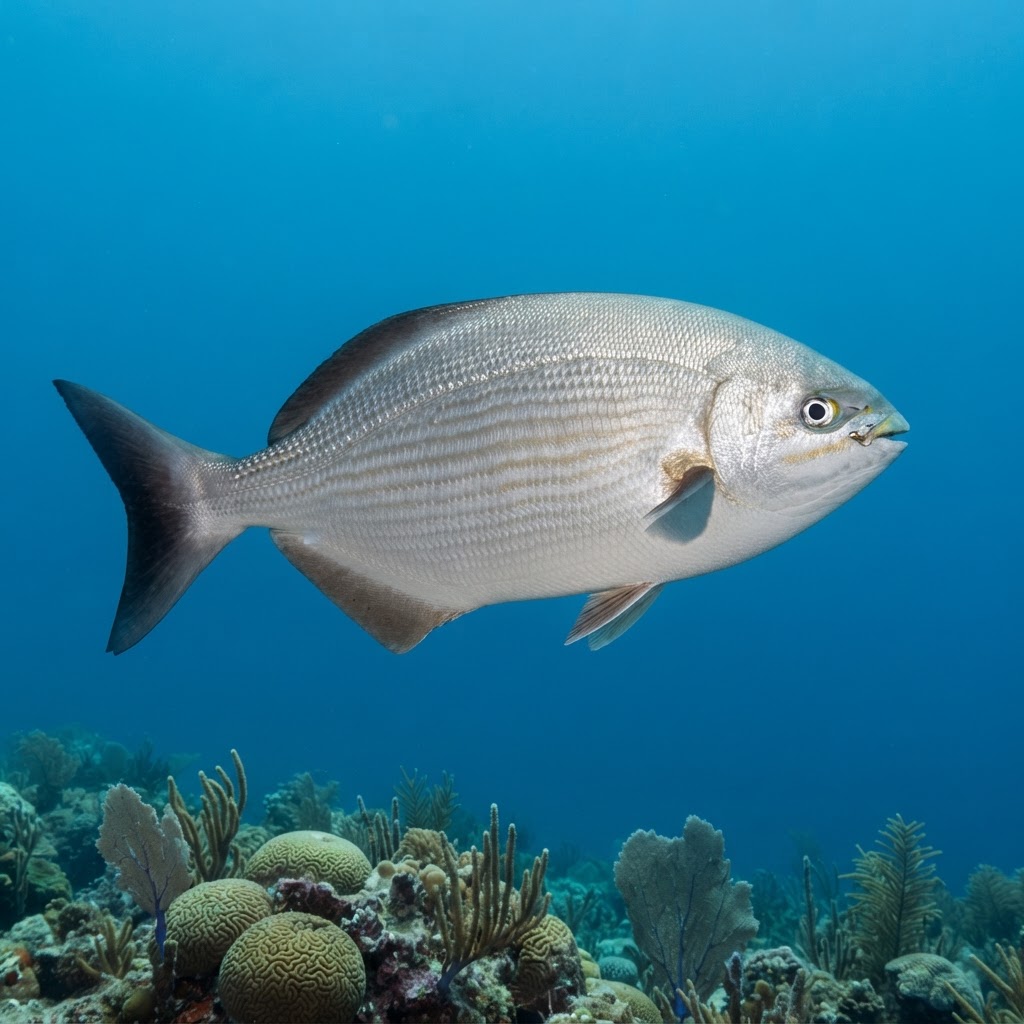
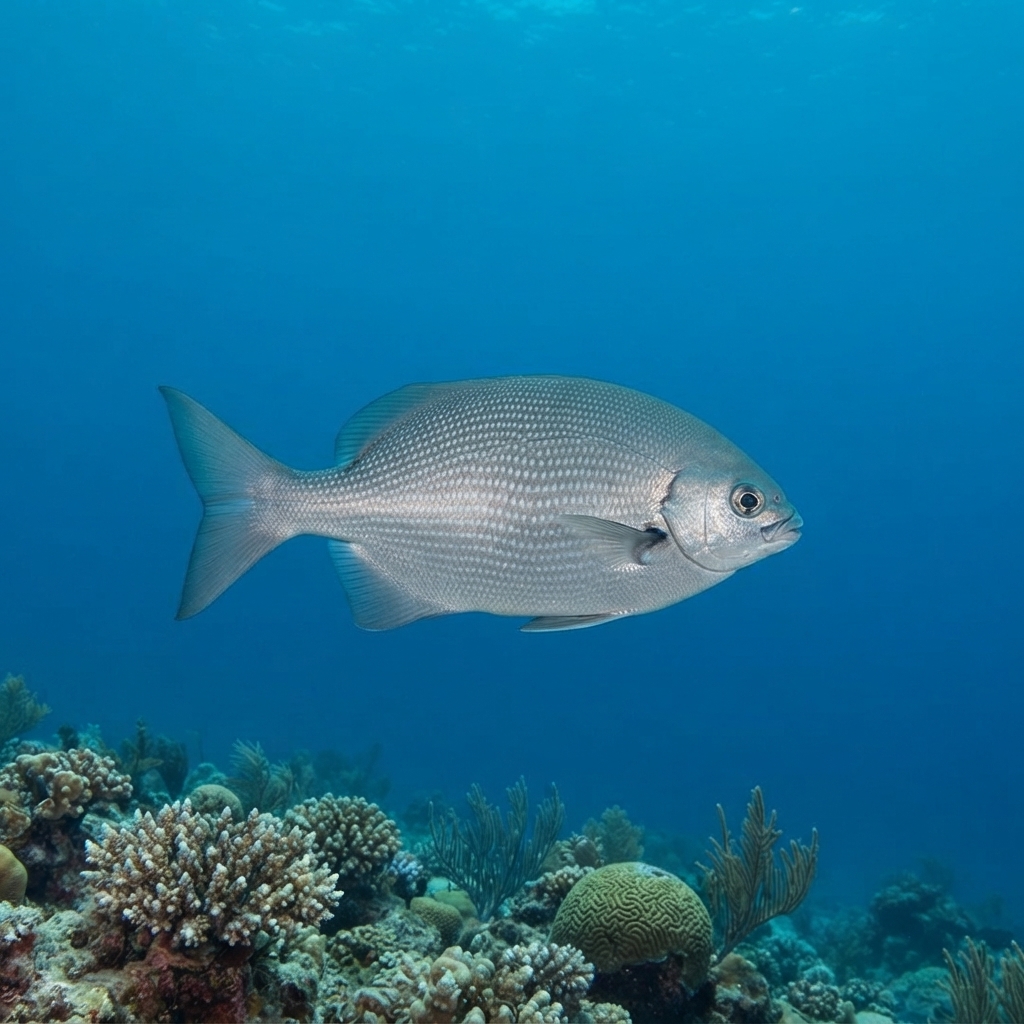
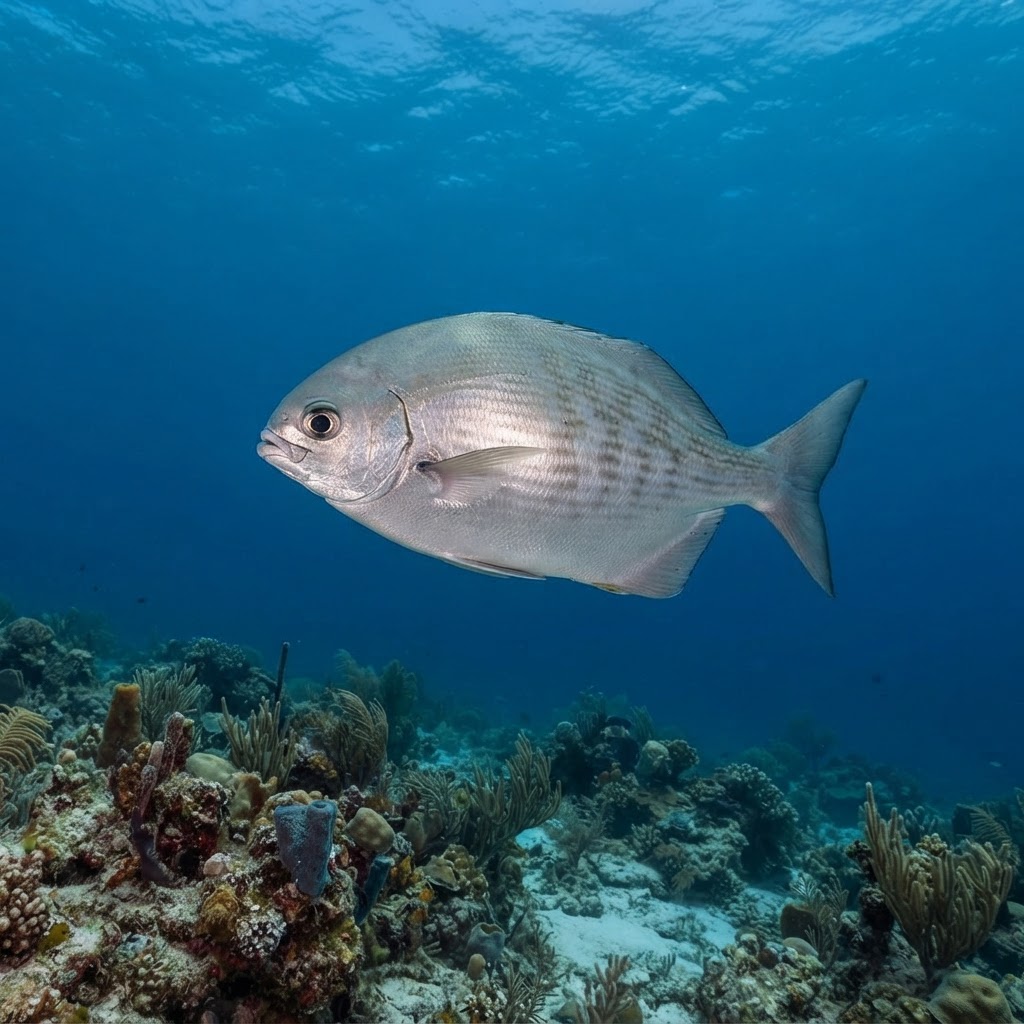
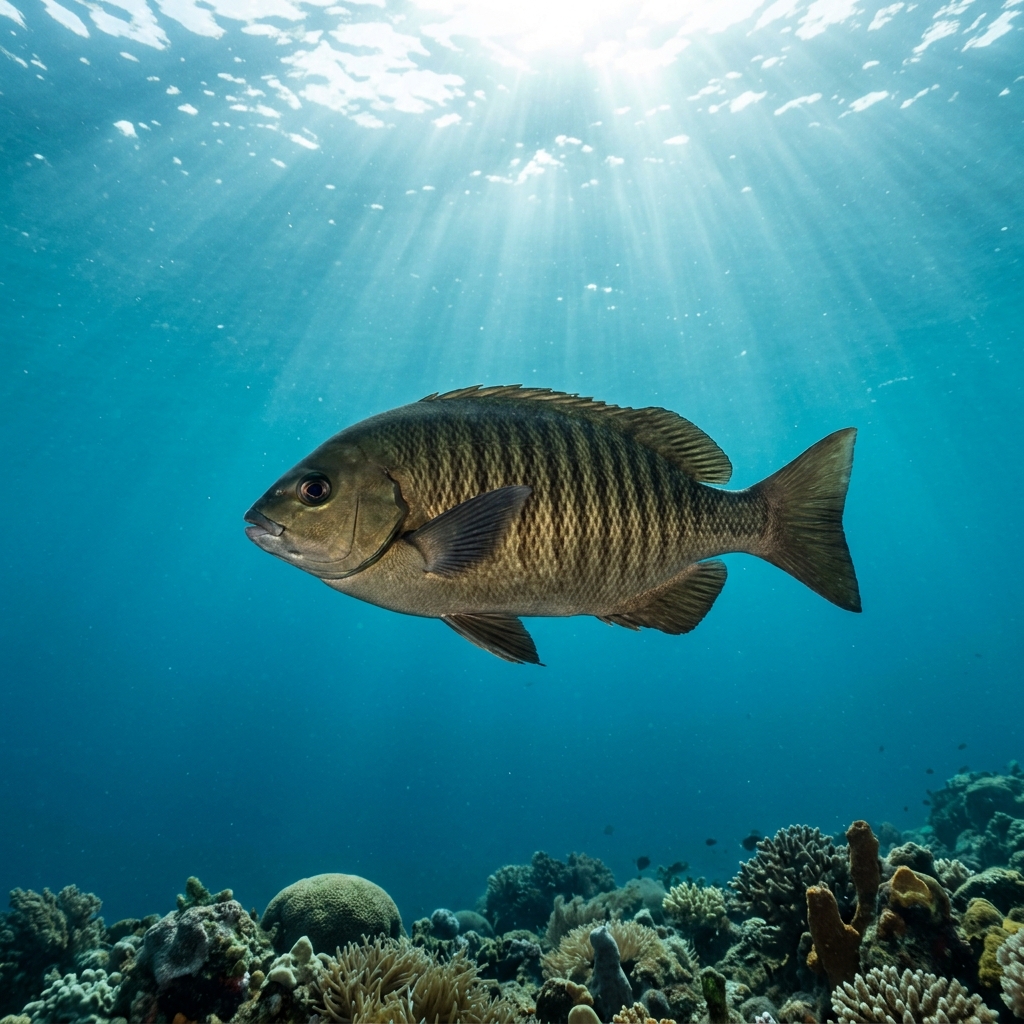
Dark olive to grey-green vertical bars on a silver body are the key field mark, count roughly a dozen stripes and you're almost certainly looking at a luderick. It's a mid-sized fish, reaching around 50 cm, with a small, noticeably downturned mouth suited to grazing on algae. The body is laterally compressed (flattened side-to-side) with a forked tail, giving it a distinctly streamlined, bream-like silhouette. Look for it close to rocky reef surfaces and weedy areas in the top 20 metres.
Luderick are typically seen foraging close to the reef in small to modest-sized schools, grazing on attached algae (seaweed and sea lettuce) with that characteristic small downturned mouth. They tend to be unhurried and mildly curious around divers, often continuing to feed if approached slowly. Shallow, weedy rocky reefs and estuarine edges are where you're most likely to encounter them, generally well within recreational diving depth.
Luderick are dedicated herbivores with a digestive system fine-tuned for a plant diet, they have a notably long gut to extract nutrition from tough marine algae, which is unusual among reef fish of their size in temperate Australian and New Zealand waters.
Sightings in the Southern Hemisphere concentrate between January and July, suggesting the warmer late-summer and autumn months are your best window. The species is observed across a water temperature range of roughly 15 to 24°C, consistent with cool to warm temperate conditions in both Australia and New Zealand.
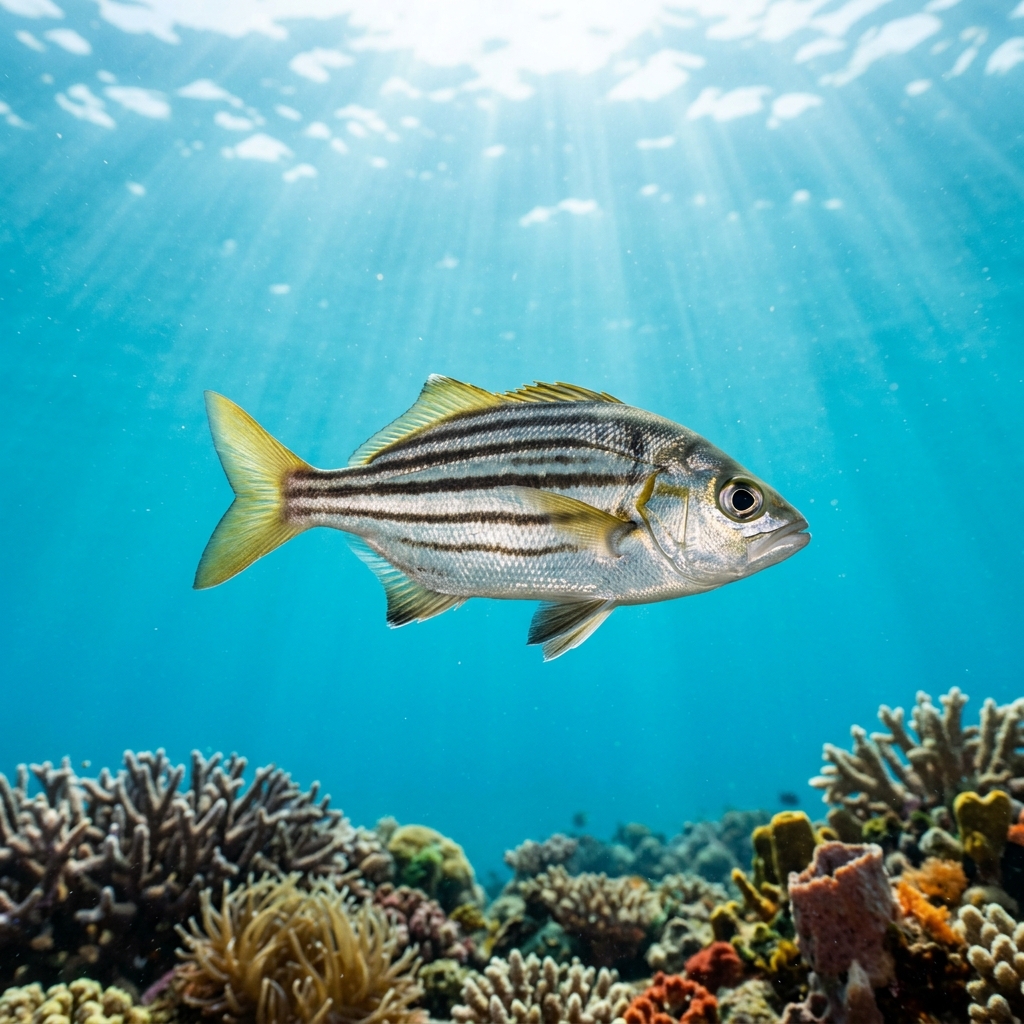
Reef neighbours a diver could mistake it for. Use the identification notes above to tell them apart.
Australia accounts for the large majority of logged sightings, with New South Wales by far the most productive region, followed by South Australia, Queensland, and Tasmania. New Zealand is the other significant range, particularly along the Coromandel and Bay of Plenty coastline and the Northland and Auckland region. Both countries offer rocky reef and estuarine habitats where this species forages in shallow water.
Mapping where Luderick is logged…
Luderick are most commonly logged in Australia, with New South Wales offering the strongest sightings record. South Australia, Queensland, and Tasmania also feature regularly. In New Zealand, the Coromandel, Bay of Plenty, and Northland and Auckland regions are your best bets. Rocky reefs and weedy estuaries in shallow water are the habitat to target.
Based on diver sighting data from the Southern Hemisphere, January through July is when encounters are most frequent. This spans late summer into autumn, which aligns with the cooler end of the species' preferred temperature range of around 15 to 24°C.
Look for the distinctive dark vertical bars, roughly a dozen of them, running across a silver-grey body. The downturned small mouth and laterally compressed body shape clinch the ID. It's usually seen close to rocky reef or weedy substrate in the shallows, often in loose schools.
A typical adult reaches around 49 cm in length. In the water they appear as a moderately sized, laterally flattened fish, noticeably smaller than a silver drummer but with a similar overall reef-fish silhouette.
Luderick are dedicated herbivores, feeding almost entirely on marine algae including sea lettuce and other seaweeds. They have an unusually long gut for their size, which helps them digest tough plant material, a specialisation rare among temperate reef fish of comparable size.
Site and sighting data is aggregated from diver logs, iNaturalist and GBIF. For taxonomy and conservation status:
Blue Sea Chub
554 sites