Kyphosus azureus
Uncommon but steady in California's kelp forests, this silvery chub cruises reefs from 0 to 8m in 18 to 27C water, year-round.
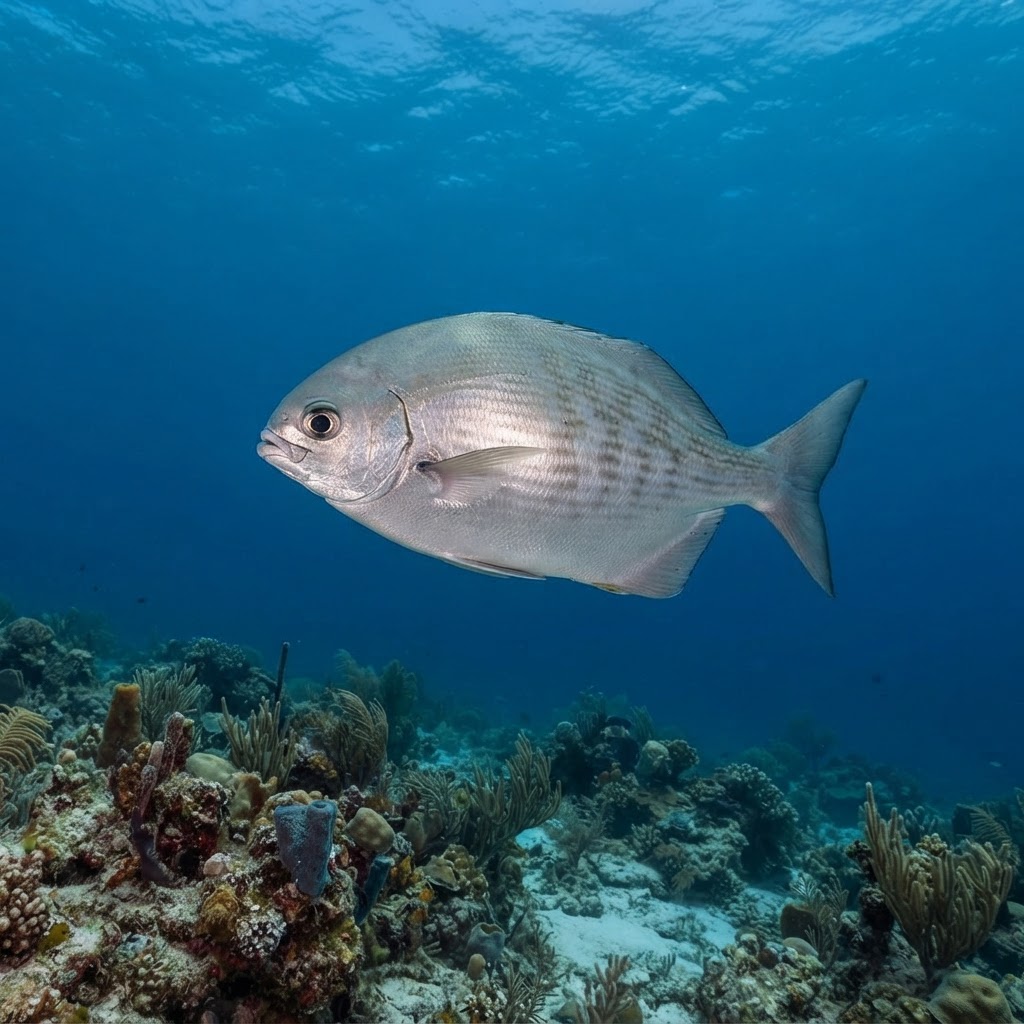
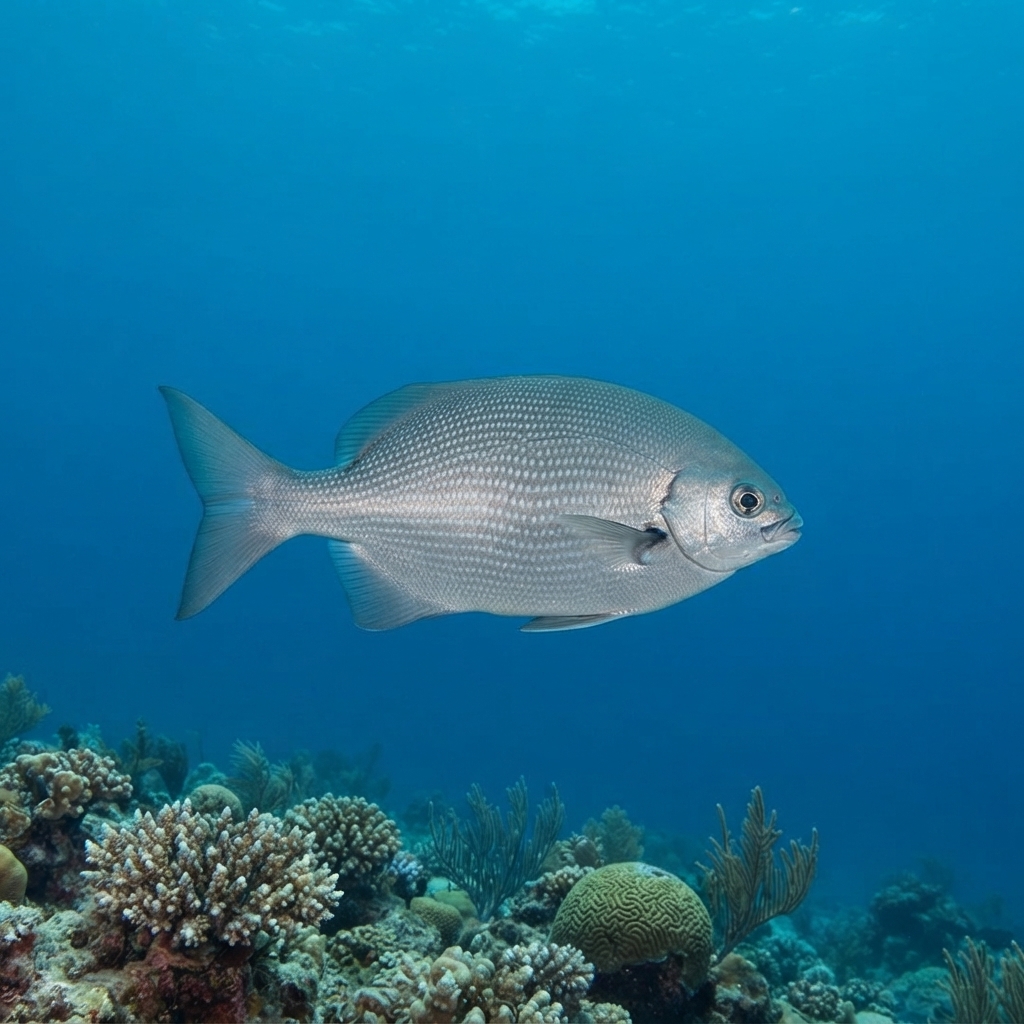
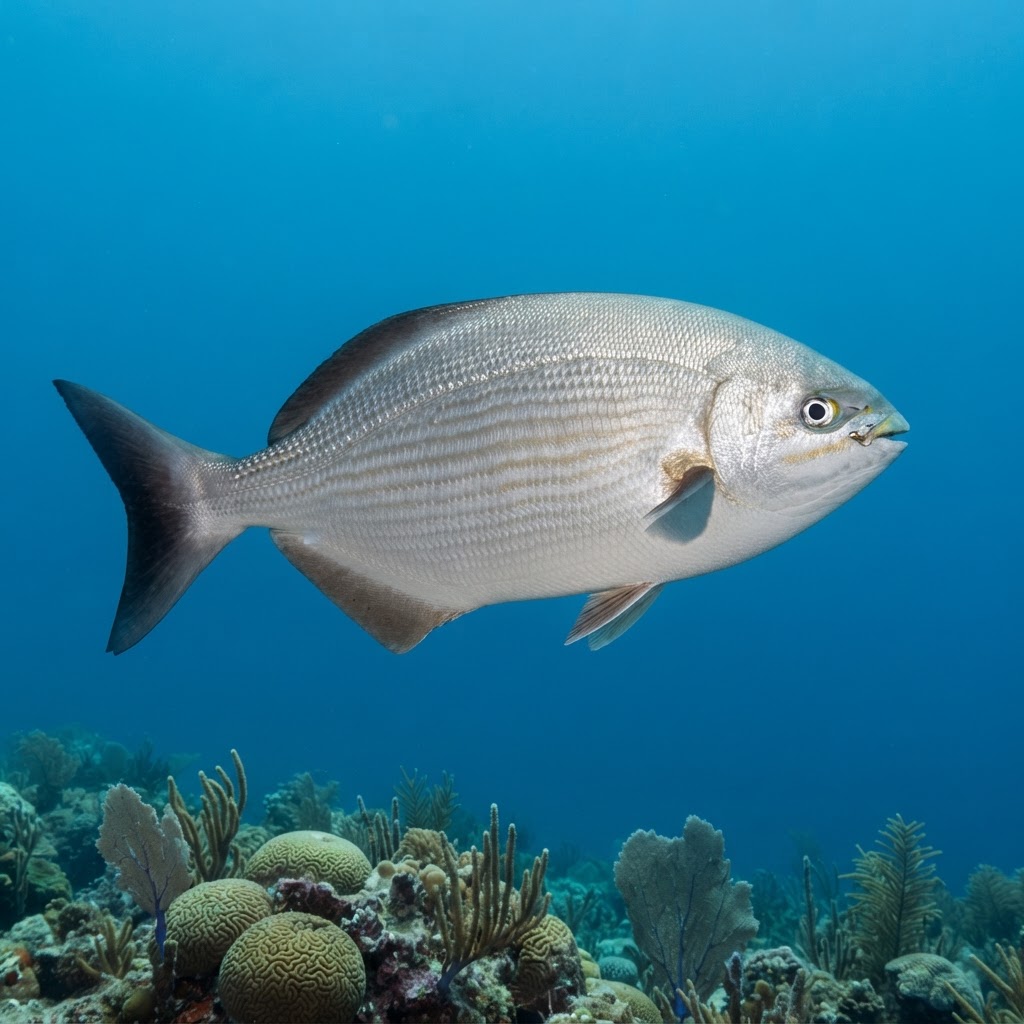
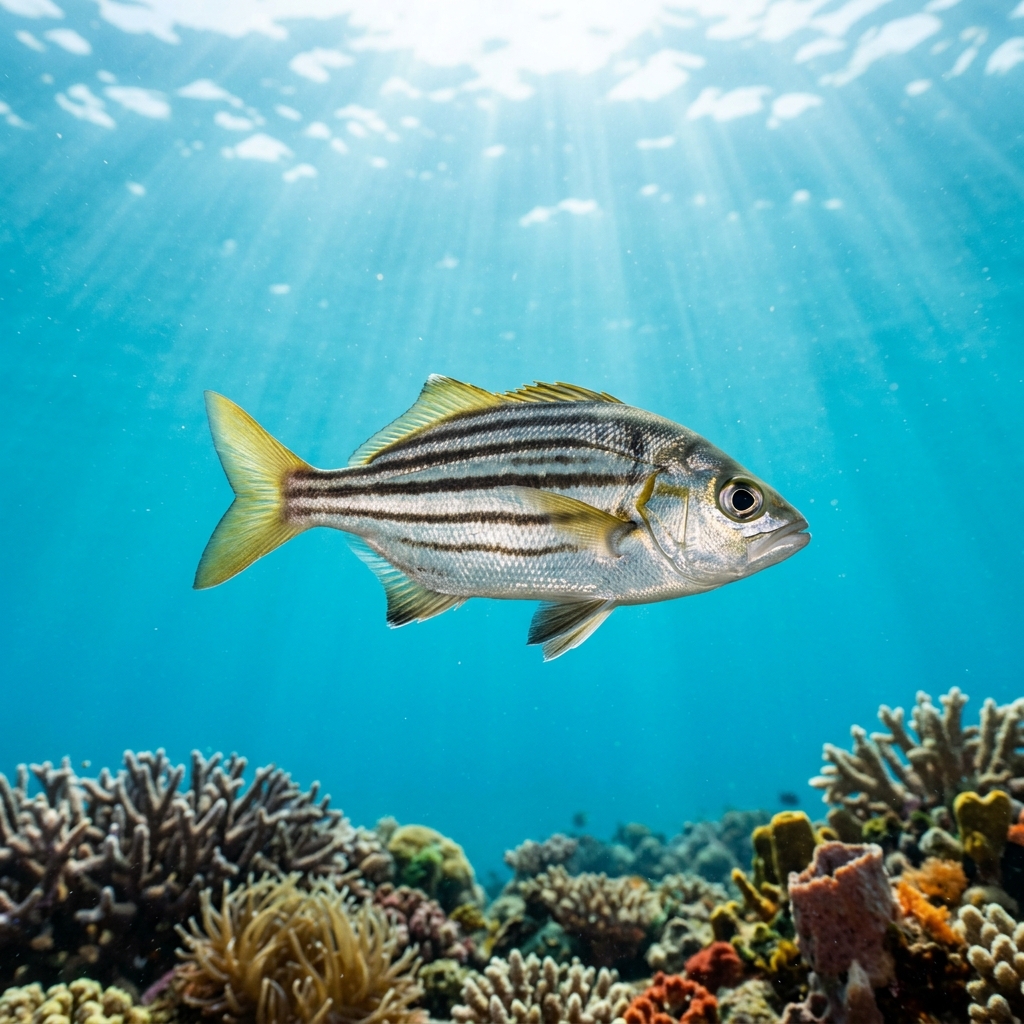
Silvery-grey, deep-bodied fish around 31 cm with faint horizontal stripes running along its flanks, more visible in good light. It has a small mouth set on a blunt, rounded snout and a slightly forked tail, and often hangs mid-water over reef structure rather than hugging the bottom. Look for it in loose groups drifting over rocky reef or kelp edges in shallow water.
Usually seen cruising in small loose groups over rocky reef and kelp beds, grazing on algae growing on rock surfaces rather than darting for cover. Divers report it as an uncommon but unbothered presence, holding its distance without fully spooking, and staying in the shallow 0 to 8m band where light and algal growth are best.
As a herbivore grazing algae off rocky reef, it plays a small but steady role in keeping kelp-forest surfaces clear of overgrowth.
No clear seasonal pattern shows up in the data, so treat it as a year-round sighting on Californian reefs. It sits comfortably in the 18.2 to 26.9C range recorded at these sites, which covers most of the diveable season along that coast.
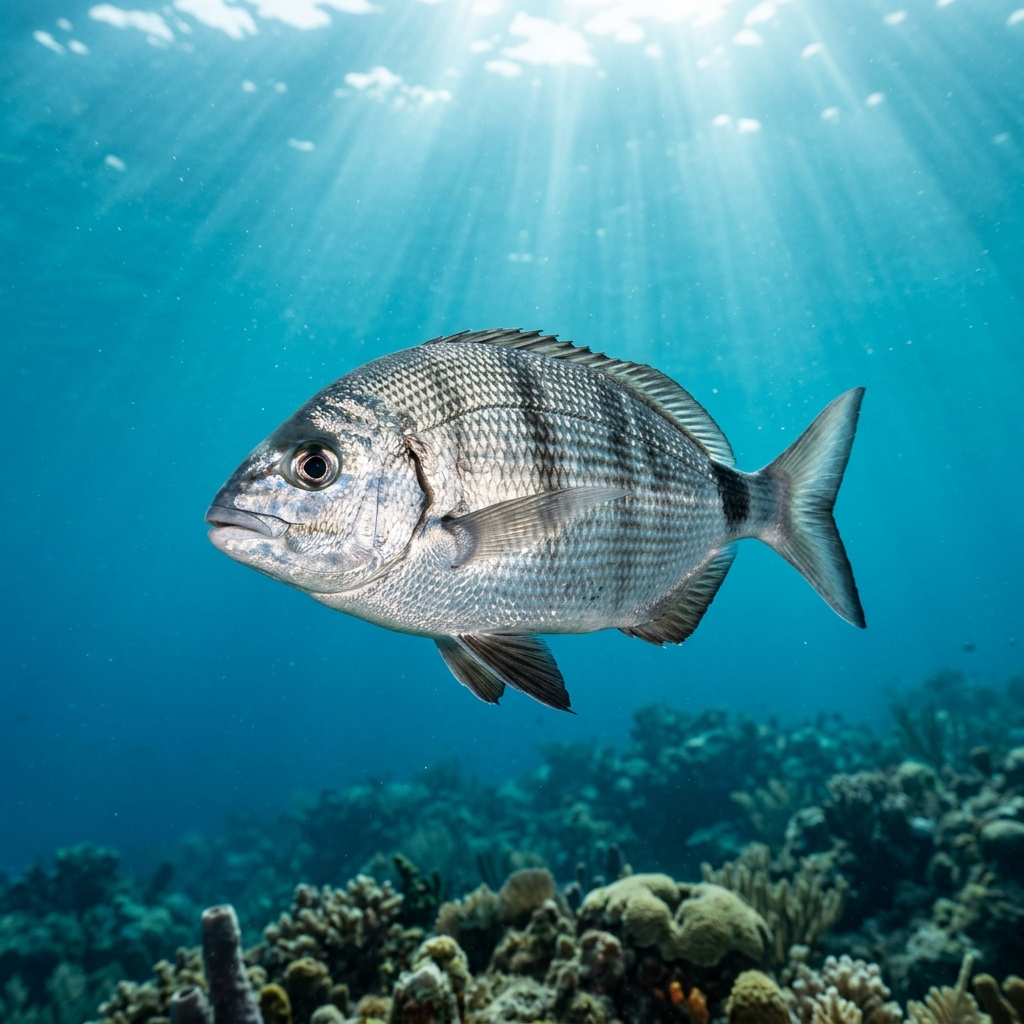
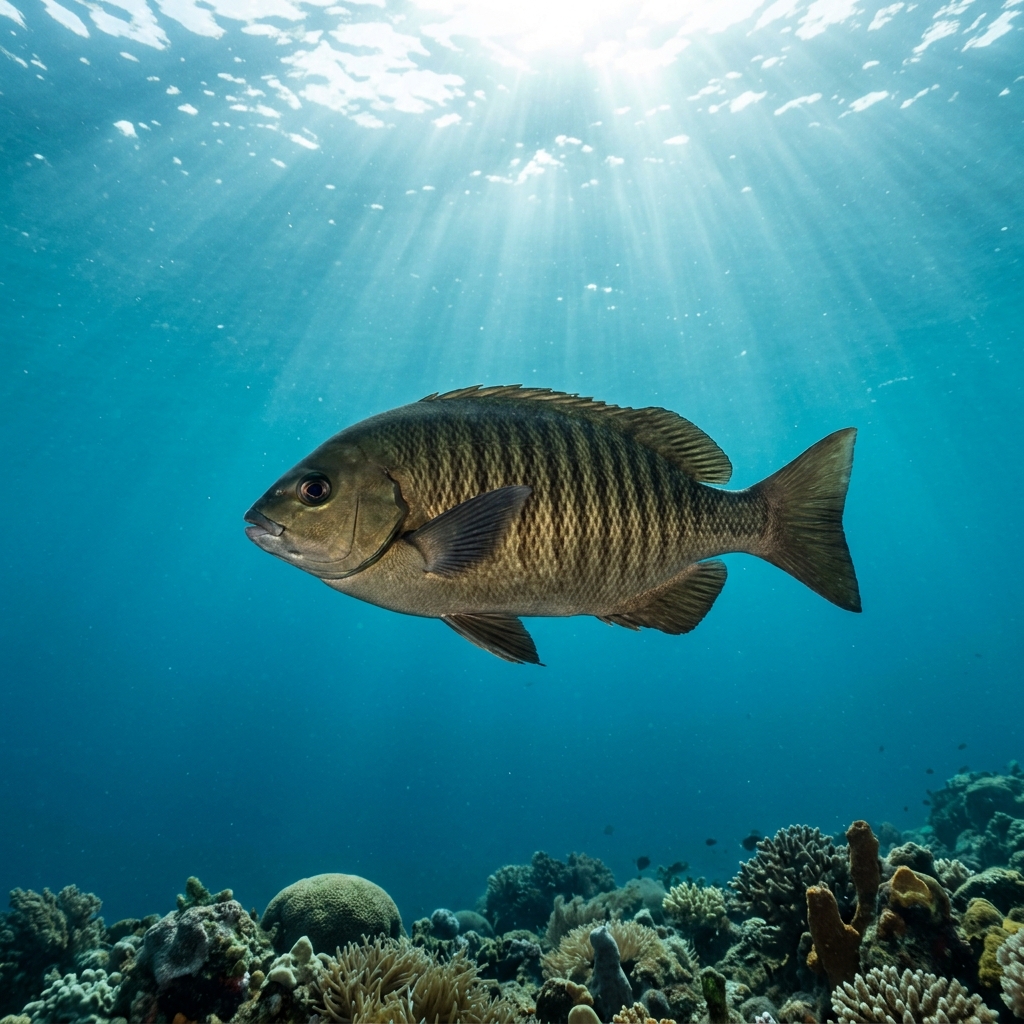
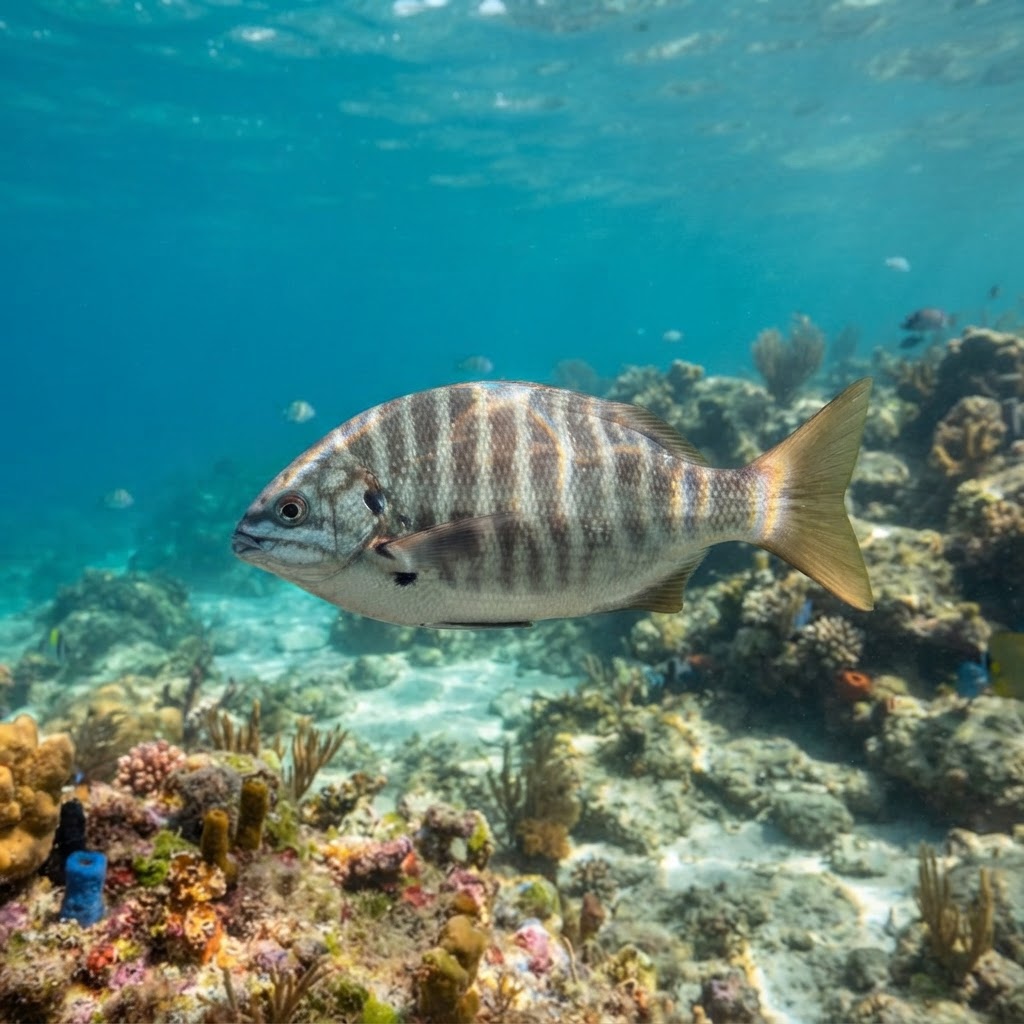
Reef neighbours a diver could mistake it for. Use the identification notes above to tell them apart.
Logged almost exclusively in California, with sites concentrated along the Southern and Central California coast. It is the go-to region for this species, with most sightings coming from shallow rocky reef and kelp forest dive sites there.
Mapping where Zebraperch is logged…
California is the main place divers log this species, particularly along the Southern and Central coast on rocky reef and kelp forest sites in shallow water.
There is no strong seasonal signal in sighting data, so it is considered a year-round find on Californian reefs, consistent with the wide 18.2 to 26.9C temperature range it tolerates.
Look for a silvery-grey, deep-bodied fish around 31 cm with faint horizontal stripes, a small blunt mouth, and a habit of drifting in loose groups over shallow rocky or kelp reef.
They typically reach around 31 cm in length, a mid-sized reef fish easily spotted against rock or kelp backgrounds.
No, they pose no danger to divers. They are herbivorous grazers that keep a comfortable distance and show no aggressive or defensive behaviour toward divers.
Site and sighting data is aggregated from diver logs, iNaturalist and GBIF. For taxonomy and conservation status:
Blue Sea Chub
554 sites