Kyphosus ocyurus
Silvery schools drift over Malpelo and Cocos Island in 21-29 C water, most reliably spotted year-round in Colombia and Costa Rica.
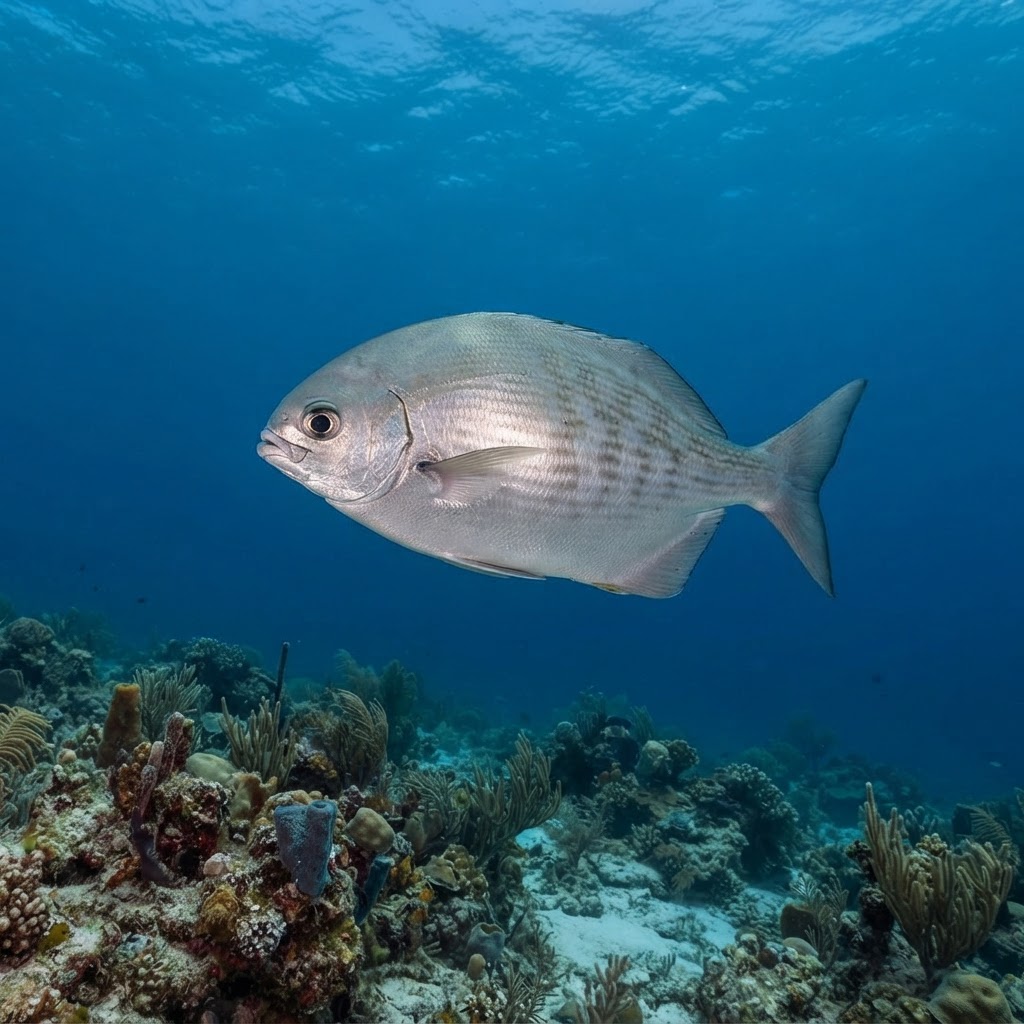
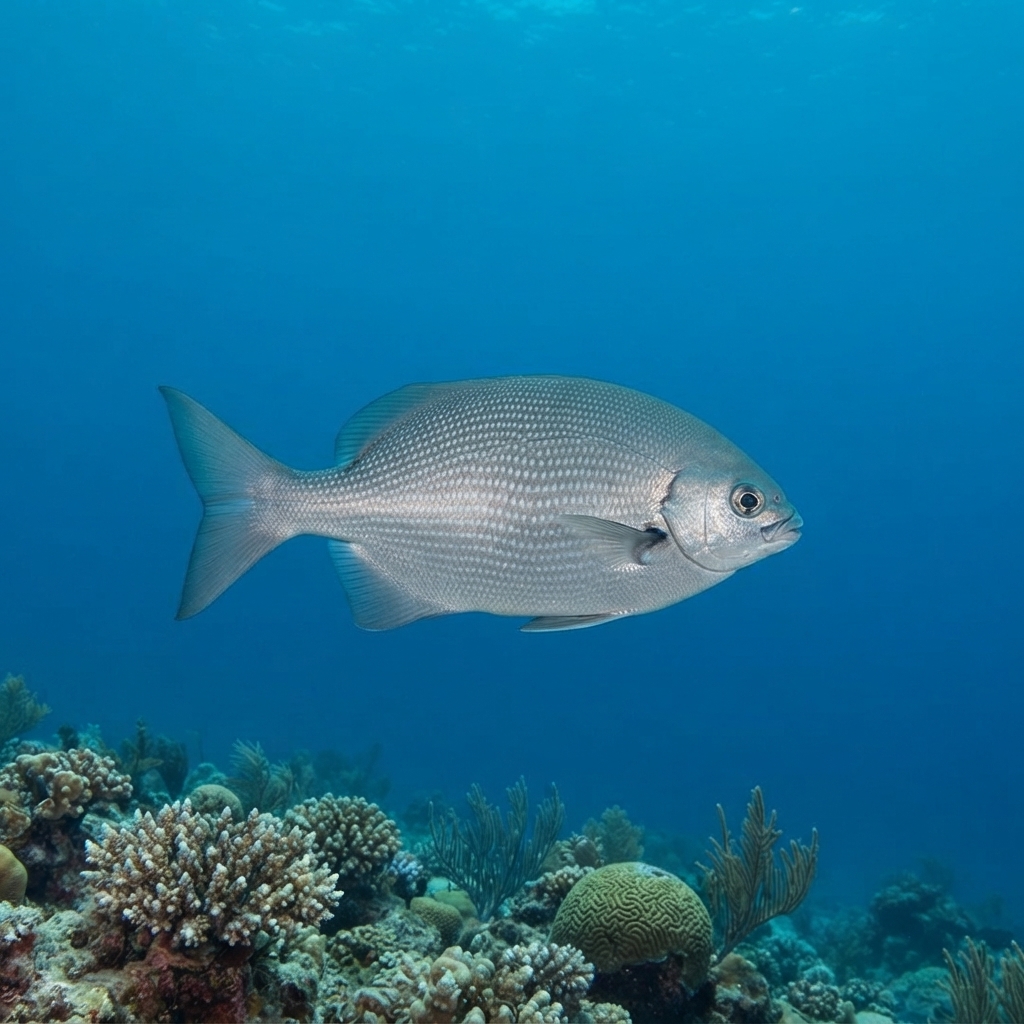
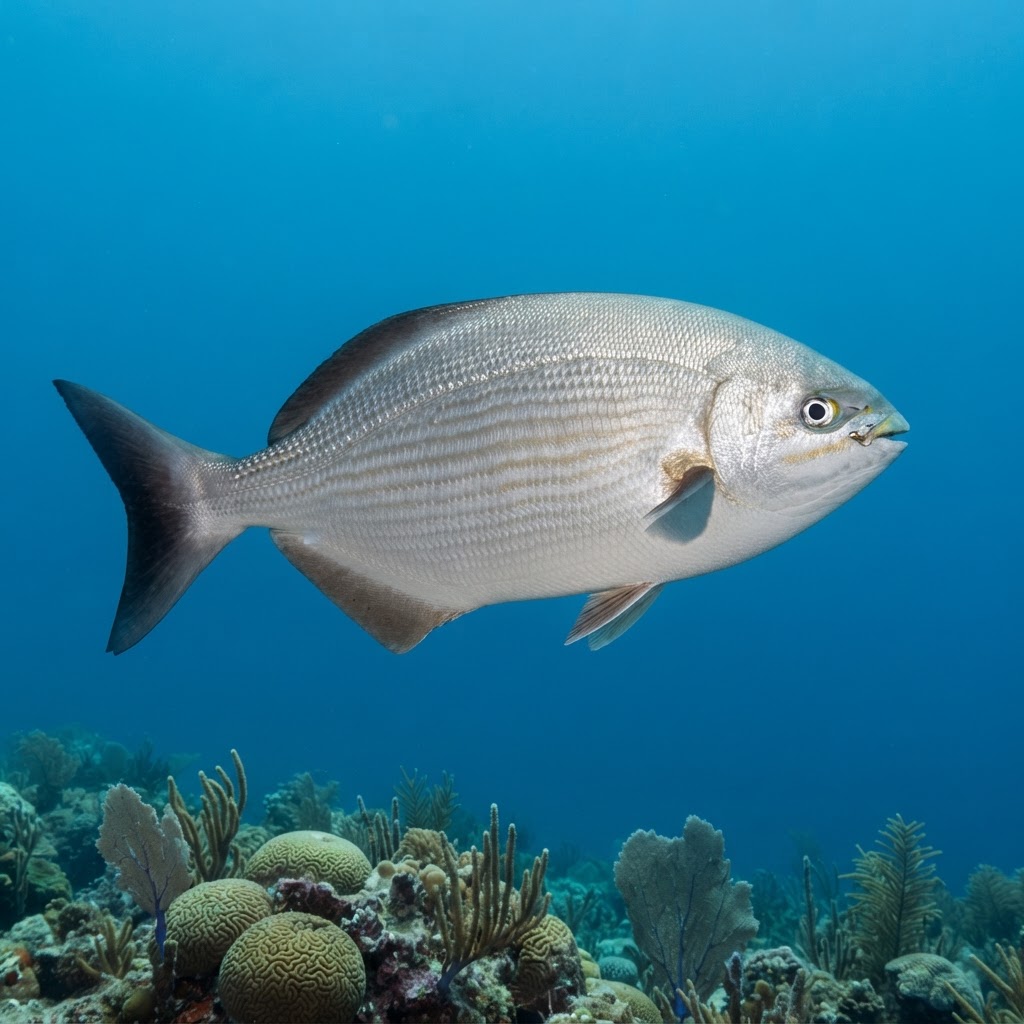
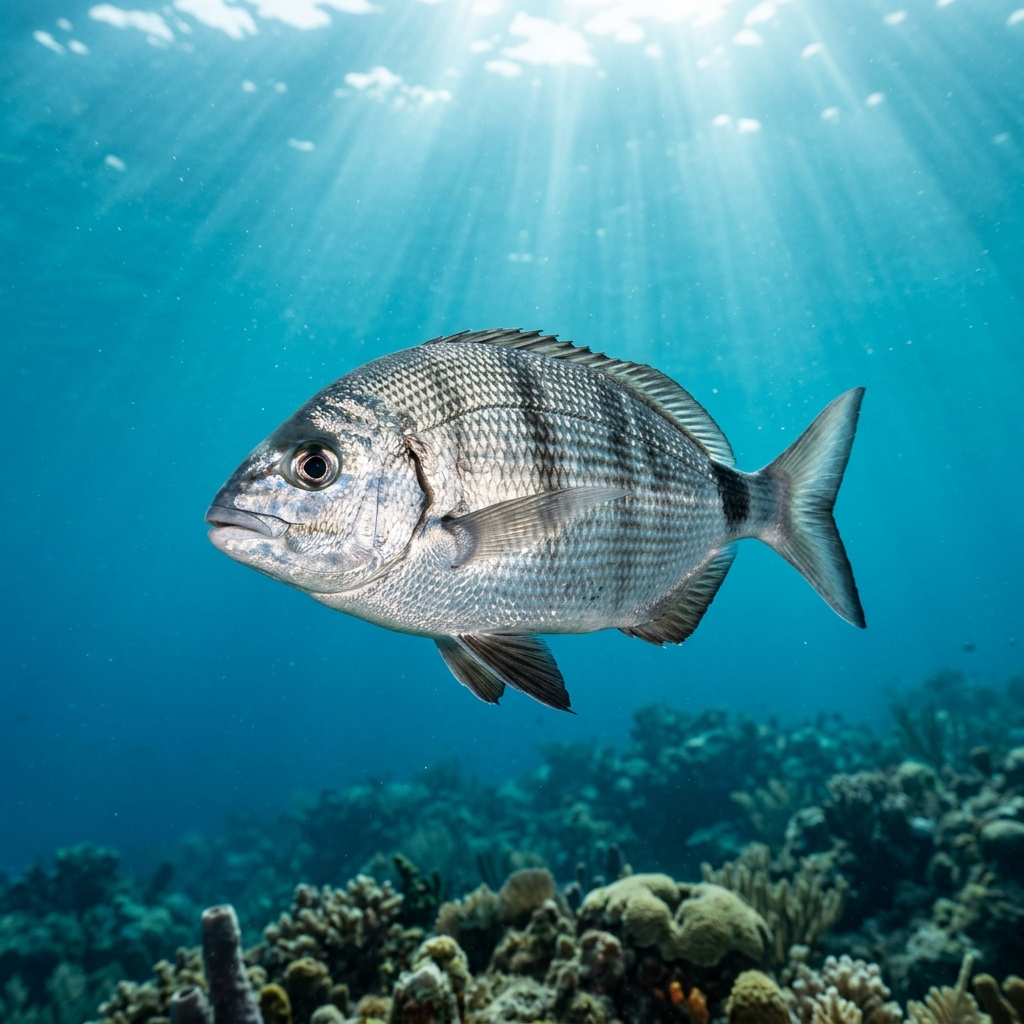
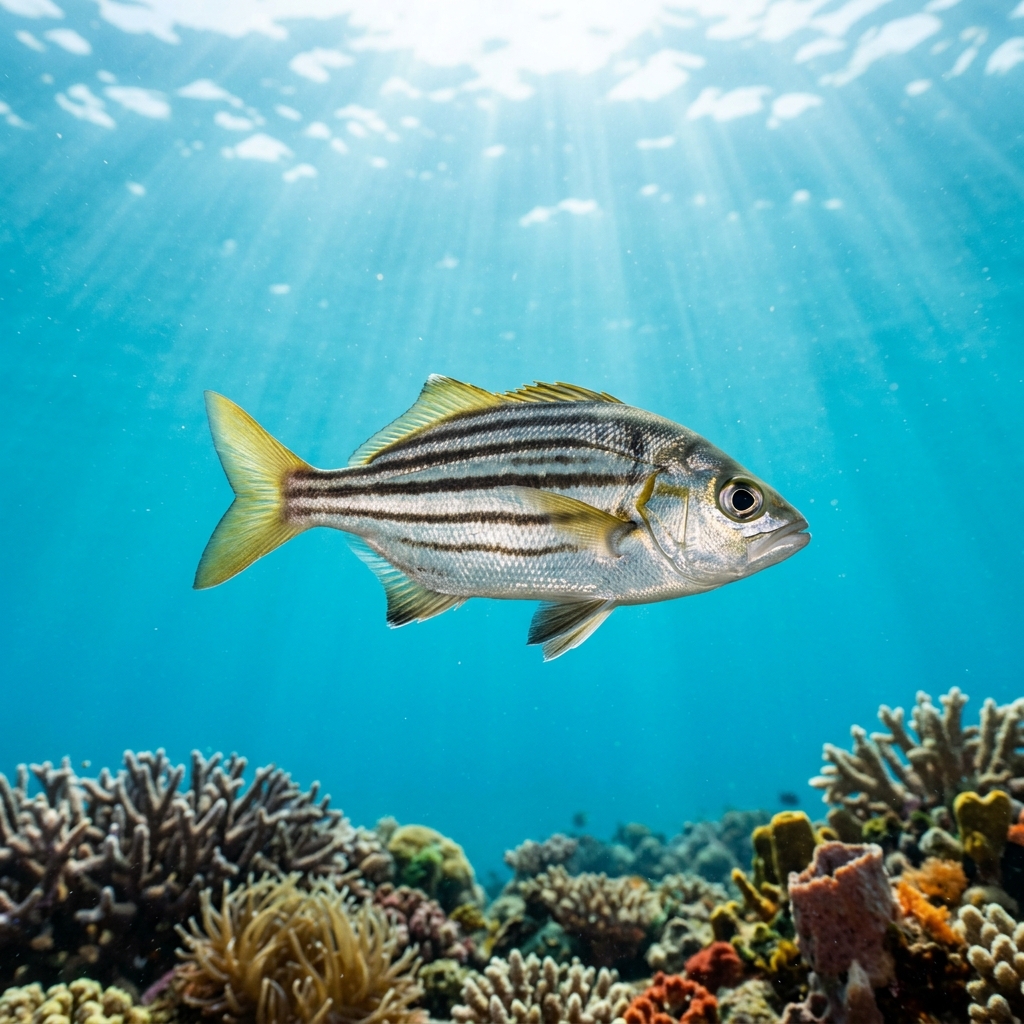
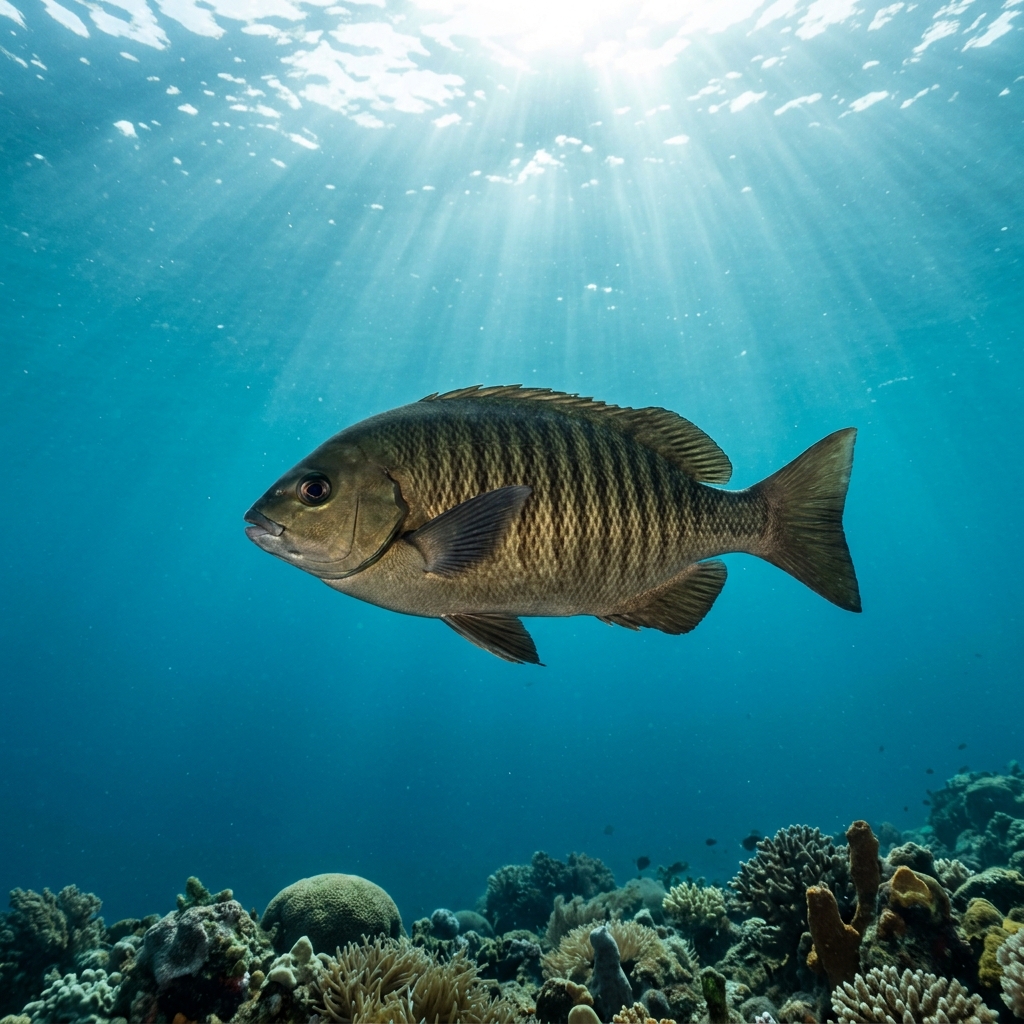
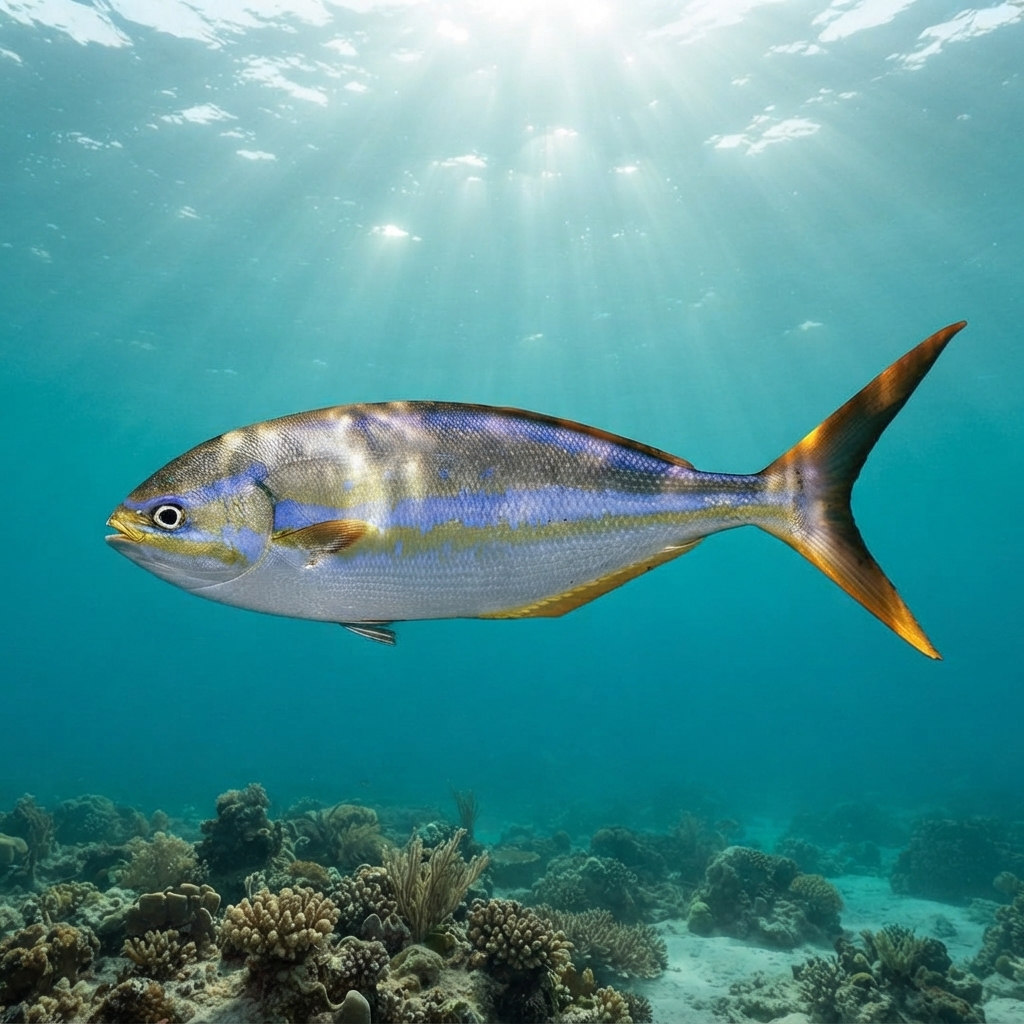
Elongated, oval-bodied fish around 41 cm with a silvery-grey body and faint pale blue horizontal stripes running along its flanks. Look for a small mouth set high on a blunt, rounded head and a deeply forked tail. They usually show up in loose schools rather than alone, hovering just off rock or reef structure in mid-water.
Divers most often find them schooling in open water just above rocky reef or pinnacle structure, moving as a loose, unhurried group rather than darting for cover. They tend to hold a fairly neutral distance from divers, neither approaching nor bolting, and are picked up more often as background schooling fish than as a target sighting given their uncommon-to-common rating at most sites.
Sea chubs like this one graze on algae and can shift between picking at growth on rock and reef surfaces and feeding in open water, which is part of why they're often seen schooling rather than staying put on one patch of reef.
No clear seasonal pattern shows up in the data, and with a comfortable range of 21 to 29.3 C these fish are logged across the year at their core sites. Plan around conditions at the dive site itself rather than a particular month.
Reef neighbours a diver could mistake it for. Use the identification notes above to tell them apart.
Most reliably logged around Malpelo in Colombia, which carries the bulk of sightings, followed by strong numbers along Panama's Pacific coast and Costa Rica's South Pacific and Cocos Island sites. The Galápagos Islands in Ecuador are another dependable spot, with occasional reports from Baja California in Mexico.
Mapping where Bluestriped Chub is logged…
Malpelo in Colombia has the strongest numbers, with Panama's Pacific coast, Costa Rica's South Pacific coast and Cocos Island, and Ecuador's Galápagos Islands all offering reliable sightings.
There's no strong seasonal pattern in the sighting data, so they're considered a year-round presence at sites where water stays between roughly 21 and 29 C.
Look for a silvery-grey, oval-bodied fish around 41 cm with faint pale blue stripes along the sides, a small high-set mouth, and a forked tail. They're usually seen in loose schools hovering over rocky reef rather than solo.
They typically reach around 41 cm in length, making them a mid-sized reef fish that's easy to pick out in a school by its elongated, streamlined shape.
No, they pose no danger to divers. They're a calm, schooling fish that keeps a neutral distance and shows no aggressive or defensive behaviour around people.
Site and sighting data is aggregated from diver logs, iNaturalist and GBIF. For taxonomy and conservation status:
Blue Sea Chub
554 sites