Kyphosus vaigiensis
Silvery reef schooler logged across the Yucatán, Florida and Grand Cayman, comfortable in 24.7-29°C water year-round.
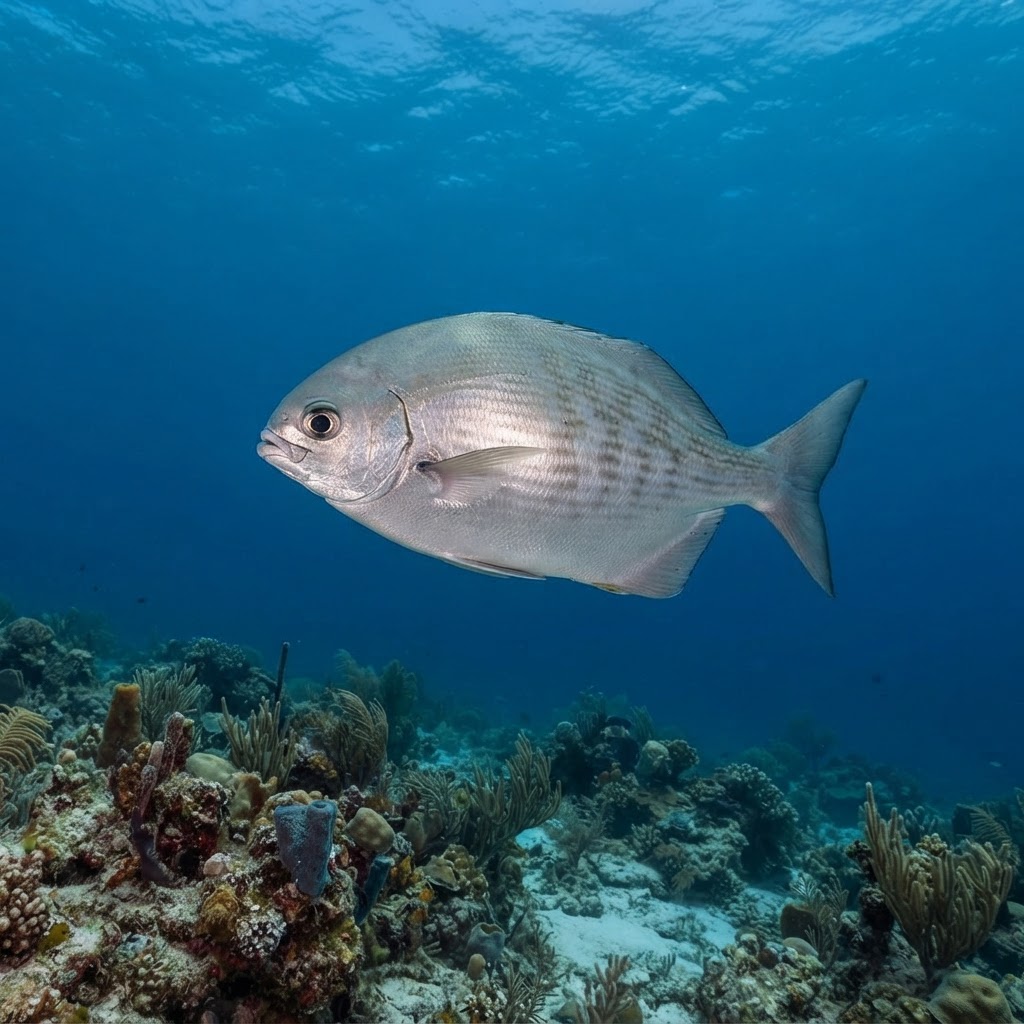
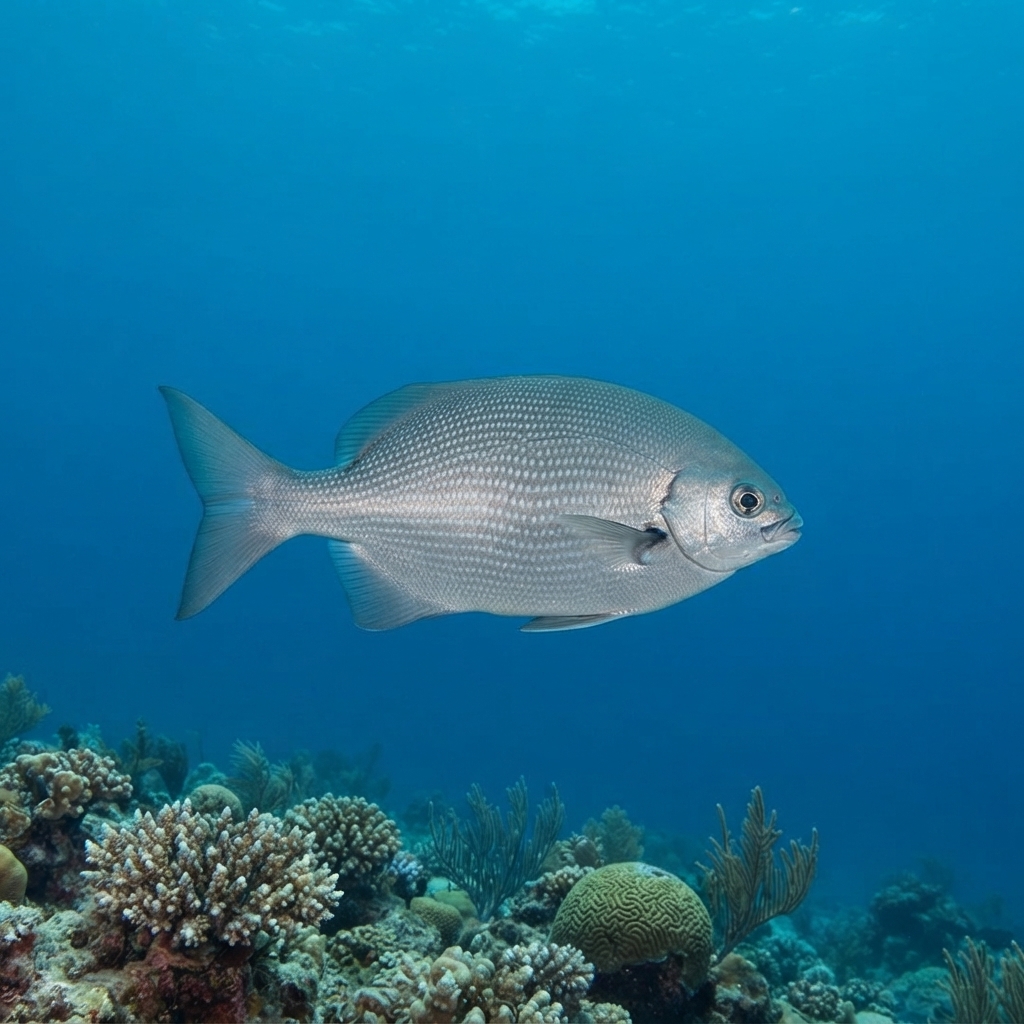
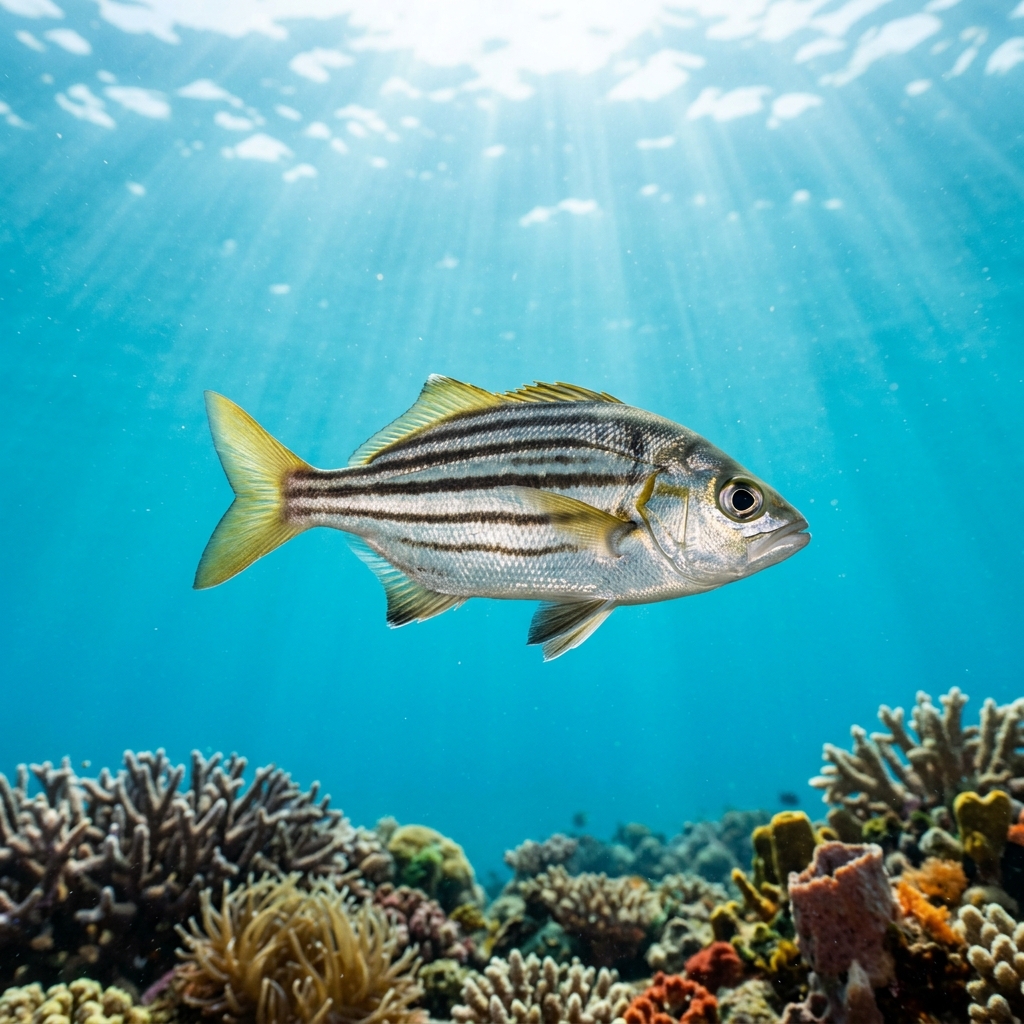
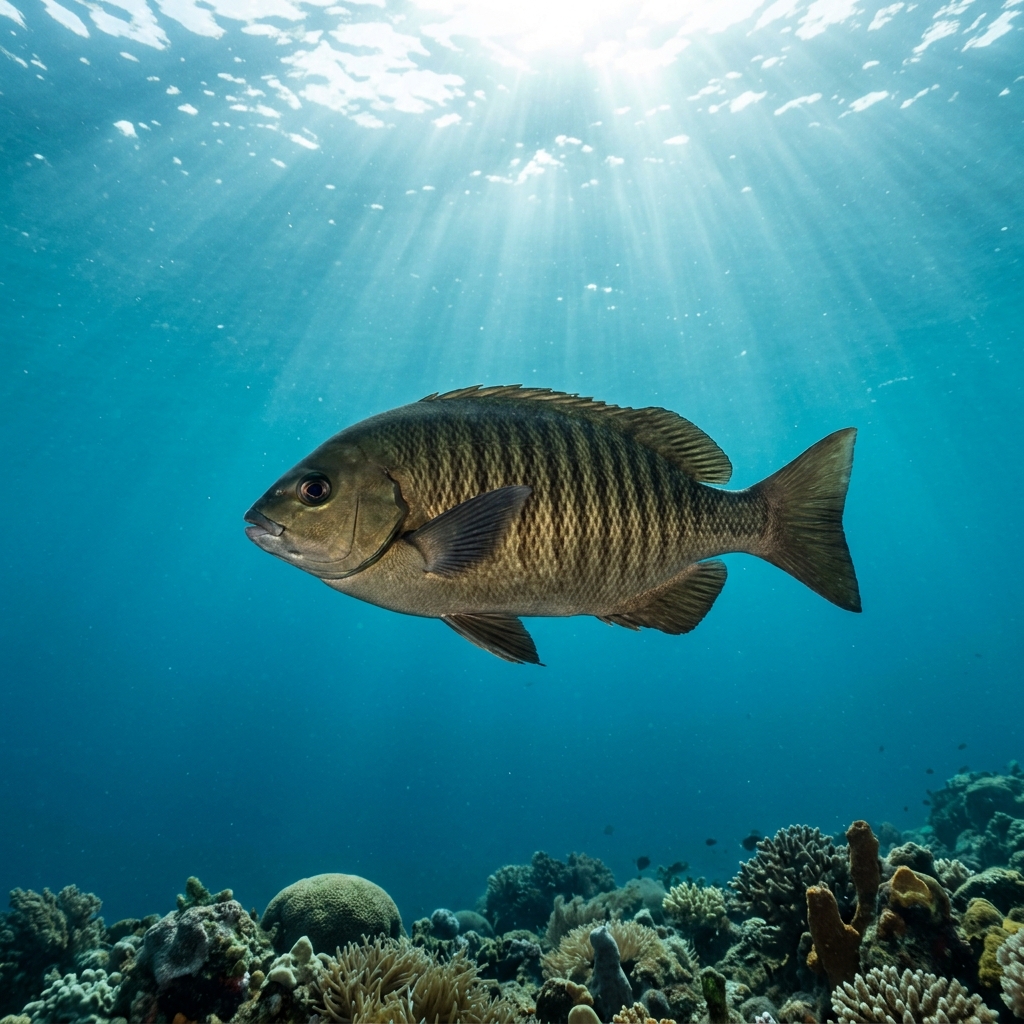
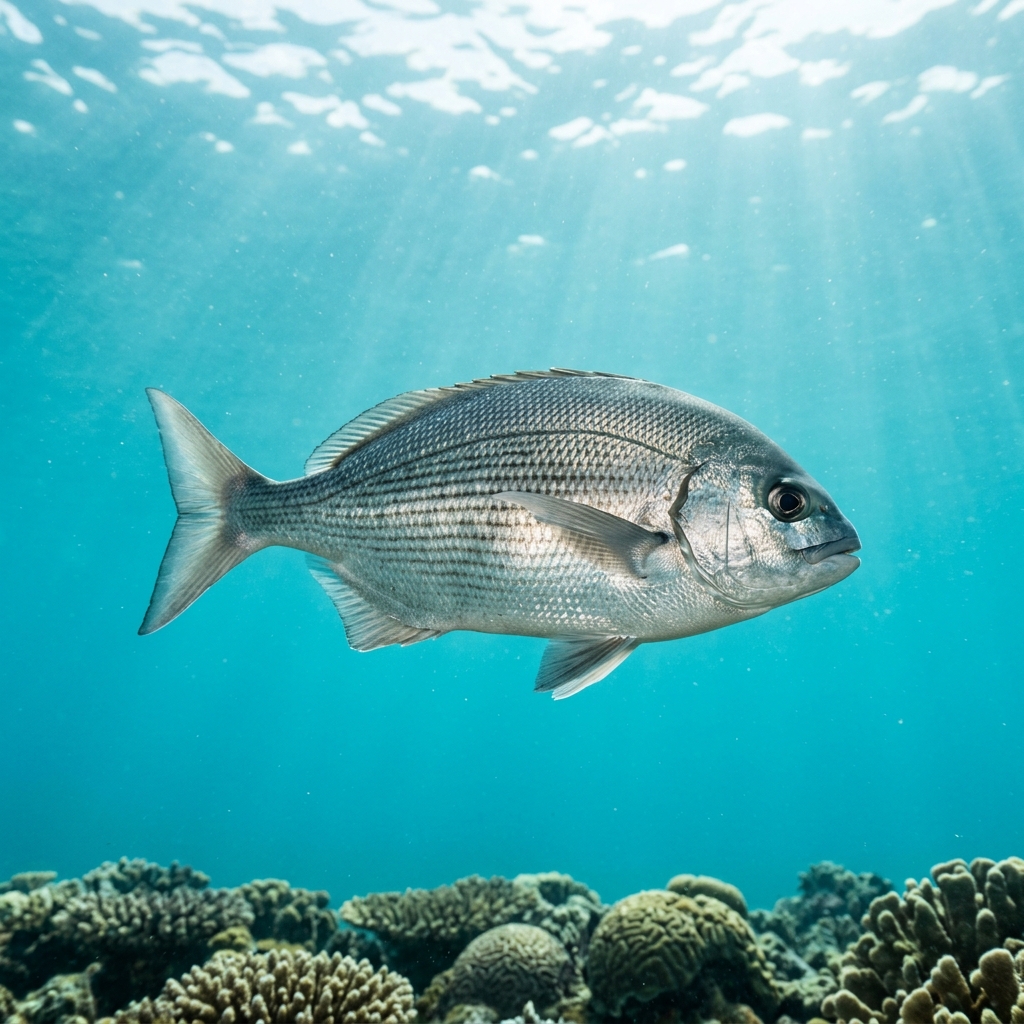
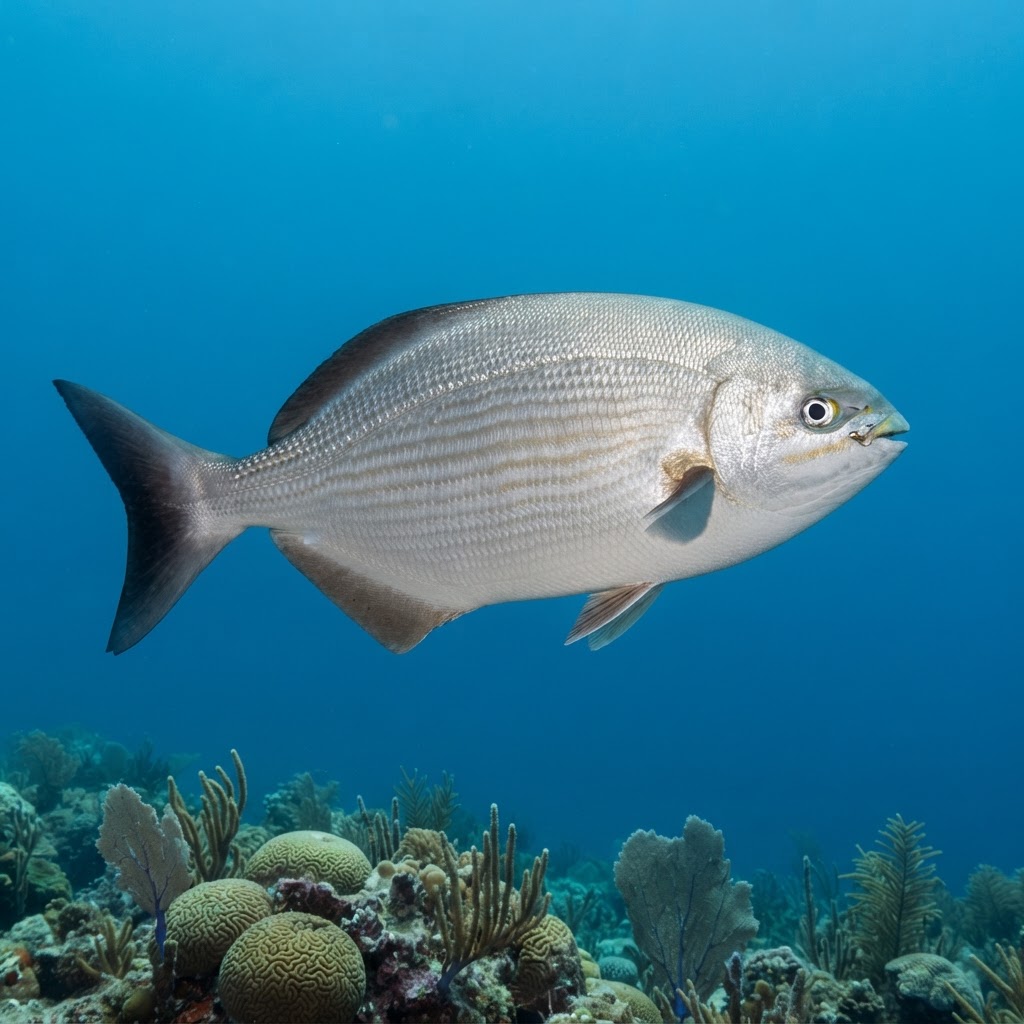
Look for a deep, oval-bodied fish up to roughly 49cm, silvery-grey with a brassy sheen along the flanks and faint horizontal striping that's easiest to see at close range. The small mouth and blunt snout give it a slightly rounded profile compared to other reef schoolers, and it's usually seen moving in loose groups rather than alone. There's no strong colour split between juveniles and adults noted in sightings, so size and the brassy tone are your main cues.
Divers most often log it cruising in loose, unhurried groups over reef flats and slopes, grazing on algae and picking at whatever the current brings past. It tends to ignore divers rather than react to them, holding its course along the reef edge rather than darting for cover. Most sightings are logged as uncommon rather than a guaranteed encounter, so it's more of a nice surprise mid-dive than a target species.
As an omnivore that grazes algae off reef structure, it plays a small but steady role in keeping reef surfaces clear, similar to the job surgeonfish and other chubs do on the same reefs.
No clear seasonal pattern shows up in the sighting data, and with a comfortable range of 24.7 to 29°C it's present on tropical reefs across the year. Plan around water temperature and visibility for your chosen region rather than a specific chub season.
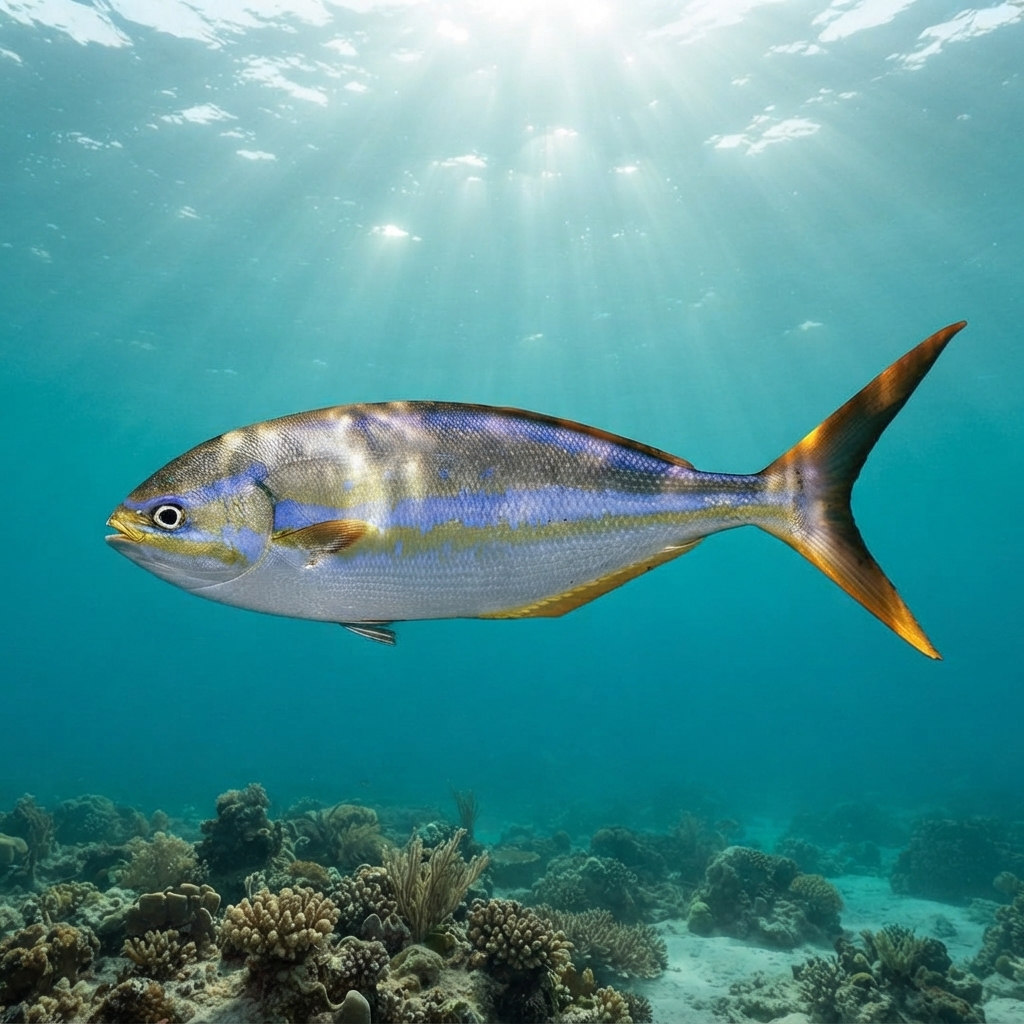
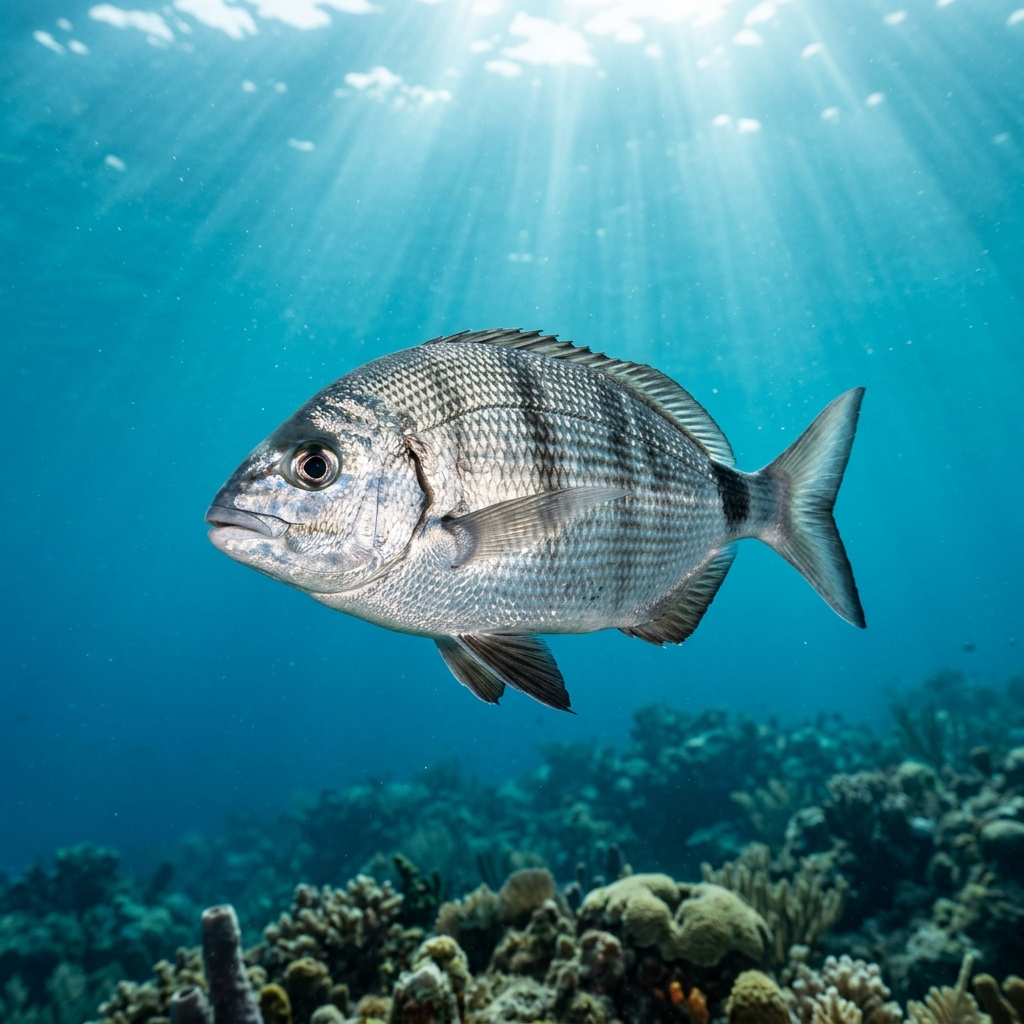
Reef neighbours a diver could mistake it for. Use the identification notes above to tell them apart.
Most reliably logged in the Yucatán Peninsula and Baja California and Pacific Coast in Mexico, plus Florida in the United States, with strong showings in Grand Cayman and Hawaii too. It also turns up on reefs in the Bay Islands of Honduras, Fernando de Noronha in Brazil, and Belize, so it's a wide Caribbean-and-tropical-Pacific spread rather than a single hotspot.
Mapping where Brassy Chub is logged…
It's most consistently reported in the Yucatán Peninsula and Baja California in Mexico, Florida and Hawaii in the United States, and Grand Cayman. The Bay Islands of Honduras and Fernando de Noronha in Brazil also have recorded sightings.
There's no strong seasonal pattern in the sighting data, so it's considered a year-round sighting on reefs within its 24.7-29°C comfort range.
Look for a deep-bodied, silvery-grey fish with a brassy sheen and faint stripes, growing to around 49cm and usually moving in loose groups over the reef. The small mouth and rounded snout help separate it from similarly shaped schooling fish.
They reach around 49cm in length, making them a solid mid-size presence when spotted moving along the reef in a group.
No, they're not considered dangerous to divers and typically carry on grazing or cruising past without reacting to a diver's presence.
Site and sighting data is aggregated from diver logs, iNaturalist and GBIF. For taxonomy and conservation status:
Bermuda Chub
450 sites