Kyphosidae spp.
Sea chubs roam reefs from Florida to the Maldives in waters between 16-28 °C. Find out where and when to spot them, and how to tell them from look-alikes.
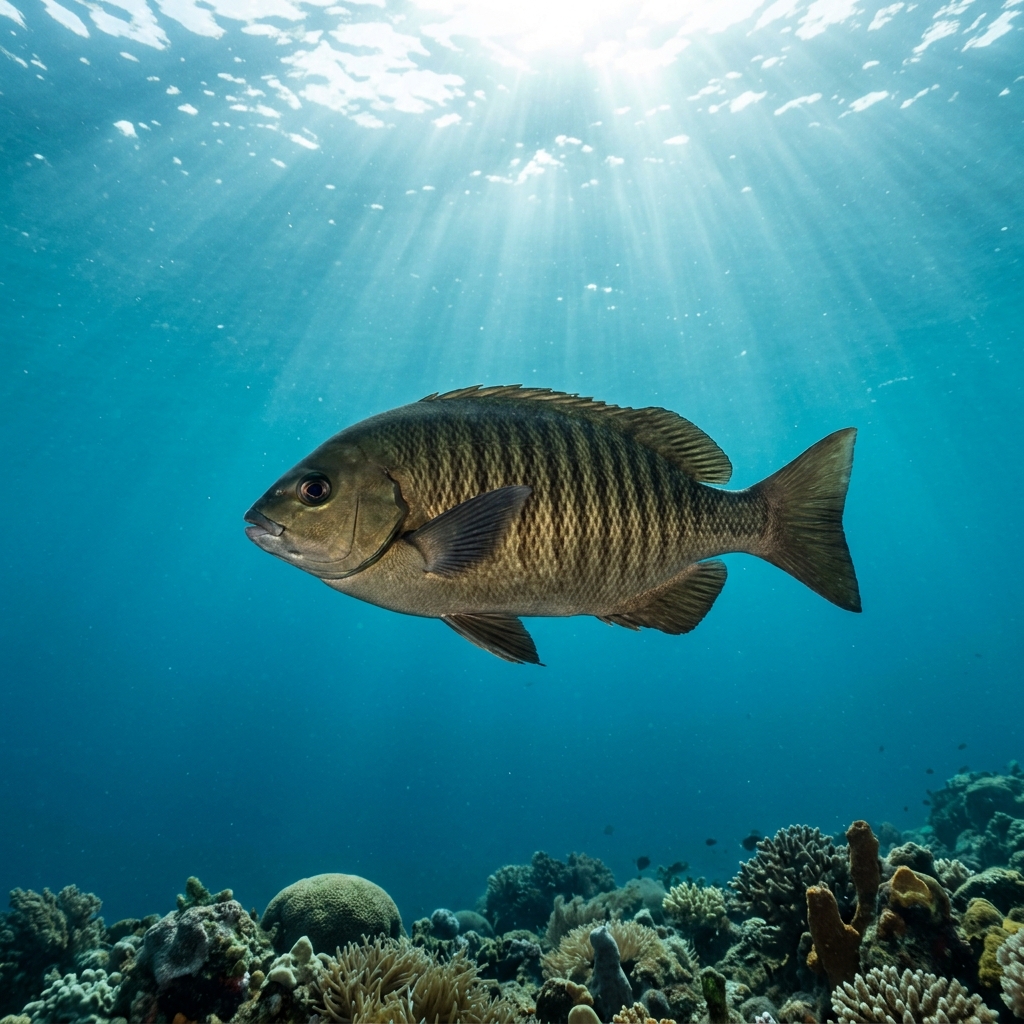
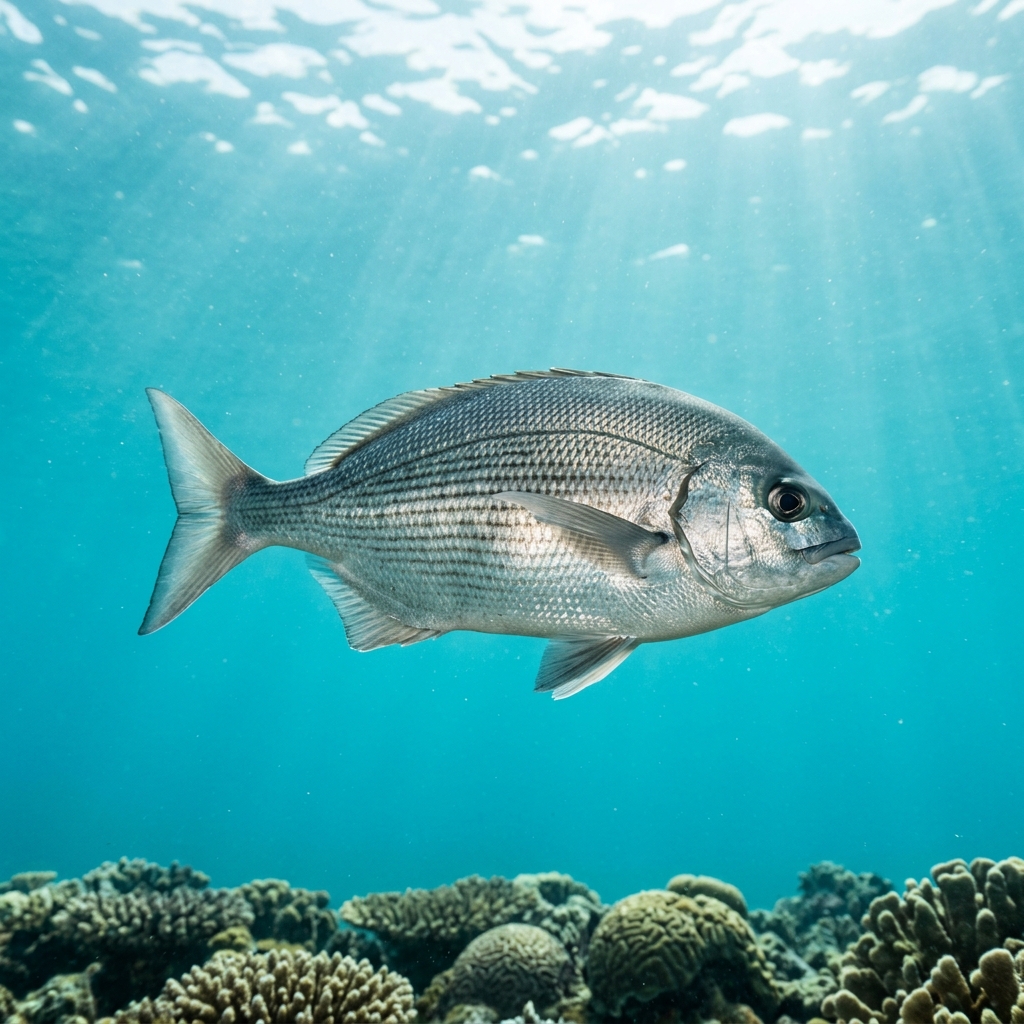
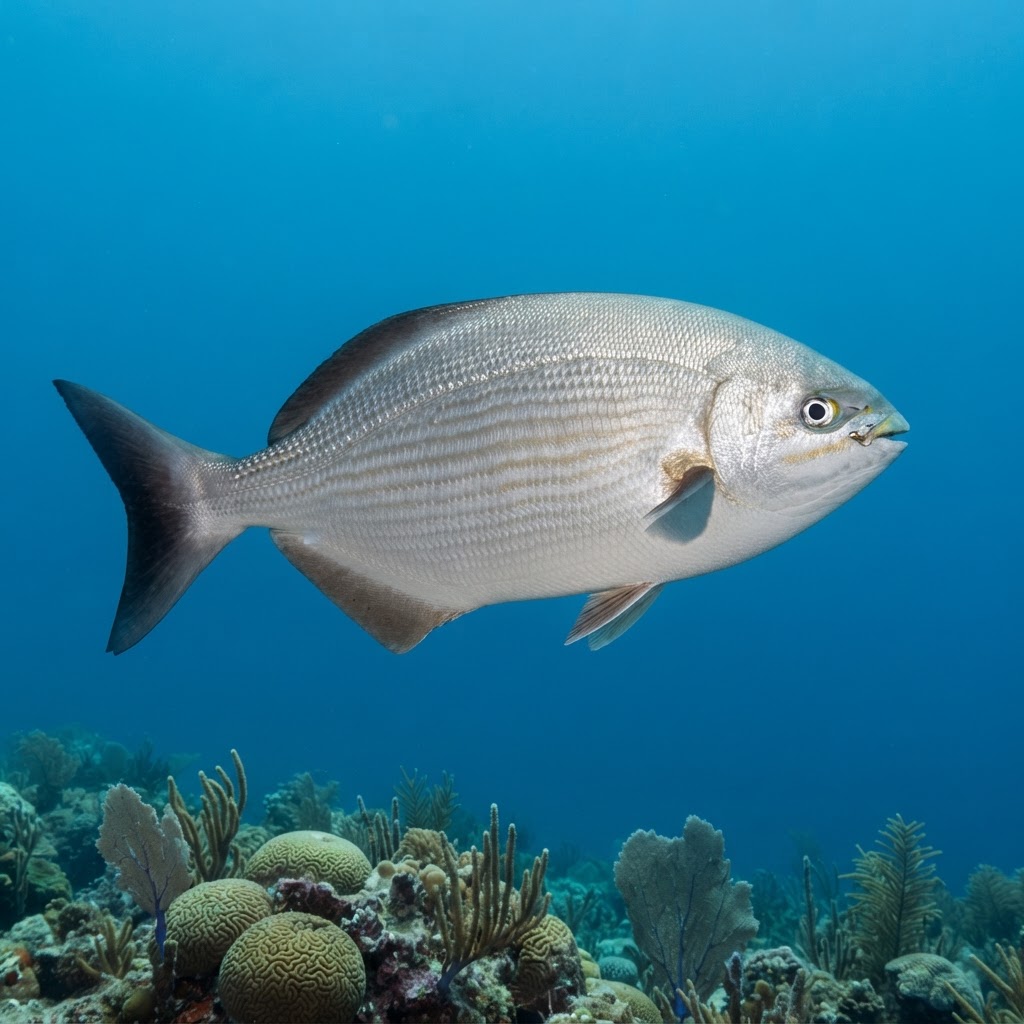
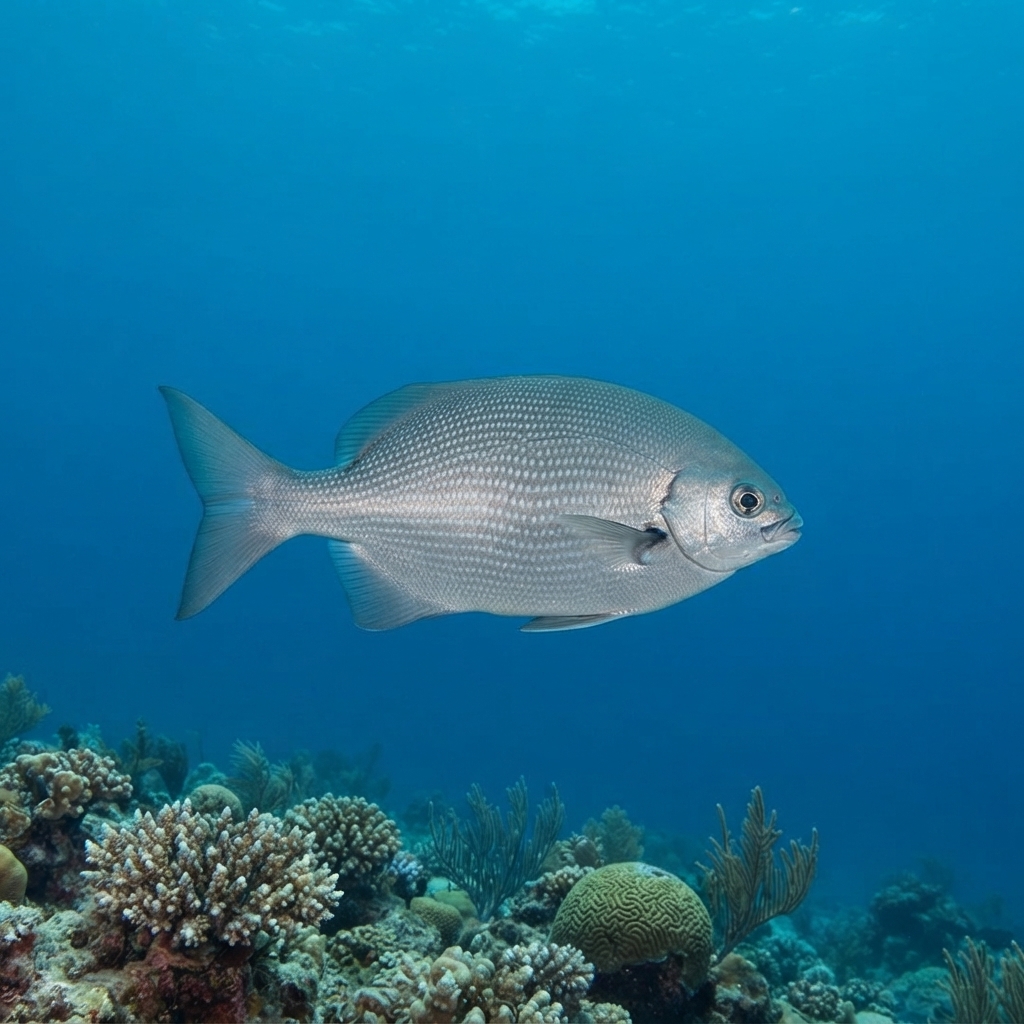
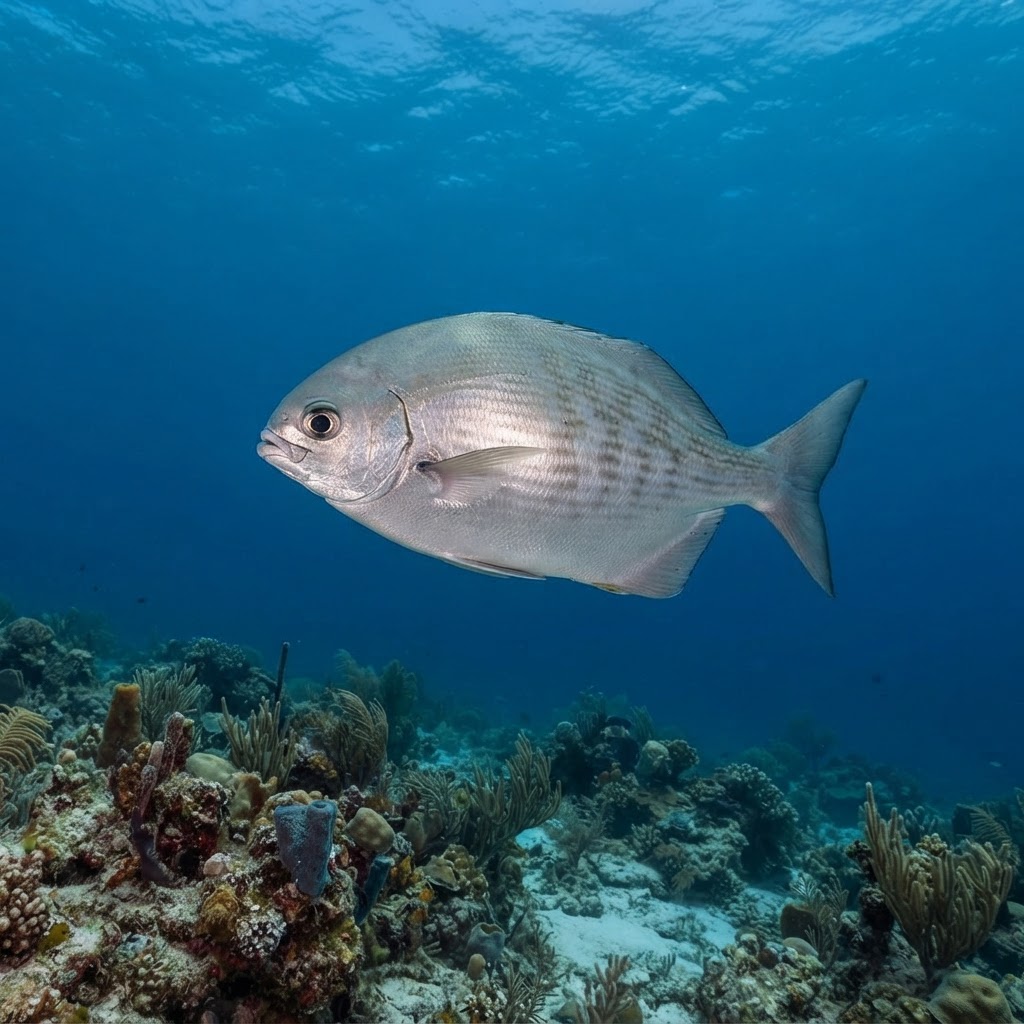
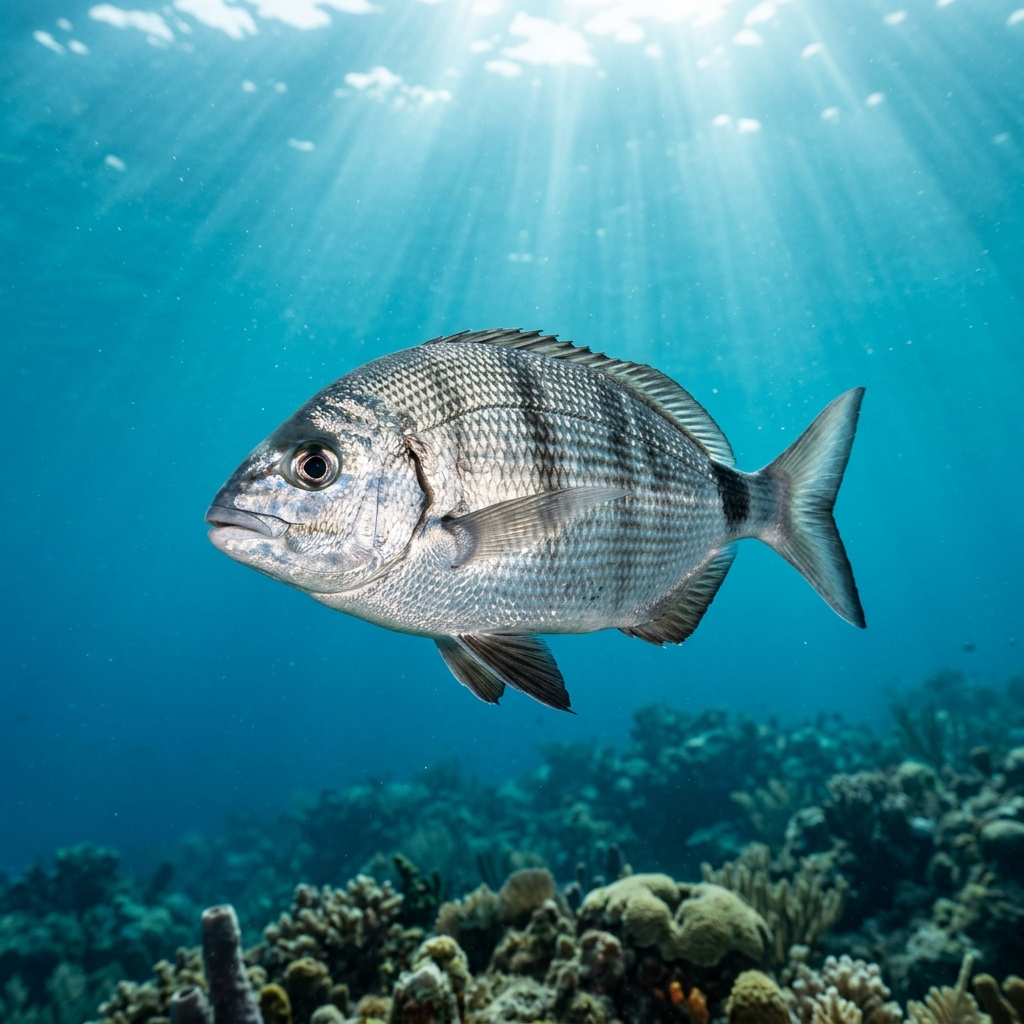
Sea chubs are stocky, deep-bodied fish with a notably small mouth tucked at the front of a rounded snout, a useful anchor point when trying to nail an ID underwater. Most members of the family are silvery-grey to olive-bronze, often carrying faint horizontal streaking or spotting along the flanks. Body shape is the key: think of a compressed oval that looks almost too thick to be that fast. They typically school loosely in mid-water above rocky or coral reef habitats, which helps separate them from similarly coloured benthic (bottom-dwelling) fish.
At most sites sea chubs are encountered in loose, unhurried schools patrolling the upper reef or rocky drop-offs, often within a few metres of the surface. They tend to ignore divers at first but will drift away if approached too closely, so slow and steady movement keeps the school around you longer. Watch for them grazing on algae and encrusting growth directly off the reef surface, that small downward-pointing mouth is perfectly adapted for scraping, and you will often see the whole school tilting to feed in unison.
Sea chubs are among the reef's most important herbivores: their constant grazing on macroalgae helps prevent algae from smothering coral and encrusting organisms, giving them an outsized ecological role relative to their unremarkable appearance.
In the Northern Hemisphere, sightings are spread evenly throughout the year with no concentrated peak, which makes sense given the family's broad temperature tolerance from around 16 °C to nearly 29 °C. Southern Hemisphere divers see the most activity between July and February, so plan Australian or South African dives within that window.
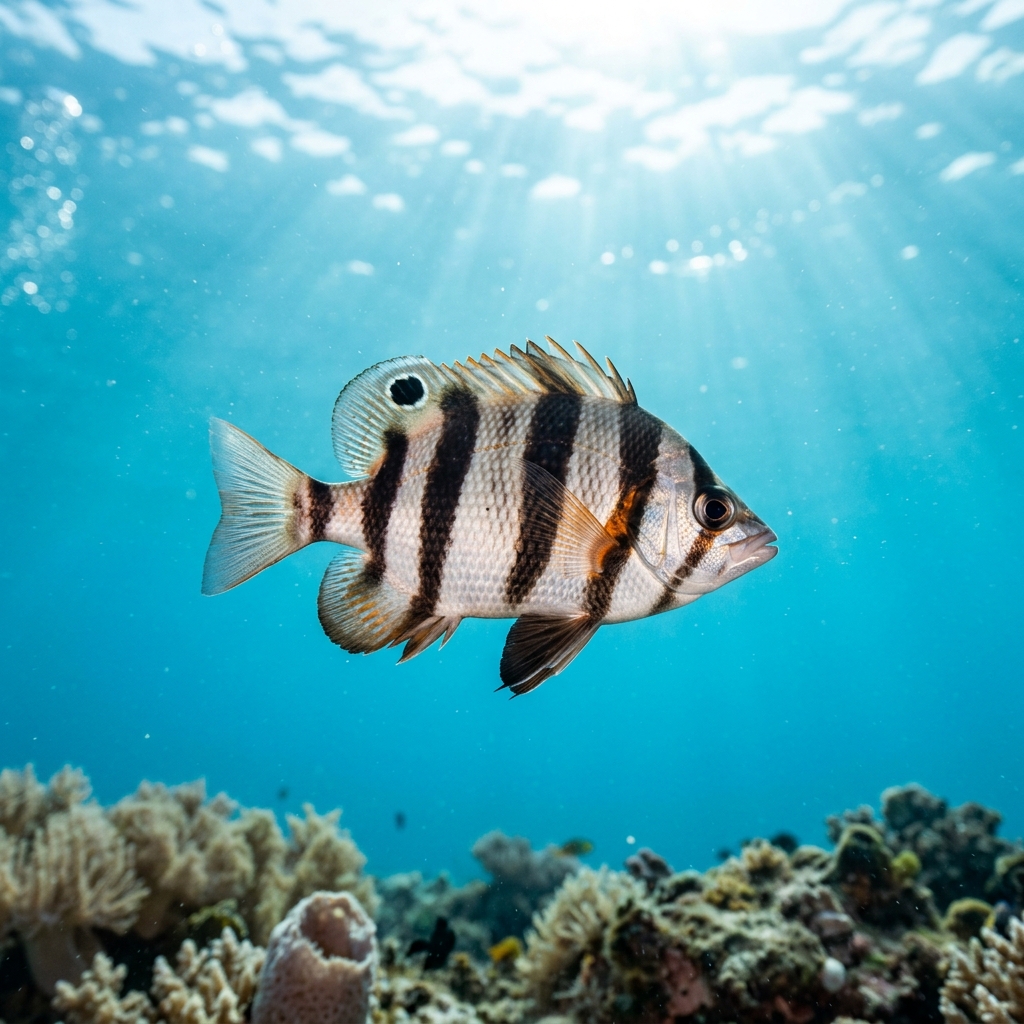
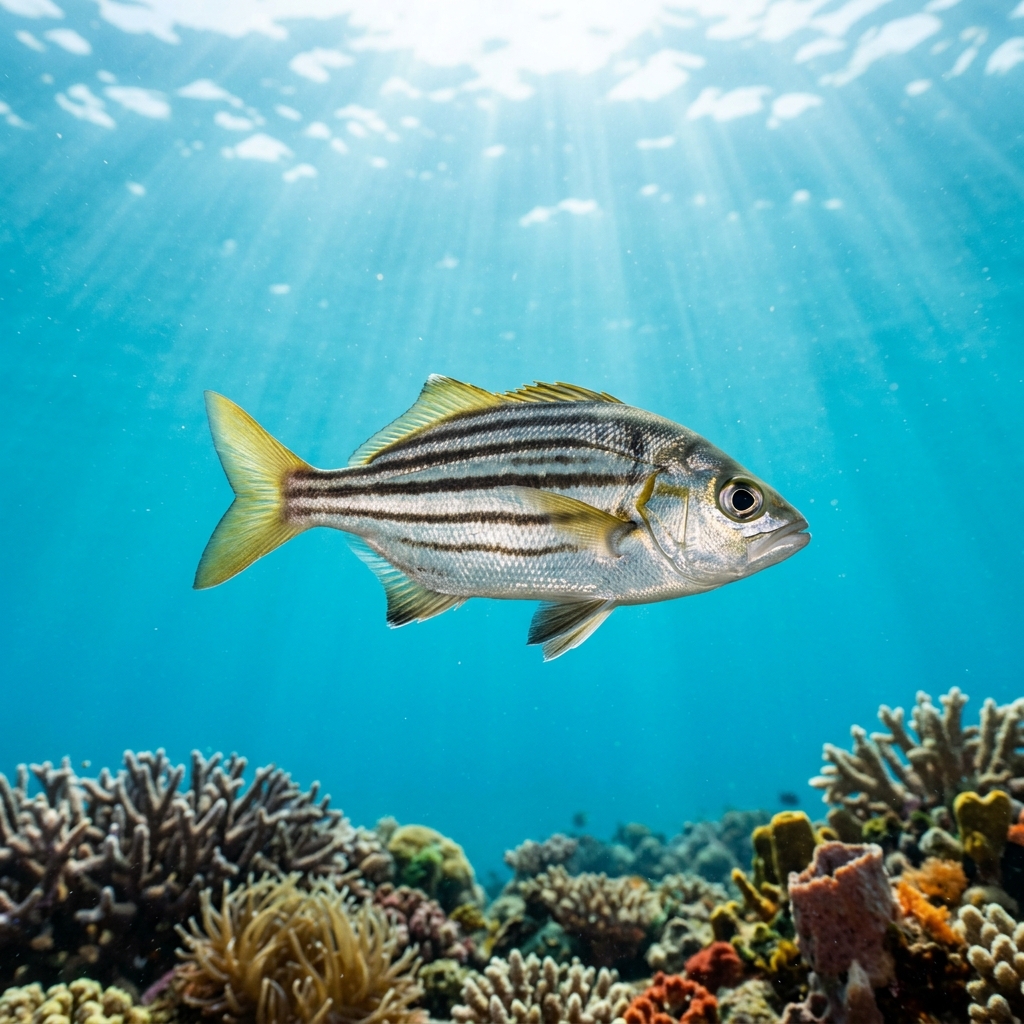
Reef neighbours a diver could mistake it for. Use the identification notes above to tell them apart.
Sea chubs are most commonly logged across the United States, Mexico, and Australia, with Florida and the South-east, the Yucatán Peninsula, and Queensland standing out as the most reliable regions. Strong populations are also recorded throughout the Indo-Pacific, particularly in the Maldives and the Philippines, and in the western Pacific from Japan south. Mediterranean divers encounter them regularly around Italy.
Mapping where Sea Chub is logged…
Sea chubs are logged at dive sites across a wide range of countries, with the strongest representation in the United States (especially Florida and Hawaii), Mexico's Yucatán Peninsula, Australia's Queensland and Western Australian coasts, and the Maldives. They also appear regularly throughout the Philippines, Thailand, Japan, and Italy.
In the Northern Hemisphere they turn up year-round with no seasonal peak, so any month works for Florida, Hawaii, or the Maldives. In the Southern Hemisphere, sightings concentrate between July and February, making that the preferred window for Australian dives.
Look for a deep, compressed oval body, silvery-grey or olive colouring with faint horizontal streaks, and a distinctively small mouth at the tip of a rounded snout. They almost always school loosely in open water just above the reef rather than hugging the bottom, which helps narrow the ID quickly.
At sites where they are recorded, sea chubs are most often classed as uncommon, meaning you may see them on some dives but should not count on it every session. They are rated common at a smaller proportion of sites, typically sheltered rocky reefs with good algal growth.
No. Sea chubs pose no risk to divers whatsoever. They are not venomous, do not bite, and typically move away calmly if you get too close.
Site and sighting data is aggregated from diver logs, iNaturalist and GBIF. For taxonomy and conservation status:
Bermuda Chub
450 sites