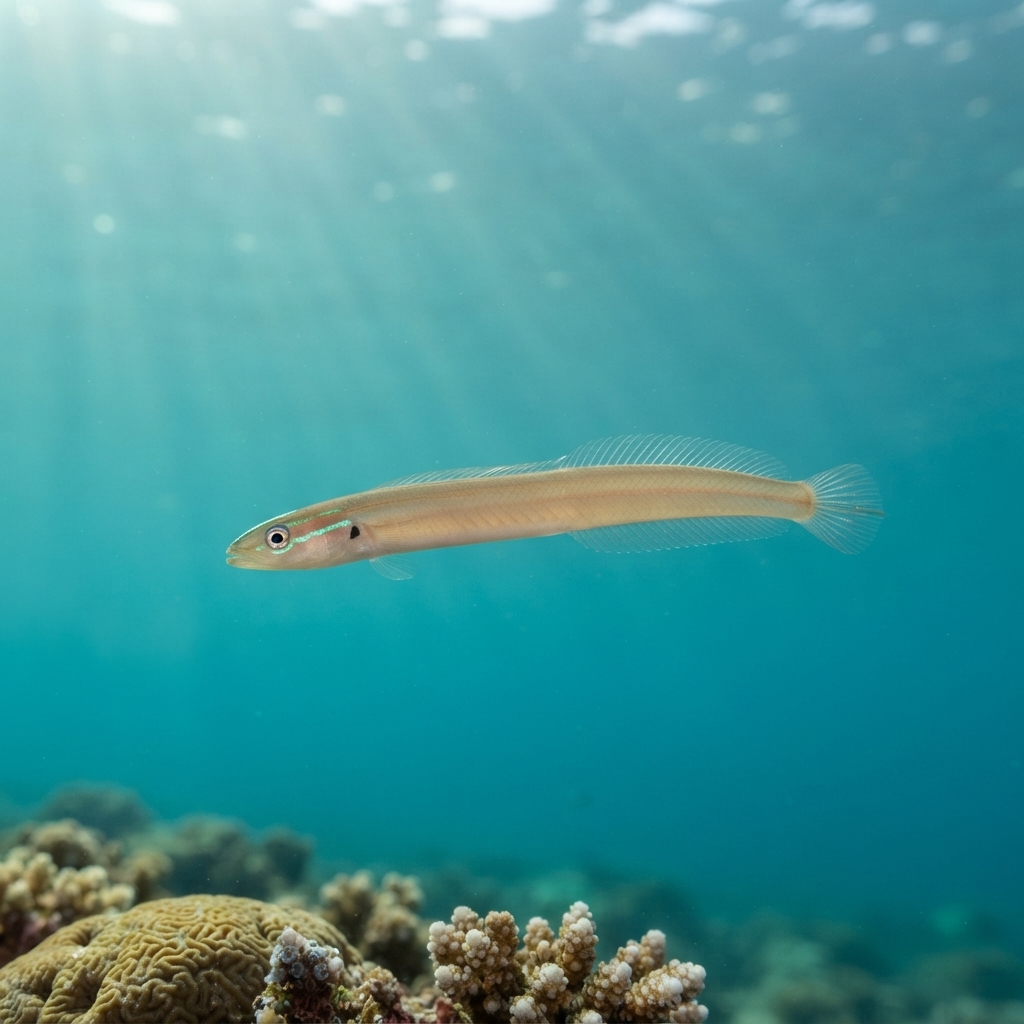
Gunnellichthys monostigma
Slender goby that hovers over rubble in Sulawesi, Indonesia, in water around 26-29C. Here's how to spot the single dark tail flag.
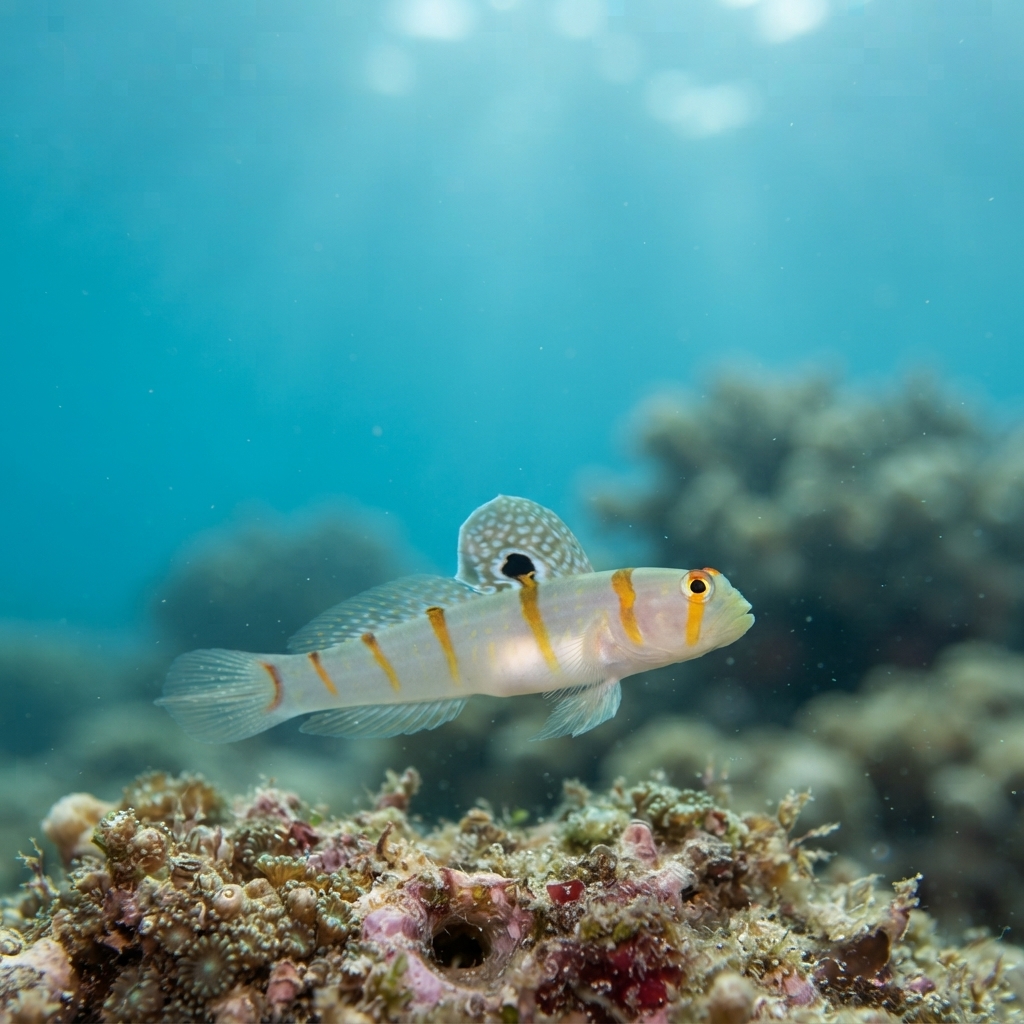
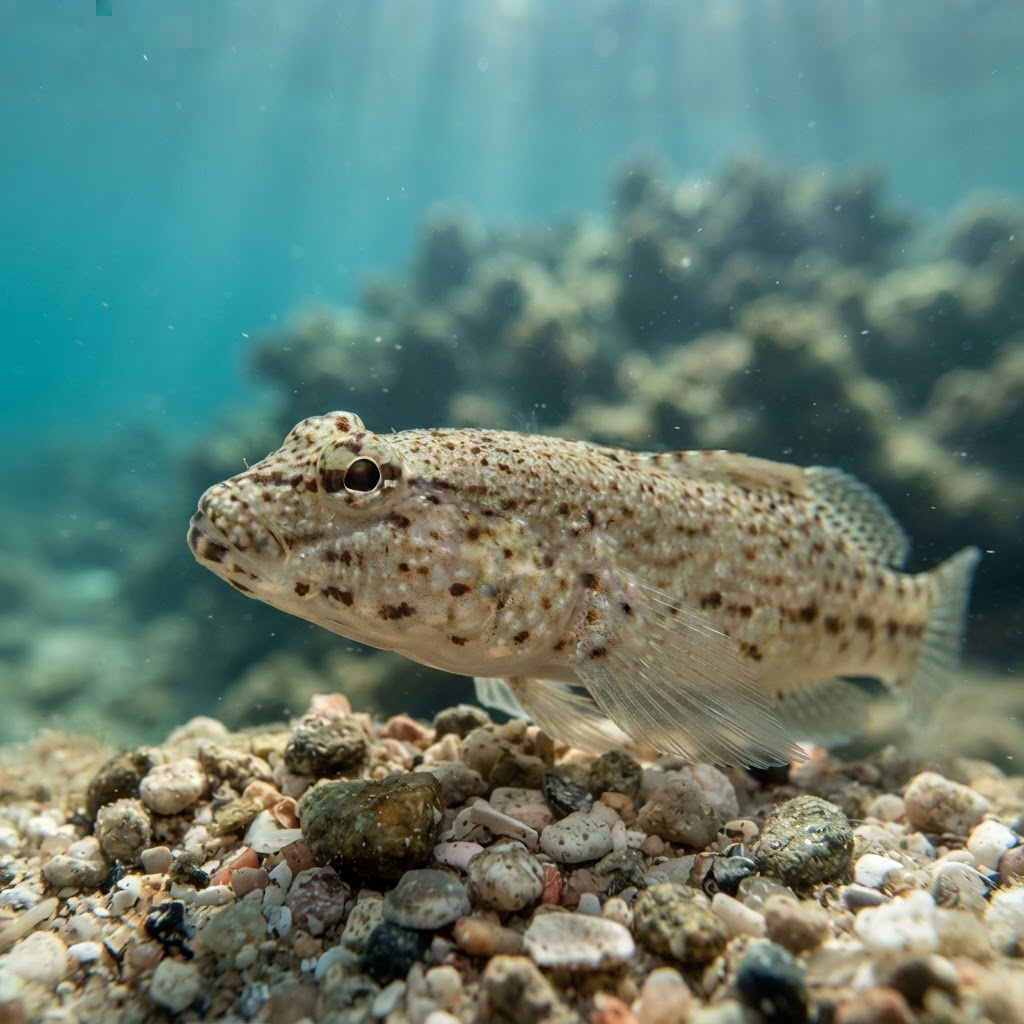
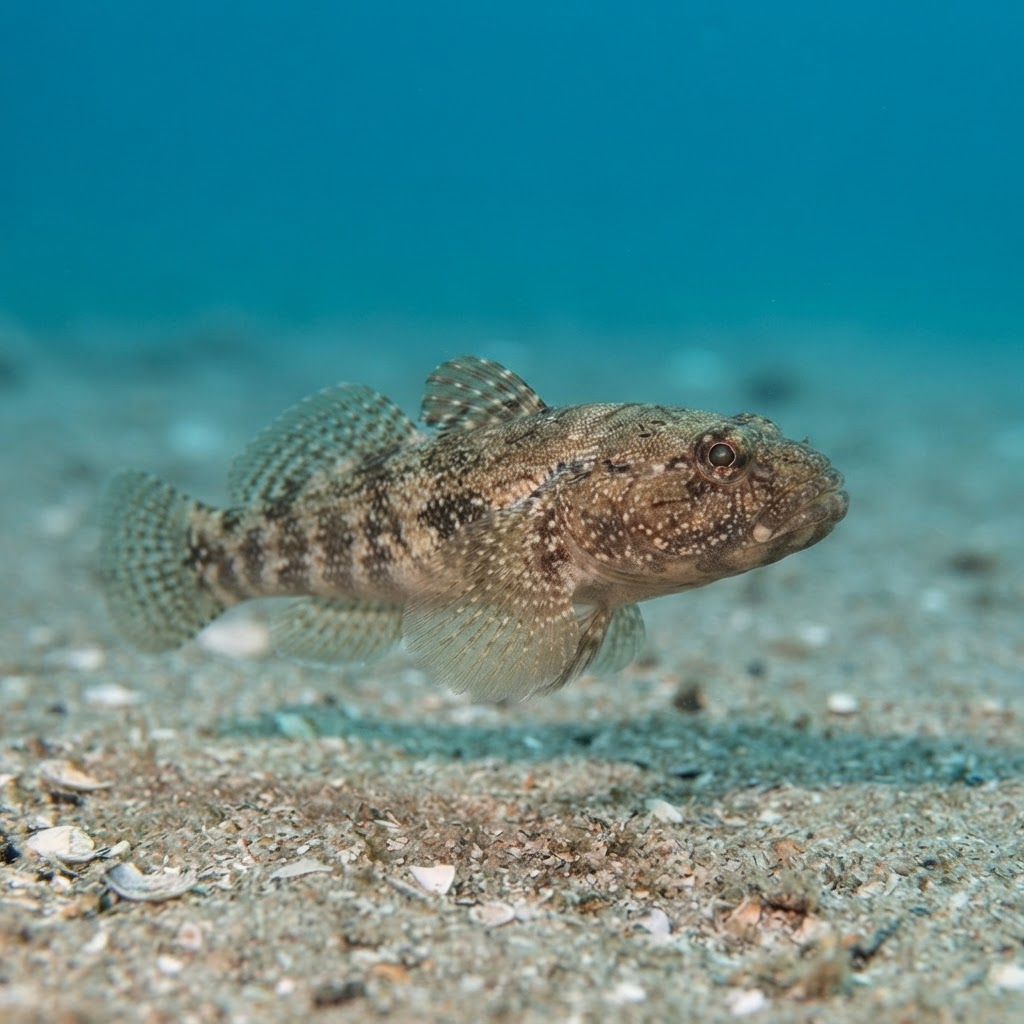
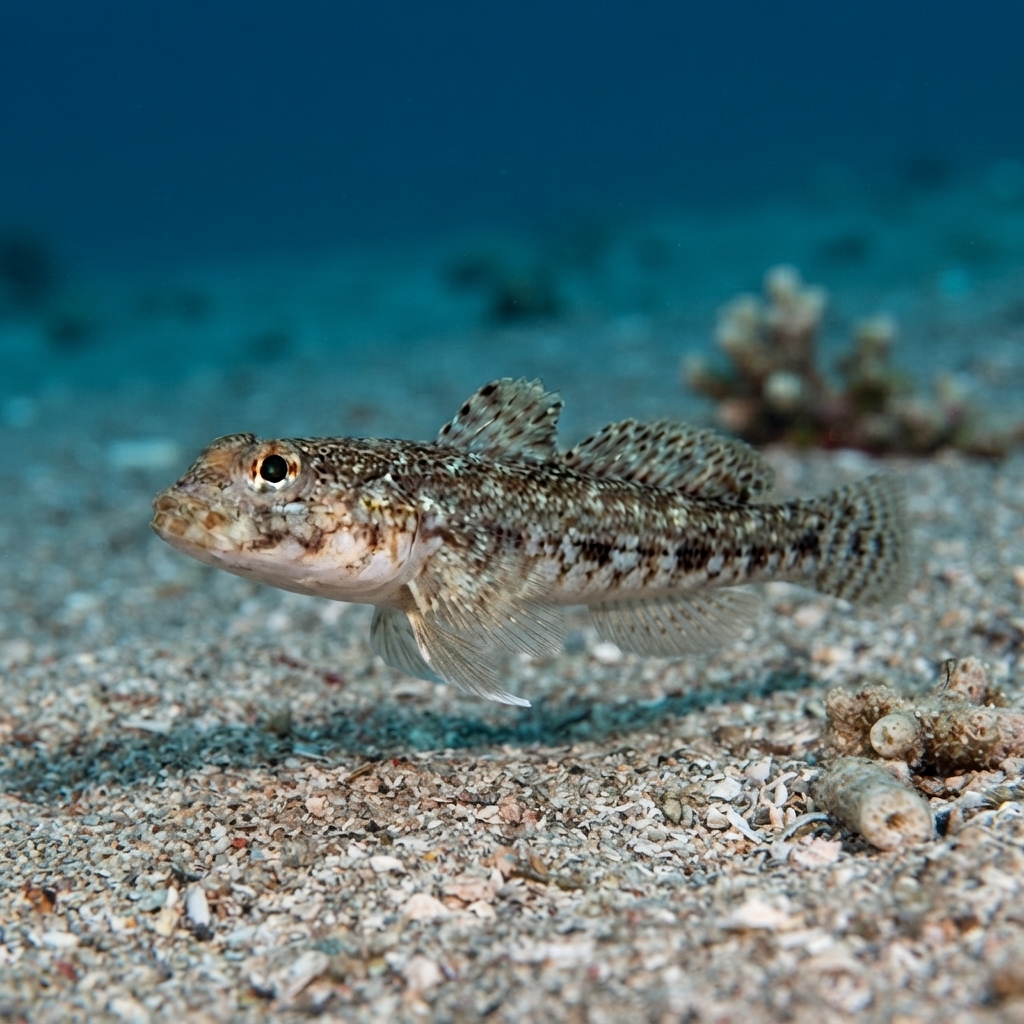
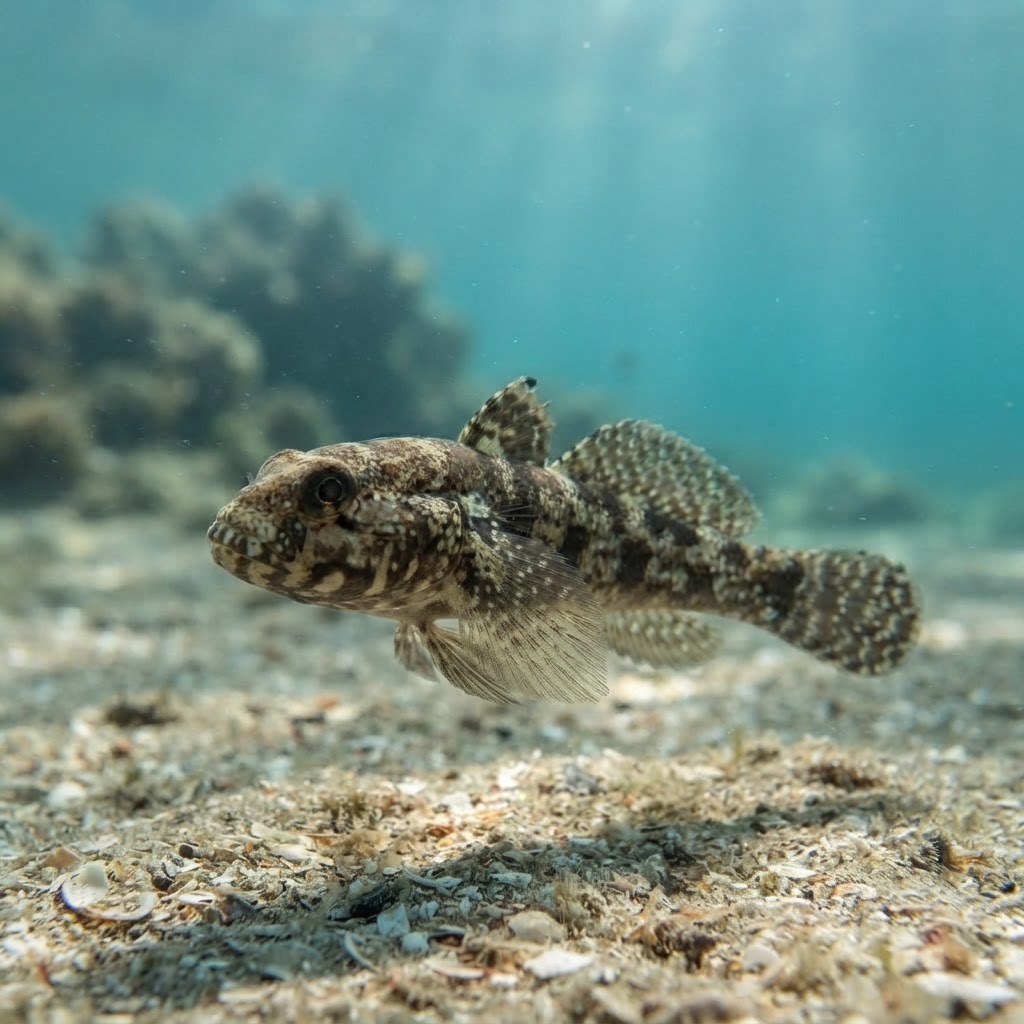
A slim, eel-like body only about 10cm long, pale grey to yellowish with a faint bluish sheen along the flanks. The single dark spot at the base of the tail (the source of the name) is the main thing to look for as it hovers just above the seabed. It holds a straight, elongated posture rather than the perched stance of a typical goby, which helps separate it from bulkier reef gobies at a glance.
Look for it hanging in the water column just centimetres above sand or rubble patches, tail slightly angled down, ready to dart into a burrow at the first sign of a diver getting close. It's logged as uncommon at the sites where it turns up, so patient, slow scanning of open sandy stretches between coral heads is more productive than reef-scanning. Sightings suggest it's easiest to spot with a careful, low approach rather than fast fin kicks that push a pressure wave ahead of you.
Like other wormfish, it retreats tail-first into a burrow in the sand when startled, which is often the only clue a diver gets that one was there at all.
No clear seasonal pattern shows up in the sightings, and the water it's found in stays a steady 25.8 to 28.9C, so it's a year-round prospect on Sulawesi's reefs rather than a seasonal target.
Reef neighbours a diver could mistake it for. Use the identification notes above to tell them apart.
Logged sightings currently come from Sulawesi, Indonesia, which is the region to target if you want to look for this one specifically. It's not widely reported elsewhere in the data, so treat Sulawesi's rubble and sand-flat sites as the reliable starting point.
Mapping where Onespot Wormfish is logged…
Confirmed sightings are concentrated in Sulawesi, Indonesia, where divers have logged it on sand and rubble patches. It's considered uncommon even at these sites, so it's a bonus find rather than a guaranteed one.
There's no detected seasonal pattern, and it's found in consistently warm water between about 25.8 and 28.9C, so it can turn up year-round on Sulawesi's reefs.
Look for a slender, eel-shaped body around 10cm long hovering just above sand or rubble, with a single dark spot near the base of the tail. Its straight, elongated posture sets it apart from stockier perched gobies.
They reach roughly 10cm in length, making them one of the smaller, slimmer residents of sand and rubble habitats.
When approached, it drops tail-first into a burrow in the sand almost instantly, which is often the clearest sign a diver has actually found one.
Site and sighting data is aggregated from diver logs, iNaturalist and GBIF. For taxonomy and conservation status:
Slender Goby
806 sites