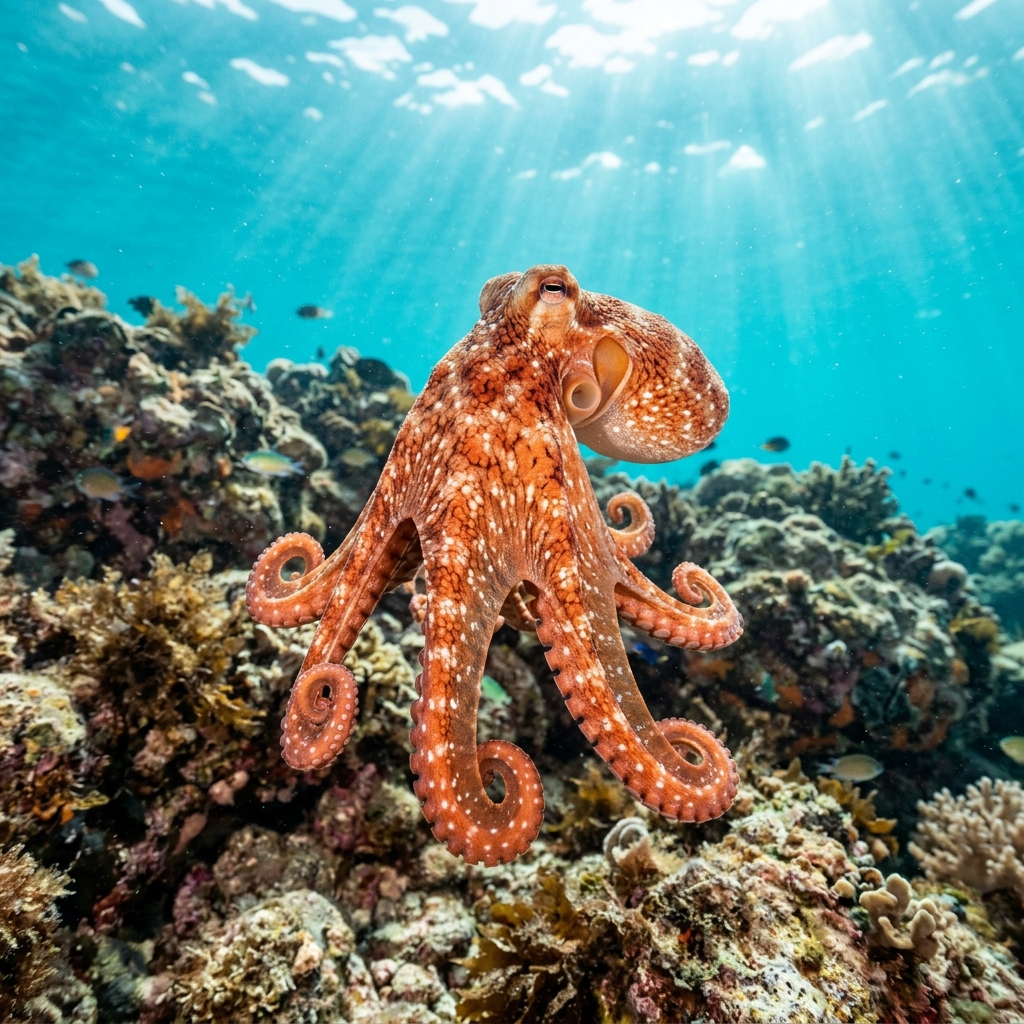
Octopus djinda
Star Octopus appears most in Western Australia from Nov, Apr in cool 18-22 °C water. Here's where to find it and how to recognise it underwater.
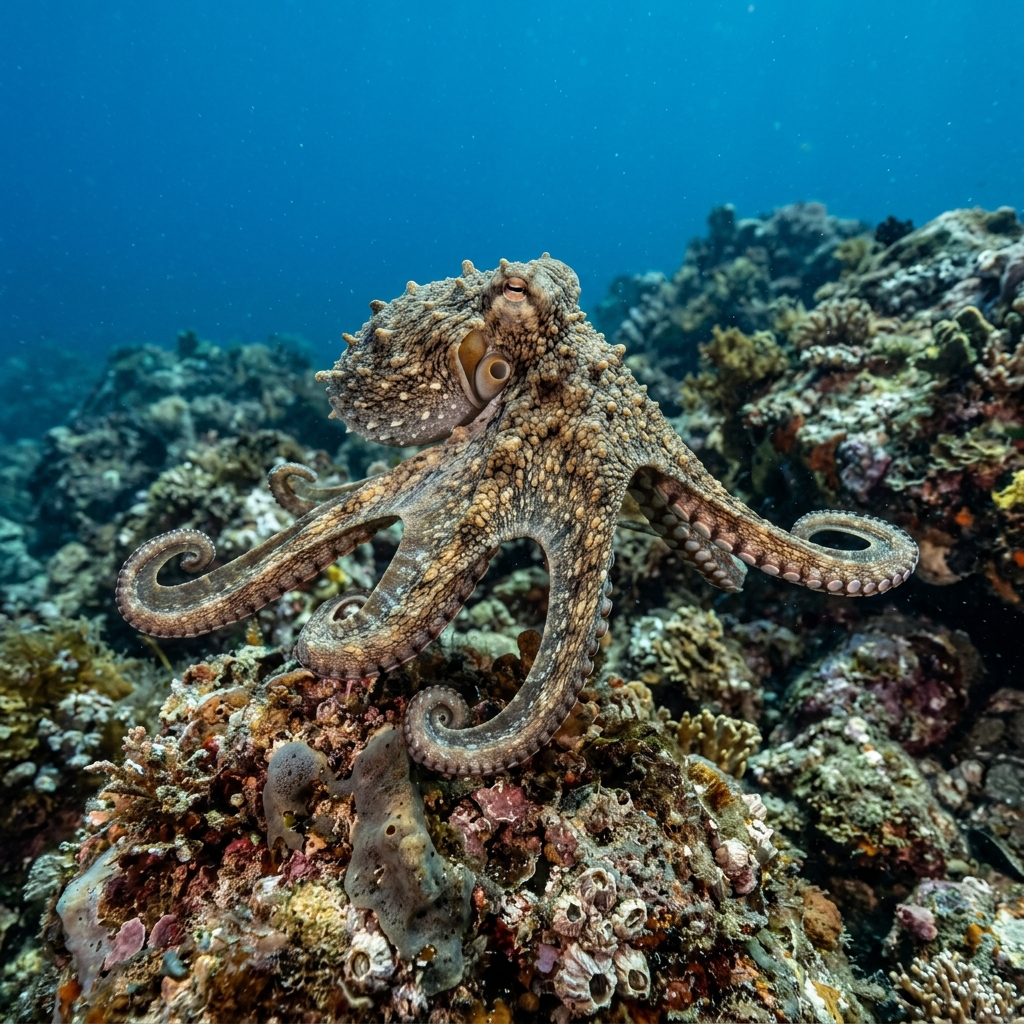
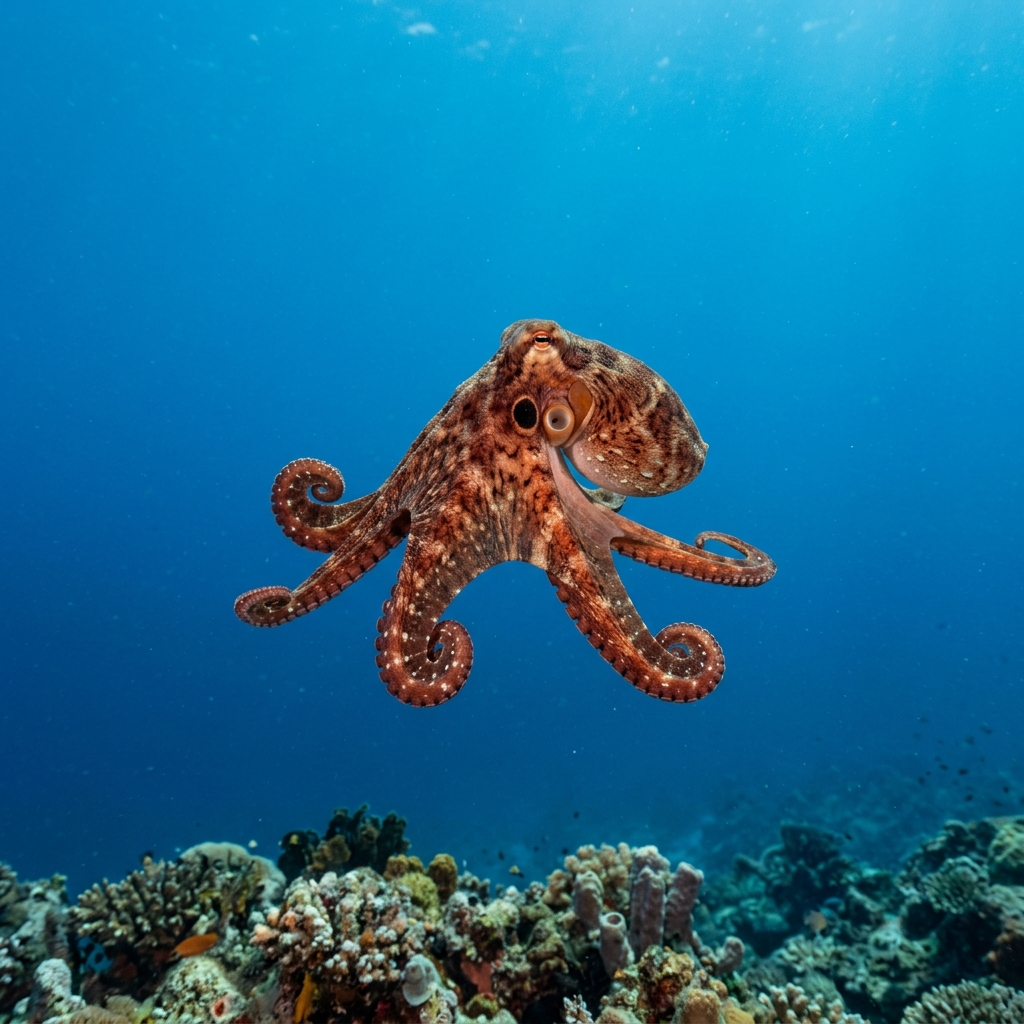
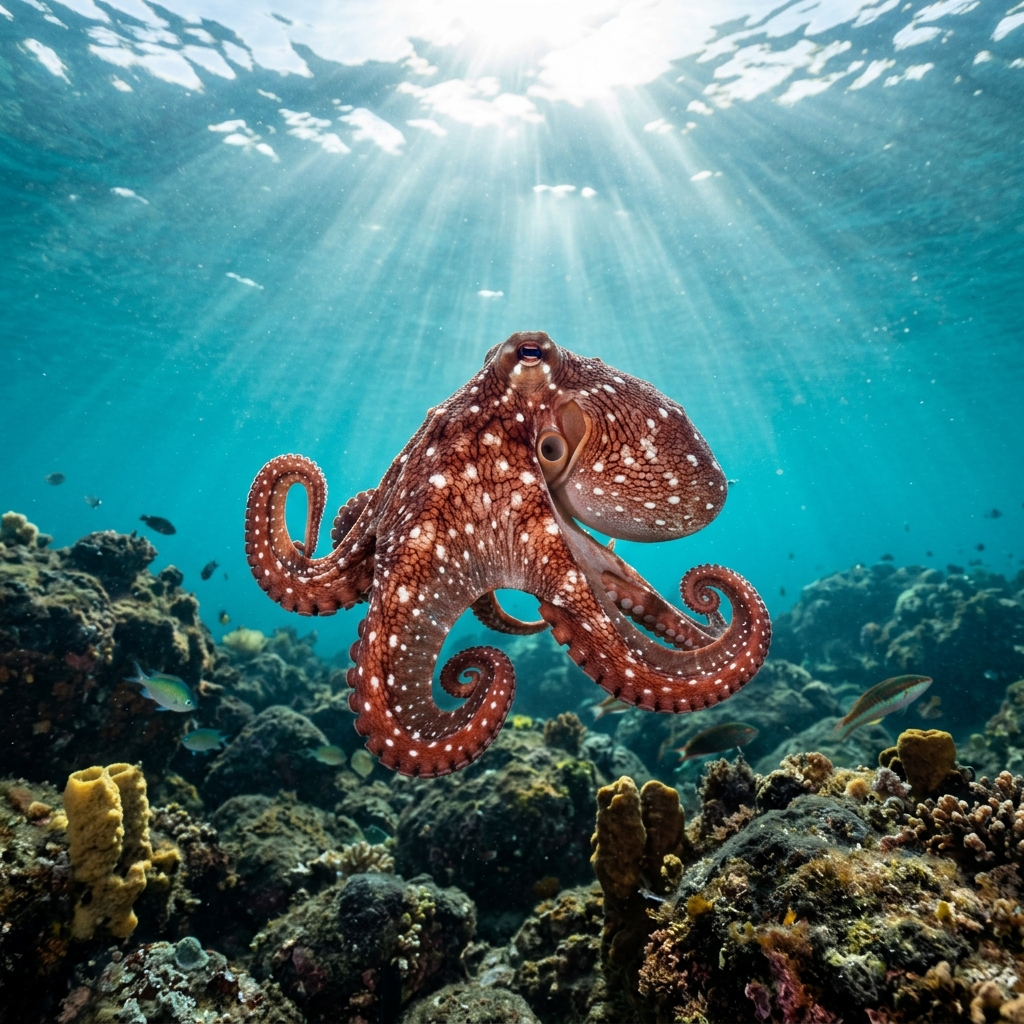
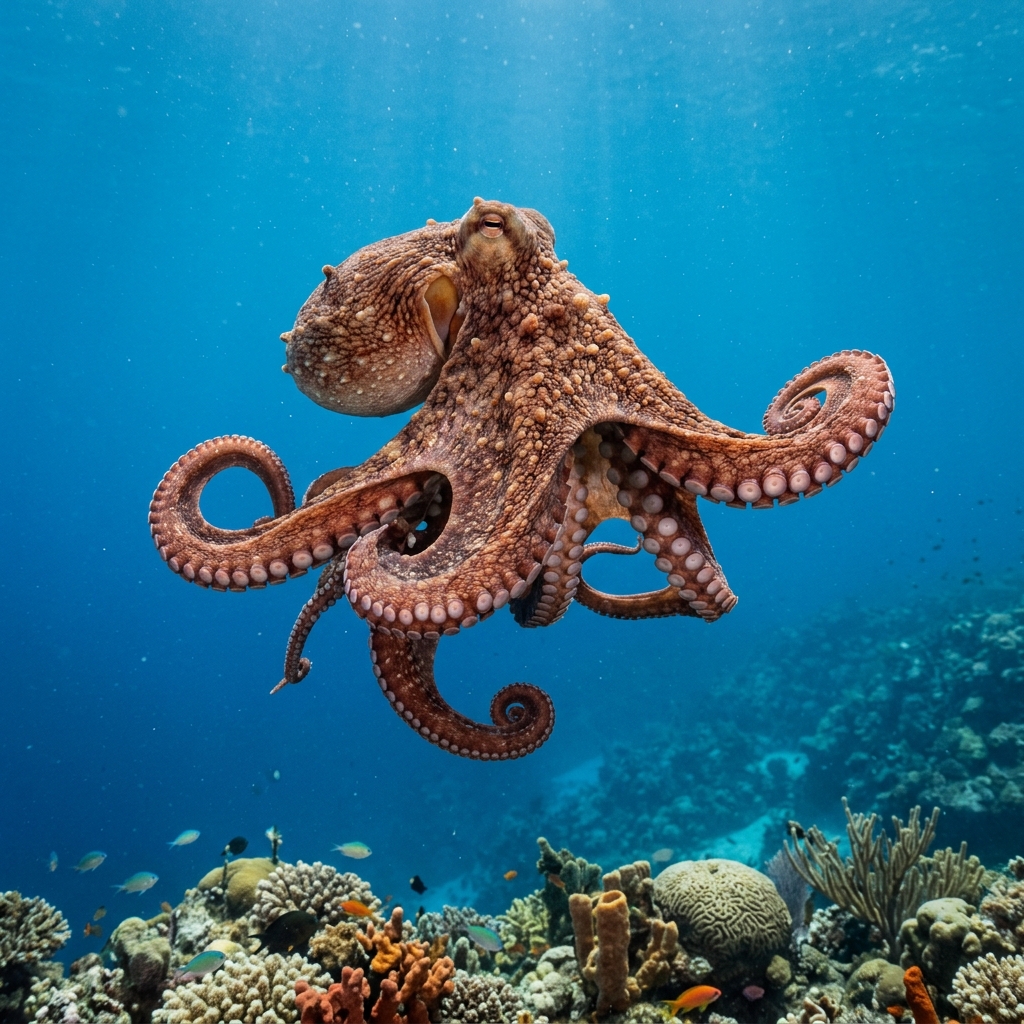
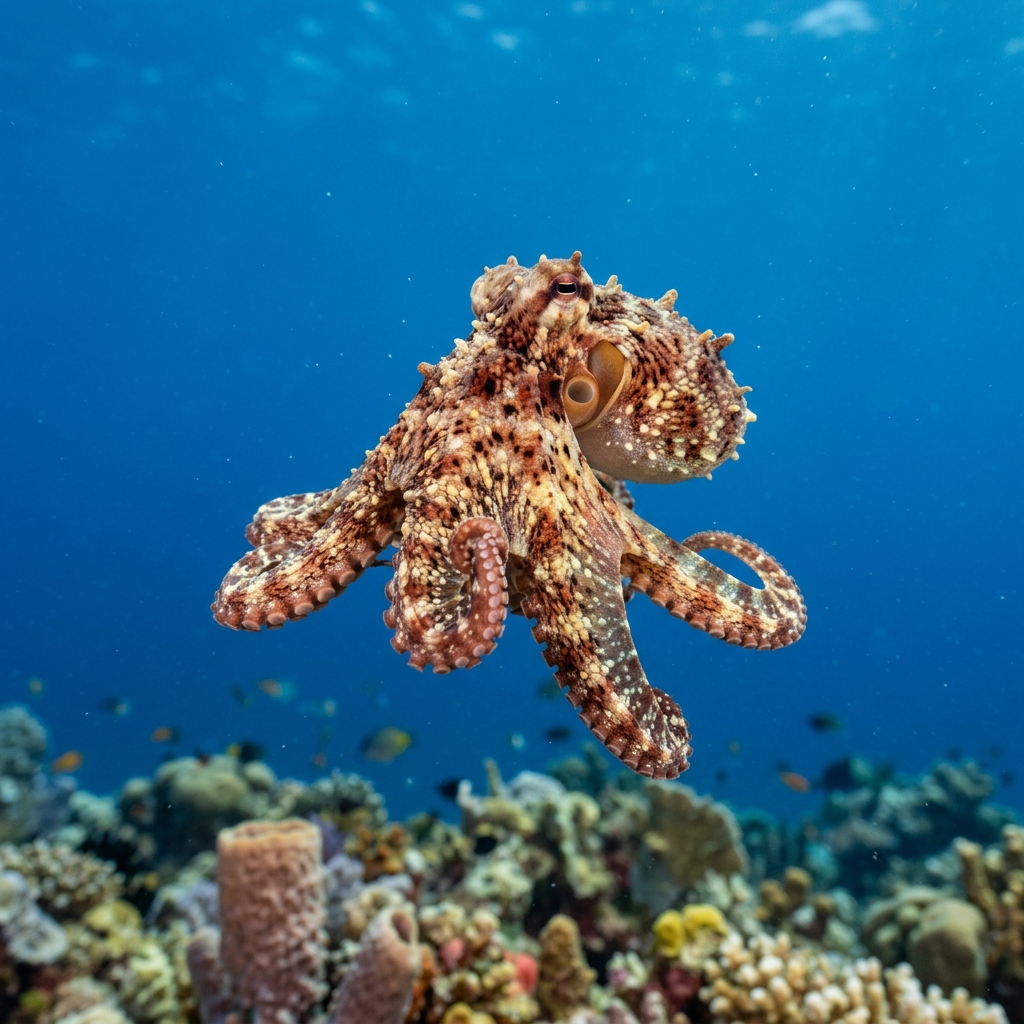
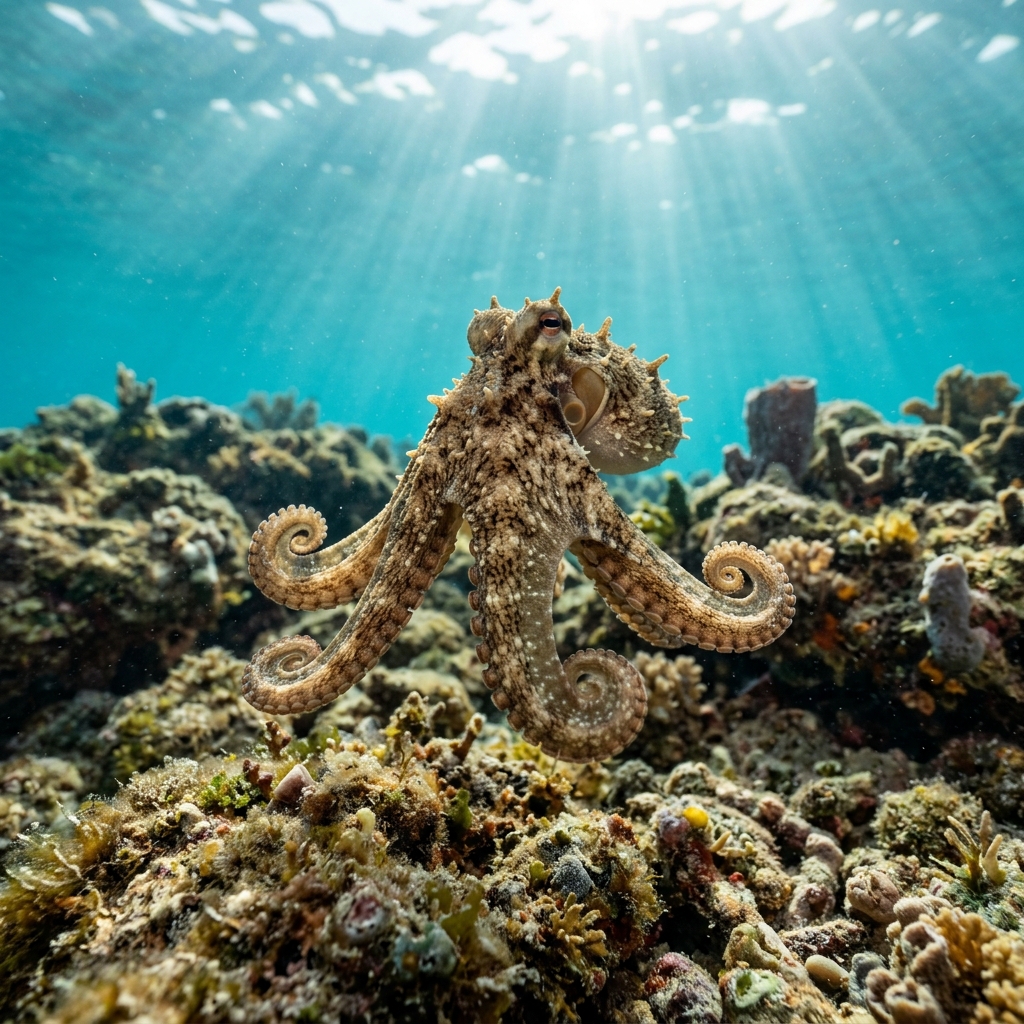
Star octopuses display a highly textured, bumpy mantle with mottled browns, creams and rusty reds that shift rapidly to match the surrounding reef or sand. Look for the characteristic star-shaped white spots or pale rosette markings scattered across the arms and mantle, these give the species its name and are the most reliable field mark. Body size is modest compared with other Australian octopuses, and when at rest the arms tend to splay outward in a flattened, star-like posture. Like all octopuses, it can flatten dramatically and push through surprisingly tight crevices.
Most encounters find it moving slowly over rocky reef, rubble or seagrass beds during daylight, investigating crevices and hunting for crustaceans. When approached by a diver it typically freezes, intensifies its camouflage (the ability to change skin texture and colour in real time), and only jets away if pressed hard. Early morning and late afternoon dives tend to produce the most active individuals, as with most inshore octopuses.
The star-patterned rosettes on its arms are not just a passive colour pattern, the animal can rapidly enhance their contrast when alarmed, making the spots flash more vividly, possibly as a warning or distraction display similar to that seen in other Octopus species.
In the southern hemisphere sites where seasonality data exists, sightings concentrate from November through April, the austral spring and summer. This aligns with the species' observed water-temperature window of roughly 18 to 22 °C, when coastal waters in south-western Australia sit within that cooler range.
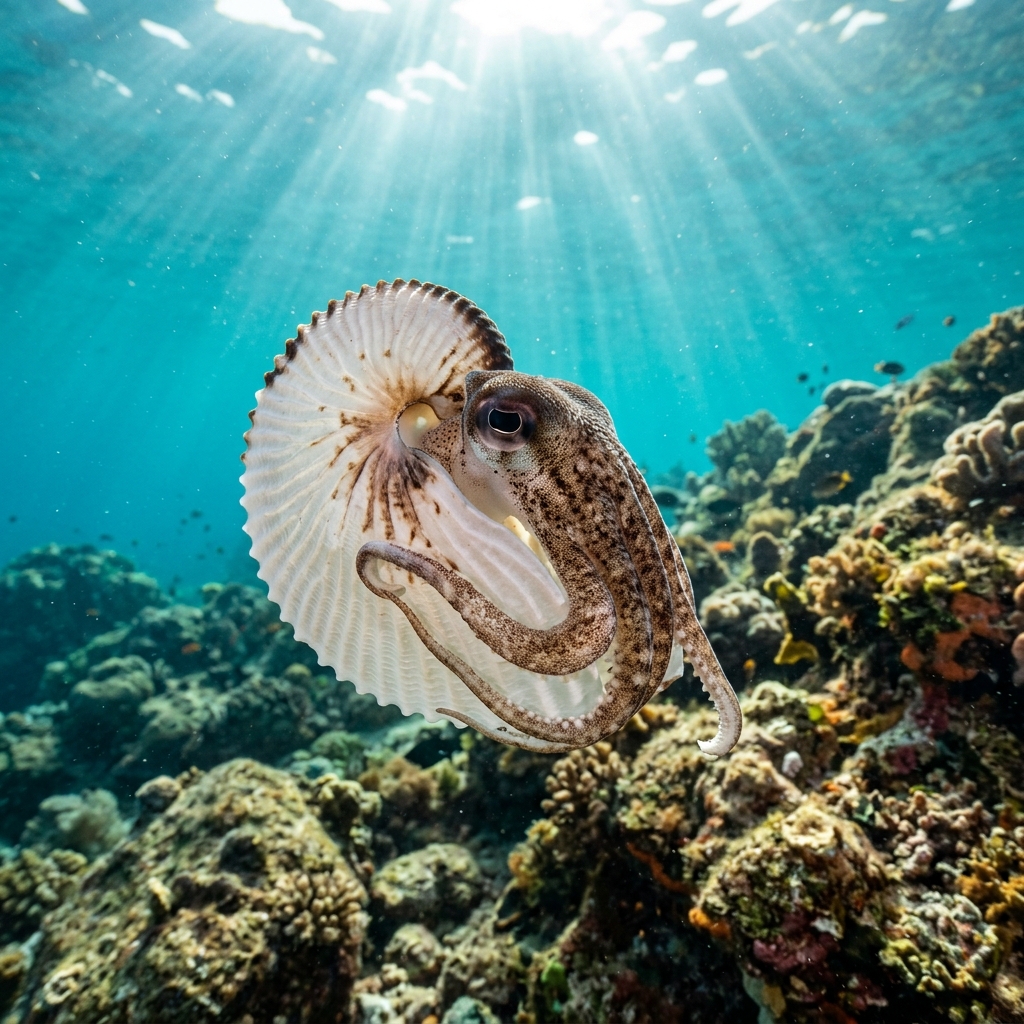
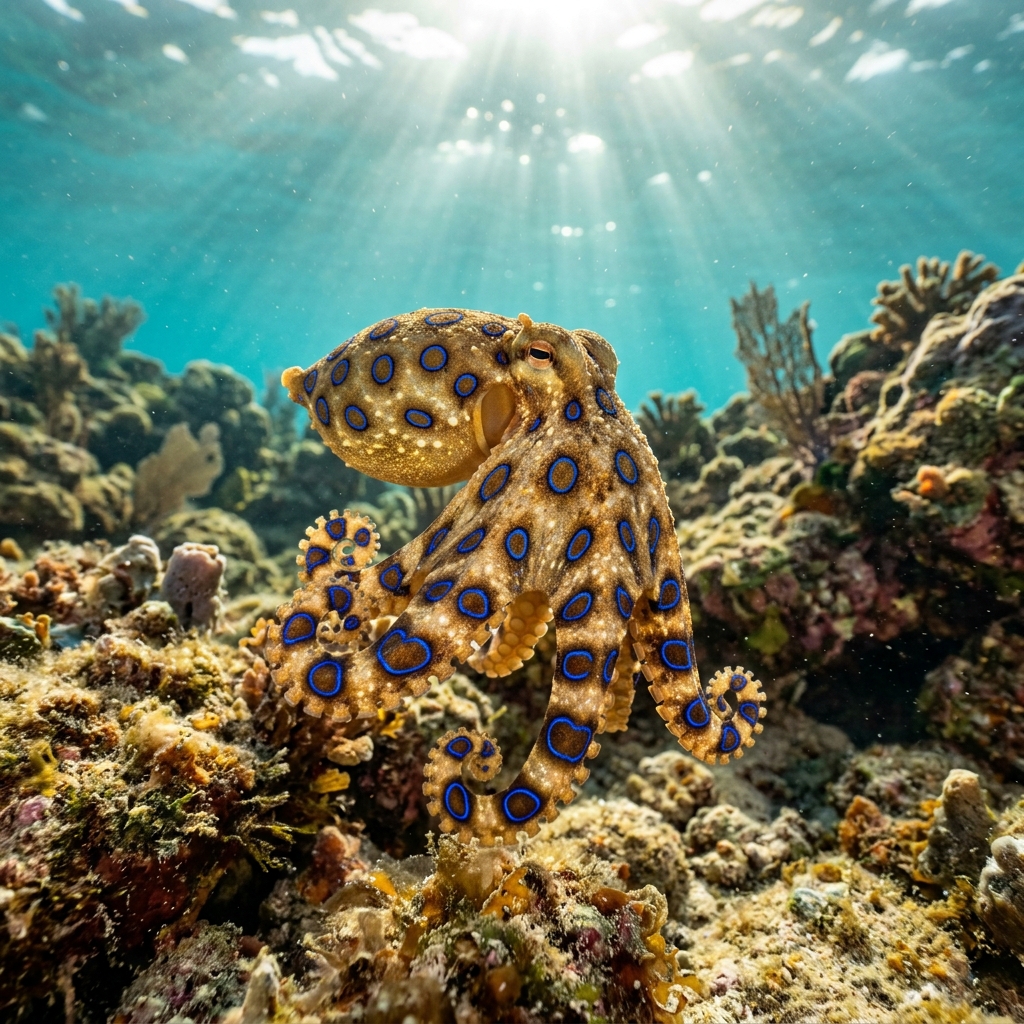
Reef neighbours a diver could mistake it for. Use the identification notes above to tell them apart.
Almost all logged sightings come from Western Australia, making it one of the most distinctively range-restricted octopuses on the continent. A small but consistent number of records also come from Western Cape, South Africa, suggesting a cool-temperate affinity that spans the southern hemisphere. If Western Australia is on your itinerary, this is essentially your only realistic shot at seeing one.
Mapping where Star Octopus is logged…
Western Australia is by far the strongest place to look, accounting for the vast majority of logged sightings. A smaller number of records come from Western Cape, South Africa. Outside those two regions there are almost no verified observations, so planning a dive specifically for this species means focusing on south-western Australian reefs.
Sightings peak between November and April in the southern hemisphere, which is the austral spring and summer. The species is observed in water temperatures of roughly 18 to 22 °C, so planning around those cooler but comfortable conditions in Western Australia gives you the best odds.
Key in on the pale star-shaped or rosette markings scattered across the arms and mantle, these are distinct from the more uniform spotting seen on Day Octopus or the iridescent blue rings of dangerous species. The skin texture is heavily papillate (covered in small raised bumps) and the overall colour palette runs to warm browns and creams. If the animal feels threatened, the pale spots may briefly intensify in contrast.
No. Star Octopus poses no significant risk to divers. Like all octopuses it can bite if handled roughly, so the sensible rule is to observe without touching. It will almost always retreat or camouflage itself rather than confront a diver.
Across the sites where it has been recorded, most divers rate it as uncommon, meaning you may complete several dives in the right habitat before spotting one. It is classed as common on only a small proportion of sites. Slow, careful reef inspection, especially around rubble patches and rocky crevices, improves your chances considerably over simply swimming through.
Site and sighting data is aggregated from diver logs, iNaturalist and GBIF. For taxonomy and conservation status:
Brazilian Reef Octopus
1,142 sites