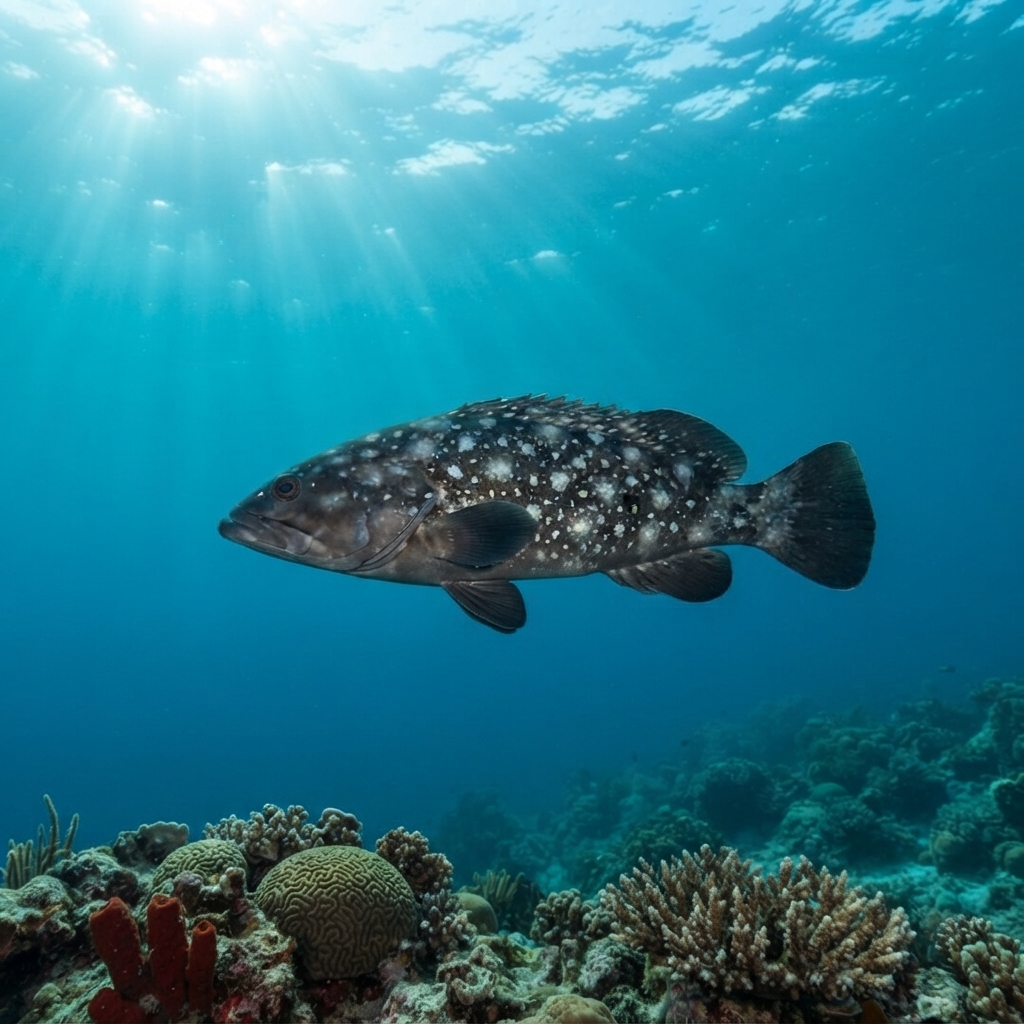
Epinephelus coeruleopunctatus
Speckled reef grouper found resting on ledges from Sumatra to Nosy Be, in warm water year-round, 24 to 29C.
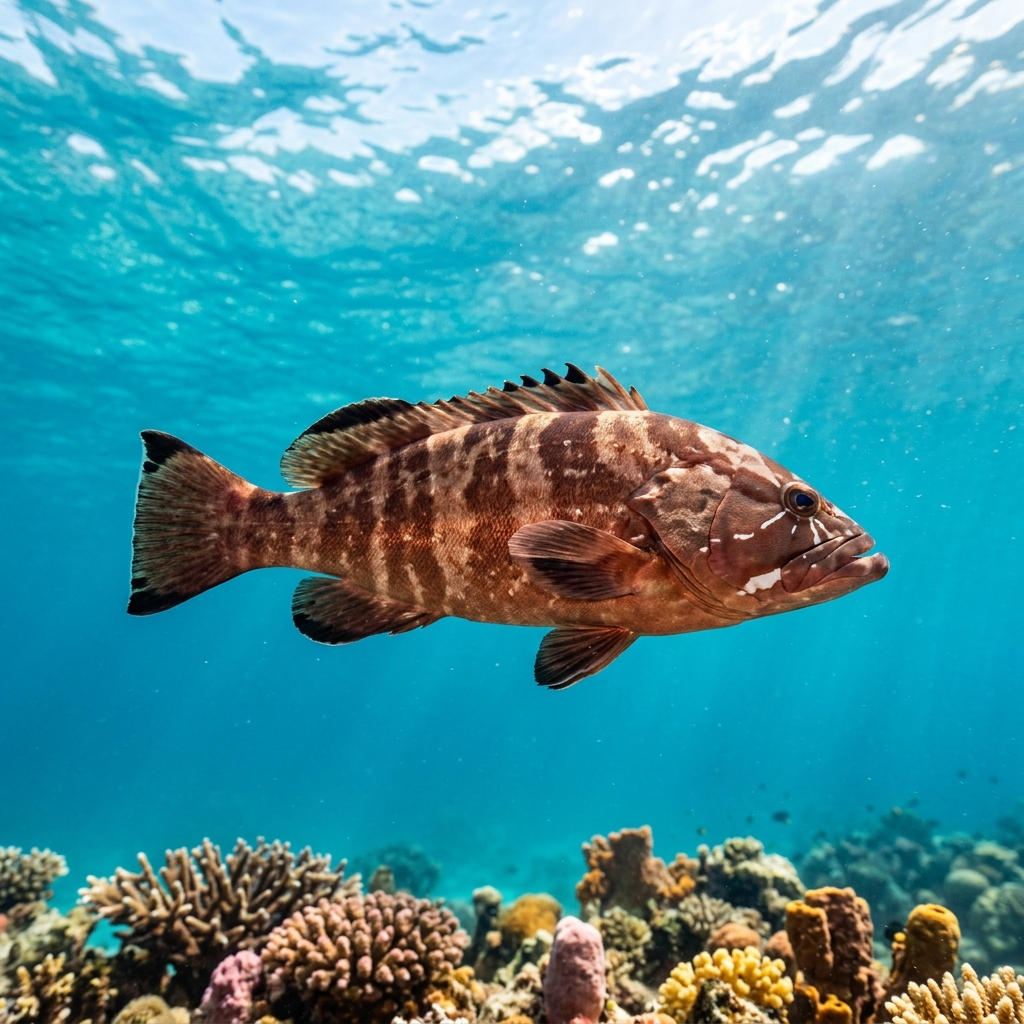
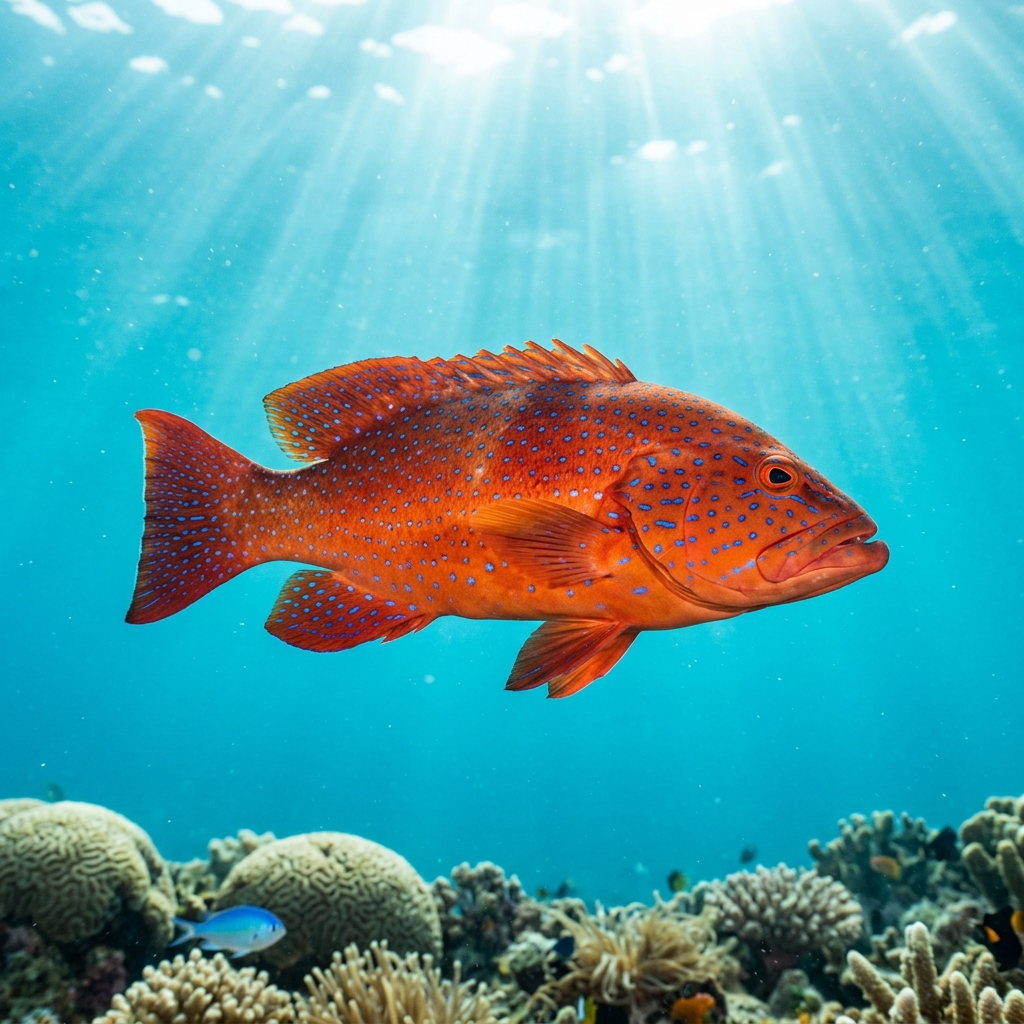
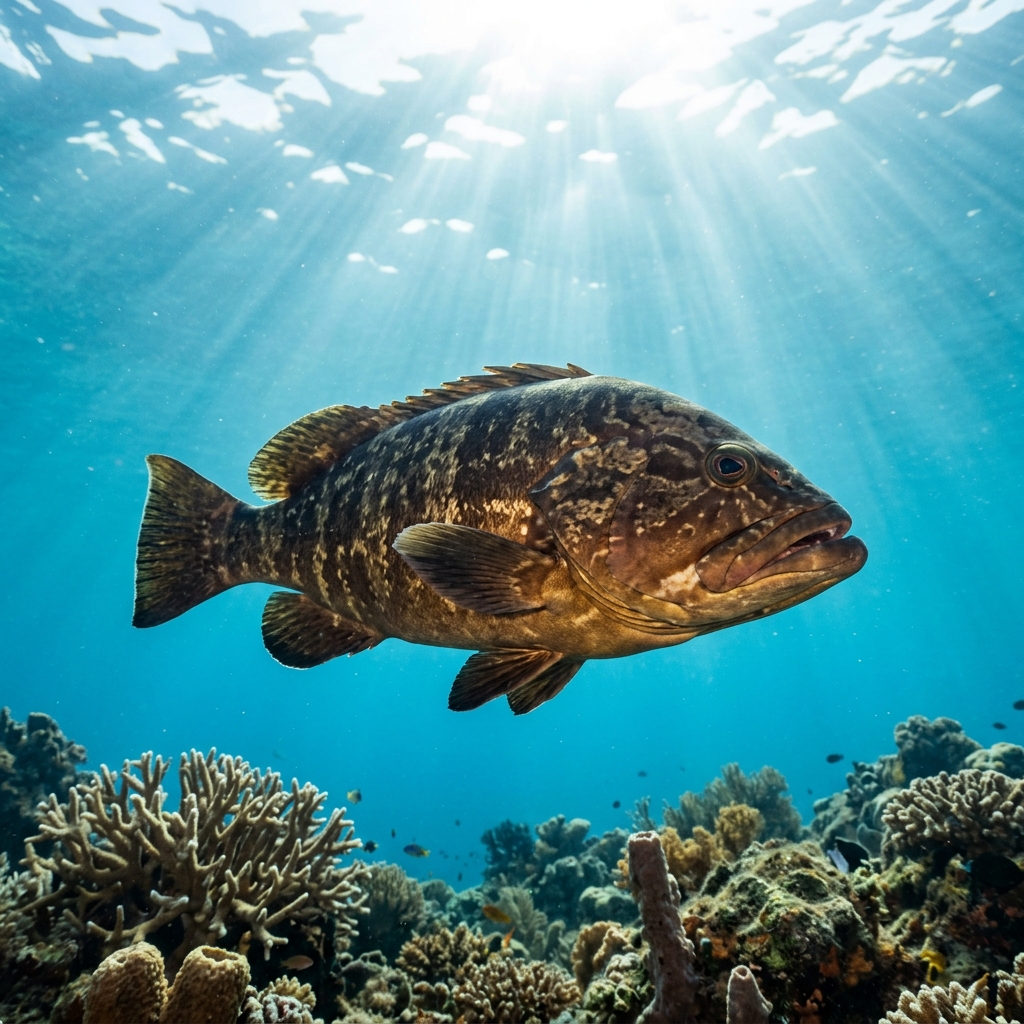
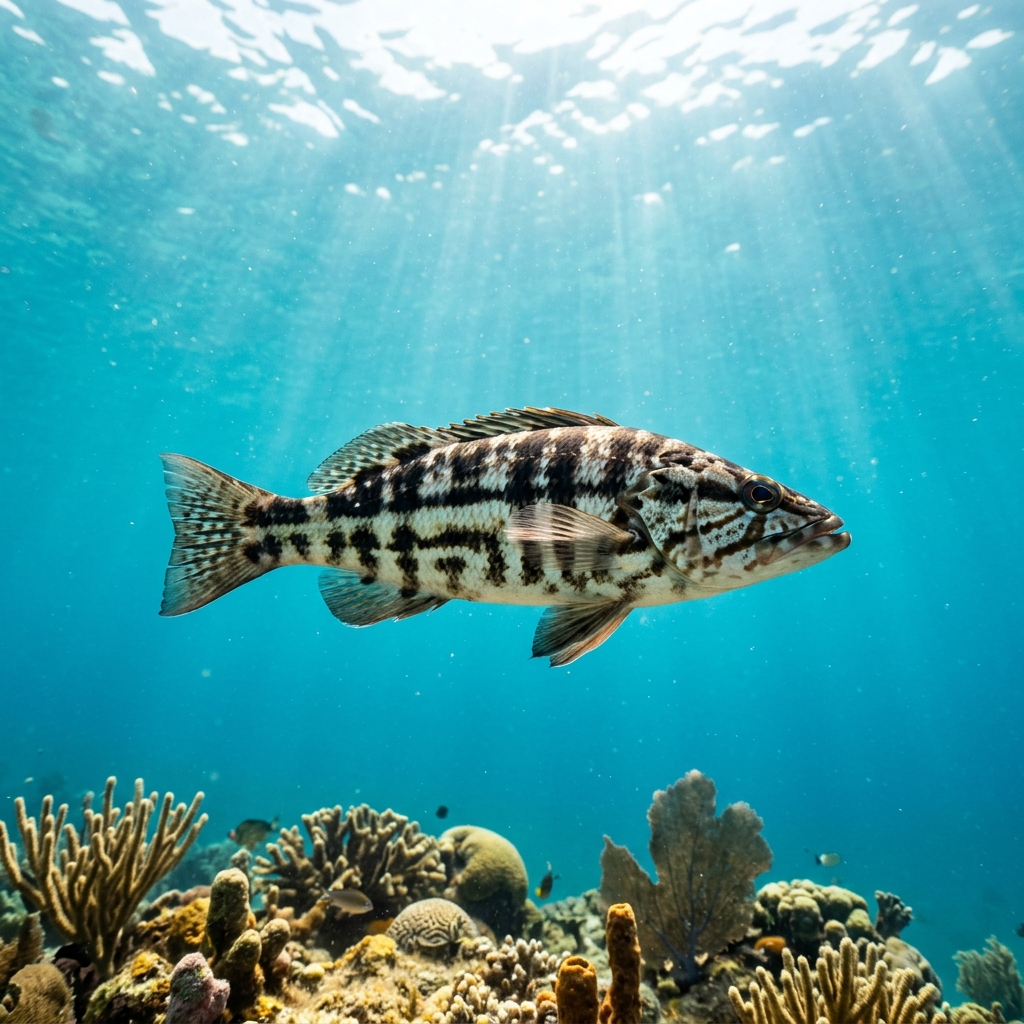
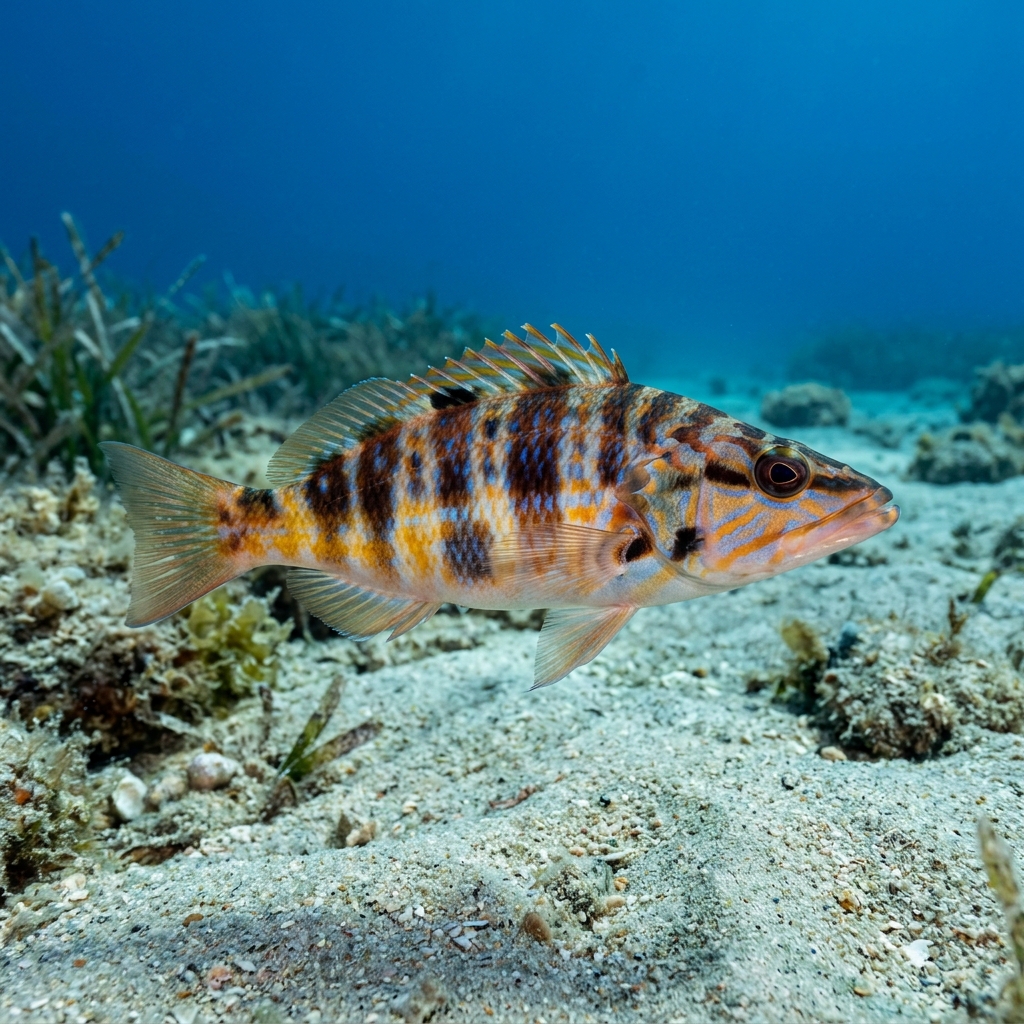
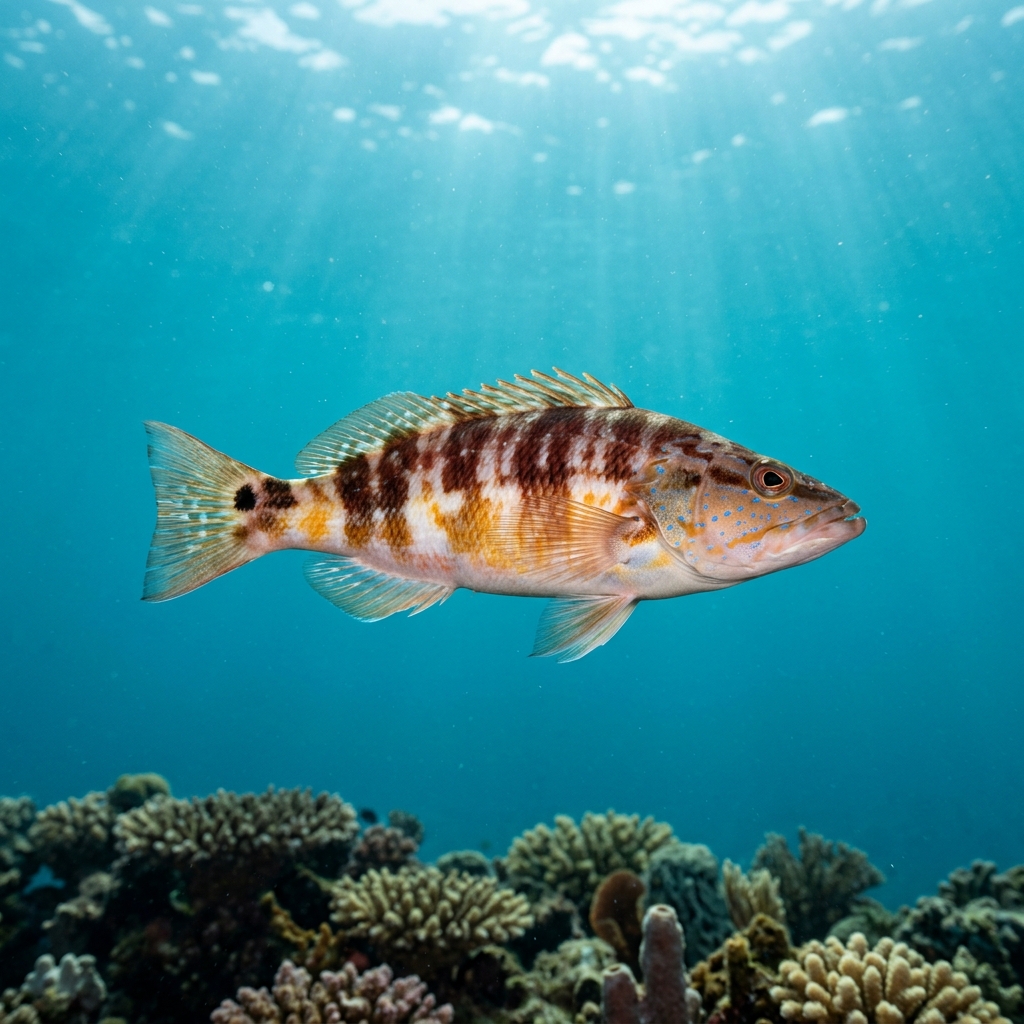
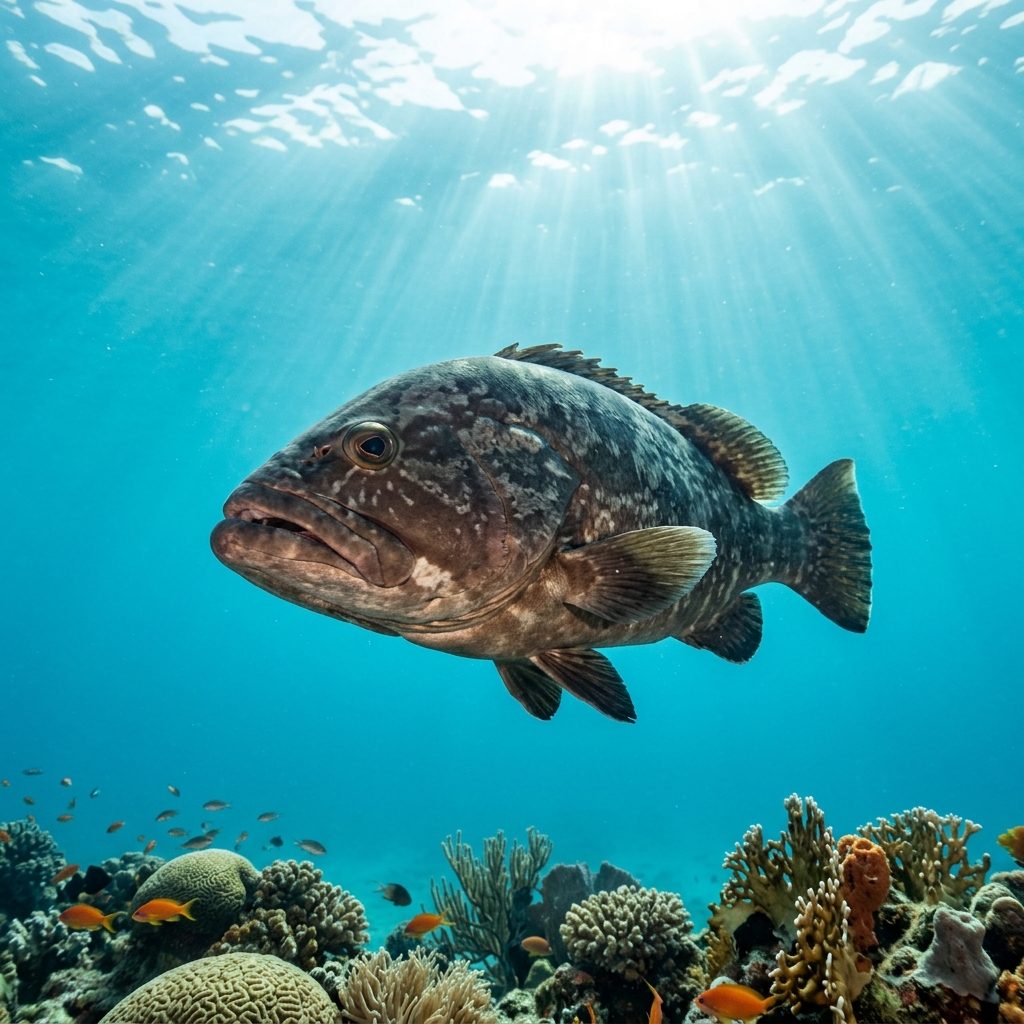
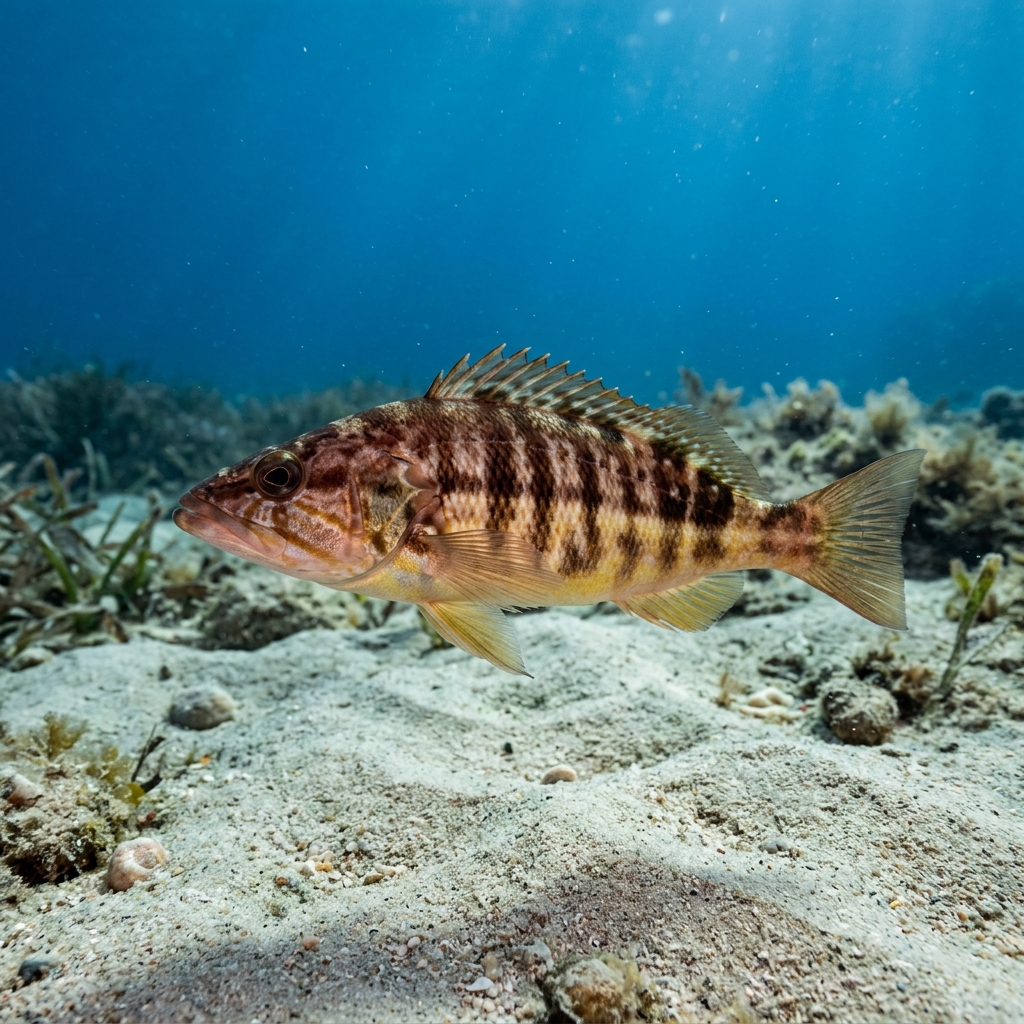
Grows to around 53cm and shows a stocky, heavy-bodied grouper shape with a broad head and thick lips. The body is covered in small dark spots over a pale grey to brown background, giving it a speckled, freckled look rather than bold blotches. It typically sits still on ledges or under overhangs, propped on its pectoral fins, which is often the giveaway before the pattern is.
Expect to find it parked motionless on a ledge, in a crevice, or tucked under a coral overhang rather than cruising open water. It's an ambush feeder, so divers usually see it holding still and watching rather than actively hunting, and it tends to hold its ground rather than bolt when approached slowly. Most sightings are logged as uncommon rather than common, so it rewards divers who check nooks and overhangs instead of just scanning open reef.
Like other groupers in this family, it's an ambush predator that relies on camouflage and a sudden lunge rather than speed, which is why it spends so much time simply sitting still on the reef.
No clear seasonal pattern shows up in the sightings, and with a comfortable range of 24.6 to 29C it's present on these reefs all year, so any month you're diving Koh Phi Phi or Nosy Be gives you a fair shot.
Reef neighbours a diver could mistake it for. Use the identification notes above to tell them apart.
Most reliably logged in Southeast Asia, with strong numbers around Sumatra in Indonesia and across Thailand's Koh Phi Phi, Phuket and Koh Lanta. Madagascar's Nosy Be is another consistent spot, and it also turns up in Oman's Musandam region, Mozambique's Ponta do Ouro, South Africa's KwaZulu-Natal coast and the Maldives, though in smaller numbers.
Mapping where Ocellated Rockcod is logged…
Best chances are around Sumatra in Indonesia and Thailand's Koh Phi Phi, Phuket and Koh Lanta. Nosy Be in Madagascar and Musandam in Oman also have reliable records, with smaller numbers in Mozambique, South Africa and the Maldives.
There's no strong season in the sightings data, and it tolerates a wide warm-water range of 24.6 to 29C, so it's a year-round find on the reefs where it occurs.
Look for a stocky, heavy-bodied grouper around half a metre long with a fine speckled pattern of small dark spots over a grey-brown body. It's usually resting on a ledge or under an overhang rather than swimming in the open.
They typically reach about 53cm in length, a mid-sized grouper that's noticeably bulkier than slender reef fish of the same length.
No, they're not considered dangerous to divers. They tend to hold still on the reef and pose no threat if you observe from a normal distance.
Site and sighting data is aggregated from diver logs, iNaturalist and GBIF. For taxonomy and conservation status:
Blacktip Grouper
2,726 sites