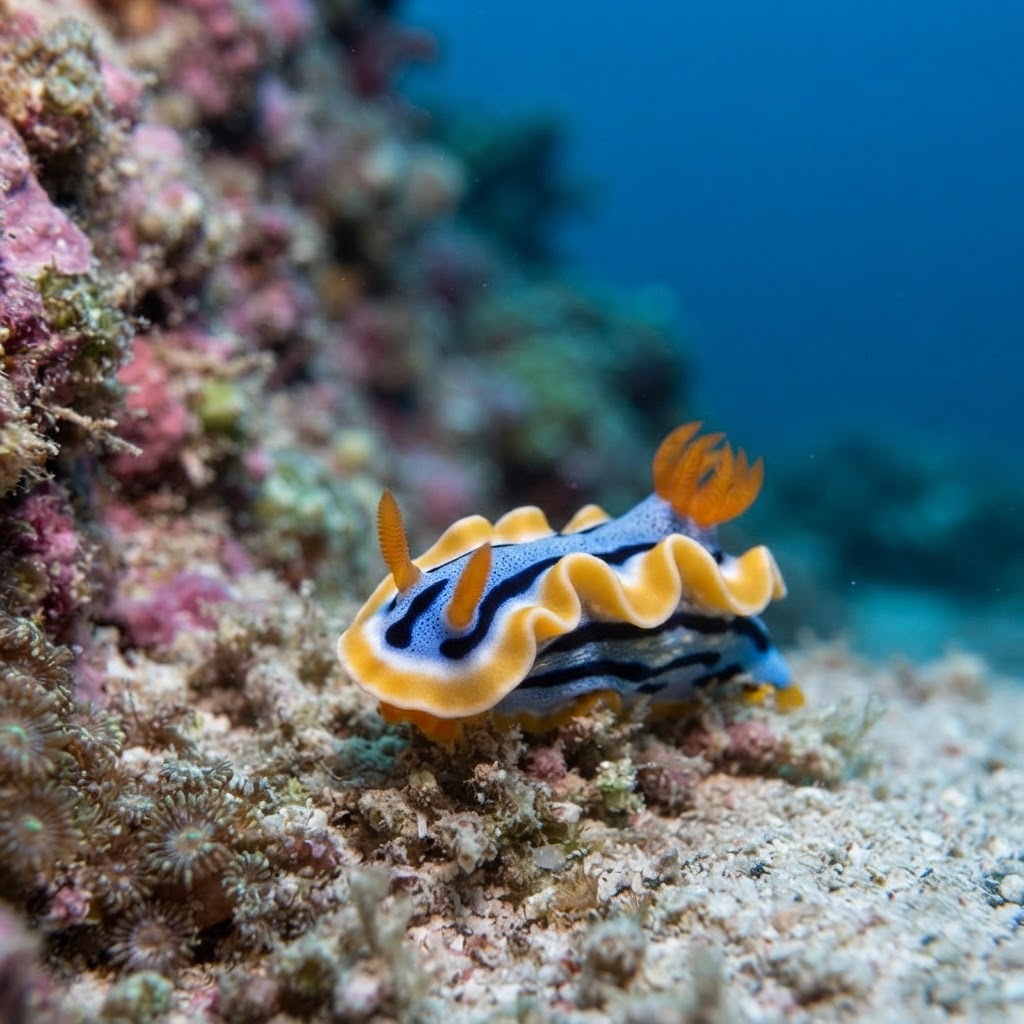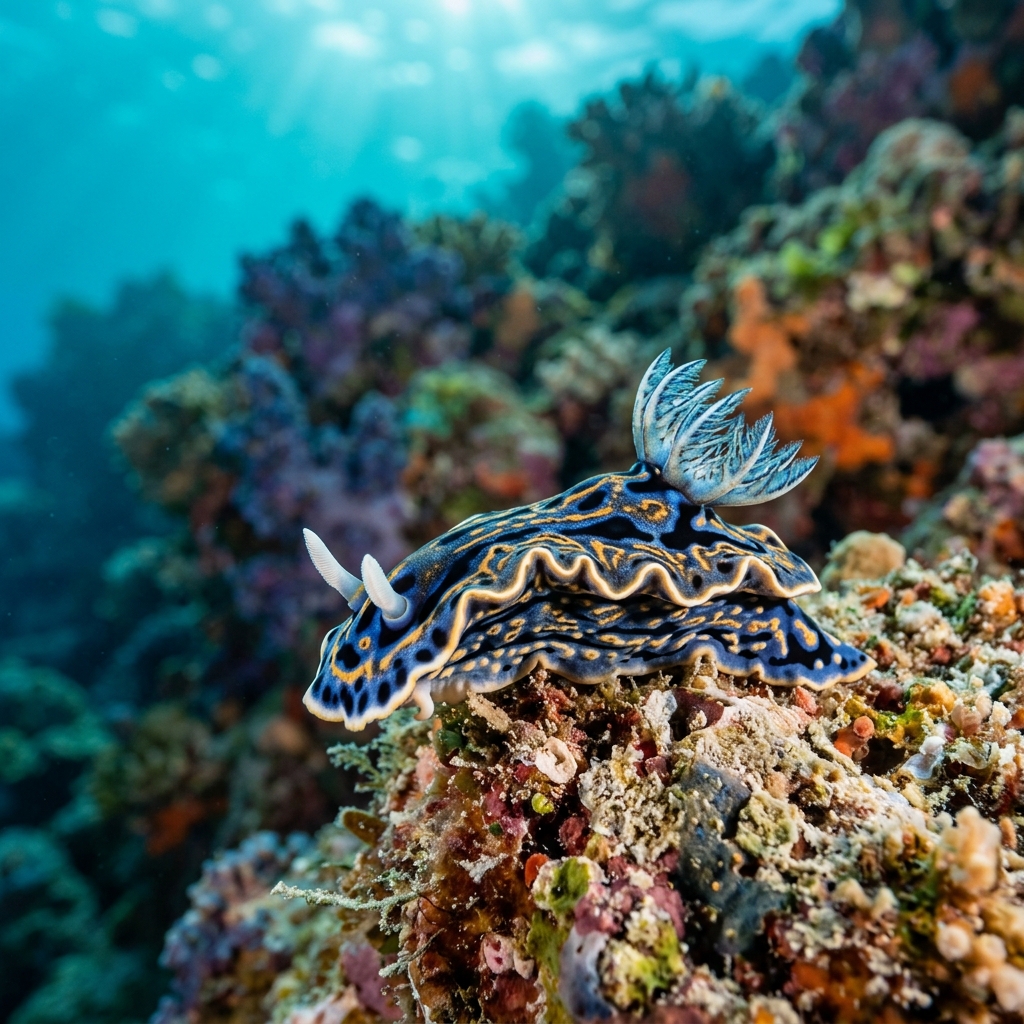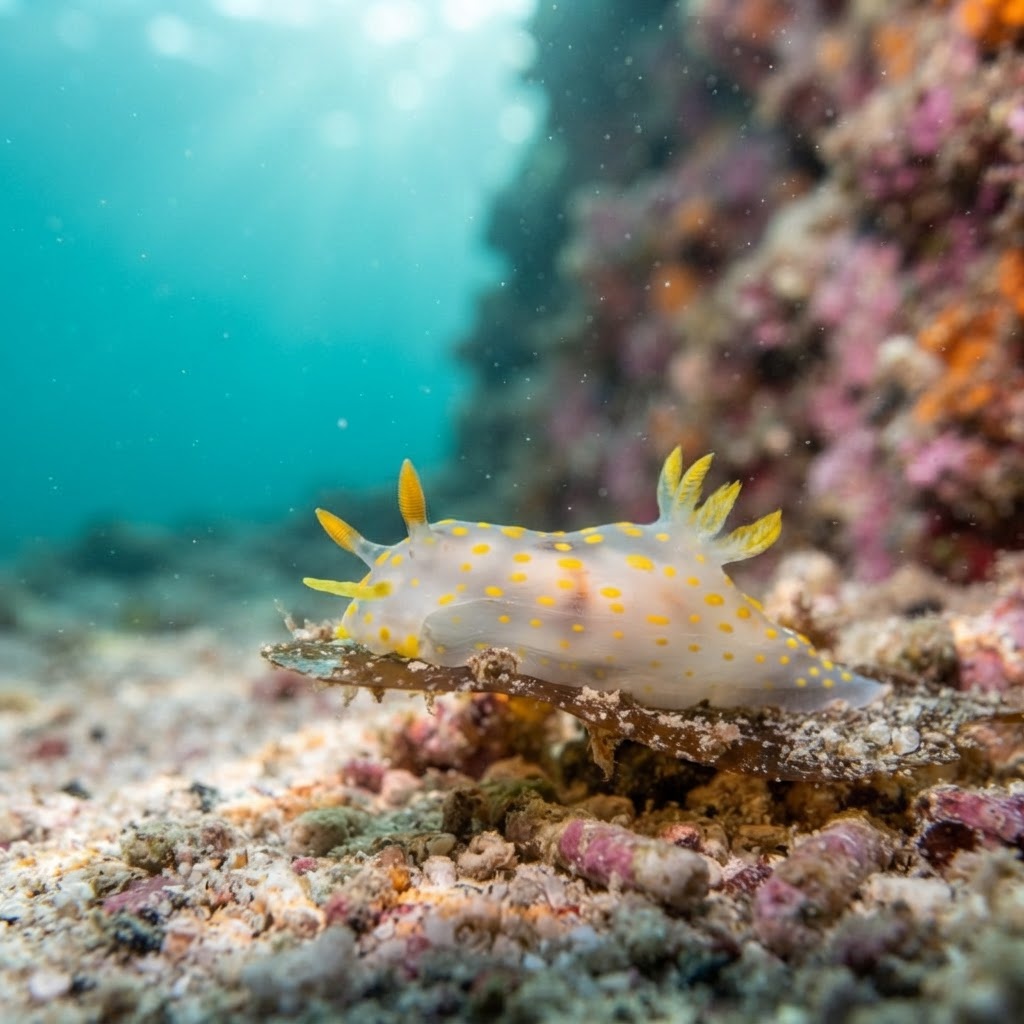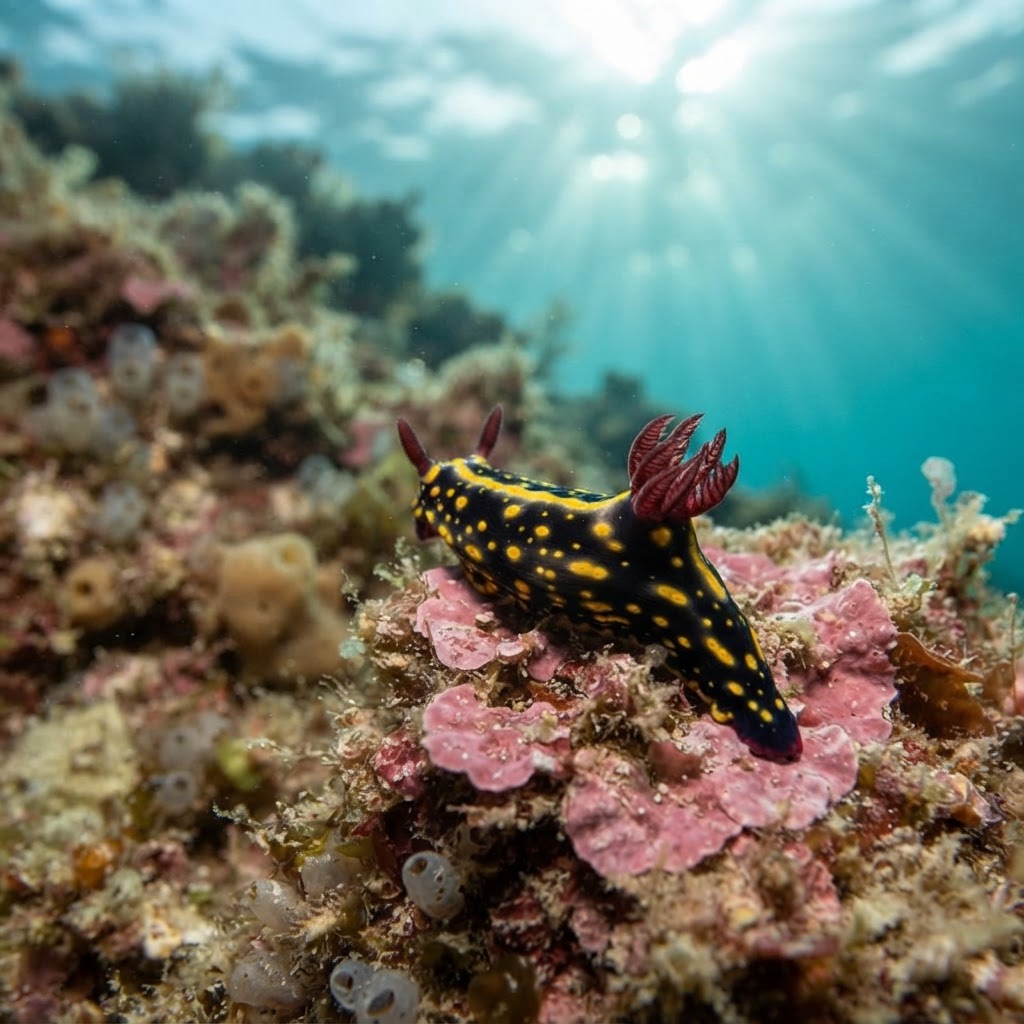
Hypselodoris obscura
A tiny nudibranch logged mainly in New South Wales and Queensland, spotted year-round in 18 to 25 C water on Australian reef and rubble.
A tiny nudibranch, topping out around 2 cm, so you're scanning rubble and sponge patches close-up rather than spotting it from a distance. Body colour and mantle markings are the key cues within the genus, but at this size a torch and a slow pass over the substrate matter more than any single mark. No juvenile or sex-based colour difference has been documented for this species.
Found grazing slowly over reef and rubble surfaces, doing what most small dorid nudibranchs do: crawling along in search of sponge to feed on, largely unbothered by divers hovering nearby. Most sightings come from divers working slow, close-focus passes over the substrate rather than mid-water encounters, and it shows no flight response when approached carefully.
Like other Hypselodoris nudibranchs, it almost certainly feeds on specific sponges and stores chemical compounds from that diet in its own tissue as a defence against predators, a common survival trick across the family.
No clear seasonal pattern shows up in the data, so treat it as a year-round find. Observed water temperatures span 18.1 to 24.8 C, a range that covers both cooler and warmer parts of the New South Wales and Queensland dive season.
Reef neighbours a diver could mistake it for. Use the identification notes above to tell them apart.
Logged almost entirely in Australia, with New South Wales the strongest region for sightings and Queensland close behind. Divers doing muck and reef dives along the New South Wales coast have the best odds, with a solid secondary chance further north in Queensland.
Mapping where Obscure Hypselodoris is logged…
Almost all logged sightings come from Australia, with New South Wales the most reliable region and Queensland a strong second. Look for it on reef and rubble sites where divers slow down for macro life.
There's no detected seasonal peak, so sightings are spread across the year. It has been recorded in water from 18.1 to 24.8 C, a range that covers most of the New South Wales and Queensland dive calendar.
It's a small dorid nudibranch, only around 2 cm, found crawling slowly over reef rubble and sponge. At that size, a close, slow look with a torch is the main way divers pick it out from similar small Chromodorididae species nearby.
Around 2 cm, making it one of the smaller nudibranchs divers log, best spotted with a torch and a slow, close search of rubble patches.
No. It poses no threat to divers and can be observed and photographed up close without any risk.
Like its Hypselodoris relatives, it likely feeds on specific sponges and repurposes chemical compounds from that diet as a defence against predators, rather than relying on a shell or speed to survive.
Site and sighting data is aggregated from diver logs, iNaturalist and GBIF. For taxonomy and conservation status:
Light-spotted Aegires
3,168 sites