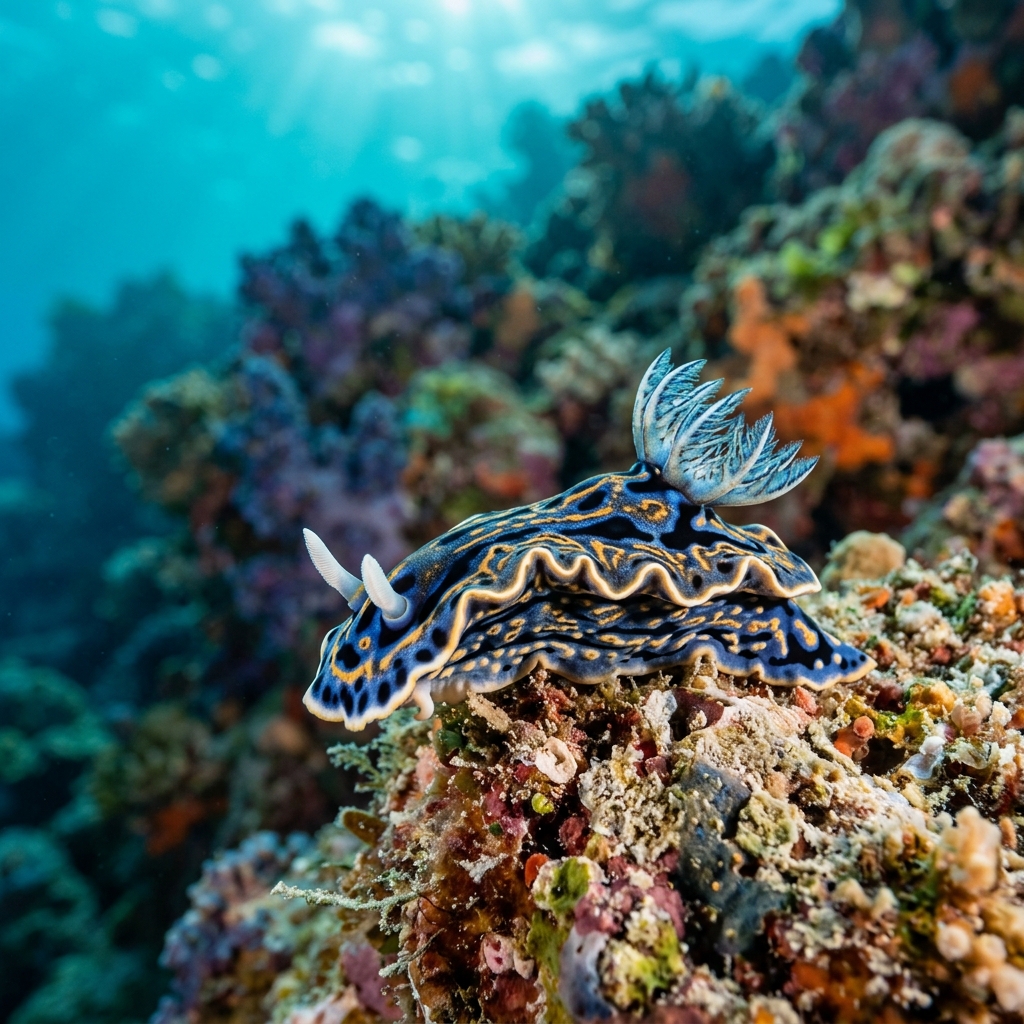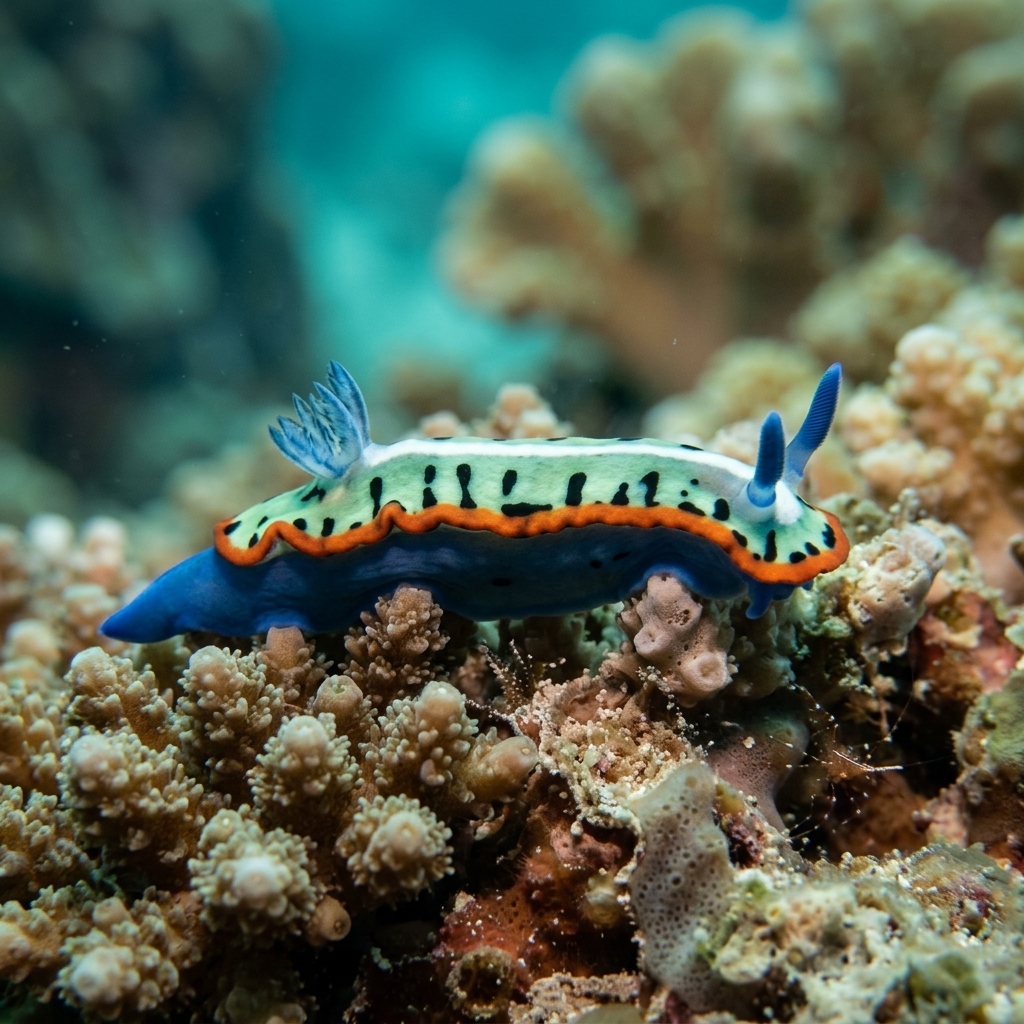
Neptunazurea kempfi
Spot Purple-crowned Sea Goddess across the US Pacific Coast, Guadeloupe, and Saba. Best sightings May to Sep in 15 to 28°C water. ID tips for divers inside.
A member of the family Chromodorididae, this nudibranch carries the hallmark elongated, soft-bodied form with prominent gill plumes (cerata) fanned out across its back. Colouration and patterning are the key field marks, so look closely at the mantle edges and gill cluster for distinctive hues that set it apart from other chromodorids in the same water. It is a small animal; at nudibranch scale, any splash of vivid colour on a reef or rubble patch is the cue to stop and look. Size data are not yet well documented, so treat any boldly marked dorid in the right habitat as a candidate worth photographing.
Like most chromodorids, it is typically found moving slowly across reef substrate, rubble, or encrusting organisms as it grazes. Divers usually encounter it at rest or in slow motion on the benthos (the sea floor and its surface), making it easy to photograph once spotted. It shows little reaction to divers, but its small size means it is easily missed without a careful, slow approach close to the substrate.
Chromodoridid nudibranchs are known to sequester chemical compounds from their sponge prey and use them as a chemical defence against predators, making their bright colours a real warning signal rather than mere decoration.
Northern Hemisphere sightings concentrate between May and September, so plan warm-season dives in the key regions for the best chance. The species has been observed across a wide temperature band, from around 15°C to 28°C, suggesting it can tolerate both temperate and tropical conditions.
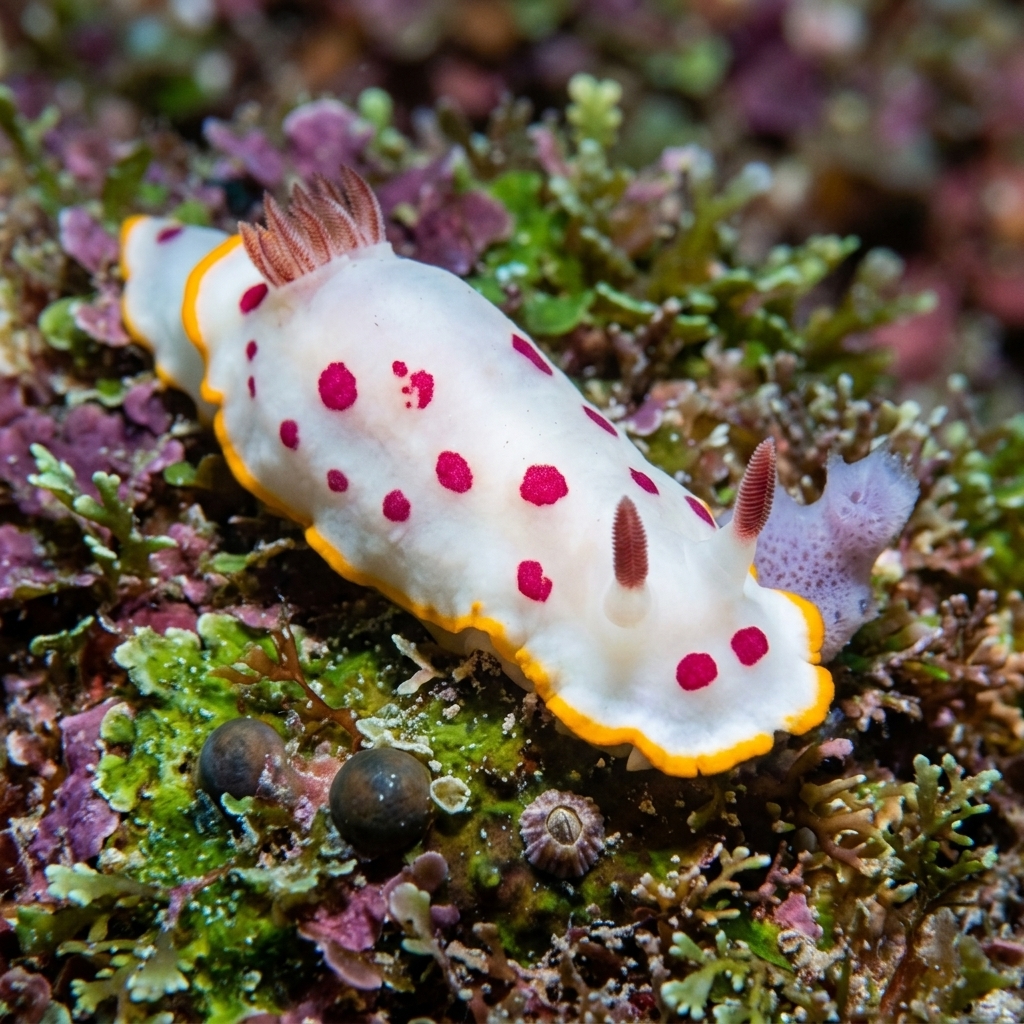
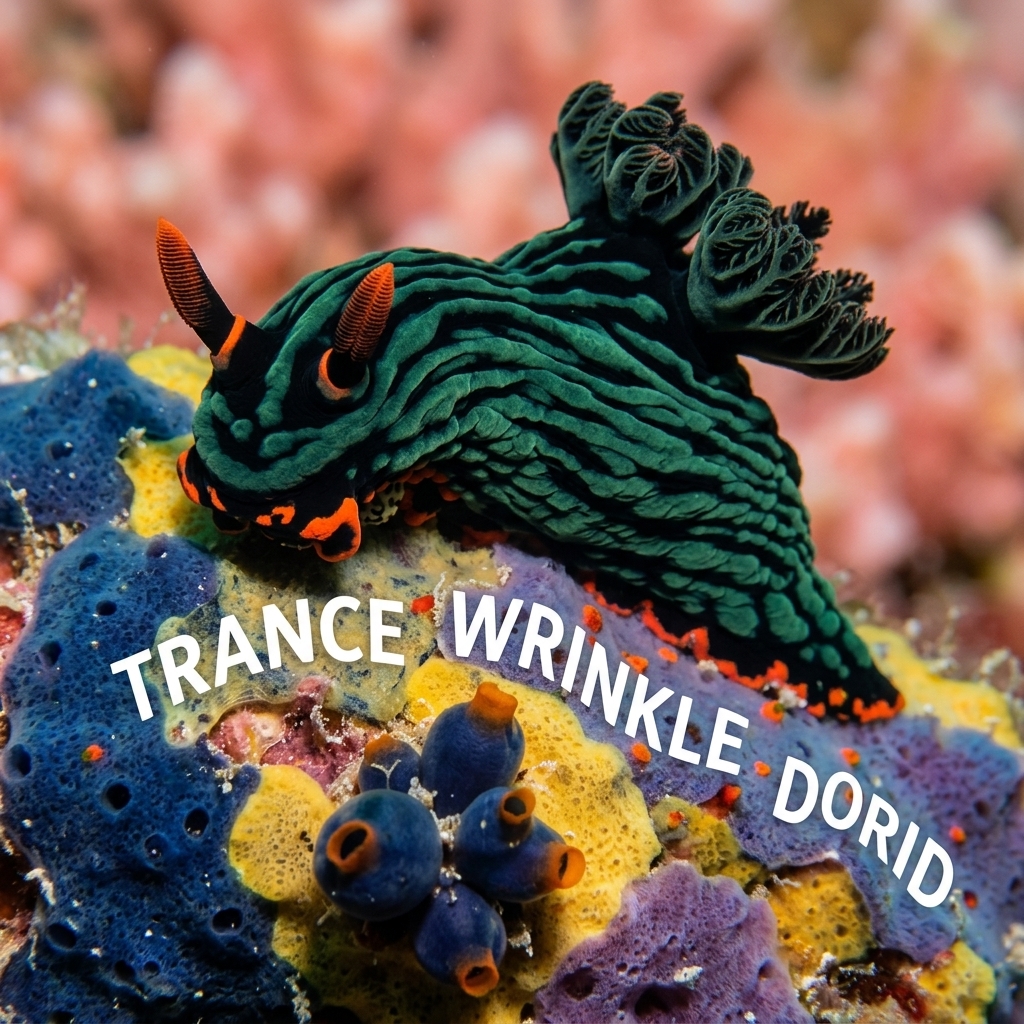
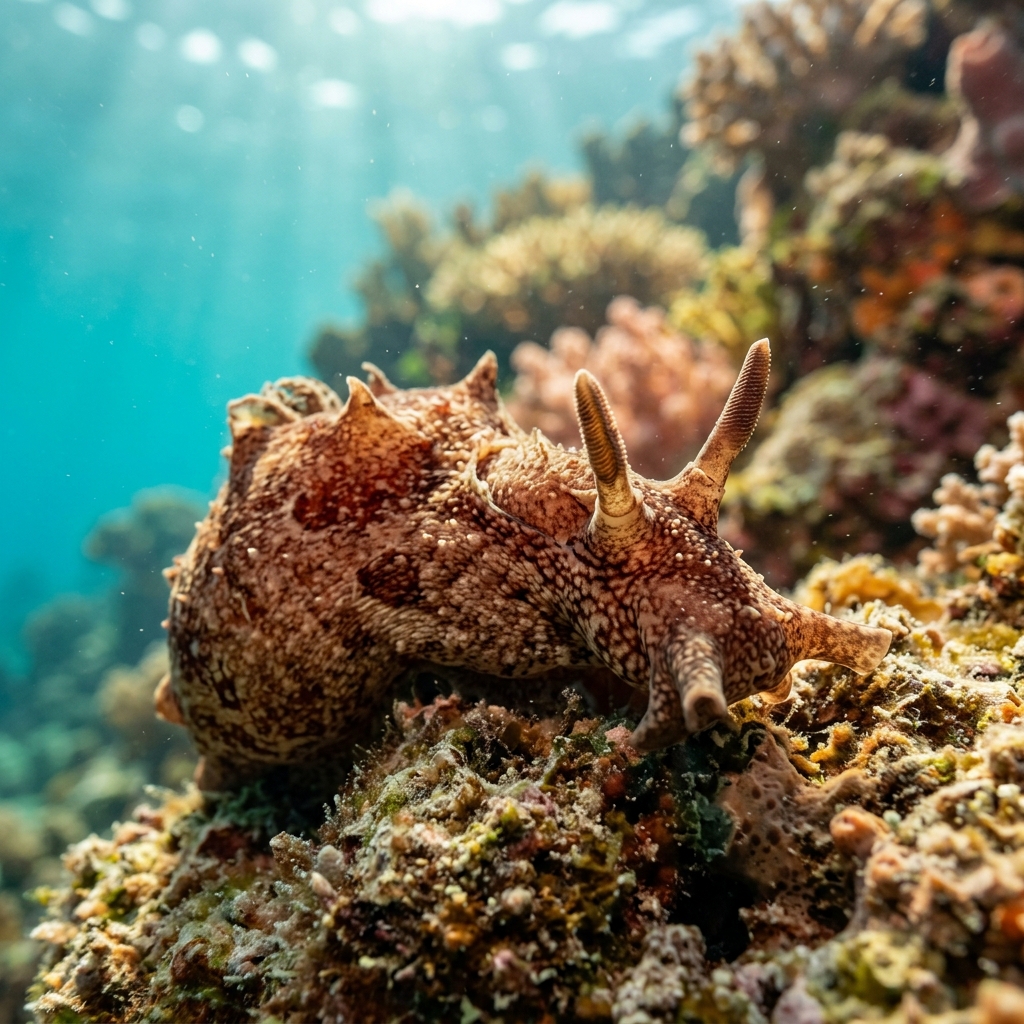
Reef neighbours a diver could mistake it for. Use the identification notes above to tell them apart.
Most sightings come from the US Pacific Coast, which accounts for a large share of logged sites, making it the most reliable region to target. Guadeloupe, particularly Grande-Terre, is the strongest Atlantic location, with Saba Marine Park and the Soufriere area of Saint Lucia also producing regular records. Mexico's Northern Pacific coast rounds out the confirmed range with a solid cluster of observations.
Mapping where Purple-crowned Sea Goddess is logged…
The species is most commonly logged along the US Pacific Coast, with strong Atlantic records from Grande-Terre in Guadeloupe and Saba Marine Park. Mexico's Northern Pacific and the Soufriere area of Saint Lucia also feature regular sightings. It turns up across a surprisingly wide geographic spread for a small nudibranch.
Based on logged sightings in the Northern Hemisphere, May through September is the peak window. Diving during these warmer months in the top regions gives you the best realistic chance of an encounter.
Look for a small, soft-bodied chromodorid nudibranch crawling slowly on reef substrate or rubble. The gill plumes on its back and the patterning along its mantle edges are the main field marks. Photographing any boldly marked dorid in its range and comparing images afterwards is the most reliable approach, as exact size data are not yet well established.
It is classed as uncommon at the majority of sites where it is recorded, and rare at most others. Finding one takes patience and a slow, methodical search close to the reef, but sightings are consistent enough across known sites that a focused nudibranch dive has a reasonable chance of success.
No. It poses no threat to divers whatsoever. Like other chromodorids it may carry chemical defences sequestered from its sponge diet, but these are directed at predators, not people. Simply look and photograph without handling it.
Site and sighting data is aggregated from diver logs, iNaturalist and GBIF. For taxonomy and conservation status:
Light-spotted Aegires
3,168 sites