Miamira sinuata
Spot the Jolly Green Giant nudibranch in the Philippines, Taiwan, and Indonesia. Rare but logged at sites in warm 24-29 °C Indo-Pacific waters year-round.
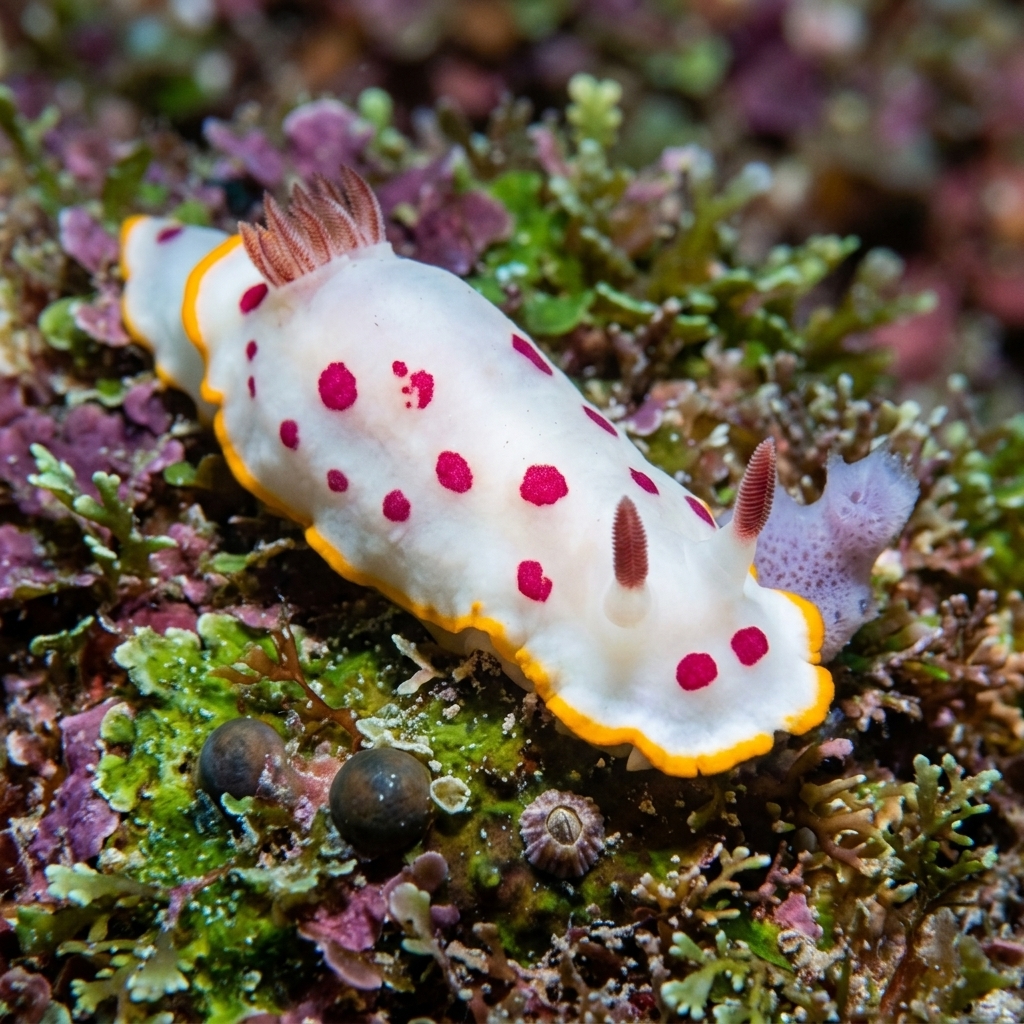
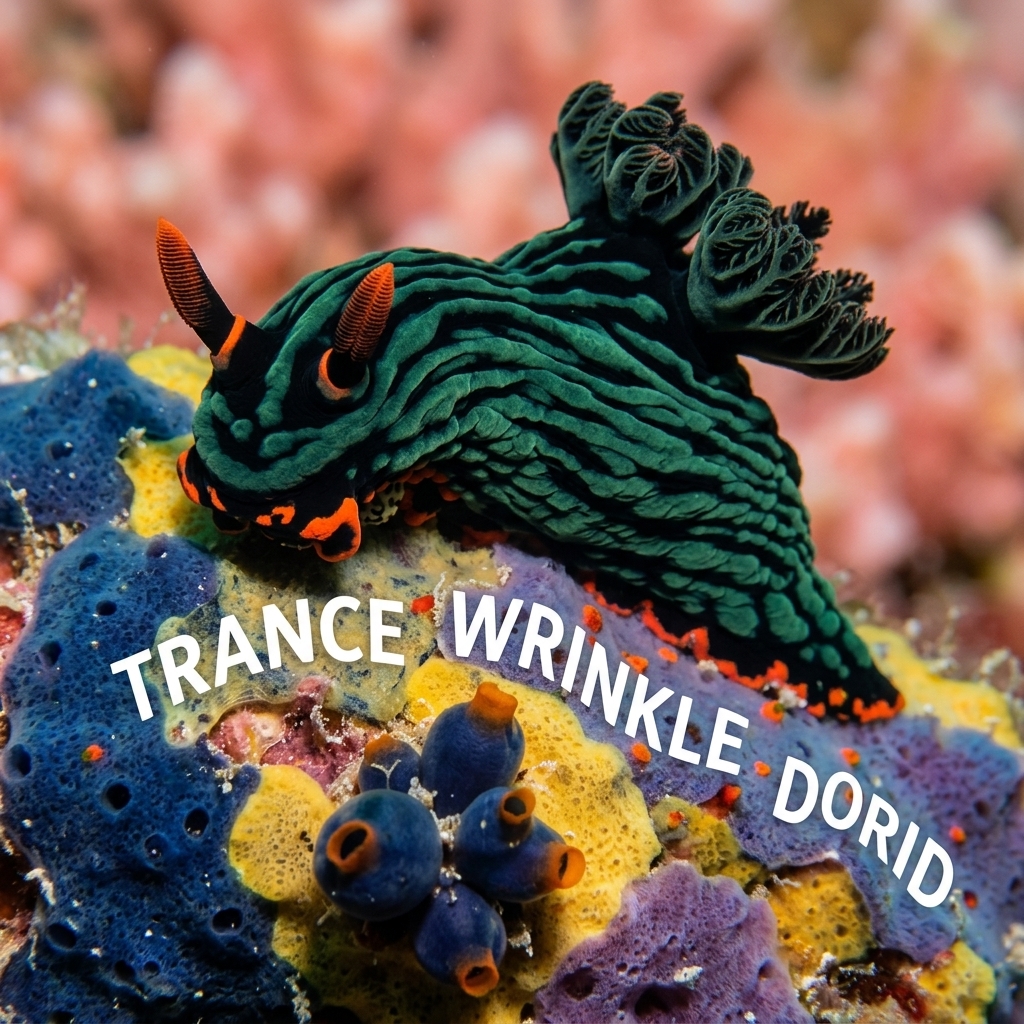
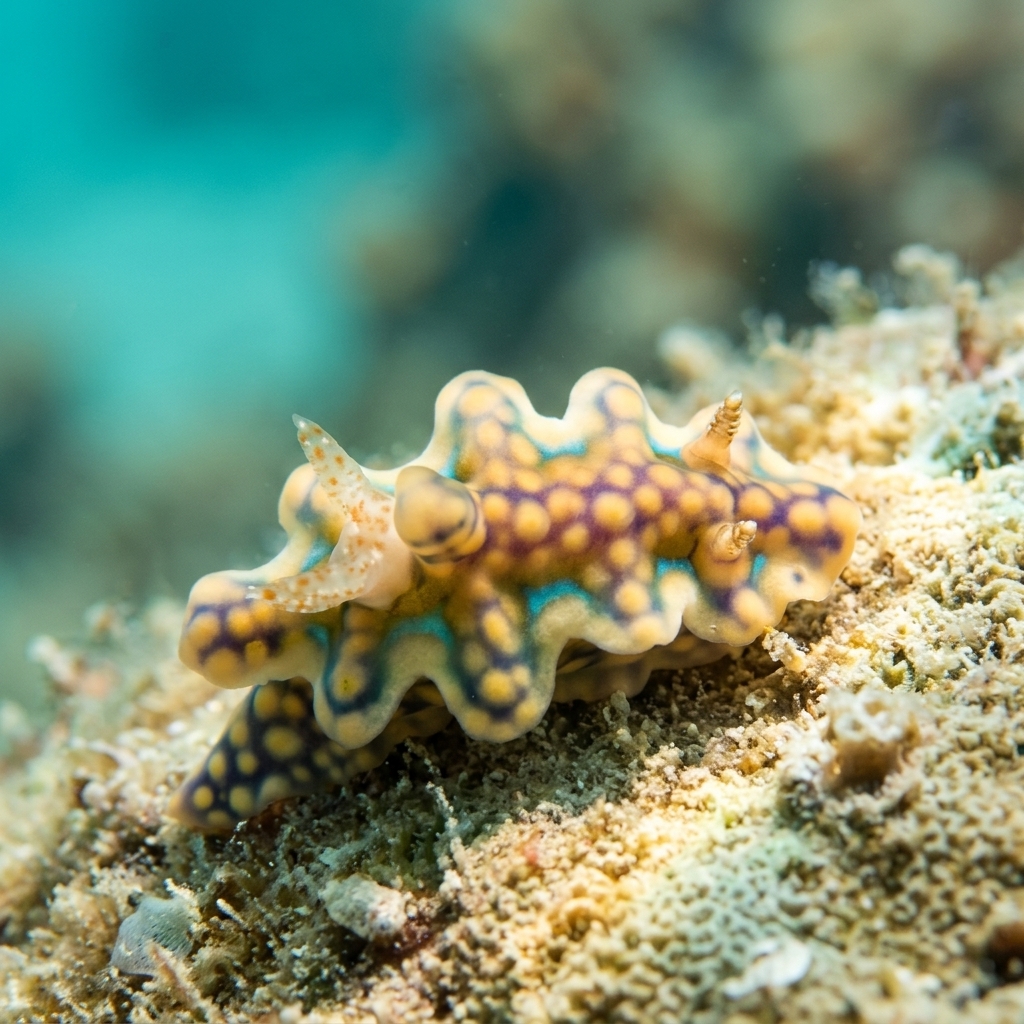
A medium-sized chromodorid with a distinctively ruffled or wavy mantle edge and a striking green body patterned with white or cream markings, making it stand out sharply against the reef. The gill plume and rhinophores (sensory stalks on the head) are typically tipped in orange or red, which is one of the quickest field marks underwater. The deep folds and undulations along the mantle margin give the body a crinkled, lettuce-like silhouette that is unlike most other nudibranchs sharing the same habitat.
Like most chromodorids, this nudibranch is a slow, deliberate crawler, typically found moving across sponge or tunicate growth on reef slopes and rubble patches. It tends to stay in the open rather than hiding, relying on its bold colouration as a warning signal to predators. Divers who find one can usually observe it at close range without disturbing it, as it rarely reacts to nearby movement.
The vivid green and contrasting orange or red accents on this nudibranch are not decorative; they function as aposematic colouration, advertising to would-be predators that the animal is chemically unpalatable, a strategy common across the Chromodorididae family.
No clear seasonal peak has emerged from logged sightings, so this species is best treated as a year-round target wherever it occurs. Its observed temperature range of roughly 24 to 29 °C fits tropical reef conditions well, meaning timing your dive to the destination rather than to any particular month is the practical approach.
Reef neighbours a diver could mistake it for. Use the identification notes above to tell them apart.
Most observations come from the Philippines, particularly around Liuqiu Island in Taiwan and the Visayas region, with strong representation across Bali and the broader Indonesian archipelago. Thailand's Andaman North sites also contribute meaningful records. Outside Southeast Asia, sightings have been logged in Queensland, Sipadan in Malaysian Borneo, and New Caledonia, underlining a broad but thinly spread Indo-Pacific distribution.
Mapping where Jolly Green Giant is logged…
The strongest concentration of sightings is in the Philippines (especially the Visayas) and Taiwan (Liuqiu Island), with good records from Bali and the Indonesian archipelago. Thailand's Andaman North coast, Sipadan in Malaysia, Queensland in Australia, and New Caledonia round out the known range.
There is no confirmed seasonal peak in the data, so it is effectively a year-round target. It thrives in water temperatures between roughly 24 and 29 °C, which describes tropical Indo-Pacific reefs throughout the year. Your best strategy is simply to look carefully on sponge-rich reef slopes whenever you are diving in the region.
Key in on the deeply ruffled, wavy mantle edge and bright green body marked with white or cream. The orange or red tips on the gill plume and rhinophores are a quick confirming mark. The crinkled, lettuce-like silhouette distinguishes it from smoother-bodied chromodorids sharing the same reef.
It is classed as rare at the vast majority of sites where it has been logged. Finding one requires slow, attentive searching on sponge and tunicate growth, usually on reef slopes or rubble. Patience and good macro eyes are more reliable than any particular dive site.
Site and sighting data is aggregated from diver logs, iNaturalist and GBIF. For taxonomy and conservation status:
Light-spotted Aegires
3,168 sites