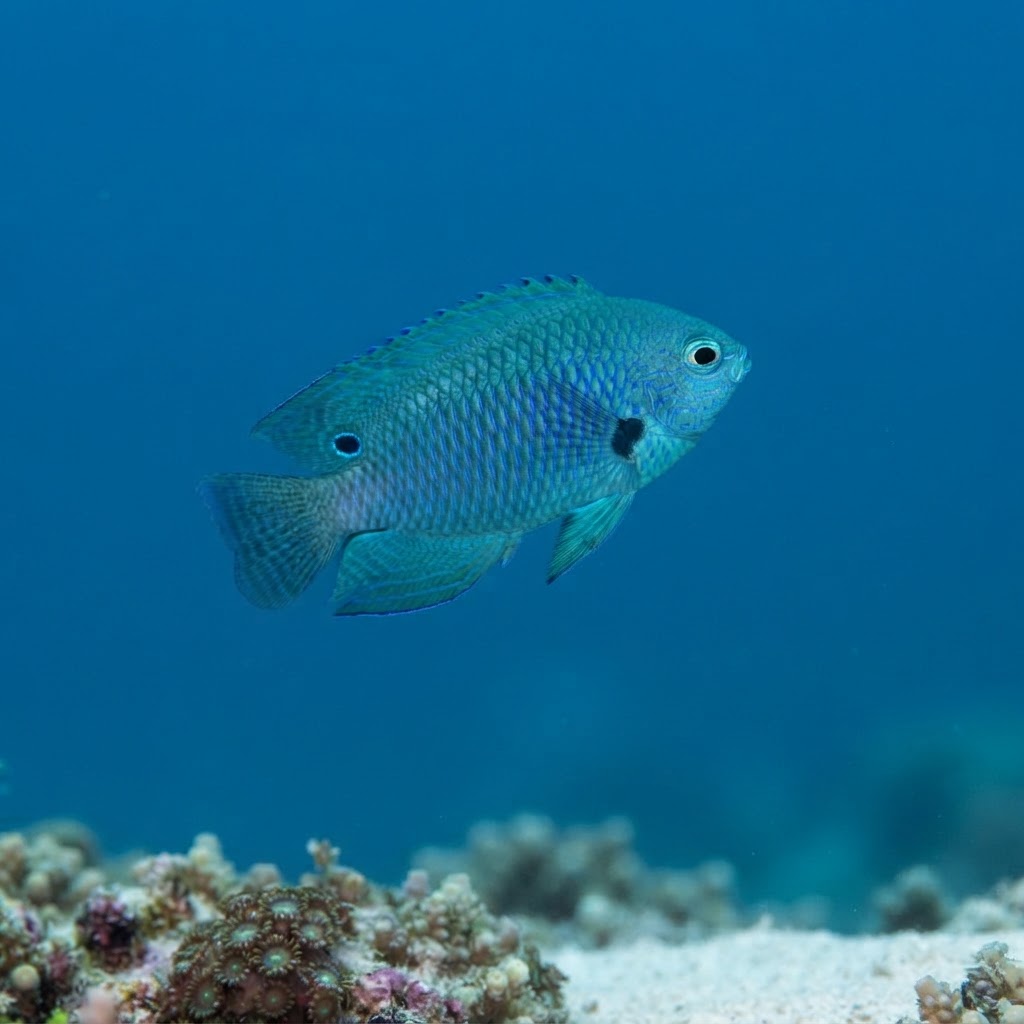
Pomacentrus nagasakiensis
Small blue-grey damselfish logged reliably around Koror & Malakal, Palau, in 25-29C water on shallow reef year-round.
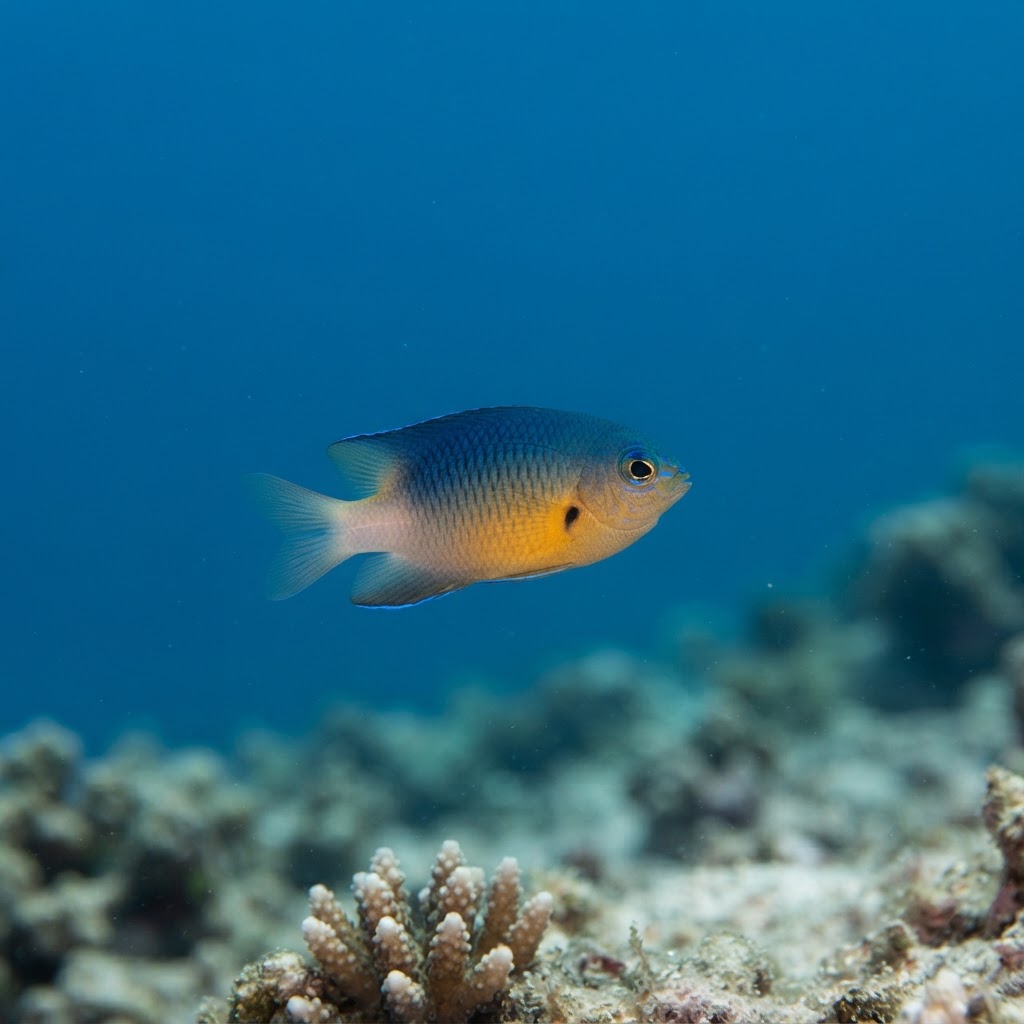
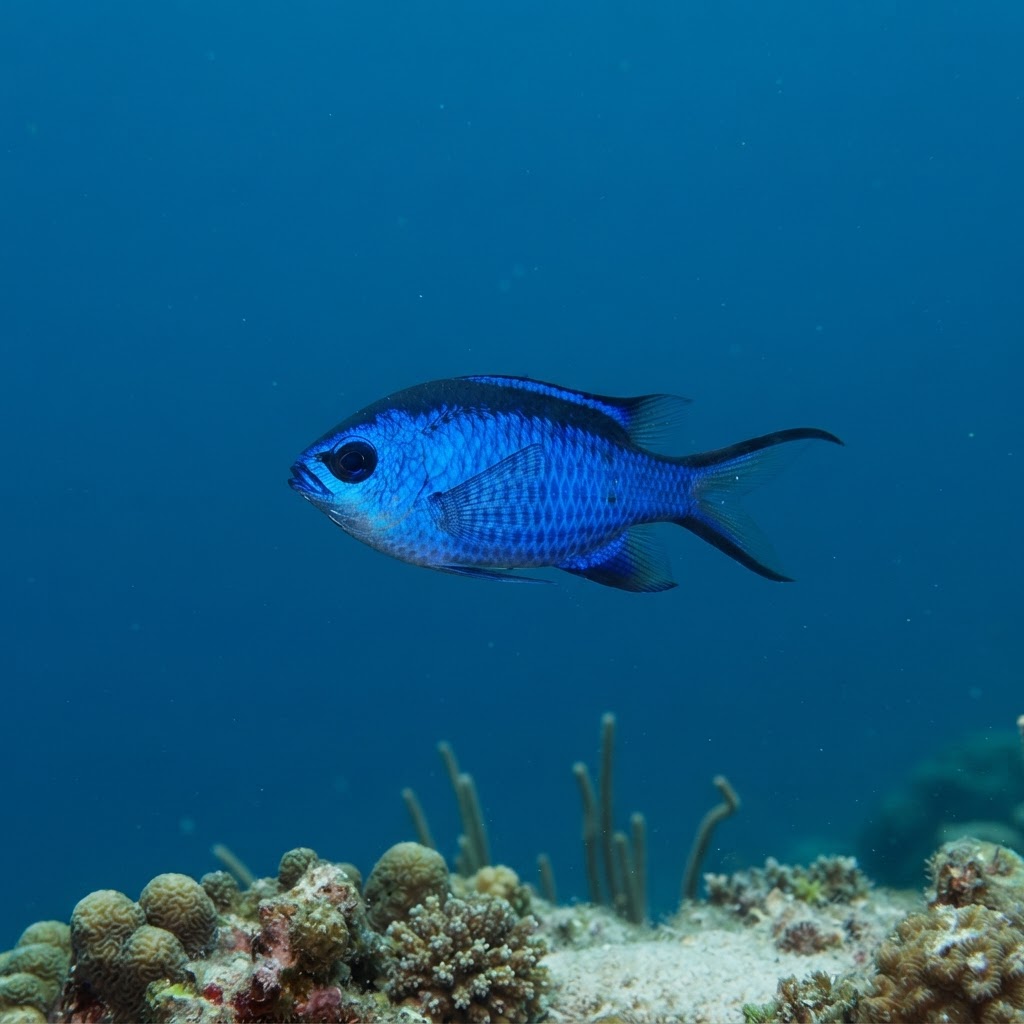
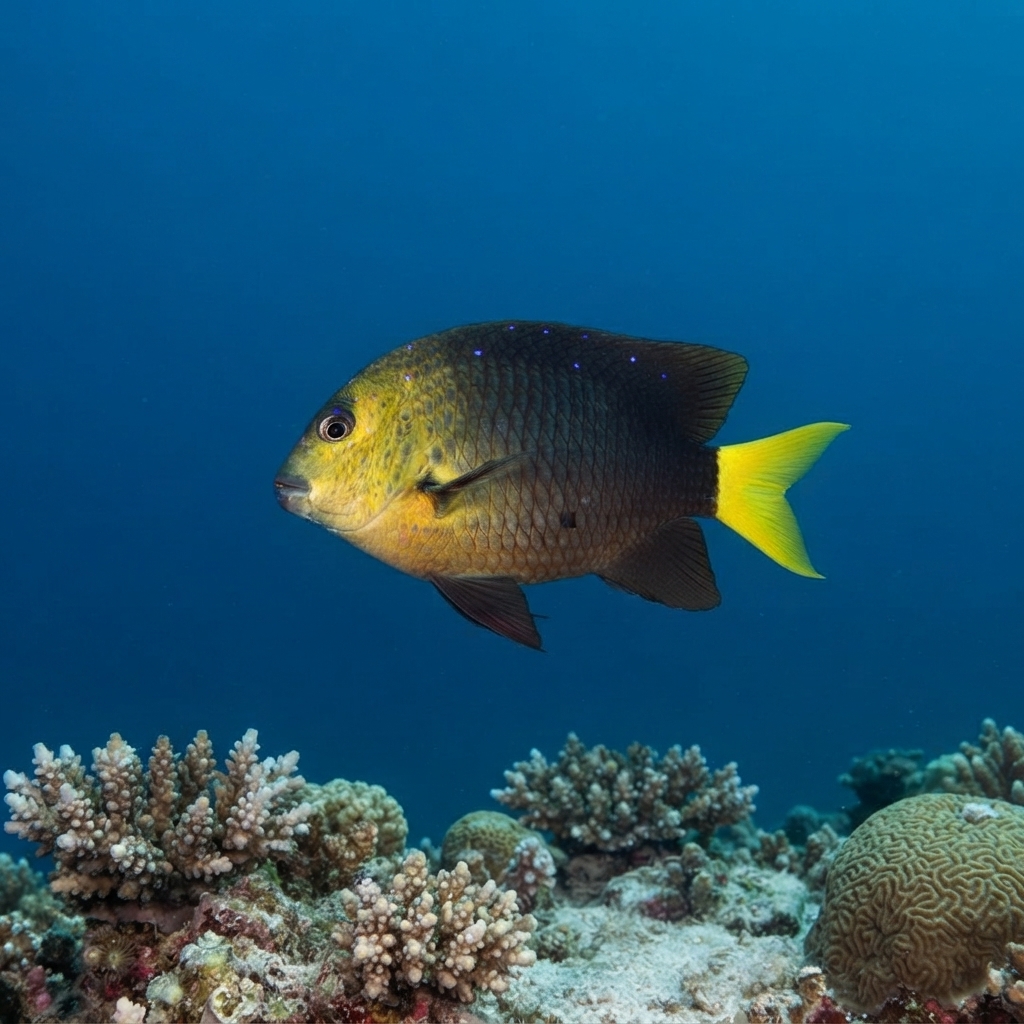
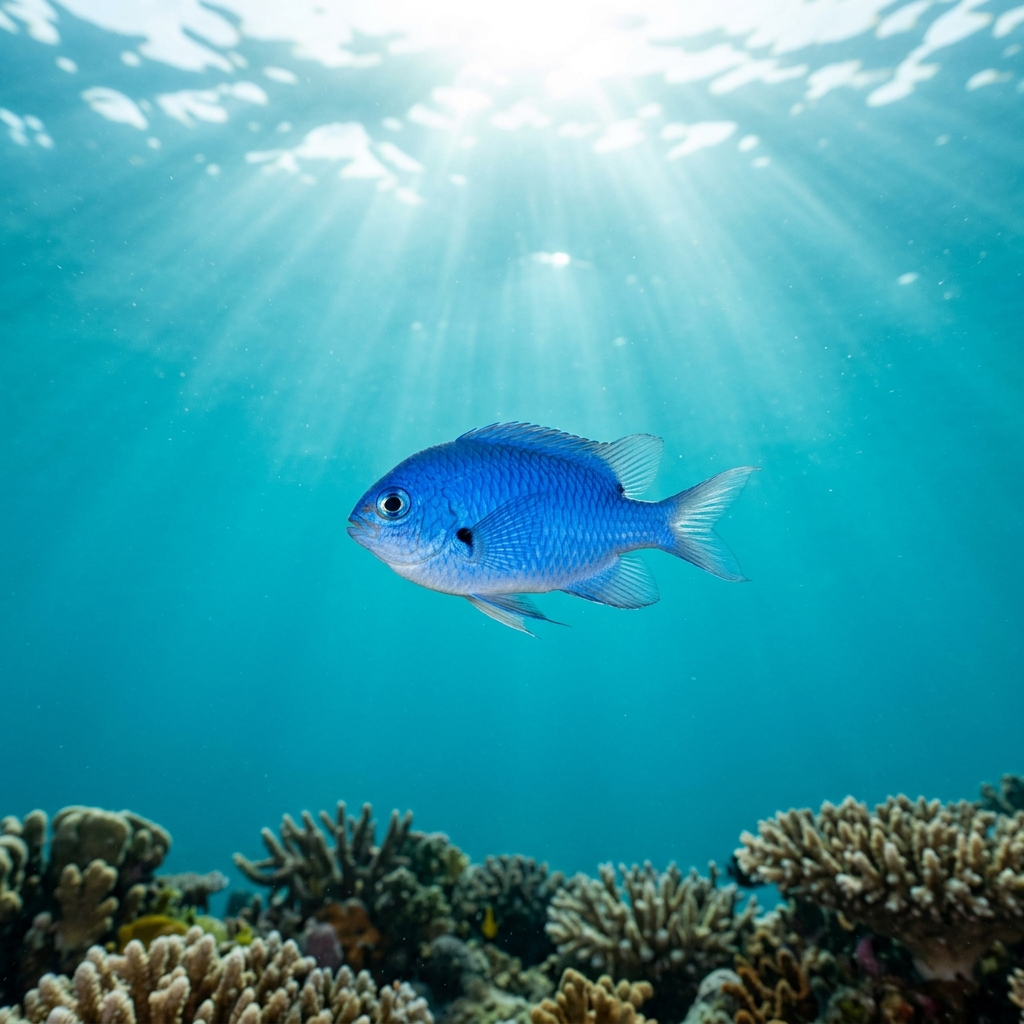
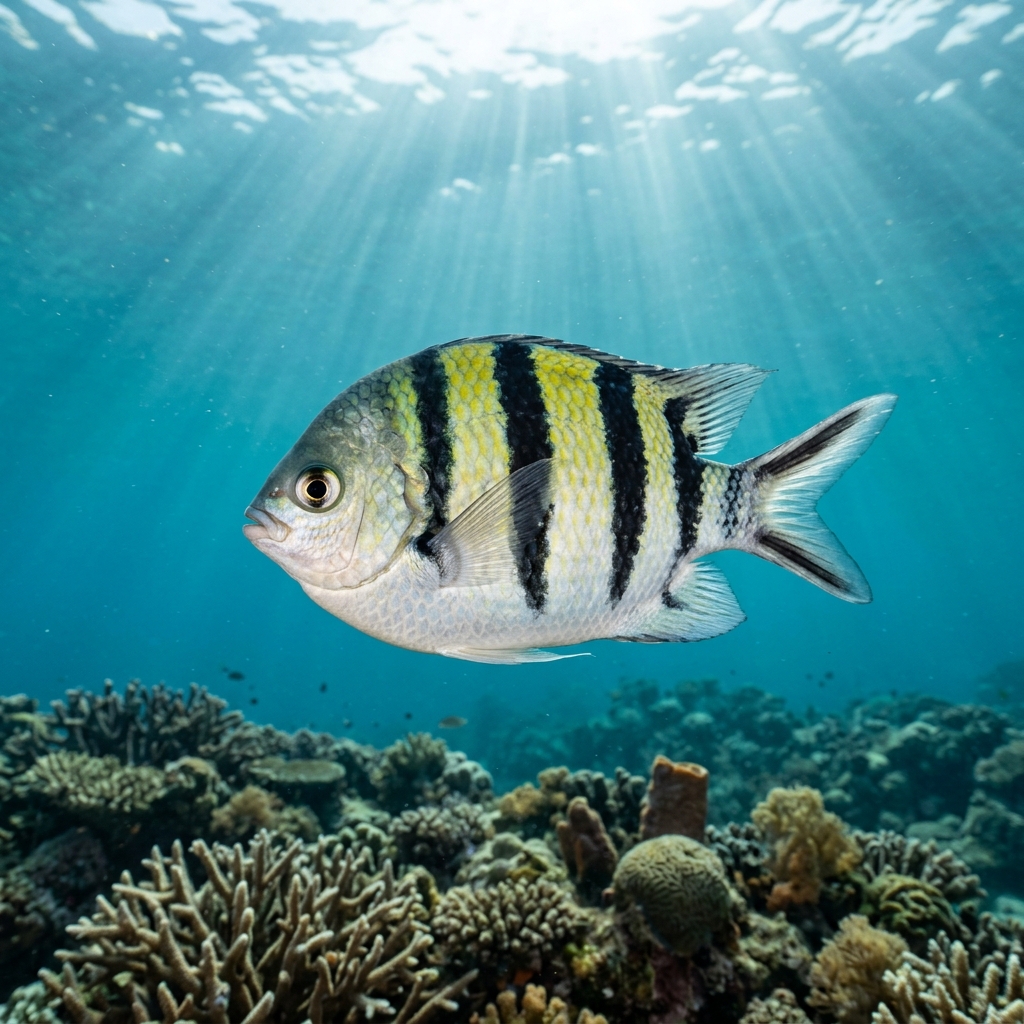
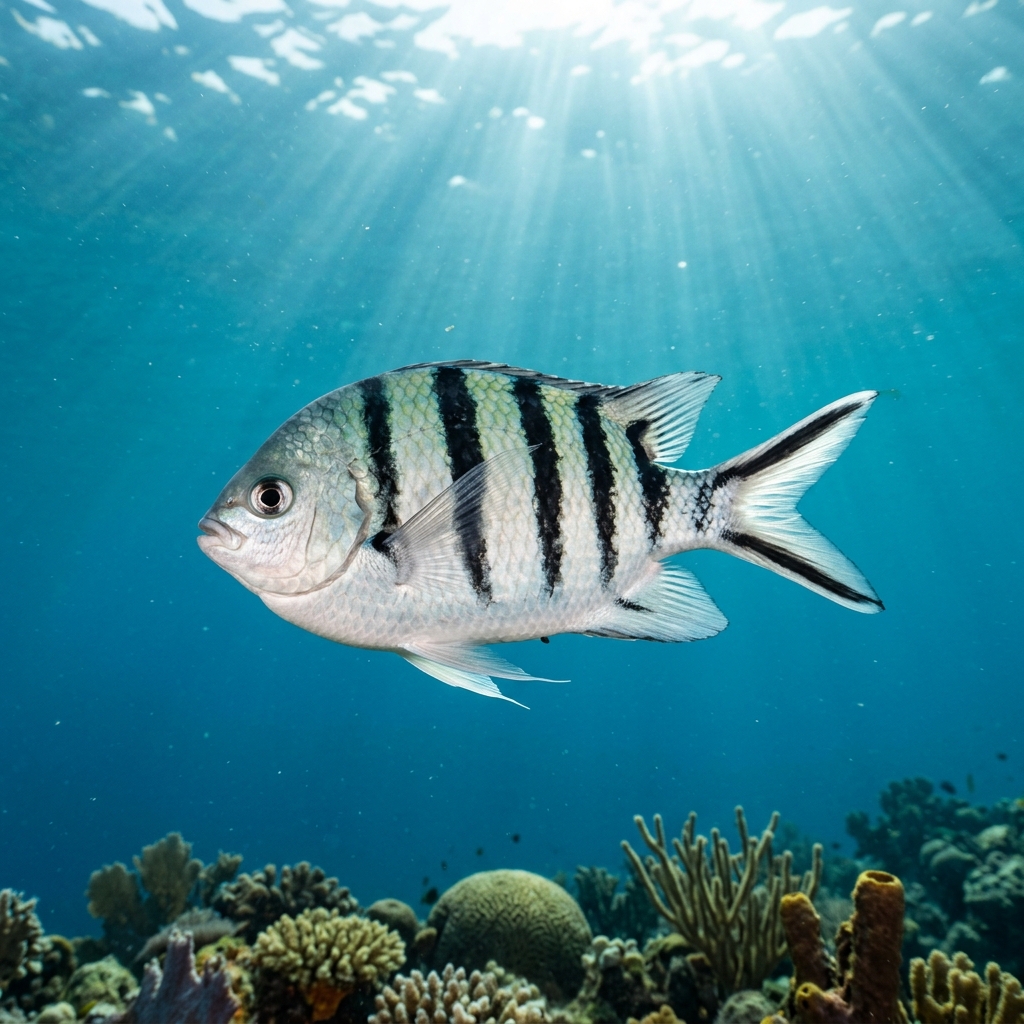
A small, slender damselfish around 7 cm, typically a soft blue-grey to olive body with a faint darker blotch near the upper base of the tail. Look for the pale, almost translucent fins against the muted body colour, and the classic damselfish shape: compact, deep-bodied, with a slightly forked tail. It sits low over reef structure rather than cruising open water, so scan rubble patches and coral heads at a slower pace than you would for larger reef fish.
Divers typically find it hovering close to coral rubble or low reef structure, picking at algae and small invertebrates rather than schooling in open water. It holds its ground when divers approach slowly, ducking into cover only if pressed, and like most small damselfish it is most active during daylight hours over shallow to mid-depth reef.
As an omnivorous grazer it spends much of its time nibbling algae films off rubble and dead coral, doing a small but steady share of the reef's algae control alongside other damselfish.
No clear seasonal pattern shows up in the sightings, and its comfort range of roughly 25 to 29C matches tropical reef conditions year-round, so any month diving Palau or Sabah gives you a fair shot.
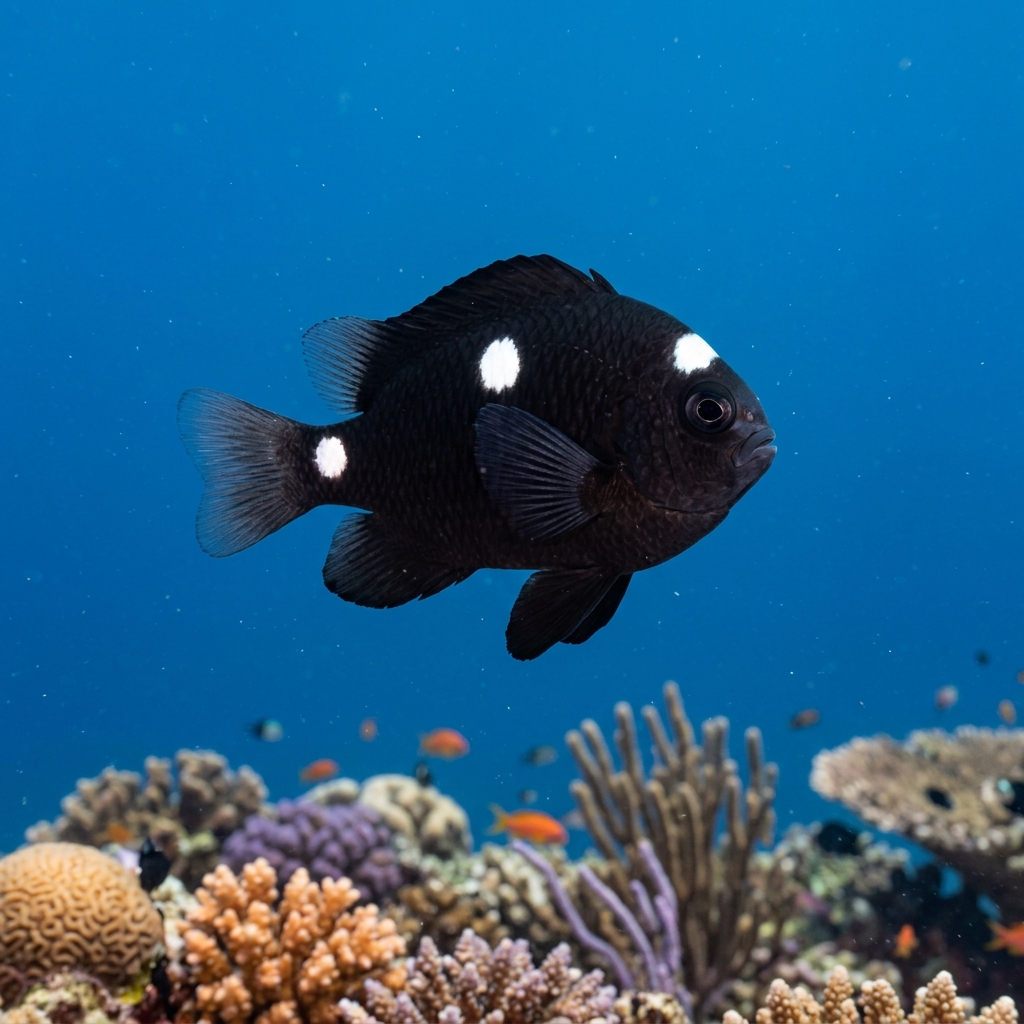
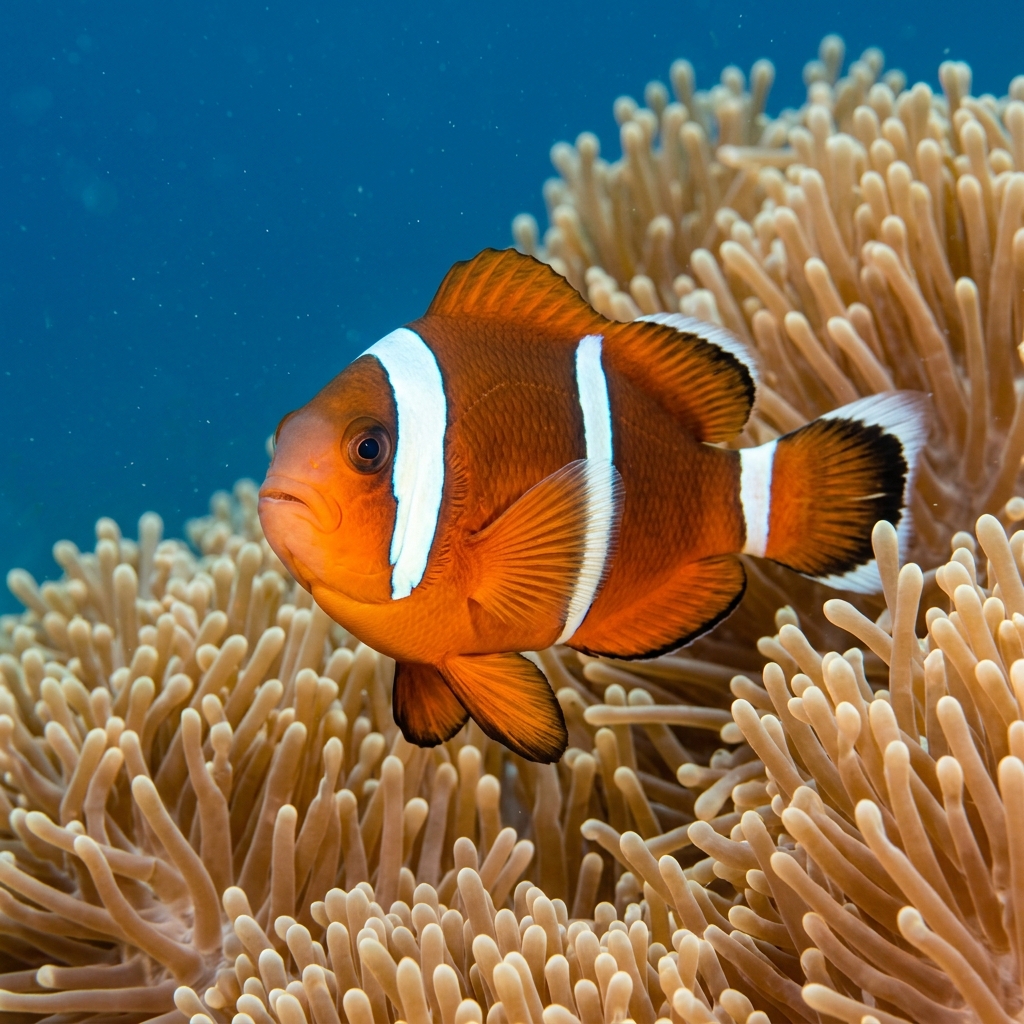
Reef neighbours a diver could mistake it for. Use the identification notes above to tell them apart.
Palau is by far the strongest bet, with sightings spread across multiple sites in the Koror & Malakal region. It also turns up in Sabah, Malaysia, with single confirmed sites in Dili, Timor-Leste, and Western Australia, Australia, so it is a real Indo-Pacific reef species rather than a Palau specialty, just harder to pin down outside it.
Mapping where Nagasaki Damselfish is logged…
Palau's Koror & Malakal region is the most consistent place to find it, with additional sightings logged in Sabah, Malaysia, and single records from Dili, Timor-Leste, and Western Australia.
There is no strong seasonal pattern in the sightings, and it favours water between about 25 and 29C, so it is present on tropical reefs throughout the year.
Look for a small, blue-grey to olive damselfish around 7 cm long with pale fins and a faint dark mark near the tail base, hovering low over rubble or coral rather than schooling in open water.
They stay small, reaching around 7 cm in length, typical for reef-associated damselfish in the genus Pomacentrus.
No, they pose no threat to divers and simply hold their position over the reef or retreat into cover if approached too quickly.
Site and sighting data is aggregated from diver logs, iNaturalist and GBIF. For taxonomy and conservation status:
Dascyllus
3,697 sites