Porophryne erythrodactylus
Spot the red-fingered anglerfish in New South Wales, Australia, where sightings peak Dec, Apr in 18-23°C water. Tips on ID and what to look for.
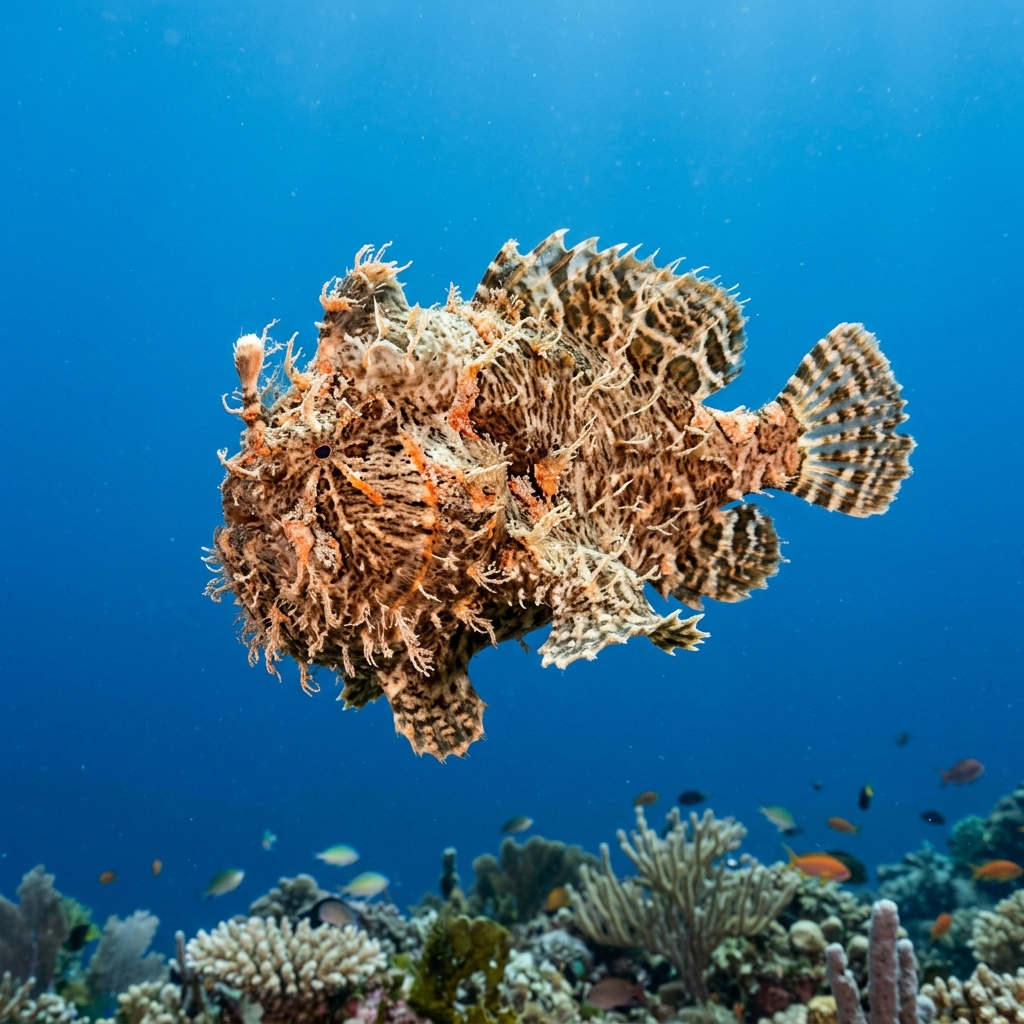
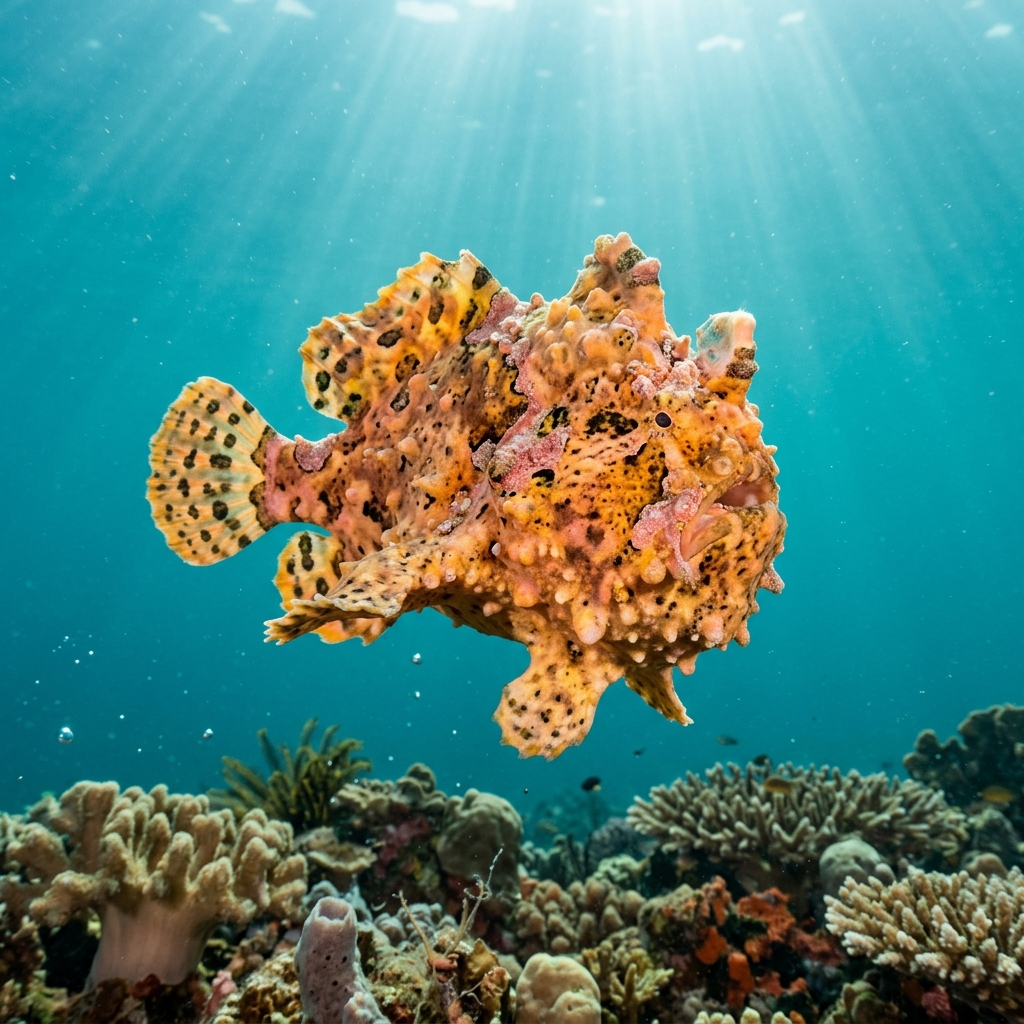
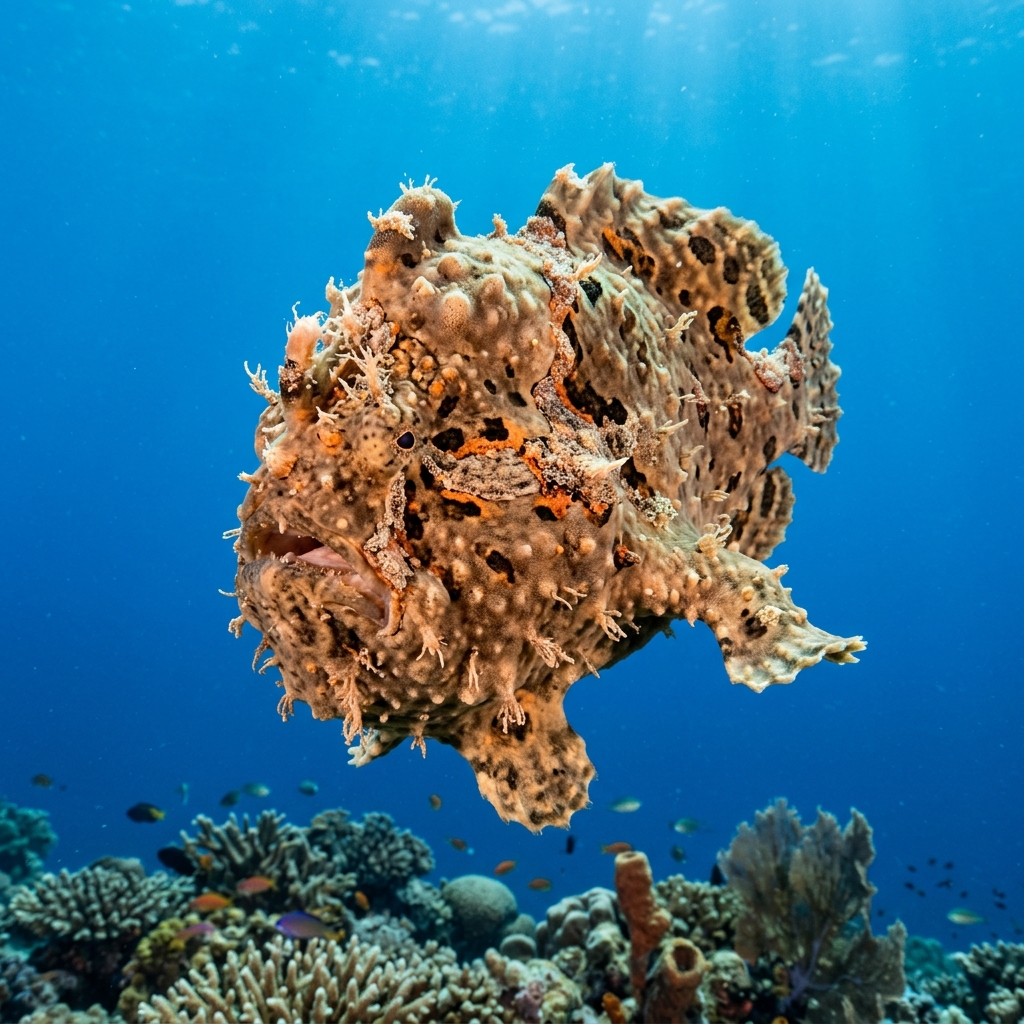
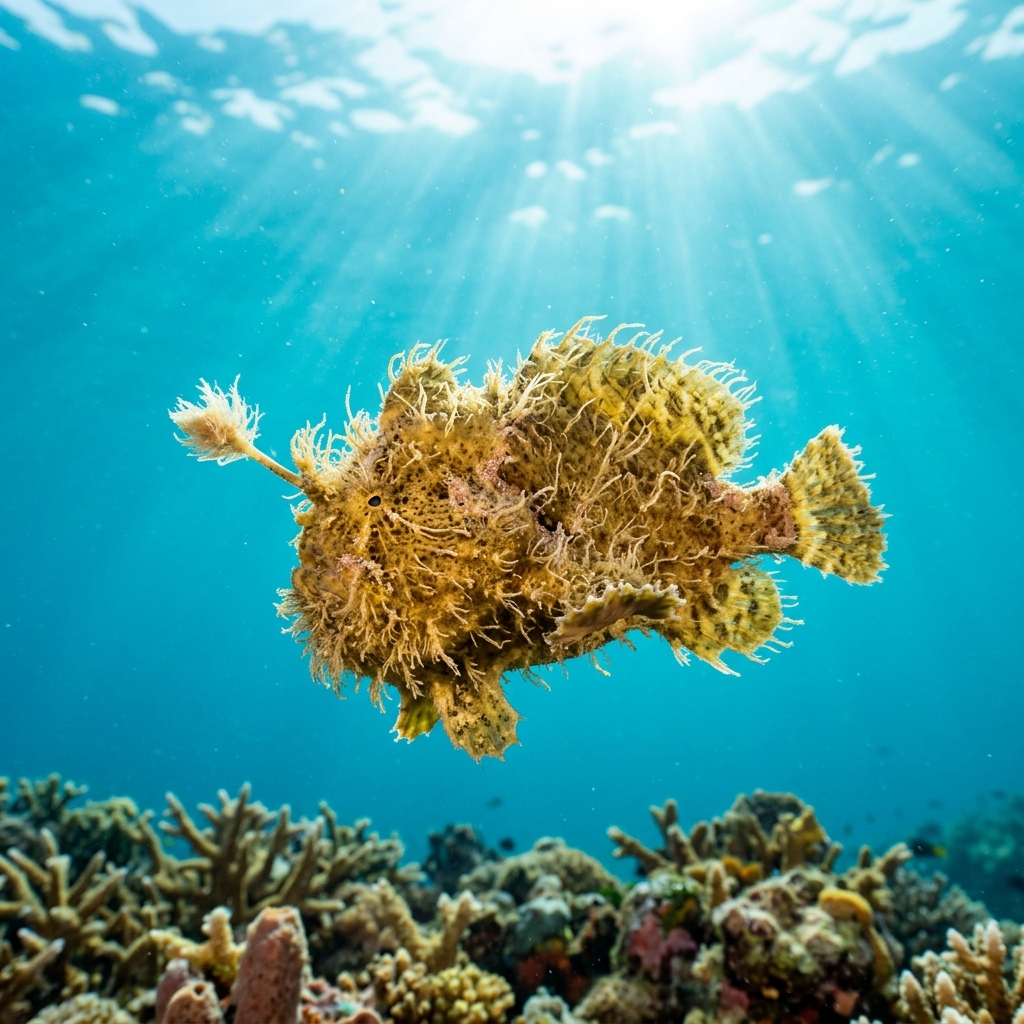
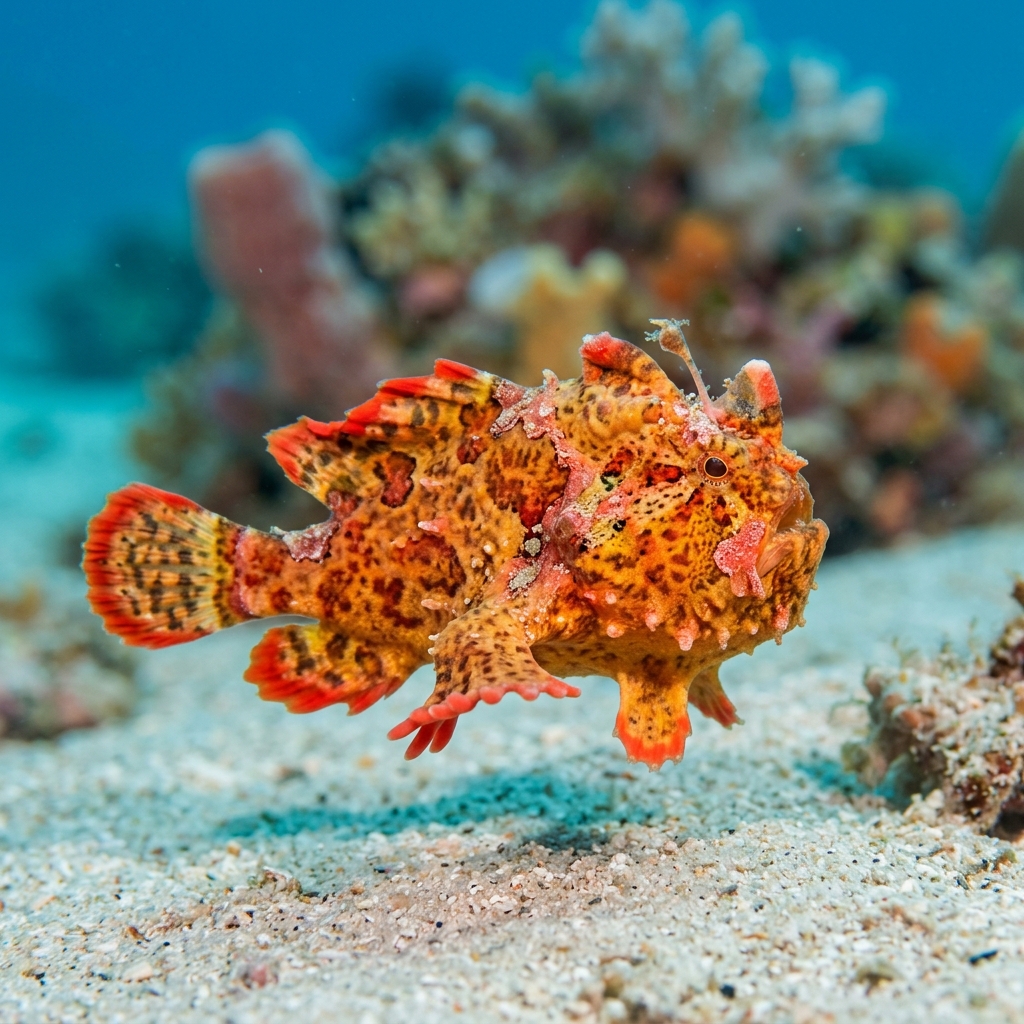
At roughly 4 cm, this is a tiny, lumpy fish that sits perfectly still on the reef and is far easier to miss than to find. The key feature is the distinctive reddish-orange, finger-like appendages (cirri) on the body and around the face, which give the species its name and set it apart from most other small anglerfish. Body colouration is variable, often pale cream to beige with irregular mottling that matches encrusting reef growth. The illicium (the modified dorsal spine used as a lure) is short and held close to the snout.
Encounters are almost entirely static: the fish parks itself on rocky or rubble reef and relies on camouflage rather than flight to deal with approaching divers. It is an ambush predator, holding position and waiting for small prey to wander within lunging range, so it will rarely move during an observation. If you do get too close it may shuffle a short distance away, but patience and a slow approach usually reward you with a prolonged, close view.
Like other frogfish, it can engulf prey in as little as six milliseconds, one of the fastest strikes recorded in vertebrates, using rapid expansion of its enormous mouth to create suction.
Sightings in New South Wales concentrate between December and April, the austral summer and early autumn, when water temperatures sit in the 18-23°C range that suits this species.
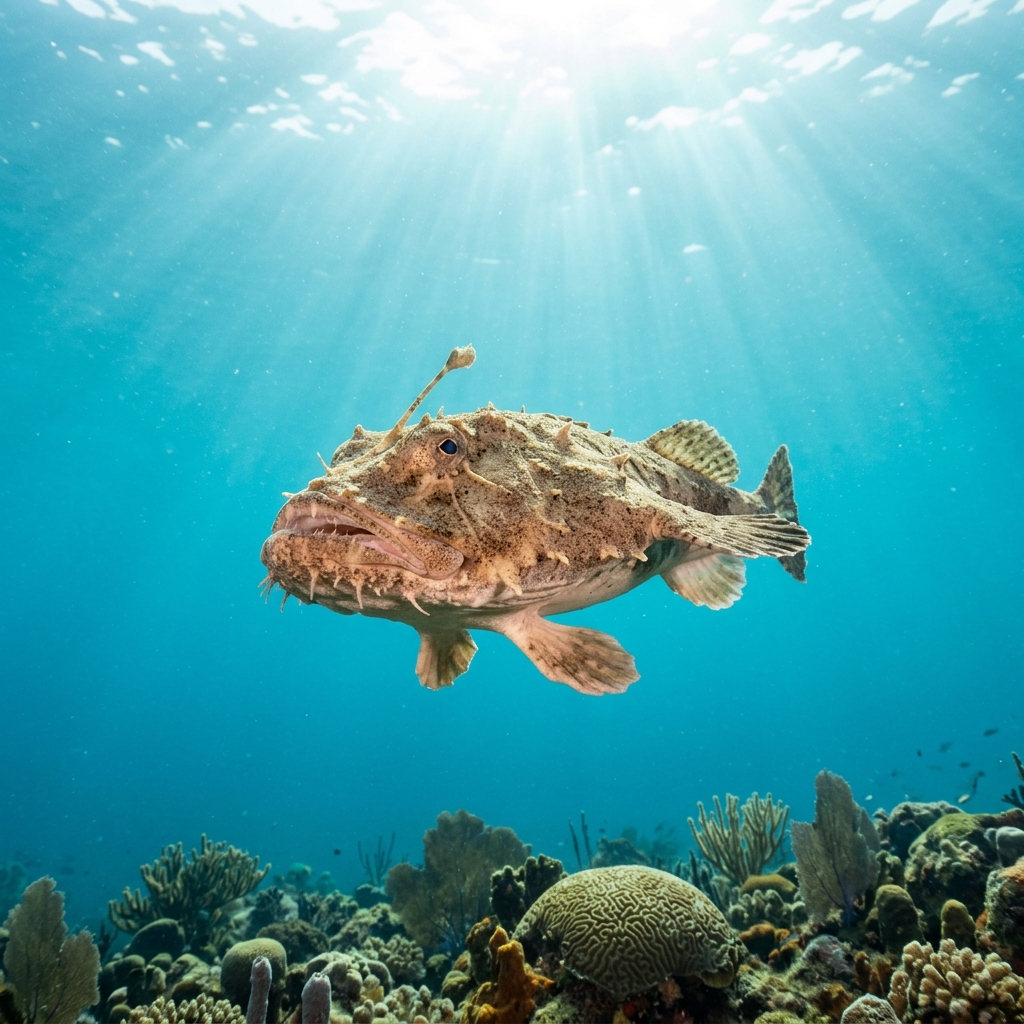
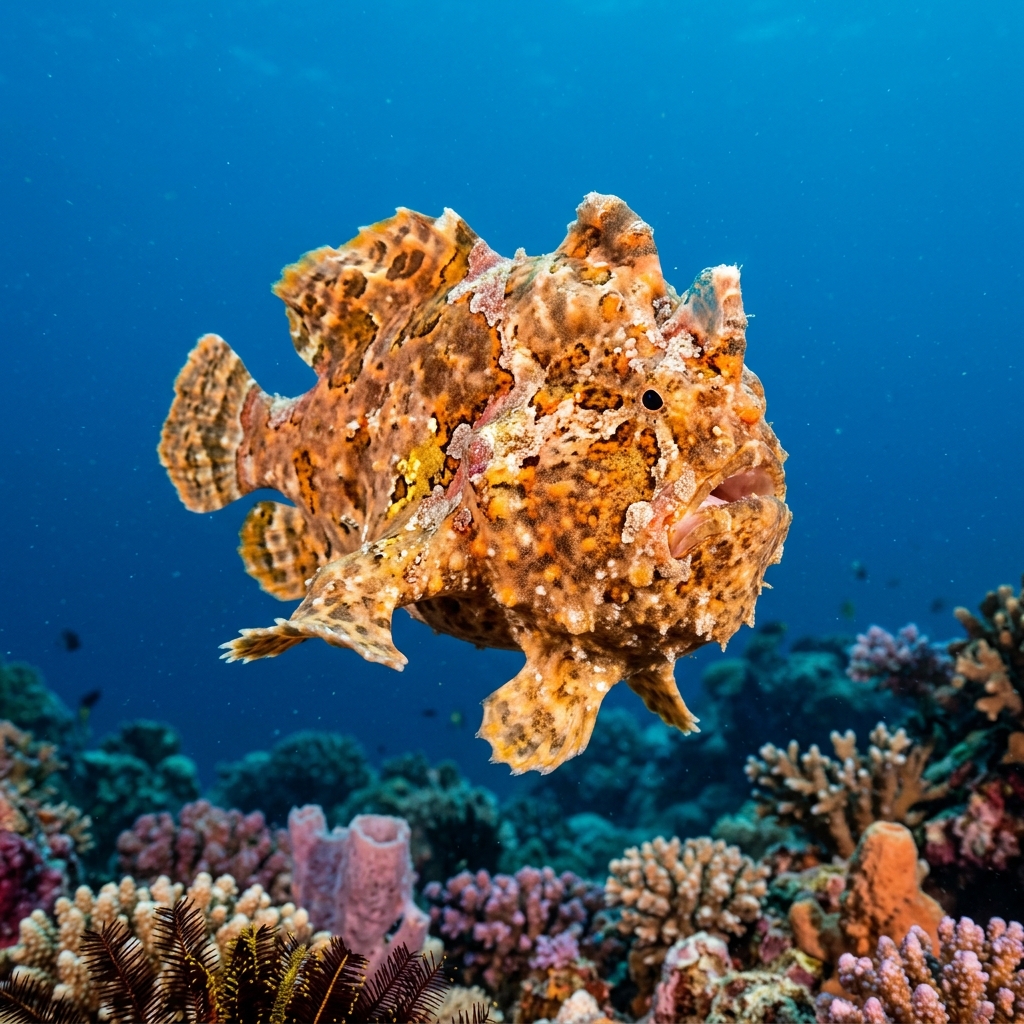
Reef neighbours a diver could mistake it for. Use the identification notes above to tell them apart.
All confirmed sightings are concentrated in New South Wales, Australia, making this an effectively endemic target for divers exploring that stretch of the east Australian coast. Sightings are consistently logged as common across the sites where it occurs, suggesting it is reliably findable once you know the habitat to search.
Mapping where Red-fingered Anglerfish is logged…
All recorded sightings come from New South Wales, Australia, making it effectively a speciality target for divers on the east Australian coast. Look for it on rocky reef and rubble habitat in the depth range of about 6 to 24 metres.
Sightings in New South Wales peak from December through to April, the local summer and early autumn. Water temperatures during this period sit in the 18-23°C range that this species favours.
Look for a tiny, motionless, lumpy fish roughly 4 cm long sitting on the reef. The reddish-orange finger-like cirri scattered across the body are the standout feature. Overall body colour is pale and mottled to match the surrounding reef.
They are very small fish, typically around 4 cm as adults. That small size, combined with excellent camouflage, means a good eye or a knowledgeable guide makes a real difference to your chances of finding one.
No, they pose no danger to divers. They are passive ambush predators focused on tiny prey, and their only defensive response to a diver is to sit still and hope you miss them.
Site and sighting data is aggregated from diver logs, iNaturalist and GBIF. For taxonomy and conservation status:
Giant Frogfish
1,292 sites