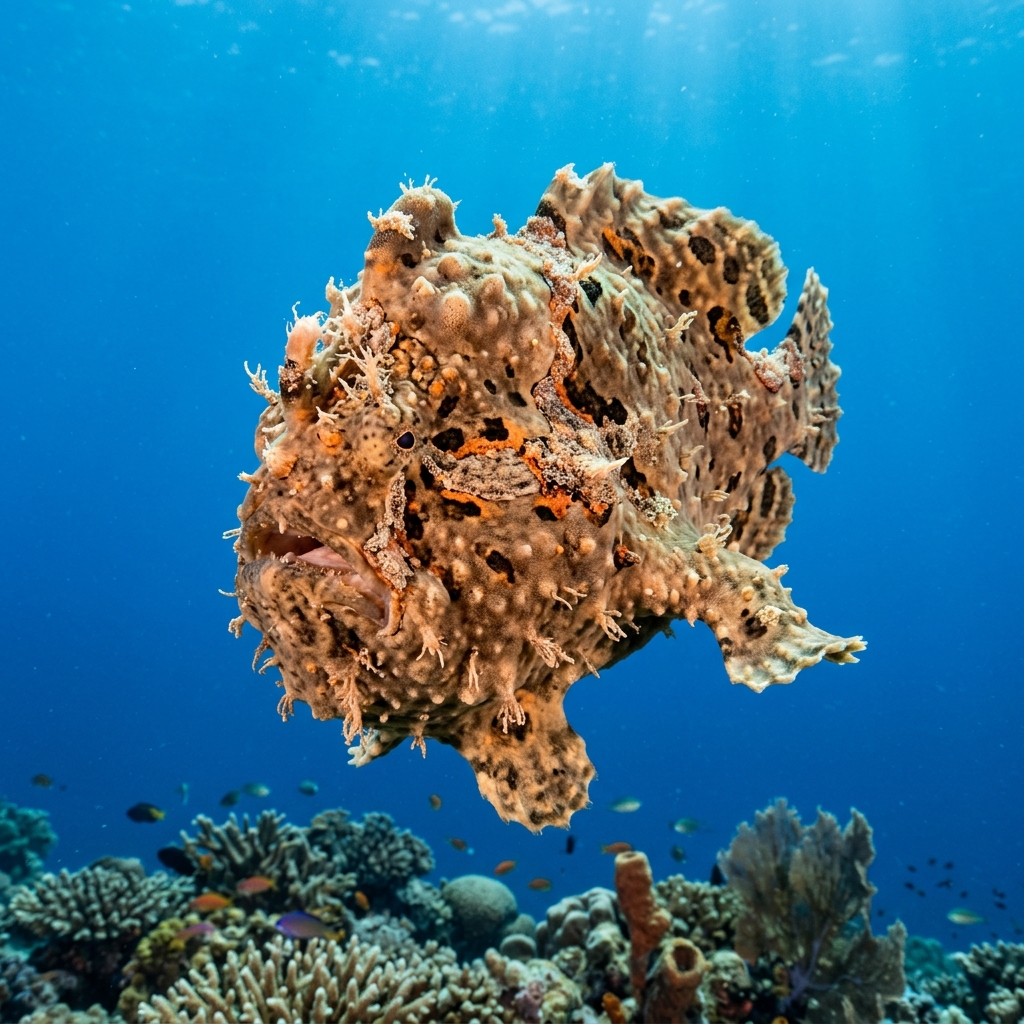
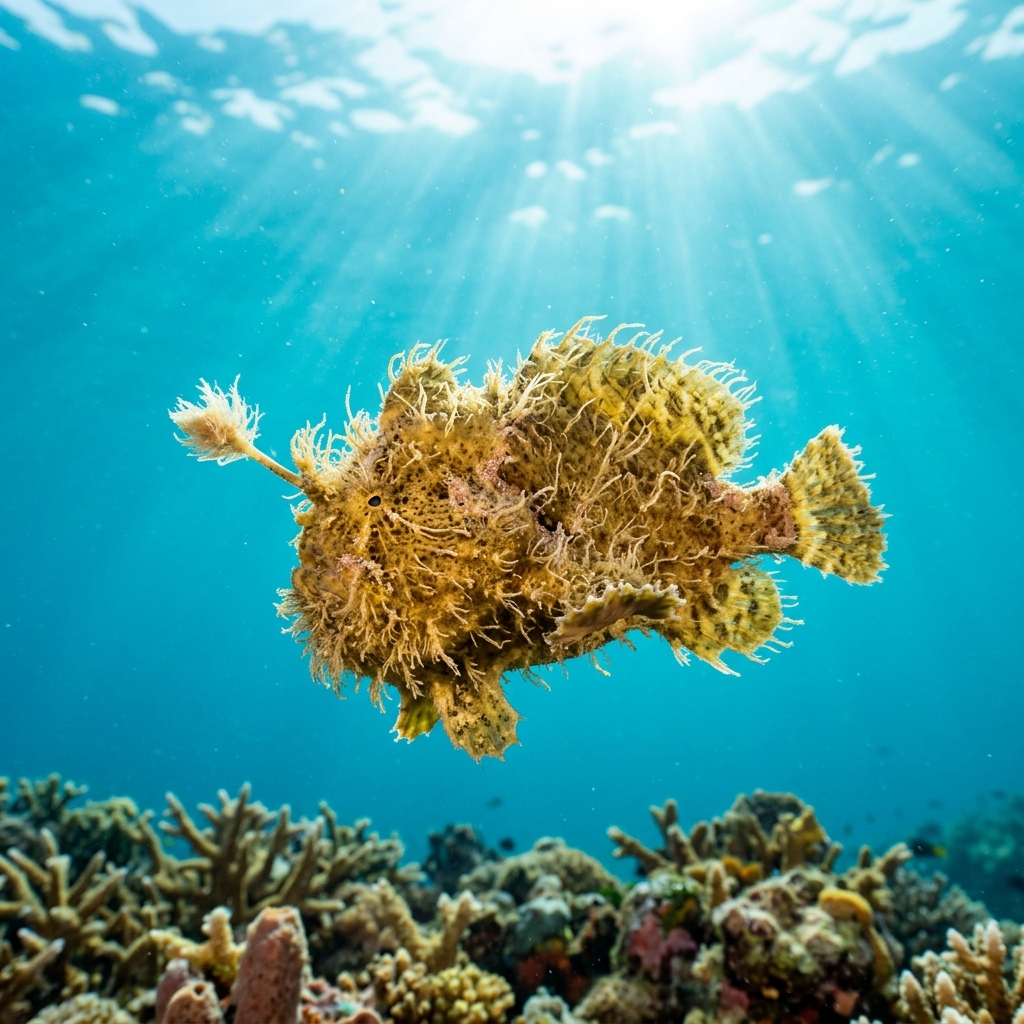
Ogcocephalidae spp.
Flattened, warty and walking on fins along the sand, these odd bottom-dwellers turn up uncommonly from Cuba to Brazil year-round.
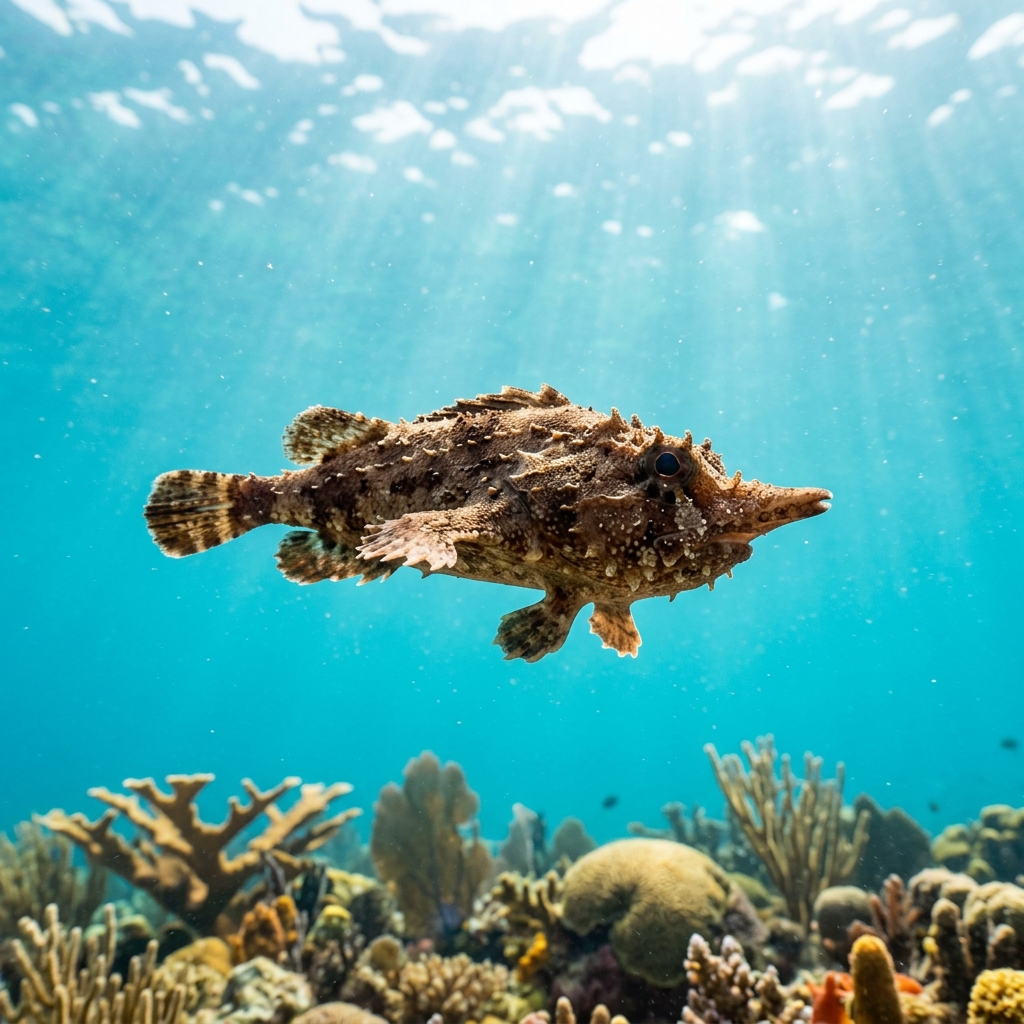
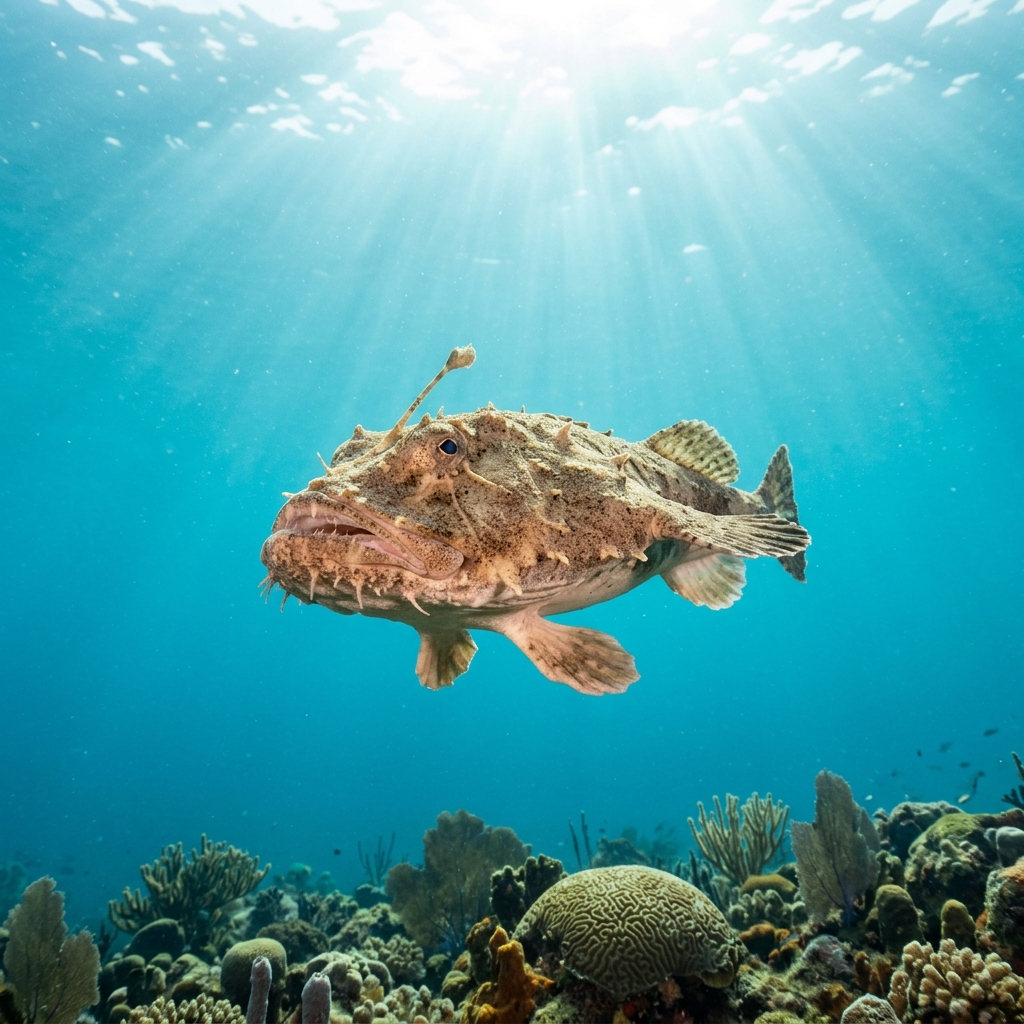
Look for a flattened, disc-shaped body that sits low on the sand, propped up on a pair of thick, leg-like pectoral fins rather than swimming freely. The skin is rough and warty, usually mottled brown, grey or reddish to match the seabed, and the head tapers to a small upturned mouth with a lure tucked beneath it. Most species stay small and easy to miss unless you are scanning the bottom closely, since they rely on camouflage over colour.
Divers usually find them motionless on sand or rubble, using those stubby pectoral fins to shuffle along the bottom rather than swim, which is where the walking habit gets noticed. They tend to sit tight and rely on camouflage when a diver approaches, so a slow, close look at open sandy patches near reef edges is the best way to spot one. Sightings are logged as uncommon even at sites where they occur, so this is very much a fish for divers who enjoy hunting the bottom rather than the open water.
Many species in this family carry a small worm-like lure just above the mouth that they can flick out to attract prey, essentially fishing while sitting still.
No clear seasonal pattern shows up in the data, and with a comfortable range of roughly 19 to 29 C these fish sit on sandy and rubble bottoms year-round across their range. Any month works for a sighting, it comes down to slowing down and searching the substrate rather than timing a season.
Reef neighbours a diver could mistake it for. Use the identification notes above to tell them apart.
Most commonly logged across the Caribbean and western Atlantic, with strong site counts in Brazil, Cuba, Venezuela and Colombia, plus a reliable presence in the Bahamas, the United States and Mexico. Regional hotspots include the Caribbean Coast of Colombia, Florida, Jardines del Rey in Cuba, and Pernambuco and Bahia in Brazil, with Cape Verde standing out as an eastern Atlantic outpost.
Mapping where Walking Batfish is logged…
They show up across the Caribbean and western Atlantic, with the strongest logs from Brazil, Cuba, Venezuela and Colombia, plus sites in the Bahamas, Florida and Mexico. Cape Verde is an outlier further east where they are also recorded.
There is no strong season in the sighting data, and their temperature range of about 19 to 29 C covers most of the year on tropical and subtropical reefs. Treat them as a year-round possibility rather than something tied to one month.
Look for a flattened, disc-like body sitting on the sand, propped up on thick fins used for shuffling rather than swimming. Rough, warty skin in brown, grey or reddish tones and a small upturned mouth are the key clues.
Many species carry a small worm-like lure just above the mouth, which they can wiggle to draw in prey while staying almost completely still on the seabed. Combined with their walking fins, it makes them one of the more unusual ambush predators divers can find on sand.
Site and sighting data is aggregated from diver logs, iNaturalist and GBIF. For taxonomy and conservation status:
Giant Frogfish
1,292 sites