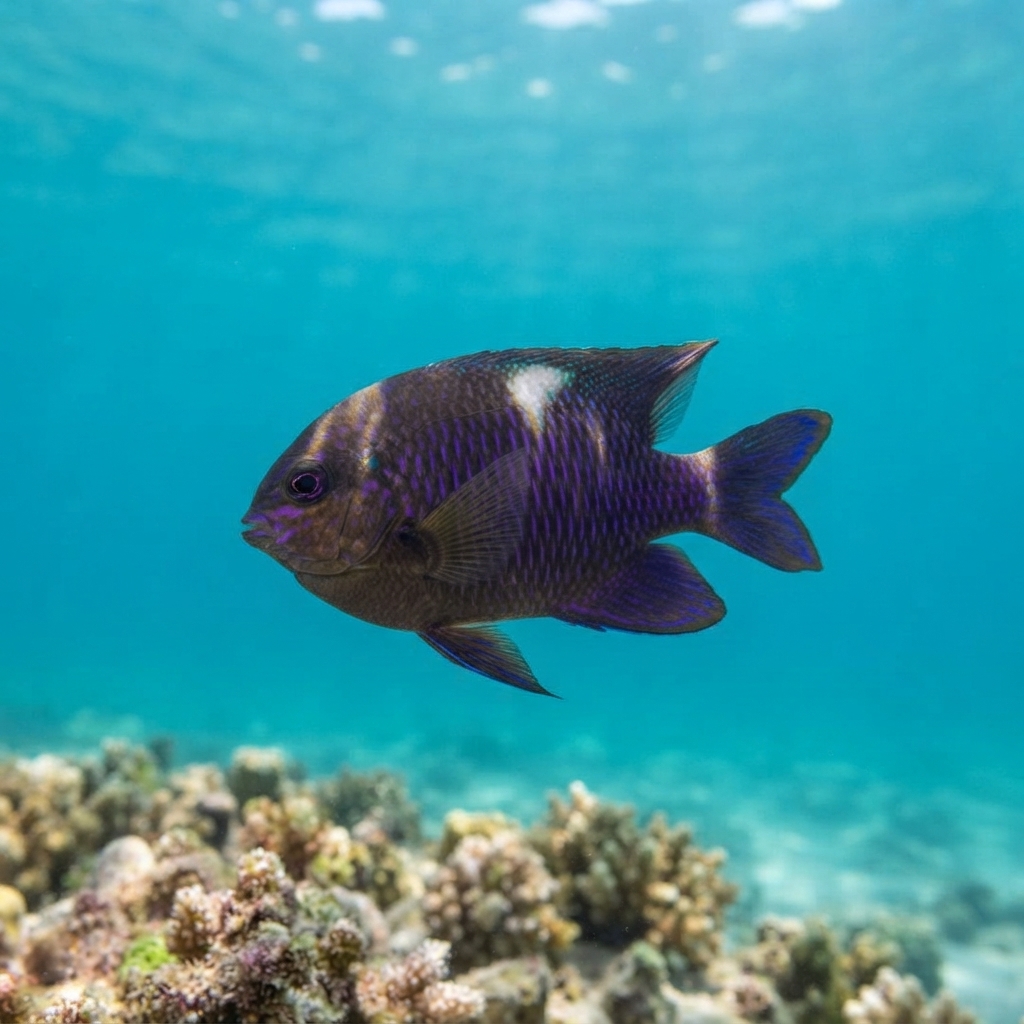
Dischistodus pseudochrysopoecilus
Spot Monarch Damselfish on reefs across Queensland, Australia, in warm 26-29C water where they're logged as a common year-round sighting.
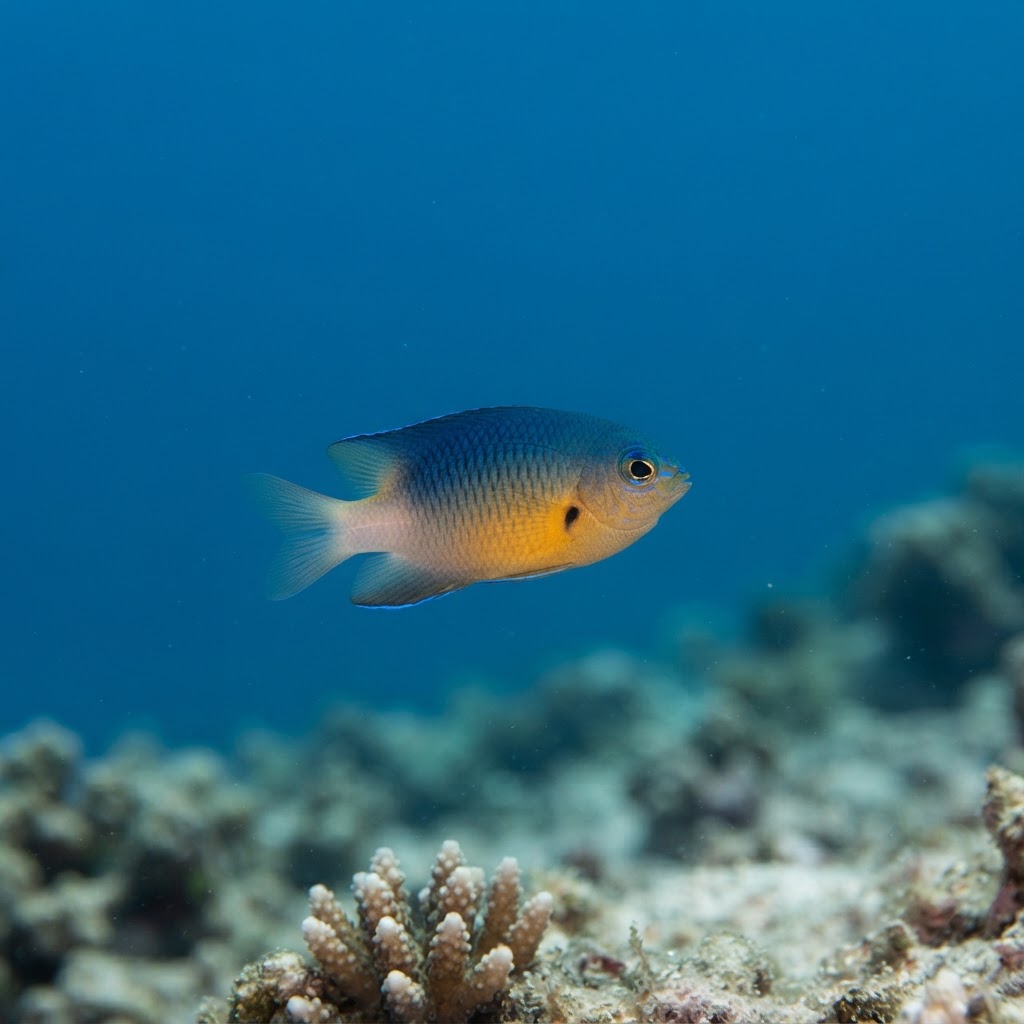
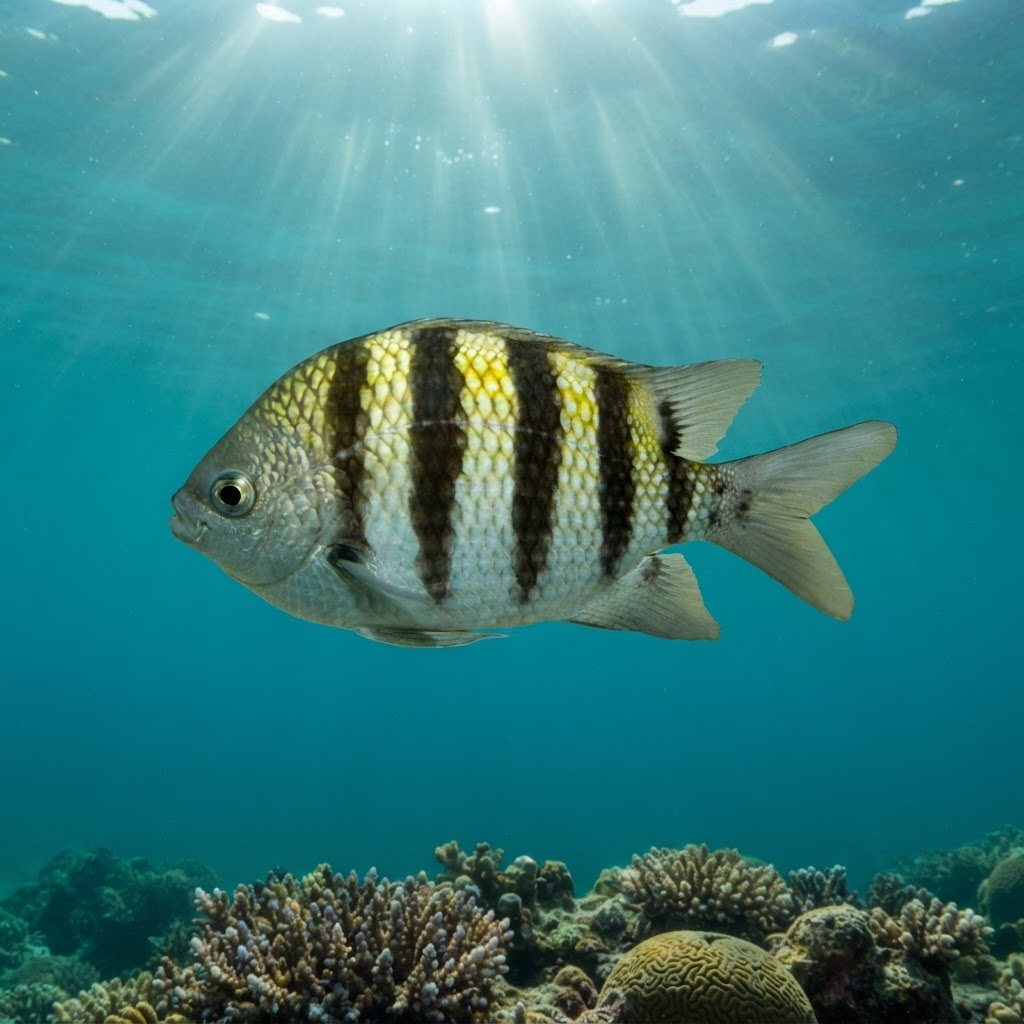
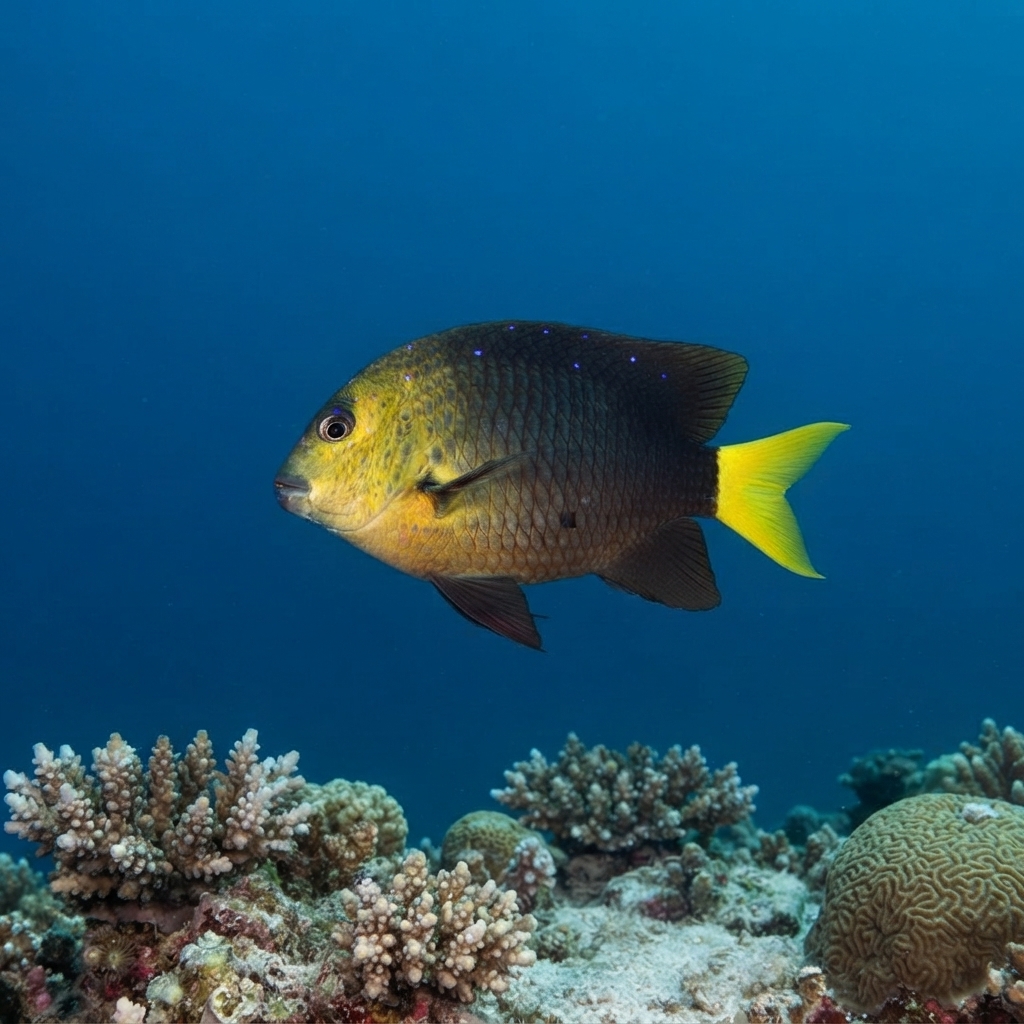
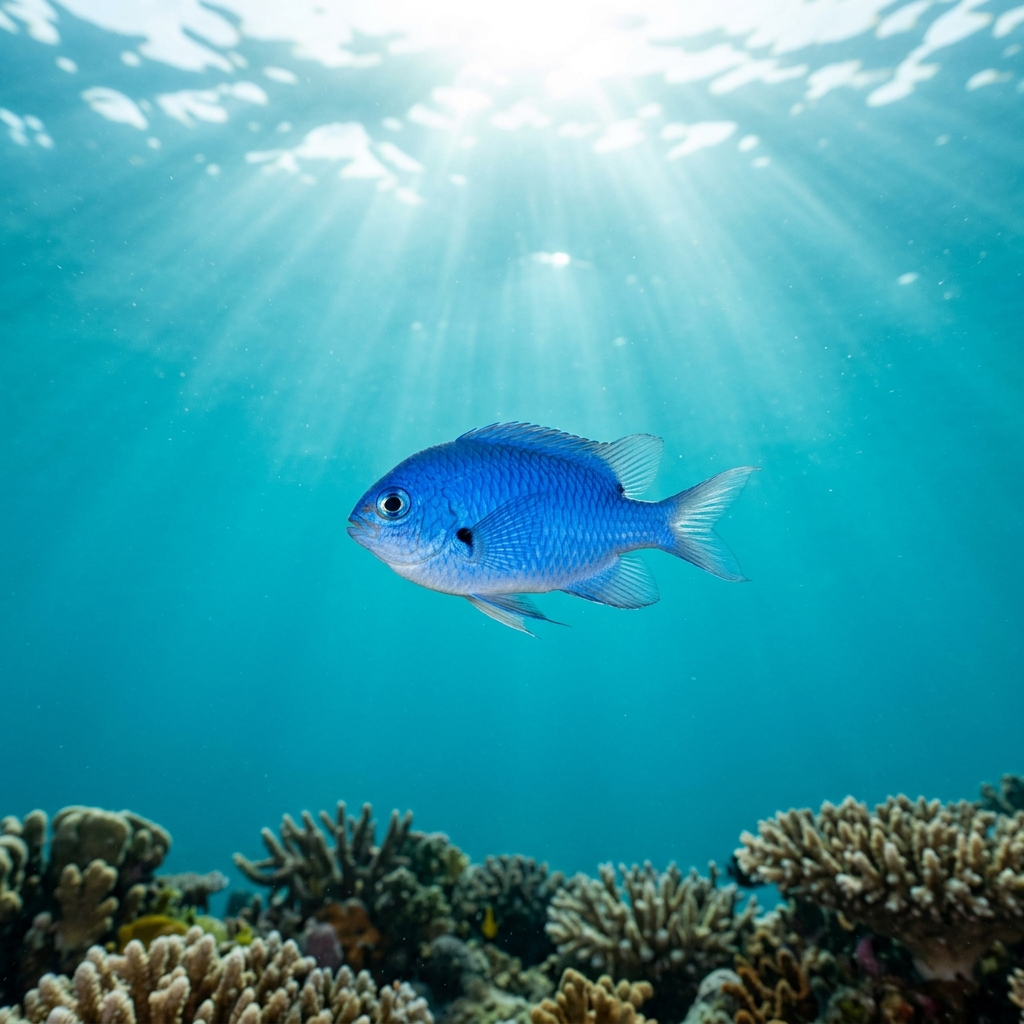
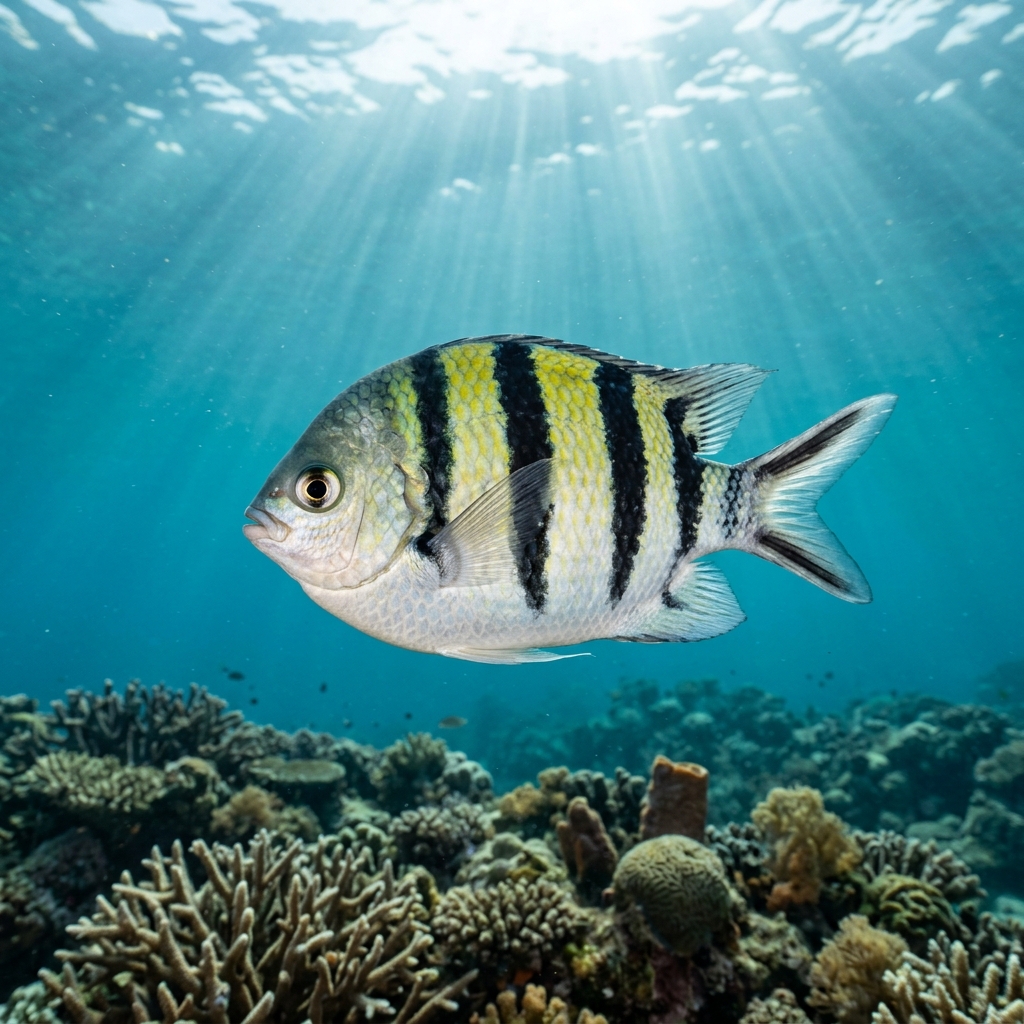
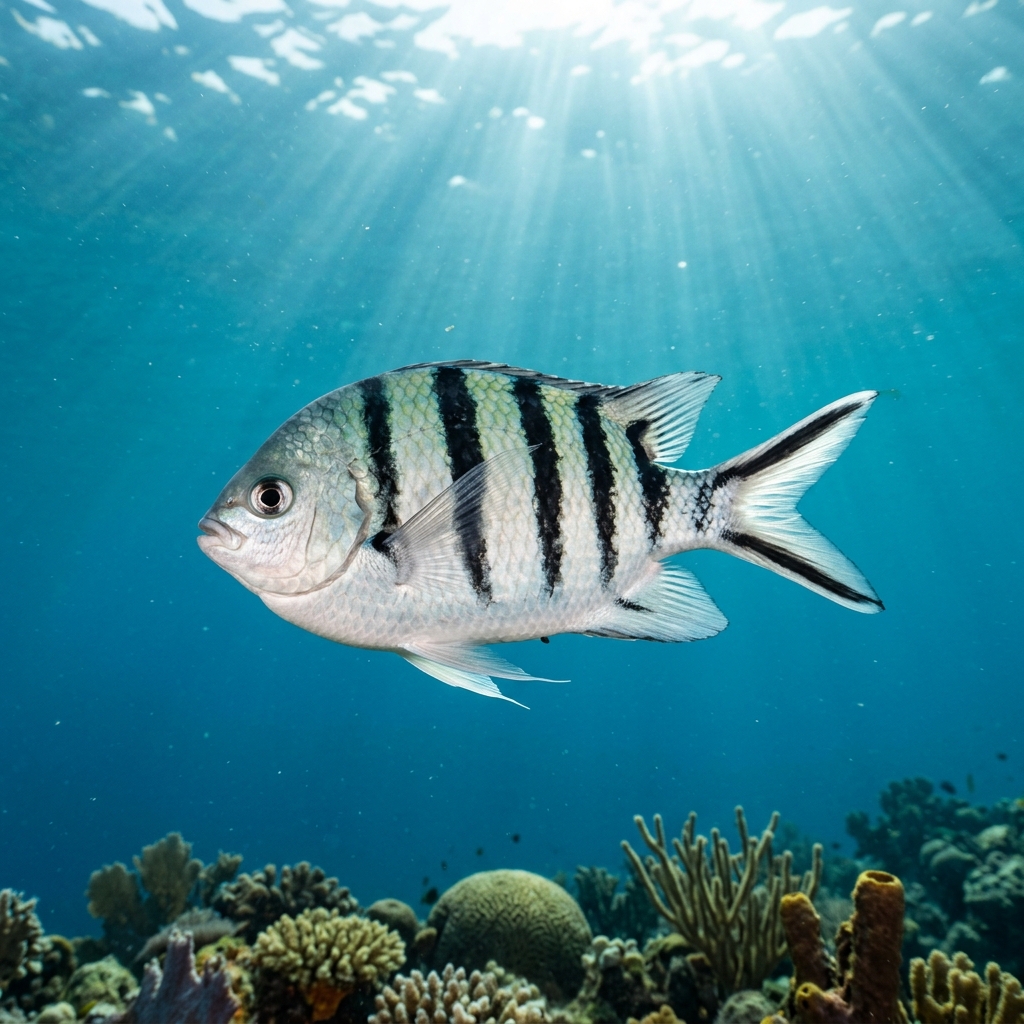
A small, deep-bodied damselfish reaching around 13 cm, with a pale grey to bluish body and darker edging along the dorsal and tail fins that gives it a faintly outlined look. It sits close to the reef in a compact, almost boxy posture rather than swimming in the open water column. Look for the plain, unfussy pattern; there's no bold stripe or bar to key on, which is itself a clue among the more flamboyant damselfish and clownfish sharing the reef.
Divers typically find it holding a small patch of reef or rubble, hovering and darting back to the same spot rather than roaming far. Like most damselfish it can be territorial around its patch, giving a quick dart or nip toward anything, diver included, that lingers too close. It's usually seen singly or in loose numbers on the reef structure rather than schooling in open water.
Many Dischistodus damselfish tend and defend small algae patches on the reef, effectively farming a food source and chasing off grazers that try to move in on it.
Sightings don't show a distinct season, and with a comfortable water-temperature range of roughly 25.7 to 29.3C, it's a reasonable year-round find on Queensland reefs rather than a fish tied to one part of the calendar.
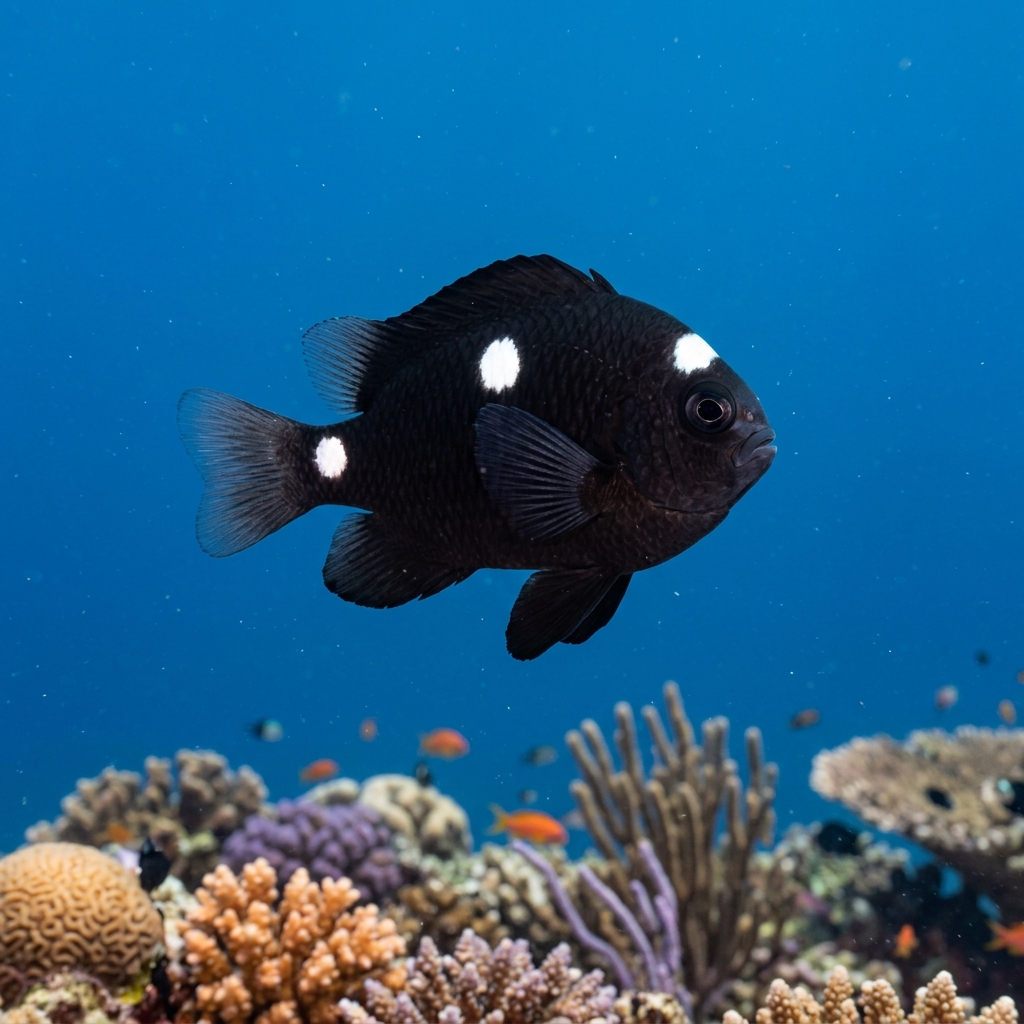
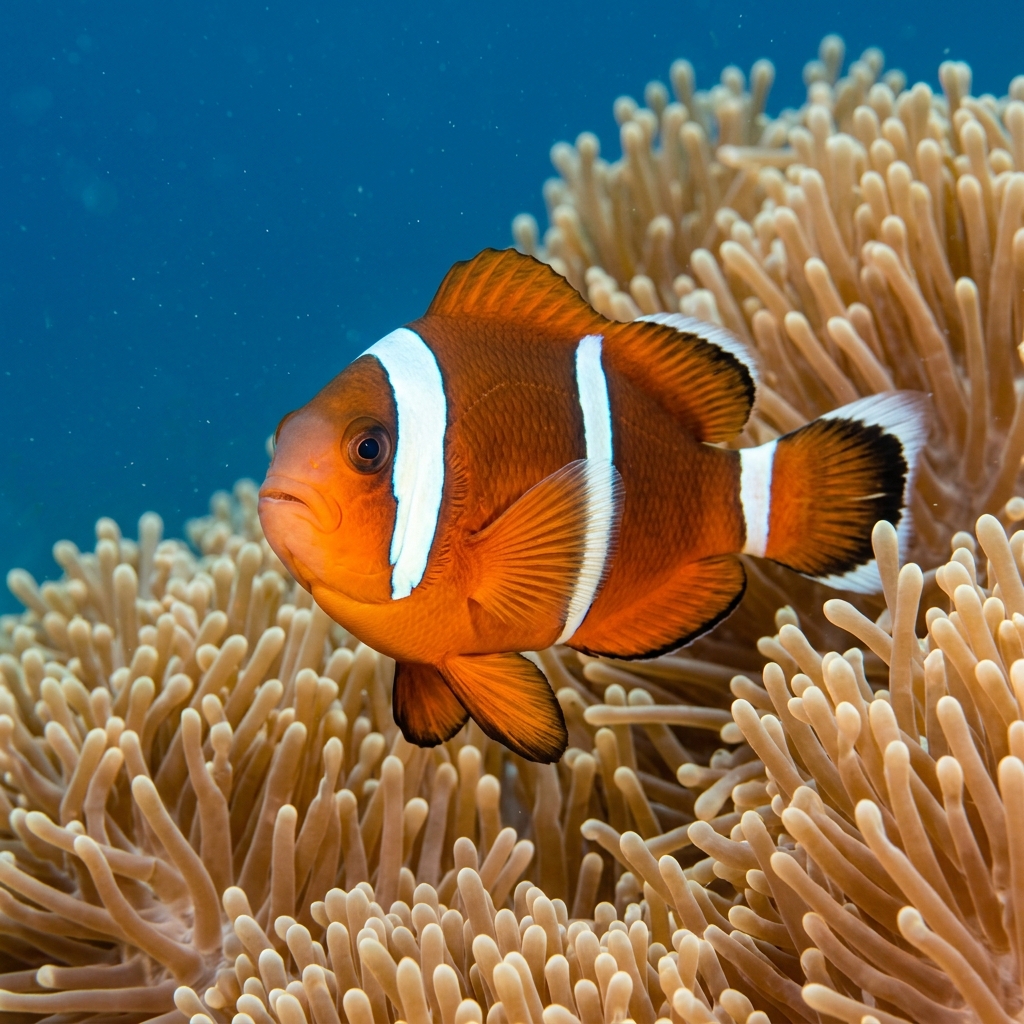
Reef neighbours a diver could mistake it for. Use the identification notes above to tell them apart.
This is very much an Australian fish on current records, most reliably found on reefs around Queensland, with a smaller foothold reported from Sulawesi in Indonesia. If you're diving Queensland's inshore and mid-shelf reefs, this is one of the more dependable damselfish to tick off.
Mapping where Monarch Damselfish is logged…
Queensland, Australia, is the strongest and most consistent place to find them, with additional records from Sulawesi in Indonesia. Most divers logging this species have done so on Queensland reef dives.
There's no clear seasonal pattern in the sightings, and the species tolerates a fairly wide warm-water range of about 25.7 to 29.3C, so it's reasonable to expect it on Queensland reefs at any time of year.
Look for a small, deep-bodied damselfish around 13 cm with a plain grey-blue body and darker fin edges, holding position close to the reef or rubble rather than swimming freely in open water.
They reach around 13 cm, putting them in the typical size range for reef damselfish, small enough to overlook if you're not scanning low over rubble and coral patches.
No, they pose no danger to divers. At most they may dart toward a mask or hand if you hover too close to their patch of reef, which is normal territorial behaviour rather than a real threat.
Yes, like several relatives in the genus Dischistodus they are known to tend a small patch of algae on the reef and chase off other fish that try to graze it, a behaviour worth watching for if you spot one holding its ground.
Site and sighting data is aggregated from diver logs, iNaturalist and GBIF. For taxonomy and conservation status:
Dascyllus
3,697 sites