Micromelo scriptus
A rare, glossy orange sea snail logged uncommonly on Queensland reefs in 20 to 26.4C water, year-round.
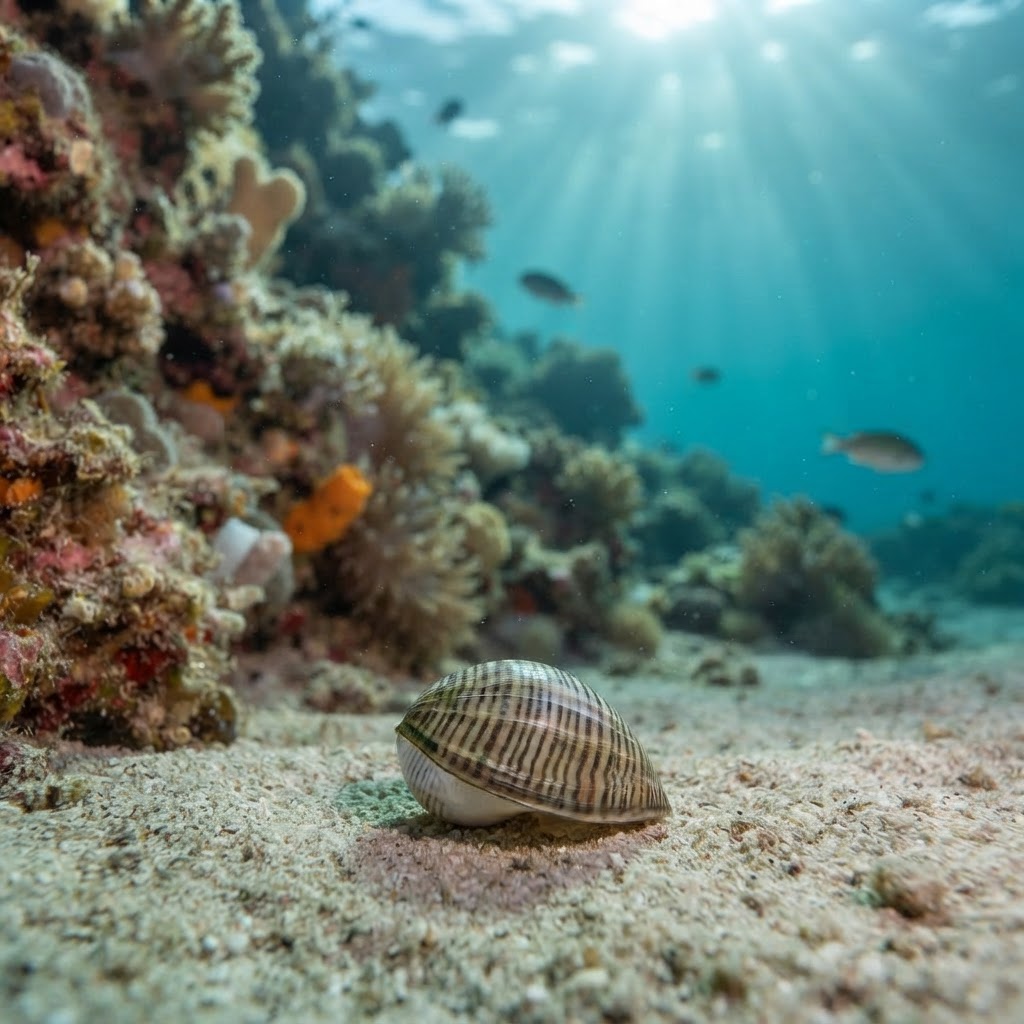
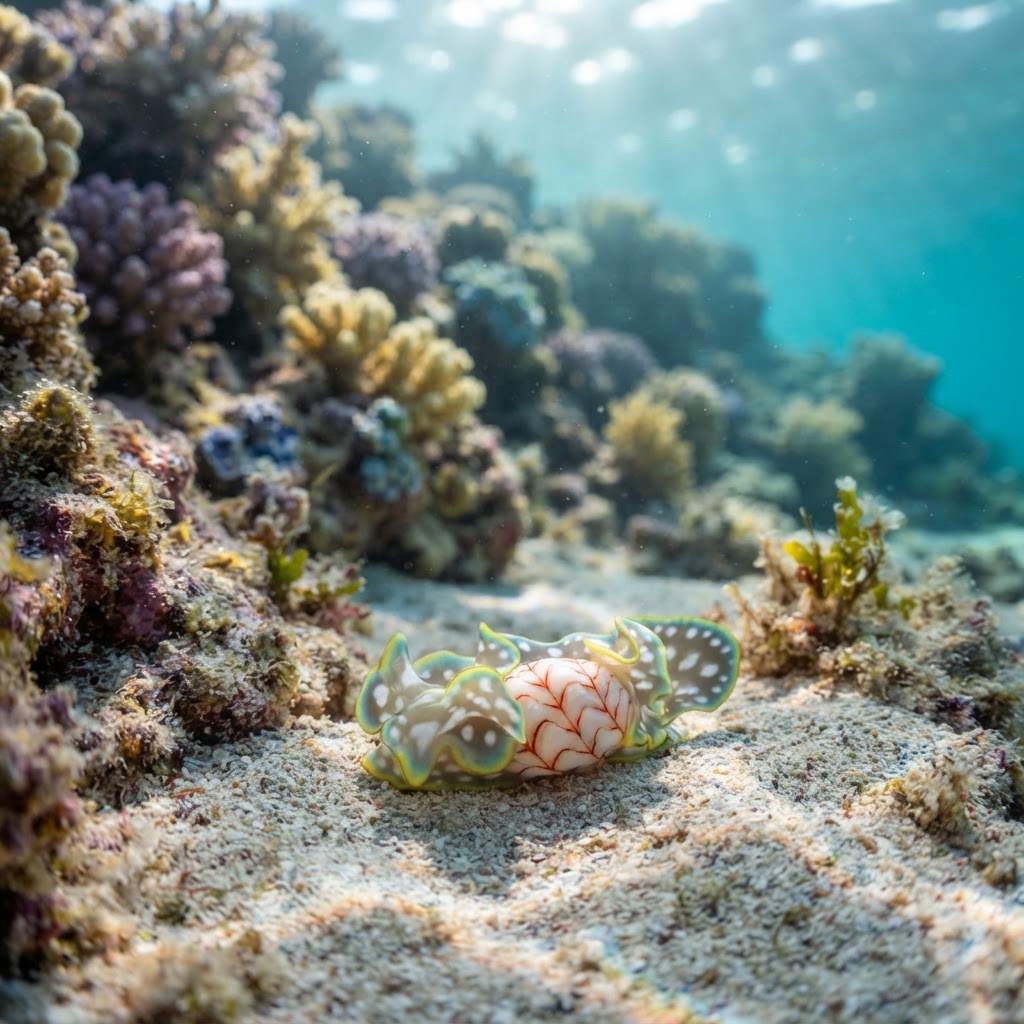
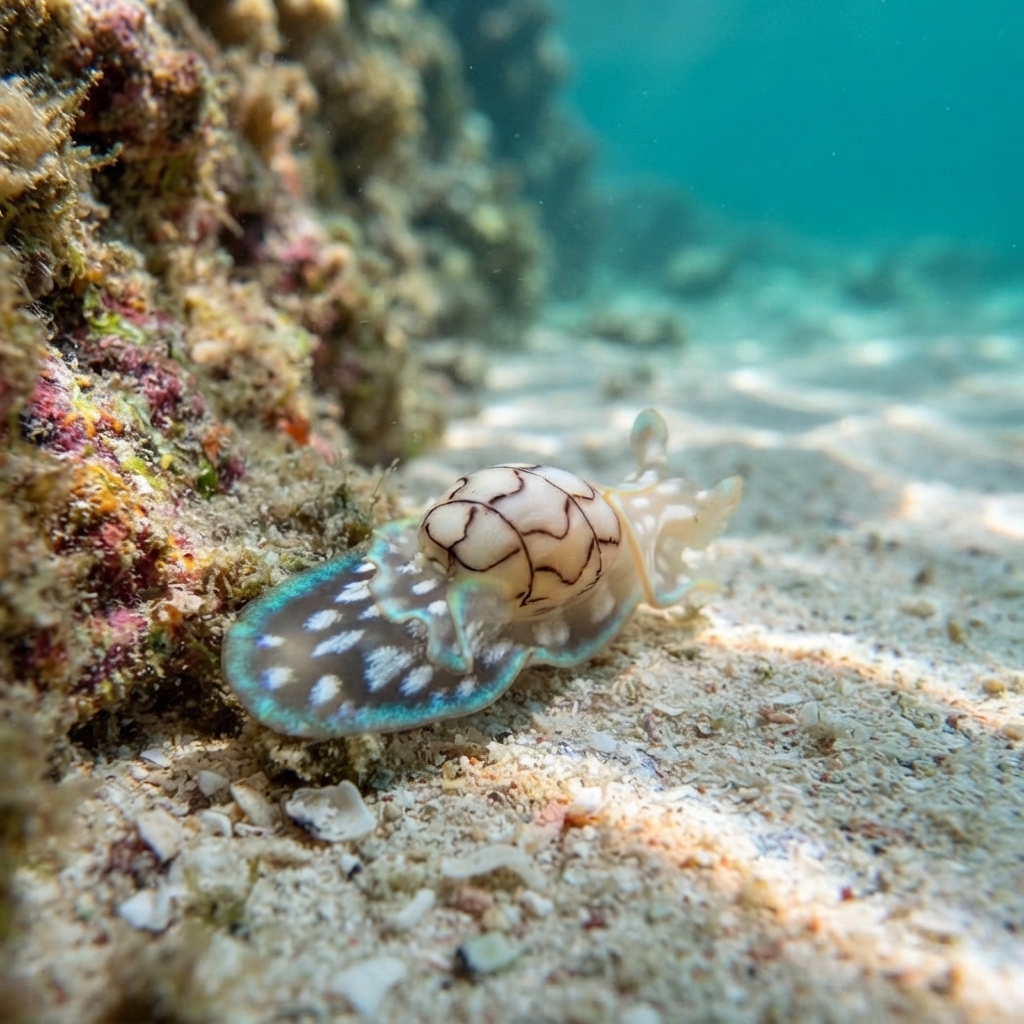
Small, glossy shell in shades of orange to red-brown with dark speckling, giving it a lacquered look on the reef floor. The body and mantle often show through or extend past the thin shell, mottled with darker patches, and the overall shape is a rounded, ear-like bubble rather than a coiled spiral. Most divers spot it at night, picking out the shine of the shell against dark sand or rubble under a torch beam.
Turns up as a slow, ground-hugging crawler on sand and rubble patches, usually found by divers scanning with torches after dark. It doesn't react to light or divers with any evasive burst of speed, so a steady, patient look at the substrate is the best way to pick it out. Logged as uncommon at the sites where it does appear, so finding one is more a matter of careful searching than a guaranteed sighting.
Like other headshield slugs, it's a predator of other small molluscs and uses a broad, shield-like head to plough through sand hunting prey rather than grazing algae.
Sightings don't show a clear season, and with water in the 20 to 26.4C range year-round on these reefs, it's reasonable to look for it on any night dive rather than planning around a specific month.
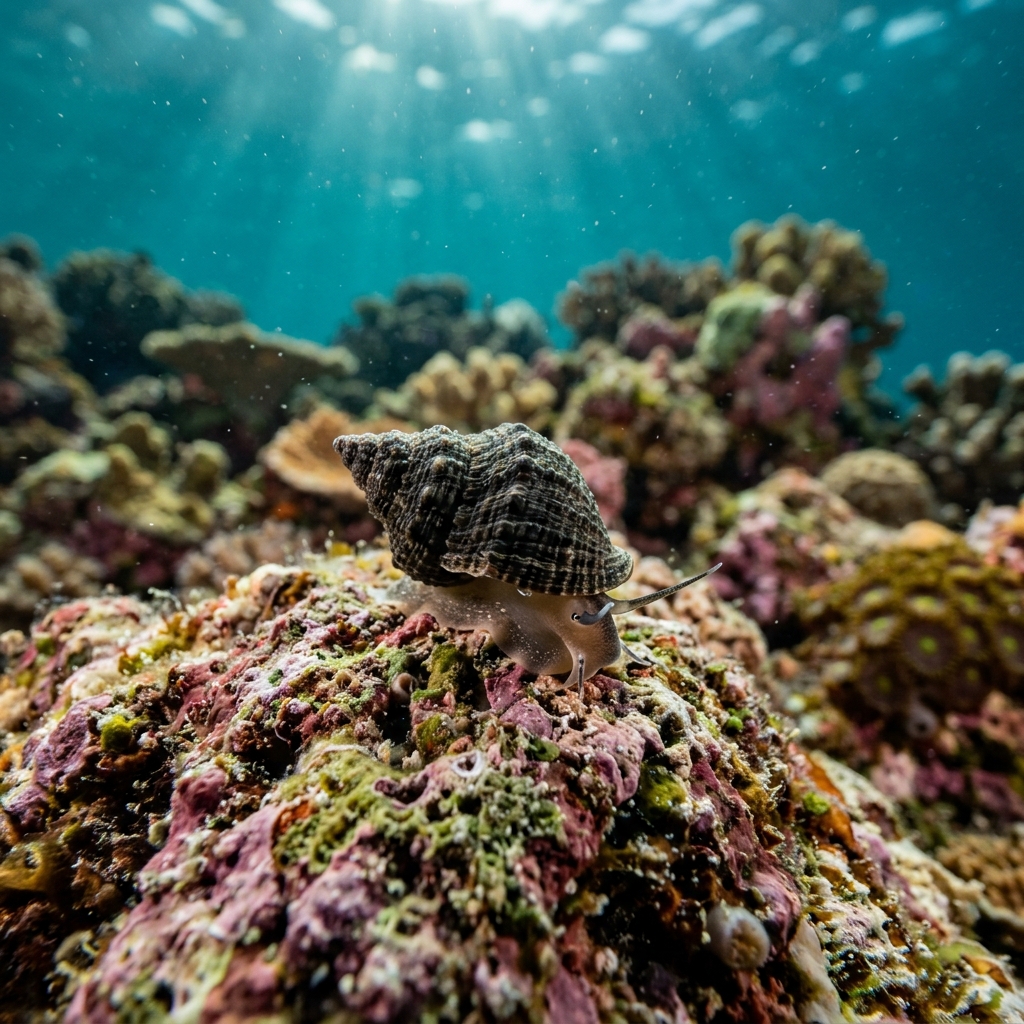
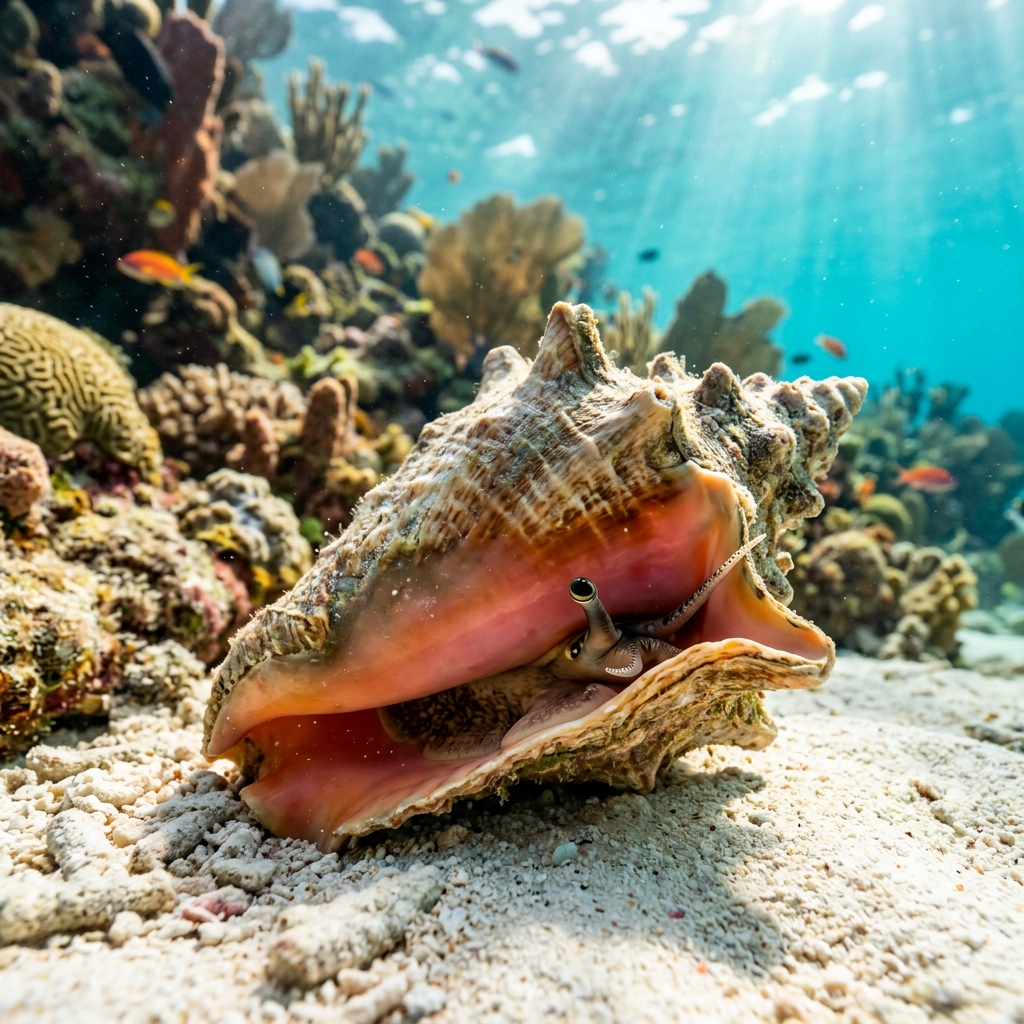
Reef neighbours a diver could mistake it for. Use the identification notes above to tell them apart.
Logged sites sit in Queensland, Australia, making it the only region with confirmed sightings in the data. Divers targeting this species should focus night dives on Queensland reefs rather than expecting it elsewhere.
Mapping where Scribbled Micromelo is logged…
The only confirmed sightings in the data come from Queensland, Australia, so that's the region to target if you want to find one on a night dive.
There's no detected season in the sighting data, and the water it's found in ranges from 20 to 26.4C, so it's treated as a year-round find rather than tied to a particular month.
Look for a small, glossy orange to red-brown shell with dark speckling and a rounded bubble shape, usually spotted on sand or rubble during a night dive. The soft body often shows past the edges of the thin shell, mottled with darker patches.
No, it isn't considered dangerous to divers. It's a small, slow-moving mollusc with no venomous spines or aggressive behaviour to worry about.
It hunts other small molluscs using a broadened head shield to burrow through sand, a hunting style shared with related headshield slugs rather than a typical grazing lifestyle.
Site and sighting data is aggregated from diver logs, iNaturalist and GBIF. For taxonomy and conservation status:
Triton Shell
2,297 sites