Charonia lampas
Rare but rewarding, the Knobbed Triton turns up across the Canary Islands, Cape Verde, and Crete. Here's where, when, and how to spot one.
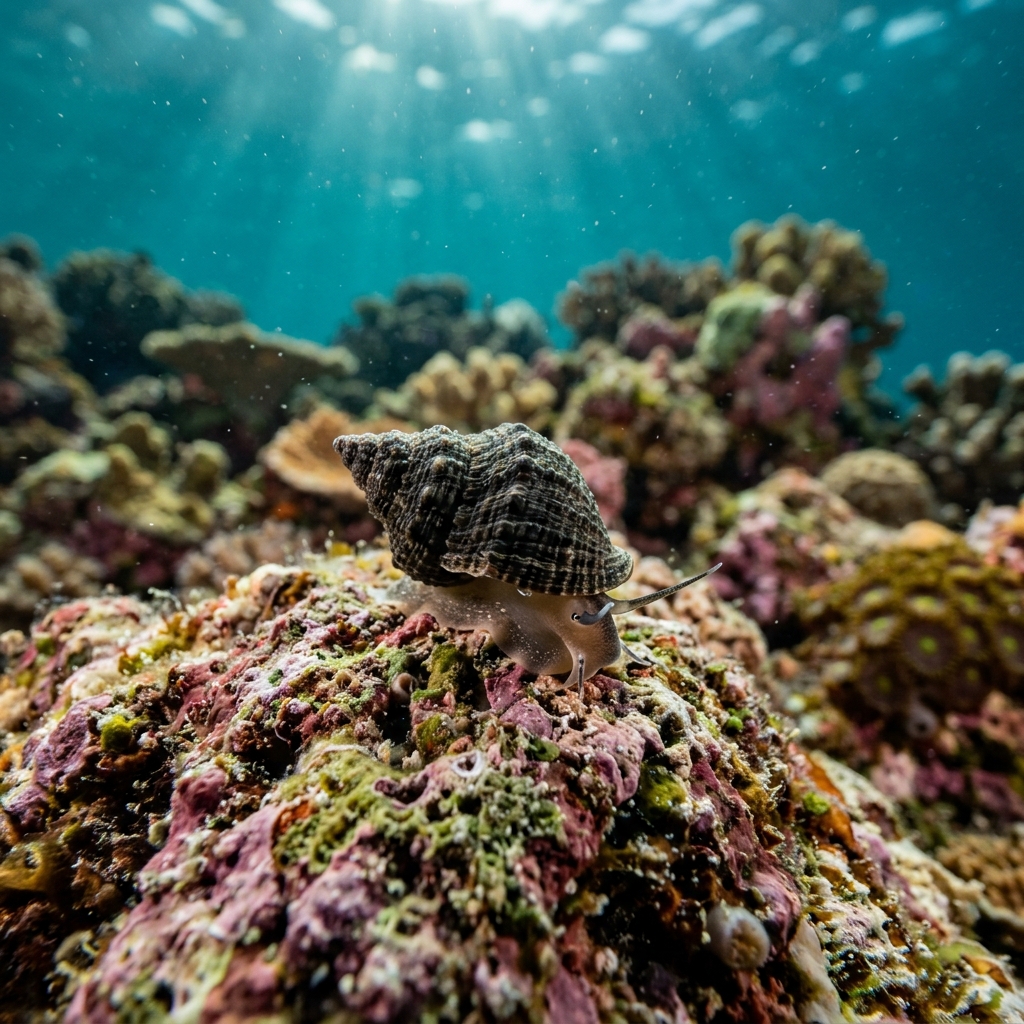
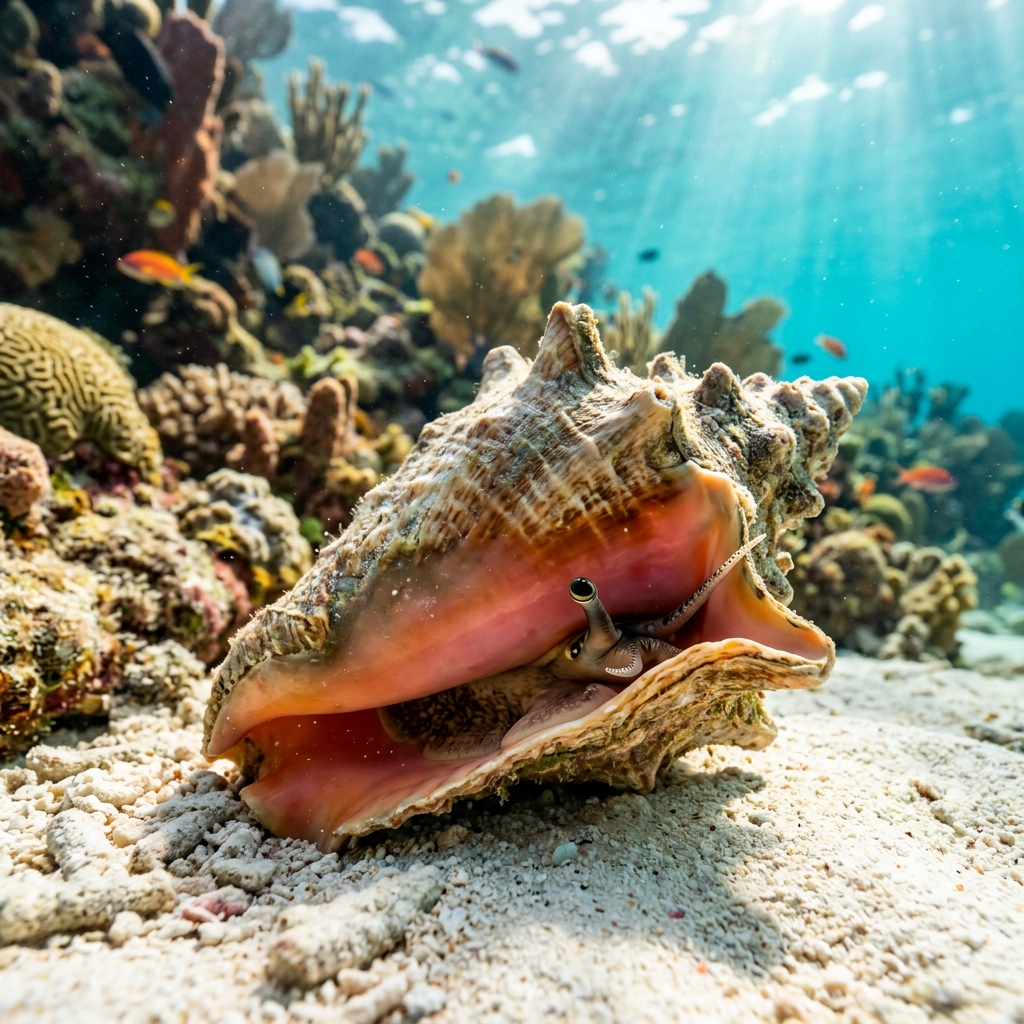
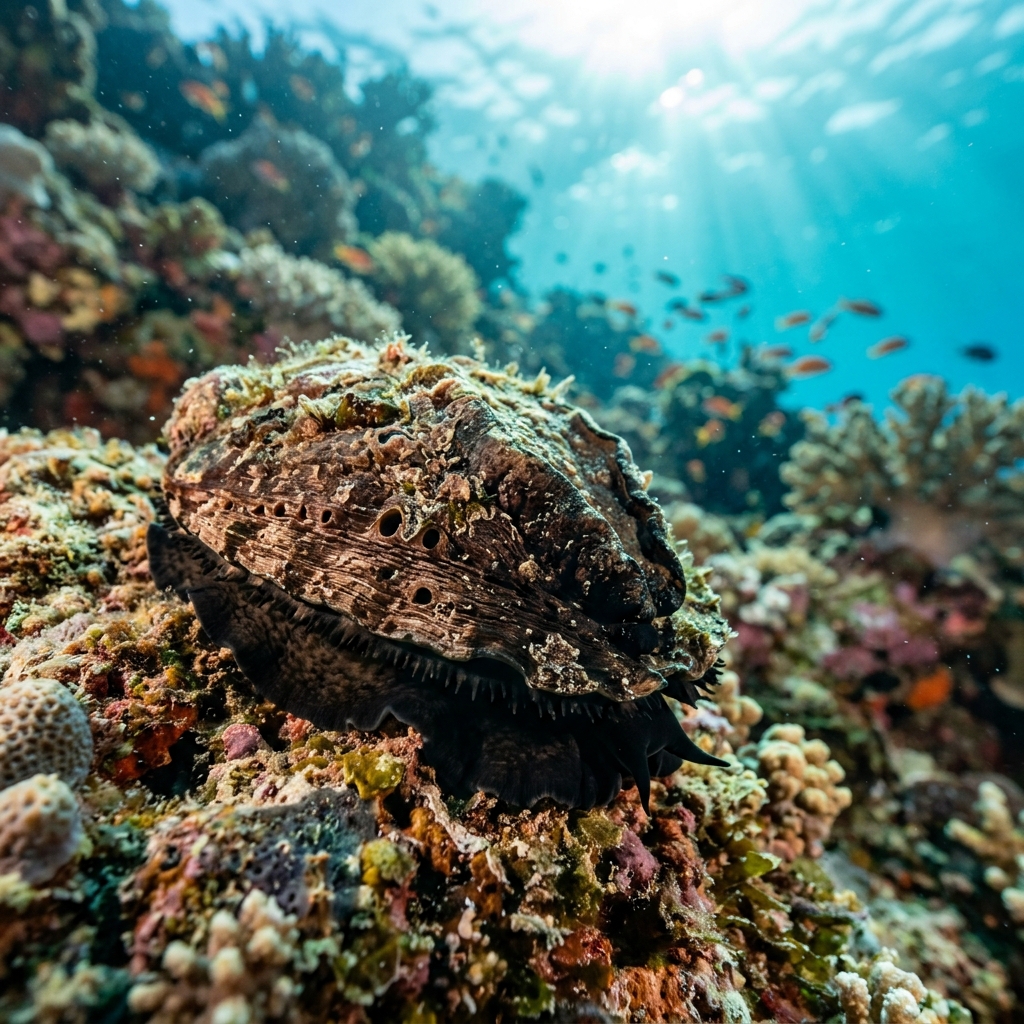
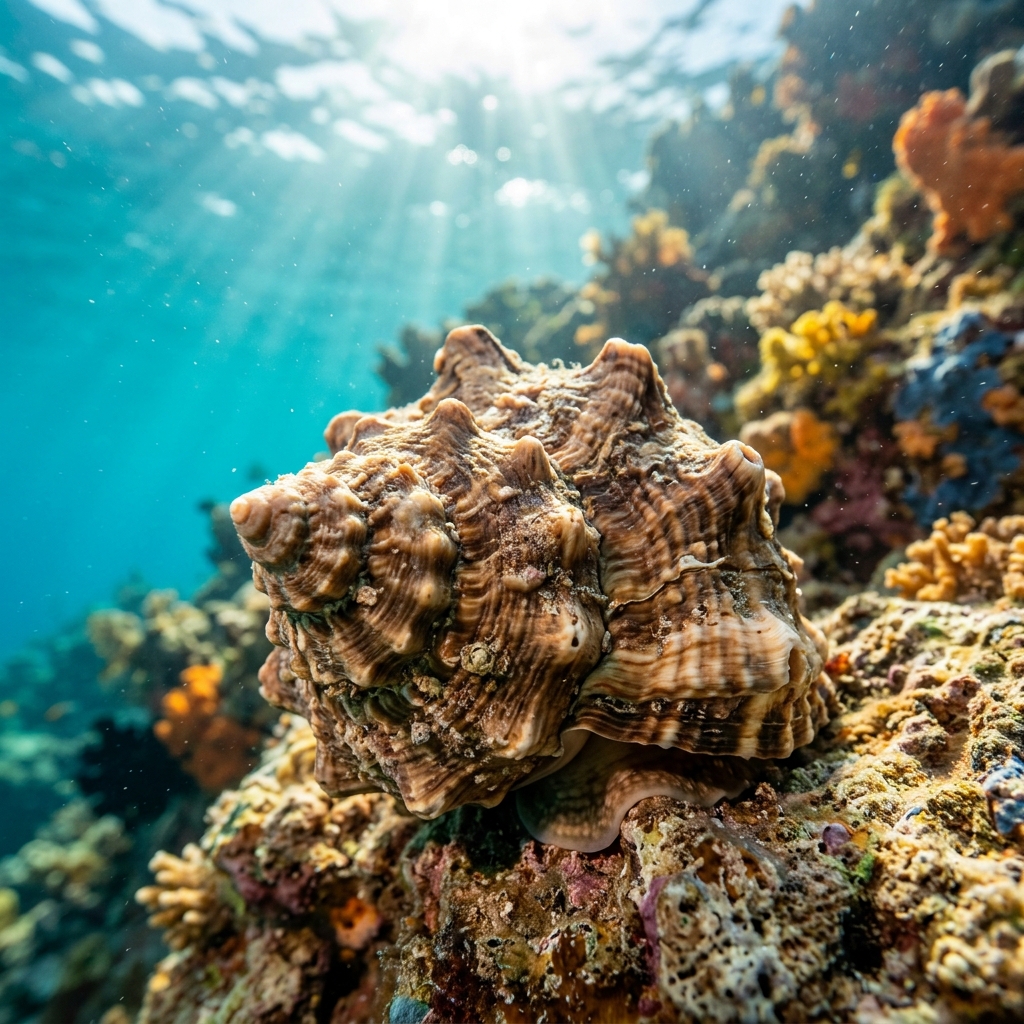
A large, heavily built gastropod with a tall, spiralling shell covered in distinct rounded knobs (nodules) running along each whorl. The shell is creamy white to pale orange-brown with irregular chestnut blotching, and the wide outer lip is pale with dark brown spots or teeth along its inner edge. When active, the fleshy body extending from the shell is orange-brown and mottled. Size alone helps: this is one of the larger shells a diver is likely to encounter on temperate and subtropical reefs.
Encounters typically involve the animal moving slowly across rocky or mixed reef and rubble, usually close to the seafloor, often during the day. It is a slow-moving predator that ignores divers entirely, making for relaxed observation. Finding one tends to reward patient, low-and-slow diving rather than drift or blue-water work.
Knobbed Tritons are active predators of echinoderms (spiny-skinned animals such as sea urchins and starfish), and in areas where they are present they help regulate urchin populations on rocky reefs.
Northern Hemisphere sightings concentrate between April and October, which aligns with warming coastal waters in the Canaries, Cape Verde, and the Mediterranean. The species tolerates a wide temperature range of around 16.5 to 28 °C, so in subtropical and tropical sites such as Bali and Taiwan it may be encountered beyond those months.
Most consistently logged across the Canary Islands, particularly Tenerife and El Hierro, and across Cape Verde, especially in the waters around São Vicente and Santo Antão. Strong records also come from New South Wales in Australia, Crete in Greece, and Northland and Auckland in New Zealand, making this a species spread across warm-temperate and subtropical seas worldwide.
Mapping where Knobbed Triton is logged…
The Knobbed Triton is most commonly logged in the Canary Islands, especially Tenerife and El Hierro, and in Cape Verde around São Vicente and Santo Antão. It also turns up regularly off New South Wales in Australia, across Crete in Greece, and in Northland and Auckland in New Zealand, as well as in Indonesian and Taiwanese waters.
In the northern hemisphere, sightings concentrate from April through October. At year-round subtropical and tropical sites like Bali or Lanyu in Taiwan, encounters are possible outside those months too, as the species copes with water temperatures anywhere from around 16 to 28 °C.
Look for a large, elongated spiral shell with prominent rounded knobs running along each whorl, cream to orange-brown colouring with darker blotching, and a wide lip with pale teeth along its inner edge. The living animal extends a mottled orange-brown foot and head from the opening. Its size and distinctive knobbly sculpture make it hard to confuse with anything else on the same reef.
Knobbed Tritons are among the larger gastropods divers encounter, with shells commonly reaching 20 to 30 cm in length, and some individuals exceeding that. Their bulk and the prominent knobs on the shell make them conspicuous once you know what to look for.
Knobbed Tritons prey on echinoderms, including sea urchins and starfish. As a predator of these animals, it plays a role in regulating populations on rocky reefs. When you find one, it is usually tracking prey slowly across the substrate.
Site and sighting data is aggregated from diver logs, iNaturalist and GBIF. For taxonomy and conservation status:
Triton Shell
2,297 sites