Gastropoda spp.
Snails are logged at dive sites from Florida to the Philippines. Find out where to spot them, what to look for, and why they turn up on almost every dive.
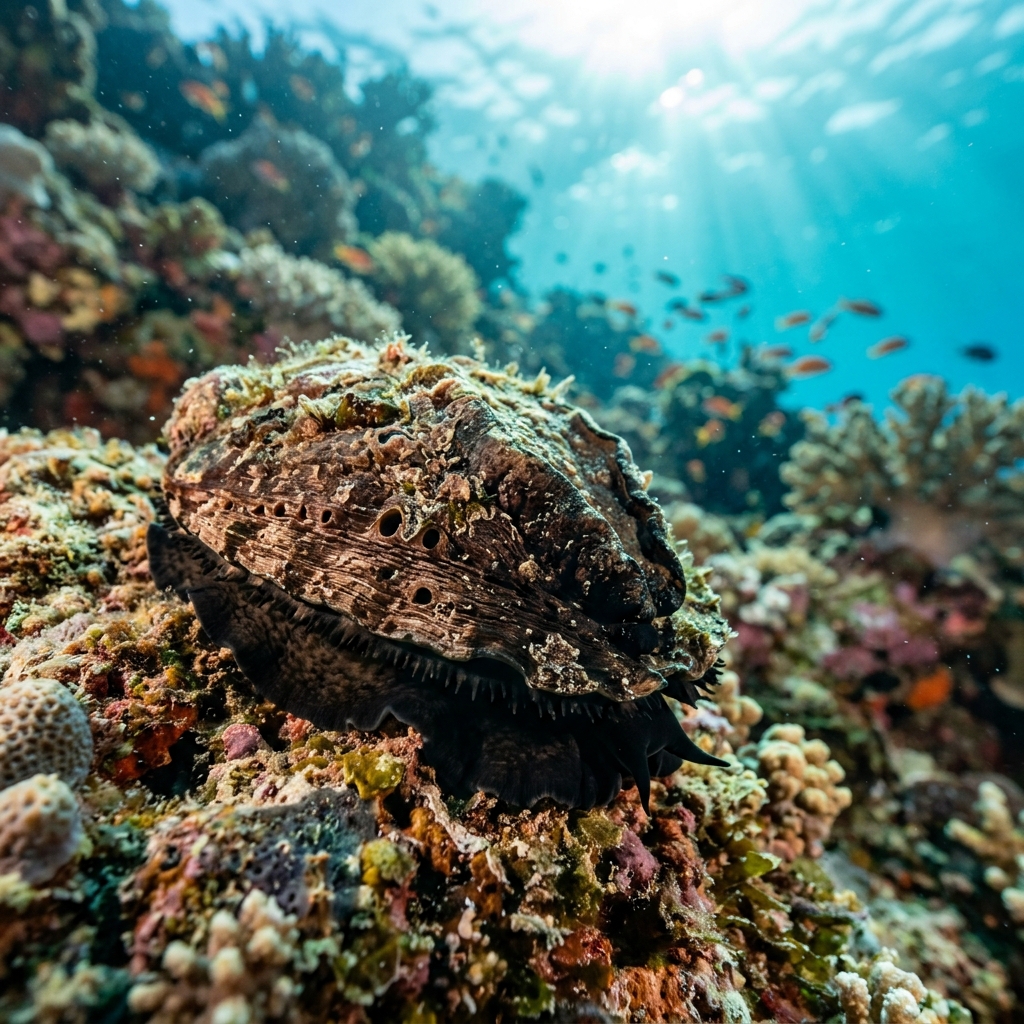
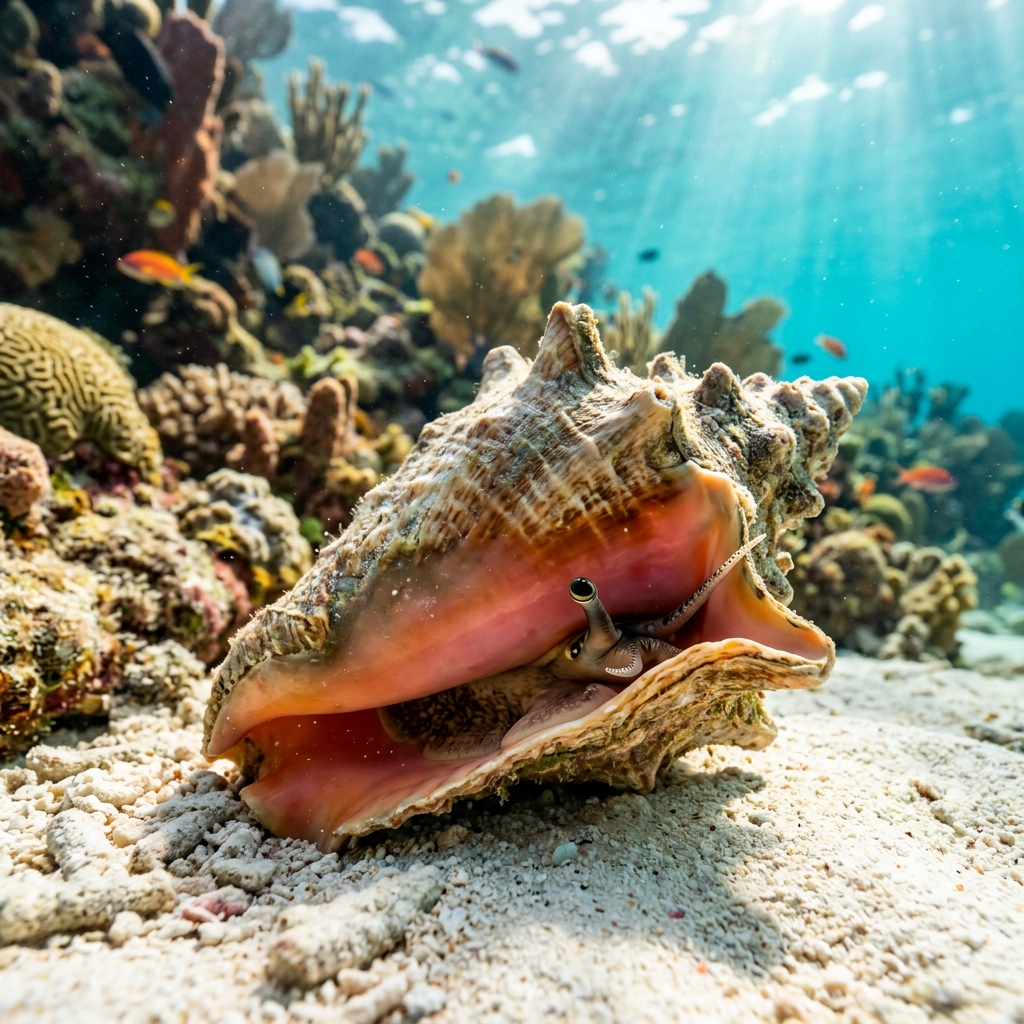
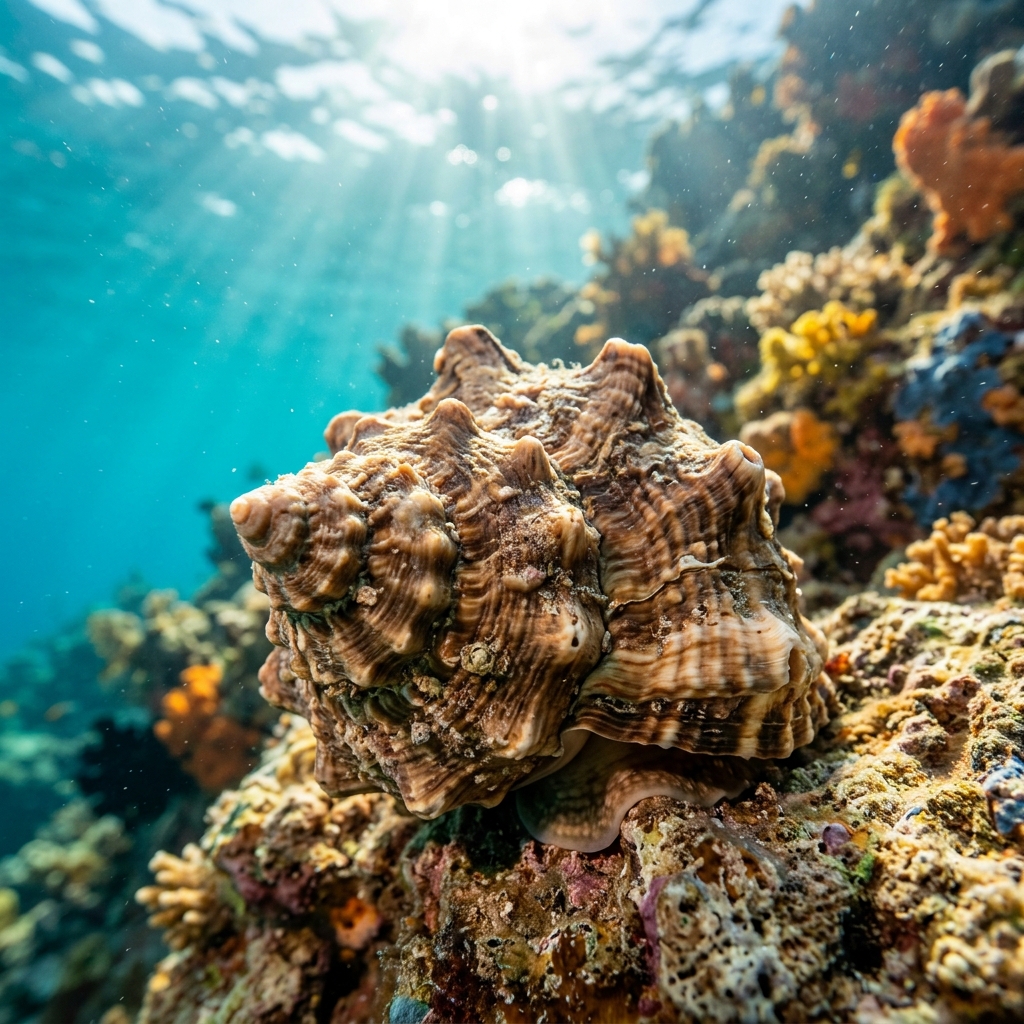
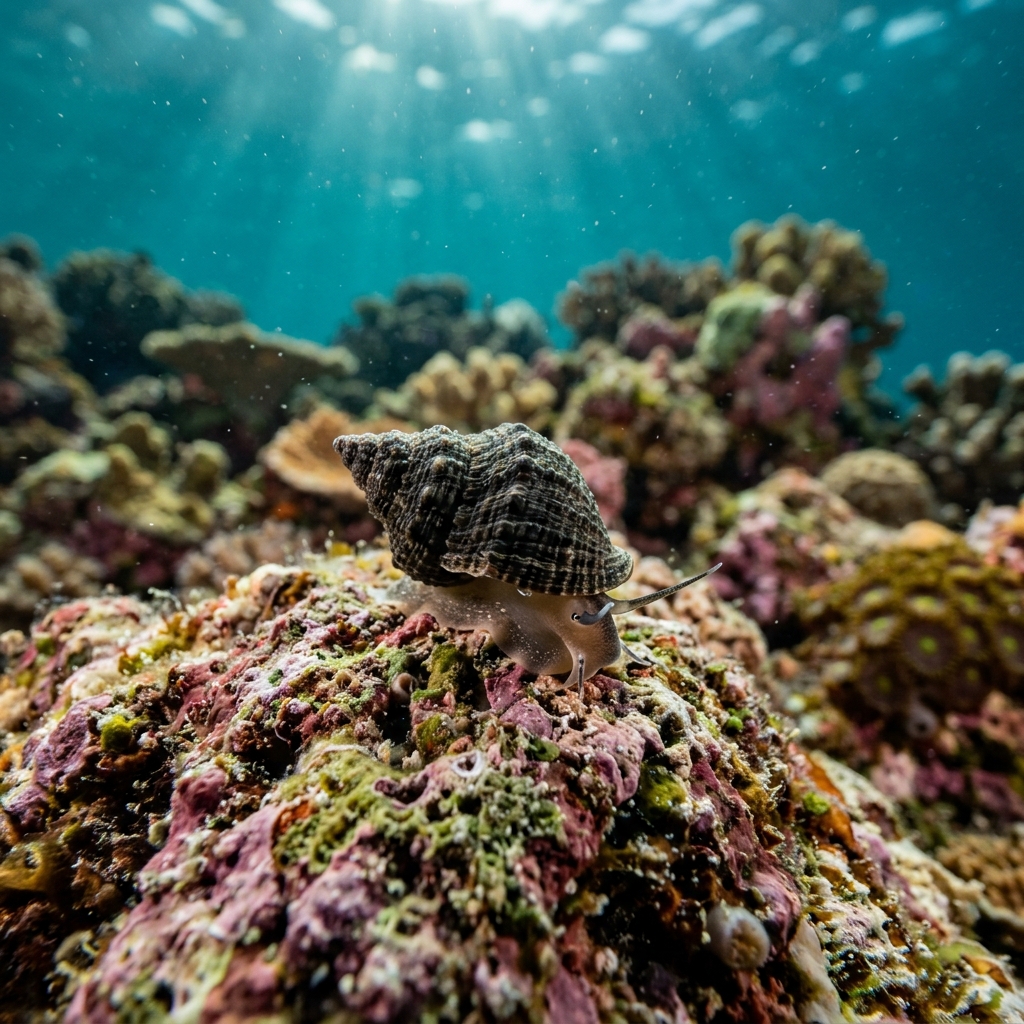
Gastropods are recognised by their single, often coiled shell and the muscular foot that extends below it as they move across the substrate. Shell shape, size, and patterning vary enormously across the group, from small conical periwinkles to large, flared conchs, but the basic coiled-shell-plus-soft-body combination is the key underwater signature. Many species are nocturnal, so the animal you see by day may be withdrawn into its shell, revealing only the opening. Colour ranges from drab brown and grey to vivid orange, purple, or banded patterns depending on the genus.
Most gastropods you encounter underwater are grazing on algae, encrusting organisms, or detritus, moving slowly across rock, coral, or sandy substrate on their muscular foot. Many species are nocturnal or crepuscular, so night dives often reveal far more activity than daytime dives, when many individuals sit motionless or partially withdrawn. They generally ignore divers entirely, though some predatory species such as cone snails will retract quickly if approached closely.
Some members of the group, the cone snails (family Conidae), hunt fish and worms using a harpoon-like tooth that can deliver venom. While the group as a whole is harmless, it is worth being able to distinguish a cone snail's elongated, narrow shell before picking anything up off the reef.
Snails are present year-round in both the Northern and Southern Hemispheres with no concentrated season, which makes sense given their broad temperature tolerance from about 7 to 28 °C, encompassing cold-water kelp forests right through to tropical coral reefs.
Reef neighbours a diver could mistake it for. Use the identification notes above to tell them apart.
Snails are logged across an enormous global spread, with particularly strong concentrations in the United States (especially Florida and the Southeast, and the Pacific Coast), Spain's Costa Brava, and the French Riviera. The Philippines (notably the central Visayas), Australia's Queensland, and Indonesia also show high sighting rates, making them reliable sightings on virtually any tropical or temperate reef dive. Mexico's Yucatán Peninsula and the Maldives' Male and Ari Atolls round out the regions where divers log them most consistently.
Mapping where Snail is logged…
Snails are logged at dive sites across a huge range of countries, with particularly reliable sightings in the United States (Florida, the Pacific Coast), Spain's Costa Brava, France's French Riviera, the Philippines' Visayas region, and Queensland, Australia. They are also commonly encountered in Indonesia, Mexico's Yucatán, and the Maldives. In short, they turn up on almost every reef dive worldwide.
There is no best season, snails are present year-round in both hemispheres with no concentrated peak. They tolerate water temperatures from around 7 °C to over 28 °C, so whether you are diving a cold-water kelp forest in winter or a tropical reef in summer, you are likely to find them.
Look for a coiled or conical shell with a soft, fleshy foot extending beneath it. The shell distinguishes them from nudibranchs, which have lost their shells entirely. Shell shape ranges from tightly coiled and globose to elongated and spired. If the animal is withdrawn into its shell, you may only see the shell aperture (opening).
The vast majority of snails are completely harmless. However, cone snails carry a venomous harpoon-like tooth and should never be picked up. Cone shells are typically elongated and narrow with a glossy, patterned surface. If you are unsure of the species, admire it from a distance and do not handle it.
Gastropods are the largest group of molluscs on the planet, with tens of thousands of species occupying habitats from deep-sea vents to mountain streams. Underwater, many are herbivores or scavengers, but some, like cone snails and murex snails, are active predators. Their shells grow continuously throughout their lives by secreting calcium carbonate at the shell's outer edge.
Site and sighting data is aggregated from diver logs, iNaturalist and GBIF. For taxonomy and conservation status:
Queen Conch
1,738 sites