Charonia spp.
Uncommon but rewarding: divers log triton shells across the Carolinas, Greece's Cyclades and Sardinia year-round in warm shallows.
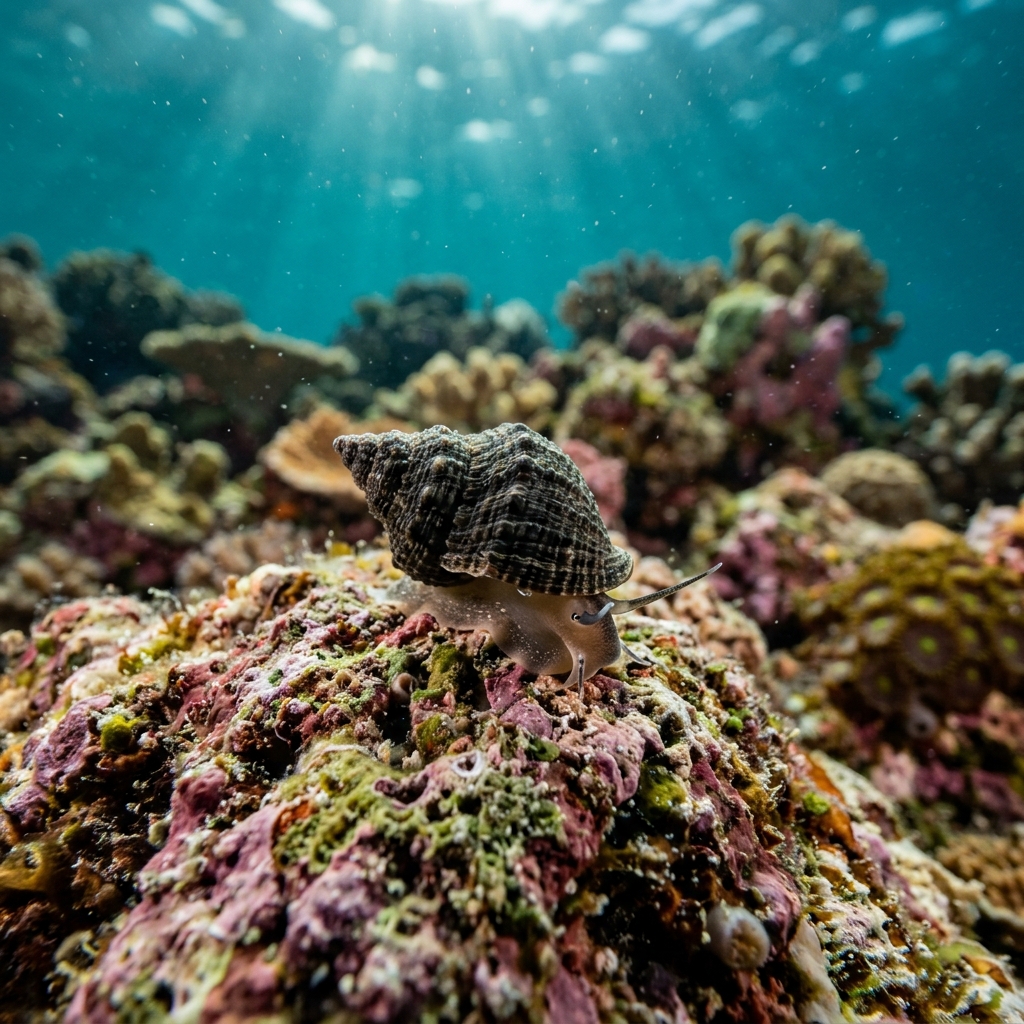
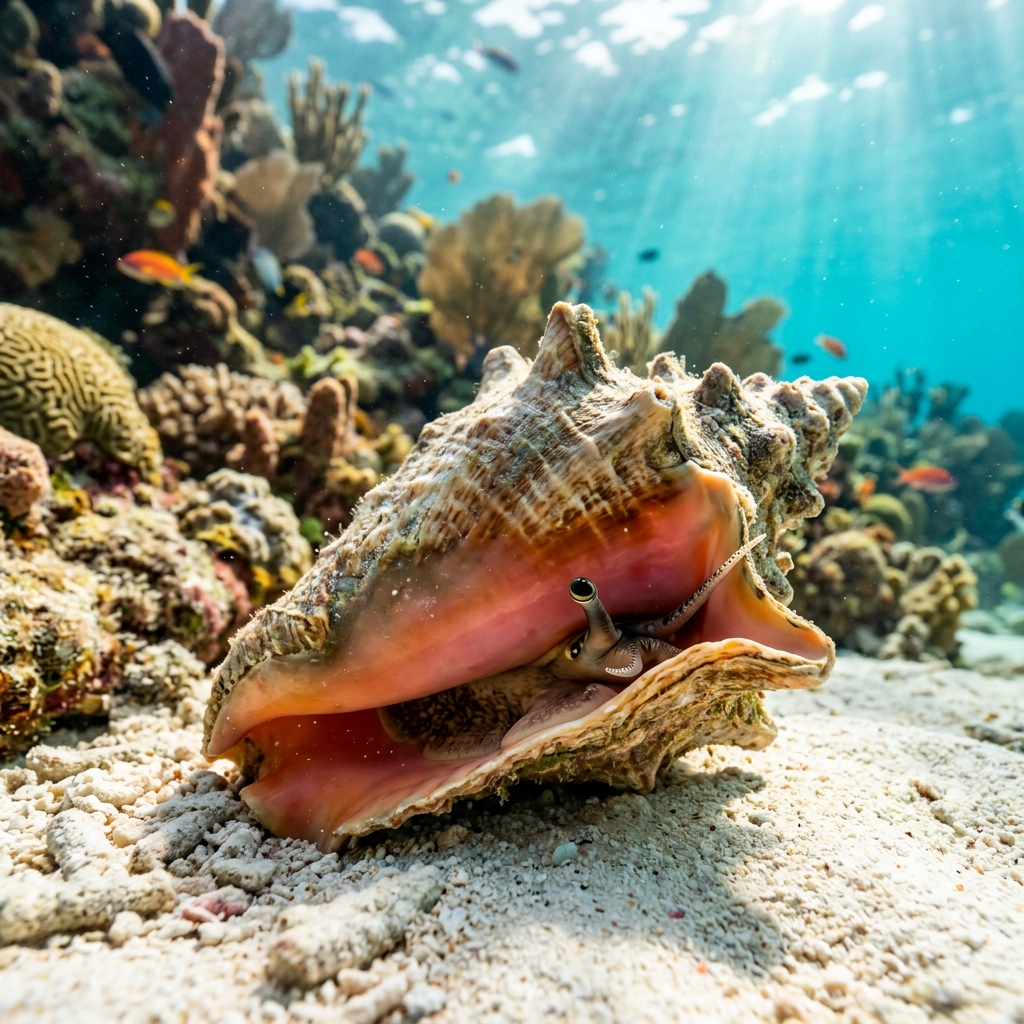
Look for a large, heavy spiral shell, often mottled brown, orange or cream with a rough, ridged surface and a flared, trumpet-like opening. Species in this genus rank among the biggest sea snails divers encounter, with a body that can extend well beyond the shell mouth when active. The animal itself is fleshy and pale to orange, often barely visible as it grazes low on rock or rubble.
Divers usually find these snails moving slowly across sand, rubble or rocky bottom, often tucked near ledges or in low light rather than out in the open. They are unhurried and unbothered by divers, giving you plenty of time for a close look or a photo before they retreat back toward the shell opening.
Triton shells are known predators of sea stars and sea urchins, including species that can overrun a reef, so a healthy population helps keep those grazers in check.
No strong seasonal pattern shows up in the data, and with a comfortable range from about 15.6 to 28.6C it can turn up on dives through the year rather than in one narrow window.
Most reliably logged in the United States, particularly the Carolinas and Florida, and across the Mediterranean in Greece (Saronic & Athens, the Cyclades, Crete), Italy (Sardinia, Sicily) and Turkey. Also turns up along Spain's coasts, in Croatia, Cuba and Brazil's Caribbean Colombia coast, making it a genus you can look for on temperate and warm-water dives alike.
Mapping where Triton Shell is logged…
Best chances are in the United States (the Carolinas and Florida) and across the Mediterranean, especially Greece's Saronic Gulf and Cyclades, Sardinia and Sicily in Italy, and Turkey's coast. They also show up in Spain, Croatia, Cuba and Colombia's Caribbean coast.
There is no clear seasonal spike in sightings, so they are considered a year-round find. Their comfortable temperature range of roughly 15.6 to 28.6C means they are active across most dive seasons in the regions where they are logged.
Look for a large, heavy, spiral shell with a rough mottled surface in browns, oranges or cream, and a flared trumpet-shaped opening. They move slowly over rock and rubble, with the fleshy body only partly visible outside the shell.
Exact sizes vary by species within the genus, but tritons are among the larger sea snails divers see on a reef, with shells substantial enough to be spotted from several metres away.
No. They pose no threat to divers and can be observed or photographed up close without concern.
They are notable predators of sea stars and urchins, including species capable of damaging reef habitat, so their presence can play a real role in keeping those populations balanced.
Site and sighting data is aggregated from diver logs, iNaturalist and GBIF. For taxonomy and conservation status:
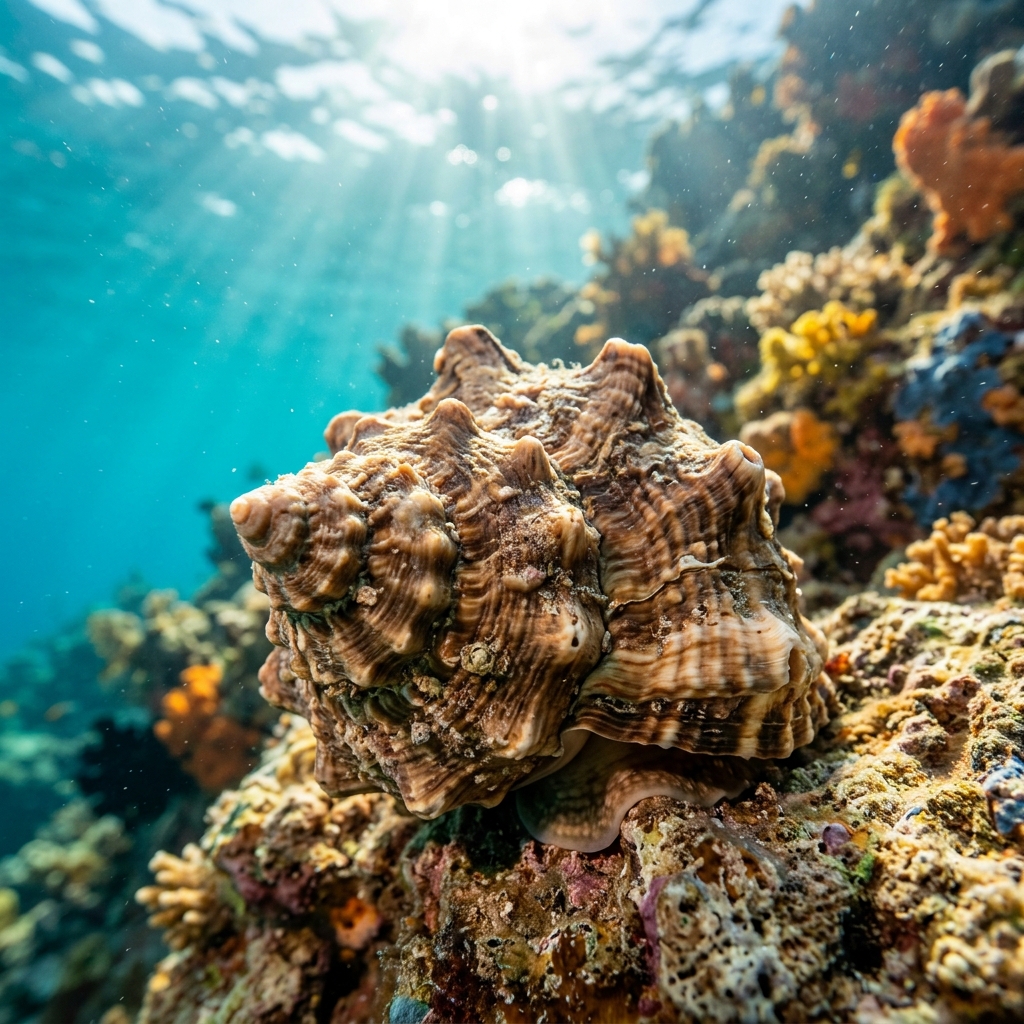
Knobbed Triton
1,496 sites