Aliger gigas
Spot queen conch across the Yucatán Peninsula, Roatán and the Bahamas in warm 26-29°C Caribbean waters. Present year-round, here's where and what to look for.
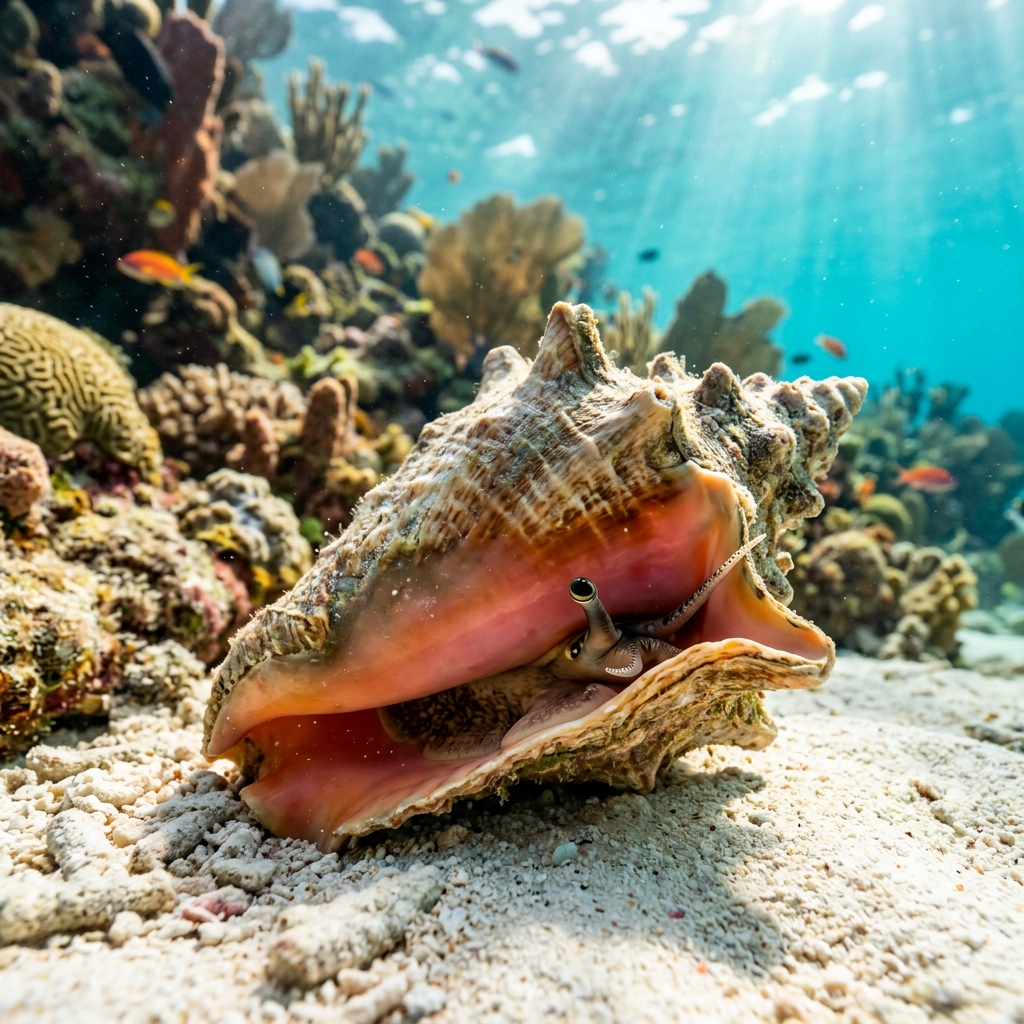
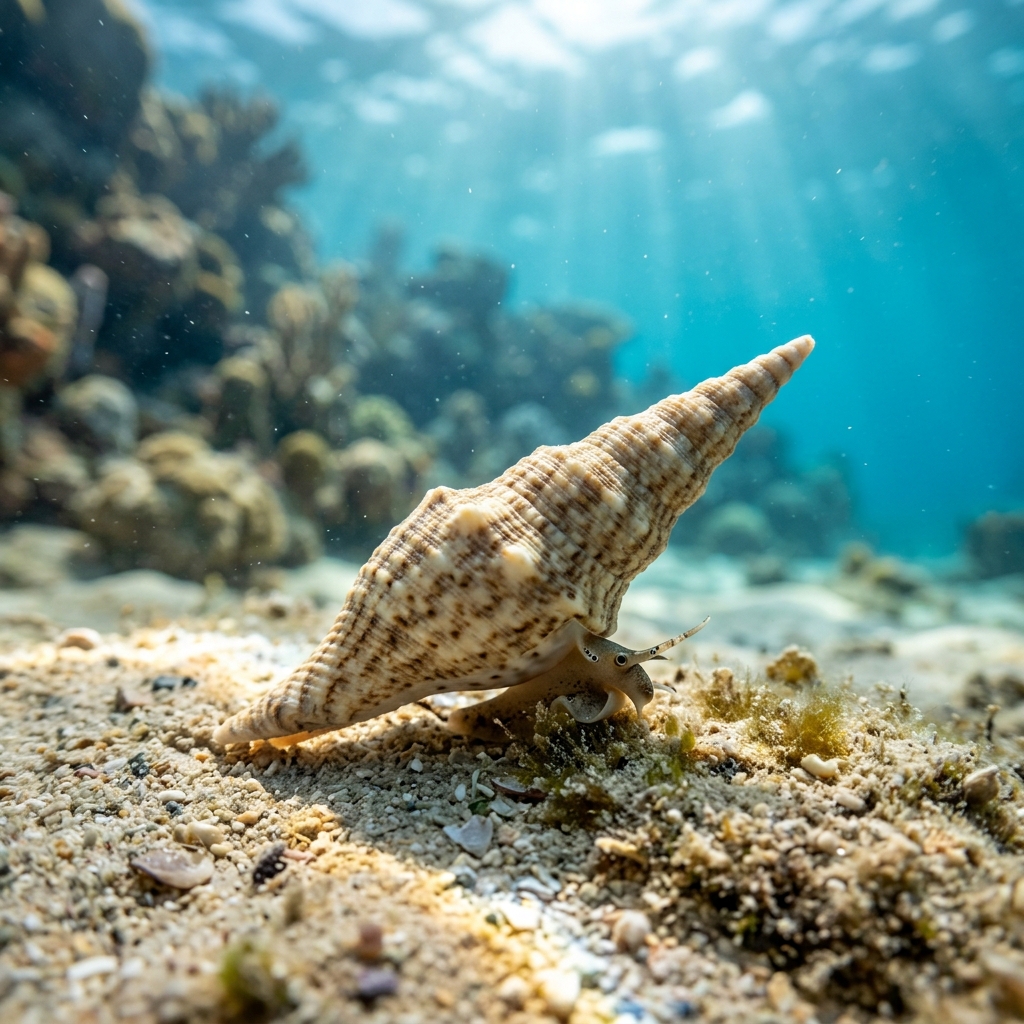
At around 20 cm, a fully grown queen conch is hard to miss on a sandy or seagrass bottom: look for the wide, flared outer lip (the characteristic 'flare' of adult strombids) with a vivid pink-to-orange interior, and a tall, pointed spiral spire above it. The outer shell is cream to tan with brownish blotches, and the animal inside shows a mottled foot with a distinctive sickle-shaped operculum (the horny plate it uses to push itself along). Movement is a giveaway: rather than sliding continuously like most snails, it lurches forward in short hops.
Most encounters happen on sand or seagrass beds in the shallower part of their depth range, where they graze on algae and detritus. When a diver approaches, a queen conch often retracts into its shell and stays still, relying on camouflage, but you may also catch one mid-hop, using its muscular foot to vault itself across the bottom in that characteristic jerky gait. They are most active in daylight hours, so daytime dives on sandy margins adjacent to coral reef are your best bet.
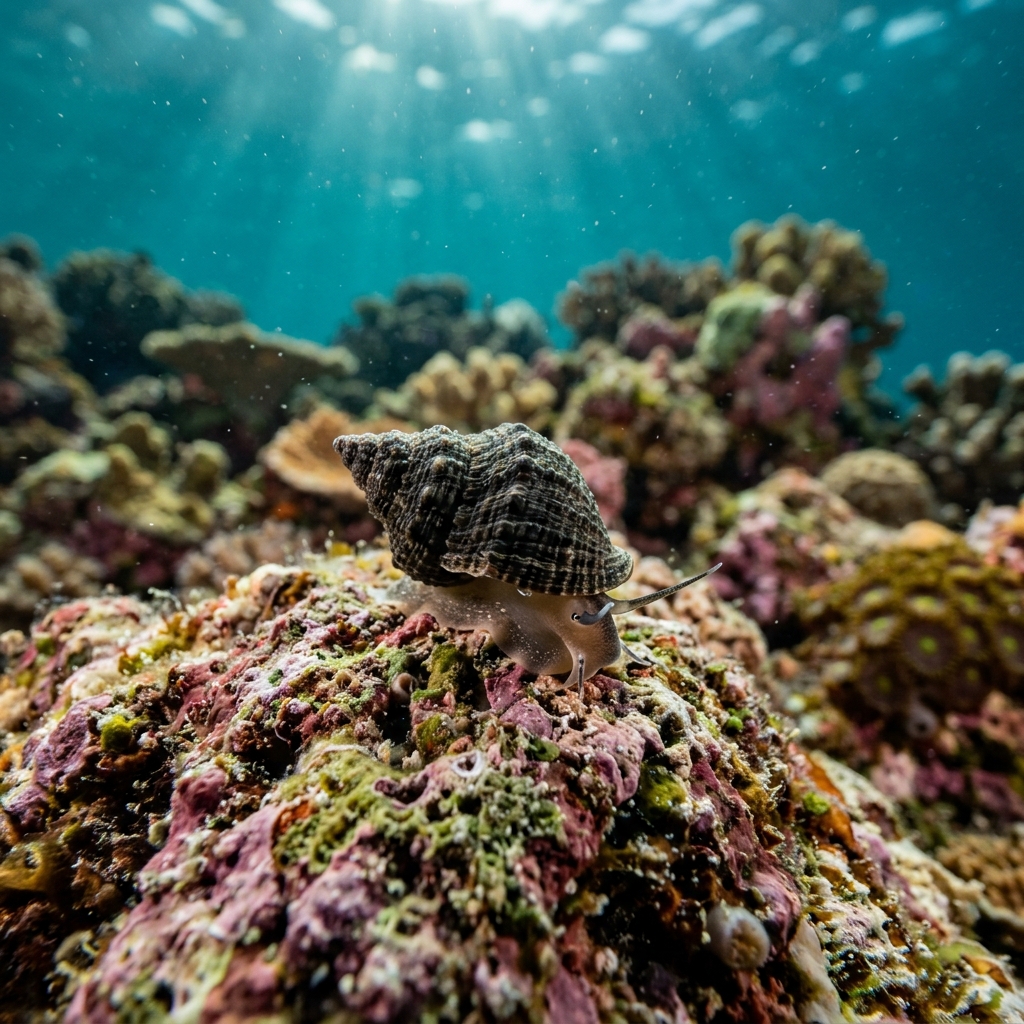
Queen conch have a pair of well-developed eyes on long stalks that can track movement, giving them surprisingly good vision for a mollusc, divers who linger often notice the eyes following them around.
Queen conch are present year-round across their Caribbean range, their preferred water temperature of roughly 26-29°C aligns with the consistently warm tropical conditions at these sites through all seasons.
Queen conch are most consistently logged across the wider Caribbean, with the heaviest sighting records coming from the Yucatán Peninsula and the Florida coast, both rank as the top regions by sheer number of sites. Strong populations are also well documented around Roatán in Honduras, Grand Cayman, the Caribbean Coast of Colombia, the British Virgin Islands and the Bahamas, making virtually any shallow sandy or seagrass dive in those areas a reasonable prospect.
Mapping where Queen Conch is logged…
Queen conch are most reliably seen across the Caribbean, with the strongest sighting records from the Yucatán Peninsula in Mexico, the Florida coast, Roatán in Honduras, Grand Cayman, the Bahamas and Colombia's Caribbean Coast. They favour shallow sandy and seagrass habitats, so look for them on the sandy margins around reefs rather than on the reef itself.
There is no single peak season, queen conch are present year-round across their Caribbean range. Their preferred water temperatures of around 26-29°C are typical of tropical Caribbean conditions in all months, so any time of year works for a well-planned trip.
Look for a large spiral shell (around 20 cm) with a distinctive wide, flared outer lip and a bright pink to orange interior. The outer shell is pale tan or cream with brown markings. The clincher is movement: queen conch hop rather than glide, pushing off the seafloor in short lurches with a sickle-shaped operculum.
Adults typically reach around 21 cm in shell length, making them one of the largest gastropod molluscs in the Caribbean. The shell itself is substantial and heavy, which is part of why they are so easy to spot resting on sandy or seagrass beds.
They are currently listed as Near Threatened on the IUCN Red List. Populations have declined significantly across the Caribbean due to collection pressure. Several countries have protective regulations in place, and divers should never handle or disturb them.
Queen conch have two long eye-stalks that extend from the shell when the animal is active, each tipped with a well-developed eye capable of detecting movement and form. Divers who stay still often notice the eyes tracking them, it is one of the more surprising moments when watching these animals up close.
Site and sighting data is aggregated from diver logs, iNaturalist and GBIF. For taxonomy and conservation status:
Triton Shell
2,297 sites