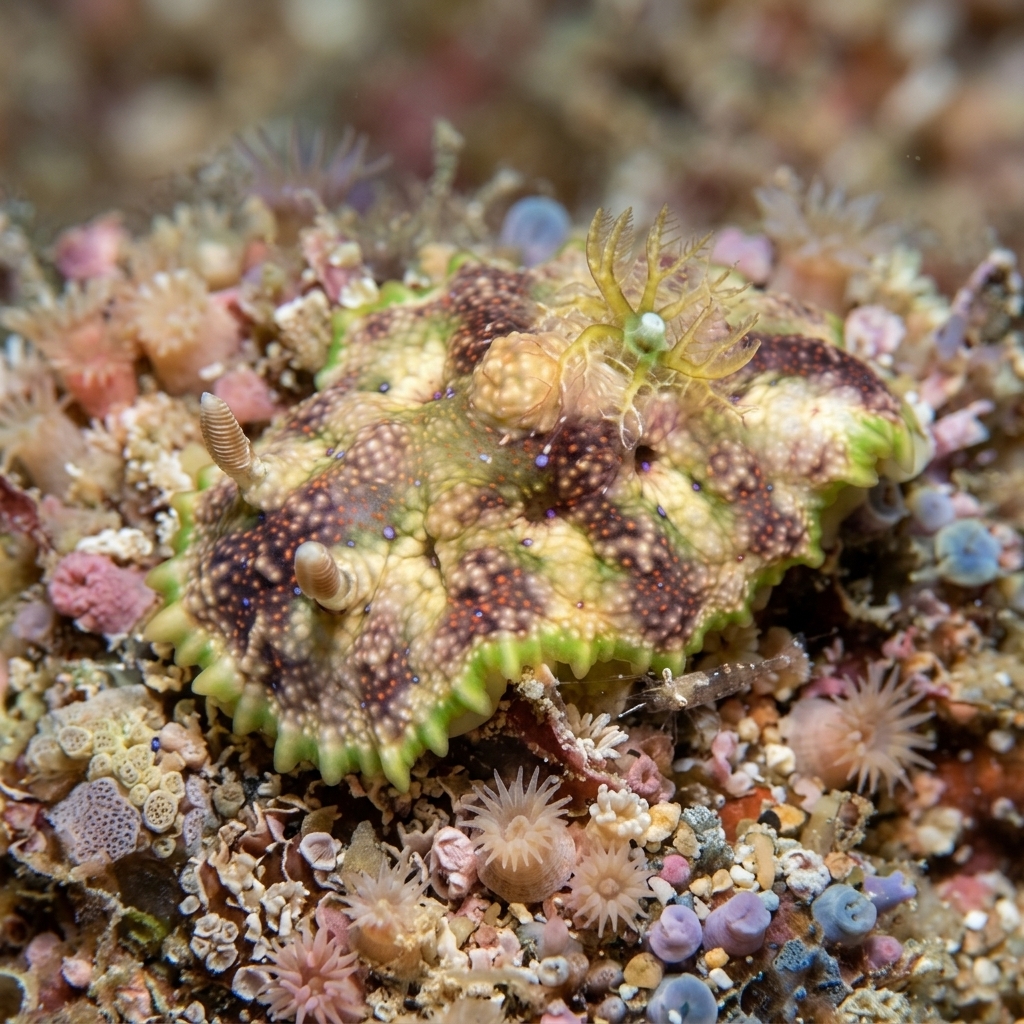
Miamira miamirana
Spot the rare Pancake Lobe-margin Dorid in the Philippines and Indonesia. Key ID tips, top dive regions, and what to expect in warm 27-29°C water.
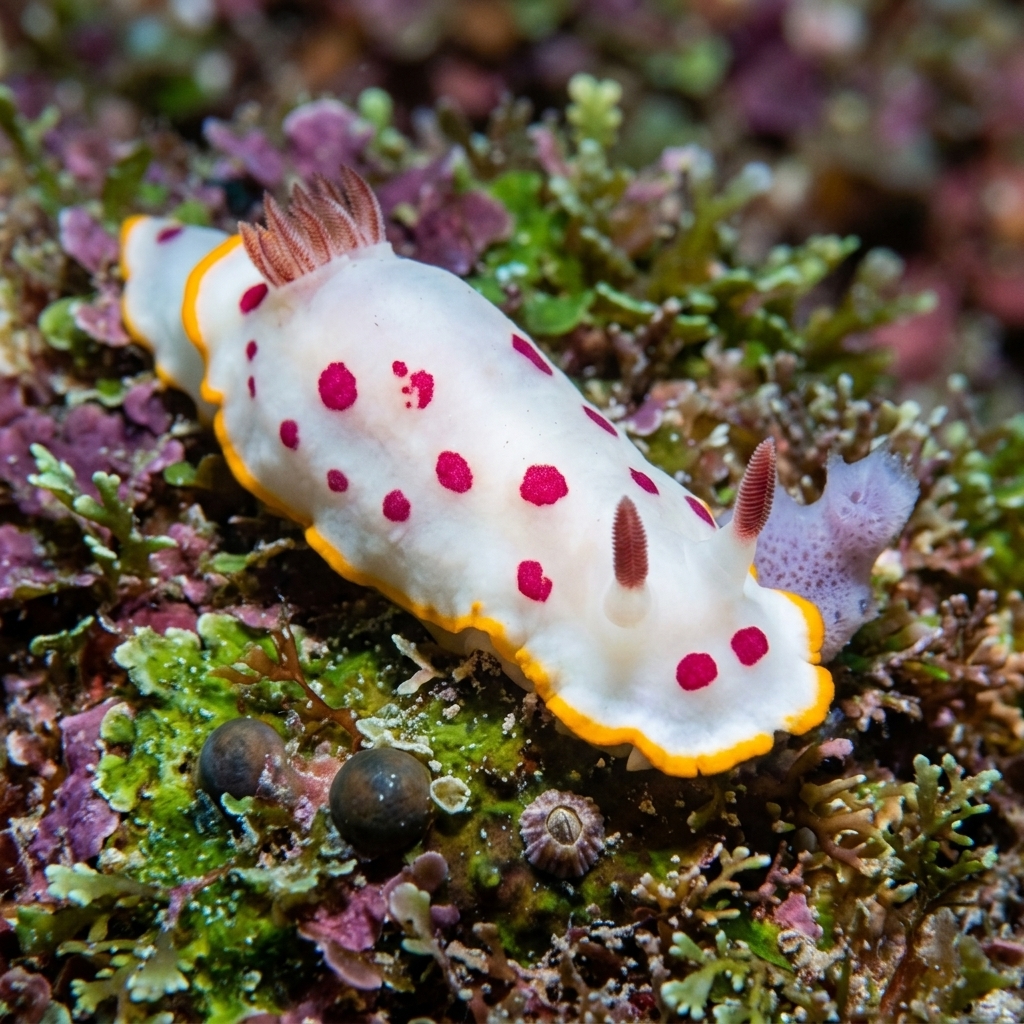
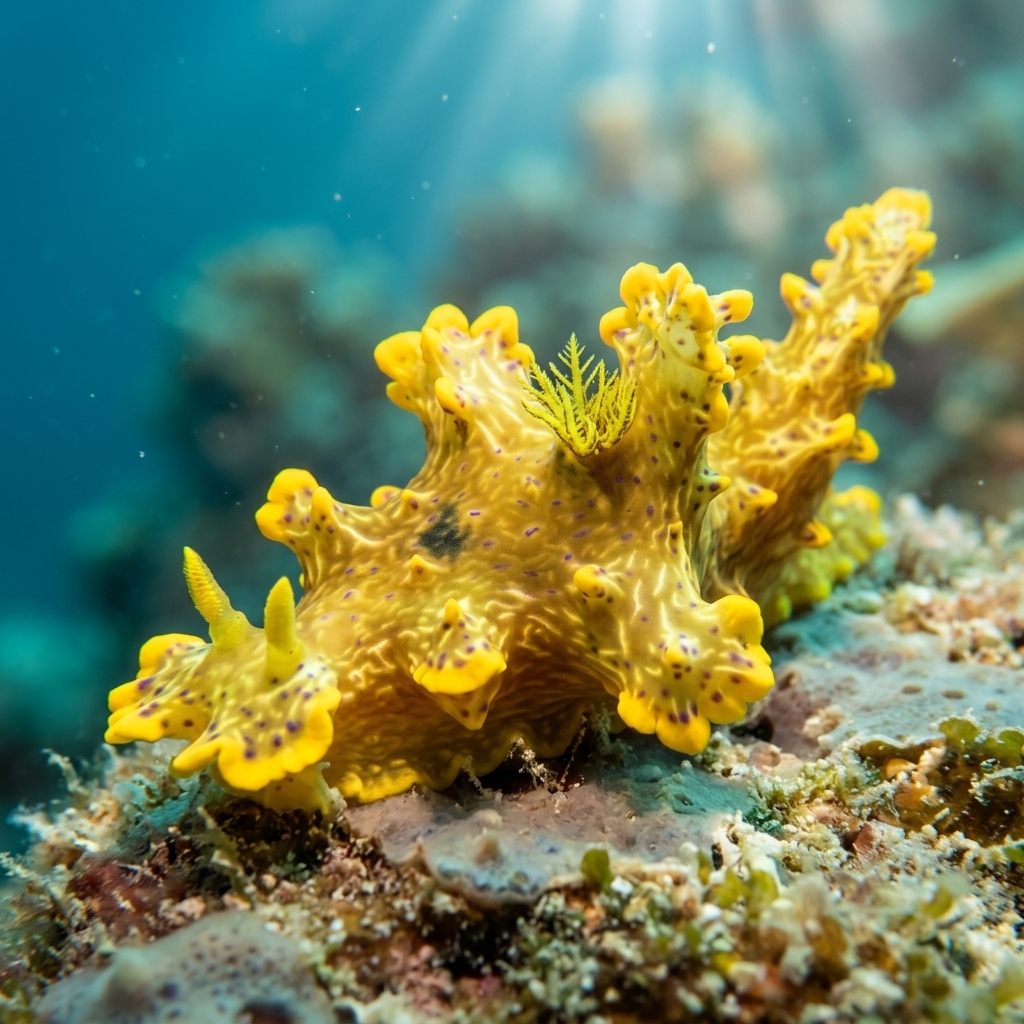
A flattened, disc-like dorid with conspicuously ruffled or lobed edges to the mantle, giving it a pancake-like silhouette that sets it apart from most other nudibranchs. The body is pale with bold colour patterning, and the cerata (gill plumes) and rhinophores on top are prominent enough to spot even at small sizes. Look for that distinctively crinkled mantle rim as the first key field mark.
Like most dorids, it is a slow-moving benthic crawler, typically found inching across reef rubble, coral skeletons, or sponge-covered walls while grazing. Divers generally encounter it resting motionless, making it easy to photograph once spotted but very easy to overlook if you are moving quickly. Slow down and scan the substrate carefully, as its flattened shape can make it blend into encrusting growth.
The lobed mantle margin is not purely decorative, in many chromodorid relatives these ruffled edges help the animal absorb more oxygen directly through the skin, supplementing the gill plumes.
There is not enough monthly sighting data to point to a particular season, so treat it as a year-round possibility. Its observed water-temperature range of 27 to 29°C fits the consistent warmth of tropical Indo-Pacific reefs, meaning conditions at the top sites are suitable throughout the year.
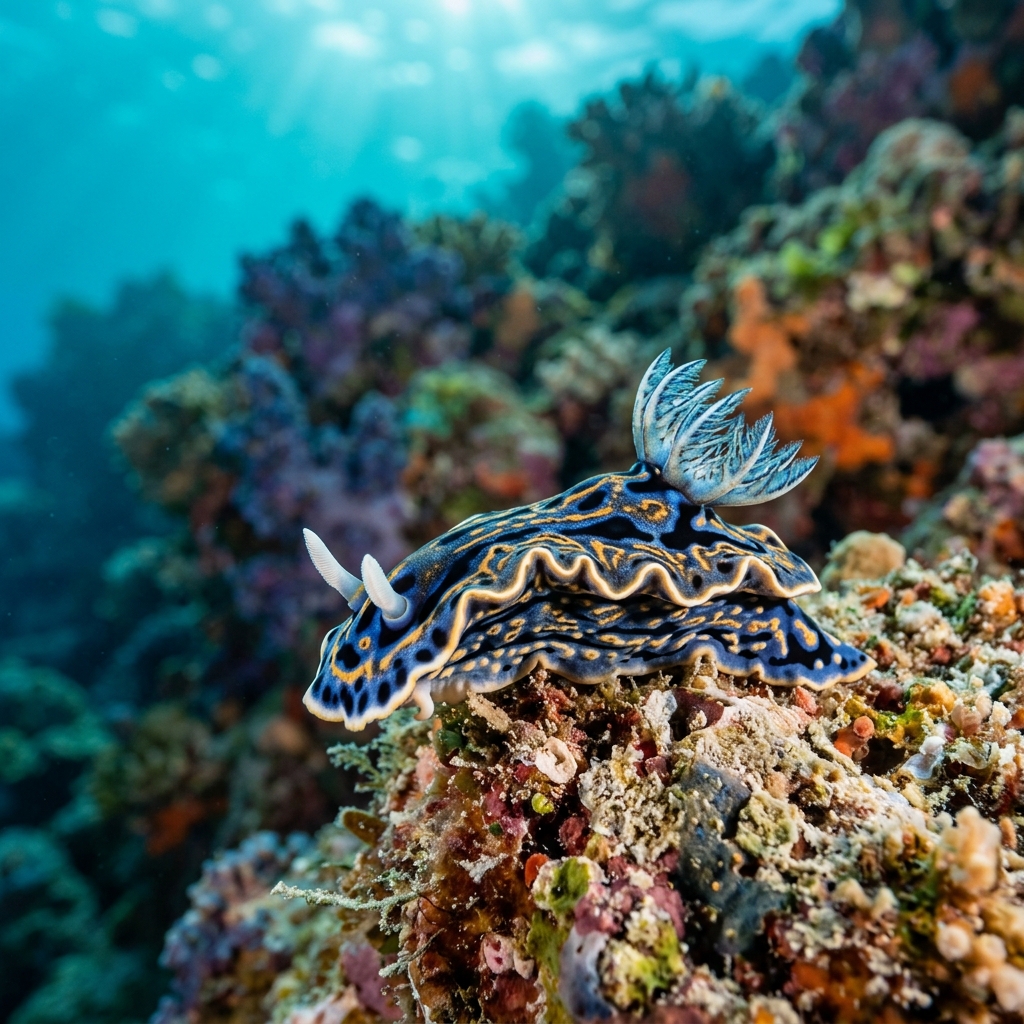
Reef neighbours a diver could mistake it for. Use the identification notes above to tell them apart.
Most sightings come from the Philippines, particularly Western Visayas, making that region the best single destination for this species. Indonesia, especially Bali, Lombok and Java, accounts for most of the remaining records, with a solitary observation from New South Wales, Australia rounding out the known range. If you are targeting this nudibranch, a muck or reef dive in Western Visayas is your strongest bet.
Mapping where Pancake Lobe-margin Dorid is logged…
The Philippines, especially Western Visayas, has the most recorded sightings. Indonesia, covering Bali, Lombok and Java, is the second strongest area. There is also a record from New South Wales, Australia, though sightings there are far less frequent.
No clear seasonal peak has emerged from the data, so it is best treated as a year-round species. It is observed in water between 27 and 29°C, typical of tropical Indo-Pacific reefs throughout the year.
Focus on the strongly ruffled, lobed edges of the mantle, which give the animal its flattened, pancake-like outline. This crinkled rim is the most reliable field mark and separates it from other chromodorids that have smoother, rounder mantles.
It is considered rare at every site where it has been recorded. Sightings are spread thinly across a small number of sites in the Philippines, Indonesia, and Australia, so encountering one is a real stroke of luck even for experienced nudibranch hunters.
No, they pose no threat to divers whatsoever. Like other nudibranchs, they are slow, small, and entirely harmless to observe at close range.
Site and sighting data is aggregated from diver logs, iNaturalist and GBIF. For taxonomy and conservation status:
Blue Dragon
3,163 sites