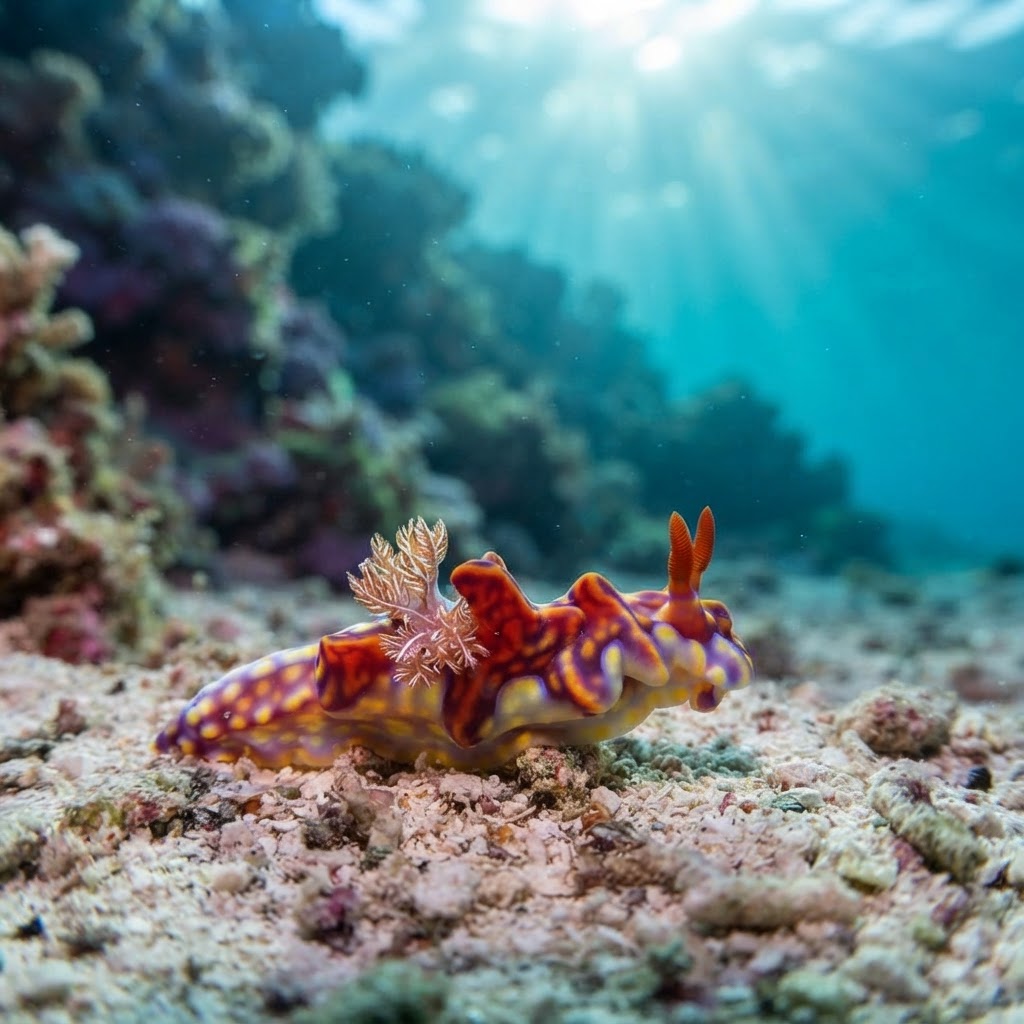
Miamira flavicostata
A frilly orange nudibranch most reliably found on reef dives in New South Wales, Australia, in water around 19 to 25 C.
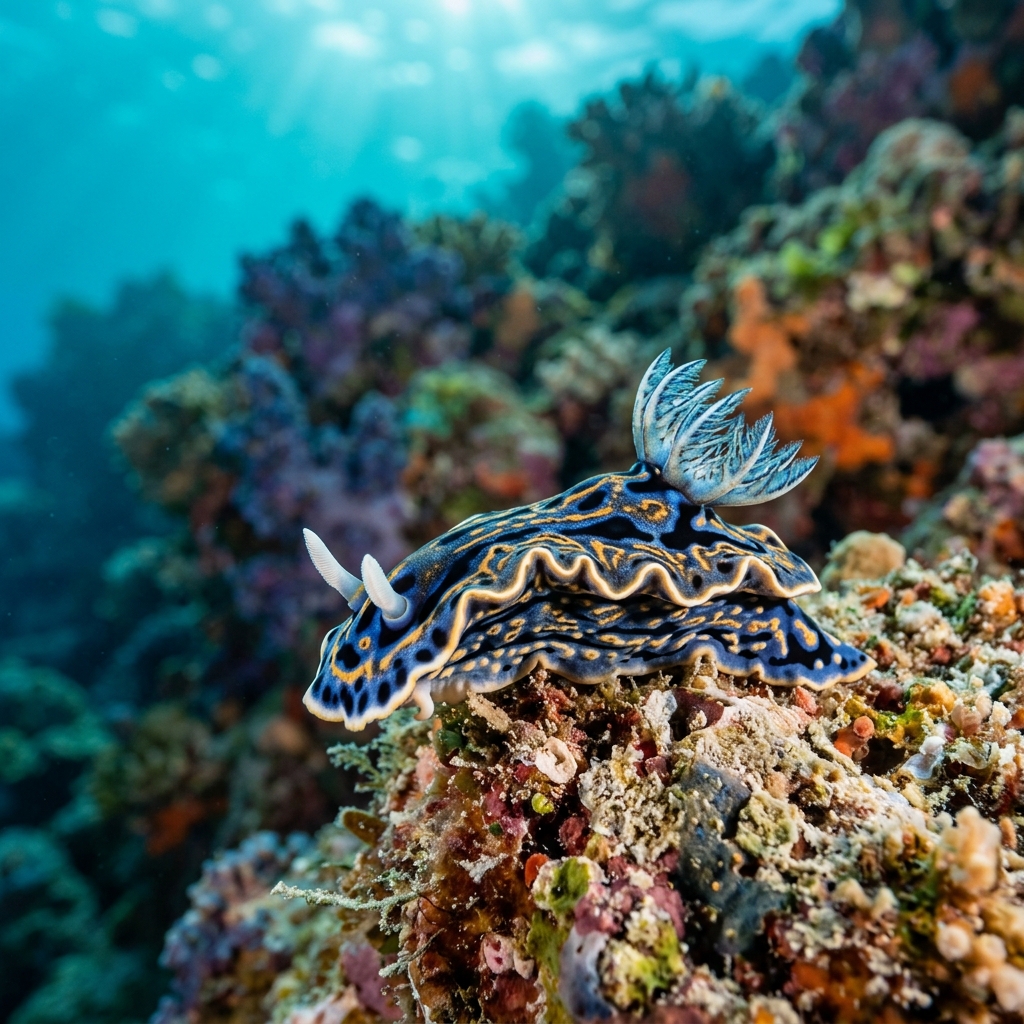
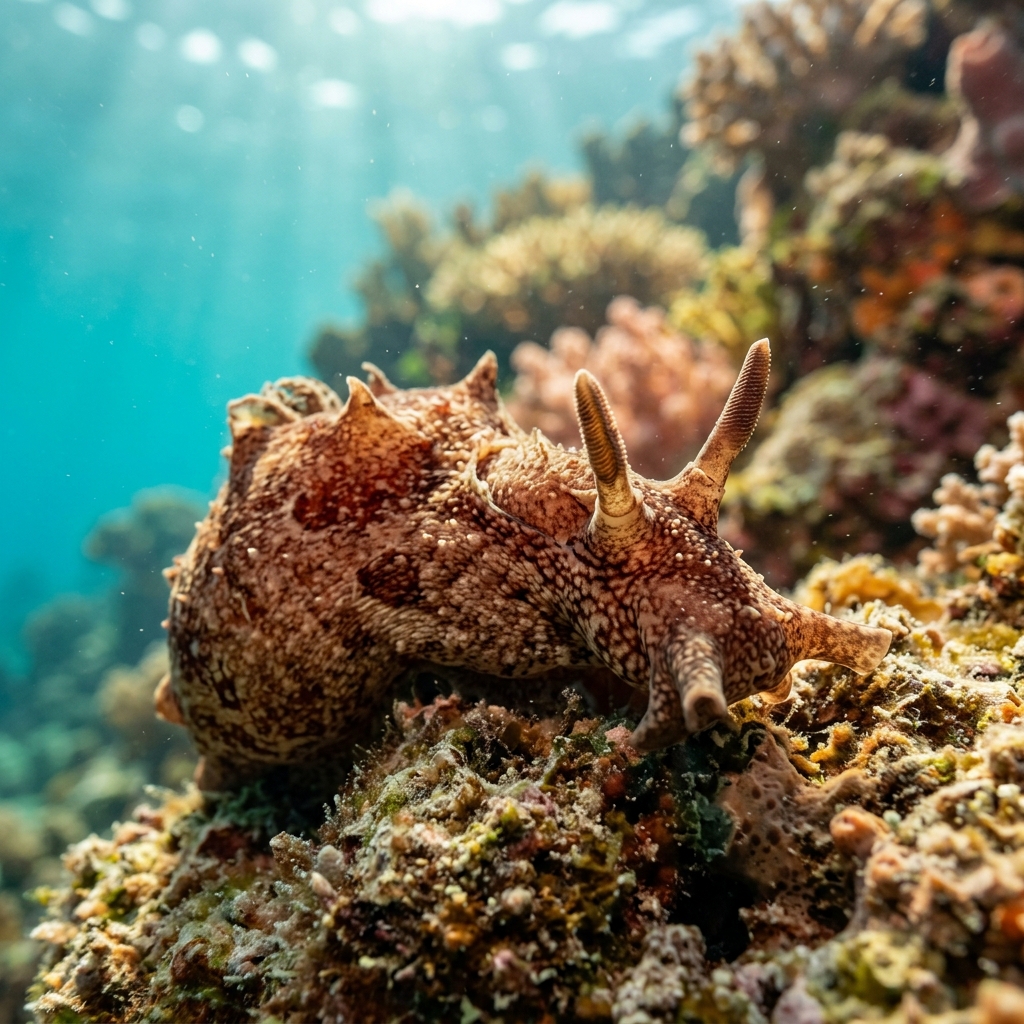
Bulky, ridged body carrying warm orange to rust colouring with paler tubercles (raised bumps) running down its back. The exposed gill cluster near the tail and the frontal rhinophores (sensory horns) often show a contrasting yellow tip, which is the quickest tell against plainer-coloured nudibranchs on the same reef. Most individuals logged sit at a modest, hand-sized scale typical of chromodorid sea slugs rather than the larger showy Nembrotha species.
Divers find it parked on rock and reef substrate rather than swimming, grazing slowly over sponge-covered surfaces the way most chromodorid nudibranchs do. It pays no attention to divers and won't move off in a hurry, making it an easy subject for a close macro shot if you spot the colour against the rock. Most logs come from the temperate reef sites of southeastern Australia rather than tropical coral reef.
Like other chromodorid nudibranchs, it likely feeds on specific sponges and stores their chemical defences in its own tissue, which is part of why its colouring stays bold rather than needing to hide.
Sightings don't cluster into a clear season, so treat it as a year-round find on New South Wales and Queensland reefs where water sits comfortably in the 19 to 25 C range logged for this species.
Reef neighbours a diver could mistake it for. Use the identification notes above to tell them apart.
This one is very much an Australian speciality in the current data, with every logged sighting coming from Australian sites. New South Wales carries by far the strongest record, with Queensland turning up occasional additional sightings further north.
Mapping where Yellow-ribbed Miamira is logged…
Almost all confirmed sightings come from Australia, with New South Wales the strongest region and Queensland producing a handful of additional records further north.
There's no strong seasonal pattern in the sightings, so it's logged across the year on New South Wales and Queensland reefs in water from about 19 to 25 C.
Look for a ridged, orange-toned body with paler raised bumps and a yellow-tipped gill cluster near the tail. It sits still on rock or sponge-covered substrate rather than swimming.
No. It has no venom or sting relevant to divers and simply sits on the reef; it's completely safe to observe and photograph up close.
Like other chromodorid nudibranchs, it almost certainly grazes on particular sponge species, likely borrowing their chemical compounds for its own defence.
Site and sighting data is aggregated from diver logs, iNaturalist and GBIF. For taxonomy and conservation status:
Light-spotted Aegires
3,168 sites