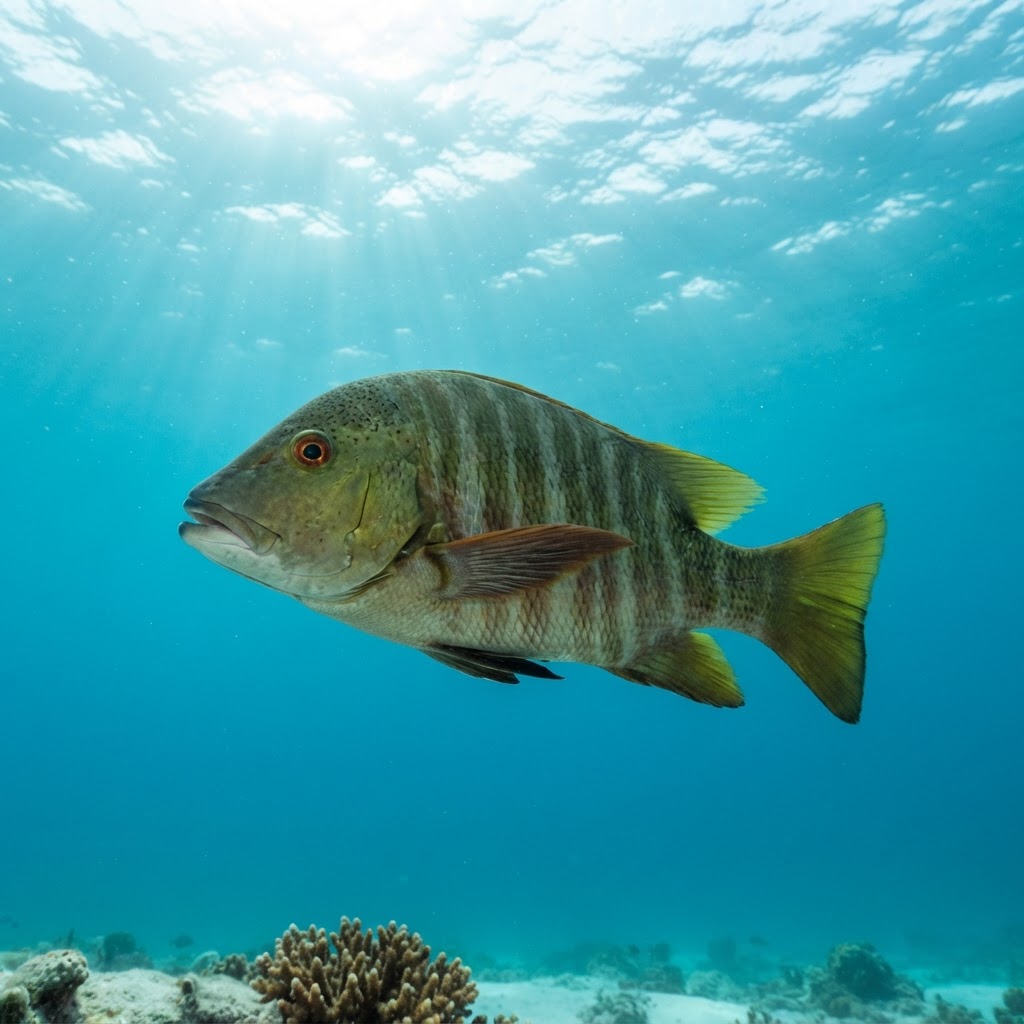
Hoplopagrus guentherii
Thick-bodied reef snapper with bold vertical bars, most reliably found around Malpelo, Colombia and Mexico's Pacific coast in 20.6 to 28.5C water.
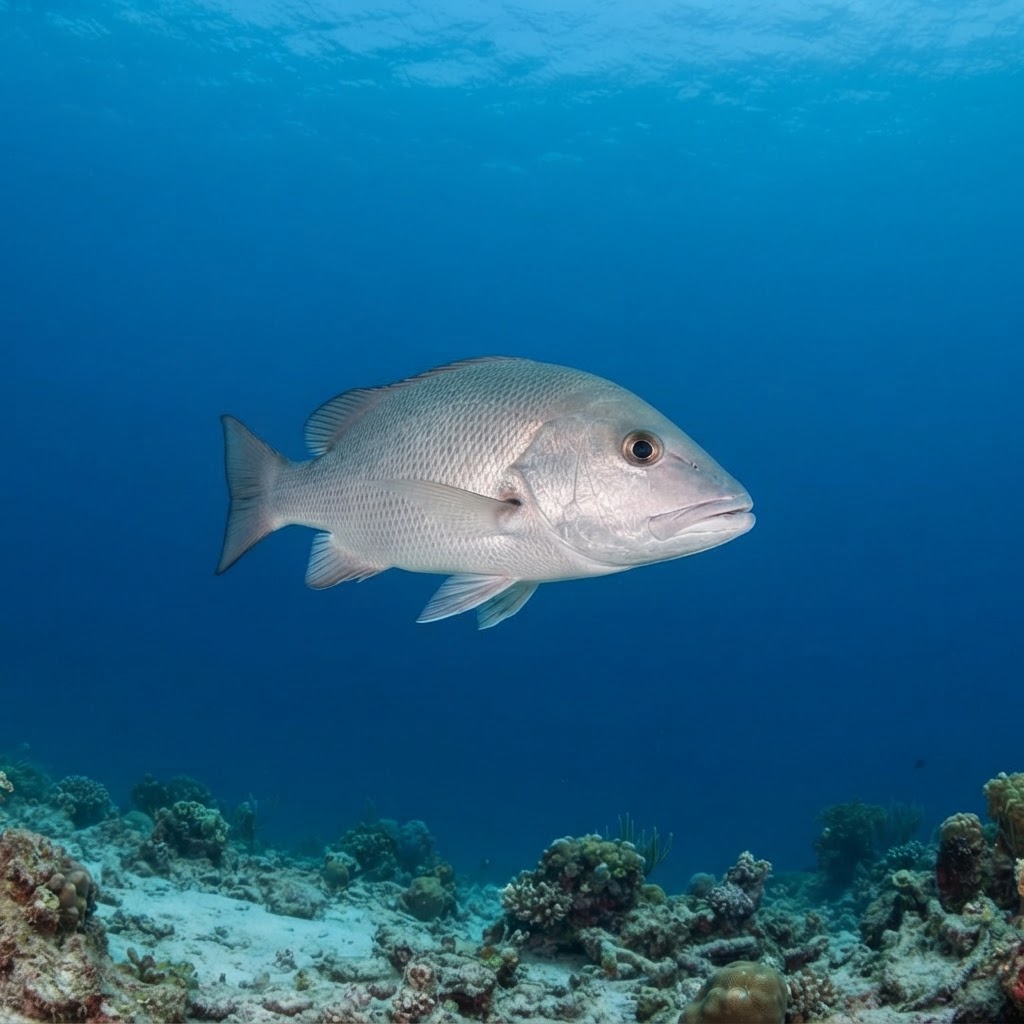
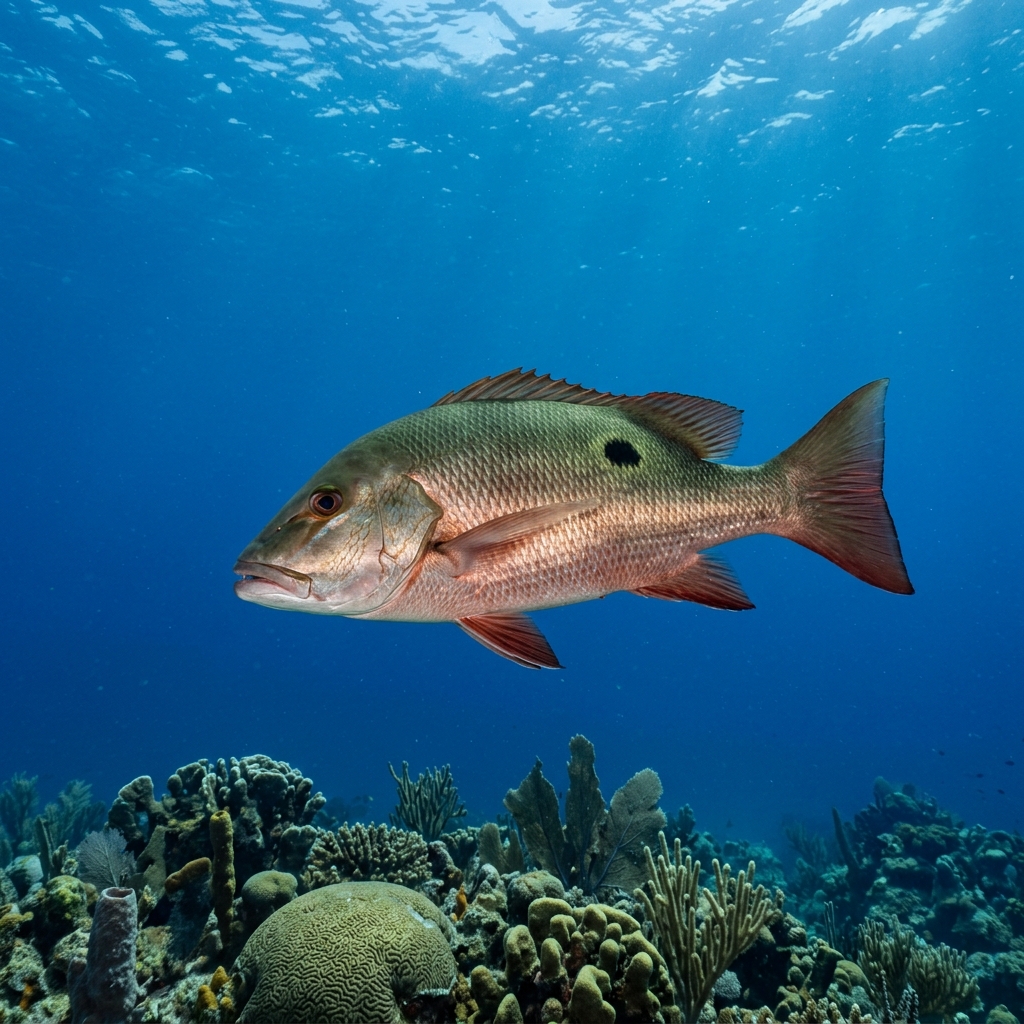
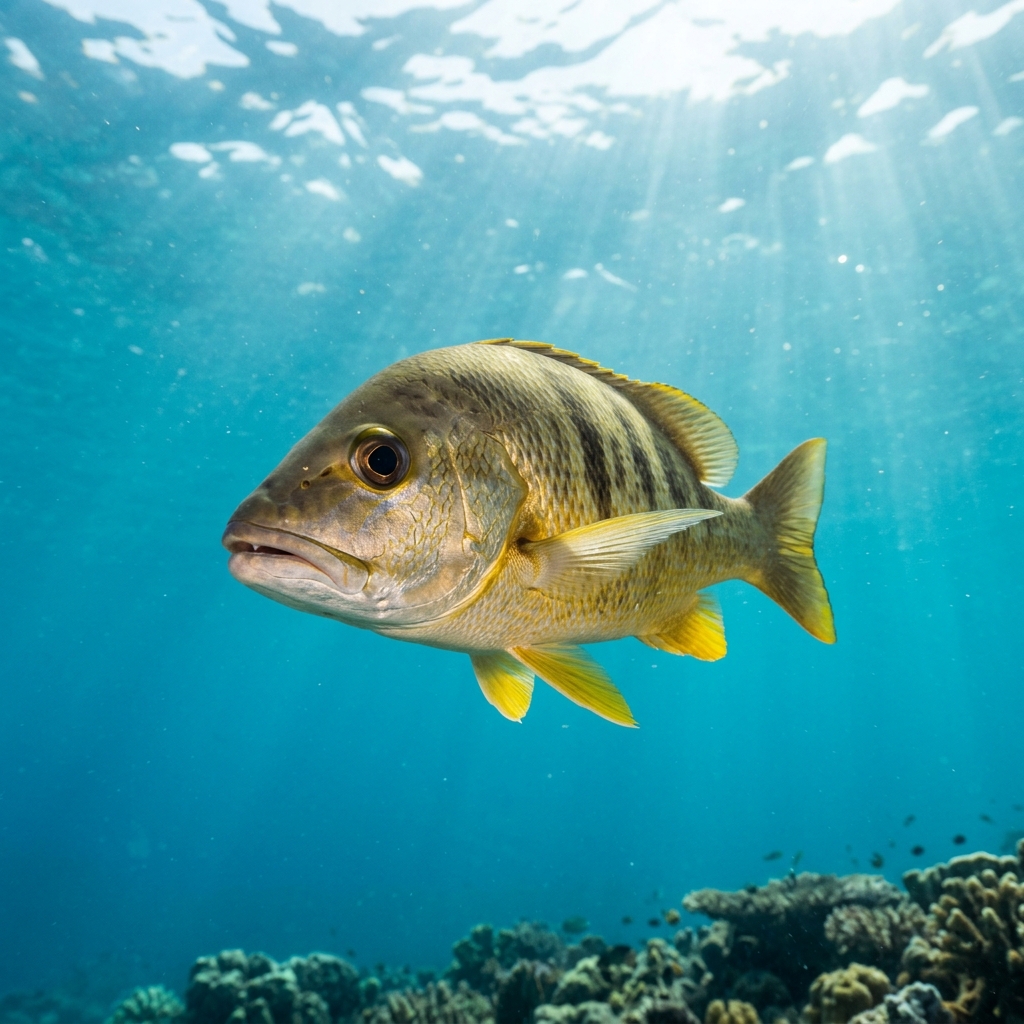
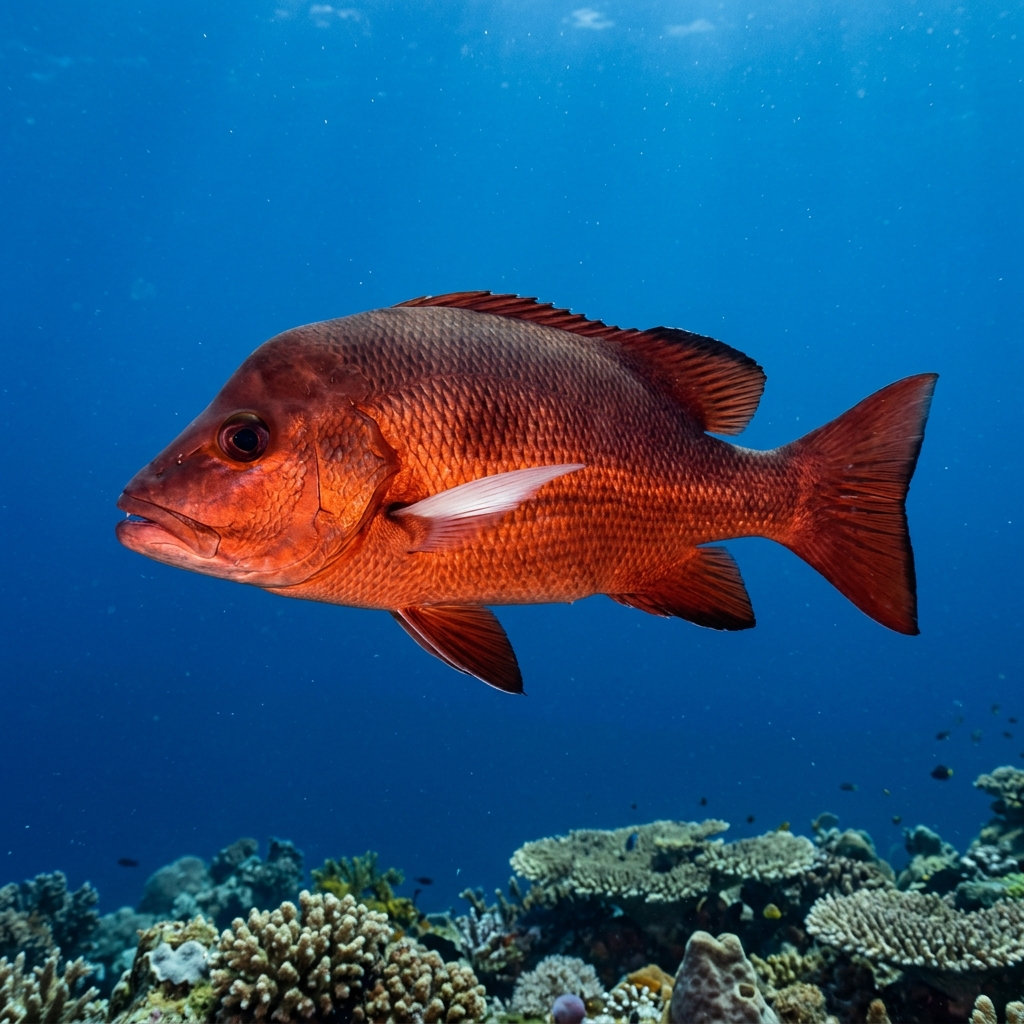
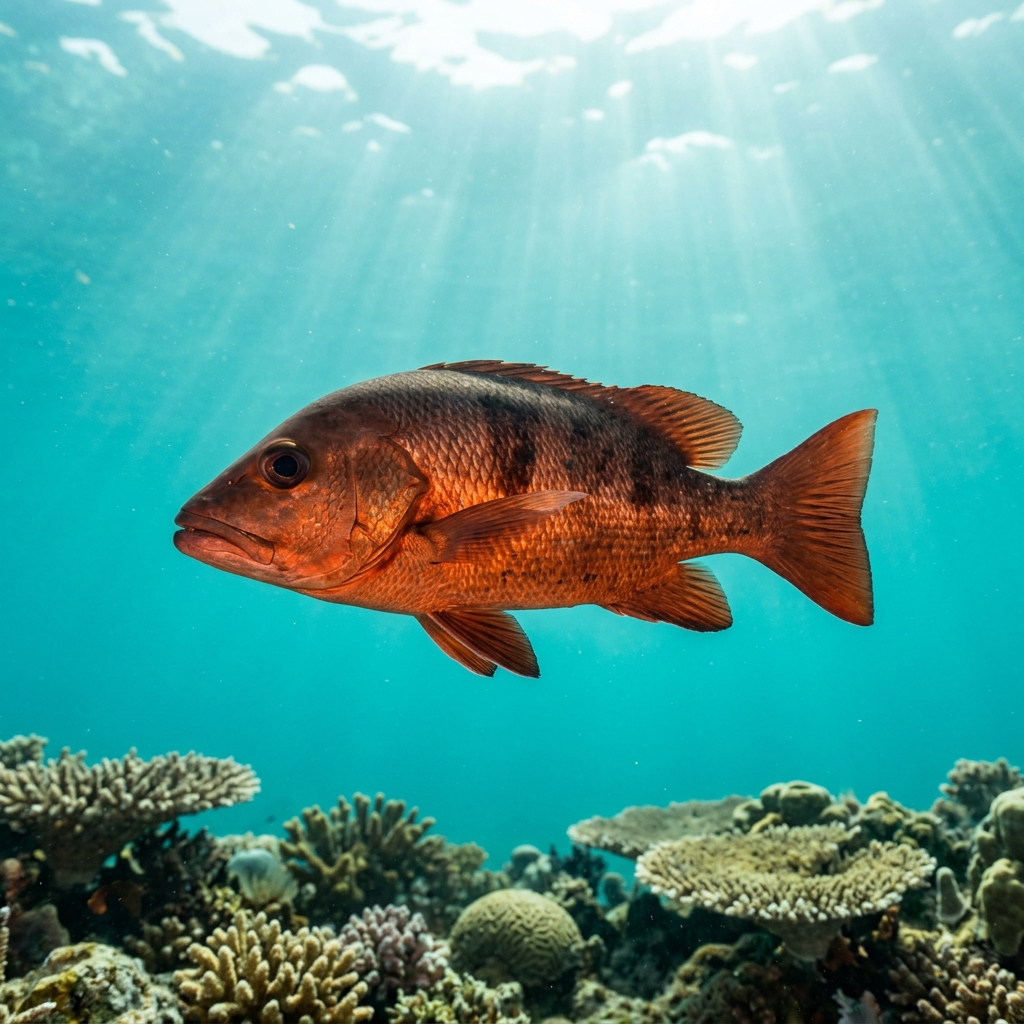
Chunky, deep-bodied snapper with a blunt head and noticeably thick, fleshy lips built for picking food off rock and reef. Body colour runs reddish-brown to orange with several pale vertical bars down the flanks, most visible when the fish sits still in open water. Grows to around 64 cm, giving it a heavier, more solid silhouette than most reef snappers sharing its range.
Usually seen alone or in small loose groups hovering close to rocky reef structure and boulder fields rather than out in open water. Divers describe it as unhurried and approachable, often holding position near a ledge or cave mouth rather than bolting at the first sight of bubbles. Its heavy lips are a giveaway when it noses into crevices working over hard substrate for food.
Those oversized lips aren't just for show: they let this snapper crush and pick prey straight off rock surfaces, a feeding style closer to some grunts and hogfish than to typical open-water snappers.
Sightings are spread across the year with no clear seasonal peak in the data, and the observed temperature range of 20.6 to 28.5C covers most of the diving calendar across its Eastern Pacific range, so any month is worth trying.
Reef neighbours a diver could mistake it for. Use the identification notes above to tell them apart.
Most reliably logged along Mexico's Pacific coast and Baja California, and a strong presence at Malpelo in Colombia. Also a fairly regular sighting in Costa Rica's South Pacific, Panama's Pacific coast, and around the Galápagos Islands in Ecuador.
Mapping where Mexican Barred Snapper is logged…
Best chances are along Mexico's Pacific coast and Baja California, plus Malpelo in Colombia. Costa Rica's South Pacific, Panama's Pacific coast, and the Galápagos Islands also produce regular sightings, though it's generally logged as uncommon rather than guaranteed.
There's no strong seasonal pattern in the sightings, so it's treated as a year-round species. It's been observed in water from 20.6 to 28.5C, a range that covers most months on Eastern Pacific reefs.
Look for a thick-bodied, reddish-brown snapper with pale vertical bars and unusually fleshy, thick lips. It tends to hold still near rocky structure rather than schooling in open water, which helps separate it from slimmer, more mobile snappers.
They typically reach around 64 cm in length, making them one of the bulkier snapper species divers encounter on Eastern Pacific reefs.
No, they're not considered a danger to divers. They tend to be calm around bubbles and are more interested in working rock crevices for food than reacting to divers nearby.
Site and sighting data is aggregated from diver logs, iNaturalist and GBIF. For taxonomy and conservation status:
Bluestriped Snapper
2,054 sites