Solenostomus halimeda
One of the reef's hardest fish to spot. Learn where to look in the Philippines and Indonesia, and how to tell it apart from similar species.
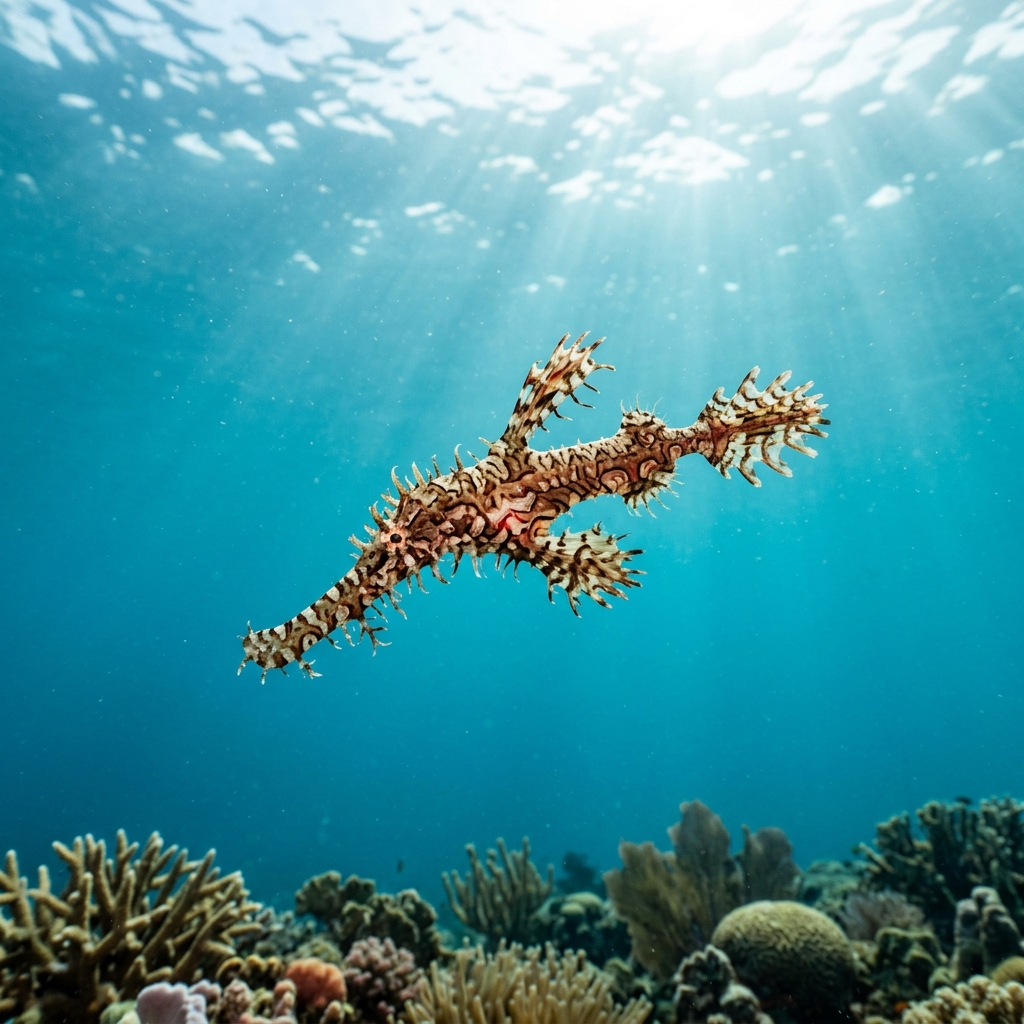
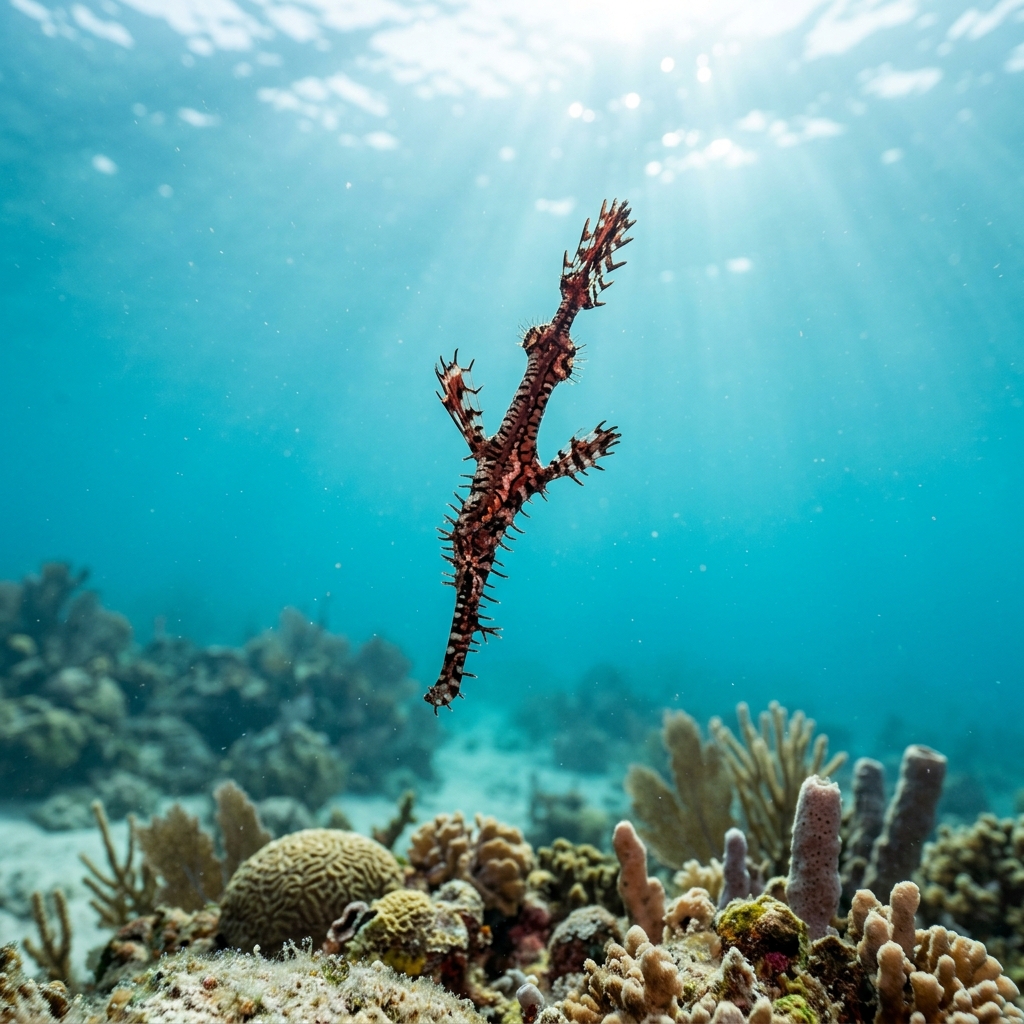
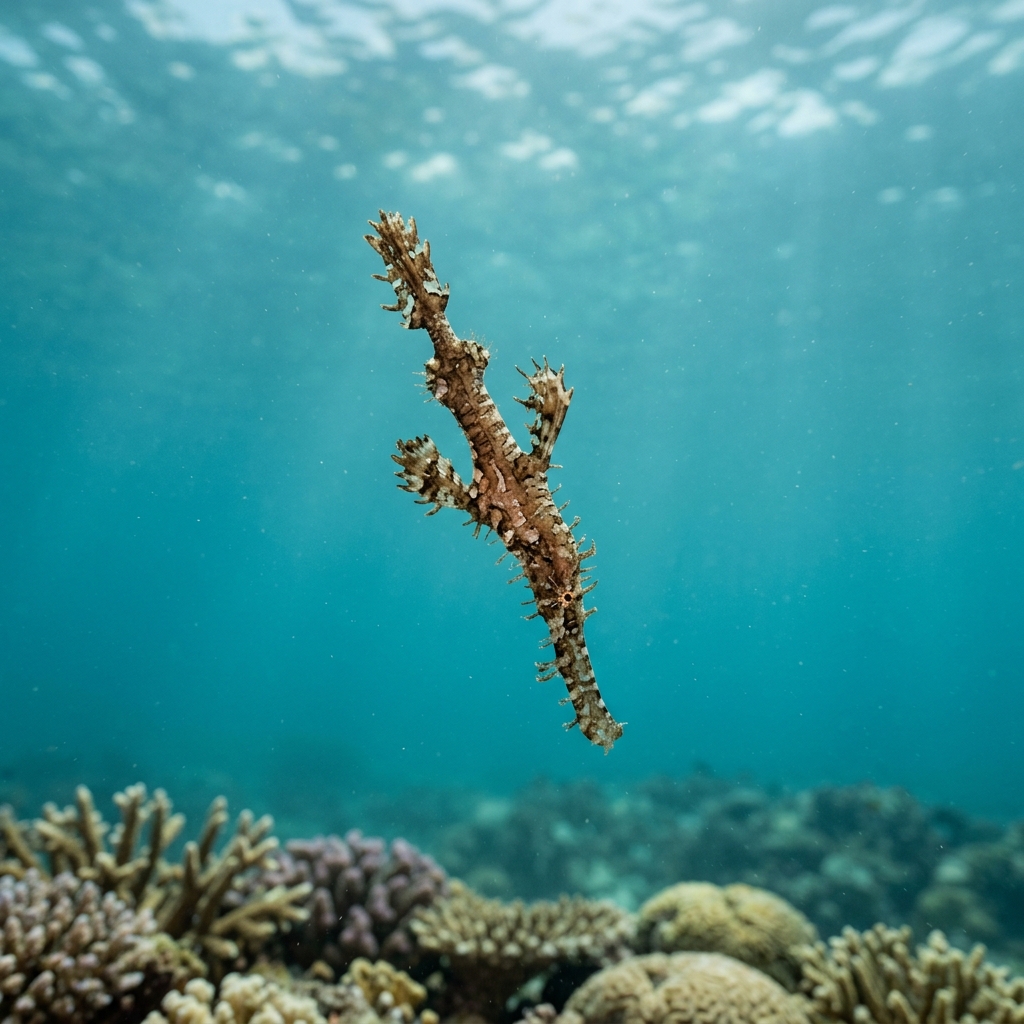
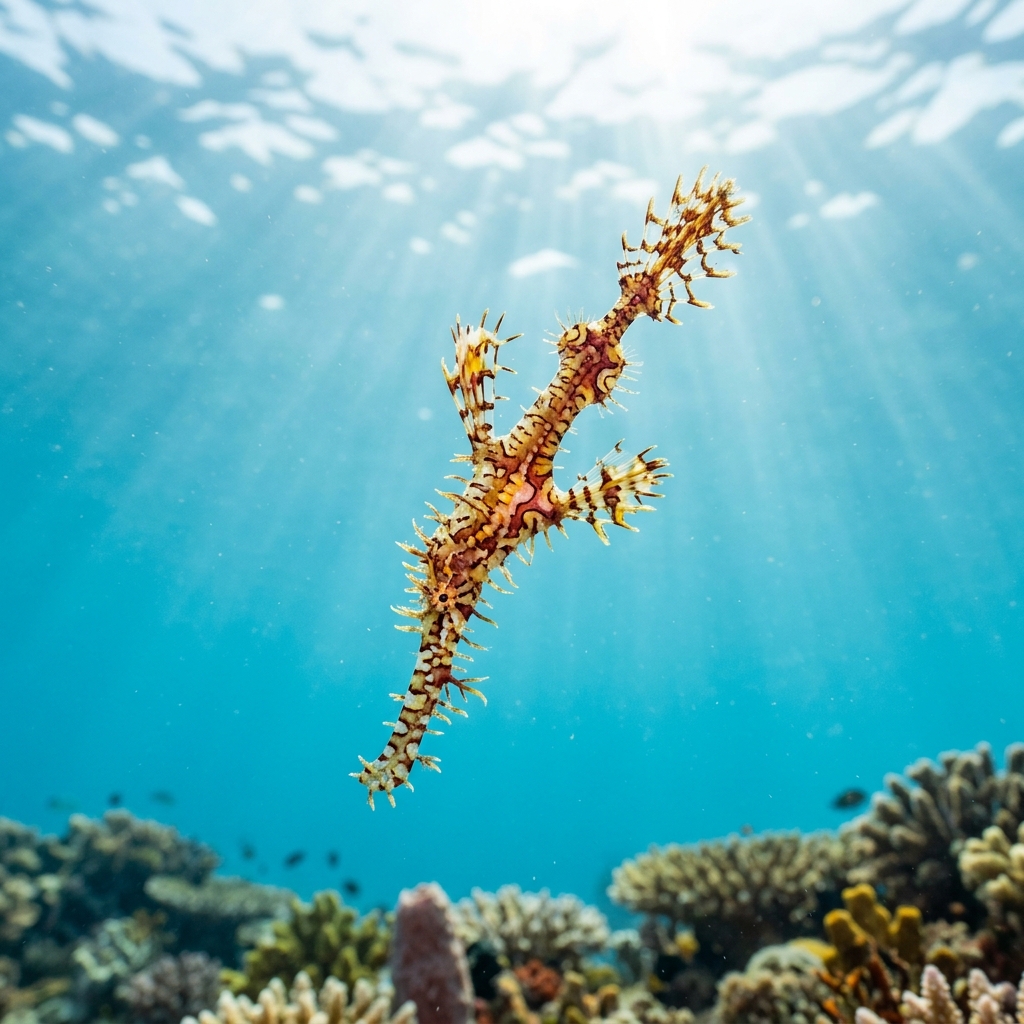
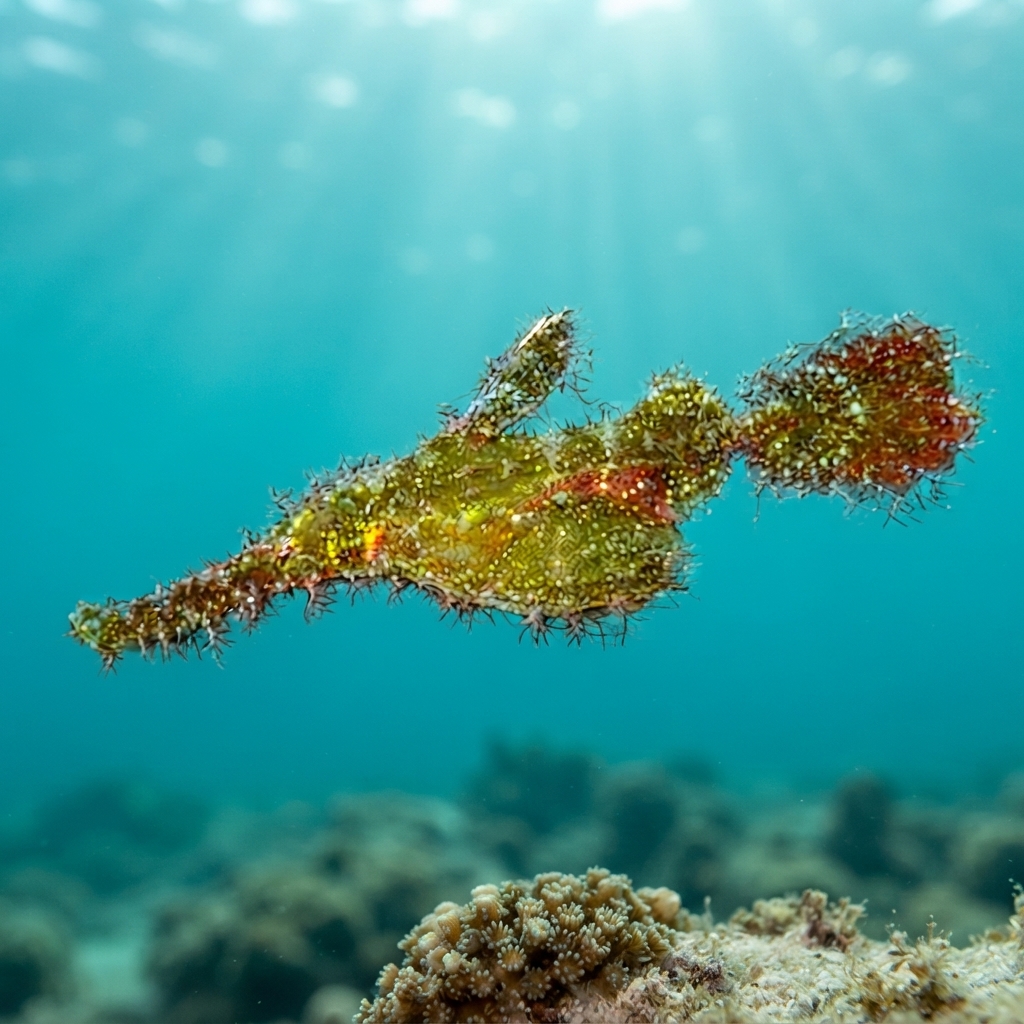
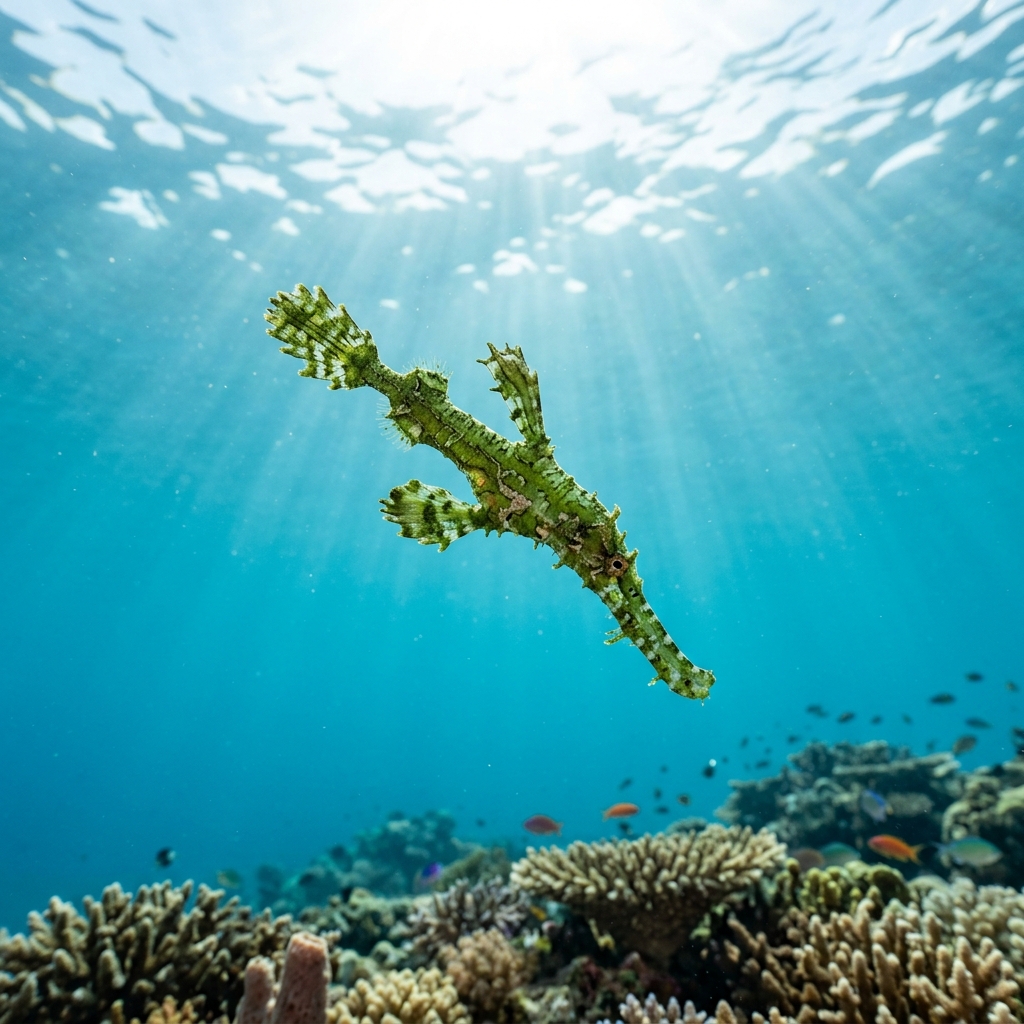
Camouflage is its superpower: the body is pale green to whitish with irregular dark mottling that mimics the calcium-carbonate segments of Halimeda algae, and it typically drifts or hangs motionless among exactly those plants. The body is laterally compressed (flattened side-to-side) and angular, giving it a leaf-like silhouette that separates it from the more cylindrical true pipefishes. Females are noticeably larger than males and carry a visible brood pouch formed by fused pelvic fins along the belly, while males are slimmer and pouch-free.
You will almost never see one moving; it holds position among Halimeda algae or other leafy algae, body tilted at an angle to blend with surrounding fronds. When approached it may sway gently in the current, leaning further into its camouflage rather than fleeing. Most sightings are logged by eagle-eyed guides or macro-focused divers who search Halimeda patches deliberately rather than stumbling across the fish by chance.
Like other ghost pipefishes, it is the female that broods the eggs, holding them in her fused pelvic-fin pouch until they hatch, which is the reverse of what happens in true seahorses and pipefishes where the male carries young.
No strong seasonal pattern has emerged from the data, so this species is treated as a year-round resident on tropical reefs. Observed water temperatures run from about 25 to 30 °C, consistent with the warm, stable conditions found across its Indo-Pacific range throughout the year.
Reef neighbours a diver could mistake it for. Use the identification notes above to tell them apart.
Diver observations and range modelling put this species firmly in the Coral Triangle, with the strongest concentration of sites in the Philippines, particularly across the Visayas, Palawan, and Apo Reef, and northern Luzon. Indonesia follows closely, with Sulawesi, Maluku, Papua, and the Nusa Tenggara and Banda Sea regions all well represented. Malaysian Borneo, especially West Sabah and Labuan, rounds out the most productive areas.
Mapping where Halimeda Ghost Pipefish is logged…
The best chances are in the Philippines, especially the Visayas, Palawan, and Apo Reef areas, and across Indonesia's Sulawesi, Maluku, and Nusa Tenggara regions. Malaysian Borneo, particularly West Sabah and Labuan, also hosts this species. Search shallow reef areas with abundant Halimeda algae.
No clear season has been identified, and the species appears to be present year-round across its tropical range. Water temperatures between roughly 25 and 30 °C suit it well, which describes most reef sites in the Philippines and Indonesia throughout the year.
Look for a pale green to whitish, laterally compressed fish hanging motionless among Halimeda algae, its body mottled to mimic the plant's segmented fronds. The angular, leaf-like silhouette and the habit of tilting at an angle to match surrounding vegetation are the key field clues. Females show a visible belly pouch; males are slimmer.
Females brood the eggs in a pouch formed by their fused pelvic fins, which is the opposite arrangement to seahorses, where males carry young. This makes spotting the larger, pouch-bearing female the more reliable find at any given site.
Site and sighting data is aggregated from diver logs, iNaturalist and GBIF. For taxonomy and conservation status:
Ghost Pipefish
249 sites