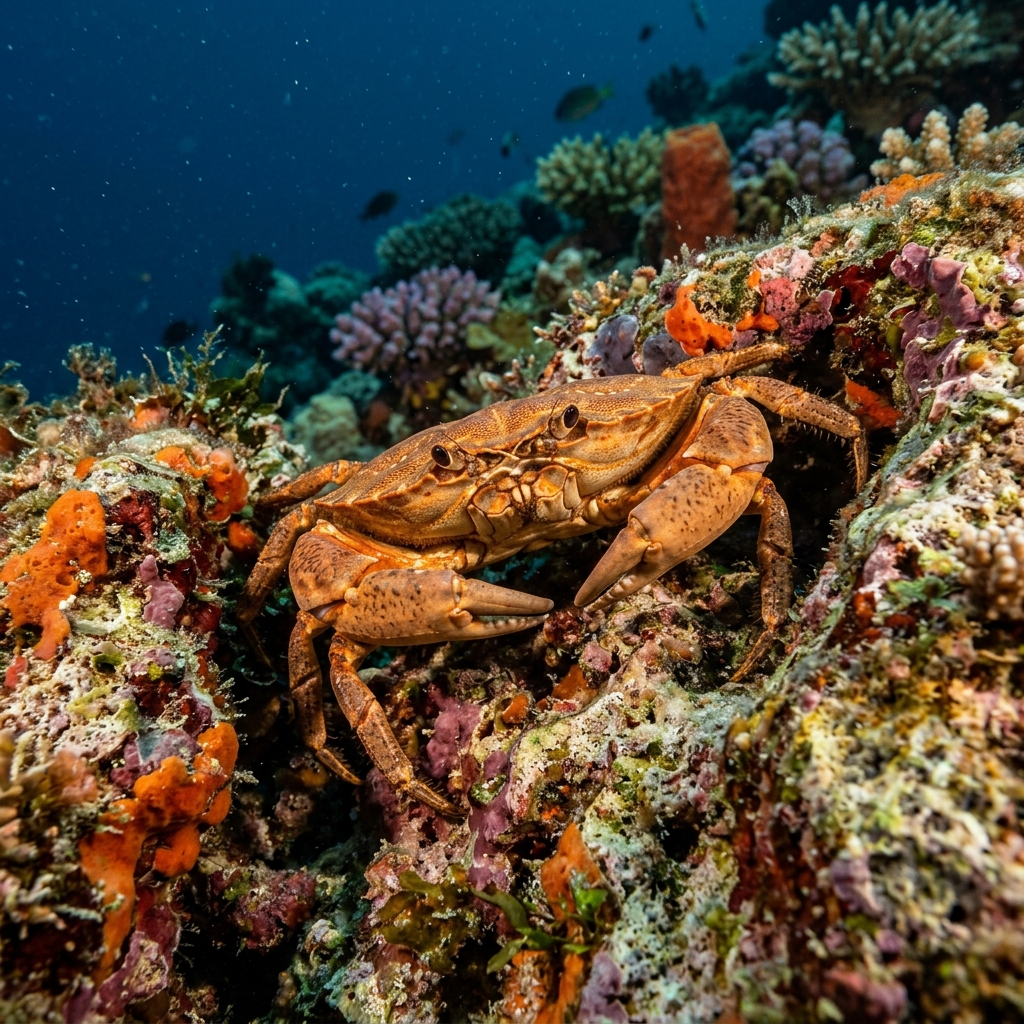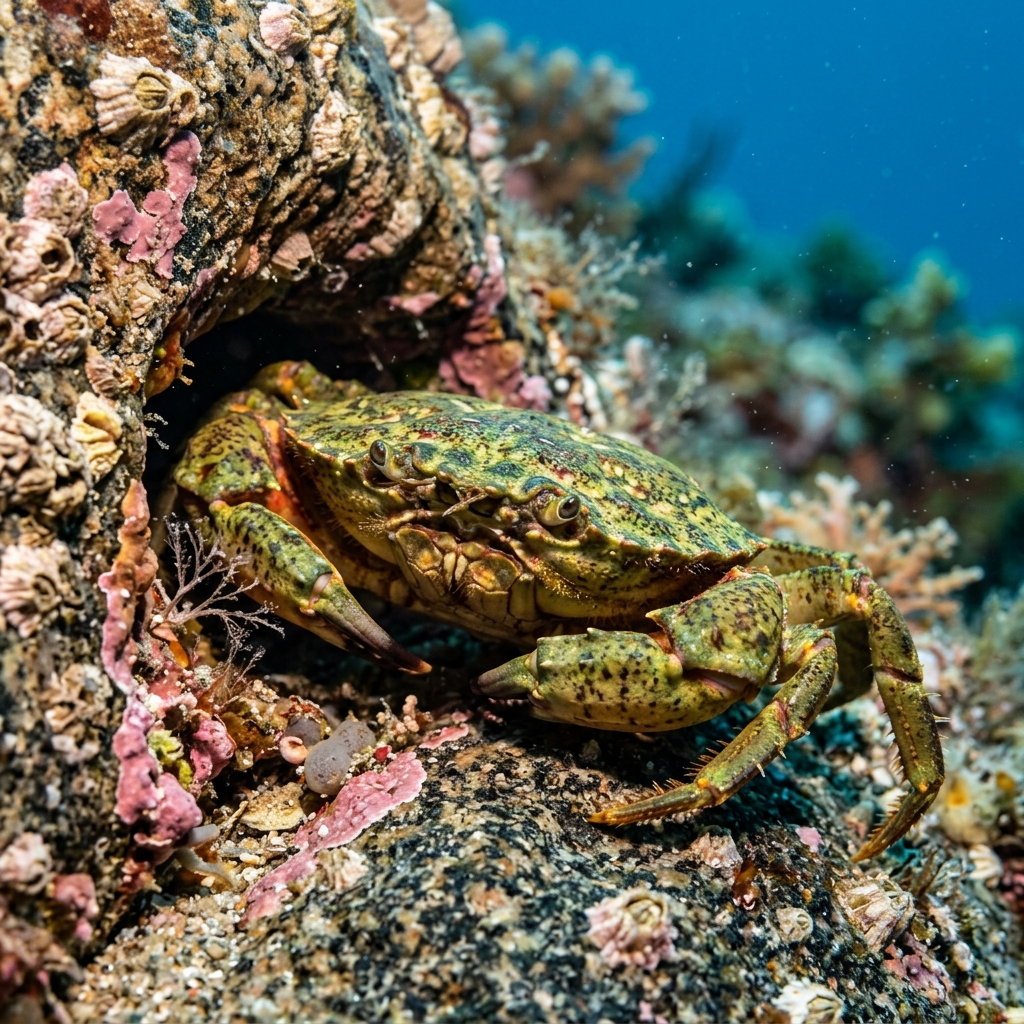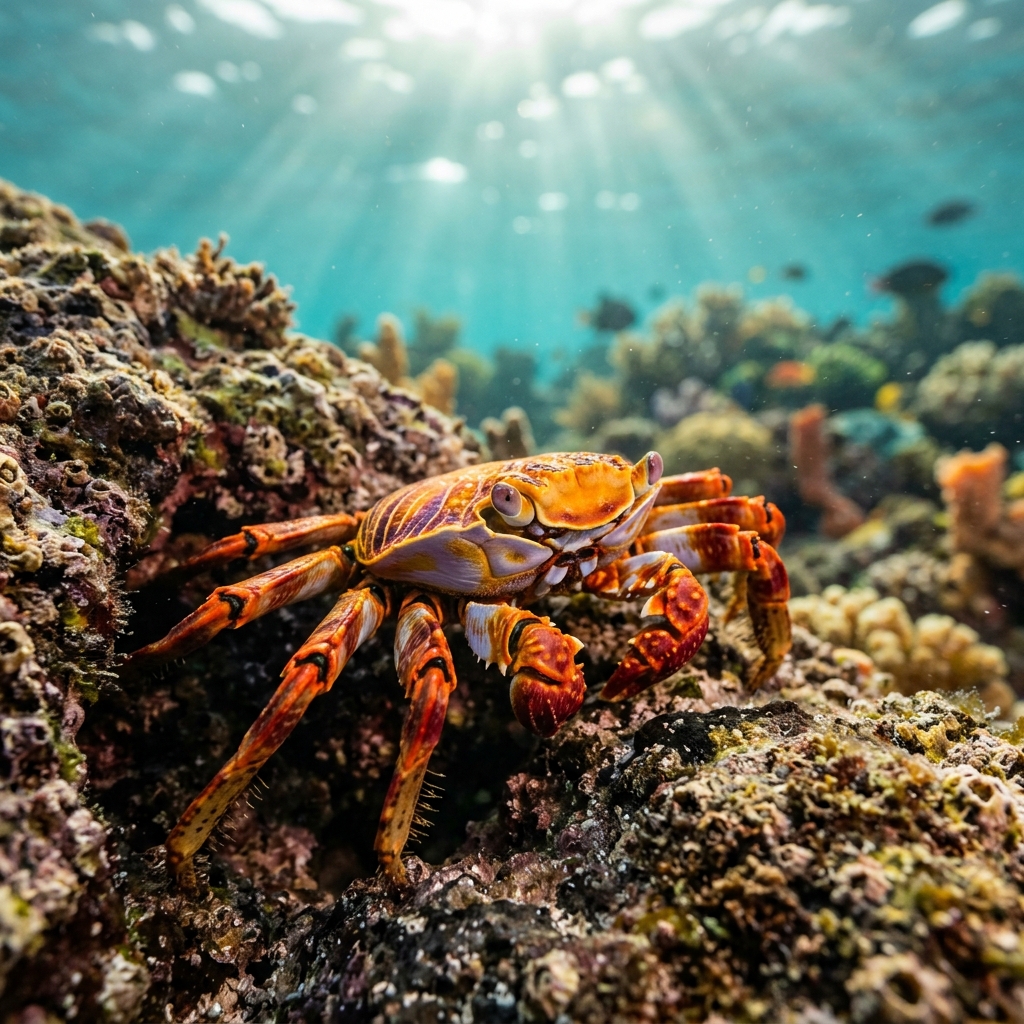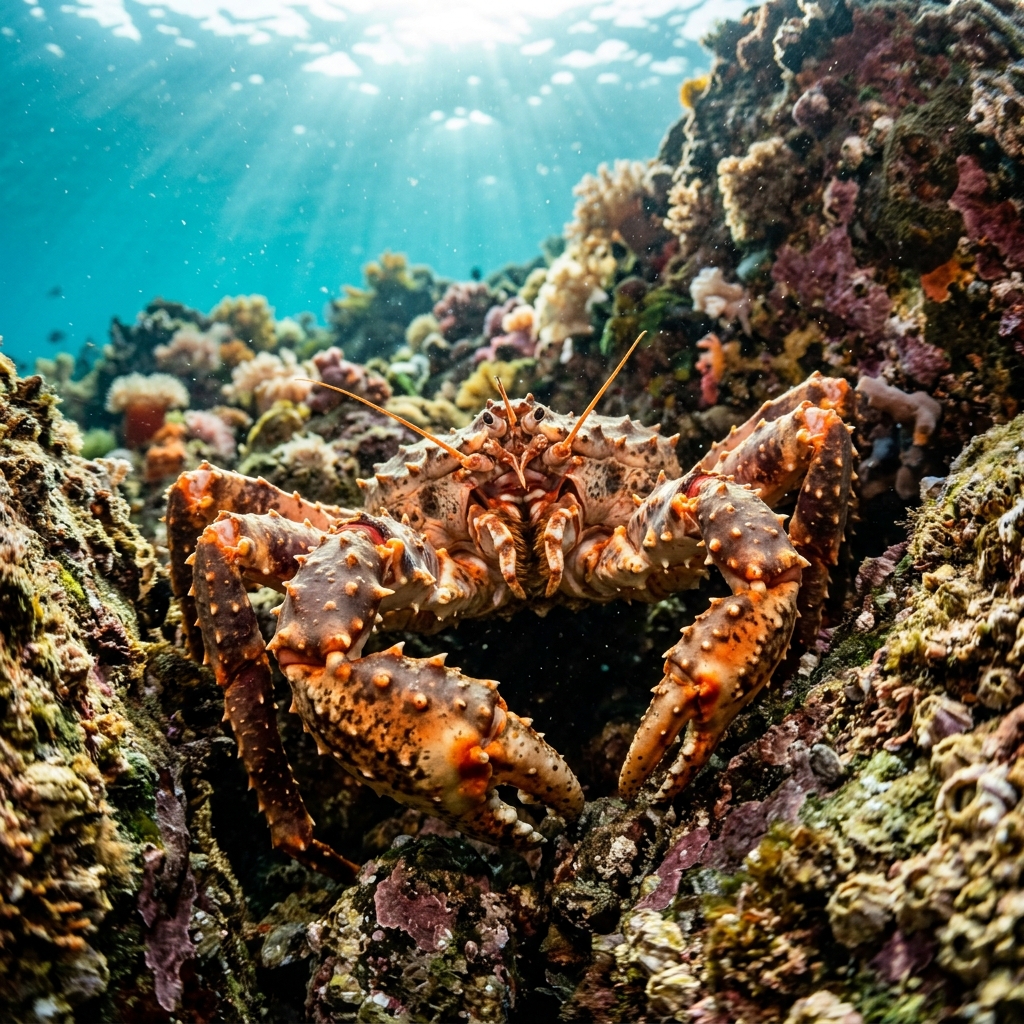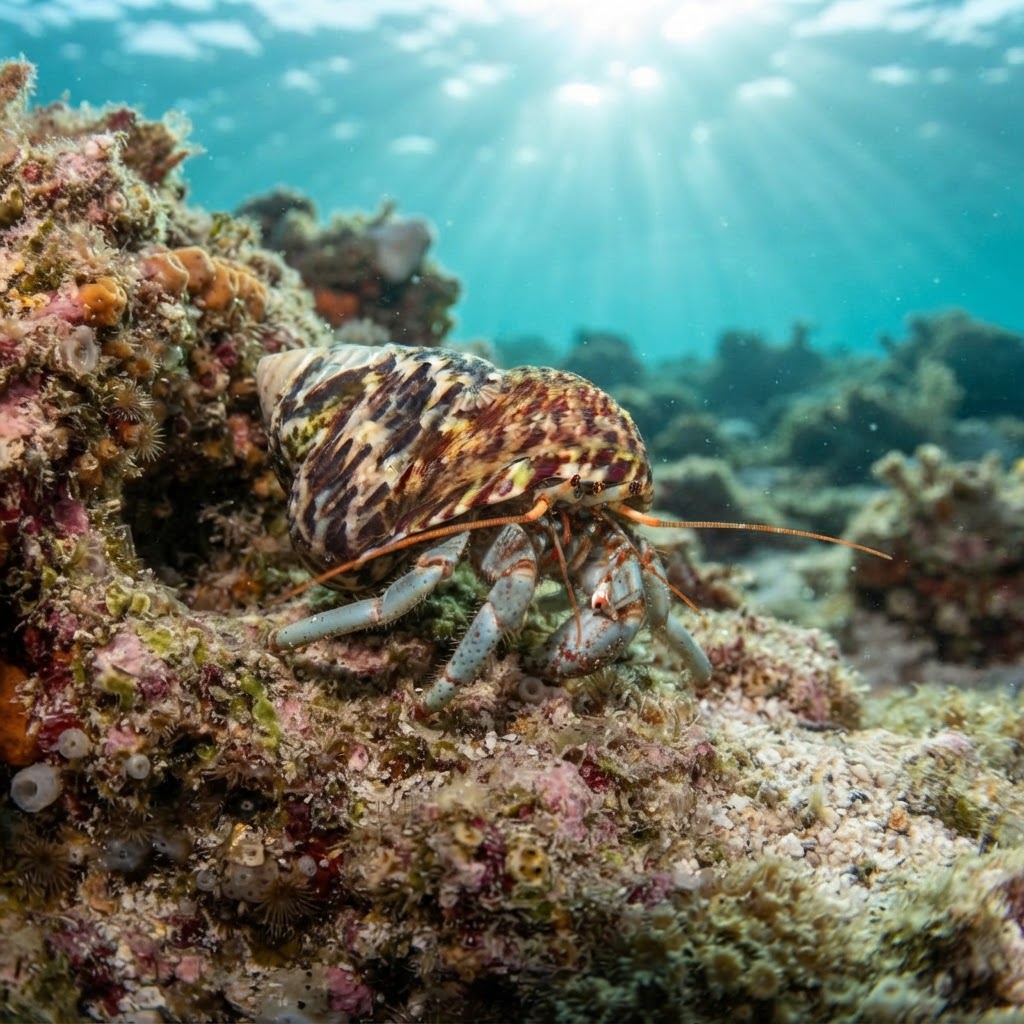
Clibanarius erythropus
Common in the shallows of the French Riviera and the Balearics, this small hermit crab turns up year-round in water from 15 to 21C.
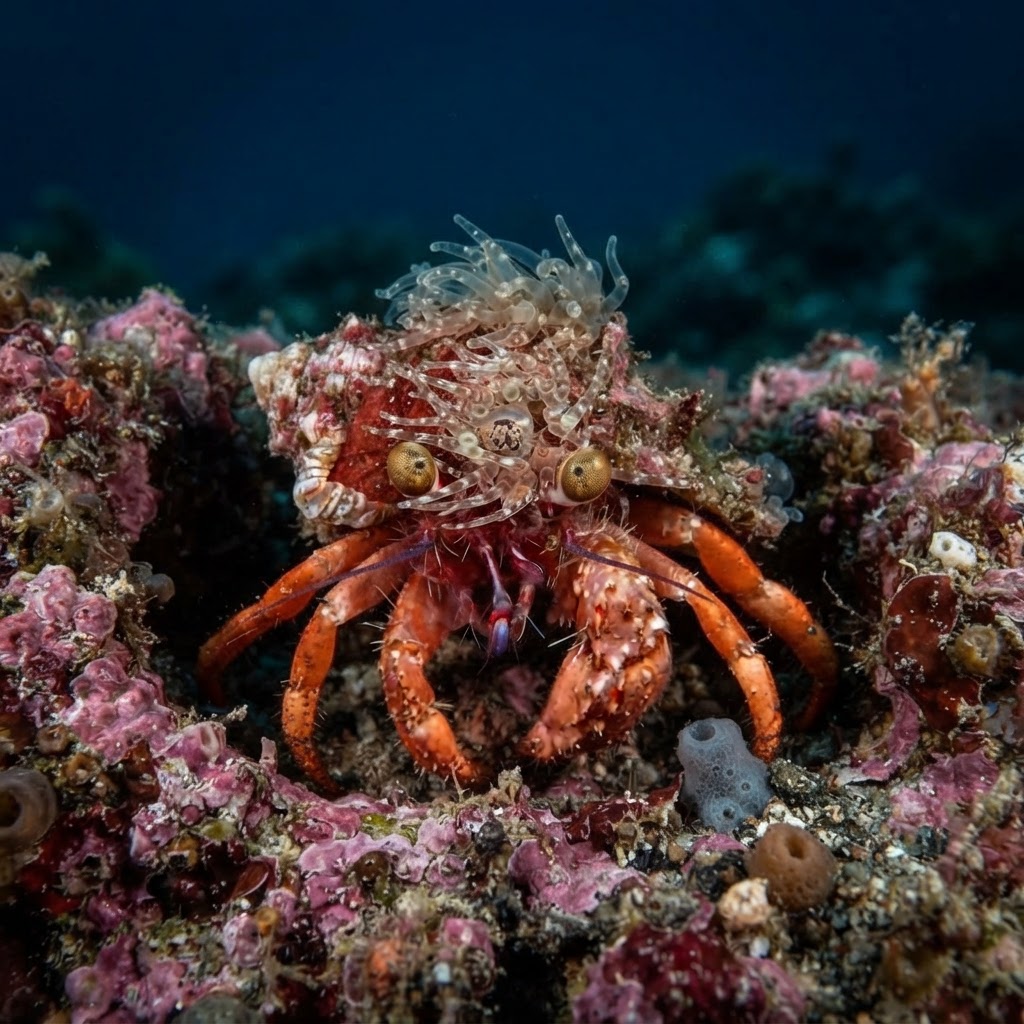
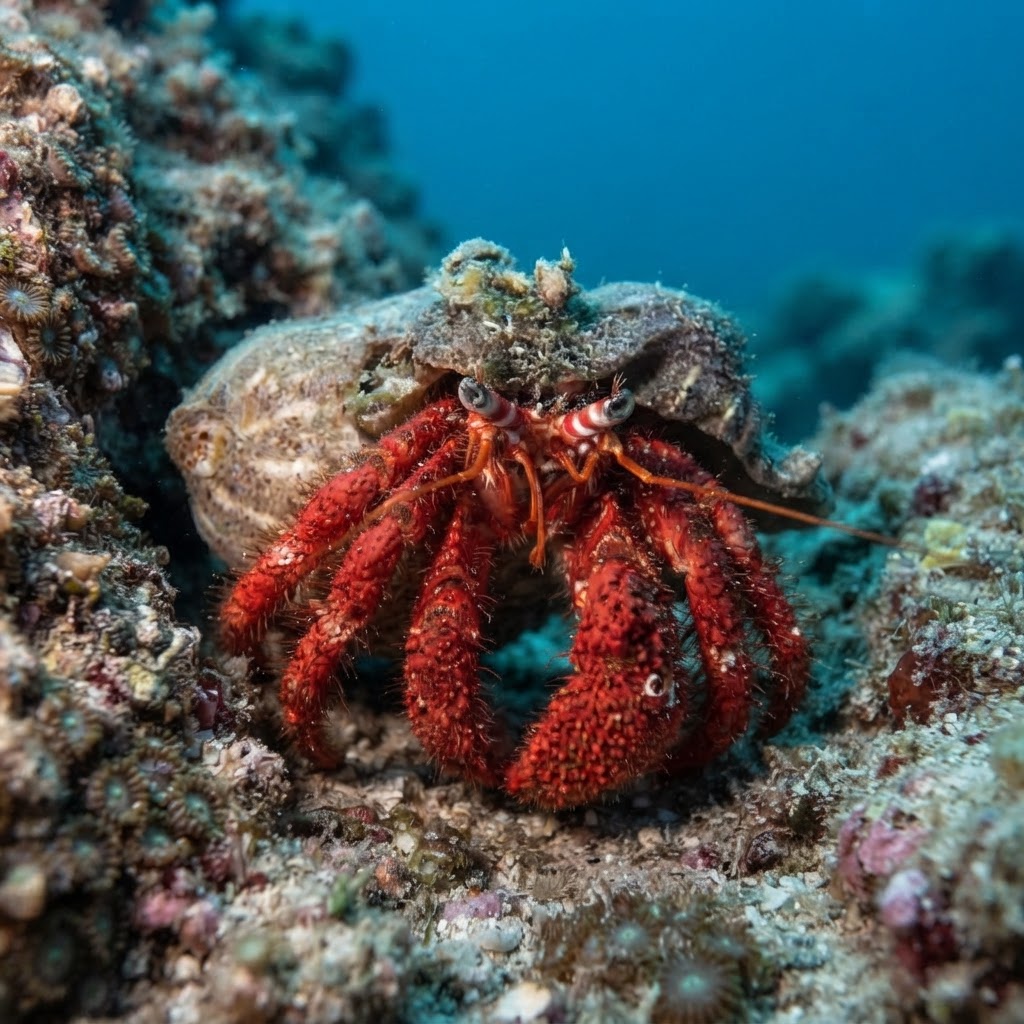
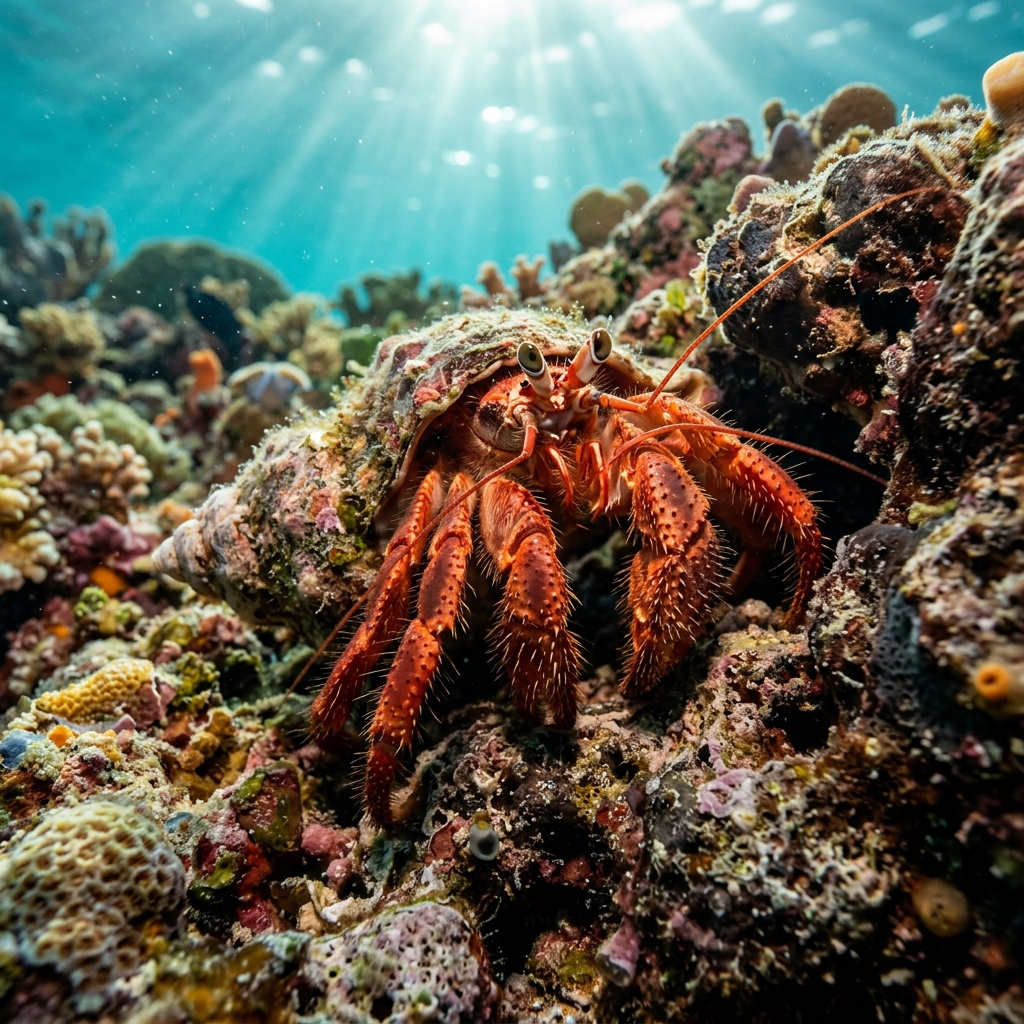
A small hermit crab, usually tucked into a scavenged snail shell, with legs showing shades of red to orange banded with a paler colour. Look for the reddish antennae and the way it drags its shell across rock and algae in the shallowest part of the reef. Its claws are uneven in size, the larger one used to block the shell opening when it withdraws.
Look for it pottering over shallow rock and weed, often at the tide line or just below it, picking through algae and debris for scraps. It is unhurried around divers and snorkellers, more likely to retreat into its shell than scuttle away, and easiest to spot in bright shallow water where the rock is exposed to some wave action.
Like other hermit crabs, it does not grow its own shell but recycles a discarded snail shell and has to find a bigger one as it grows, sometimes fighting or queuing with other hermit crabs over the swap.
Sightings are spread across the year with no strong seasonal pattern, consistent with its comfortable range of 15 to 21C, so it is a fair bet on any dive or snorkel in its range regardless of month.
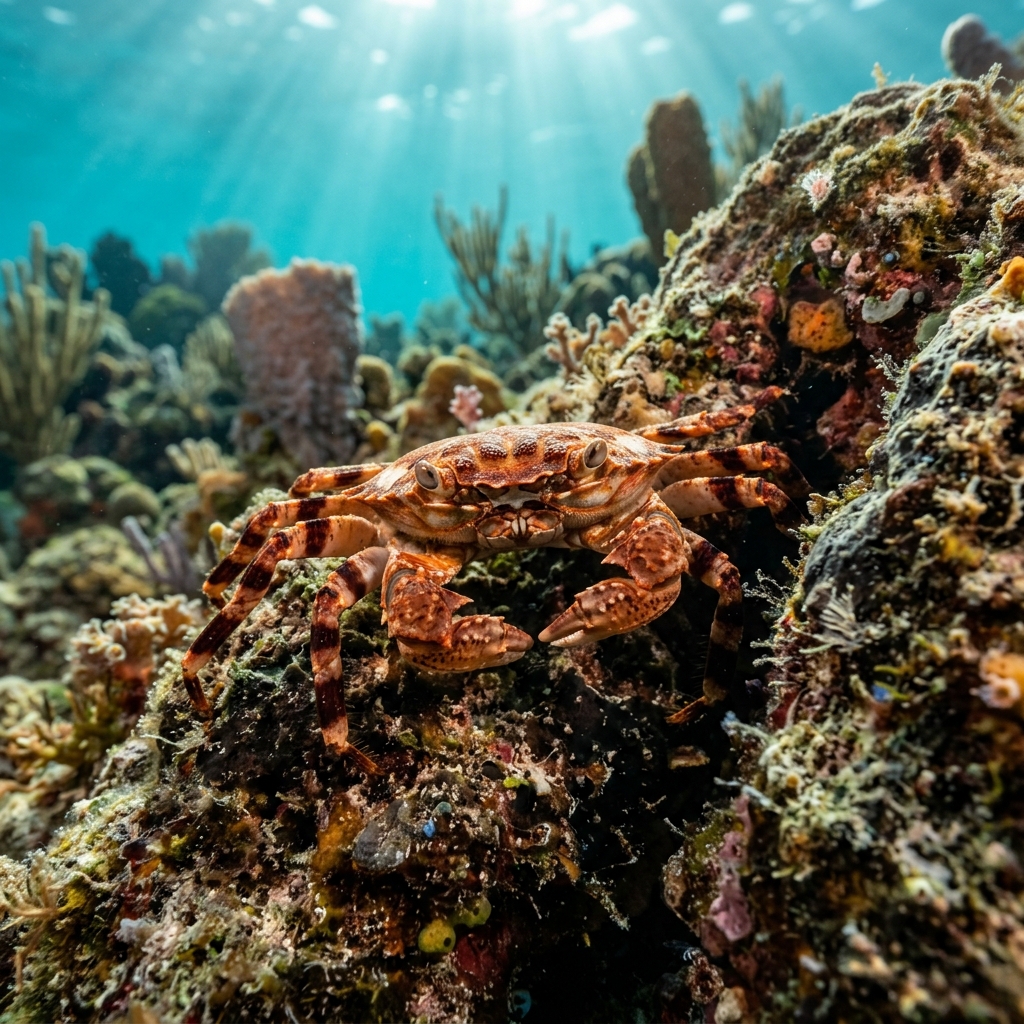
Reef neighbours a diver could mistake it for. Use the identification notes above to tell them apart.
This is a shallow, rocky-shore species most commonly logged in Spain and France, with particularly strong numbers along the French Riviera and Provence and in the Balearic Islands. It also turns up reliably in Croatia (Istria and Kvarner), Italy (Sicily and Liguria), and the Algarve in Portugal, making it one of the more widespread finds across Mediterranean and near-Atlantic dive and snorkel sites.
Mapping where Mediterranean Intertidal Hermit Crab is logged…
It is most reliably found in shallow rocky habitat across Spain and France, especially the French Riviera and the Balearic Islands, with good numbers also in Croatia, Italy, and Portugal's Algarve.
There is no strong season for this species. It sits comfortably in 15 to 21C water, so it is seen year-round across its Mediterranean and near-Atlantic range.
Check for reddish, banded legs, reddish antennae, and a mismatched pair of claws peeking out of a scavenged snail shell. It moves slowly over shallow rock and algae rather than swimming or darting.
No. It has no venom or sting and poses no risk to divers or snorkellers; it will simply withdraw into its shell if disturbed.
It never builds its own shell. Instead it occupies an empty snail shell for protection and has to move house to a larger one as it grows, sometimes competing with other hermit crabs for the best fit.
Site and sighting data is aggregated from diver logs, iNaturalist and GBIF. For taxonomy and conservation status:
European Green Crab
2,469 sites