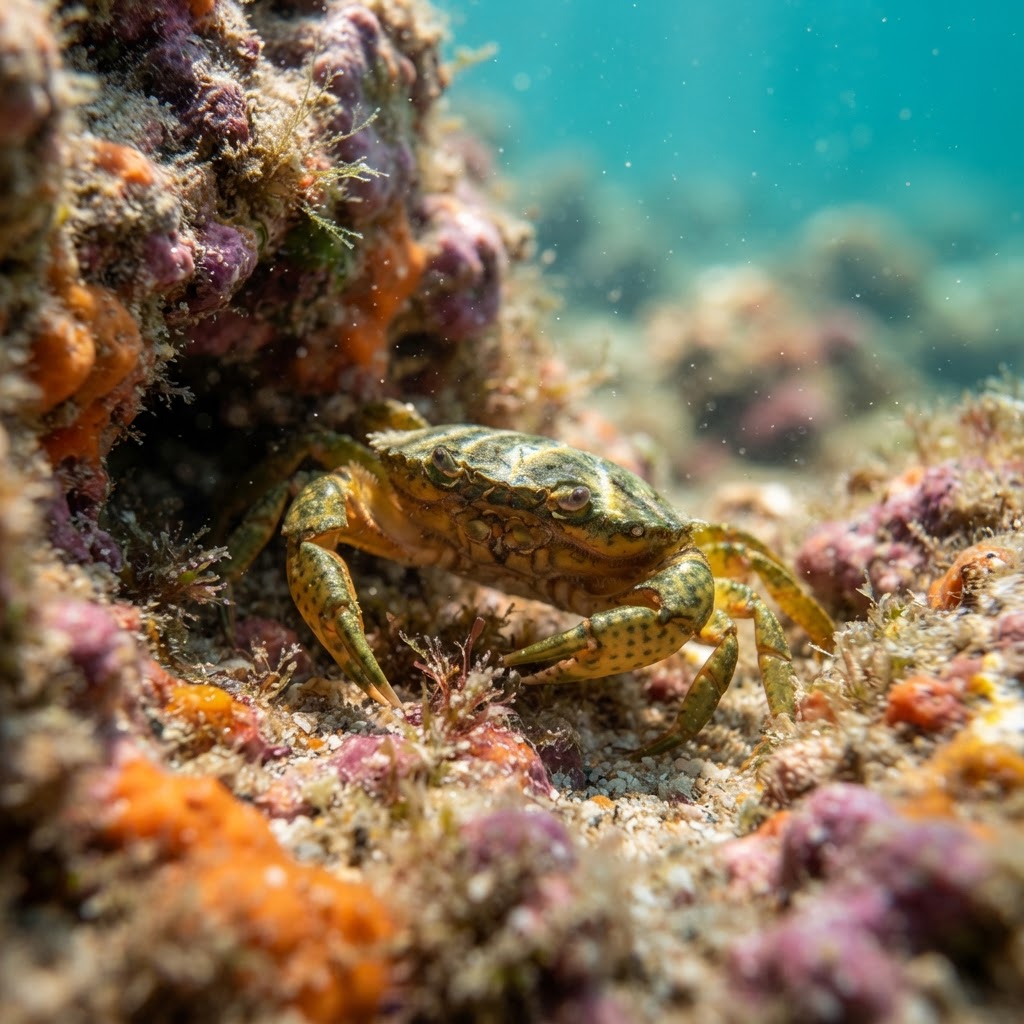
Carcinus aestuarii
A small, mottled crab common on rocky reefs from Sardinia to Istria, often overlooked but worth a closer look on any dive.
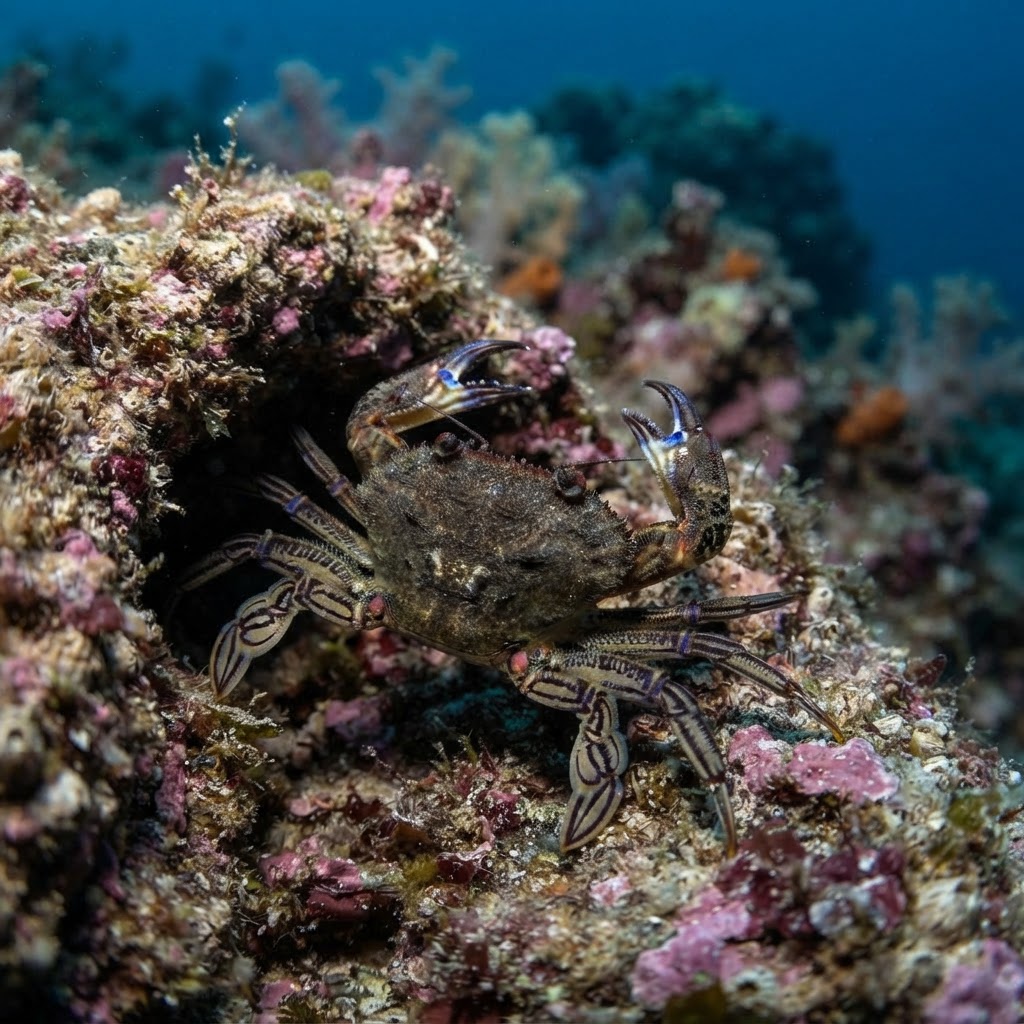
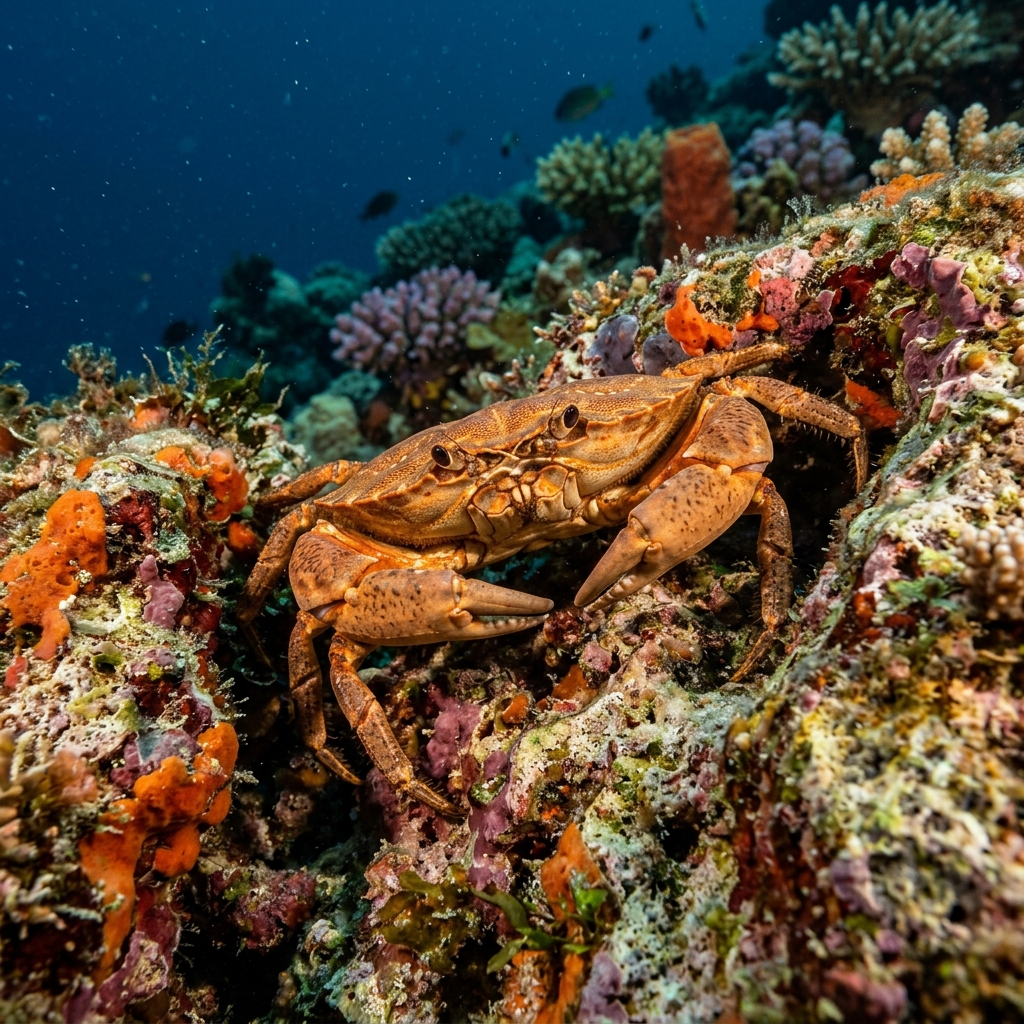
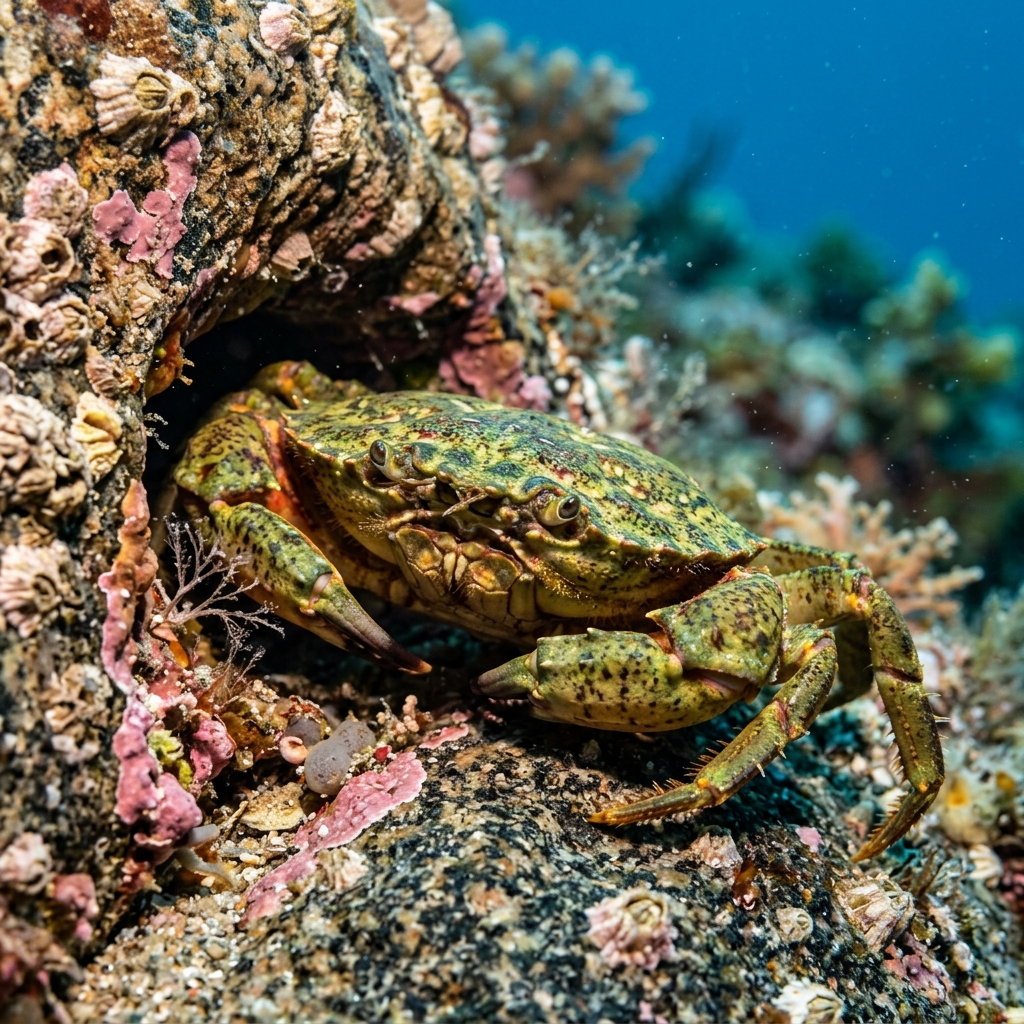
Small crab, around 4 cm across the shell, with a mottled green-brown to olive carapace that blends into rock and sediment. The shell is roughly fan-shaped with a row of short spines along the front edge on each side of the eyes. Legs are proportionally short and the claws are stout but unremarkable in size, which helps separate it from the bulkier, more colourful Velvet Swimming Crab.
Usually found tucked among rocks, seagrass margins or under boulders on shallow reef and harbour-adjacent ground, moving slowly and keeping low to the substrate. It tends to freeze or wedge itself into a crevice rather than flee when a diver's torch or shadow passes over it, which makes it an easy subject for a close look once spotted. Most logs describe it as an uncommon find rather than something divers see on every dive, so a slow scan of rocky nooks pays off.
It is closely related to the invasive European green crab (Carcinus maenas), which has spread well beyond its native Atlantic-Mediterranean range and reshaped shellfish and seagrass communities wherever it has established itself.
Sightings show no clear seasonal pattern, and the observed water temperature range of 14.8 to 20.8 C spans much of the Mediterranean diving calendar, so it is worth watching for on any dive rather than one season in particular.
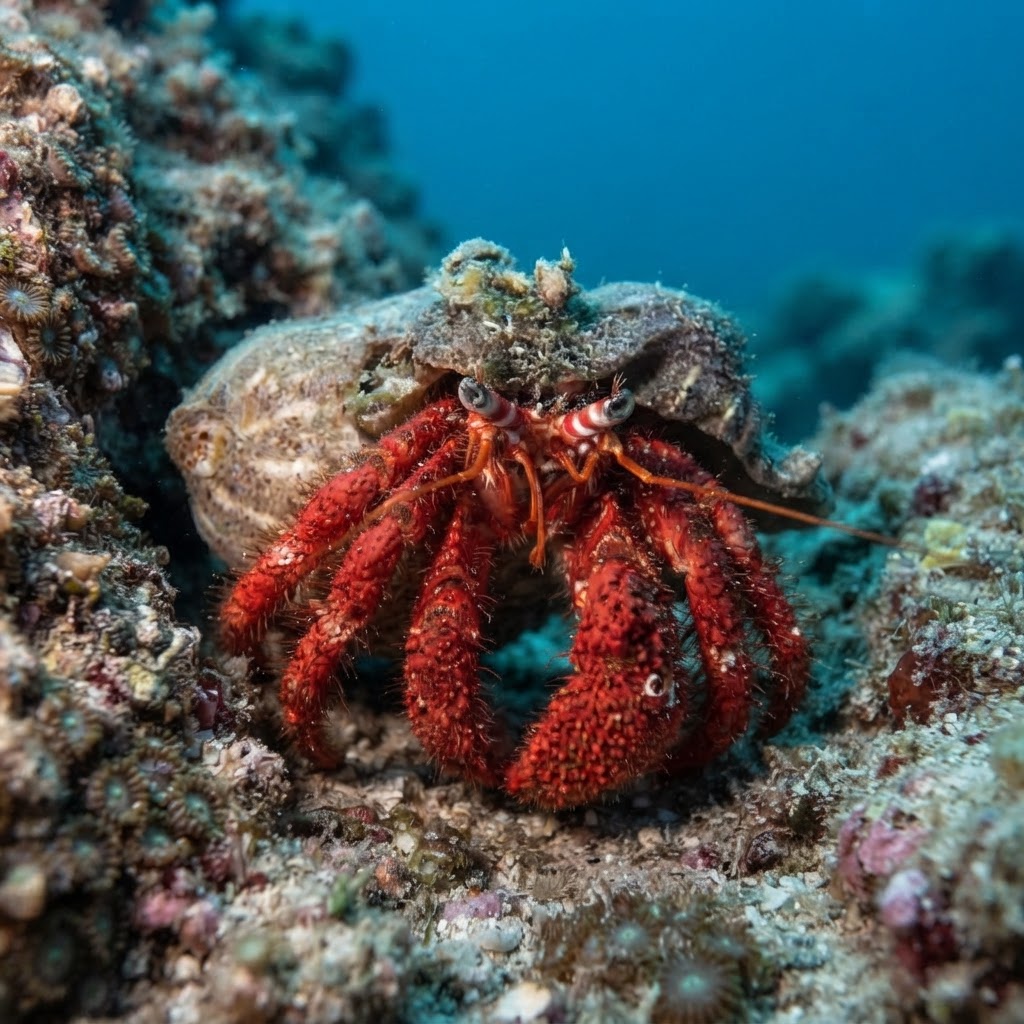
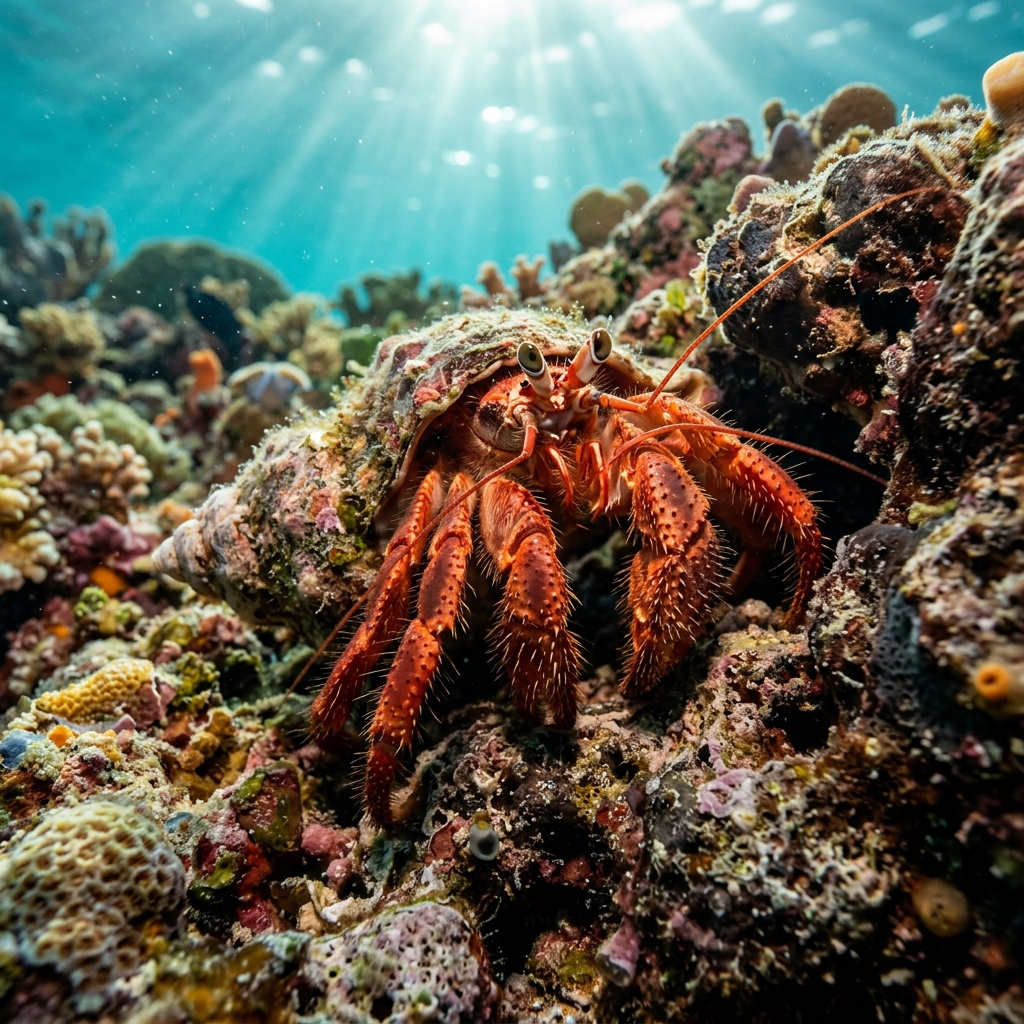
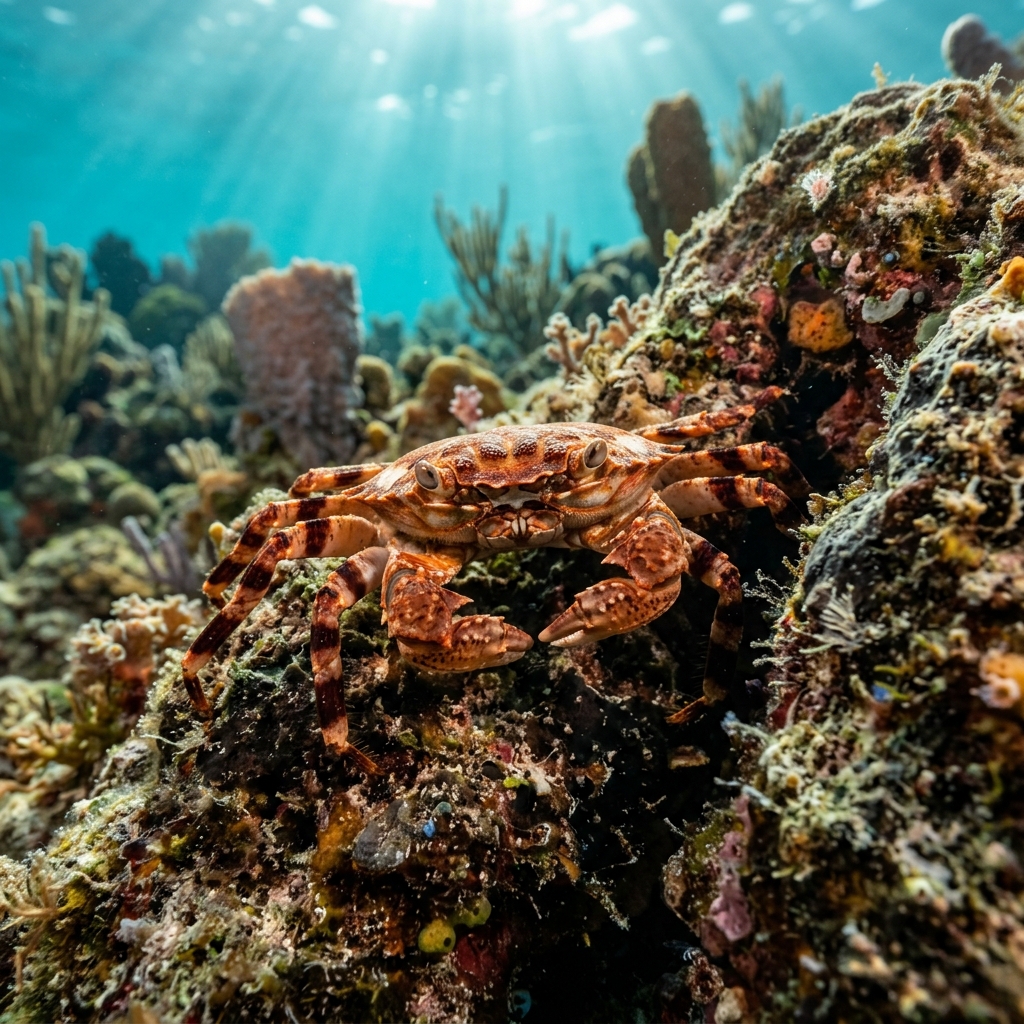
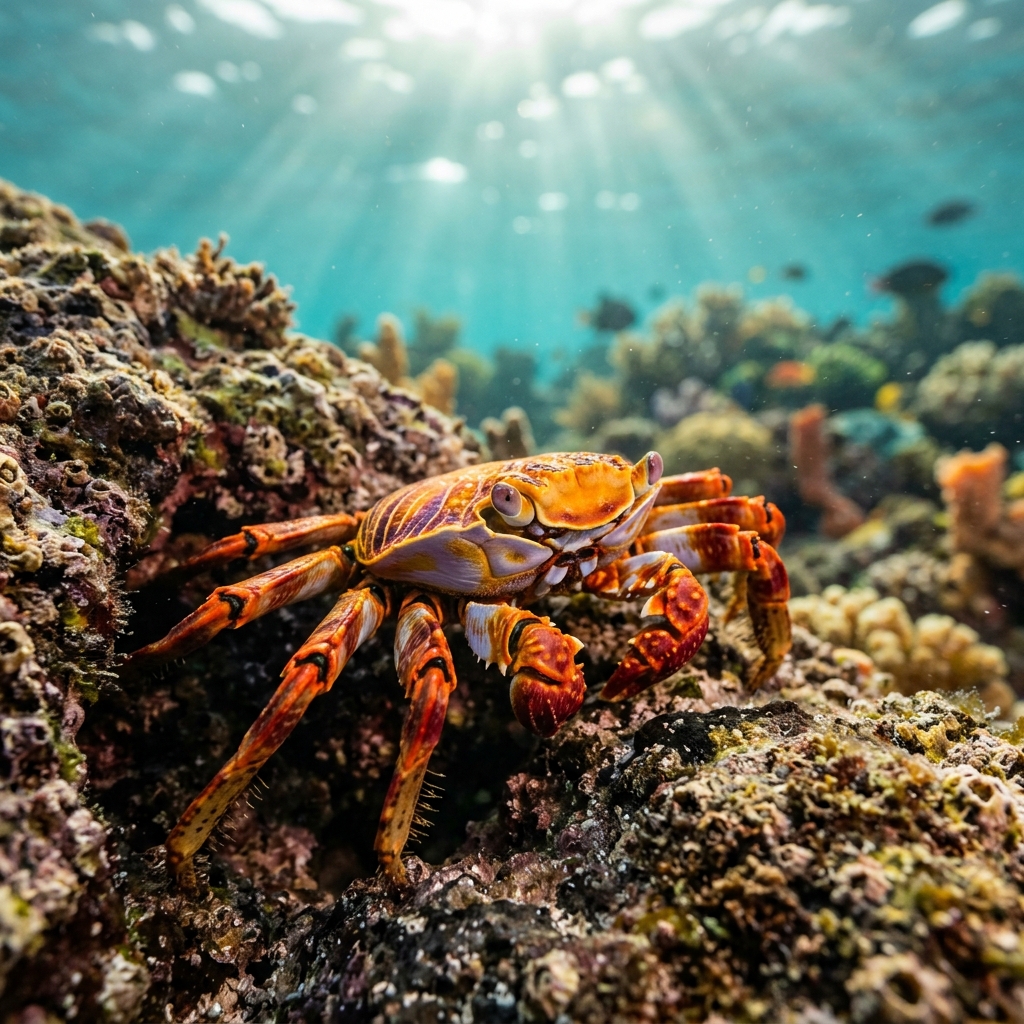
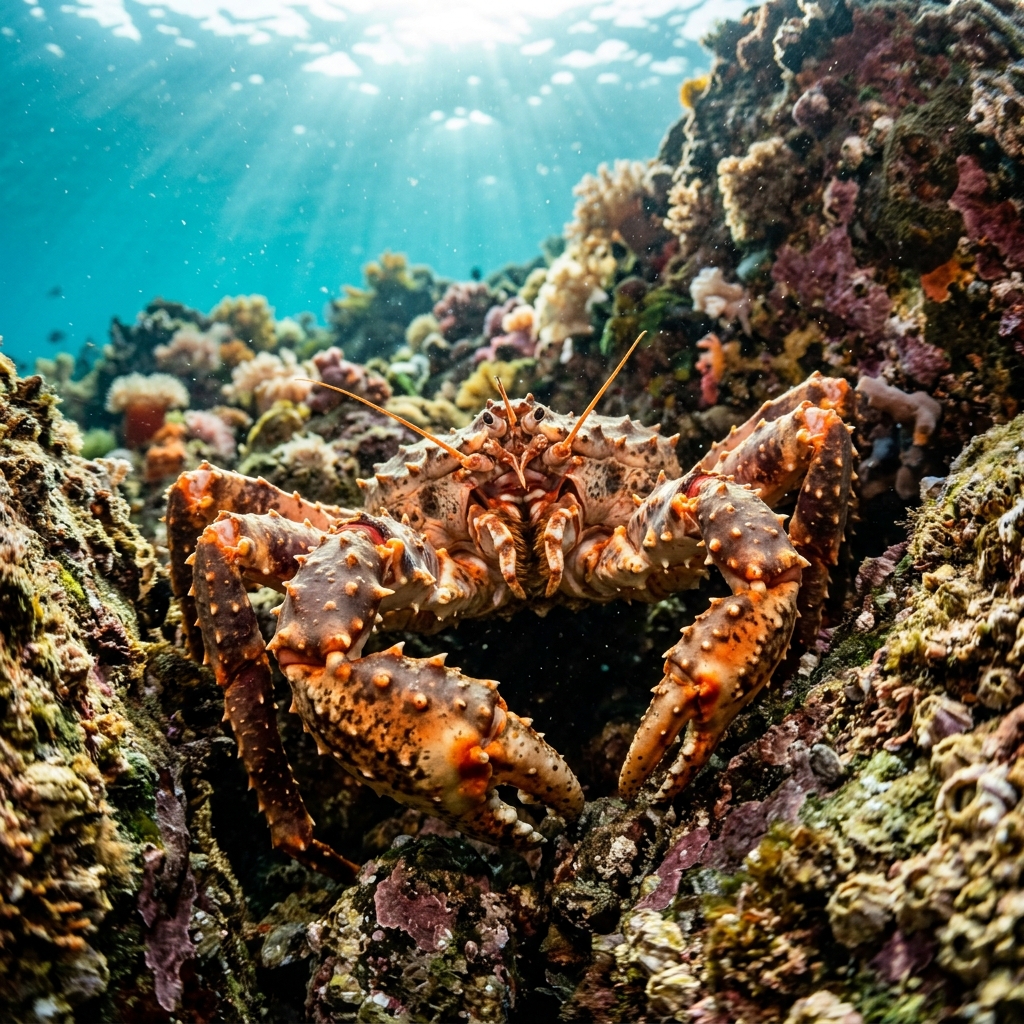
Reef neighbours a diver could mistake it for. Use the identification notes above to tell them apart.
Most reliably logged in Italy, with strong numbers in Sardinia and Sicily, and in Croatia's Istria region, which together account for the bulk of sightings. It also turns up along France's Occitanie coast and the French Riviera, with occasional records from Puglia, the Ionian Islands in Greece and Catalonia in Spain.
Mapping where Mediterranean Green Crab is logged…
It's most often logged in Italy, especially Sardinia and Sicily, and in Croatia's Istria region. Divers also report it along France's Occitanie and Riviera coasts, with scattered sightings in Greece and Spain.
There's no strong season in the sighting data, and it's recorded across water temperatures from about 15 to 21 C, so it can turn up on rocky Mediterranean dives year-round.
Look for a small, fan-shaped crab around 4 cm across with a mottled green-brown shell that blends into rock and sediment. It has short spines along the front edge of the shell near the eyes and tends to stay still when approached.
They typically reach around 4 cm across the shell, making them one of the smaller crabs divers encounter on Mediterranean rocky reefs.
No, they pose no threat to divers. They are small, retreat into crevices when disturbed and have no venom or aggressive defence worth worrying about.
Site and sighting data is aggregated from diver logs, iNaturalist and GBIF. For taxonomy and conservation status:
European Green Crab
2,469 sites