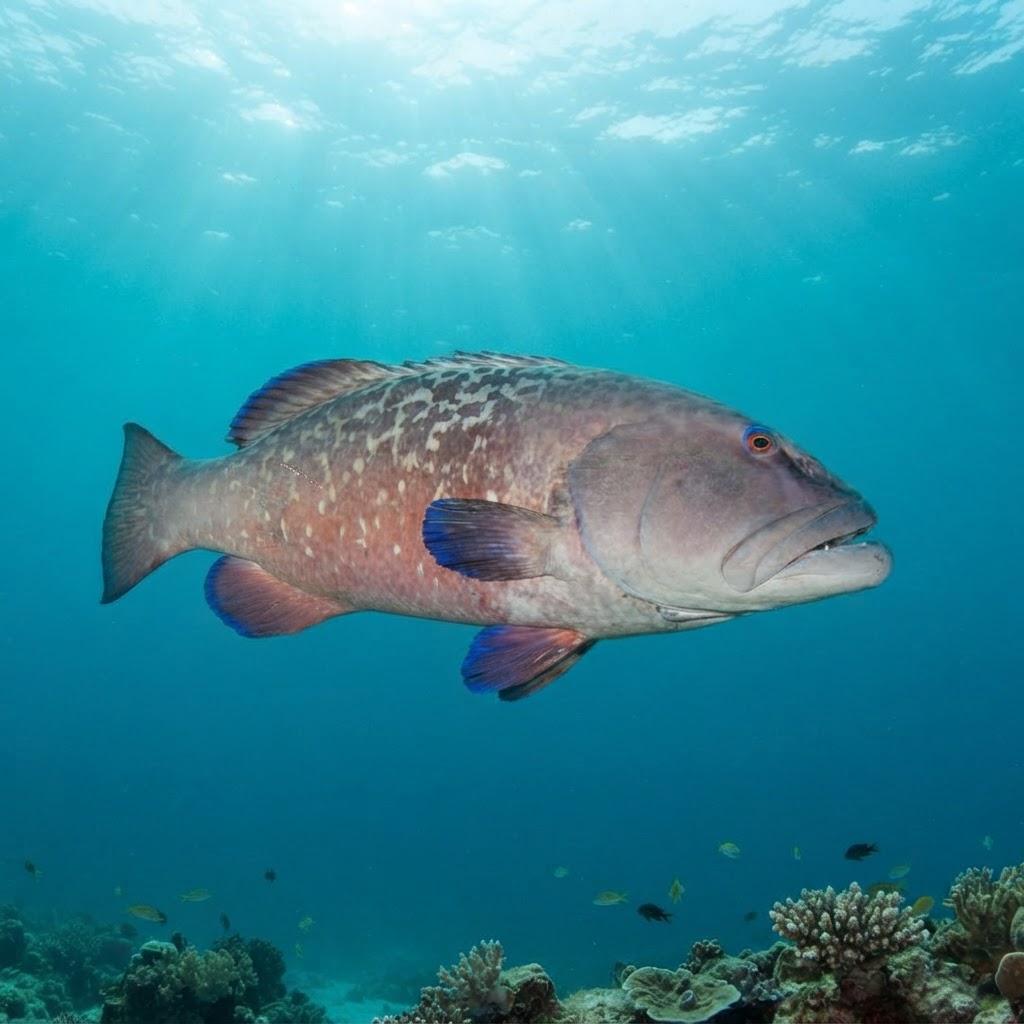
Plectropomus punctatus
Spot this marbled reef predator on KwaZulu-Natal dives, year-round in 25 to 28C water, though sightings stay uncommon even at known sites.
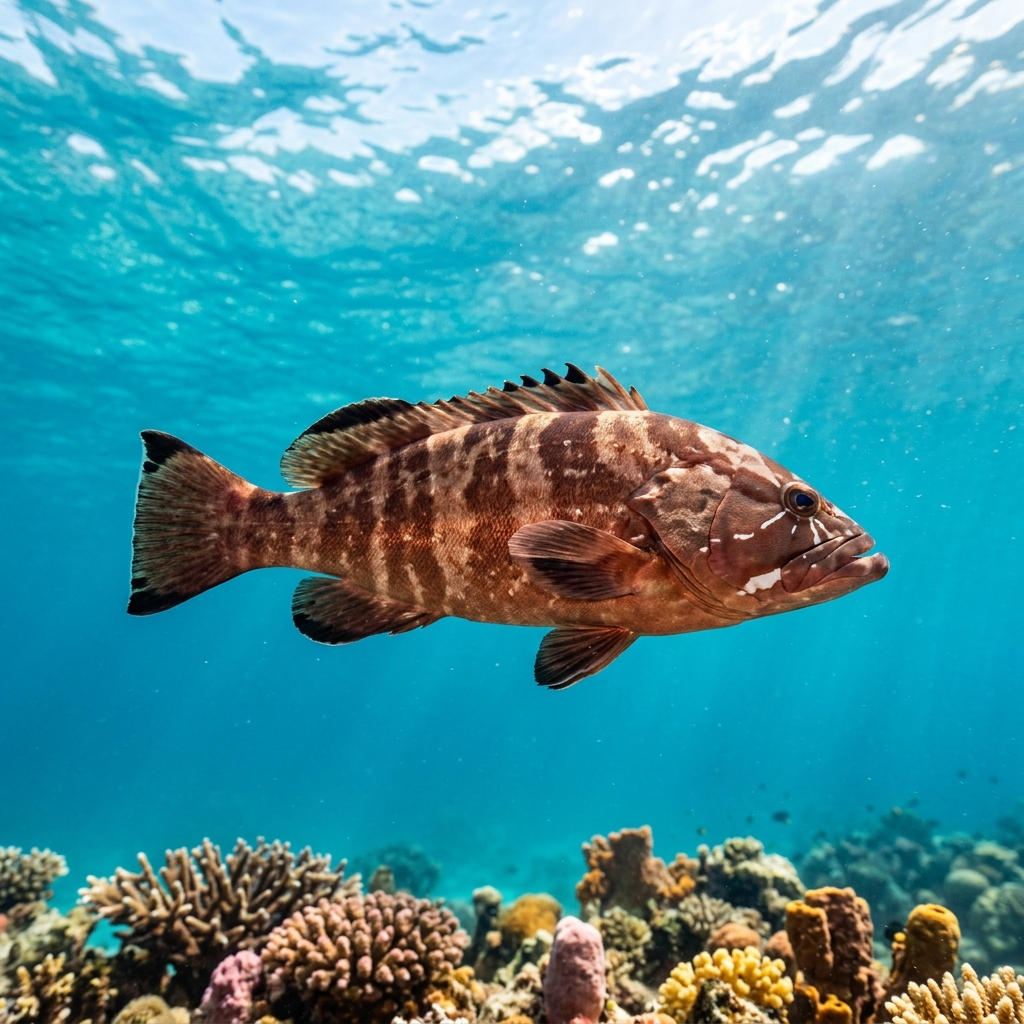
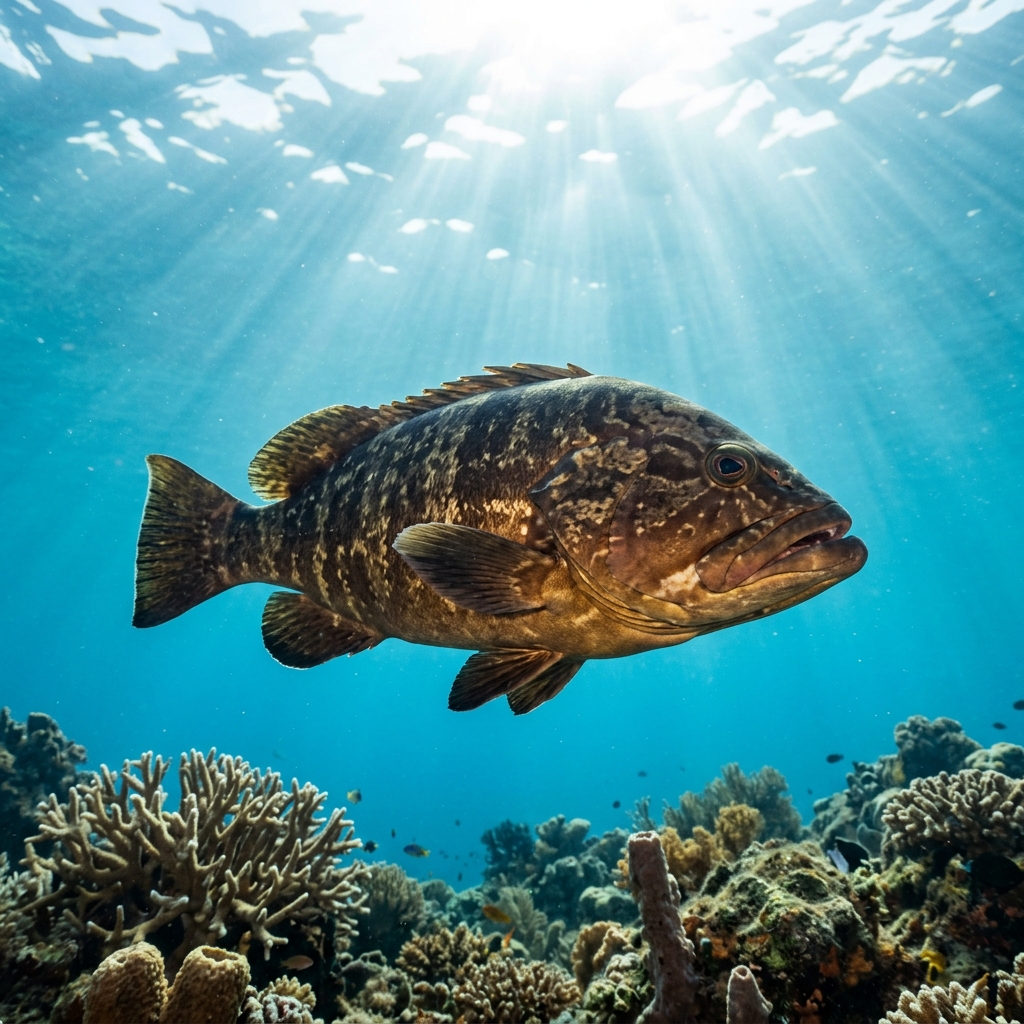
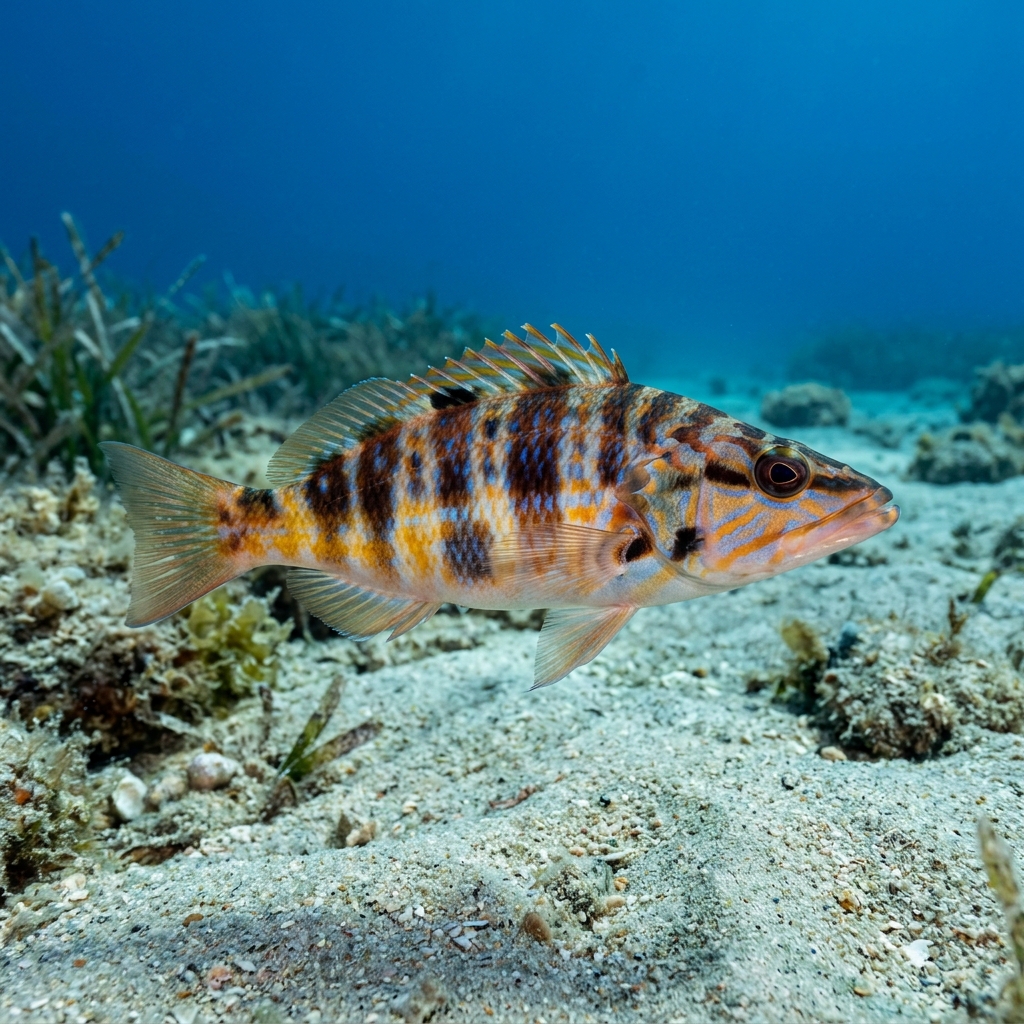
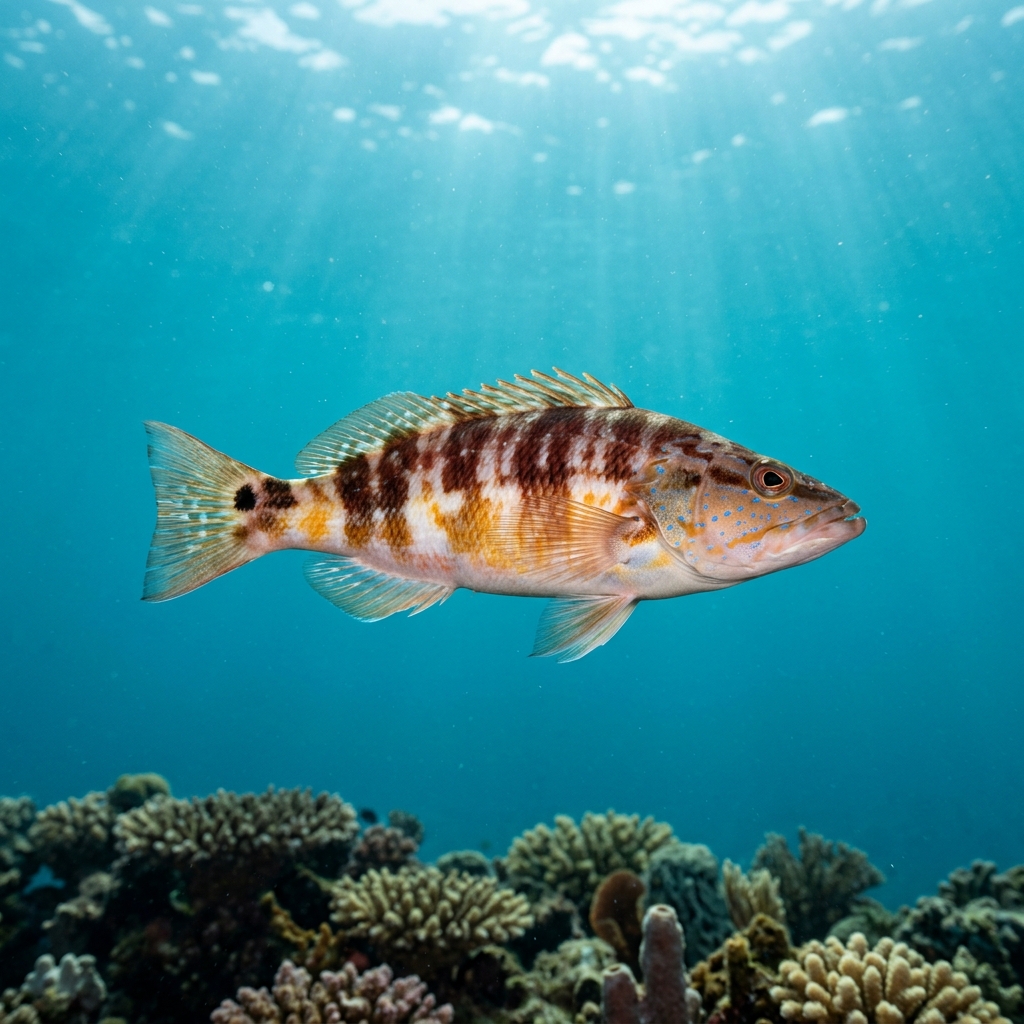
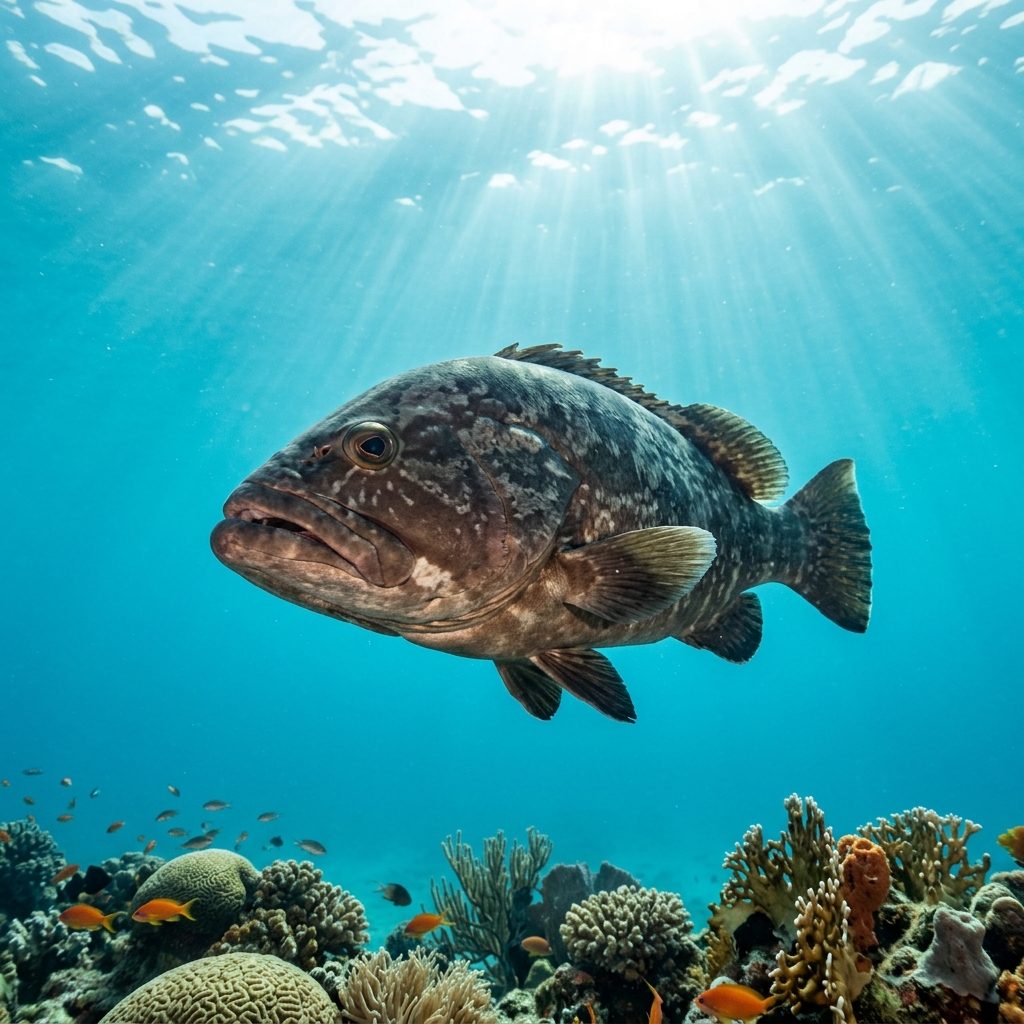
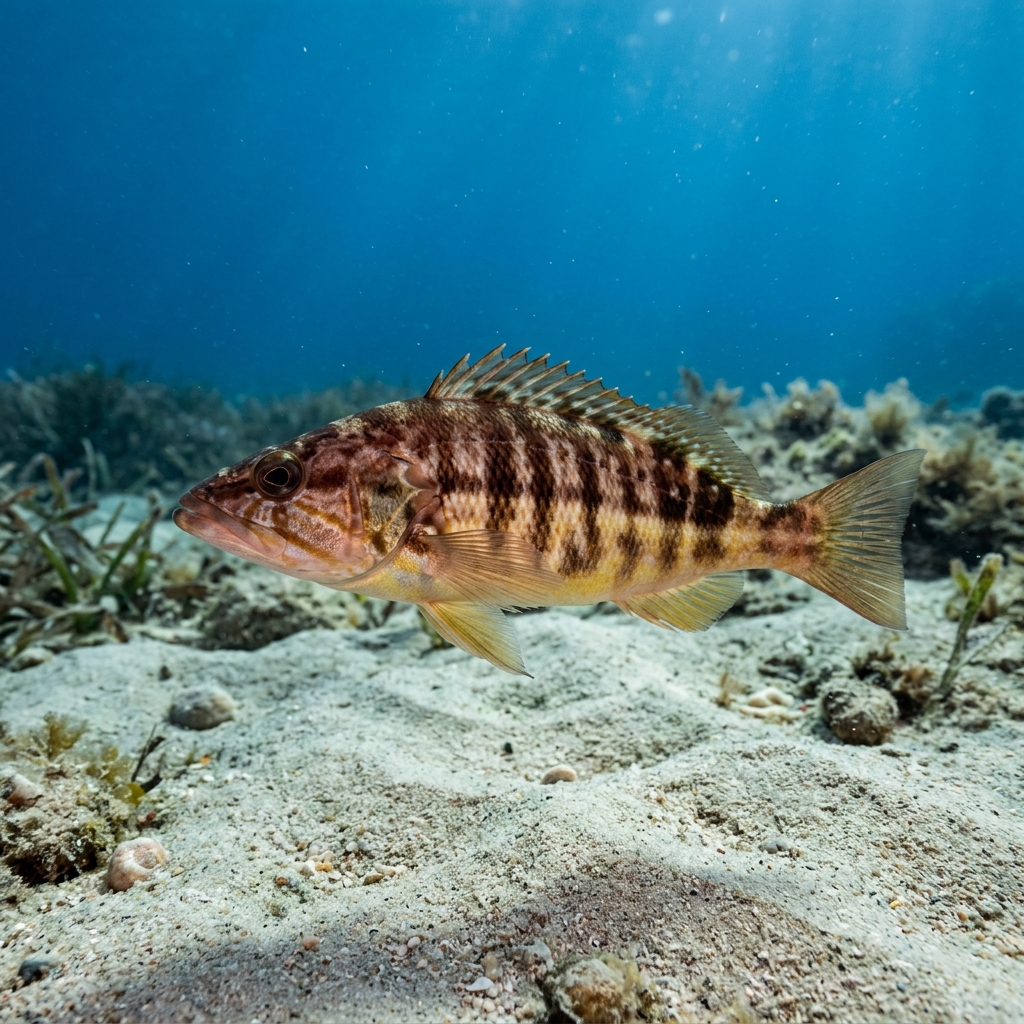
Grows to around 67 cm, with a thickset, torpedo-shaped grouper body covered in dense small dark spots over a reddish-brown to grey-brown base, giving the marbled look the name promises. The spots run right onto the head and fins, with no large blotches or bands breaking up the pattern. Look for it holding still near reef structure rather than swimming in open water, which is typical grouper behaviour and helps separate it from faster-moving reef fish at a glance.
Typically found holding close to reef structure such as ledges and coral heads rather than out in open water, in classic grouper ambush-predator style. Divers log it as an uncommon find even at sites where it does occur, so encounters tend to be a case of spotting one tucked into a crevice or hovering near cover rather than seeing it out cruising. It is generally unbothered by divers at a respectful distance, staying put rather than bolting.
Like other Plectropomus groupers, it is a reef-associated ambush predator that relies on camouflage and a burst of speed from cover rather than chasing prey in open water.
No clear seasonal pattern shows up in the sightings, and it sits comfortably in 25 to 28.1C water, so it appears to be a year-round resident on KwaZulu-Natal reefs rather than a seasonal visitor.
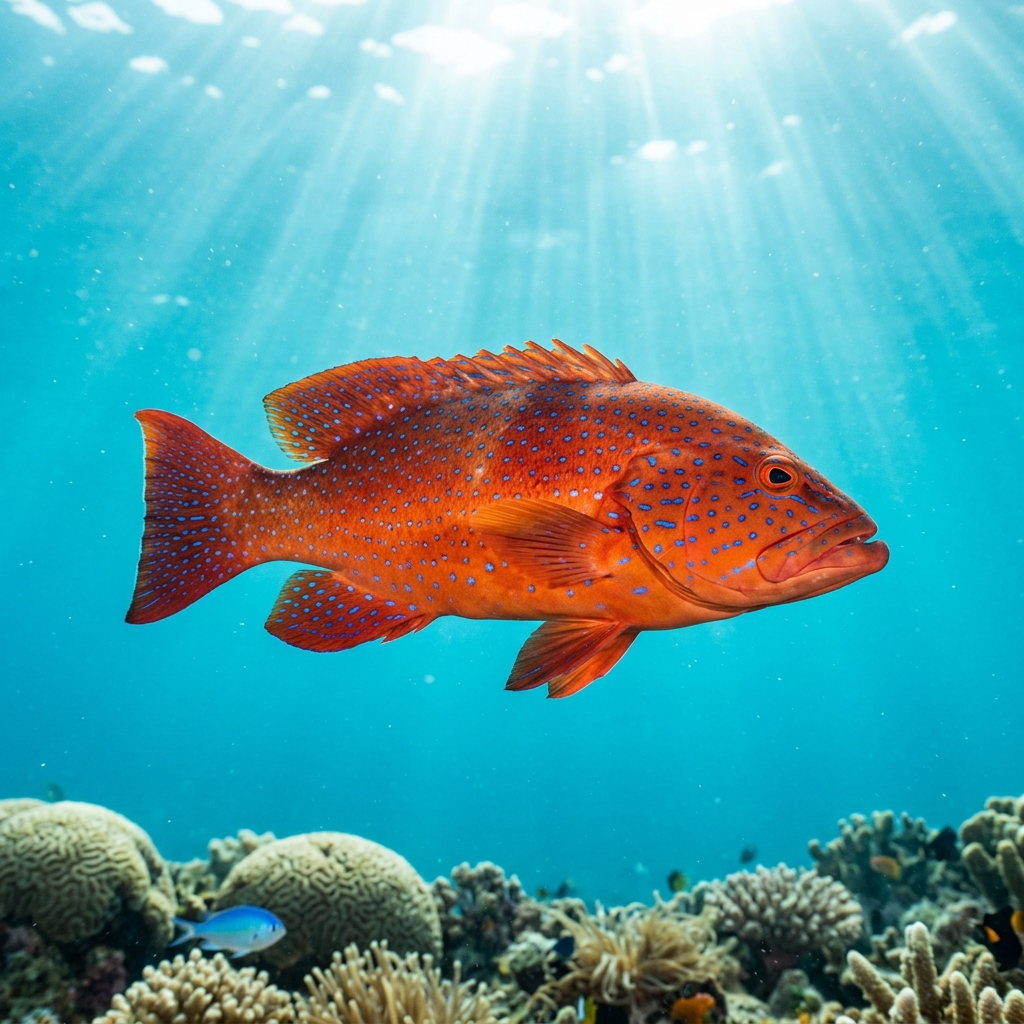
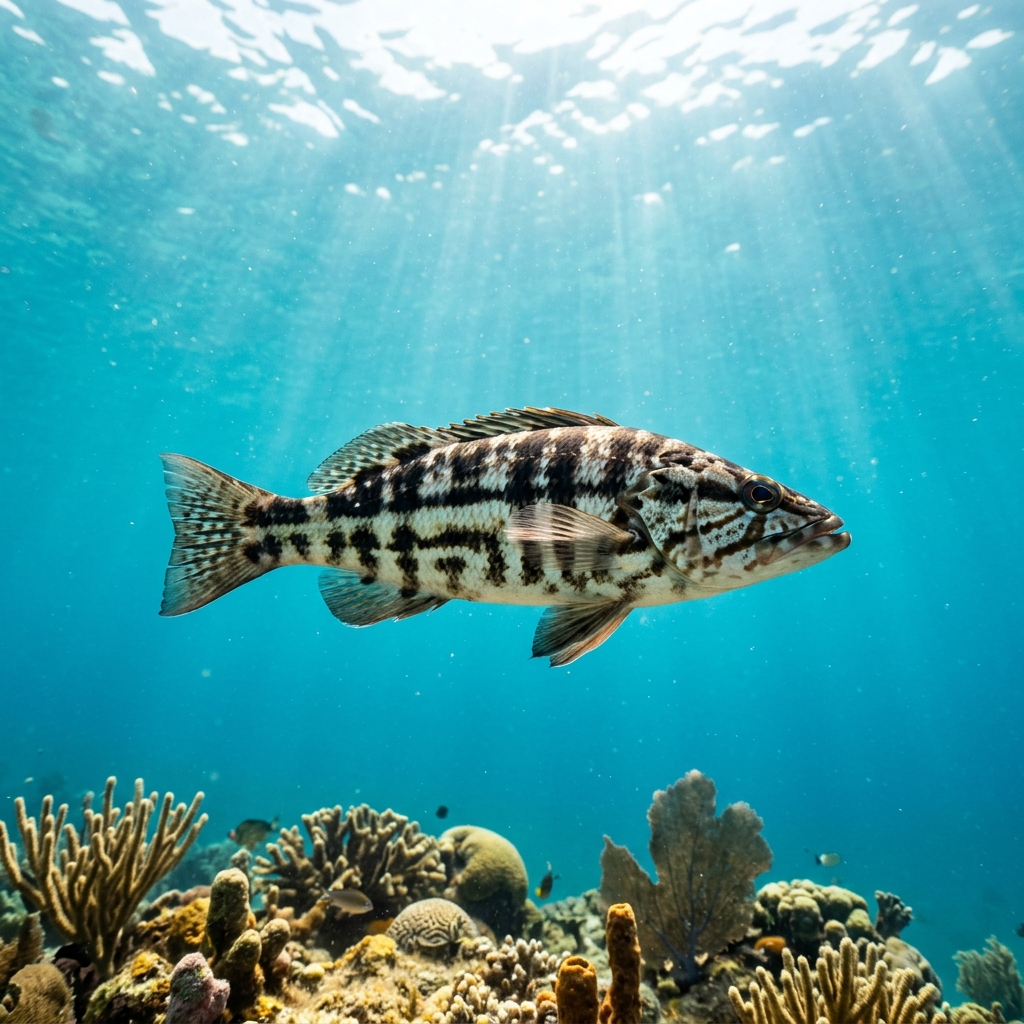
Reef neighbours a diver could mistake it for. Use the identification notes above to tell them apart.
KwaZulu-Natal in South Africa is by far the strongest area for logged sightings, with reef sites along this stretch of coast producing the bulk of confirmed encounters. Divers currently have no other well-documented regions to fall back on, so South Africa's KwaZulu-Natal reefs are the place to plan a search.
Mapping where Marbled Coralgrouper is logged…
The strongest and most reliable sightings come from KwaZulu-Natal in South Africa, where reef sites have produced the bulk of logged encounters. Outside this region there is little documented diver data on where else to find it.
There is no clear seasonal spike in sightings, and it tolerates a fairly narrow warm-water range of 25 to 28.1C, suggesting it is present on KwaZulu-Natal reefs throughout the year rather than tied to one season.
Look for a stocky grouper around 67 cm covered edge to edge in small dark spots over a reddish-brown body, sitting still near reef cover rather than swimming in the open. The dense, even spotting across the whole body and fins is the key marbled pattern to key on.
They typically reach around 67 cm in length, a solid mid-sized reef grouper rather than one of the giant species in the family.
No, they are not considered dangerous to divers. Like most groupers they will simply hold their position or retreat into cover if approached rather than showing any aggression.
Site and sighting data is aggregated from diver logs, iNaturalist and GBIF. For taxonomy and conservation status:
Blacktip Grouper
2,726 sites