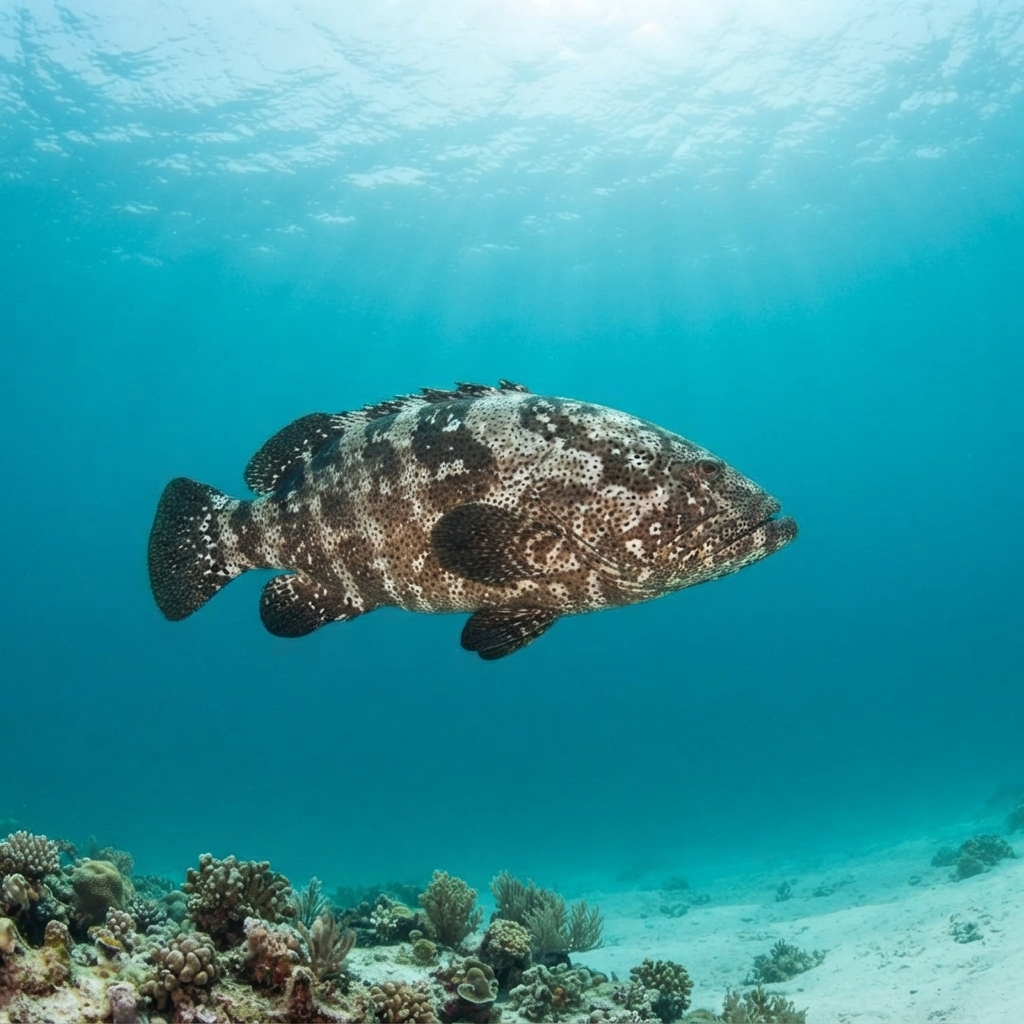
Epinephelus malabaricus
Grey-brown groupers with dark blotches turn up year-round on Queensland reefs and around Mozambique's Bazaruto Archipelago in 24-29 C water.
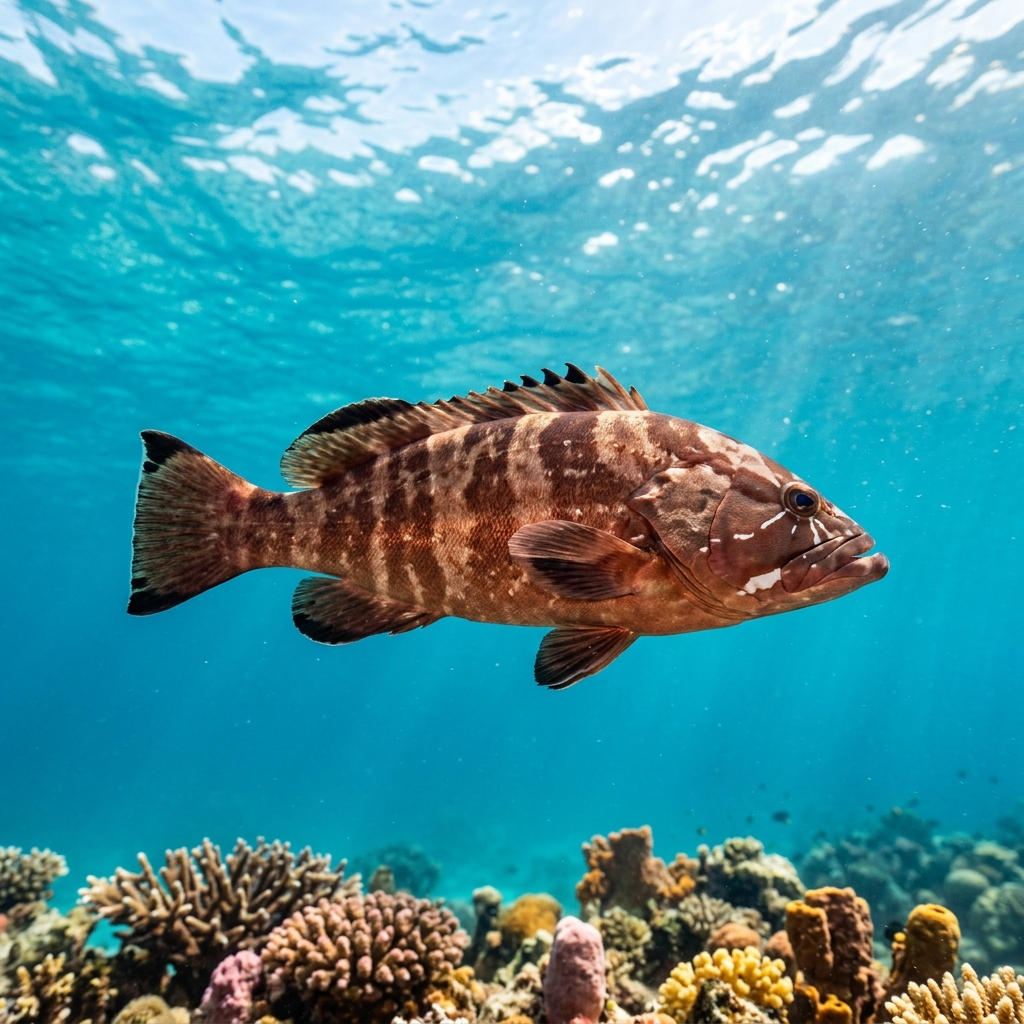
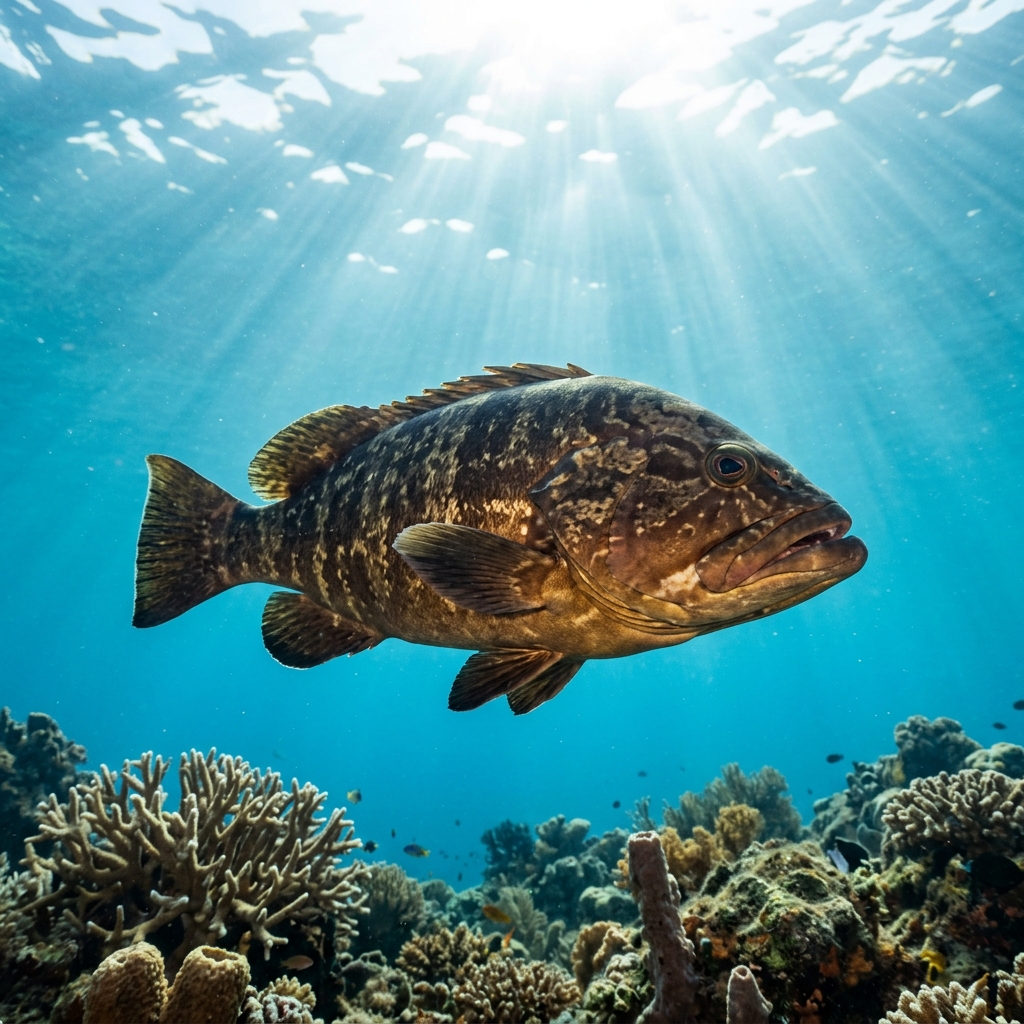
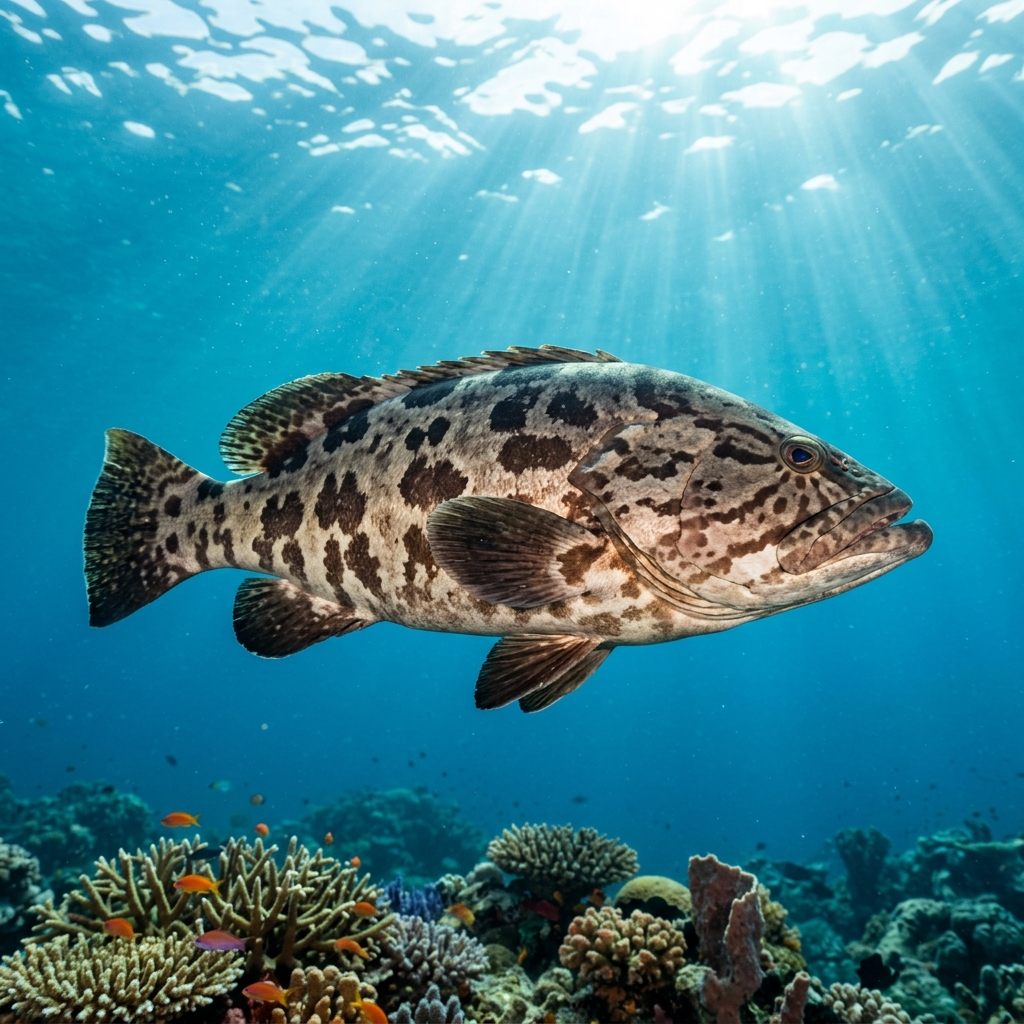
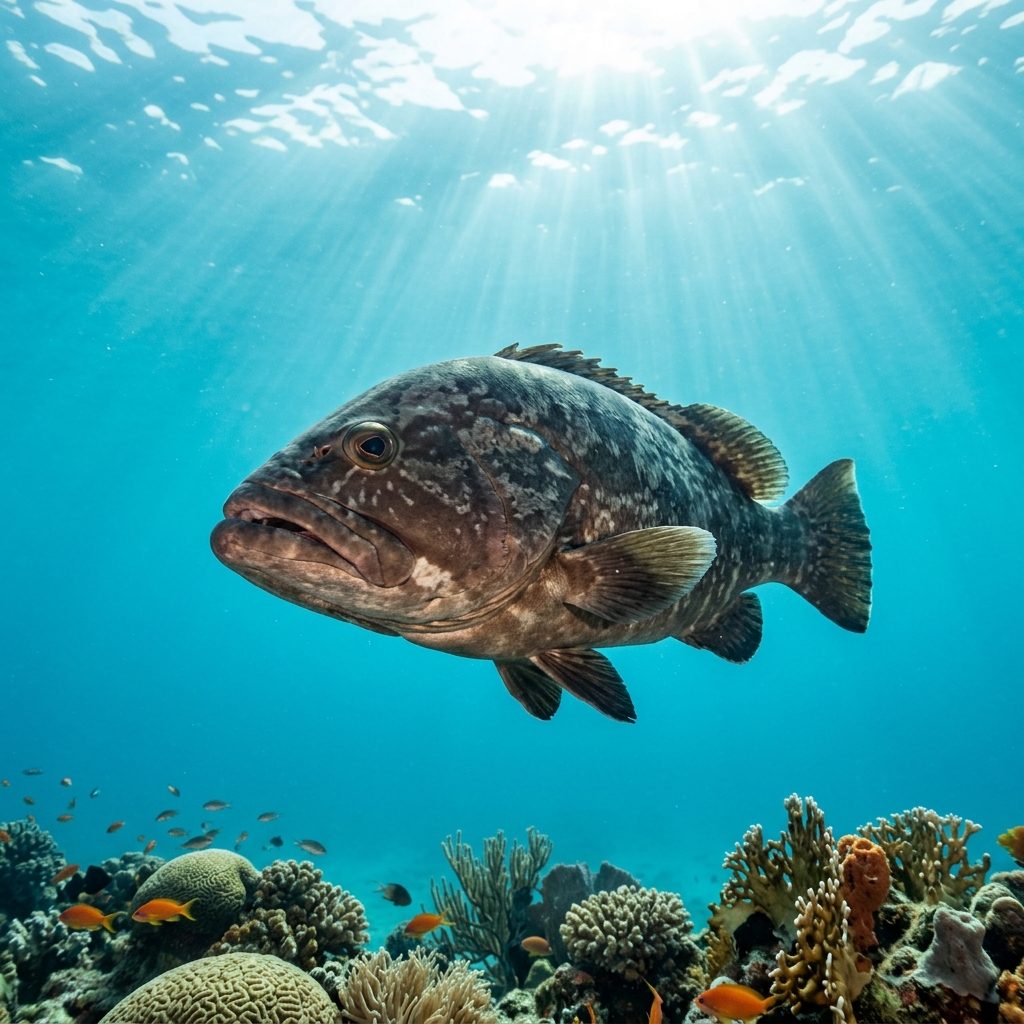
Bulky, thick-bodied grouper that can push past 1.5 metres, with a grey-brown to olive base colour covered in dark, irregular blotches and smaller pale spots that give it a mottled, camouflage-like look. The head is broad and flattish with a large mouth built for engulfing prey rather than biting. Look for it sitting low over the reef or wedged near a ledge rather than swimming in open water, where its bulk and patchy colouring set it apart from slimmer reef fish.
Usually seen holding a fixed position near a coral head, ledge or wreck structure rather than cruising the reef, often with just its head and gills visible from a cave or overhang. It tends to be unbothered by divers, holding its ground and watching rather than bolting, which makes for a decent ID photo if you approach slowly. Most sightings are logged as uncommon rather than common, so a Malabar grouper feels more like a solid find than a guaranteed tick.
Like many groupers, this species is a protogynous hermaphrodite, starting life as female and with some individuals later changing sex to male as they grow, a trait shared across much of the grouper family.
No clear seasonal pattern shows up in the sightings, and with a comfortable range of 24.3 to 29.1 C, this is a year-round fish on the reefs where it's found rather than a seasonal visitor.
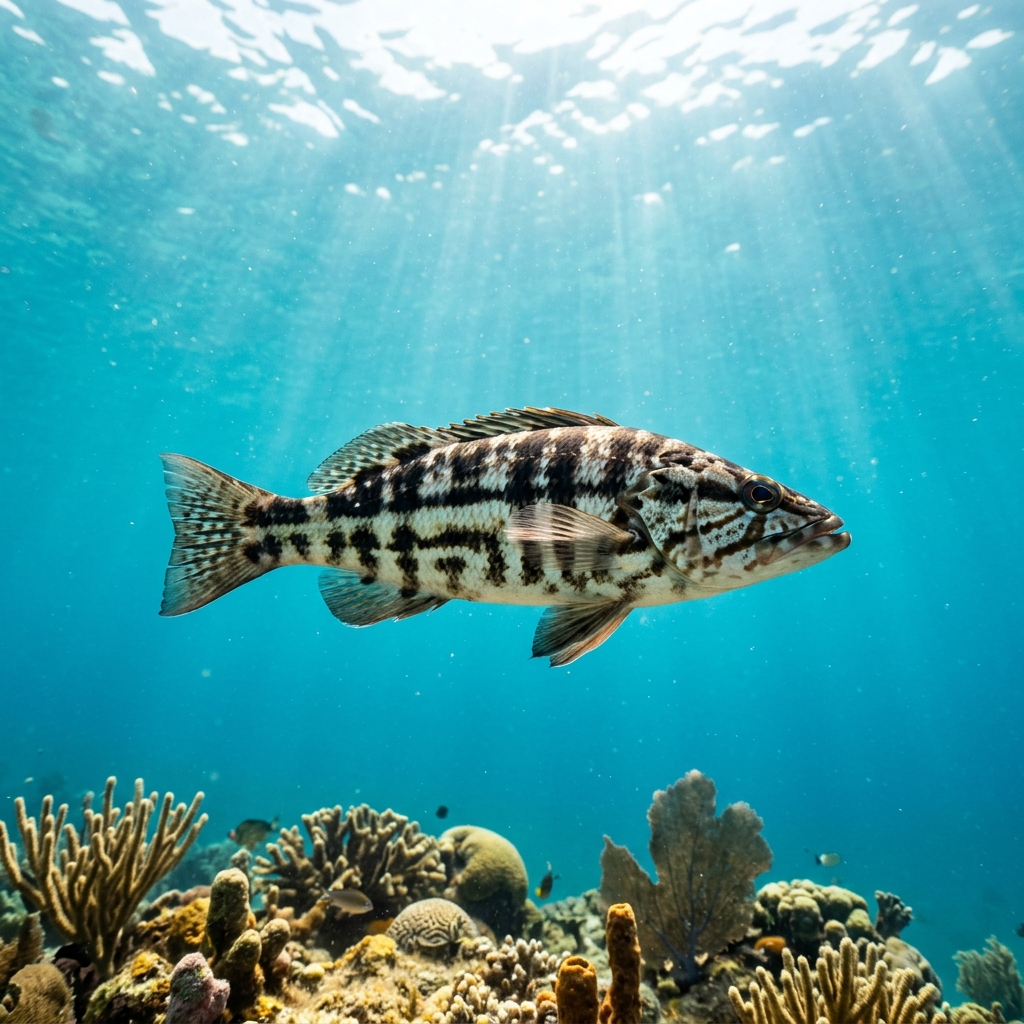
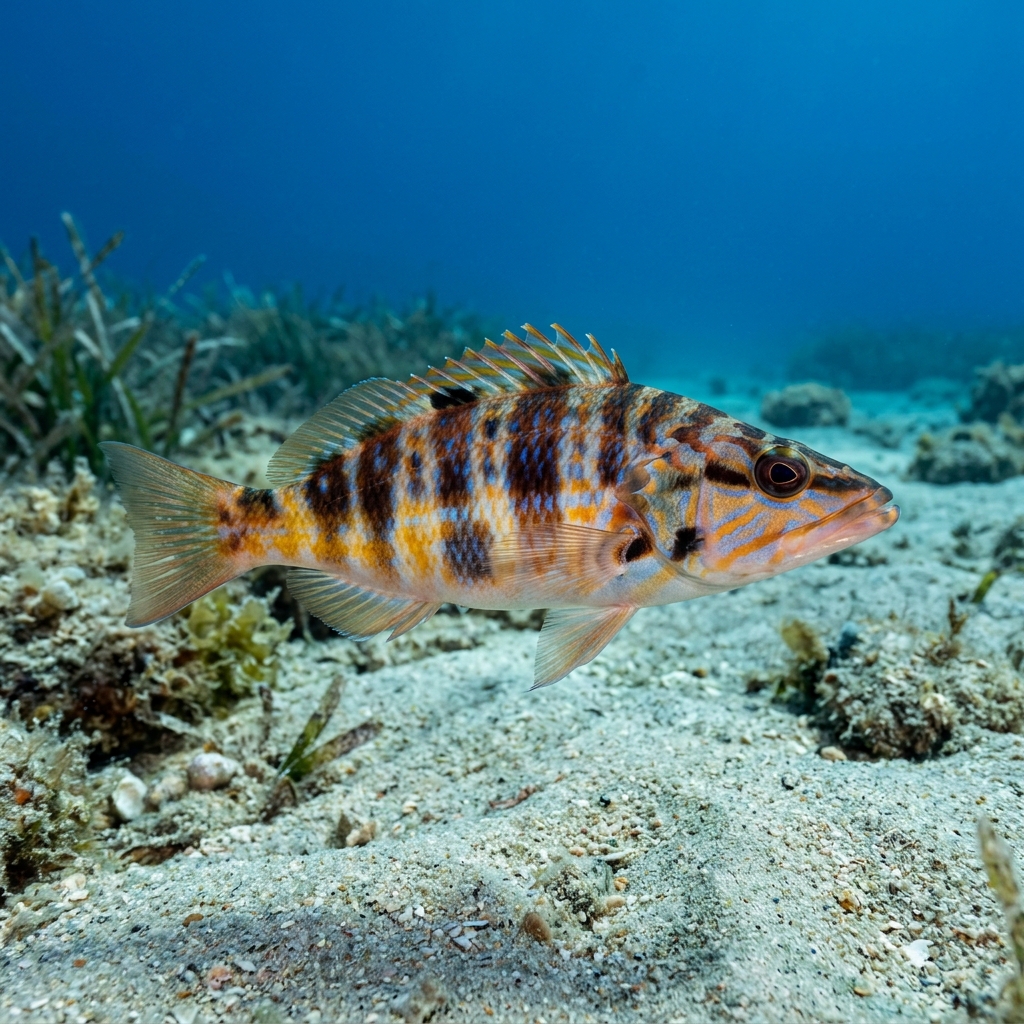
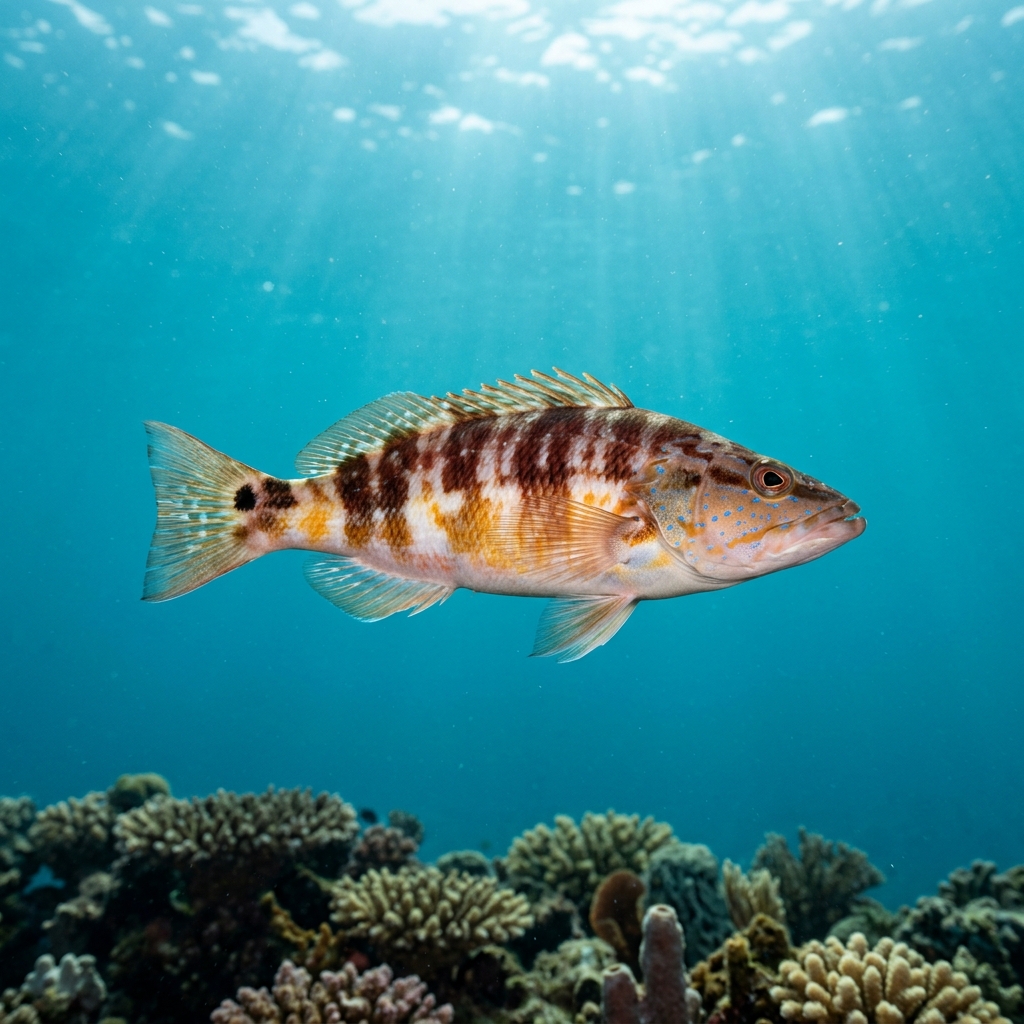
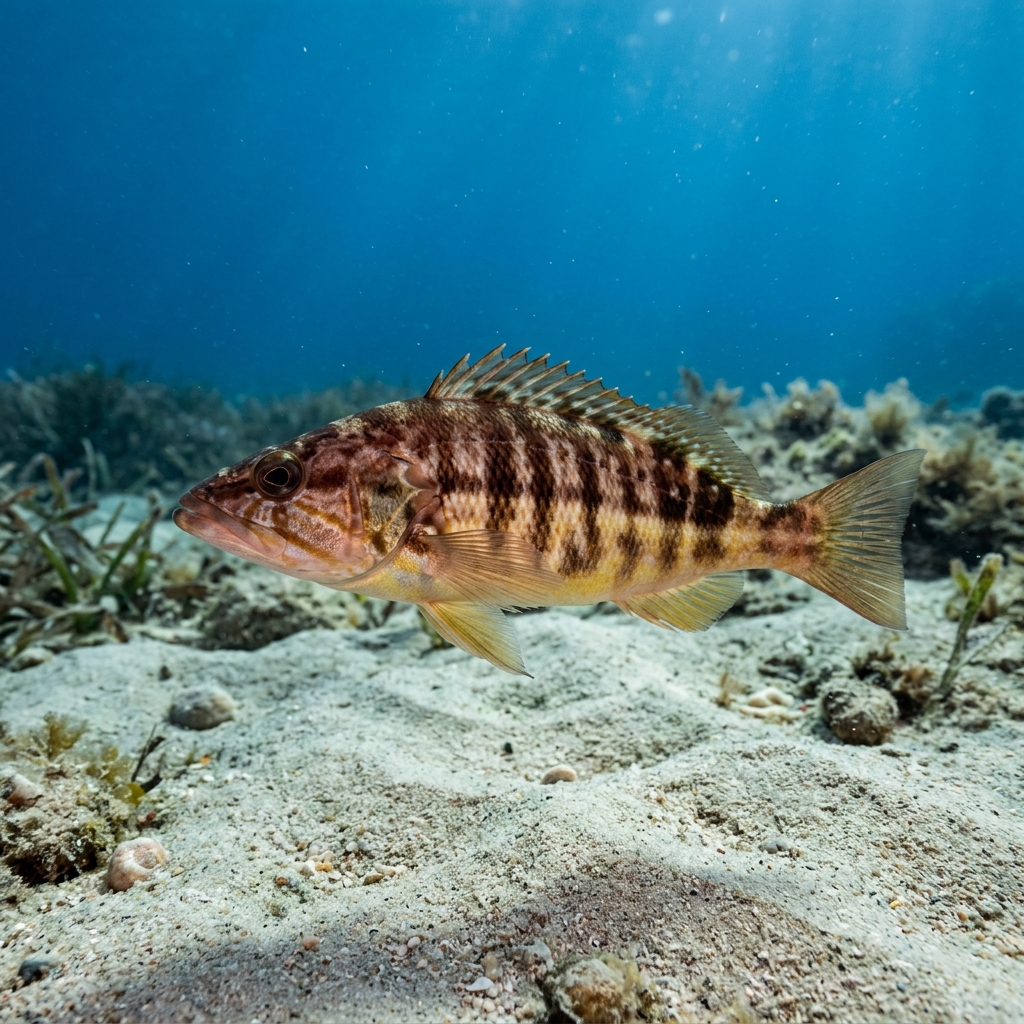
Reef neighbours a diver could mistake it for. Use the identification notes above to tell them apart.
Most consistently logged on the Great Barrier Reef and inshore sites across Queensland and Western Australia, Australia, which together account for the bulk of sightings. Mozambique's Bazaruto Archipelago is the other strong hotspot, with occasional sightings further afield in Fiji's Lomaiviti region and around Nouméa in New Caledonia.
Mapping where Malabar Grouper is logged…
Queensland and Western Australia are the most reliable regions, with the Great Barrier Reef and nearby inshore sites producing the most sightings. Mozambique's Bazaruto Archipelago is another strong spot, with scattered records from Fiji and New Caledonia.
There's no strong season in the sightings data, and the species tolerates a wide 24 to 29 C range, so it's realistically a year-round sighting on the reefs where it occurs rather than tied to a particular month.
Look for a large, thick-bodied grouper with grey-brown to olive skin covered in dark, irregular blotches and pale flecks, usually sitting still near a ledge or coral head rather than swimming openly. Its broad, flattish head and heavy build separate it from slimmer reef fish sharing the same habitat.
They're one of the larger reef groupers, with individuals reaching around 164 cm in length. That size, combined with their heavy build, makes adults easy to pick out from smaller grouper species sharing the same reef.
They're protogynous hermaphrodites, meaning individuals start life as female and some later transition to male as they mature, a reproductive strategy common across the grouper family.
Site and sighting data is aggregated from diver logs, iNaturalist and GBIF. For taxonomy and conservation status:
Blacktip Grouper
2,726 sites