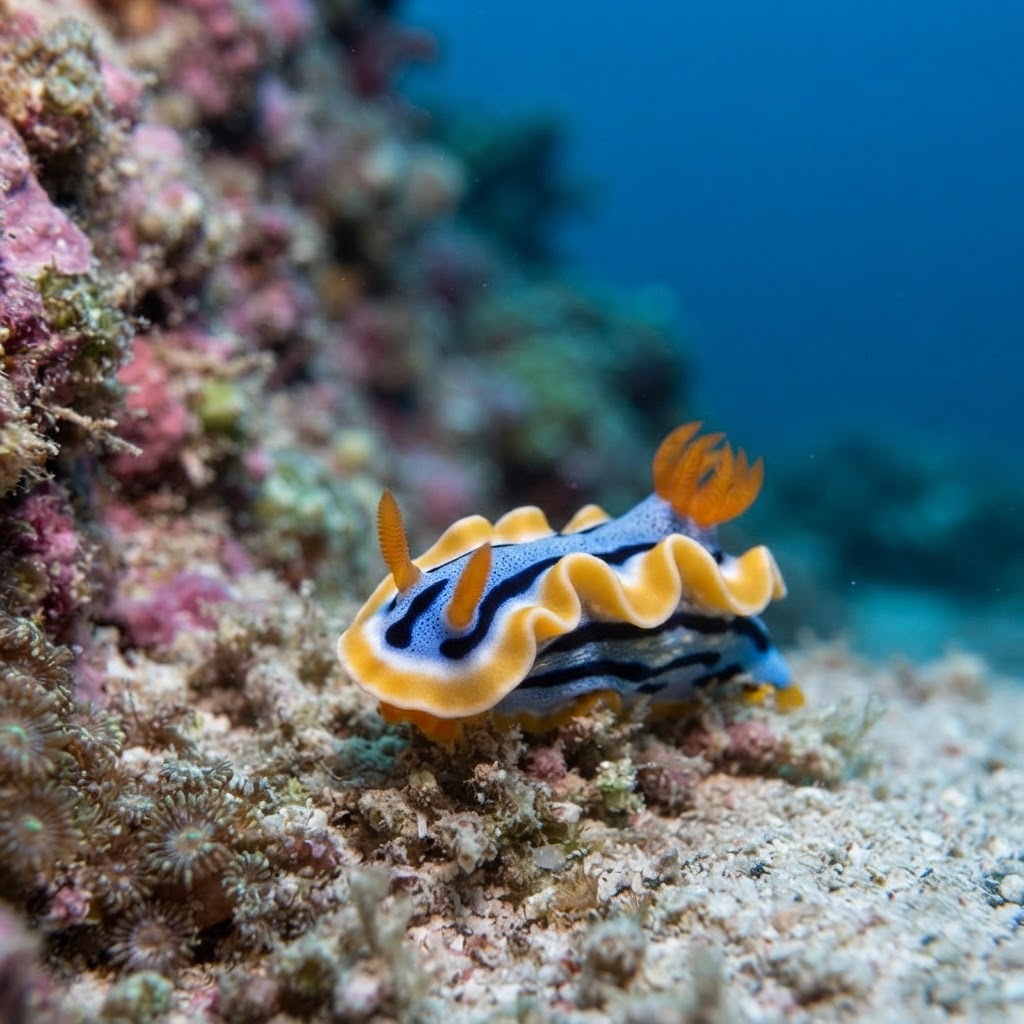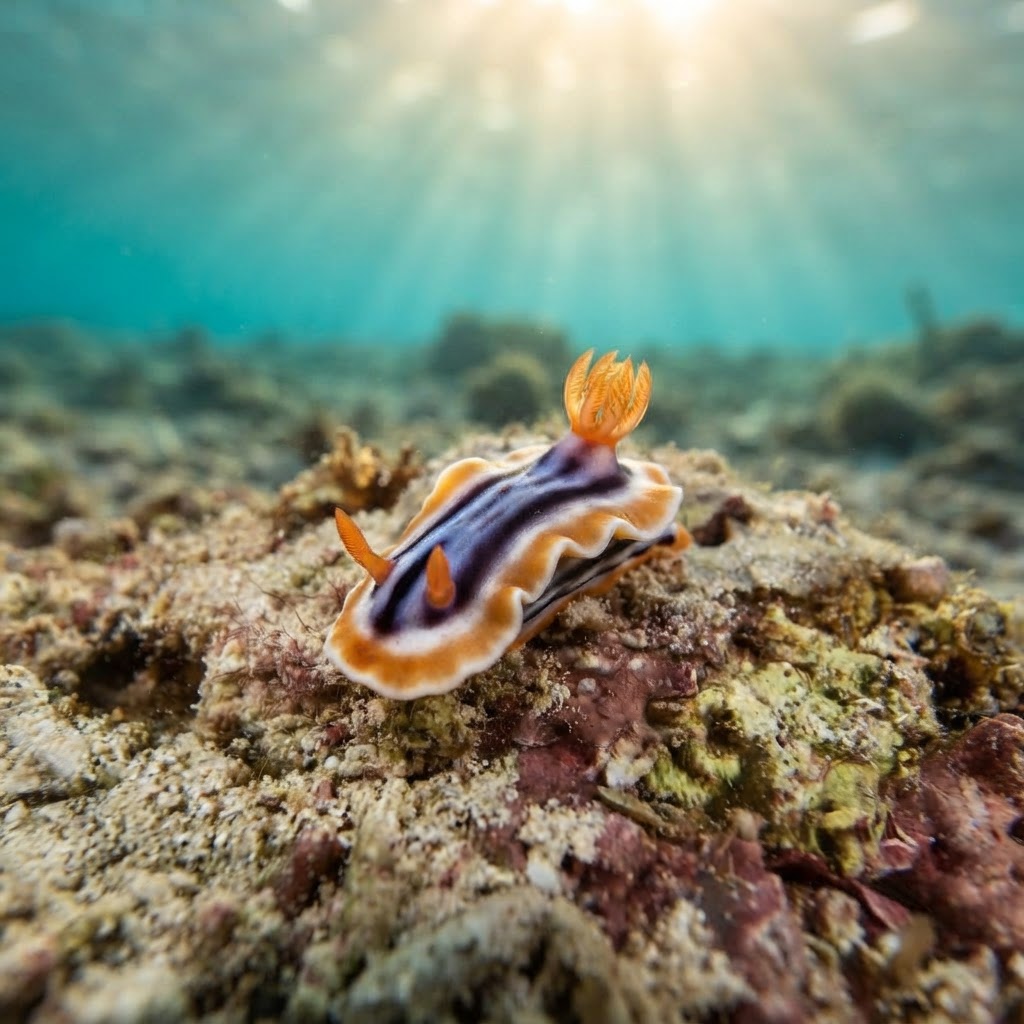
Chromodoris magnifica
A reef muck-diving favourite in the Visayas and Luzon, this bold white-and-orange nudibranch turns up year-round in 25-31C water.
A creamy white to pale mantle rimmed with a bold orange border is the giveaway, running the length of an elongated, soft-bodied slug typically a few centimetres long. Look for the contrasting purple to lavender gills (feathery tuft) and rhinophores (the paired sensory horns) at the tail and head ends. It moves slowly across the substrate, never darting, so once spotted it is easy to photograph.
Divers most often find this one grazing slowly across rubble, sponge patches, or coral debris on the reef floor, moving at the unhurried pace typical of nudibranchs. It shows no reaction to divers beyond continuing to feed, which makes it an easy, patient subject for macro photography. Most logs come from daytime dives rather than night dives, suggesting it is active and visible in daylight.
Like other Chromodoris nudibranchs, its bright colouring is not for show to divers but a warning to predators: it sequesters chemical compounds from the sponges it feeds on, making itself distasteful or toxic to eat.
No clear seasonal pattern shows up in the sightings, and with a comfortable range of 25.4 to 31.4C this is a year-round find on the tropical reefs where it lives. Plan around good visibility and a slow macro dive rather than a particular month.
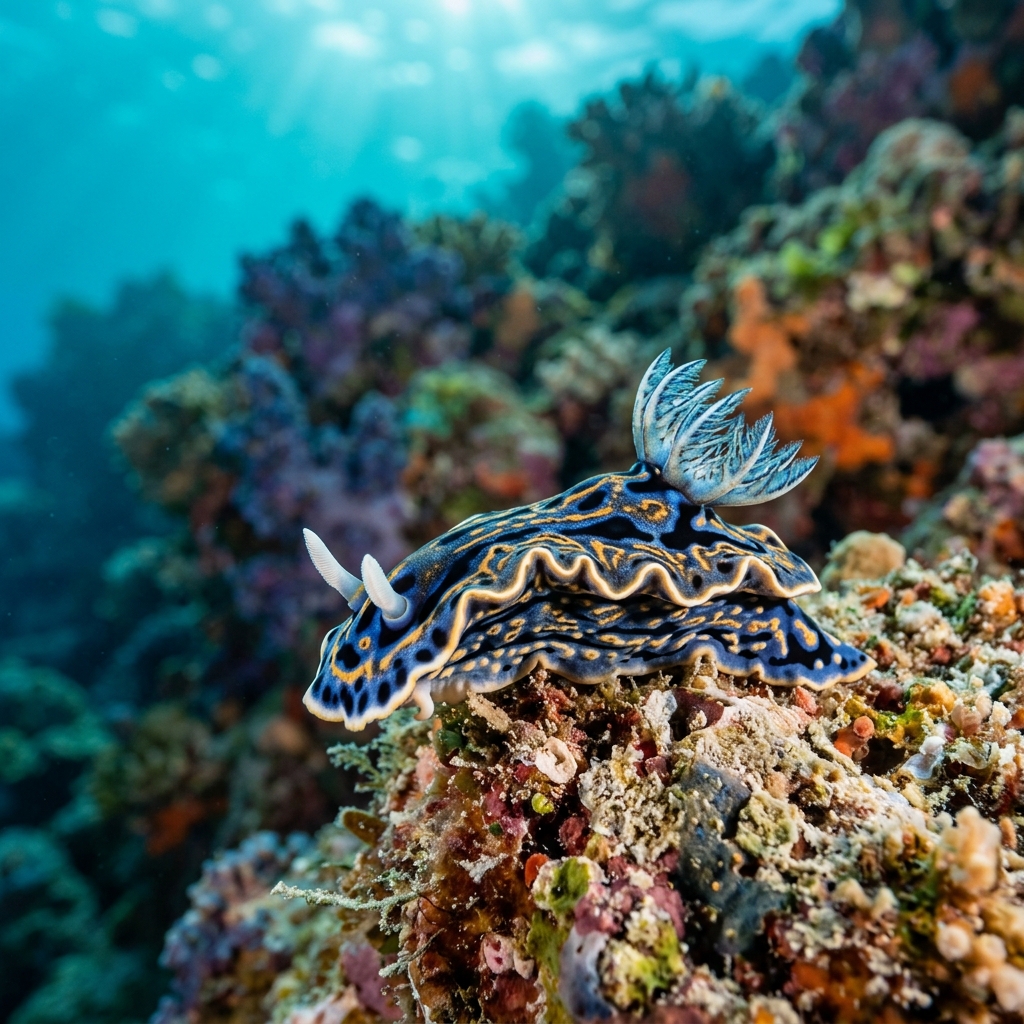
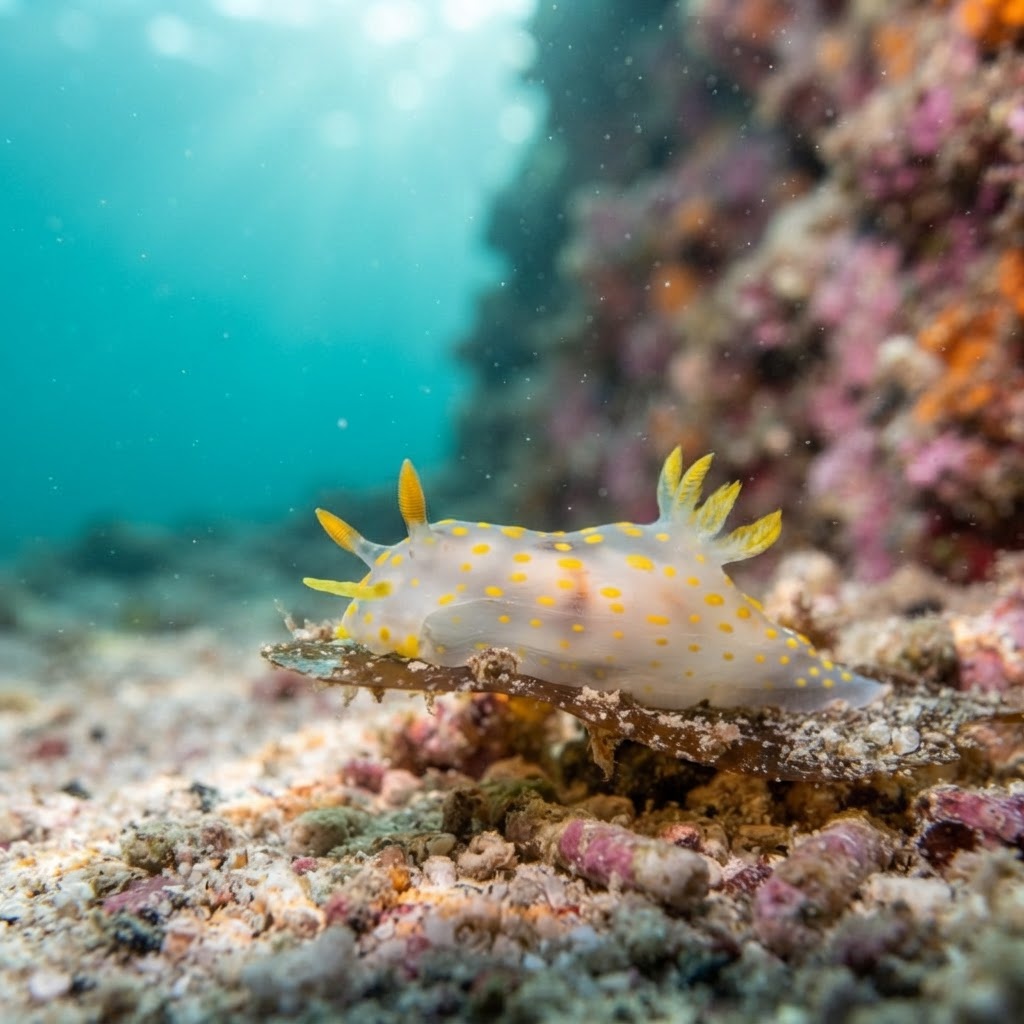
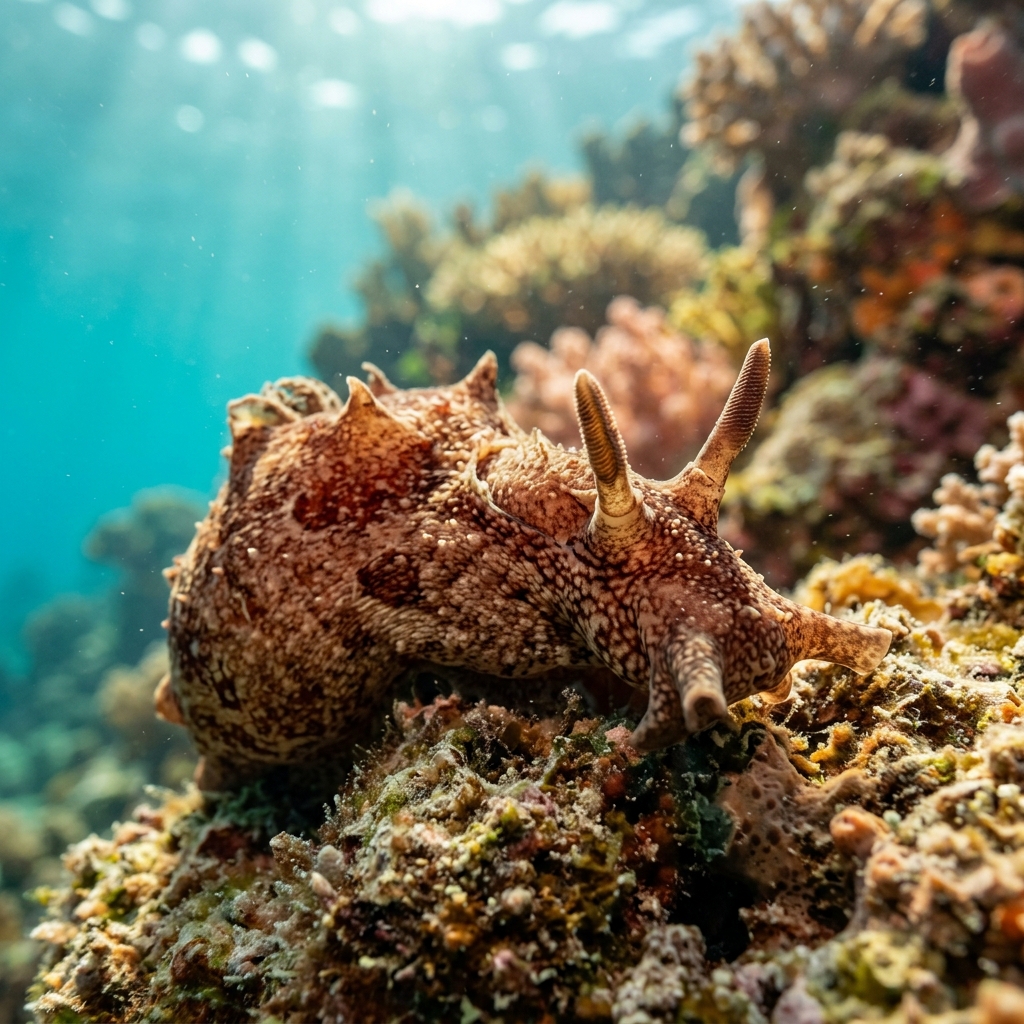
Reef neighbours a diver could mistake it for. Use the identification notes above to tell them apart.
This is a strong find across the Philippines, especially the Visayas and Luzon, where it turns up more consistently than almost anywhere else in the data. It is also a reliable sighting on the East Coast of Peninsular Malaysia, in Sabah, and around Bali in Indonesia, with smaller but steady populations logged in Taiwan's Green Island, Western Australia, and Okinawa in Japan.
Mapping where Magnificent Chromodoris is logged…
The Philippines is the strongest region, particularly the Visayas and Luzon, followed by the East Coast of Peninsular Malaysia, Sabah, and Bali in Indonesia. Smaller populations are logged in Taiwan, Western Australia, and Okinawa.
There is no strong seasonal pattern in the sightings, so it is considered a year-round find. It lives comfortably between 25.4 and 31.4C, matching typical tropical reef conditions all year.
Look for a white to cream mantle with a bold orange border and purple gills and rhinophores at each end. It is slow-moving and usually found on rubble or sponge-covered substrate during the day.
Exact size data isn't available for this species, but like most Chromodoris nudibranchs it is a small, elongated slug typically measured in centimetres rather than tens of centimetres.
No, it poses no risk to divers. It has no means of stinging or biting and simply continues grazing when approached.
Its colours are a warning rather than decoration. It absorbs distasteful or toxic compounds from the sponges it eats, then displays bright patterns to signal to predators that it is not worth attacking.
Site and sighting data is aggregated from diver logs, iNaturalist and GBIF. For taxonomy and conservation status:
Light-spotted Aegires
3,168 sites