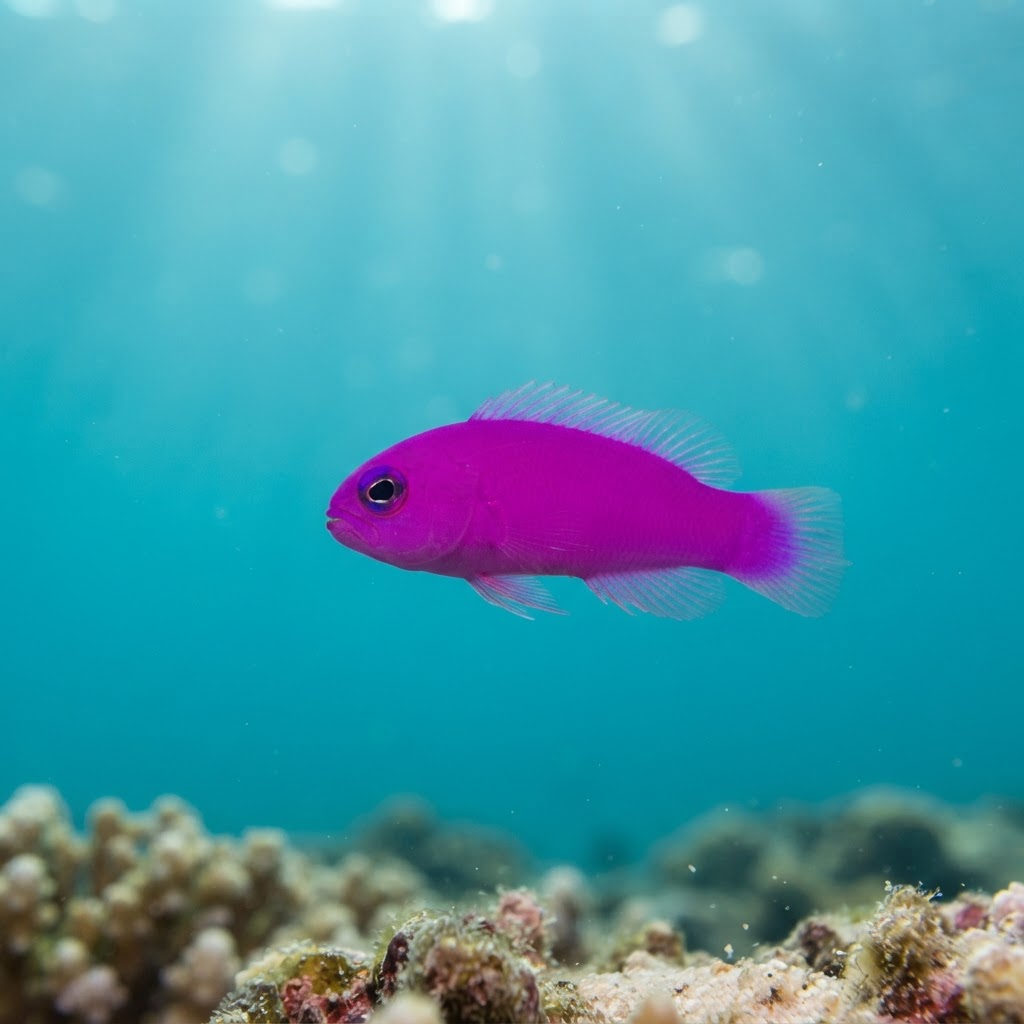
Pictichromis porphyrea
Small magenta-pink fish darting through rubble in Raja Ampat, Okinawa and Palau's Rock Islands year-round in warm reef water.
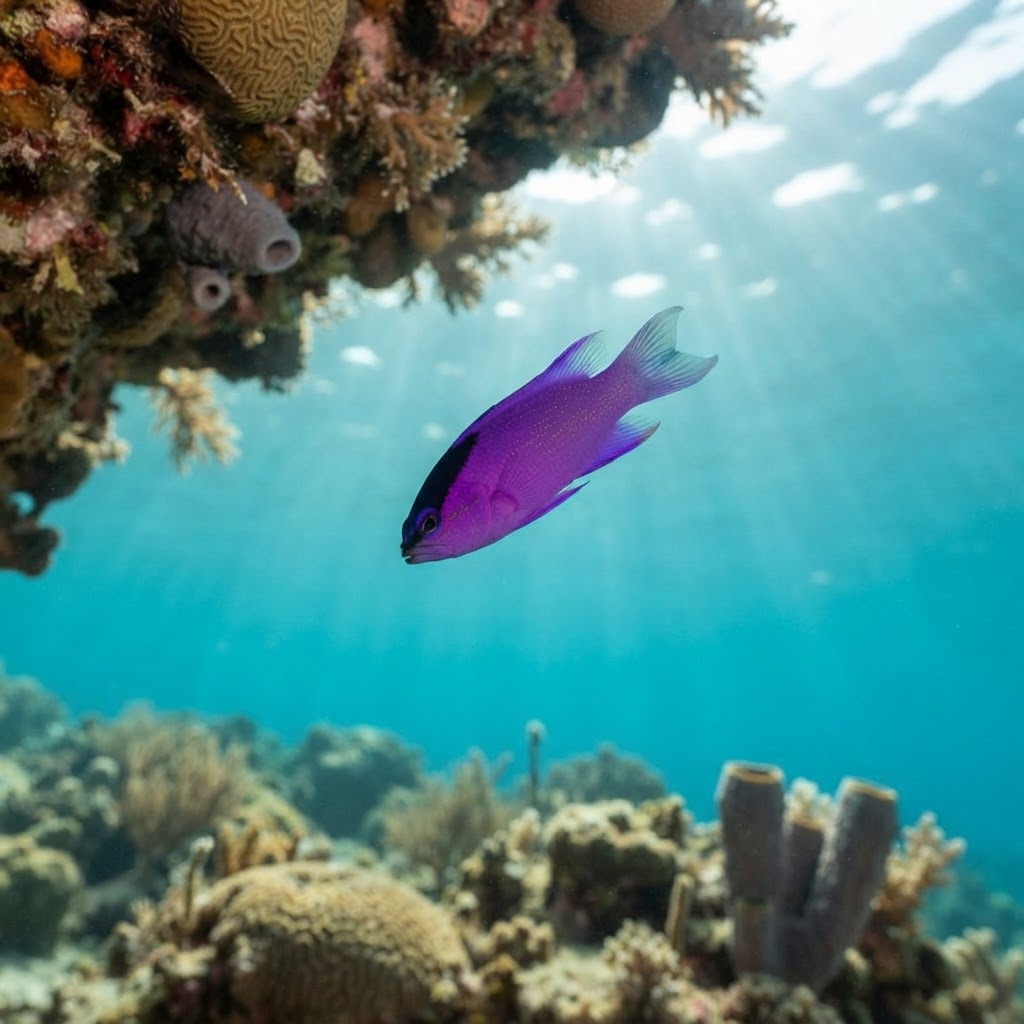
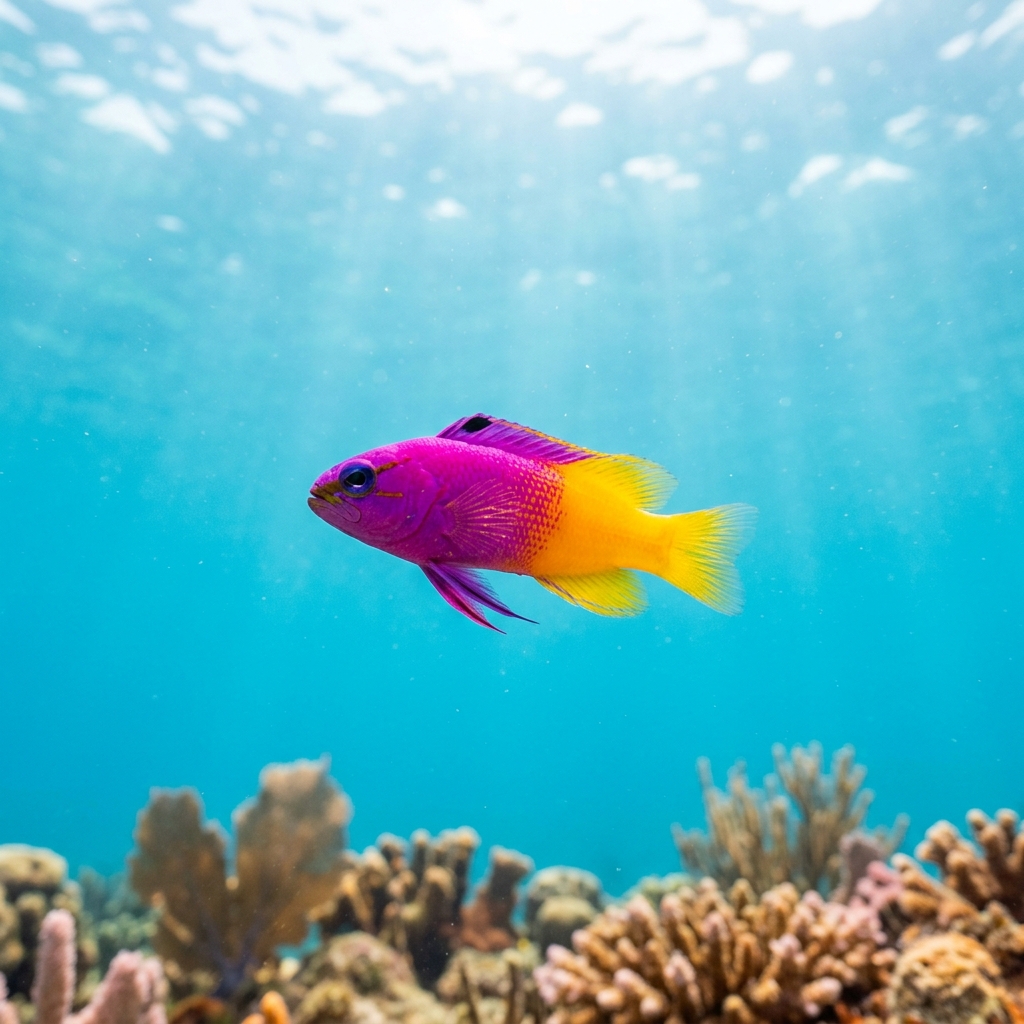
A tiny fish, only about 4 cm long, with an unmistakable solid magenta-purple body and no other markings to speak of. The body is slender and torpedo-shaped, tapering to a rounded tail, and it tends to hold itself at an angle near a hole or crevice rather than swimming in open water. There's no notable colour difference between juveniles and adults to worry about.
Look for it hovering close to rubble patches, small caves and reef crevices rather than out over open coral, usually staying within a body-length or two of cover it can dart into. It's a shy fish that tends to slip out of sight the moment a diver gets too close, so a slow approach and patience pay off far more than chasing it. Most sightings are on the reef itself rather than in the sand flats or seagrass around it.
Like other dottybacks, it's a fiercely territorial little predator that will chase off fish many times its own size from its patch of rubble or crevice, a disproportionate attitude that's part of the fun of spotting one.
No clear seasonal pattern shows up in the data, and with a comfortable range of 25.5 to 29.4 C it's on the reef year-round across its Indo-Pacific range. Any month works for a dedicated search in Raja Ampat, Palau or Okinawa.
Reef neighbours a diver could mistake it for. Use the identification notes above to tell them apart.
Most reliably logged in Raja Ampat, Indonesia, with strong numbers also across the Rock Islands and Peleliu in Palau and throughout Okinawa and the Ryukyu Islands in Japan. It also turns up in the Visayas in the Philippines, though less consistently than in those three core areas.
Mapping where Magenta Dottyback is logged…
Raja Ampat in Indonesia is the most consistent spot, alongside Palau's Rock Islands and Peleliu, and Okinawa and the Ryukyu Islands in Japan. It also shows up occasionally in the Visayas in the Philippines.
There's no strong seasonal pattern in sightings, so it's a year-round fish on the warm reefs it inhabits. Water in its favoured range, roughly 25.5 to 29.4 C, is available across the seasons at its main sites.
Look for a tiny, roughly 4 cm fish that's a solid deep magenta-purple all over, with no stripes, spots or other patterning. It has a slender, torpedo-shaped body and is usually seen hovering close to rubble or a crevice it can retreat into.
They're small, topping out at around 4 cm, making them easy to overlook against rubble and coral rubble patches unless you're looking closely.
No, they pose no danger to divers. They're too small and too shy to be anything other than a fun spotting challenge.
Site and sighting data is aggregated from diver logs, iNaturalist and GBIF. For taxonomy and conservation status:
Soldierfish
3,612 sites