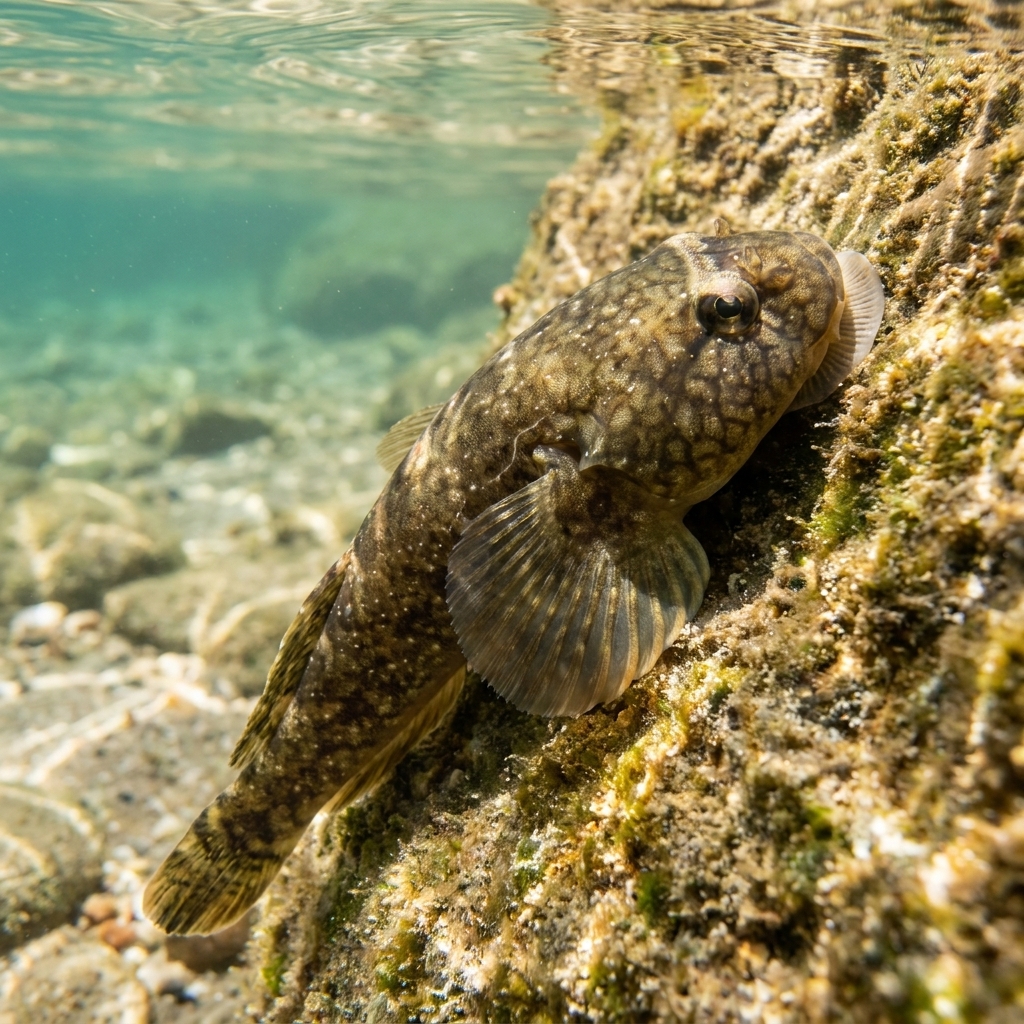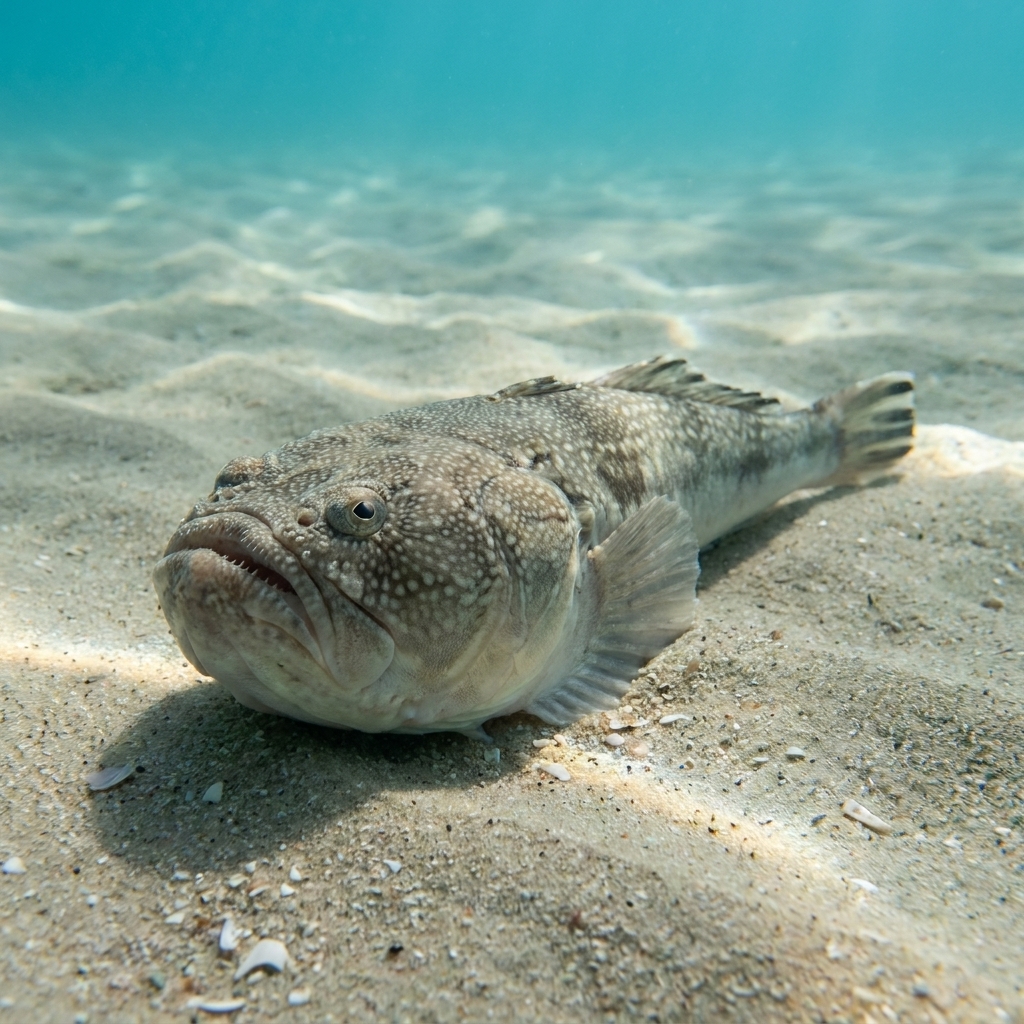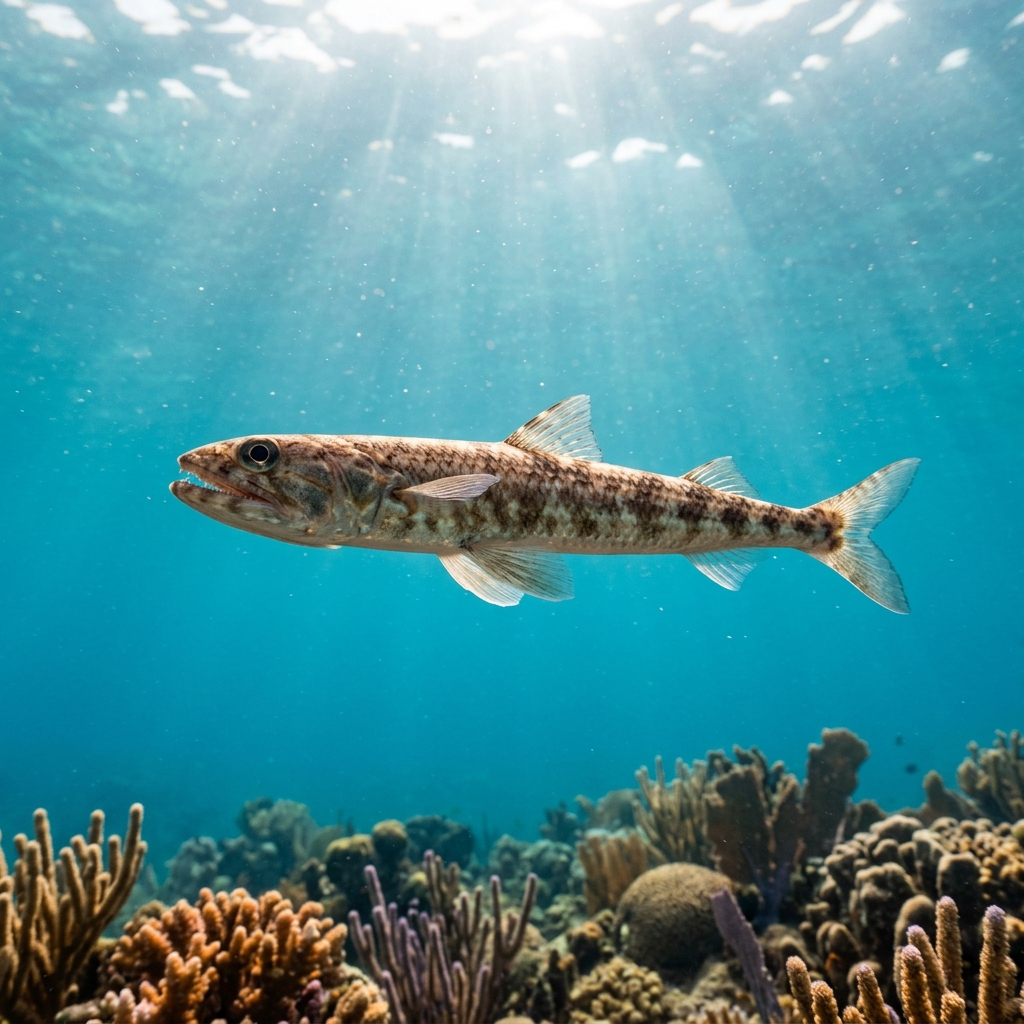
Siganidae spp.
Rabbitfish are logged year-round from the Maldives to the Philippines. Learn to spot them on Indo-Pacific and Red Sea reefs.
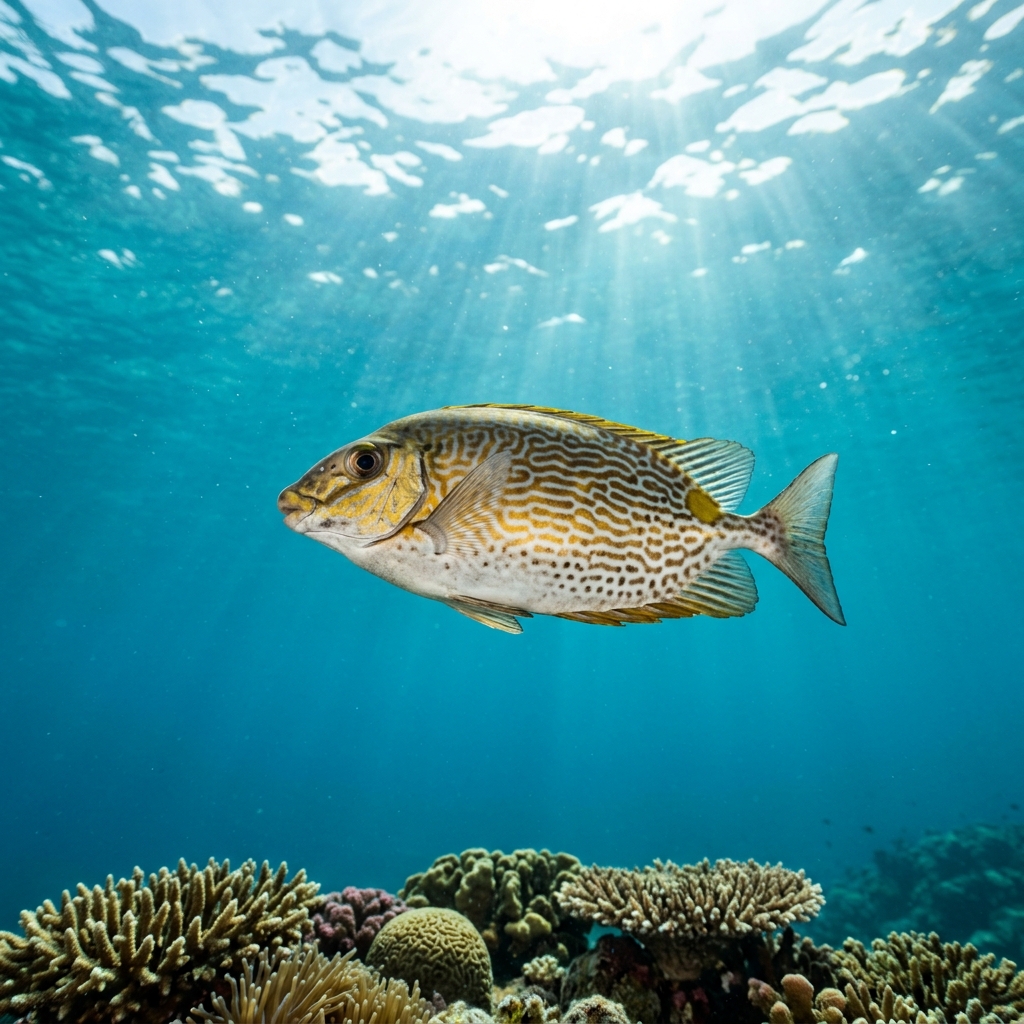
Rabbitfish are oval-bodied reef fish with a distinctive small, rounded snout that really does resemble a rabbit's nose, giving the family its name. Most species are subtly patterned in browns, yellows, whites, and greys, with intricate spots, stripes, or reticulated (net-like) markings across the flanks. The key field mark is the tall, stiff dorsal fin armed with venomous spines, which the fish often fans out when approached. Body length typically sits in the 20 to 40 cm range, and the compressed, disc-like profile distinguishes them from similarly sized wrasse or surgeonfish.
You'll most often spot rabbitfish grazing on algae and coral rubble on the reef flat or slope, moving steadily and deliberately as they crop vegetation with that characteristic blunt snout. They are not particularly wary of divers and will usually continue feeding unless approached very closely, at which point they slip into the reef structure. Many species school loosely during the day and are most active in the early morning or late afternoon feeding periods.
Several rabbitfish species have been observed forming mixed-species foraging partnerships with surgeonfish, taking turns to act as lookout while the other feeds, a cooperative behaviour rarely documented between different fish species.
Rabbitfish are present year-round in both the Northern and Southern hemispheres, with no concentrated season detected across observation data. Their tolerance of water temperatures from around 18 to 29 °C means they persist on tropical and warm-temperate reefs through all seasons.
Rabbitfish are most consistently logged across the Indo-Pacific, with the Philippines, Indonesia, the Maldives, and Australia recording the highest number of sites. Strong populations are also well documented in Thailand, Malaysia, and along the Egyptian Red Sea, particularly around Sharm el Sheikh. Within those countries, the Male and Ari Atolls in the Maldives, the Visayas in the Philippines, and Queensland's reefs are among the most reliable spots.
Mapping where Rabbitfish is logged…
Rabbitfish are logged across a huge swathe of the Indo-Pacific and beyond. The Philippines, Indonesia, the Maldives, Australia, and Malaysia are the standout countries. The Male and Ari Atolls in the Maldives, the Visayas in the Philippines, and Sharm el Sheikh in Egypt are among the most reliable regions to encounter them.
There is no single best season. Observation data from both hemispheres shows rabbitfish present throughout the year, with no concentrated peak period. Because the family tolerates a broad water temperature range, roughly 18 to 29 °C, they remain active on tropical and subtropical reefs across all seasons.
Rabbitfish are not aggressive and will move away before they let you get close enough to cause a problem. That said, the sharp venomous spines on the dorsal, pelvic, and anal fins can deliver a painful sting if you accidentally grab or kneel on one. Keep hands away from the reef and you have nothing to worry about.
Look for the small, blunt, rabbit-like snout, a compressed oval body, and a tall spiny dorsal fin. Most species carry intricate spotted or reticulated patterns in earthy yellows, browns, and whites. The distinctive snout and body shape separate them from similarly sized surgeonfish or parrotfish at a glance.
Most species you'll encounter on a reef measure somewhere between 20 and 40 cm in length. A few larger species can approach 50 cm, but the typical sighting is a fish roughly the size of a dinner plate, seen grazing close to the reef.
Some rabbitfish species team up with surgeonfish to forage more safely, with one species grazing while the other watches for predators, then swapping roles. This kind of cooperative inter-species foraging is rare among reef fish and makes them particularly interesting to observe on the reef flat.
Site and sighting data is aggregated from diver logs, iNaturalist and GBIF. For taxonomy and conservation status:
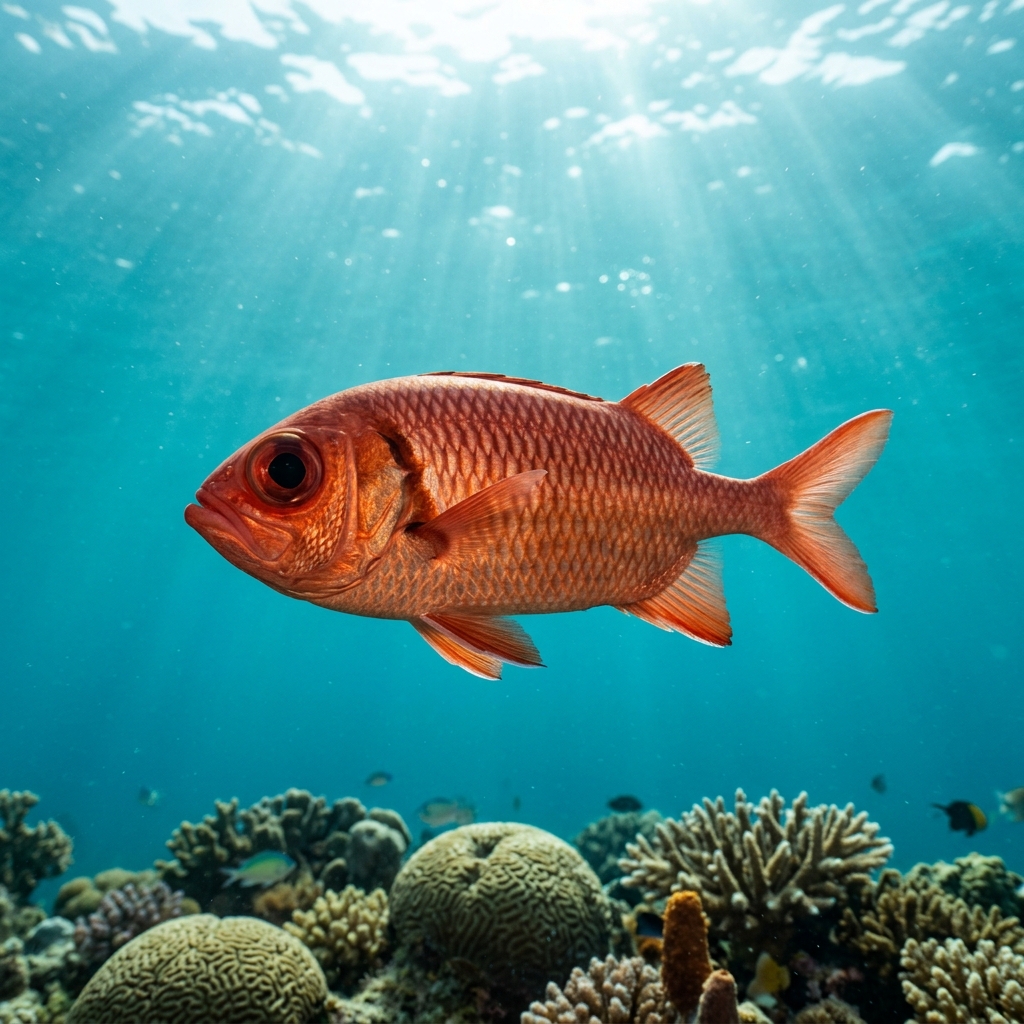
Soldierfish
3,612 sites