Holocentridae spp.
Spot soldierfish on tropical reefs from the Maldives to the Red Sea. Present year-round in warm water, here's how to find and identify the family.
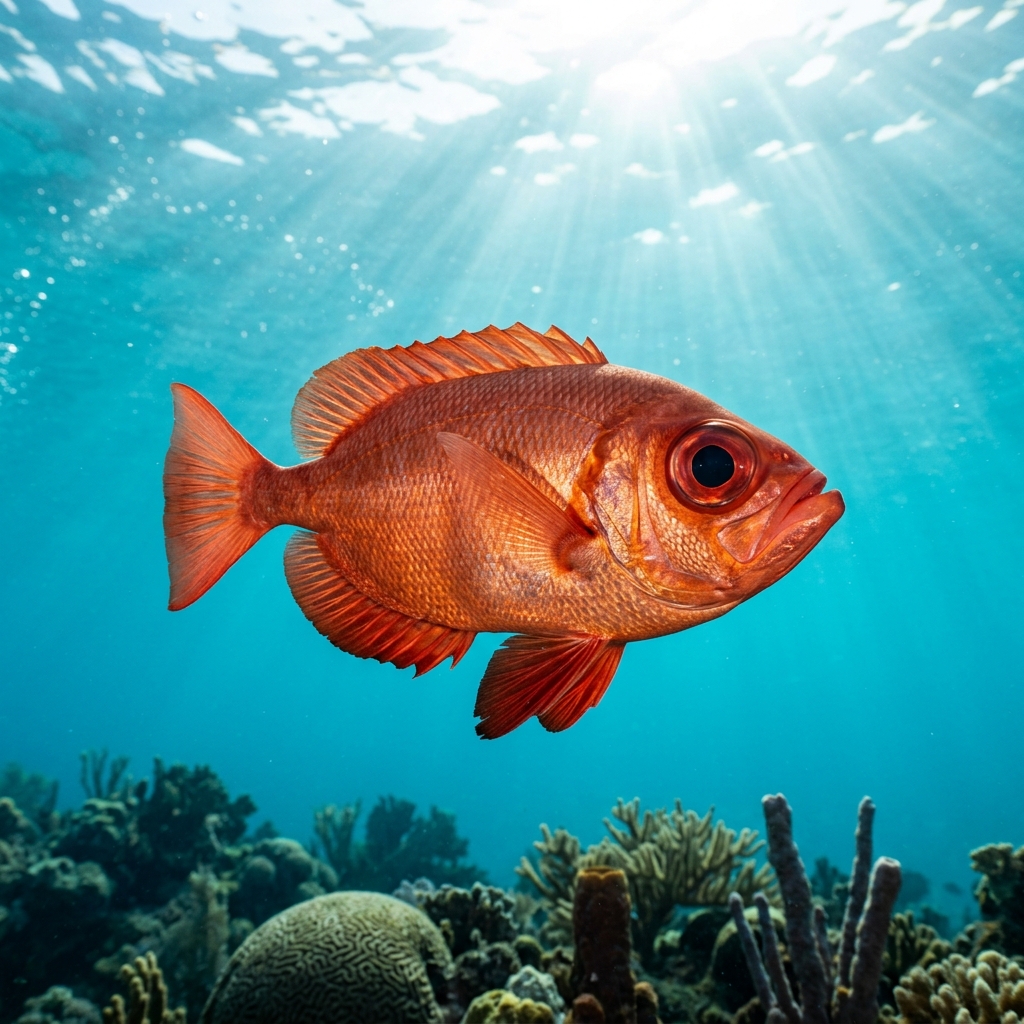
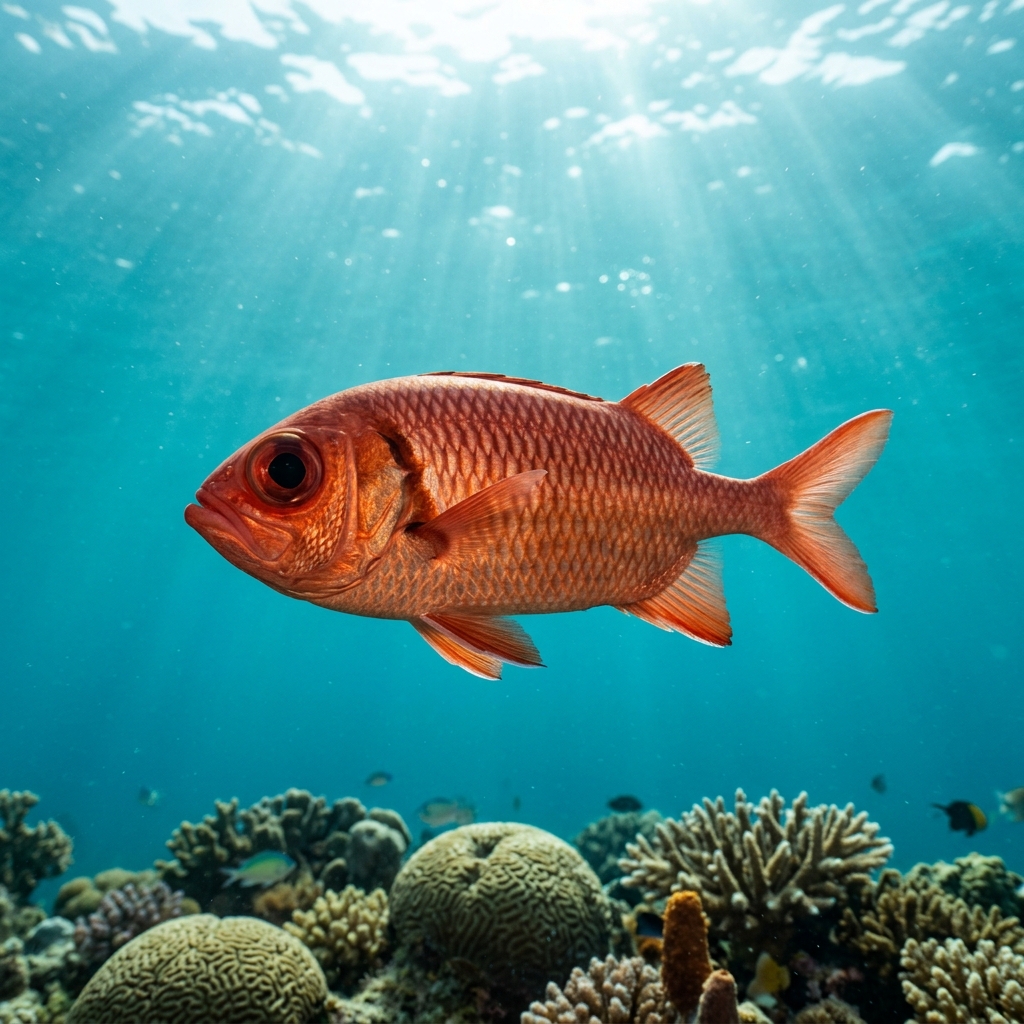
Big eyes are the giveaway, soldierfish have the largest eyes relative to body size of almost any reef fish, an adaptation to their nocturnal lifestyle. Most species are boldly red, orange-red, or crimson, often with white or silver along the scale edges that gives them a latticed look in torchlight. The body is deep and oval with a spiny dorsal fin, and they tend to hover in loose groups just under ledges or inside cave mouths rather than swimming openly over the reef.
During the day, soldierfish congregate in sheltered spots, beneath overhangs, inside coral caves, or along the shadowed underside of a reef wall, and will hold their position calmly as divers approach. After dark they scatter across the reef to hunt small invertebrates and zooplankton, so a night dive shifts your odds of seeing them out in the open dramatically. They are not skittish; slow, non-invasive approaches usually let you get very close.
Those oversized eyes are not just for show, soldierfish can detect prey and predators in near-total darkness, which is why they spend daylight hours resting and do almost all their active feeding at night.
Comfortable in water temperatures from around 24 to 29 °C, soldierfish live on tropical reefs year-round and show no concentrated season in either hemisphere, you can expect to find them on any dive, any month.
Soldierfish are most commonly logged in the Maldives and Indonesia, followed by Egypt's Red Sea, particularly around Sharm el Sheikh, and the Philippines. Strong sightings also run through the Yucatán Peninsula, Hawaii, Queensland, and Malaysia, making this one of the most geographically widespread fish families a diver will encounter.
Mapping where Soldierfish is logged…
Soldierfish are logged across tropical reefs worldwide. The strongest concentrations in the data are in the Maldives, Indonesia, Egypt's Red Sea around Sharm el Sheikh, and the Philippines, but they also appear reliably in Mexico's Yucatán Peninsula, Hawaii, Queensland, and Malaysia.
There is no single best season, soldierfish are present year-round on tropical reefs in both hemispheres. If you want to see them actively hunting rather than resting under a ledge, plan a night dive regardless of the month.
Look for a deep-bodied, oval fish with strikingly large eyes and a vivid red or orange-red colour. They almost always hover in groups under overhangs or inside reef crevices during the day. The combination of those giant eyes, red colouration, and sheltered resting behaviour is distinctive enough to separate them from most other reef fish at a glance.
No. Soldierfish pose no risk to divers. They are calm, slow-moving fish that tolerate close approaches without fleeing or acting defensively.
Soldierfish are nocturnal hunters, and their large eyes allow them to see well in very low light conditions. During daylight hours they rest quietly in dark crevices; at night those eyes give them a major advantage when hunting small invertebrates and zooplankton across the reef.
Site and sighting data is aggregated from diver logs, iNaturalist and GBIF. For taxonomy and conservation status:
Rabbitfish
3,313 sites