Gramma melacara
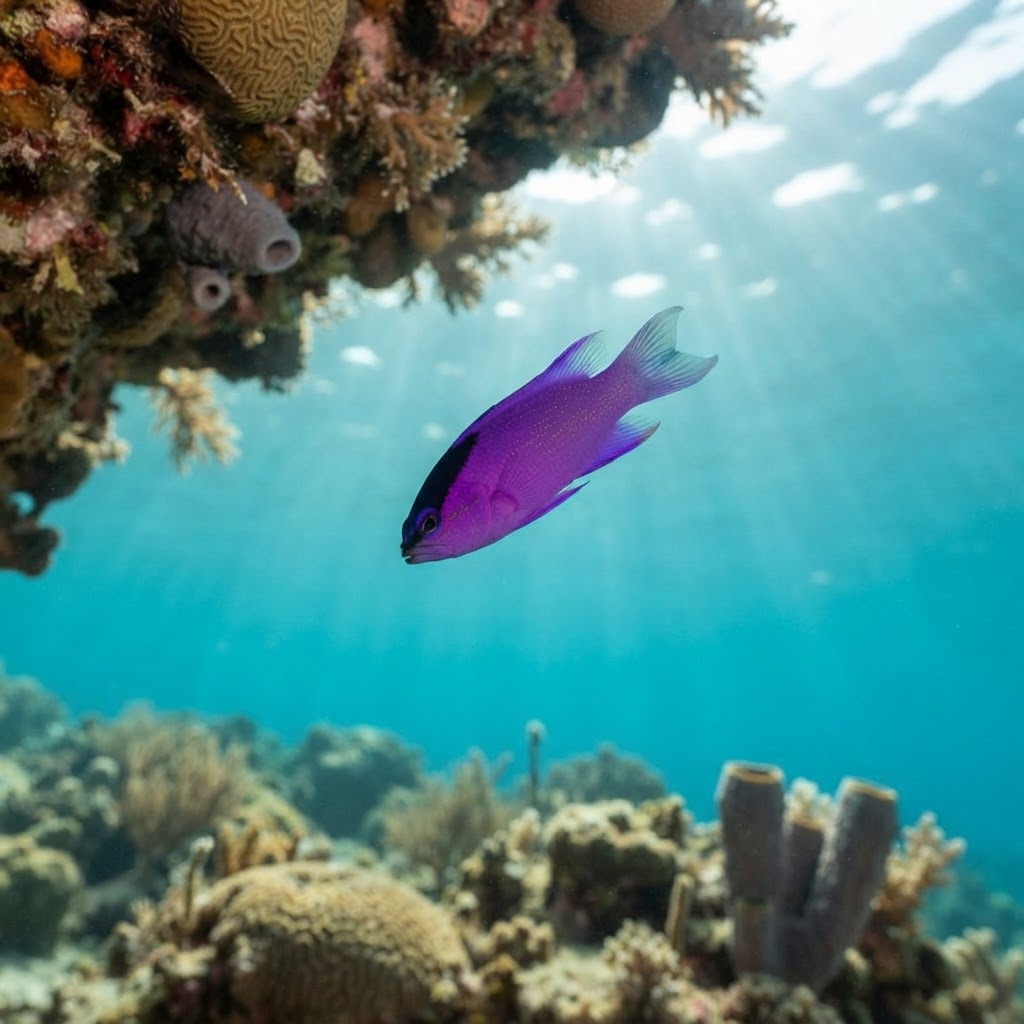
Purple body, black cap, upside-down under ledges: find this basslet in Bay Islands, Honduras and Western Cuba year-round in 24-28C water.
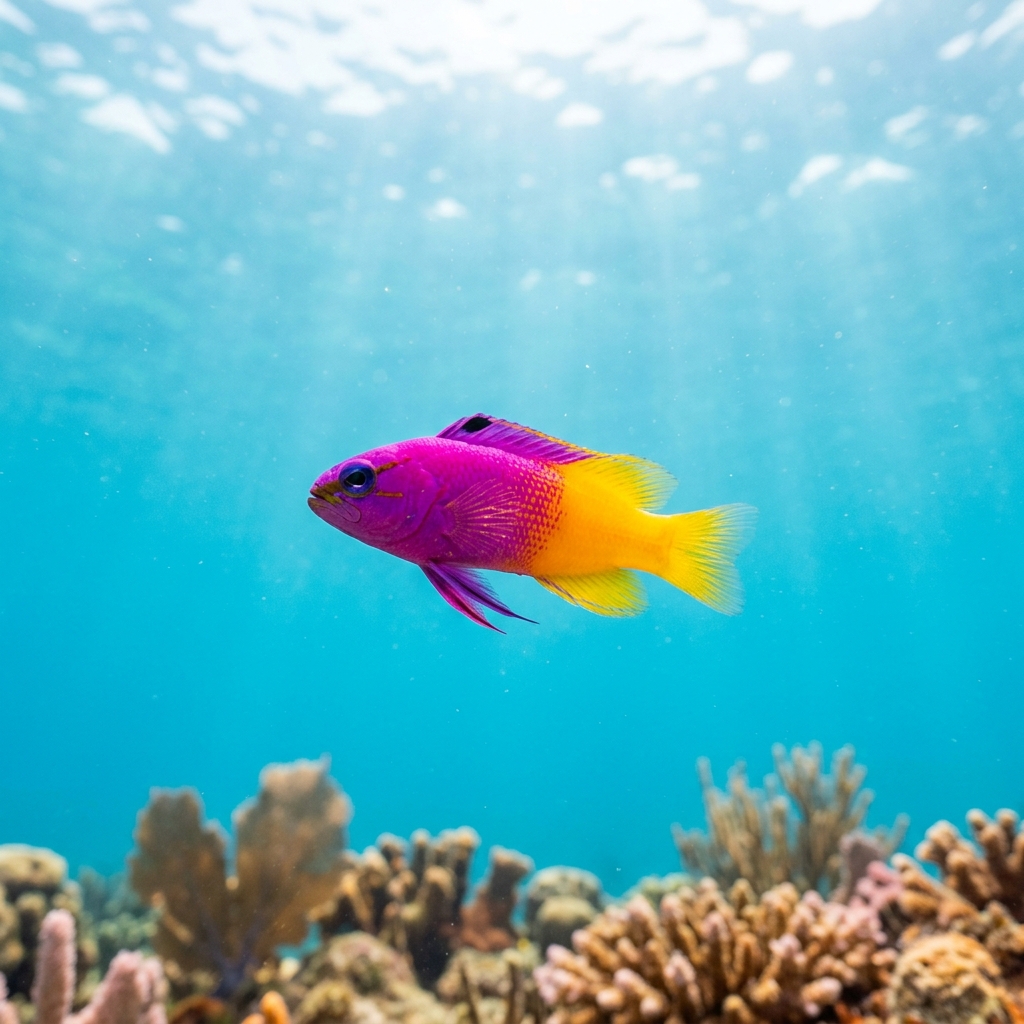
Small at around 7cm, with a body that runs violet to deep purple from nose to tail and a solid black cap covering the top of the head down through the eye. It has no other bold markings, which combined with the two-tone colour split (purple front, black cap) makes it easy to separate from other small reef fish once you clock the pattern. Look for it hanging at odd angles, often upside down, tucked under ledges and in crevices rather than out in the open.
Divers typically find it wedged into crevices, under coral ledges, or in small caves, often hanging motionless upside down against the roof of an overhang. It stays close to cover and does not venture far into open water, so slow down and check the shaded underside of ledges rather than scanning the reef top. It is not shy exactly, but its preference for tight, dim spots means a torch and a careful eye help more than a fast swim past.
It is a protogynous hermaphrodite, meaning individuals can start life as female and switch to male, a trait shared with several of its basslet and wrasse relatives.
No clear seasonal pattern shows up in the sightings, and it sits comfortably in 23.6 to 27.9C water, so it is a year-round resident on the reefs where it lives rather than a seasonal visitor.
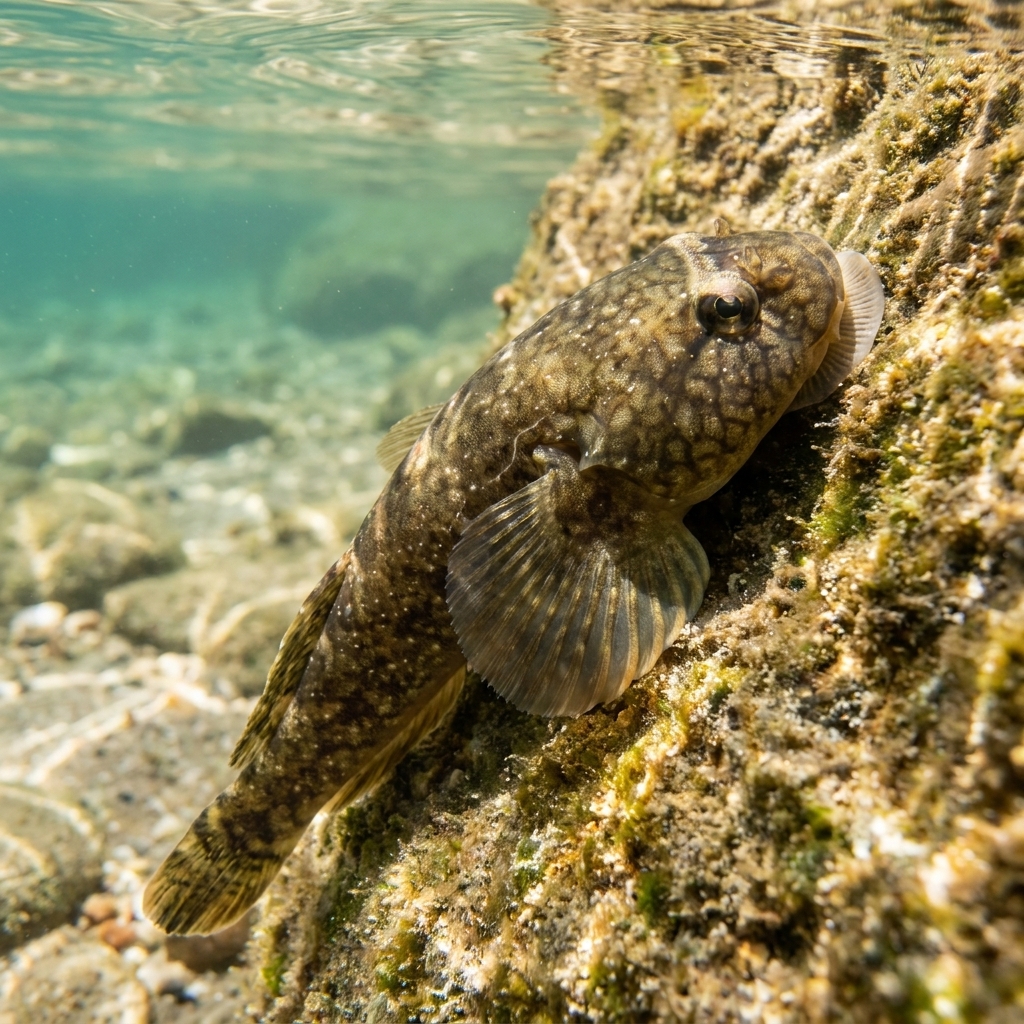
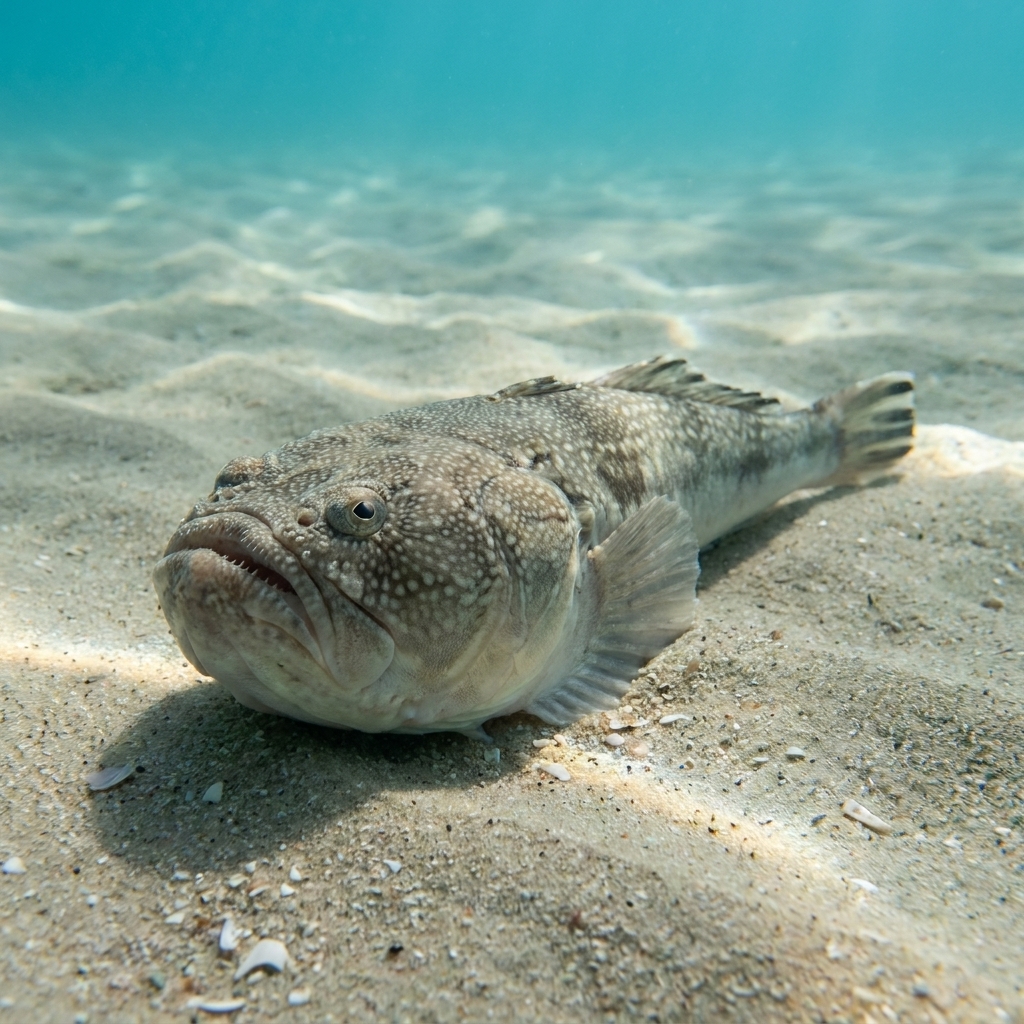
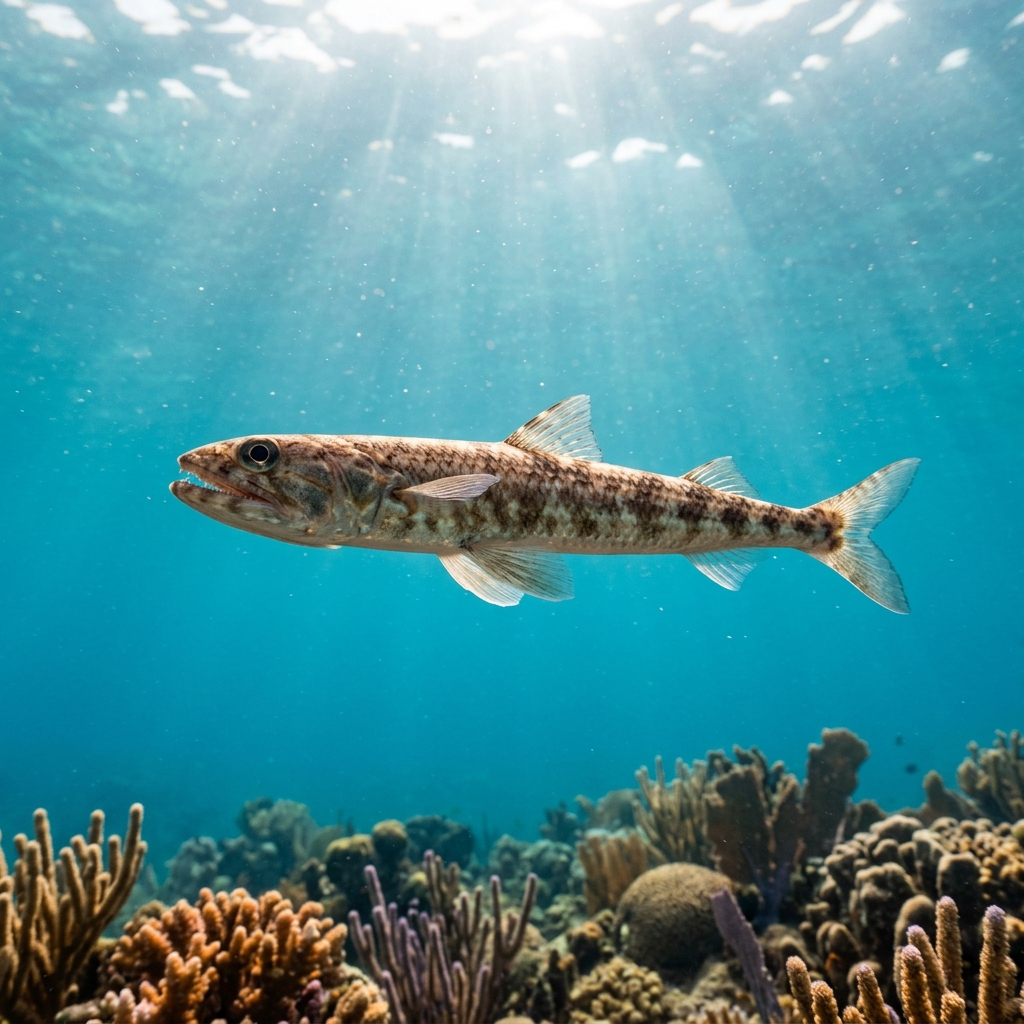
Reef neighbours a diver could mistake it for. Use the identification notes above to tell them apart.
This one is a Caribbean specialist, most reliably logged in the Bay Islands of Honduras and in Western Cuba, with far fewer records anywhere else. Divers rate it uncommon even at the sites where it turns up, so treat any sighting as a bonus rather than a given on a Bay Islands or Cuba wall dive.
Mapping where Blackcap Basslet is logged…
The strongest sightings come from the Bay Islands in Honduras and Western Cuba, where it lives tucked into reef ledges and crevices. Outside the wider Caribbean it is rarely logged, so these two regions are your best bet.
There is no detected season for this fish, and it sits happily in 23.6 to 27.9C water year-round, so any month works on a Bay Islands or Cuba dive trip.
Look for a small, roughly 7cm fish with a violet-purple body and a distinct black cap running over the top of the head and through the eye. It is usually seen hovering upside down under ledges rather than swimming openly over the reef.
They max out at around 7cm, making them one of the smaller reef fish divers look out for on Caribbean walls.
Yes, they are protogynous hermaphrodites, meaning a fish can start life as a female and later change into a male, a pattern seen in several related basslets.
Site and sighting data is aggregated from diver logs, iNaturalist and GBIF. For taxonomy and conservation status:
Soldierfish
3,612 sites