Synodontidae spp.
Spot lizardfish year-round from Florida to the Philippines. Learn the key ID features and best dive sites for this widespread bottom-dwelling family.
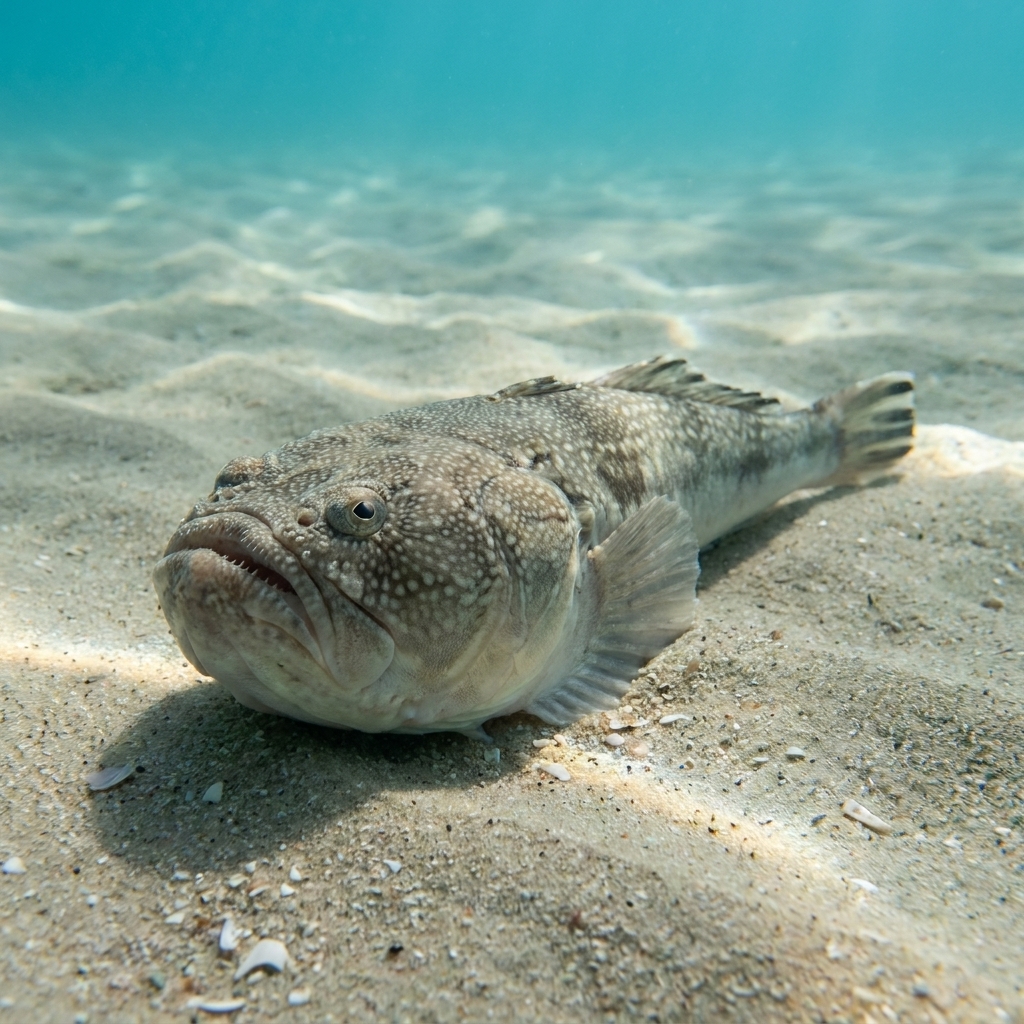
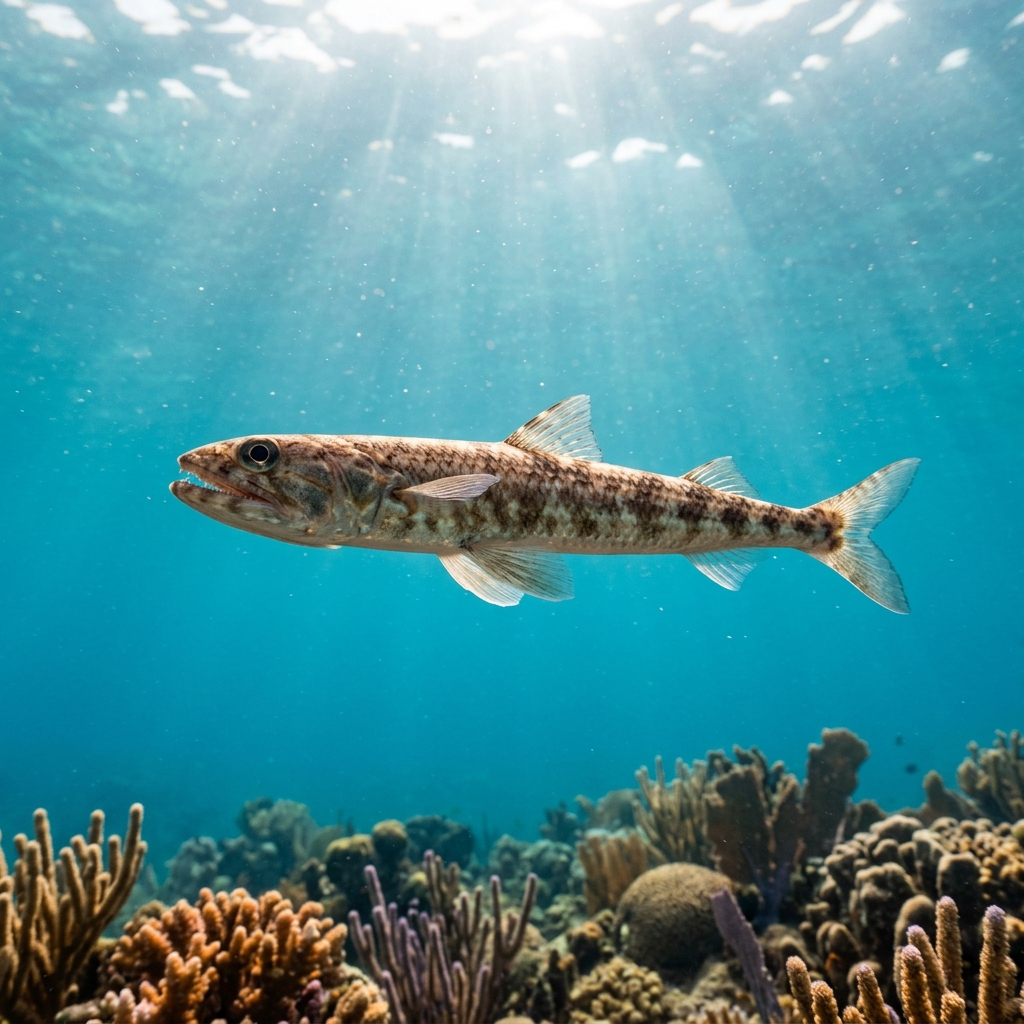
Elongated, almost cylindrical bodies and a broad, flattened head with a disproportionately large mouth lined with rows of small, sharp teeth make lizardfish hard to mistake for anything else. Most species sit in the 15 to 35 cm range in the water. Colouration is typically mottled brown, tan, or grey on the back with a pale underside, blending tightly with sand and rubble substrates. The sharply pointed snout and the habit of propping themselves upright on their pelvic fins are the two details a diver keys on immediately.
Almost every encounter is the same scene: a lizardfish sitting completely motionless on sand, rubble, or a flat coral surface, propped up on its pelvic and pectoral fins and watching everything pass by. They are ambush predators, and they tend to hold their ground when a diver approaches slowly, making close observation easy. Look for them in the shallows down to moderate depths, often in the open rather than tucked away.
Lizardfish are simultaneous hermaphrodites, meaning each individual carries both functional male and female reproductive organs at the same time, allowing any two individuals to spawn together.
Lizardfish are present year-round in both hemispheres with no concentrated season. They tolerate a broad thermal range, from about 21 to 29 °C, which means they are resident on warm-temperate and tropical reefs throughout the calendar.
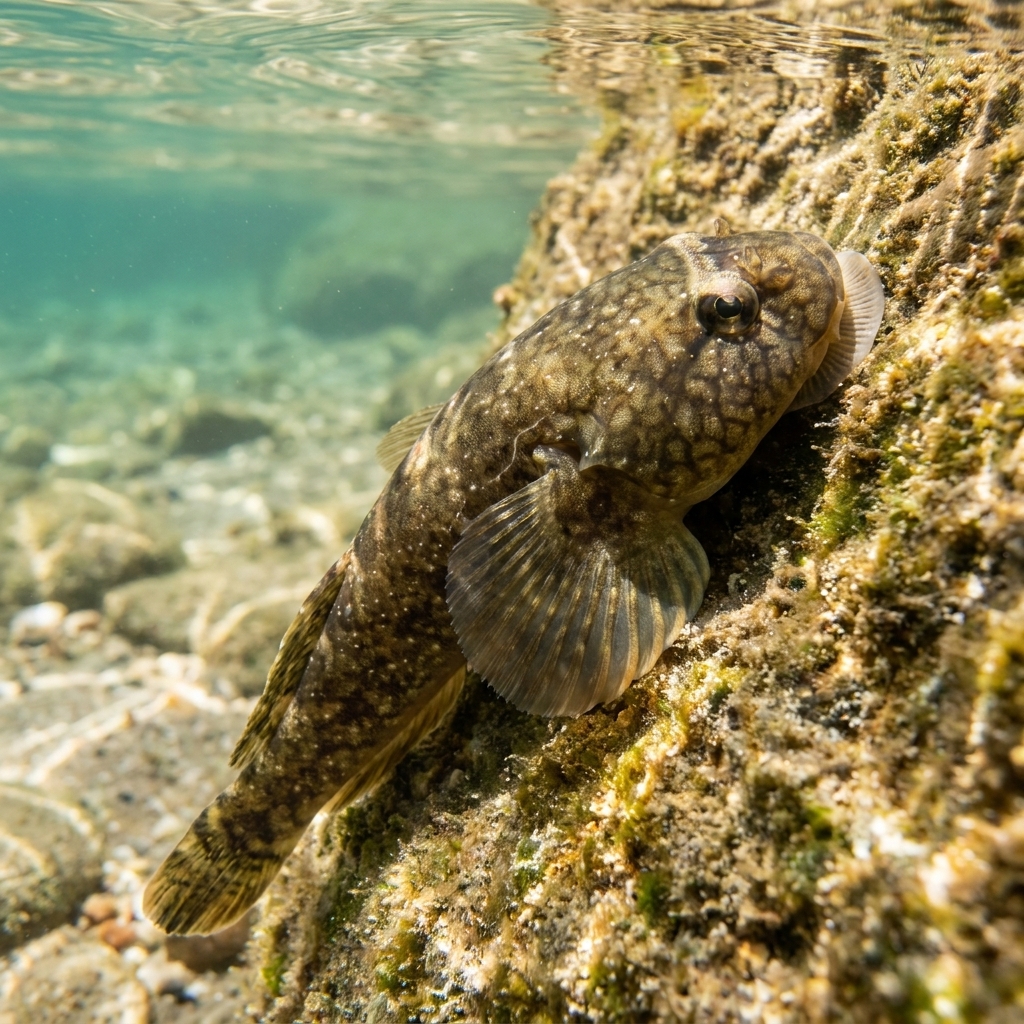
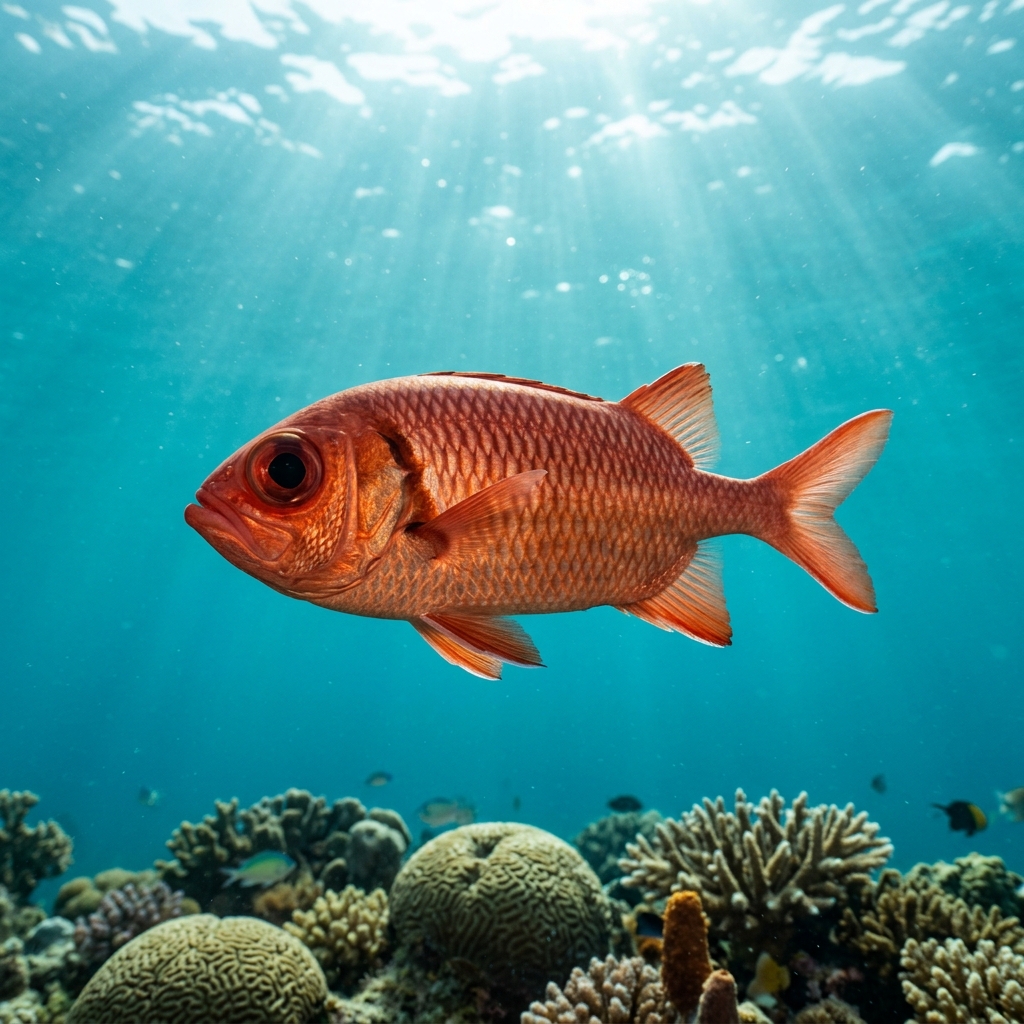
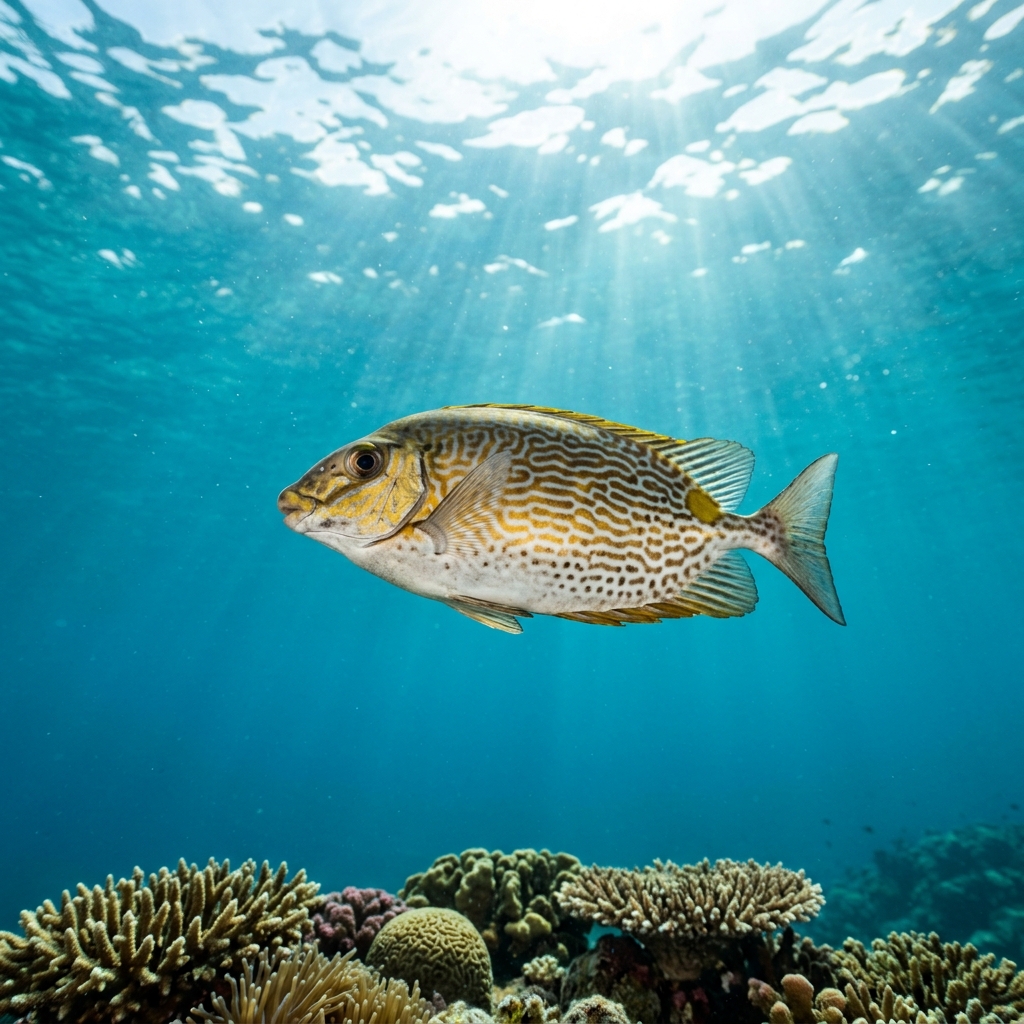
Reef neighbours a diver could mistake it for. Use the identification notes above to tell them apart.
Lizardfish are logged across an enormous range, with the strongest concentrations in the Philippines, the United States (particularly Florida and the Southeast), and the Egyptian Red Sea around Sharm el Sheikh. Indonesia, Australia's Queensland coast, the Maldives, and the Canary Islands all host reliable sightings, and the family turns up across the Yucatán Peninsula and the French Riviera as well.
Mapping where Lizardfish is logged…
Lizardfish are among the most widely distributed bottom-dwellers in the sea. The most sightings are logged in the Philippines, Florida and the US Southeast, the Egyptian Red Sea, Indonesia, and Queensland, Australia. They also appear reliably in the Maldives, the Canary Islands, and the Yucatán Peninsula.
There is no single peak season. Lizardfish are recorded year-round in both the northern and southern hemispheres, and they tolerate water temperatures from roughly 21 to 29 °C, so they are resident on tropical and warm-temperate reefs at any time of year.
Look for an elongated, mottled brown or tan fish sitting perfectly still on the seabed, propped upright on its pelvic fins. The very wide, toothy mouth and the sharply pointed snout are the giveaway features. No other common reef fish sits in quite the same rigid, lizard-like pose on open sand.
Size varies across the family, but most species encountered by divers are in the 15 to 35 cm range. A few deeper-water species can exceed 50 cm, but those are not the animals you typically meet on a recreational reef dive.
Every lizardfish is a simultaneous hermaphrodite, carrying both functional male and female reproductive tissue at the same time. This means any two individuals can pair up and spawn, regardless of which direction they happen to be developing at that moment.
Site and sighting data is aggregated from diver logs, iNaturalist and GBIF. For taxonomy and conservation status:
Rabbitfish
3,313 sites