Atypichthys strigatus
Yellow-striped Mado school over rocky reefs in New South Wales, comfortable in 15 to 25C water, seen year-round.
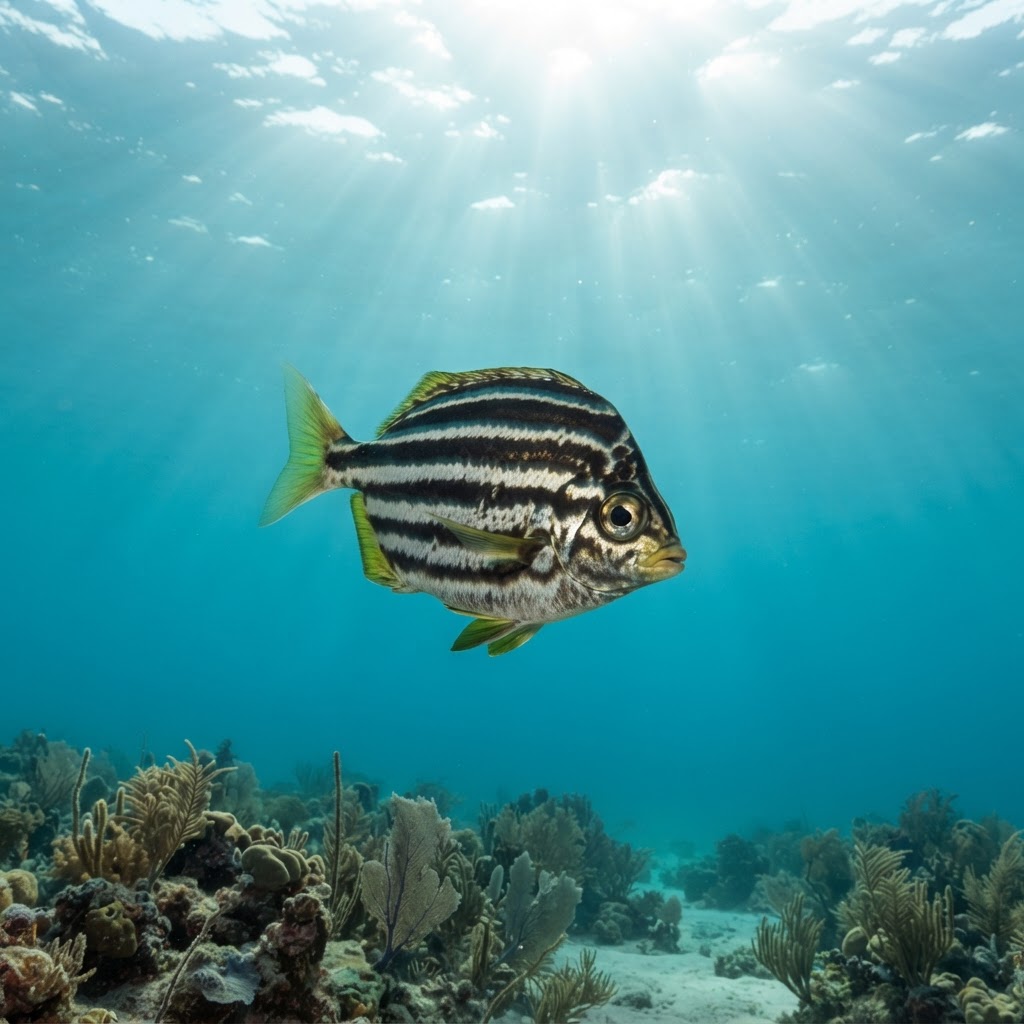
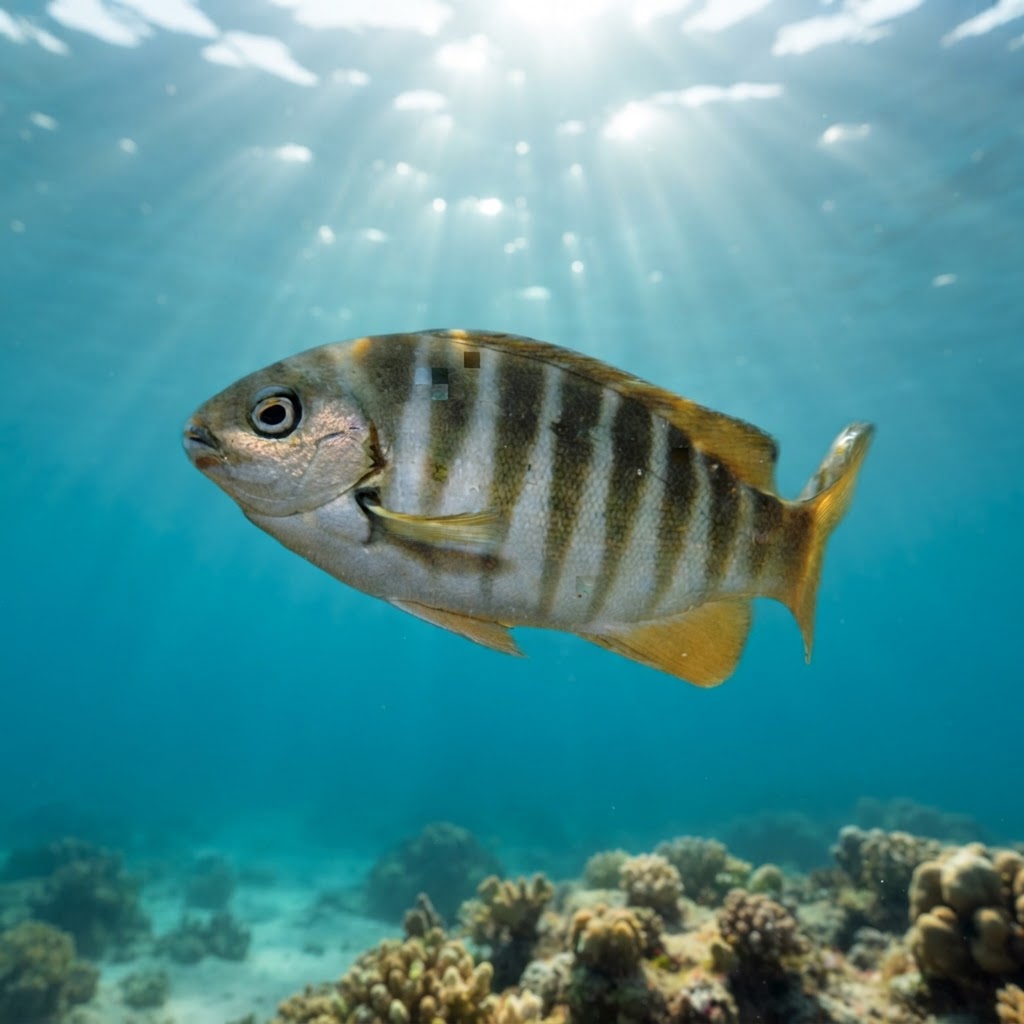
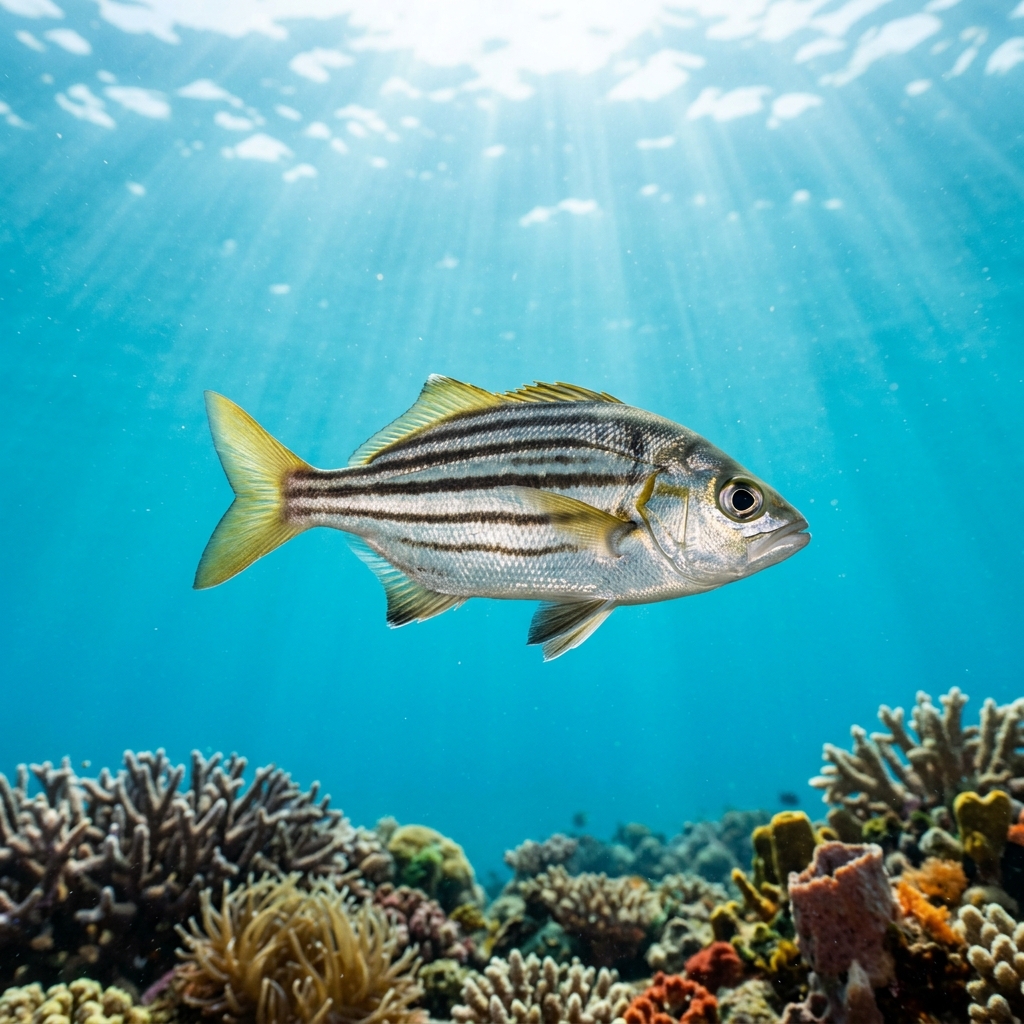
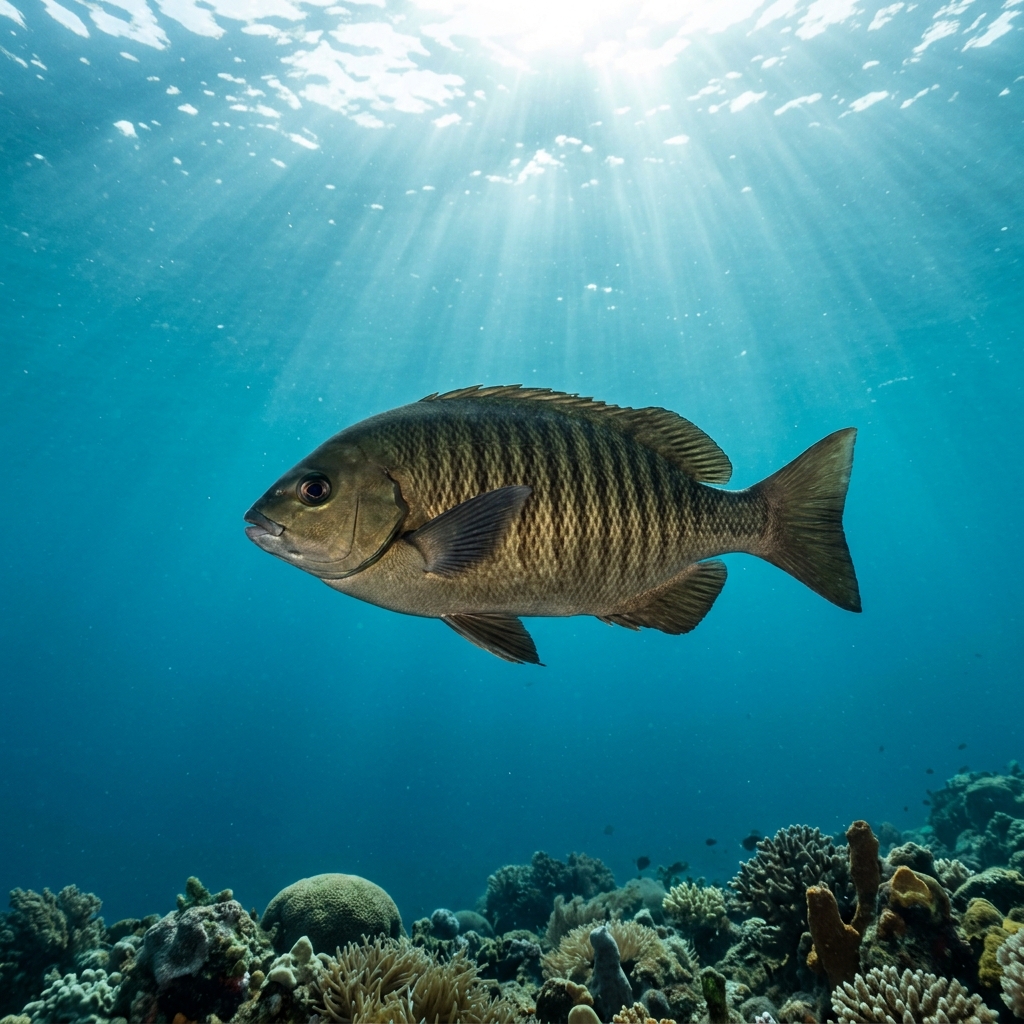
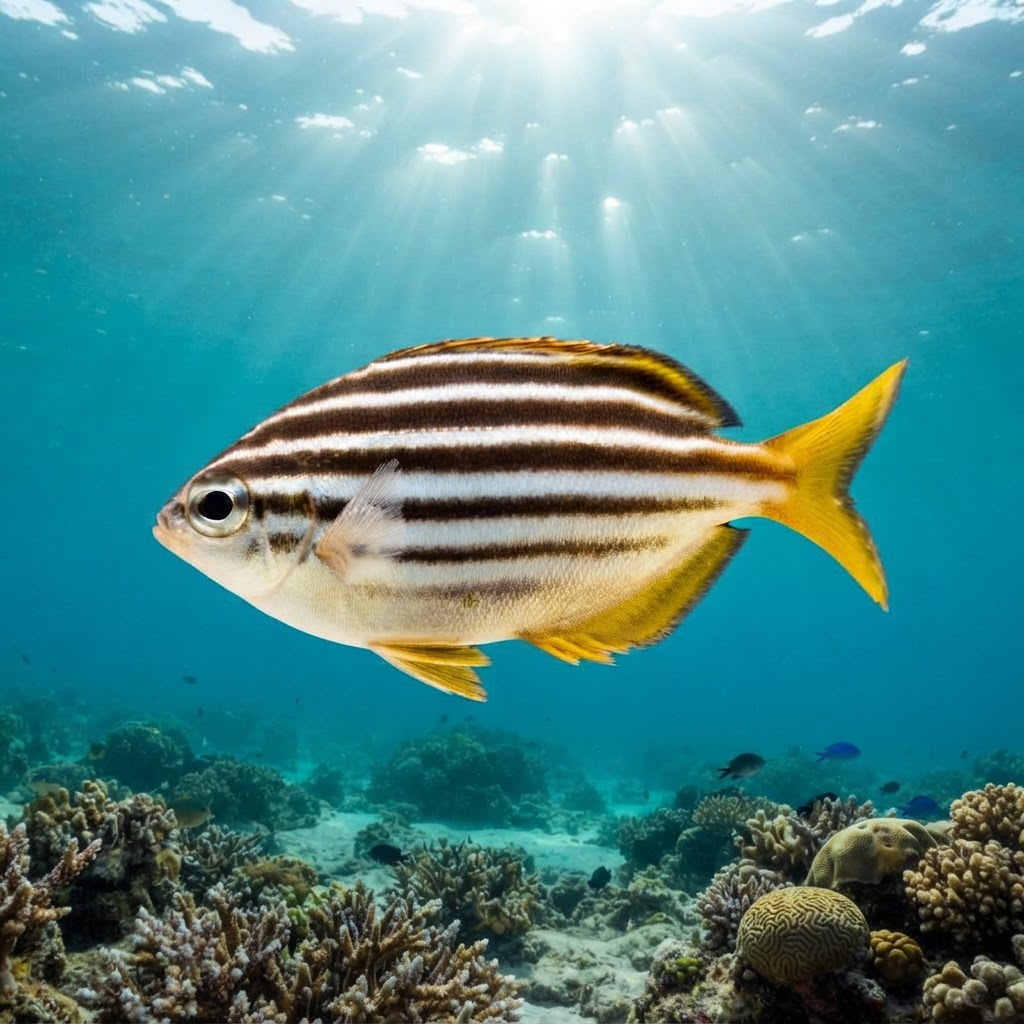
Look for a slim, oval-bodied fish around 17 cm with a silvery-grey body marked by several bold yellow to olive horizontal stripes running nose to tail. A dark blotch sits near the base of the tail, which helps separate it from plainer silver schoolers on the same reef. They're almost always seen in loose schools rather than alone, hanging over rocky reef structure in mid water.
Expect to find them loafing in loose, mixed-size schools around rocky reef faces, ledges and kelp edges rather than out in open water. They're unbothered by divers and will often hold position nearby or drift along with a group rather than scattering, making them an easy, relaxed subject for photos. Most sightings come from typical daytime reef dives rather than any dawn or dusk pattern.
Juveniles of this species are known to shelter among the tentacles of jellyfish and around floating debris before settling onto reef habitat as adults, a trick that gives them cover in open water while still small.
No clear seasonal pattern shows up in the sightings, and the water-temperature range logged (15.3 to 25C) spans the full swing of the southern Australian year, so they're a fair bet on any dive along the NSW coast. Treat it as a year-round species rather than something tied to a particular month.
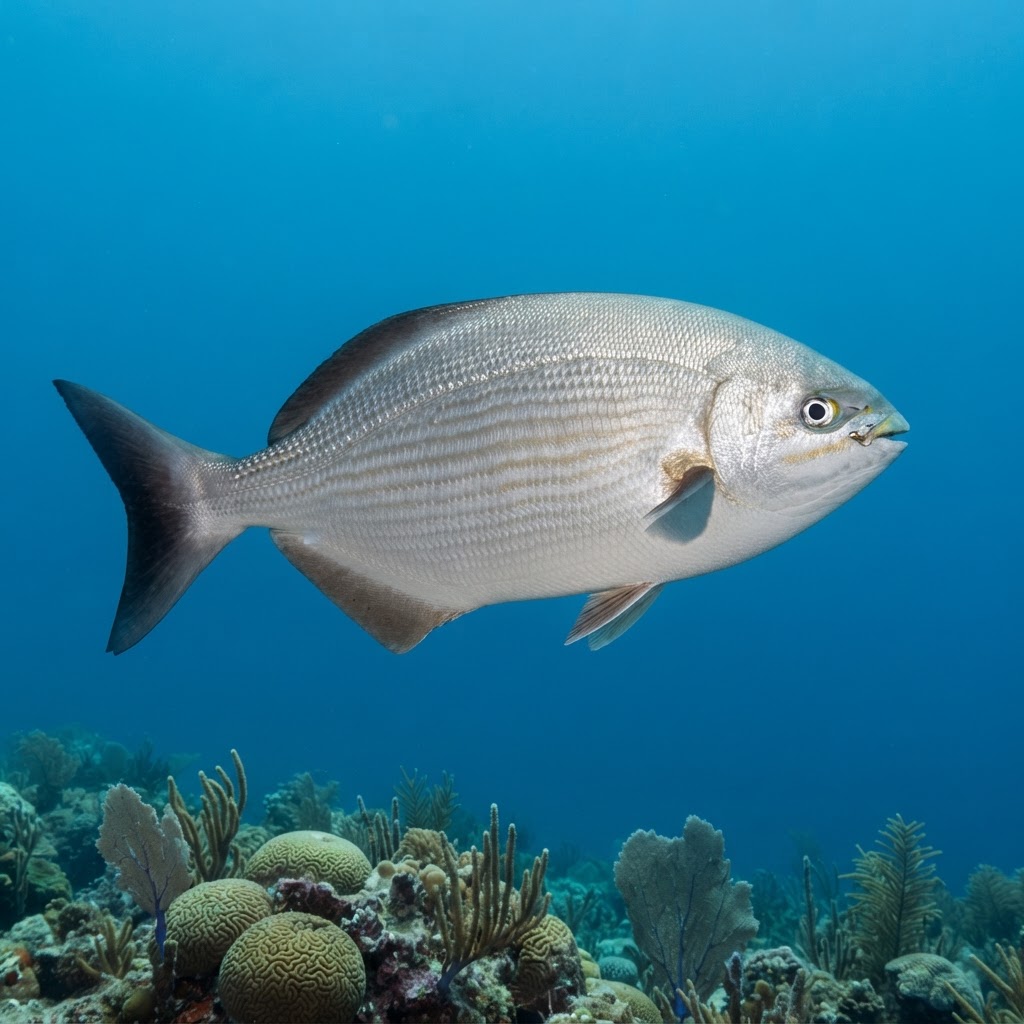
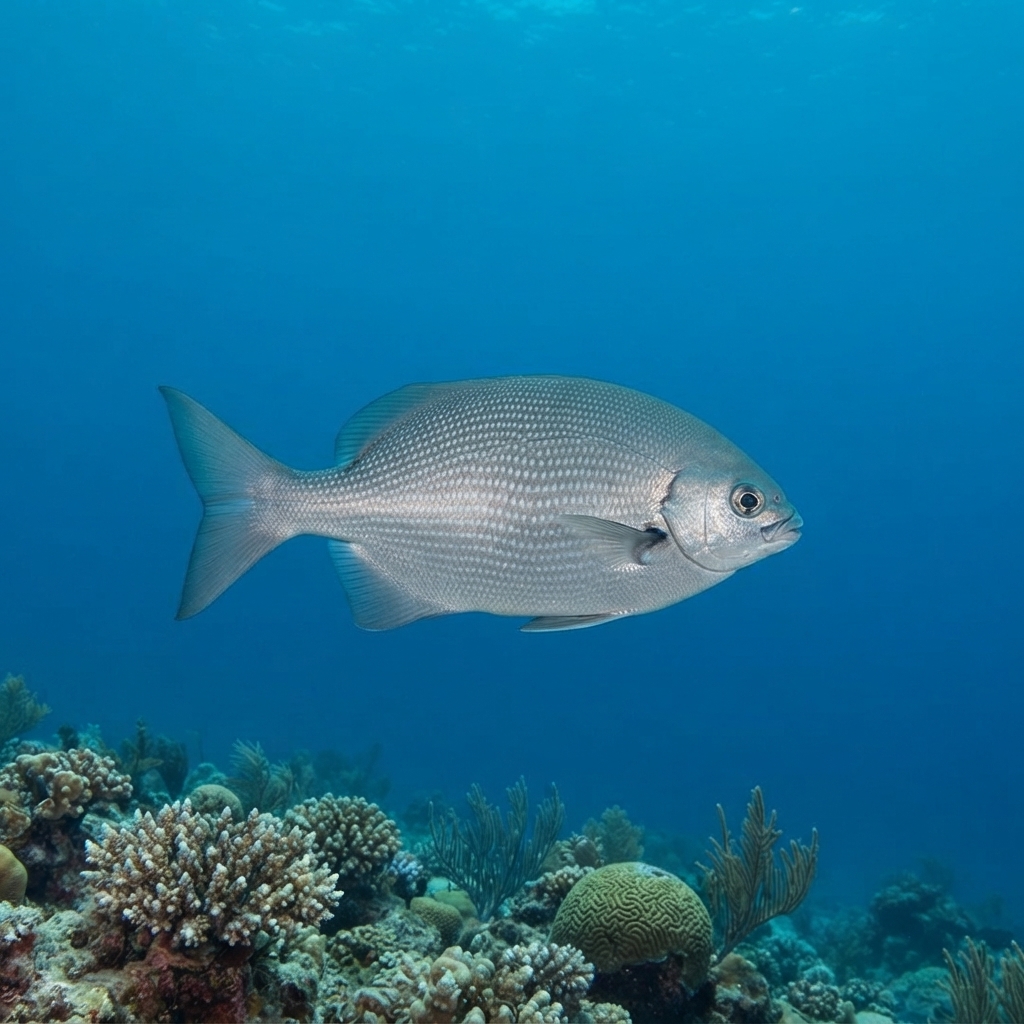
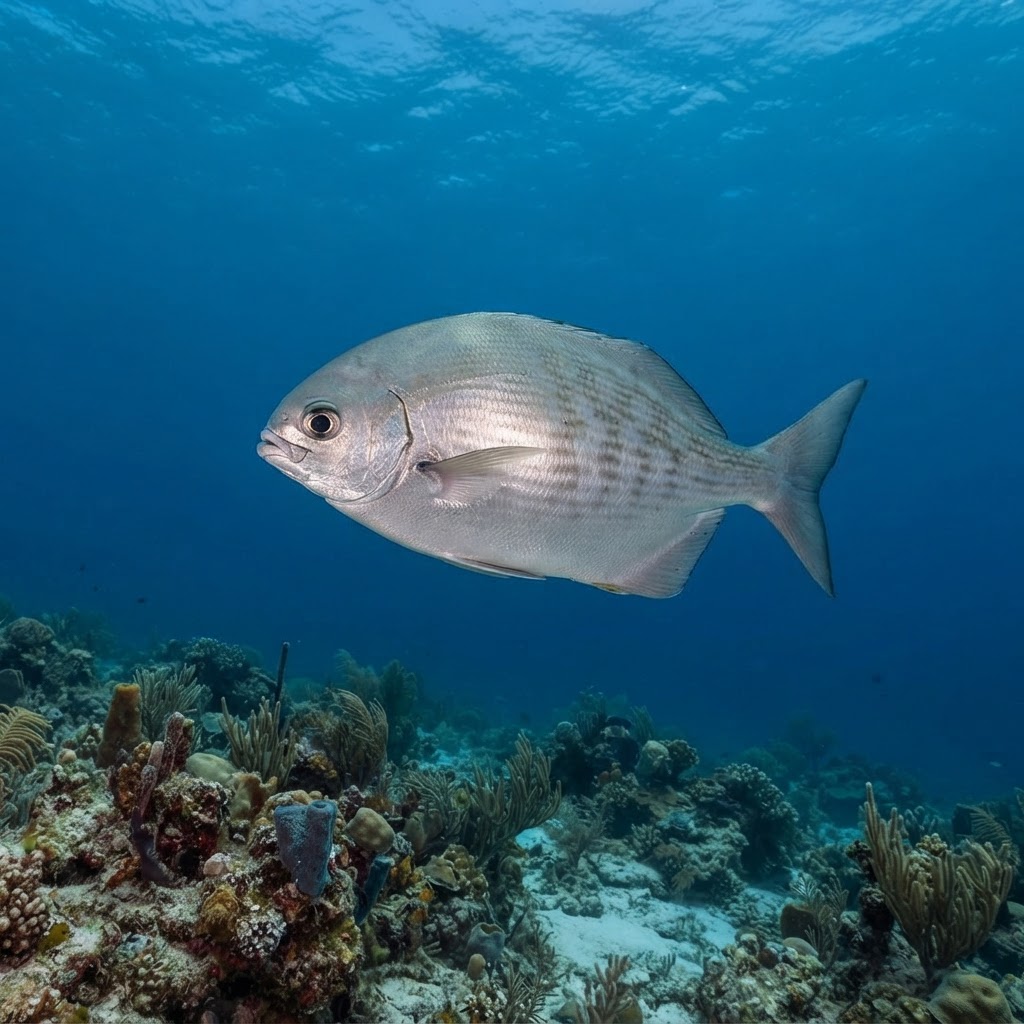
Reef neighbours a diver could mistake it for. Use the identification notes above to tell them apart.
This is very much a New South Wales fish, logged at reef sites up and down that coast far more than anywhere else, with smaller but reliable numbers turning up in Victoria and Tasmania. Divers in Australia's temperate south-east are the ones most likely to run into schools of them over rocky reef.
Mapping where Mado is logged…
They're a New South Wales speciality, turning up at reef sites along that whole coastline, with smaller numbers logged in Victoria and Tasmania. Most divers encounter them on temperate rocky reef dives rather than tropical reef trips.
There's no strong seasonal pattern in the sightings, and they tolerate a wide temperature range from about 15 to 25C, so they're seen year-round on NSW reefs.
Look for a silvery, oval-shaped fish about 17 cm long with several yellow to olive stripes running along its body and a dark mark near the tail base. They're usually in loose schools over rocky reef rather than solitary.
They typically reach around 17 cm, making them a small to mid-sized reef fish most often noticed in numbers rather than individually.
No, they pose no risk to divers and are typically curious or indifferent, often schooling calmly near people on the reef.
Young Mado are known to hide among jellyfish tentacles and drifting debris for shelter before moving onto reef structure as they mature, an unusual nursery strategy for a reef fish.
Site and sighting data is aggregated from diver logs, iNaturalist and GBIF. For taxonomy and conservation status:
Blue Sea Chub
554 sites