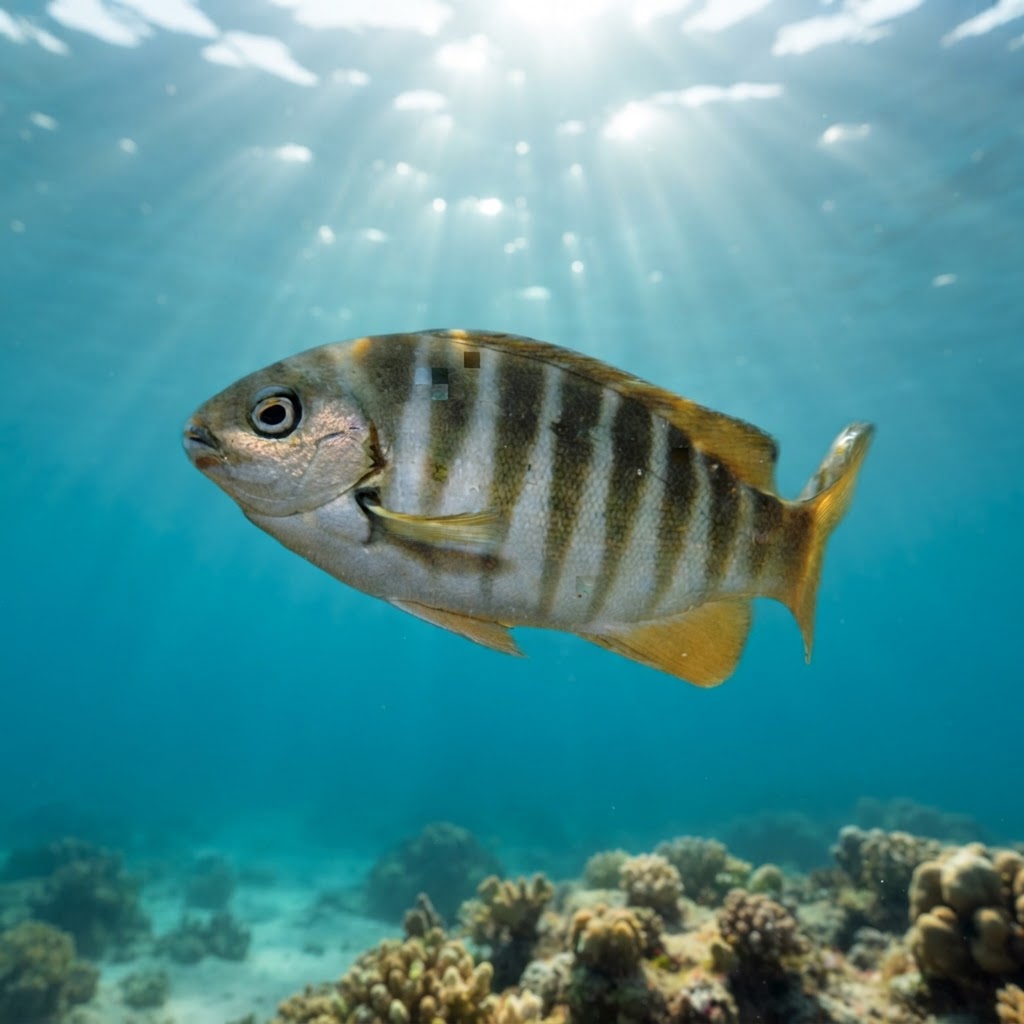
Girella zebra
Striped, silvery and reef-loving, Zebra Fish turn up on temperate dives across Western Australia and Victoria in 15 to 21C water year-round.
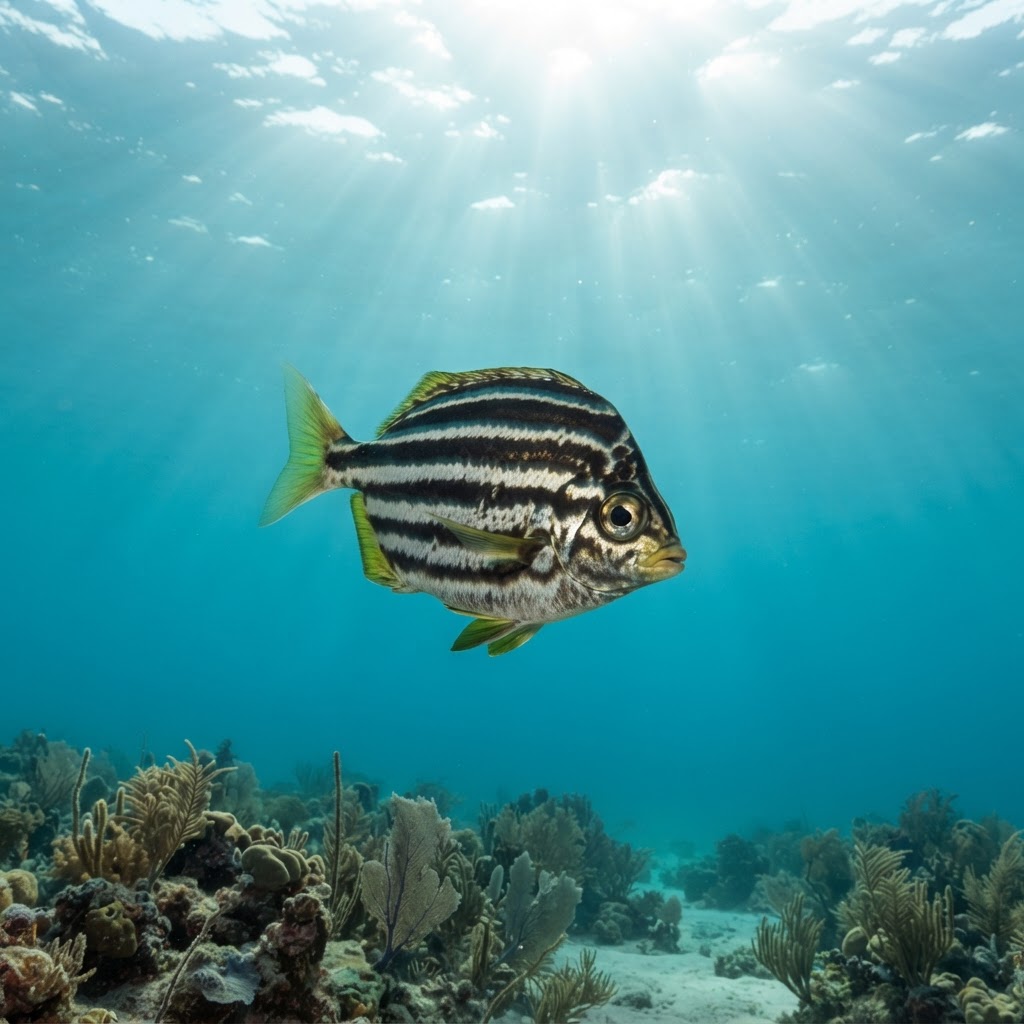
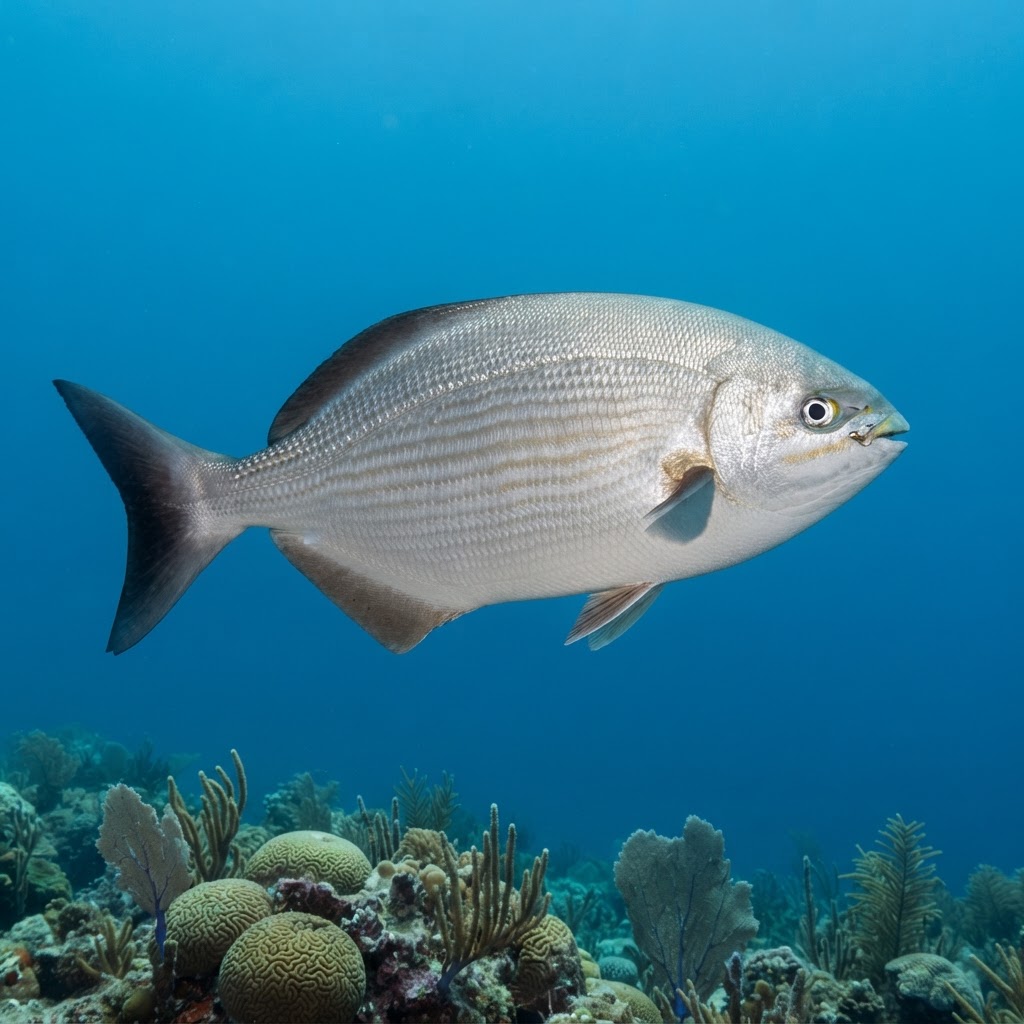
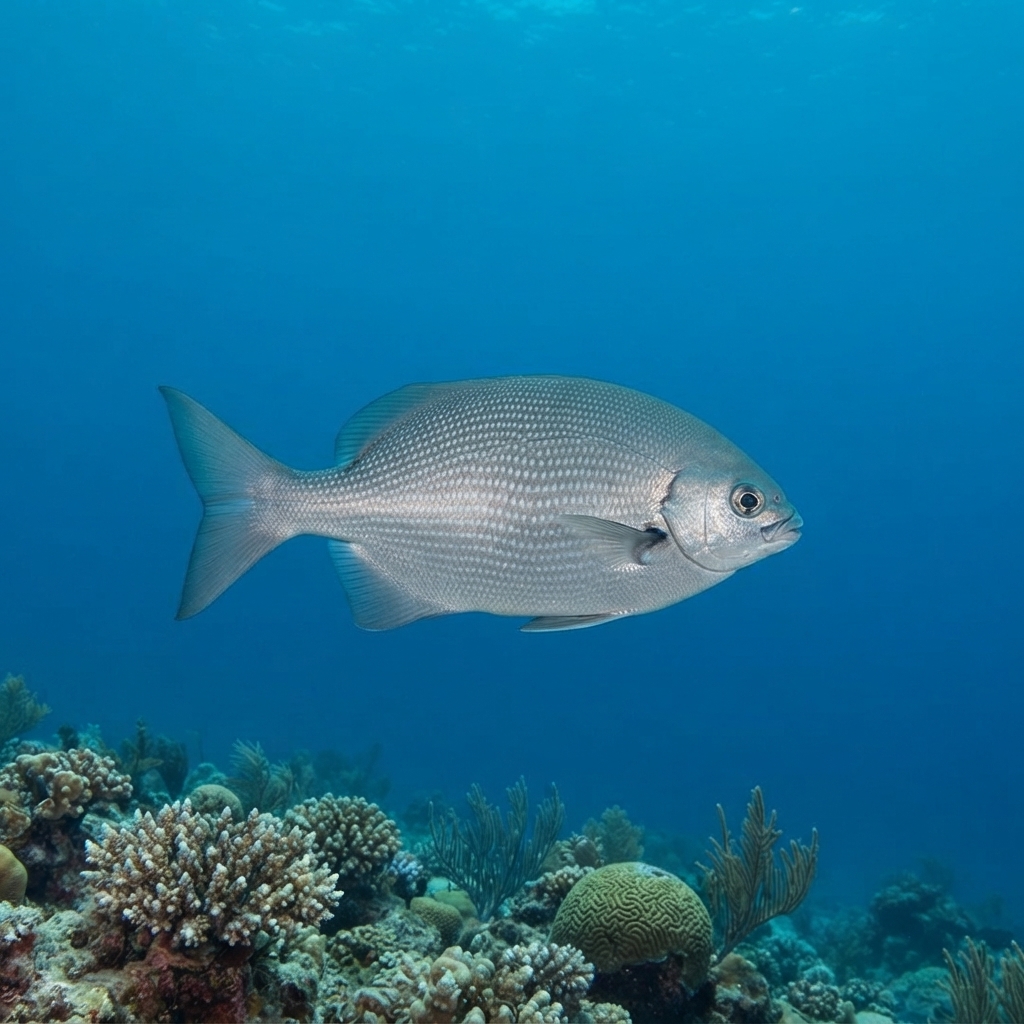
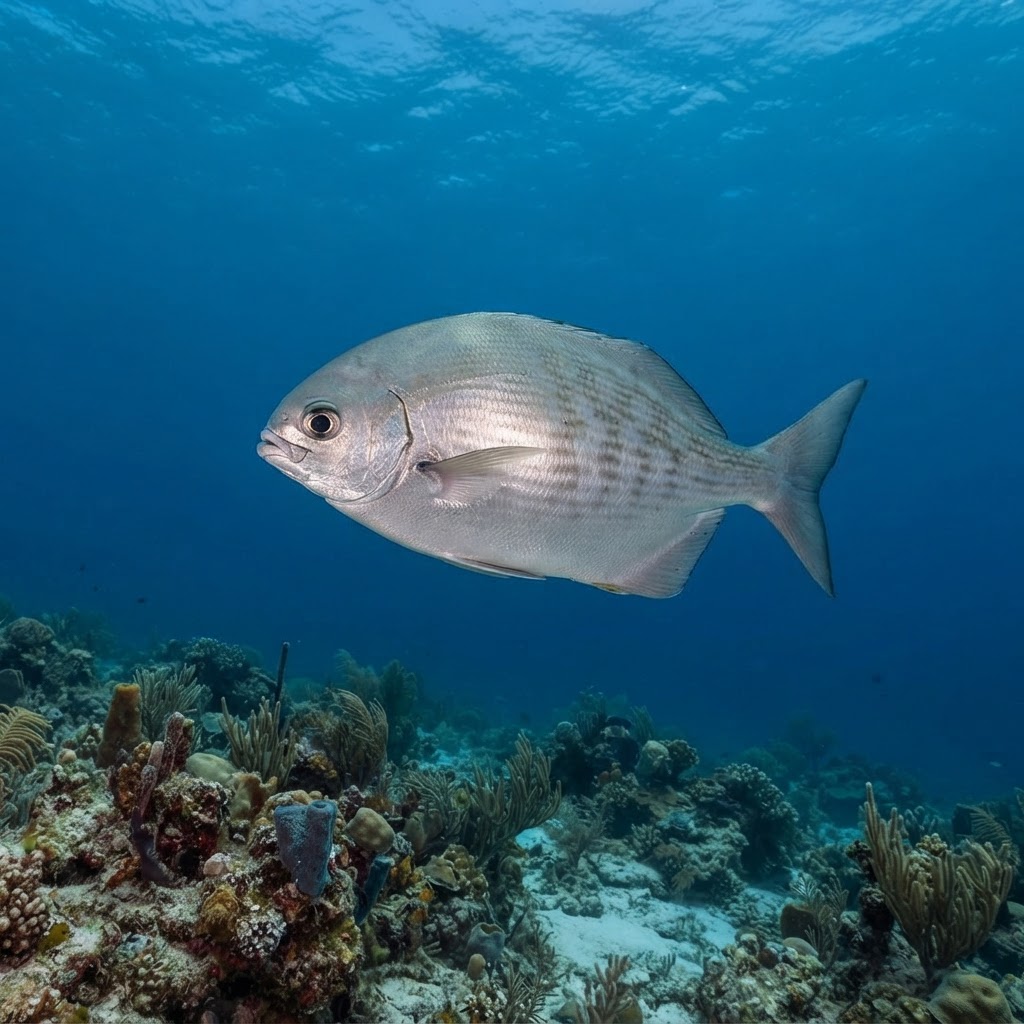
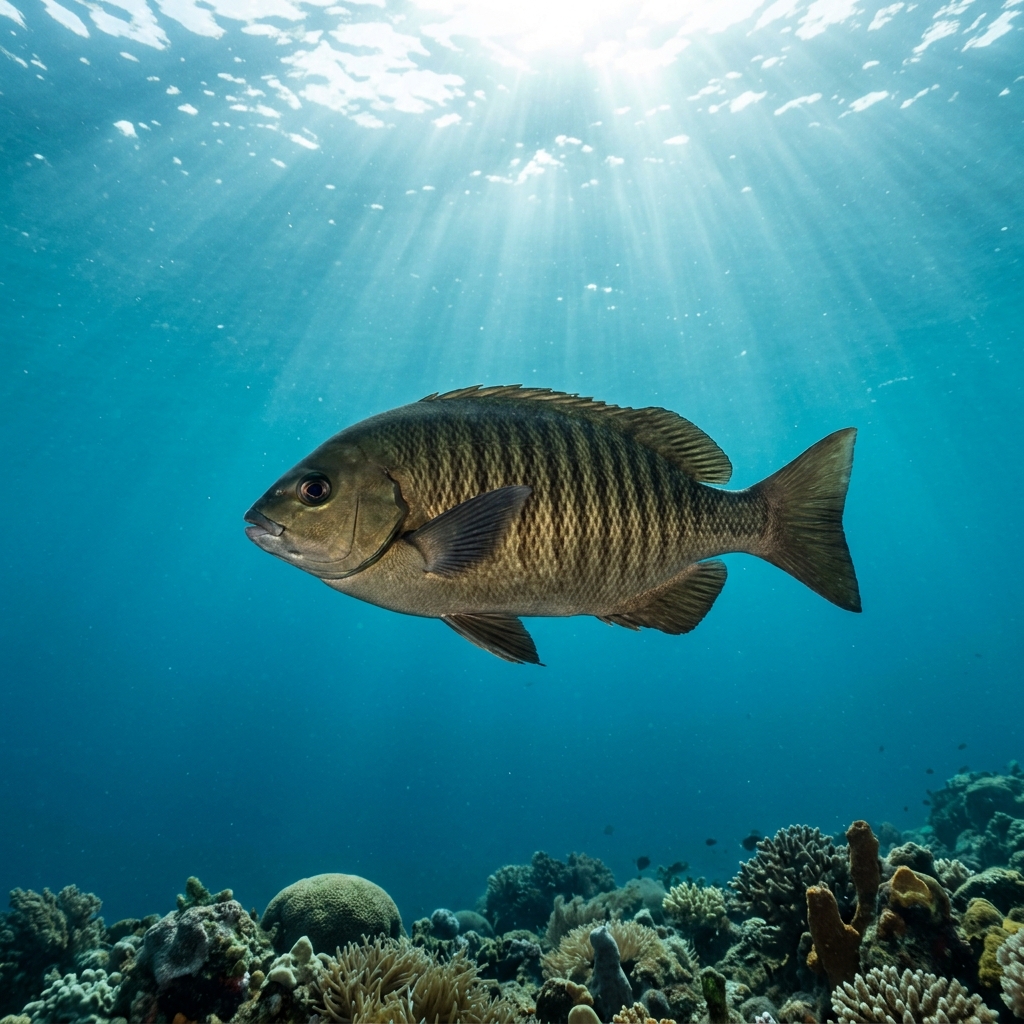
Silvery-grey body marked with several dark vertical bars running down each flank, giving it the striped look the name suggests. Grows to around 23 cm, with a deep, oval-shaped body and a small mouth suited to grazing algae off rock. The bars are boldest on fish over open reef and can fade slightly against dark kelp backgrounds, but the banded pattern is still the quickest way to pick it out from other reef fish nearby.
Look for it grazing over rocky reef and weedy ground, picking at algae rather than chasing anything down, which fits its plant-based diet. It tends to hang around structure rather than open water and is generally unbothered by divers, allowing a reasonably close approach if you move slowly. Most logs describe it singly or in small loose groups rather than large schools.
Its diet is almost entirely algae, so it spends most of a dive grazing rock and reef surfaces rather than patrolling for other food, making it one of the more herbivorous fish you will see on southern Australian reefs.
Sightings show no clear seasonal pattern, and with a temperature niche spanning roughly 15 to 21C, it is present on these reefs across the year rather than tied to a particular month.
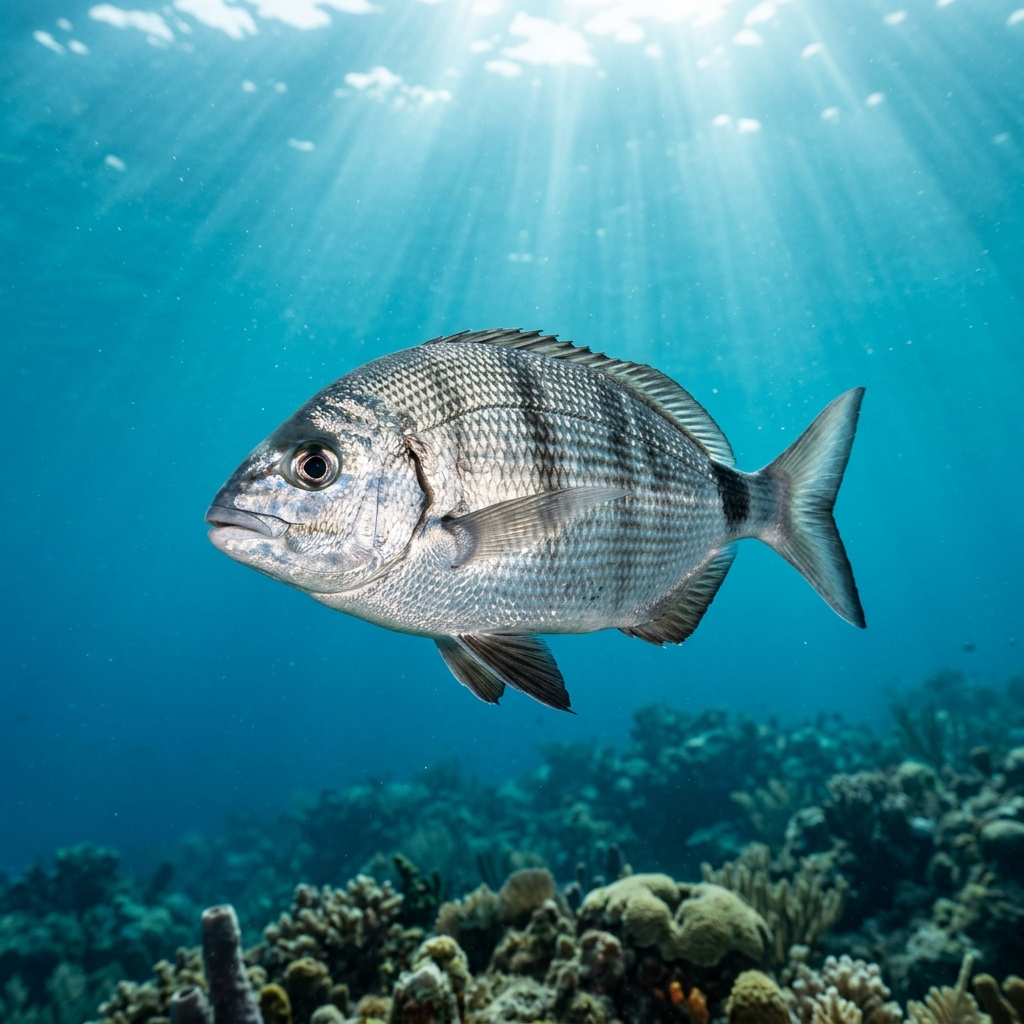
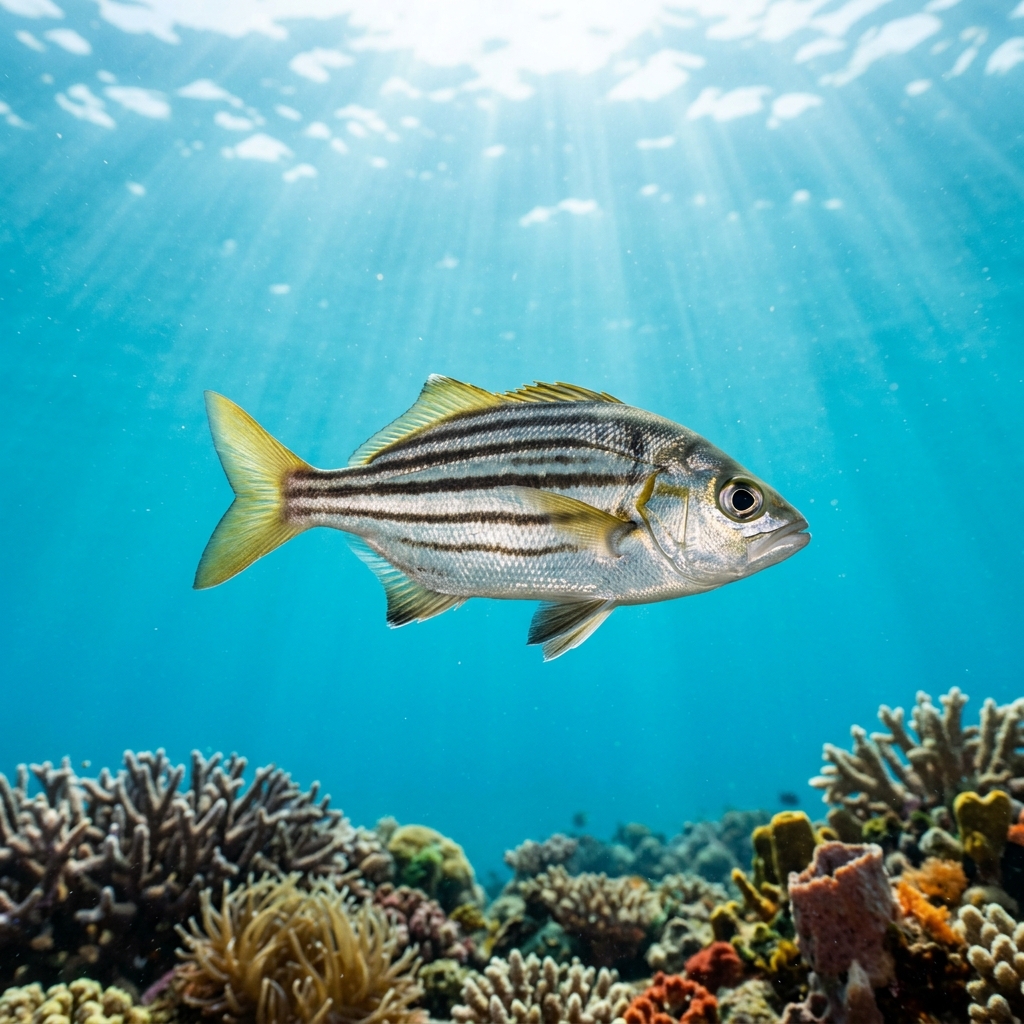
Reef neighbours a diver could mistake it for. Use the identification notes above to tell them apart.
This is an Australian temperate-reef fish through and through, most commonly logged in Western Australia and Victoria, with a further reliable presence in South Australia and smaller numbers in New South Wales and Tasmania. Most sites report it as uncommon rather than common, so it is a fish worth watching for rather than one you can count on at every dive.
Mapping where Zebra Fish is logged…
Zebra Fish are an Australian speciality, most often logged in Western Australia and Victoria, with further sightings in South Australia, New South Wales and Tasmania.
There is no strong seasonal pattern in sightings, and they tolerate a wide temperature range of roughly 15 to 21C, so they are seen on Australian temperate reefs throughout the year.
Look for a silvery-grey, oval-bodied fish around 23 cm long with several dark vertical bars down its flanks. It is usually seen alone or in small groups grazing over rock and reef rather than schooling in open water.
They typically reach around 23 cm in length, making them a mid-sized reef fish rather than a giant of the group.
No, they pose no danger to divers. They are herbivorous grazers that generally ignore divers and can be approached slowly without any risk.
They are herbivores that spend most of their time grazing algae off rock and reef surfaces, which is why divers usually spot them nosing along the substrate rather than swimming in open water.
Site and sighting data is aggregated from diver logs, iNaturalist and GBIF. For taxonomy and conservation status:
Blue Sea Chub
554 sites