Lethrinus olivaceus
Grey-brown reef fish with an elongated snout, most reliably logged in French Polynesia's Society and Tuamotu Islands and the Maldives' Southern Atolls.
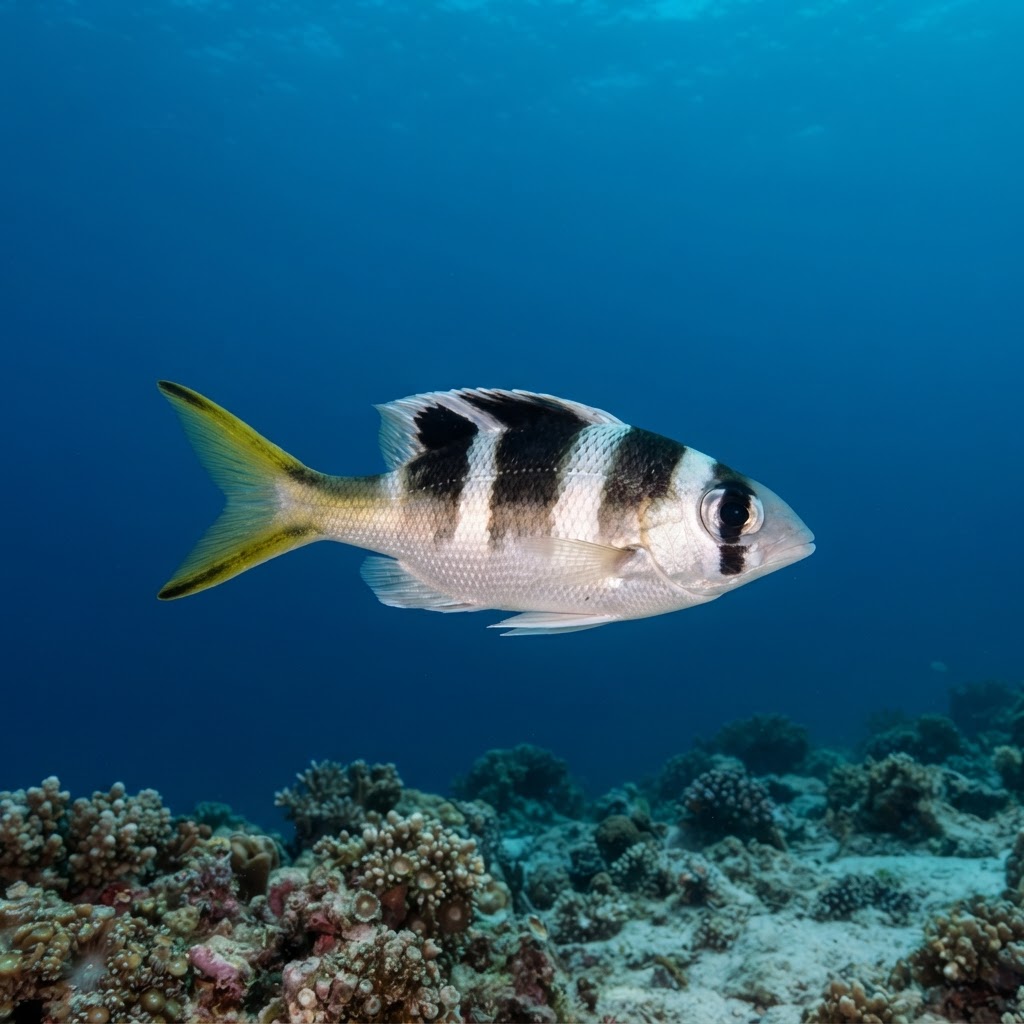
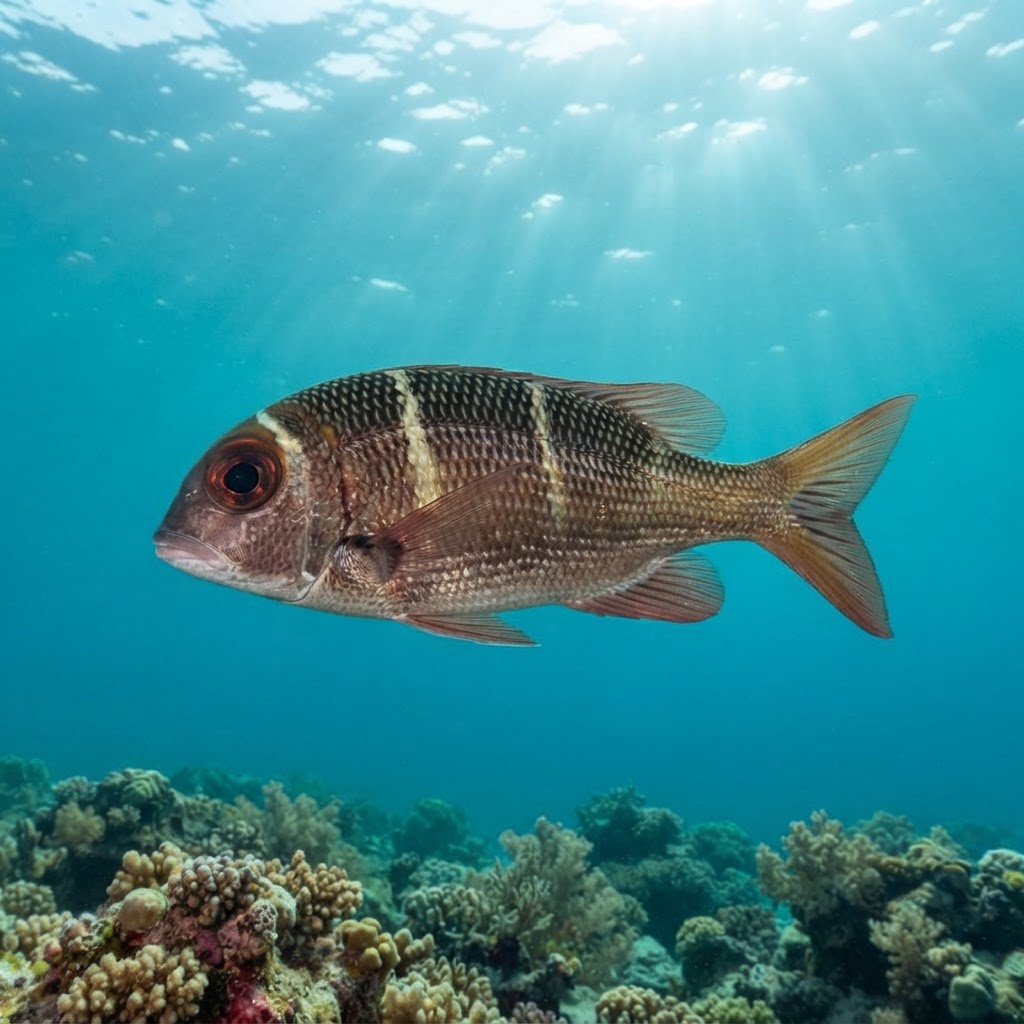
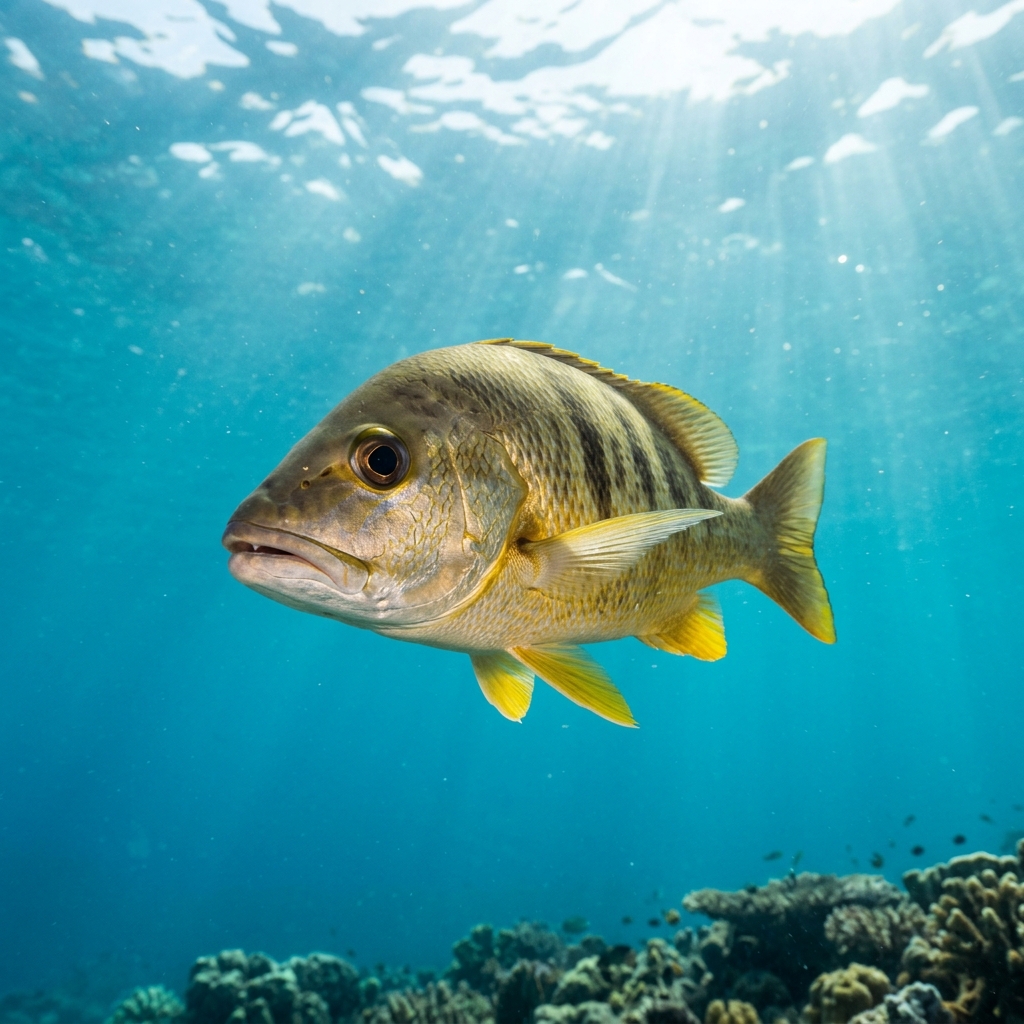
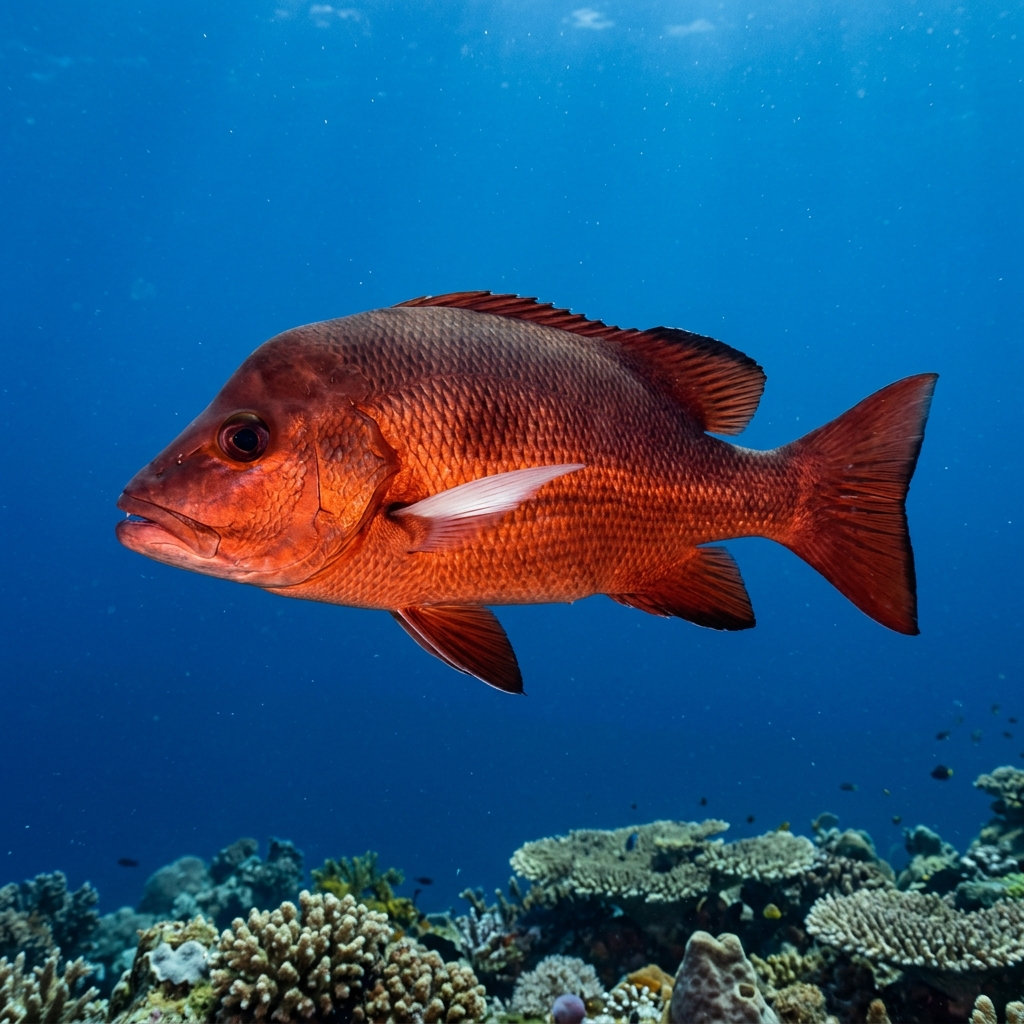
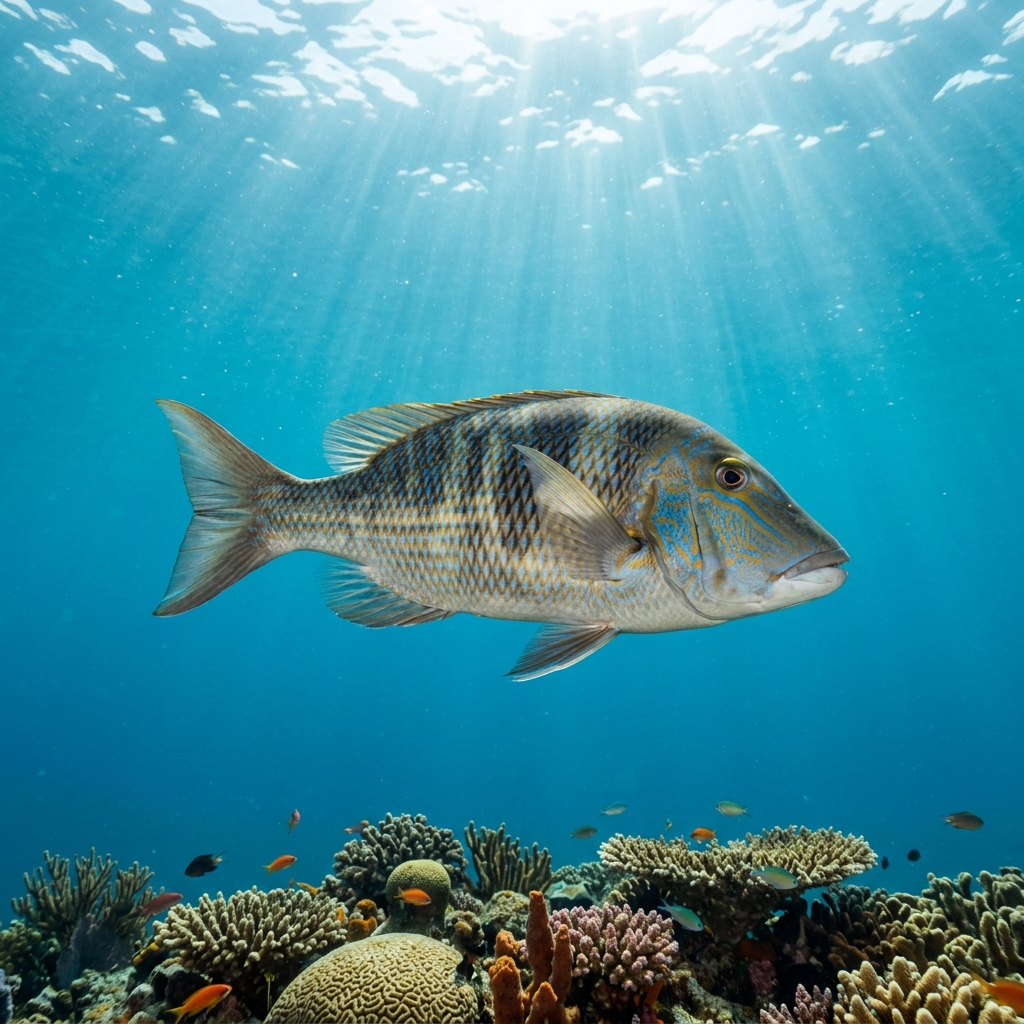
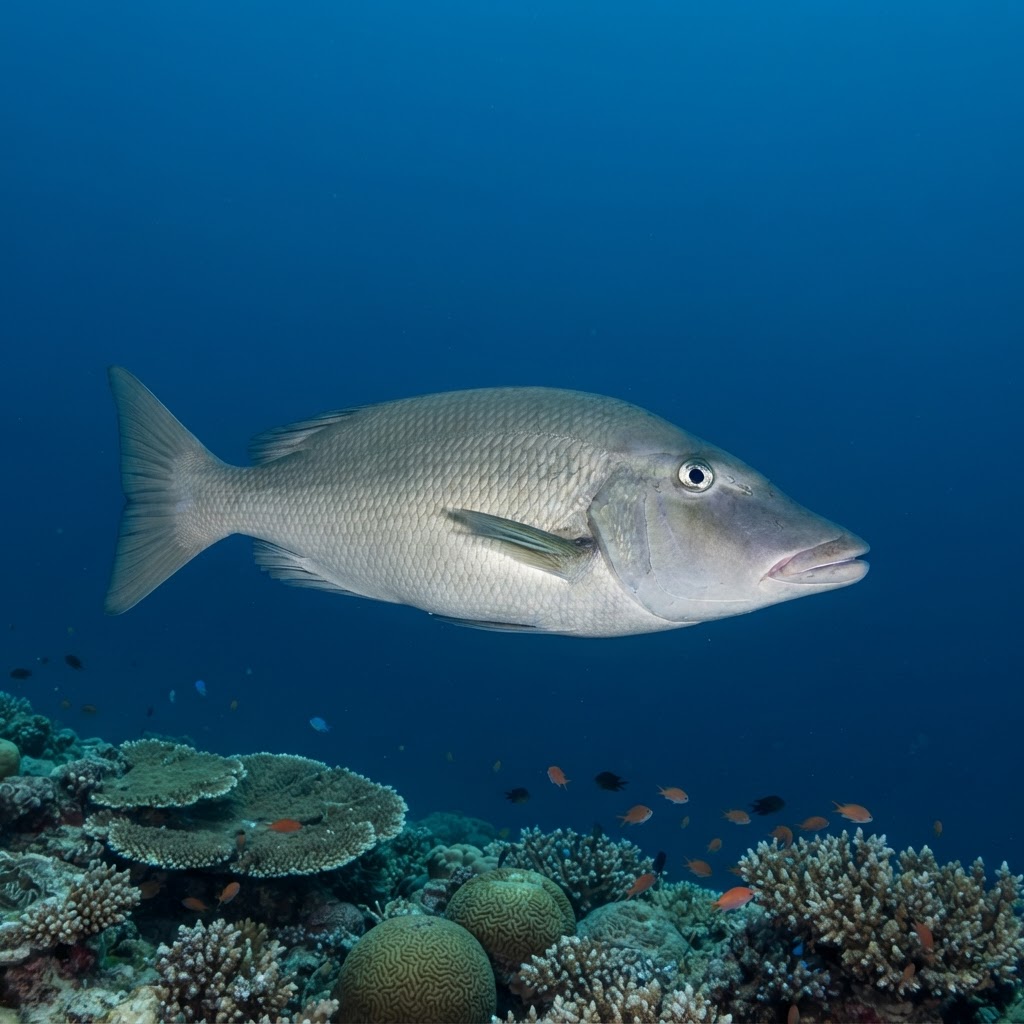
Grows to around 70cm and stands out from other emperors thanks to its unmistakably elongated, pointed snout, which gives the head a sloped, almost pike-like profile. Body colour runs pale grey to olive-brown with a faint mottling along the flanks, fading to a lighter belly. Look for it hovering low over sand or rubble patches near reef edges rather than mixed into the reef structure itself.
Usually spotted solo, cruising slowly over sand flats and rubble zones adjacent to reef structure, often at depth rather than in the shallows. It tends to keep a cautious distance from divers rather than approaching, and at most sites divers log it as an uncommon but steady find rather than a guaranteed sighting. Its long snout is built for probing into sand and crevices, so watch for it nosing around the substrate hunting for prey.
That long snout is a specialised tool for rooting out buried invertebrates and small fish from sand and rubble, a hunting style few other emperors on the reef use in quite the same way.
No clear seasonal pattern shows in the data, and with a comfortable range of 23.3 to 28.4C it's a year-round presence on tropical reefs across its range.
Reef neighbours a diver could mistake it for. Use the identification notes above to tell them apart.
Most reliably logged across French Polynesia, with strong numbers in the Society Islands and Tuamotu Islands, and in the Maldives' Southern Atolls. Koh Tao in Thailand and Palawan in the Philippines are other dependable spots, with further sightings in Palau's Rock Islands and Peleliu, and in Raja Ampat, Indonesia.
Mapping where Longnose Emperor is logged…
French Polynesia is the strongest region, particularly the Society Islands and Tuamotu Islands, with the Maldives' Southern Atolls close behind. Koh Tao in Thailand, Palawan in the Philippines, and Palau's Rock Islands also produce regular sightings.
There's no strong seasonal signal in sighting data, and it tolerates a wide temperature range of roughly 23 to 28C, so it's seen on tropical reefs throughout the year.
The giveaway is the long, pointed snout that gives it a sloped, elongated head shape unlike most reef fish. Body colour is a plain grey-brown, and it's usually seen alone over sand or rubble near reef edges rather than tucked into coral.
They typically reach around 70cm in length, making them one of the larger emperors divers encounter on the reef.
No, they pose no threat to divers and generally keep a cautious distance rather than approach.
Site and sighting data is aggregated from diver logs, iNaturalist and GBIF. For taxonomy and conservation status:
Emperor
2,052 sites